
Reviewed · WARSAW UPRISING & WORLD WAR II TOURS
III Reich & WW2 in Wroclaw. Monday, Wendsday, Friday regular tour
Third Reich and WWII in Wrocław hits different on foot. This compact route ties together Jewish landmarks, the Nazi takeover, and the siege story in a city many people only see as modern and lively. I especially like how the walk includes both persecution sites and places linked to resistance and ideas, not just big monuments.
I also like the pacing for a 2 to 2.5 hour outing, with time to actually look at key buildings and square corners as the story moves from 1938 onward into the siege years. One thing to consider is that a few stops have admission tickets marked as not included, and the tour depends on good weather, so plan for some time outdoors.
In This Review
- Key highlights you should care about
- Why this Nazi and WWII walk works in Wrocław
- Meeting at Hotel Monopol, the pace, and how much you’ll walk
- The Jewish history route: from 1938 to the White Stork Synagogue
- Nazi-era power in city squares: Wolności Square and Rynek
- Resistance, moral courage, and education under the regime
- Siege-era Wrocław: Most Holy Name of Jesus, Ossolineum, and Hala Targowa
- Edith Stein and the Cathedral Island finish at Ostrow Tumski
- Price and value: is $32.20 a good deal?
- Who should book, and who might want a different tour
- Should you book this III Reich and WWII tour in Wrocław?
- FAQ
- How long is the III Reich and WWII in Wrocław walking tour?
- What is the price per person?
- Which days does this regular tour operate?
- Where do I meet the guide, and where does the tour end?
- Is the tour offered in English?
- Are entrance tickets included at each stop?
- How big are the groups?
- What happens if the weather is bad or I need to cancel?
- Are service animals allowed?
Key highlights you should care about
- Small group size (max 20) makes it easier to ask questions and keep the pace moving without feeling rushed.
- English tour and a clear, stop-by-stop storyline across major WWII-era locations.
- Multiple Jewish history points, from the 1938 destroyed synagogue site to the White Stork Synagogue that survived the war.
- Everyday-life framing around Wolności Square and Wrocław’s main square, plus siege and destruction context.
- Resistance and ideas stops, including the Dietrich Bonhoeffer Memorial and educational institutions tied to the era.
- Finish on Cathedral Island (Ostrow Tumski) so you can keep wandering after the tour without backtracking.
Why this Nazi and WWII walk works in Wrocław
Wrocław is a city where history keeps layering itself. This tour uses that reality instead of fighting it, guiding you through the specific places where Nazi power took root and where the city later faced devastation and survival. The result is a walking timeline you can actually picture, instead of a folder of names and dates.
Two things make it click. First, it stays human, touching daily life under the regime, not only ideology. Second, the tour connects Jewish heritage and persecution with the broader city experience, including the siege period and how education and institutions were shaped.
A quick note before you go: the story is heavy. If you prefer purely architectural sightseeing with no political framing, you might find parts of the tour emotionally intense. If you come ready for serious context, you will get a lot out of it.
Further tours tracing the 1944 Uprising:
- Wroclaw: Third Reich and World War Two Historical Tour
★ 4.9 · 43 reviews - The secrets of World War II
★ 5.0 · 18 reviews - Wroclaw: Day of WW2: Riese, Gross-Rosen, Ksiaz Castle
★ 4.8 · 16 reviews
Meeting at Hotel Monopol, the pace, and how much you’ll walk
You start at Hotel Monopol, on Ulica Heleny Modrzejewskiej 2. The tour ends at Cathedral Island on Ostrow Tumski, so you finish in a scenic area that’s easy to keep exploring.
The stated duration is about 2 to 2.5 hours, and the walking is described as manageable, roughly 1.7 miles for at least one group. Still, it is a walking tour, so comfortable shoes matter, especially if you’re doing it in winter or wet weather.
This one is also fairly fast-paced in the best sense: the guide moves you from stop to stop so you get the full arc, from early Nazi actions in 1938 into the city’s siege experience. That pacing is great if you like momentum and a clear storyline. If you like slow, photo-only wandering, you may want to arrive early so you can settle in before the tour starts.
The Jewish history route: from 1938 to the White Stork Synagogue
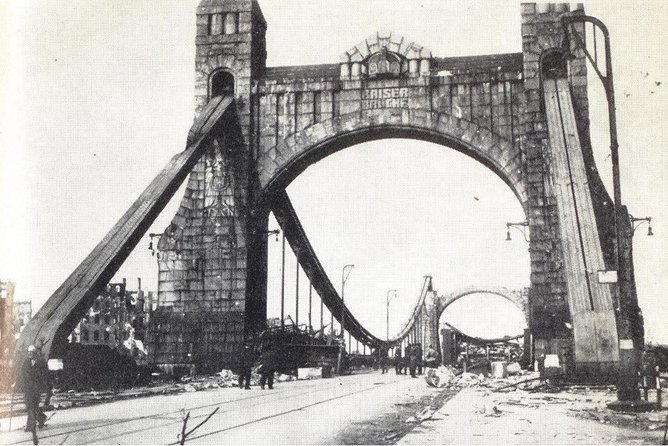
The tour begins with a site tied to the moment the Nazi persecution became unmistakable. You walk toward the place where the New Synagogue was destroyed in 1938, and you also see the Gestapo building nearby. That pairing matters, because it helps you connect policy, intimidation, and the physical presence of terror in everyday city space.
Next comes Wolności Square, then you move into the heart of the Jewish district story at the White Stork Synagogue. This synagogue survived the war, and the guide uses it as a jumping-off point for local Jewish heritage and Holocaust storytelling. Even if you know the history broadly, seeing it anchored to a building that endured is a different kind of learning.
One practical tip here: spend the extra few seconds you naturally want to spend. The guide will be packing context into short stops, so your best move is to pause, look at the building, then listen. If you try to multitask the whole time, you’ll miss the meaning.
Nazi-era power in city squares: Wolności Square and Rynek
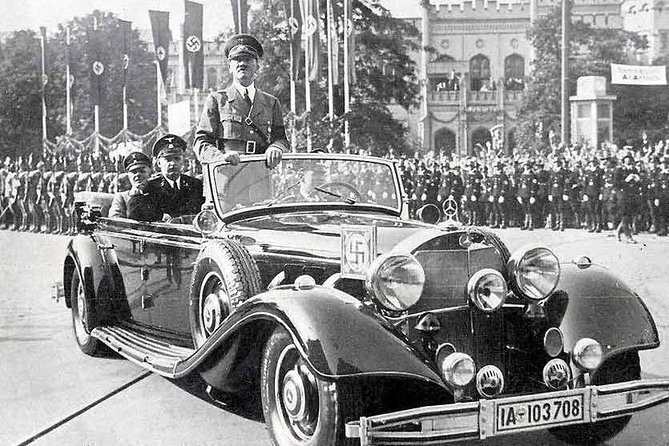
Wolności Square is where the tour sets up the beginnings of the Nazi era in Germany and then ties it back to what you’re seeing in Wrocław. This is where the guide’s job becomes more than describing buildings. You start to understand how propaganda and control translated into real routines and real fear.
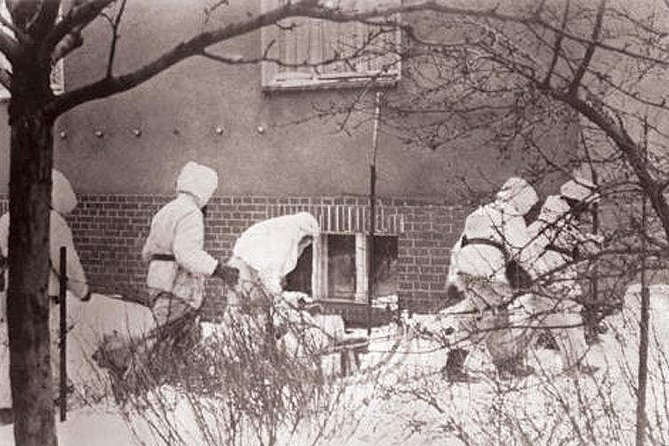
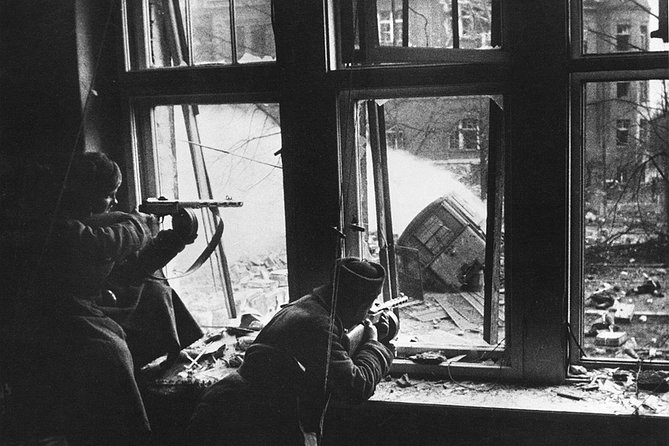
From there, you reach Rynek of Wrocław, the main square. Here the tour shifts into everyday life under the Nazi regime, plus stories about Festung Breslau and the destruction of the city. Rynek is open and dramatic, which makes it tempting to treat it like just a pretty place. This tour asks you to look at it like a lived space during catastrophe.
If you care about how a regime changes public life, this is one of the strongest parts. You learn not only what happened, but how people had to navigate it day after day.
Still tacked up around Wroclaw


Resistance, moral courage, and education under the regime
Not every WWII tour balances persecution with resistance, so I like that this one makes room for opposition and ideas. You stop at the Dietrich Bonhoeffer Memorial and get a few words about German opposition. Even in short time, it shifts the theme from only victimhood and control to the choices people made, even under extreme pressure.
Then the tour turns to education. At Wrocław University, you learn about education in the Third Reich and you also hear about Jewish scientists. This is one of those stops where you realize how authoritarian systems try to manage knowledge, not just bodies.
Two additional educational-institution stops follow, but with an important practical caveat. Admission is listed as not included at Wrocław University, the Parish of the Most Holy Name of Jesus, and Ossolineum. That means you should be ready for possible extra costs or entry rules depending on access on the day of your tour.
If you want the experience to feel cohesive, come with one question. For example: how do institutions keep functioning while power is being rewritten around them? The guide can only cover what’s in the time window, so your question helps you focus your listening.
Siege-era Wrocław: Most Holy Name of Jesus, Ossolineum, and Hala Targowa
The tour doesn’t just end at ideology and the pre-siege period. It moves into the siege story and how the city survived the worst of it.
You visit the Parish of the Most Holy Name of Jesus, where the focus is everyday life during the siege time and the first months after the war. That timing is key. It reminds you that the immediate aftermath was also part of the trauma, not a clean cutoff the moment the fighting stopped.
Next, Ossolineum is another education stop, again connected to schooling under the Third Reich. If you’re the type who likes learning how regimes shape institutions and minds, this part will hold your attention.
Then the tour reaches Market Hall, Hala Targowa, with a story about the siege and a short break. This is a smart moment in the route, because it gives you a breathing window before the final stretch. If you’re cold or tired, this is where you can reset.
Edith Stein and the Cathedral Island finish at Ostrow Tumski
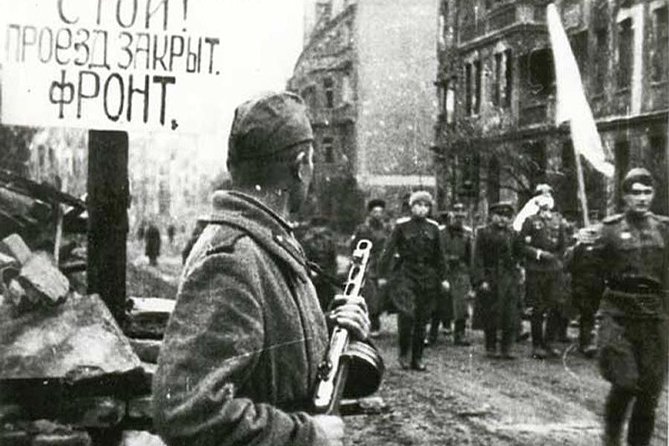
On the Sand Island in Wrocław, you get the story about Edith Stein. The tour frames this location as part of how people’s lives intersected with WWII and the Holocaust, and the guide uses it to connect history to a specific place you can see and picture.
Finally, you end at Ostrow Tumski, Cathedral Island. Finishing here is practical and scenic. It also means you can continue walking right away if you want to see the area at street level without needing transportation.
This ending spot also helps the emotional rhythm of the tour. After the heavy topics, the setting gives you a chance to slow down, take photos, and digest what you learned as you look at the city around you.
Price and value: is $32.20 a good deal?
At $32.20 per person for a 2 to 2.5 hour guided walk, this is priced for budget-minded travelers who still want depth. The value comes from two places.
First, you cover a spread of locations, not just one neighborhood. You get the 1938 synagogue destruction site, Gestapo-related architecture you can see, Jewish district landmarks, multiple central squares, resistance and education stops, and siege-era storytelling.
Second, many stops include admission ticket free. That matters because it keeps the experience from turning into a pay-to-enter relay. Still, remember the stops where admission is listed as not included. If you hit all those, you may spend a bit more on site, depending on what’s required that day.
Overall, if you’re the type who likes WWII history but also wants a city-based, on-foot version of it, the price feels fair. If you’re only interested in a single monument or two, you might get less value from a full walking route.
Who should book, and who might want a different tour
This works best for:
- WWII enthusiasts who want a connected storyline across Wrocław, not isolated facts
- Travelers who like history that includes politics and moral choices, not only dates
- People who enjoy small groups, since the cap is 20 travelers and the tour can feel more personal
You might skip it if:
- You want a light, casual sightseeing pace with minimal heavy context
- You dislike walking and short outdoor stops, especially when weather isn’t ideal
- You prefer a tour where everything is fully included and there are no potential extra admissions
One more practical point. The route includes several sites where the guide may talk briefly and then move you along. If you like slowing down for photos, consider arriving a few minutes early so you’re not trying to balance picture-taking and listening at the same time.
Should you book this III Reich and WWII tour in Wrocław?
I think it’s a strong choice if you want your WWII education anchored in real city corners, and if you’re okay with a serious tone. The English format, the focused stop sequence, and the ending at Cathedral Island make it easy to plan around, even if you have limited time.
If your schedule fits Monday, Wednesday, or Friday, take that as a sign. Just build in time for cold hands, dress for weather, and be ready for a tour that moves fast enough to cover the whole arc. Bring curiosity and questions, and this walk will give you a clearer picture of how Nazi power and the siege-era reality shaped Wrocław.
FAQ
How long is the III Reich and WWII in Wrocław walking tour?
It runs about 2 hours to 2 hours 30 minutes.
What is the price per person?
The price is $32.20 per person.
Which days does this regular tour operate?
It runs on Monday, Wednesday, and Friday.
Where do I meet the guide, and where does the tour end?
You start at Hotel Monopol (Ulica Heleny Modrzejewskiej 2, Wrocław) and finish on Cathedral Island (Ostrow Tumski), Wrocław.
Is the tour offered in English?
Yes. It is offered in English.
Are entrance tickets included at each stop?
Some stops list admission tickets as free, while others are listed as not included. Specifically, Wrocław University, the Parish of the Most Holy Name of Jesus, and Ossolineum are marked as not included.
How big are the groups?
The tour has a maximum of 20 travelers.
What happens if the weather is bad or I need to cancel?
The experience requires good weather. If it is canceled due to poor weather, you will be offered a different date or a full refund. You can cancel for a full refund up to 24 hours in advance.
Are service animals allowed?
Yes. Service animals are allowed, and the tour is near public transportation.
Freshly posted from Wroclaw
- Segway Tour Wroclaw: Old Town Tour – 1,5-Hour of Magic!★ 4.8 · 7 reviews
- The Roots of Poznań (small group)★ 5.0 · 8 reviews
- Wroclaw to Rock City Adrspach in Czech Republic Private Tour including tickets★ 4.5 · 8 reviews
- Wroclaw Private Old Town Guided Walking Tour★ 5.0 · 8 reviews
- Wroclaw: Multimedia Fountain Evening Show★ 4.0 · 9 reviews
- Wroclaw: Solar Catamaran Cruise on the Odra River★ 4.8 · 9 reviews
- Segway Tour Wroclaw: Old Town & Ostrów Tumski – Full Tour★ 5.0 · 9 reviews
Warsaw Uprising & World War II Tours, compared.
World War Two in Krakow: Jewish Quarter & Ghetto Tour
Read our review →
Warsaw for WWII Buffs – private tour with hotel pickup
Read our review →
Museum of the Second World War Gdansk Private Tour & Tickets
Read our review →
Gdansk Private WWII Tour with Museum of the Second World War
Read our review →Browse the lists this tour appears in