
Reviewed · WARSAW UPRISING & WORLD WAR II TOURS
Warsaw for WWII Buffs – private tour with hotel pickup
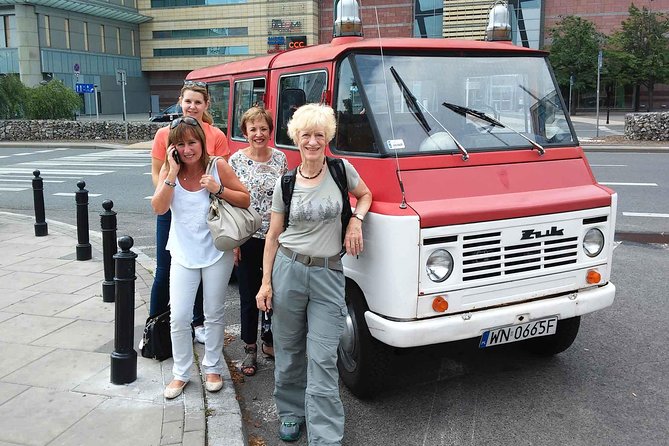
Warsaw WWII history fits in one ride. This private 3-hour experience uses a retro Żuk minibus plus a tight, story-driven route through the city’s hardest chapters, with hotel pickup for an easy start.
What I like most is the focus and pacing. You get a professional English-speaking guide who can shape the tour around your interests, and you move through Warsaw enough times to feel like you are watching the story unfold, not just hearing it.
One thing to consider: the vintage vehicles are not built like modern cars. Expect no air conditioning, some vehicles may have no seat belts, and comfort for getting in and out can vary.
In This Review
- Why the retro Żuk minibus matters in WWII Warsaw
- Price and logistics: what $169.38 buys you
- Pickup radius and meeting points, so you do not lose time
- Stop-by-stop: how the story moves through Warsaw
- Central Warsaw start: the city as a WWII map
- Late 1930s politics to 1939 invasions
- The Warsaw Ghetto wall fragments near Waliców
- Chłodna Street and the bridge that split the ghetto
- Waliców tenement house, still ruined
- Muranów district: from flat blocks to hidden layers
- Monument to the Ghetto Heroes and the POLIN area
- Monument for the Fallen and Murdered in the East
- The Warsaw Uprising finale in 1944
- What to expect from the guide, and why it matters
- Comfort and practical tips for a smooth ride
- Who should book this WWII-focused private tour
- Should you book Warsaw for WWII Buffs?
- FAQ
- How long is the Warsaw for WWII Buffs private tour?
- Is hotel pickup included, and how far does it reach?
- What is the cancellation policy?
- What language is the guide?
- What should I know about the vintage minibus?
- Do children need seat boosters?
Why the retro Żuk minibus matters in WWII Warsaw
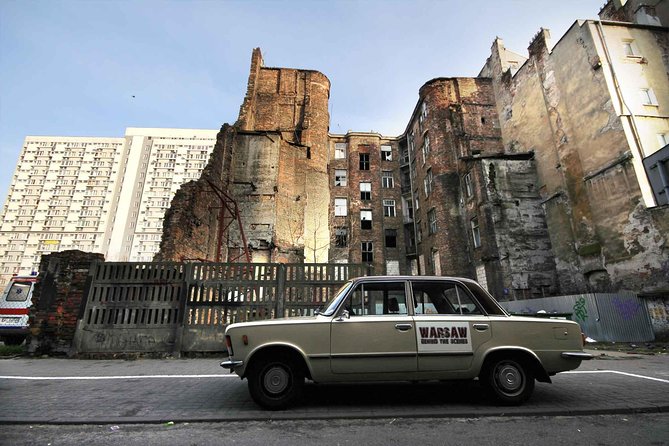
This tour is designed for people who want more than big monuments and broad explanations. The format helps. You are in a historic vehicle that keeps you close to the neighborhoods, then you step out at key points where the city itself carries the evidence.
That matters in Warsaw. WWII history here is not stuck behind ropes. It is built into street layouts, building edges, and the way districts connect or split. Riding through central Warsaw in a classic Żuk makes the geography feel real fast, and it keeps the tour moving at a good pace for a day that is already packed.
Price and logistics: what $169.38 buys you
At $169.38 per person for about three hours, this is not a budget tour. But you are paying for three practical things that usually cost extra when you do them separately.
First, you get hotel or apartment pickup and drop-off within a 3 km radius of the city center. That turns what could be a stressful start into a simple “be ready at your door” moment.
Second, you get a private setup. Only your group participates, and the vehicle carries up to 8 passengers, so you are not squeezed into a large group with 30 other voices.
Third, you get a local guide who turns a list of places into a timeline. That is the real value. If you care about cause-and-effect, this route is built to show you how the late 1930s political collapse turns into occupation, ghetto life, resistance, and then the Soviet attack and the 1944 uprising.
Further tours tracing the 1944 Uprising:
- World War 2 in Warsaw walking tour in English
★ 4.7 · 237 reviews - Warsaw in World War 2 Walking Tour
★ 5.0 · 26 reviews - Warsaw Uprising Museum (1944) : PRIVATE SERVICE /inc. Pick-up/
★ 4.5 · 18 reviews
Pickup radius and meeting points, so you do not lose time
Pickup is available up to 3 kilometers from the city center, and the total tour time includes the transfer in and out. That detail can change your day.
If your hotel is right near the center, pickup is great. If it is farther out or access is awkward for the vehicle, you might be asked to meet closer to town. My advice: choose the option that minimizes time in transit. A short walk in central streets is often better than losing 20 minutes to getting the van to a hard-to-reach spot.
The good news is that the tour is near public transportation, so there is usually a practical backup if you need to shift meeting points.
Stop-by-stop: how the story moves through Warsaw
The route is paced as a sequence of short stops with walking segments. Each stop is designed to add one new piece of the puzzle, then connect it to the next moment.
Here is what you can expect, in plain terms.
Central Warsaw start: the city as a WWII map
You begin in central Warsaw, where you will see how WWII damage and later reconstruction are woven into everyday streets. Traveling by retro Żuk minibus lets the guide cover several locations without you spending the whole three hours stuck in traffic or playing “how do I get there” on your phone.
This opening segment is meant to get your bearings. Even if you have read about Warsaw before, seeing the geography in this order helps you understand why certain areas became so important during the occupation.
One practical note: expect some driving on uneven historic roads. Several guides keep checking on comfort, but it is still a vintage ride.
Still tacked up around Warsaw

Late 1930s politics to 1939 invasions
Next, your guide frames the late 1930s political climate. You get the German invasion of Poland in 1939, and you also learn how eastern Poland was simultaneously occupied by the Soviet Union.
This is not just dates on a slide. The point is to show how quickly the ground shifted for civilians. Once you understand that two powers moved at the same time, Warsaw’s later events make more sense, including the rise of resistance and the harsh realities of life under occupation.
The Warsaw Ghetto wall fragments near Waliców
The tour then moves into one of the most emotionally heavy parts of Warsaw WWII history: the persecution and murder of the Jewish population under Nazi Germany.
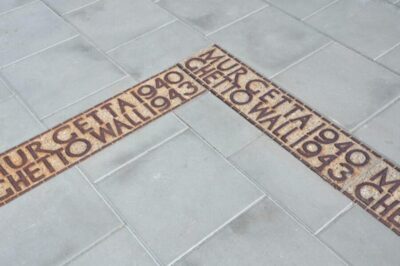
In 1940, the Warsaw Ghetto was established, confining nearly half a million people within its walls. Today, remnants of that boundary still appear in fragments, sometimes tucked between buildings and along pre-war property lines.
At Waliców, you visit one preserved section of ghetto wall. You also get to see how physical edges of the city used to enforce a forced boundary in daily life. It is the kind of stop where the guide’s tone matters, and the best guides bring facts with care.
Chłodna Street and the bridge that split the ghetto
Then comes Chłodna Street, a key detail of how the ghetto was divided into two parts. The street was used for east-west transfer traffic, so you get a clear picture of how movement, control, and segregation were built into the city’s layout.
Your stop includes the wooden bridge near the intersection of Chłodna and Żelazna streets. In photographs, you can see the bridge’s role in linking two sides while traffic passed underneath. The story here is technical, but it is also chilling, because it shows how “normal” transport patterns were repurposed for occupation.
If you like specific, concrete details, this is one of the stops you will remember.
Waliców tenement house, still ruined
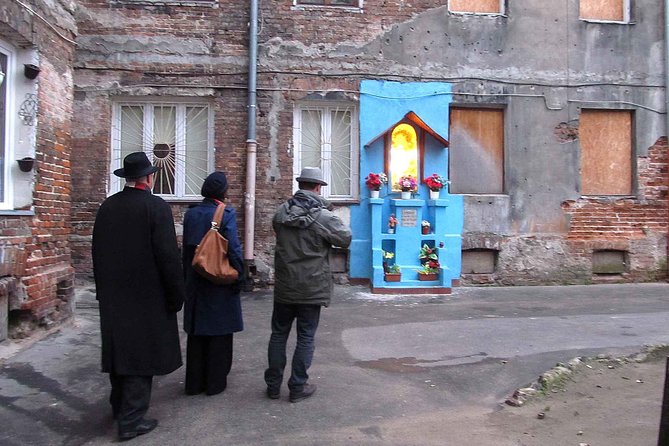
The route returns near Waliców to highlight the tenement house that remains a ruin. This is presented as the last ghost from the ghetto, because it still stands in damaged form, alongside a preserved fragment of the wall.
This is a powerful contrast. Some WWII sites are fully rebuilt or turned into museums. Here, the building still shows the break.
Because the stop is on foot and outdoors, there are usually no added ticket costs for what you see along the route.
Muranów district: from flat blocks to hidden layers
Next is Muranów. At first glance, it can look like many other European neighborhoods: squared blocks of flats, ordinary streets, daily life continuing in the present tense.
That is exactly why this stop works. With a guide, you start seeing how the past sits under the surface. The district is part of the Warsaw story of occupation and resistance, and this stop helps you connect the “where” to the “why” without getting lost in names.
The drawback here is simple: if you do not pay attention, you can miss the meaning. But with a guide who explains, you will likely spot the patterns faster.
Monument to the Ghetto Heroes and the POLIN area
The tour includes a visit to the Monument to the Ghetto Heroes and the area of the POLIN Museum of the History of Polish Jews. These symbolic sites tie directly to the location where the first armed clashes of the 1943 Ghetto Uprising occurred.
This is one of the route’s most reflective moments. It is also a useful place to recalibrate your understanding of what you just learned, because the guide links the physical space to the idea of remembrance and reconciliation.
One practical tip: if you want time to read plaques or take photos, give yourself a little extra patience here. The route timing is fixed, but you can still move a bit slower if your guide allows.
Monument for the Fallen and Murdered in the East
Then you shift from the ghetto story to a broader tragedy of Poland under Soviet attack.
The Monument to the Fallen and Murdered in the East commemorates Poles deported to Gulags in Siberia, victims of executions, and people killed in the Katyń massacres. The date context is September 17, 1939, two weeks after WWII began in Europe, when Poland was attacked by the Soviet Union and the eastern part of the country was lost forever.
This stop adds essential context. Many WWII tours focus mainly on one front. This one keeps both parts of the story present, so your understanding of Warsaw’s era feels more complete.
The Warsaw Uprising finale in 1944
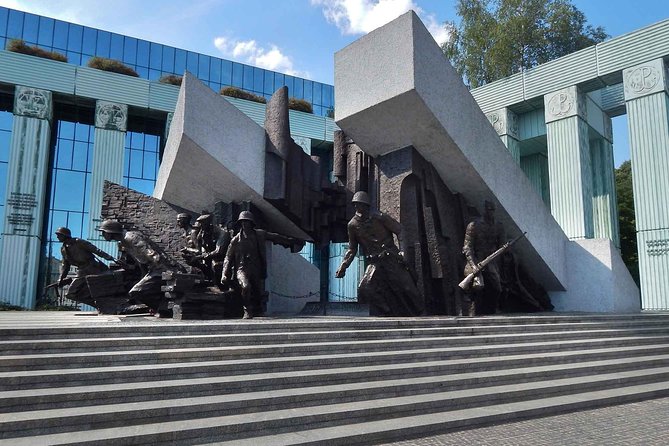
The tour ends at the Warsaw Uprising Monument, focused on 1944, the city’s last attempt to regain independence before the arrival of the Red Army.
Your guide explains what happened after the uprising’s defeat: Nazi forces systematically destroyed much of Warsaw. Then the Soviet army entered the ruins in January 1945, beginning a new era of communist rule.
This ending is designed to put a period at the end of the WWII chapter, while also pointing toward what came next. It is intense, but it also helps you leave with a clearer timeline, not just a pile of scenes.
What to expect from the guide, and why it matters
This tour rises or falls on the guide. In past group experiences, guides such as Konrad, Tom, Karol, Marcin, Martin, and Lucas show up with a consistent strength: strong English, clear storytelling, and a real ability to answer questions without turning the experience into a lecture.
One practical benefit: several guides seem to bring photos or extra context to connect street corners with what happened there. If you like seeing before and after, or you want help spotting details you might otherwise miss, that kind of support pays off.
Another benefit is flexibility. The tour is described as customizable, and guides are praised for tailoring the route when people already know some of the main sights.
If you are bringing teenagers or just want a history lesson that does not feel like homework, this is where the private format shines.
Comfort and practical tips for a smooth ride
This is a three-hour window with repeated short walking segments. That means comfort is less about lounging and more about staying ready to step out a few times.
Here is what I recommend you plan around:
- Wear comfortable shoes with decent grip. You will get out repeatedly to get closer to landmarks.
- Dress for weather. The vehicle has heating for winter, but classic vintage minibuses are not built with air conditioning.
- Expect limited seat belt coverage. Some vehicles may not have seat belts, which is permitted for historic vehicles.
- If you need extra help getting in and out, mention it ahead of time. One guide group experience flagged that the seating can be tight for seniors and smaller travelers.
And one small but useful travel habit: bring a light layer even in warm months. Vintage vehicles can run warm, and the route includes both driving and short outdoor stops.
Who should book this WWII-focused private tour
This is a great fit if you are any of the following:
- A WWII buff who wants Warsaw-specific context, not generic Europe history
- A time-crunched traveler who wants a meaningful overview in about three hours
- Someone who values hotel pickup and a small-vehicle experience
- A family with kids over 150 cm, since children under 150 cm require mandatory seat boosters in Poland
It is also a strong choice if you like a local perspective. The tour is built around street-level history, which is where Warsaw communicates its past best.
If you want a totally relaxed museum day with lots of indoor time, this may feel intense. This route is about real events, not just visuals.
Should you book Warsaw for WWII Buffs?
I think this is worth booking if you want a focused, Warsaw-specific WWII narrative with professional guidance and minimal hassle. The private format plus hotel pickup makes the day easier, and the route is structured to connect invasion, occupation, the ghetto, resistance, Soviet violence, and the 1944 uprising in a logical arc.
Book it if you can handle heavy subject matter and you are comfortable with repeated short walks. If vehicle comfort is a top priority for you, it is smart to ask what exact Żuk vehicle and seating setup you will use so you can plan accordingly.
In short: if you want the real story in limited time, this is a strong match.
FAQ
How long is the Warsaw for WWII Buffs private tour?
The tour lasts about 3 hours.
Is hotel pickup included, and how far does it reach?
Pickup and drop-off are included within a 3 km radius of the city center. If your hotel or apartment is farther or inaccessible by car, the operator’s advisor will suggest the closest and most comfortable meeting point.
What is the cancellation policy?
Free cancellation is available up to 24 hours in advance for a full refund. Canceling less than 24 hours before the start time means the amount paid is not refunded.
What language is the guide?
The tour offers a professional English speaking local guide.
What should I know about the vintage minibus?
The tour uses retro communist minibuses. They are not equipped with air conditioning, some do not have seat belts, and heating is available for winter.
Do children need seat boosters?
Children over 150 cm can participate. If a child is under 150 cm, seat boosters are mandatory under Polish law, so you should contact the operator in advance to check availability.
Freshly posted from Warsaw
- Krakow Small Group Tour from Warsaw with Lunch, Schindler’s Factory included★ 5.0 · 7 reviews
- Warsaw Private Transfer from Warsaw Chopin Airport (WAW) to City centre★ 4.0 · 7 reviews
- Wolfs Lair – Hitlers hideout★ 4.5 · 7 reviews
- 3-hour tour at Warsaw Uprising 1944 Museum /inc. Pick-up/★ 4.9 · 7 reviews
- Warsaw: Evening History and Pubs Tour by Retro Minibus★ 5.0 · 7 reviews
- Warsaw: Private Vodka Tasting Night with Snacks and Pickup★ 5.0 · 7 reviews
- Warsaw Old Town with Royal Castle + Royal Route: SMALL GROUP /inc. Pick-up/★ 5.0 · 7 reviews
Warsaw Uprising & World War II Tours, compared.
World War Two in Krakow: Jewish Quarter & Ghetto Tour
Read our review →
III Reich & WW2 in Wroclaw. Monday, Wendsday, Friday regular tour
Read our review →
Museum of the Second World War Gdansk Private Tour & Tickets
Read our review →
Gdansk Private WWII Tour with Museum of the Second World War
Read our review →Browse the lists this tour appears in