
Reviewed · WROCLAW TOURS & ACTIVITIES
University of Wrocław – discover this place with a guide!
Baroque halls, real student stories, and a math-tower view. This 90-minute guided walk through the University of Wrocław brings the splendor of Aula Leopoldyna and Oratorium Marianum to life, then tops it off with the panoramic climb up to the Mathematical Tower. I love how the guide connects the rooms to the people who used them, and I also love the way the university’s Nobel Prize links are explained in plain, memorable terms.
You start in the Old Town and move at a comfortable pace, with time for photos and stops that feel like part of a story, not a checklist. The only catch is cost and timing: the tour price does not include the entrance ticket for the museum and the halls, and the university is closed on Wednesdays.
If you want history with strong visuals and a guide who keeps things clear, this private group format works well. You get German or Polish interpretation, and you’ll leave with a much sharper sense of why Wrocław became such a student city.
In This Review
- Key highlights worth circling in your plan
- How this tour makes the University of Wrocław click
- Meeting at Piwnica Świdnicka and walking through the Old Town
- The Fencer Fountain stop: quick atmosphere, not a long detour
- Entering Aula Leopoldyna: the ceremonial heart of the university
- Oratorium Marianum and the acoustics that drew major names
- The climb to the Mathematical Tower, plus the Old Town panorama
- The University Museum: student life, before and after the war
- Brief stop at the Parish of the Most Holy Name of Jesus
- Finishing at the university, and the story behind the naked swordsman
- Price and value: what you really pay for
- When to go, and what can interrupt the visit
- Who this tour is best for
- Should you book University of Wrocław with a guide?
- FAQ
- How long is the University of Wrocław guided tour?
- Where does the tour start?
- What is the tour price?
- Is the museum and tower entry included in the price?
- What places do you visit during the tour?
- What languages is the guide available in?
- Is it a private group?
- Is the university open every day?
- What happens if the university is unavailable during your planned day?
Key highlights worth circling in your plan
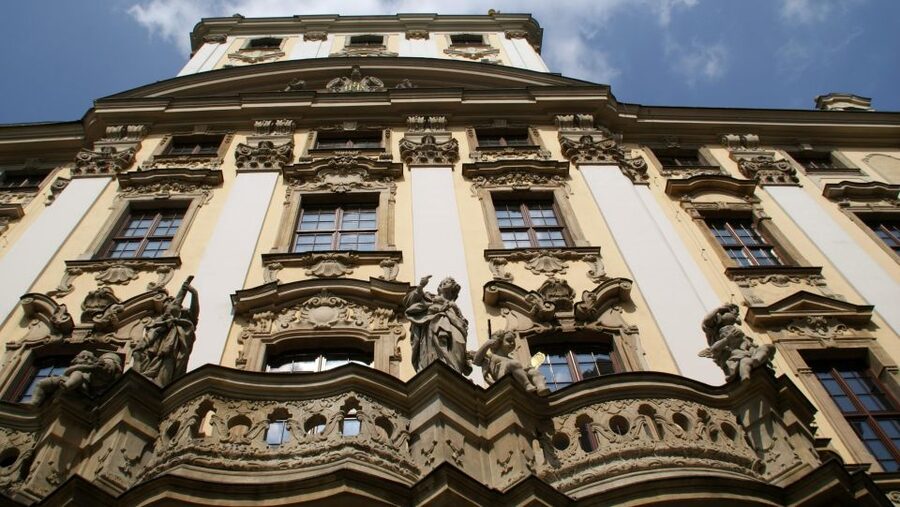
- Aula Leopoldyna and Oratorium Marianum as truly well-preserved secular baroque interiors, with illusionistic wall paintings by Johann Christoph Handke
- Student life across centuries, from past study and daily routines to how students experience the university today
- Nobel Prize connections you can actually name, including Theodor Mommsen, Fritz Haber, Max Born, Gerhart Hauptmann, and Olga Tokarczuk
- Mathematical Tower views after 50 low stone steps, plus four large sculptures by Franz Mangoldt on the deck
- A guided route that mixes culture and context, including a short pass at the Fencer Fountain and a brief visit near the Parish of the Most Holy Name of Jesus
How this tour makes the University of Wrocław click
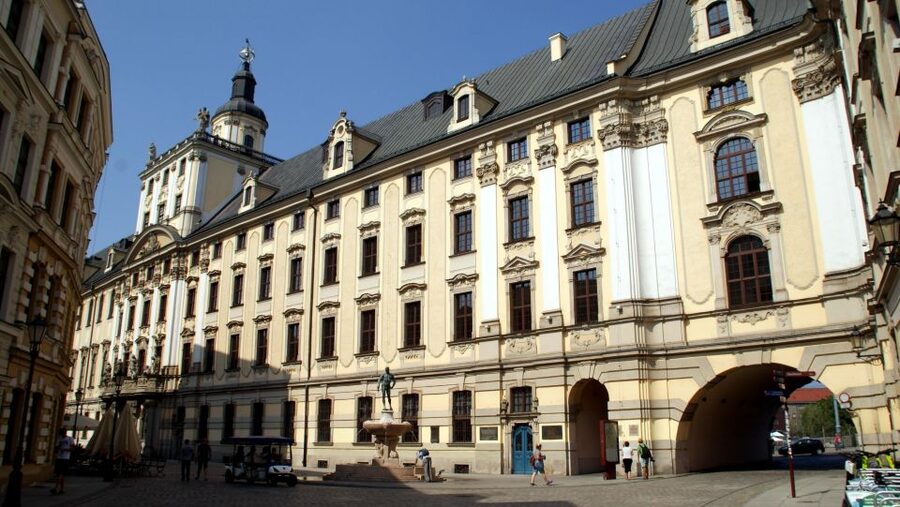
The University of Wrocław isn’t just a pretty building. It’s a whole campus story packed into one visit, with baroque rooms where ceremonies happened, a tower made for seeing the city clearly, and a museum that explains how students lived and studied over time.
What makes this format smart is that you do not just look at interiors from the doorway. You walk through the key spaces in sequence, so the history builds logically, like going from the stage to the backstage.
Still tacked up around Wroclaw
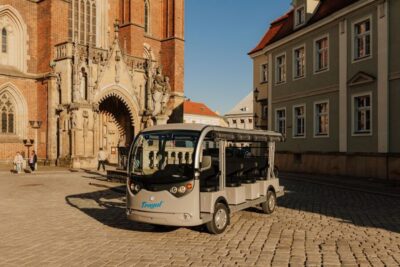
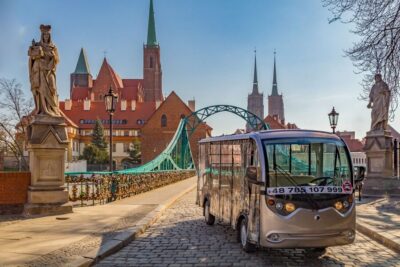
- Wroclaw: E-Car Tour and Audio Guide
★ 4.6 · 1,738 reviews - Wroclaw: 2-Hour Private Guided Tour by Electric Car
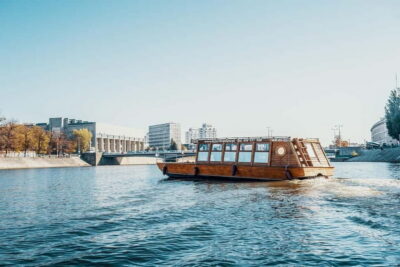
★ 4.8 · 805 reviews - Wroclaw: Ticket for Old Town Boat Cruise
★ 3.9 · 361 reviews
Meeting at Piwnica Świdnicka and walking through the Old Town
You meet at the Old Town Hall area on the Market Square, right next to Restauracja Piwnica Świdnicka. From there, the tour starts with a short guided introduction and then you move through Rynek and the narrow lanes toward University Square.
Two practical reasons I like this opening. First, it gets you oriented in Wrocław quickly, so the university feels like it has a neighborhood, not just an address. Second, the light city-walk segment helps break up the time before you step into the baroque interiors.
The Fencer Fountain stop: quick atmosphere, not a long detour
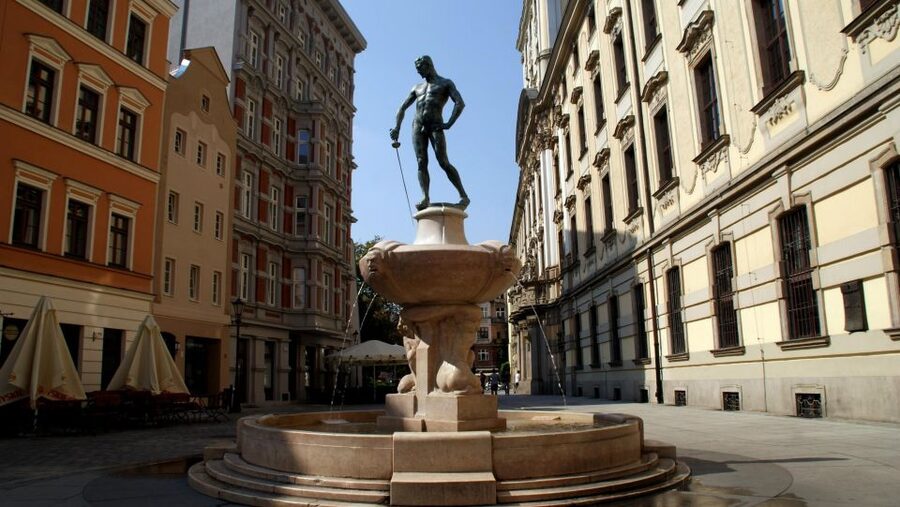
The route includes a short pass by the Fencer Fountain. It’s not the big centerpiece of the tour, but it acts like a local snapshot, the kind of landmark that helps you picture where you are in the story of the Old Town.
If your feet are already tired from exploring earlier, the good news is you are not stuck at one spot for long. You keep moving toward the university, which keeps the whole experience flowing.
Entering Aula Leopoldyna: the ceremonial heart of the university
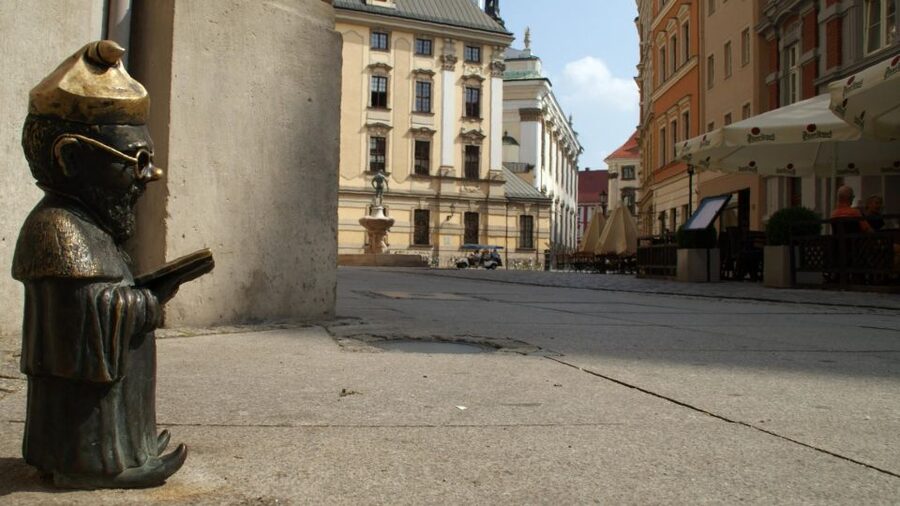
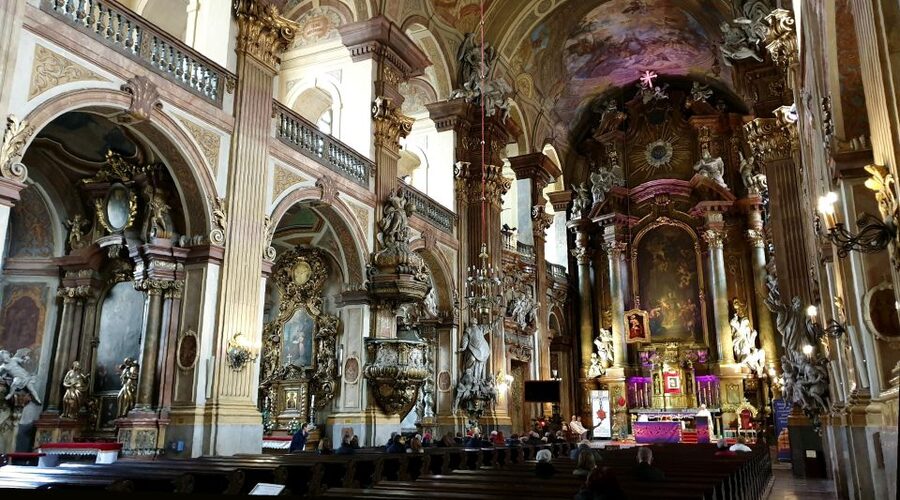
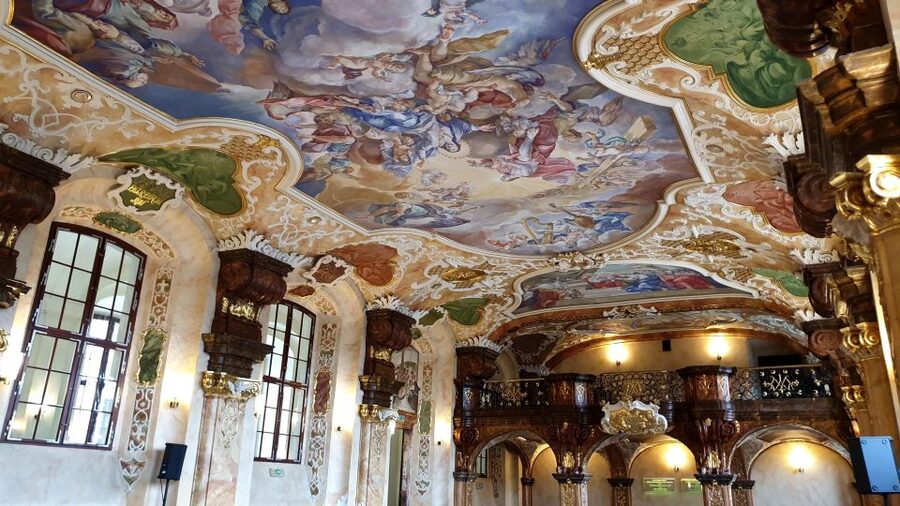
Your university tour begins in the famous baroque representative halls, starting with Aula Leopoldyna. This is where the ceremonial start of the academic year takes place for all universities in Wrocław.
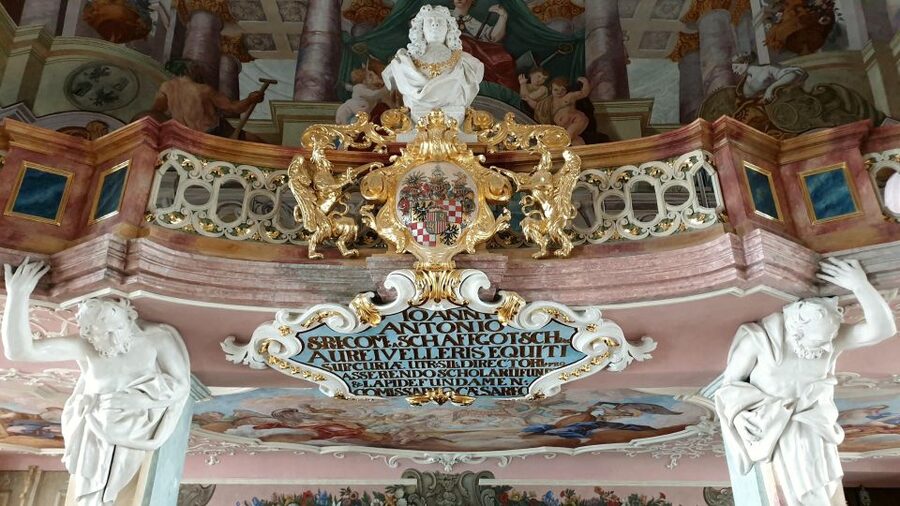
The room is impressive for a reason beyond looks. It is described as the only well-preserved secular baroque interior in Poland with full decoration, including illusionistic wall paintings by Johann Christoph Handke. Standing there, you can see why a ceremonial space matters, because the design is meant to create authority and awe, even before the first speech.
In the center you’ll spot the sculpture of the King of Germany and Emperor Leopold I Habsburg on a throne. That single image does a lot of work for you as a visitor, because it explains how power and learning were tied together in that era.
Beneath the newer pins on the Wroclaw board:

Oratorium Marianum and the acoustics that drew major names
Right next door is the Oratorium Marianum, often described as a musical oratory. Thanks to its excellent acoustics, it became one of the main music halls in Wrocław.
Here’s the useful part for your visit: the guide doesn’t treat it like a decorative room only. You get the context that in the 19th century, it hosted concerts by famous musicians, including Johannes Brahms, Ferenc Liszt, Niccolò Paganini, Anton Rubinstein, Klara Schumann, and Henryk Wieniawski.
If you’re the type who enjoys hearing music history tied to a physical place, this is one of the best moments on the tour. You can also use it as a quick mental prompt while looking around, because good acoustics usually go along with very intentional architectural design.
The climb to the Mathematical Tower, plus the Old Town panorama
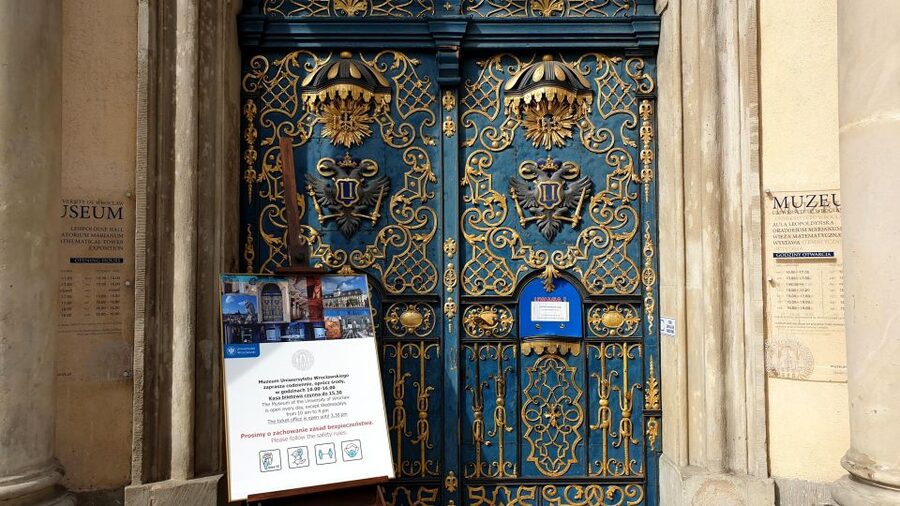
After the halls, you go up the comfortable imperial stairs to the Mathematical Tower. Plan for 50 low stone steps, which is short, but it is still real climbing, so wear shoes you’re comfortable in.
Once you reach the observation deck, you get a wide view over the Old Town. From here you can see major monuments in Wrocław, including the Wrocław Cathedral, which helps you connect the university area to the city at large.
The deck is also decorated with four huge sculptures by Franz Mangoldt. I like this detail because it gives you something to look for while you’re taking photos, so the viewing deck stays interesting even if the sky is not perfect.
The University Museum: student life, before and after the war
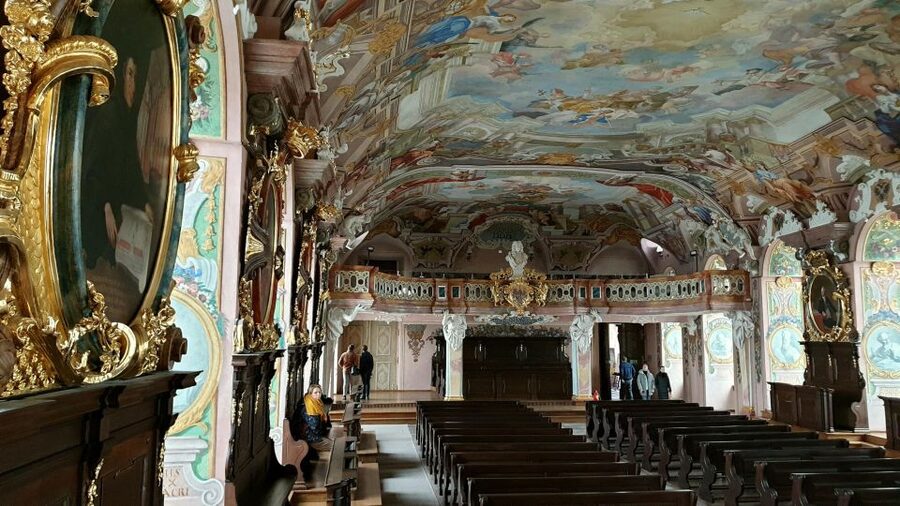
Next you reach the University Museum, where you spend a short, focused visit. This is where the tour shifts from architecture to people, and from looking at rooms to understanding how students actually lived.
The museum centers on Wrocław as a city of students for centuries, and it specifically compares student study and fun before the war with student life now. That contrast is the point. You start to notice how much of a campus experience is the same in every era, and also how history can change what students spend their time on.
This is also where the tour brings out the university’s Nobel Prize connections. The university is presented as an education place with links to German Nobel Prize winners, and the guide highlights names including Theodor Mommsen, Fritz Haber, Max Born, and Gerhart Hauptmann, plus the Polish novelist Olga Tokarczuk.
Even with limited museum time, the guide’s job is to give you a clean set of names and stories so you leave with real takeaways. If you like history that can be retold later, this portion does that well.
Brief stop at the Parish of the Most Holy Name of Jesus
The itinerary includes a short visit to the Parish of the Most Holy Name of Jesus. You won’t get a long worship-service experience, but it fits as a nearby cultural landmark that helps round out the area around the university.
This kind of stop can be helpful when you want your day to feel grounded in how the district worked, socially and spiritually, rather than university buildings existing alone in your mind.
Finishing at the university, and the story behind the naked swordsman
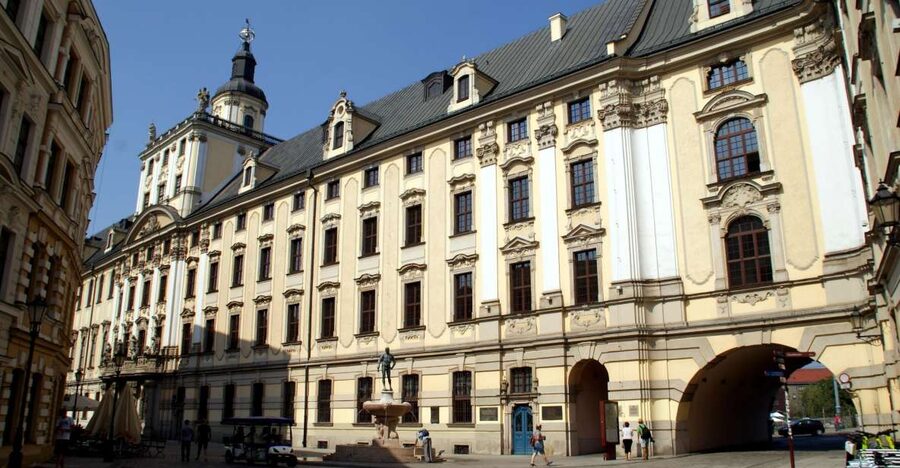
You finish outside at the University of Wrocław. In front of the building you’ll see a monument to a naked swordsman, and the tour includes the reason it’s there and why it’s funny enough to become a local talking point.
This ending matters. After baroque rooms, a tower view, and museum stories, that final landmark gives your brain a place to land. It’s a reminder that history in Wrocław does not only live in documents and paintings, it also lives in everyday public art and humor.
Price and value: what you really pay for
The tour price is listed at $41 per person for about 90 minutes. That is a solid deal when you’re getting a professional licensed guide for a private group and covering multiple named interiors and the tower viewpoint.
But you should budget extra for entry. The entrance ticket for the University Museum and the specific rooms and tower is not included in the tour price. You pay 7 EUR per person on site, either cash or card.
So the true cost is roughly the tour fee plus the ticket. Whether that feels worth it depends on what you want from your time. If you enjoy baroque architecture and you like explanations that connect names, dates, and rooms, this is good value. If you mostly want photos and minimal facts, you may feel the additional ticket cost more strongly.
When to go, and what can interrupt the visit
Two timing notes are important. The university is closed on Wednesday, so plan your dates around that. Also, it may happen that the university is unavailable due to organization of the academic year, in which case the tour provider asks you to postpone to the next day.
If your schedule is tight, that means choosing a day earlier in the week can give you more flexibility. And if you’re traveling in a group, private format is usually easier to manage, since you’re not forced into a crowded time slot.
Who this tour is best for
I think this tour is a strong match for people who like structure. You want the route to make sense, you enjoy guided interpretation, and you like seeing how one building tells multiple stories.
It’s also a good fit if you care about Nobel Prize history but find it hard to connect big names to real places. Here, you get names like Theodor Mommsen and Max Born placed into an actual university setting, not just mentioned in passing.
If you’re traveling with someone who wants city views and someone else who wants architecture, this balances both. The tower gives you the view, and the halls and museum give you the details.
Should you book University of Wrocław with a guide?
Book it if you want a guided, story-led visit to one of Wrocław’s most visually impressive university spaces. The highlights are the baroque halls, the tower panorama, and the way the guide ties student life and Nobel Prize connections into a clear narrative.
Skip it only if you are visiting on a Wednesday, if your schedule cannot handle a possible postponement, or if you dislike paying separate entrance fees. Otherwise, the combination of interiors, names, and a real city view makes this a practical use of 90 minutes in Wrocław.
FAQ
How long is the University of Wrocław guided tour?
The tour lasts 90 minutes.
Where does the tour start?
You start at the Old Town Hall on the Market Square, next to the Piwnica Świdnicka restaurant.
What is the tour price?
The price is $41 per person.
Is the museum and tower entry included in the price?
No. Entry tickets for the University Museum, Aula Leopoldyna, Oratorium Marianum, and the tower cost 7 EUR per person and are paid on site in cash or by card.
What places do you visit during the tour?
You visit the University of Wrocław halls and museum, go up to the Mathematical Tower, and include a stop at the Parish of the Most Holy Name of Jesus. The route also includes a pass by the Fencer Fountain.
What languages is the guide available in?
The guide offers German and Polish.
Is it a private group?
Yes, it is for a private group only.
Is the university open every day?
No. The university is closed on Wednesday.
What happens if the university is unavailable during your planned day?
If the university is unavailable due to organization of the academic year, you will be asked to postpone the trip to the next day.
Freshly posted from Wroclaw
- Electric Scooter Tour: Old Town Tour – 1,5-Hour of Magic!★ 5.0 · 1 review
- Poznan: Heart of Greater Poland full Day Trip from Wroclaw★ 5.0 · 1 review
- Wroclaw Scavenger Hunt and Highlights Self-Guided Tour★ 5.0 · 1 review
- Wroclaw – Gross Rosen Round Trip including tickets★ 5.0 · 1 review
- Wrocław: Solar gondola cruise on the Oder with a guide★ 5.0 · 1 review
- Wroclaw Grand City Private Tour with Japanise Garden and Panorama Painting★ 5.0 · 1 review
- Wroclaw: Private Jewish Heritage Guided Tour★ 5.0 · 1 review
Wroclaw Tours & Activities, compared.
Old Town and Ostrów Tumski Walking Tour in English
Read our review →
Private Old Town Guided Walking Tour (2 hours)
Read our review →
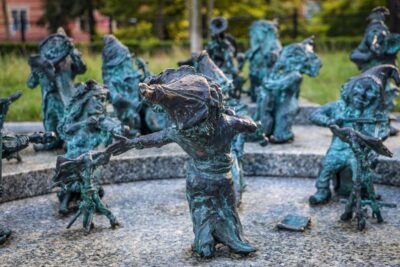
Wrocław Dwarfs & Sightseeing Tour by Electric Mini Bus
Read our review →
Group city tour (walking tour) through Wroclaw in German
Read our review →Browse the lists this tour appears in