
Reviewed · WARSAW UPRISING & WORLD WAR II TOURS
The secrets of World War II
Three sites, one sobering story.
If you want WWII history that feels real, this Wrocław day tour connects the dots between Nazi occupation and resistance using places most visitors never see. I love the hassle-free hotel pickup and the air-conditioned ride that gets you out early without stress. I also love that admission tickets are included for all three WWII-linked stops.
One thing to plan for: it is a long day (about 9 hours) with no lunch, and you will do some walking in and around museums, including an underground site.
In This Review
- Key Highlights You’ll Notice Fast
- A WWII Day Trip That Actually Connects the Dots Near Wrocław
- Getting There: 7:00 am Pickup and a Long Ride in Comfort
- Gross-Rosen Museum in Rogoźnica: Forced Labor in the Quarries of Lower Silesia
- Ksiaz Castle in Walbrzych: The Pearl of Lower Silesia Meets Nazi Construction
- Osowka Underground City: Corridors Built for a War Machine
- How the Three Stops Fit Together (and Why That Matters)
- What the Tour Is Like in Practice: Small Group, Real Questions, Mixed Language Setup
- Price and Value: Is $239.10 Worth It?
- Practical Tips for a Comfortable, Meaningful Day
- Who Should Book This WWII Secrets Tour, and Who Should Think Twice?
- Should You Book This WWII Secrets Tour from Wrocław?
- FAQ
- What time does the tour start?
- How long is the tour?
- Is hotel pickup included?
- Is the tour group small?
- Are admission tickets included for the sites?
- Is lunch included?
- What language is the tour offered in?
- What kind of transport is used?
- What fitness level do I need?
- What is the cancellation policy?
Key Highlights You’ll Notice Fast
- Gross-Rosen first thing: start at the concentration camp museum when it often feels quiet and personal
- Real scale, real details: forced labor in quarry conditions, with the camp’s grim motto (Vermichtung durch Arbeit) explained in context
- Ksiaz Castle as part of the Riese story: you learn how Tod’s construction tied into the broader underground plans
- Osówka underground spaces: a maze-like, Indiana Jones-ish feeling, built for wartime purposes
- Small-group feel: the cap is kept low, so questions and pacing are usually comfortable
- Guides who answer well in the real world: you may meet English-speaking drivers and guides such as Jakub, Paweł, or Tomek, noted for clear explanations and good care on the road
A WWII Day Trip That Actually Connects the Dots Near Wrocław
This is not a checklist of random sites. The point is to see how the same war system left fingerprints across space and stone, from a major concentration camp to castle quarters tied to Nazi planning to an underground complex built under heavy secrecy.
I like that the day is organized around links you can feel: labor and punishment in one place, planning and power in another, and the physical underground structures that made the whole scheme possible. You end up with a better sense of how occupation worked on the ground, not just in textbooks.
And yes, it’s heavy. Gross-Rosen especially asks you to slow down. Still, that is exactly why the structure of the tour helps, because you get guided context before you wander on your own time inside each site.
Further tours tracing the 1944 Uprising:
- Wroclaw: Third Reich and World War Two Historical Tour
★ 4.9 · 43 reviews - III Reich & WW2 in Wroclaw. Monday, Wendsday, Friday regular tour
★ 4.5 · 32 reviews - Wroclaw: Day of WW2: Riese, Gross-Rosen, Ksiaz Castle
★ 4.8 · 16 reviews
Getting There: 7:00 am Pickup and a Long Ride in Comfort
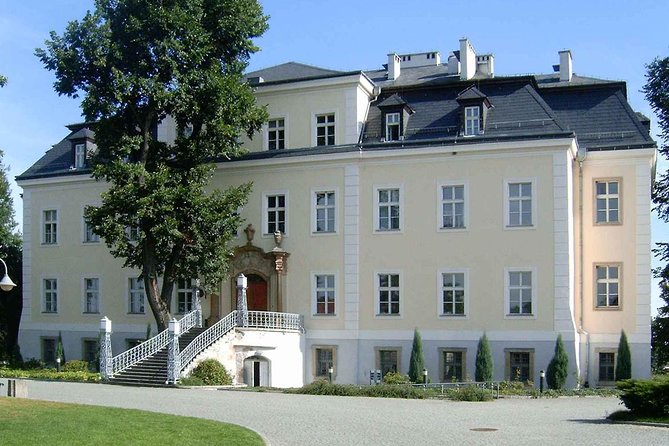
The tour starts at 7:00 am, which sounds early until you realize it is how you make the day work. You are out for about 9 hours, so timing matters.
Transport is handled by an air-conditioned minibus, with hotel pickup and a return drop-off to your hotel or hostel. That door-to-door setup is a real value booster, especially if you do not want to rent a car or spend your morning figuring out how to connect buses to remote sites.
One practical note: English is offered, and the driver is listed as English-speaking. At the same time, at least one of the experiences is sometimes guided or presented differently on-site, so you may rely on audio help inside a museum or follow explanations in Polish at a venue. The good news is you are not left totally on your own, since you still get a guided sightseeing component and support from your team.
Gross-Rosen Museum in Rogoźnica: Forced Labor in the Quarries of Lower Silesia
Gross-Rosen is the kind of place where history stops being abstract. It is described as the biggest Nazi-German concentration camp in Lower Silesia, and your visit focuses on harsh conditions and penal work tied to local quarries.
The site’s motto is explained as Vermichtung durch Arbeit, which translates to annihilation through work. That single phrase hits hard because it captures the logic behind the system: forced labor was not a side detail, it was the mechanism of destruction.
You will see the human toll in the numbers and in the variety of people imprisoned here. The information provided includes that around 40,000 prisoners died, and it names groups such as Poles, Jews, Russians, French, and Hungarian. That matters because it avoids a narrow story and shows how the occupation network pulled in people from multiple countries.
Time on this stop is about 2 hours. Two hours is not “a quick look.” It gives you enough space to take in the grounds and then absorb the museum materials without rushing. The best part, when conditions allow, is that early visits can feel quieter. One traveler specifically praised the chance to be there when it was nearly empty, which made the walk and reflections feel more personal and less performative.
What to consider: this is not “light entertainment.” Wear comfortable shoes, bring water if you need it, and keep your expectations realistic. If you want to feel deeply moved, this is where that will happen.
Ksiaz Castle in Walbrzych: The Pearl of Lower Silesia Meets Nazi Construction
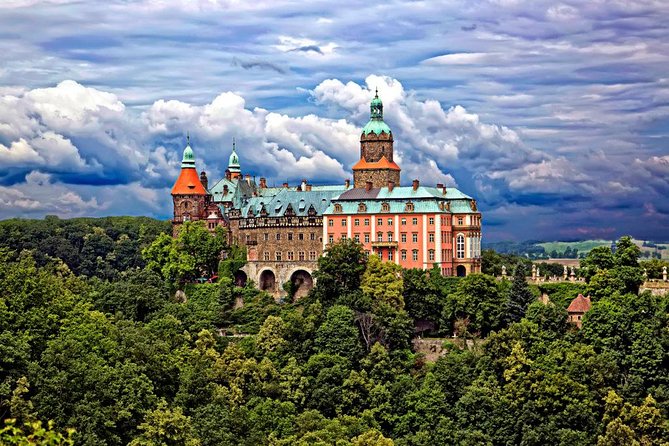
Ksiaz Castle is a palate cleanser in the sense that it is visually dramatic, but it is not a cheerful stop. It sits on a rock cliff by the Pelcznica River and is described as the third biggest castle in Poland, sometimes called the Pearl of Lower Silesia.
The setting is part of the point. The castle’s elevation is stated as 395 meters above sea level, surrounded by forest. You get views and the sense that this location was chosen for its power and presence, not its convenience.
Then the WWII link comes in. In 1943, Hitler’s paramilitary organization Tod began building one of its main quarters here. The castle and nearby objects connected to the Riese complex, with references to locations near Osówka and Włodarz, are part of what ties this castle into the larger underground story.
Time here is about 1 hour 30 minutes, and admission is included. The amount of time is good because it lets you take in the architecture and setting before the lesson becomes a bit heavier again. If you like castles, you will appreciate how different this is compared with the more famous, central European examples. It feels built into the land.
What to consider: if you are expecting only guided narration and not much self-paced time, you might feel the stop is partially “take your time and look around.” The guided context should help, but the castle itself still asks you to walk through it.
Still tacked up around Wroclaw
Osowka Underground City: Corridors Built for a War Machine
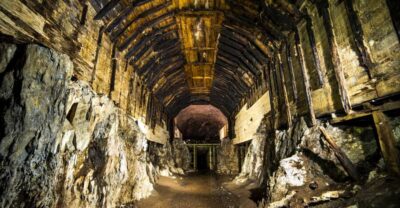
Osówka is the stop that makes people grin, and then quickly remember where they are. The underground complex is part of the Nazi project code-named Riese, conducted between 1943 and 1945.
You are told the structure called the Underground City still has not revealed all secrets. It is also presented as the biggest and most complex Hitler headquarters in Lower Silesia. Even if you keep those statements in the “tour explanation” category, the overall message lands: this is a physical expression of wartime planning and control.
The vibe is specific. One traveler compared it to something like Indiana Jones, which is a fun reference for how the corridors and caves can feel adventurous at first glance. But the real impact comes from understanding that “adventure-like” spaces were designed for serious and grim purposes.
Time here is about 1 hour, with admission included. One hour is short enough that you stay energized, but long enough that you are not just stepping inside and out. You get a real feel for how large and engineered the underground world is, and then you can reflect on why the Nazis would invest in it while so much of Europe was falling apart around them.
What to consider: underground spaces often mean cooler temperatures and enclosed areas. Bring layers if you run cold. Also, if you have any mobility limits, pace yourself, take breaks, and use the space responsibly.
How the Three Stops Fit Together (and Why That Matters)
The value of this tour is the chain of meaning. Gross-Rosen shows the occupation system using forced labor and terror. Ksiaz Castle shows the power and planning side, connected to construction in the right place and time. Osówka shows the engineered underground infrastructure that supported wartime headquarters functions.
When you see them in this order, your brain starts to organize the story. It is easier to understand why one site is not just “a museum,” and why the castle is not just “a view.” They are pieces of the same larger puzzle, and the physical distance between them becomes less important.
I also like that the day does not repeat itself. The subject changes slightly at each stop: labor and punishment, then architecture and construction, then underground space and wartime secrecy. That variation keeps the tour from becoming one long lecture. It also helps you remember more, because each place teaches a different angle of the same conflict.
What the Tour Is Like in Practice: Small Group, Real Questions, Mixed Language Setup
This is built as a small-group experience. The listing info includes a maximum of 15 travelers, and some marketing materials describe it as up to 9. Either way, it is not crowded, and that matters for history tours because you want time to ask follow-ups without shouting over everyone else.
Guides seem to be a major reason people rate this so highly. Recent reviews name guides and hosts such as Jakub, Paweł, Tomek, and even Jacob or Eric (names vary in spelling by reviewer). The common thread is that people appreciated the explanations and the fact that questions could be answered on the spot, including context about Poland and the broader region.
Also, do not ignore the driving angle. One traveler specifically praised their driver’s skill on questionable roads. That sounds minor until you realize that a long day out of Wrocław depends on safe, confident logistics.
Language notes, since they affect your experience: the tour is offered in English, and you get sightseeing in the language of your choice. At the same time, at least one visit seems to involve Polish-only guidance in certain areas, with an audio guide helping you follow along. Bottom line: you will be supported, but it is smart to plan for audio or venue-specific formats.
Price and Value: Is $239.10 Worth It?
At $239.10 per person, this is not the cheapest way to spend a day outside Wrocław. But it is also not just paying for a driver and a map.
You are paying for:
- Hotel pickup and drop-off
- Round-trip transport in an air-conditioned minibus
- A guide/pilot style team for the sightseeing portion
- Admission tickets included for Gross-Rosen, Ksiaz Castle, and Osówka
- No additional charges mentioned
That combination is where the value lives. If you were to try to DIY this with separate admissions, transport planning, and timed entry coordination, you would likely spend time and money in ways the tour bundles together.
The trade-offs are real: lunch is not included, and it is a full day (about 9 hours). So yes, bring snacks or plan a meal on your own. But the structure saves you hassle, and the paid entries justify a big chunk of the cost.
Given the ratings and the fact that people single out Gross-Rosen as especially moving, I think the price makes sense if WWII history is your thing and you want a coherent route rather than random stops.
Practical Tips for a Comfortable, Meaningful Day
A few things will make this smoother.
- Start with food or buy a snack early. Lunch is not included. One review suggested bringing snacks, and I agree. You will be thinking about heavy history, not hunting down breakfast at 10 am.
- Wear walking shoes. Museums and underground sites involve uneven ground and stairs. Even if your fitness level is moderate, comfortable footwear helps you stay relaxed.
- Bring a layer for underground sections. Underground areas tend to be cooler, and your body likes the predictability.
- Use your time well at Gross-Rosen. Two hours is plenty if you slow down. Give yourself a moment to read, not just look.
- Expect some venue-specific language quirks. English is offered, but audio or Polish narration might appear in some rooms. Downloading your phone battery habits also helps, just in case you rely on audio.
- If you are traveling with kids, plan for adult pacing. The tour notes that children must be accompanied by an adult, and the content is serious. Short breaks help everyone.
Who Should Book This WWII Secrets Tour, and Who Should Think Twice?
This tour is a strong fit if:
- You want WWII history in a regional way, not just a few generic stops
- You like the idea of seeing forced labor, construction, and underground headquarters as one connected story
- You appreciate small-group pacing and a guide who helps you interpret what you are seeing
It may be less ideal if:
- You hate long, early days. The start time is 7:00 am and the day runs about 9 hours.
- You prefer fully guided, hands-on guidance at every moment. Some parts may involve self-guided time within museums or venues, even if you have an overall guided plan.
- You are very sensitive to concentration camp content. Gross-Rosen is impactful, and it is designed to be.
Also, the tour asks for a moderate physical fitness level. Underground spaces are not the place to “push through.” Go at your own pace.
Should You Book This WWII Secrets Tour from Wrocław?
If you want a day that feels thoughtful, structured, and genuinely different from the usual tour circuit, I would book it. The biggest reason is the connection between sites, not just the sites themselves.
Start with Gross-Rosen if you can, because it sets the emotional and historical foundation. Then Ksiaz Castle gives you the physical sense of power and planning, and Osówka rounds out the story with underground engineering and wartime secrecy.
I would only hesitate if you cannot handle a serious concentration camp visit or if a 9-hour day with no included lunch sounds stressful. For most people interested in WWII history, this hits a great balance of context, logistics, and included tickets, with a small-group feel that makes the day easier to absorb.
FAQ
What time does the tour start?
The start time is 7:00 am.
How long is the tour?
It runs for approximately 9 hours.
Is hotel pickup included?
Yes. The price includes pickup from your hotel and transfer by air-conditioned minibus.
Is the tour group small?
Yes. The activity info lists a maximum of 15 travelers, and it is also described as a small-group experience.
Are admission tickets included for the sites?
Yes. Admission tickets are included for Gross-Rosen Museum, Ksiaz Castle, and the Osówka Underground Town.
Is lunch included?
No. Lunch is not included.
What language is the tour offered in?
The tour is offered in English, and sightseeing is provided in the language of your choice. The driver is English-speaking.
What kind of transport is used?
An air-conditioned minibus provides round-trip transport from Wrocław, with drop-off back to your hotel or hostel.
What fitness level do I need?
You should have a moderate physical fitness level.
What is the cancellation policy?
You can cancel for a full refund up to 24 hours in advance of the start time. If you cancel less than 24 hours before, the amount paid is not refunded.
Freshly posted from Wroclaw
- Segway Tour Wroclaw: Old Town Tour – 1,5-Hour of Magic!★ 4.8 · 7 reviews
- The Roots of Poznań (small group)★ 5.0 · 8 reviews
- Wroclaw to Rock City Adrspach in Czech Republic Private Tour including tickets★ 4.5 · 8 reviews
- Wroclaw Private Old Town Guided Walking Tour★ 5.0 · 8 reviews
- Wroclaw: Multimedia Fountain Evening Show★ 4.0 · 9 reviews
- Wroclaw: Solar Catamaran Cruise on the Odra River★ 4.8 · 9 reviews
- Segway Tour Wroclaw: Old Town & Ostrów Tumski – Full Tour★ 5.0 · 9 reviews
Warsaw Uprising & World War II Tours, compared.
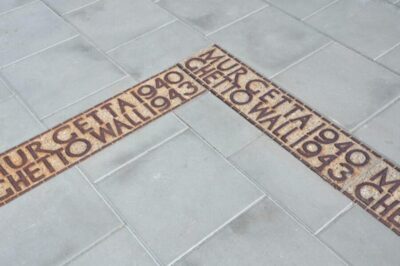
World War Two in Krakow: Jewish Quarter & Ghetto Tour
Read our review →
Warsaw for WWII Buffs – private tour with hotel pickup
Read our review →
III Reich & WW2 in Wroclaw. Monday, Wendsday, Friday regular tour
Read our review →
Museum of the Second World War Gdansk Private Tour & Tickets
Read our review →Browse the lists this tour appears in