
Reviewed · WARSAW UPRISING & WORLD WAR II TOURS
Warsaw in World War 2 Walking Tour
Warsaw’s WWII story hits hard on foot. This 2.5-hour walk strings together major WWII memorials from Castle Square to the Warsaw Uprising Monument, all led in English. It’s the kind of route that helps you read the city instead of just passing it.
I love how the guides explain what you’re standing in front of, with real clarity and a steady pace. I also love the small details that turn facts into images, like the use of period photos and the way a voice amplifier helps keep everyone following when the group is around 20.
One consideration: the subject matter is intense, and there are no planned bathroom breaks, so plan your timing and wear comfortable shoes. If the weather is rough, you will still be walking, so bring layers.
In This Review
- Key Things You’ll Like About This Tour
- Why This WWII Walking Tour Works in 2.5 Hours
- Meeting Point and Route: Sigismund’s Column to the Uprising Monument
- Stop by Stop: What You’ll See and What It Means
- Stop 1: Castle Square (Plac Zamkowy), start the story
- Stop 2: Presidential Palace area (Palac Prezydencki), occupation and power
- Stop 3: Plac Marszalka Józefa Pilsudskiego, the district that ran the city
- Stop 4: Tomb of the Unknown Soldier, Polish sacrifice and loss
- Stop 5: Reduta Bank Polski, a partially destroyed landmark
- Stop 6: Warsaw Ghetto Wall Memorial, life inside confinement
- Stop 7: Ogrod Krasinskich, Nalewki street echoes
- Stop 8: Warsaw Uprising Monument, the climax and the aftermath
- Guides, Group Size, and What That Means for Your Experience
- Price and Value: Is $19.20 a Good Deal?
- Practical Tips That Make the Walk Easier
- Who Should Book This Tour, and Who Might Want a Different Plan
- Should You Book Warsaw in World War 2 Walking Tour?
- FAQ
- Where does the tour start and where does it end?
- What time does the tour begin?
- How long is the Warsaw in World War 2 walking tour?
- What language is the tour offered in?
- What’s included in the tour price?
- Are meals included?
- Can I cancel for a full refund?
Key Things You’ll Like About This Tour
- A focused WWII route in one compact walk, from Plac Zamkowy to Krasinski Square
- English-speaking guides who keep the story moving and easy to follow
- A voice amplifier when the group gets close to the upper limit (up to 25)
- No extra entry fees at stops, since admission tickets are listed as free
- Memorial stops that explain context, from occupation buildings to ghetto life and 1944
Why This WWII Walking Tour Works in 2.5 Hours
This isn’t a long, wandering tour. It’s built like a timeline you can walk. In about 2 hours 30 minutes, you cover the places that shaped Warsaw’s darkest years, and you get the meaning behind what’s still visible today.
The value is in the structure. Each stop gets enough time for a real introduction and interpretation, but the pace stays brisk. That matters because WWII Warsaw can feel overwhelming if you try to piece it together on your own day after day.
Also, the emotional weight is handled with care. You’re not sent off to read plaques alone. You get spoken context that helps you understand why each site was chosen and what it represents.
More Walking Tours in Warsaw
- Warsaw: Old Town Highlights Walking Tour in English
★ 4.7 · 1,516 reviews - Warsaw: Old Town Guided Walking Tour
★ 4.9 · 599 reviews - Half-Day Polish Food Walking Tour with Guide and Dinner
★ 4.5 · 381 reviews
Meeting Point and Route: Sigismund’s Column to the Uprising Monument
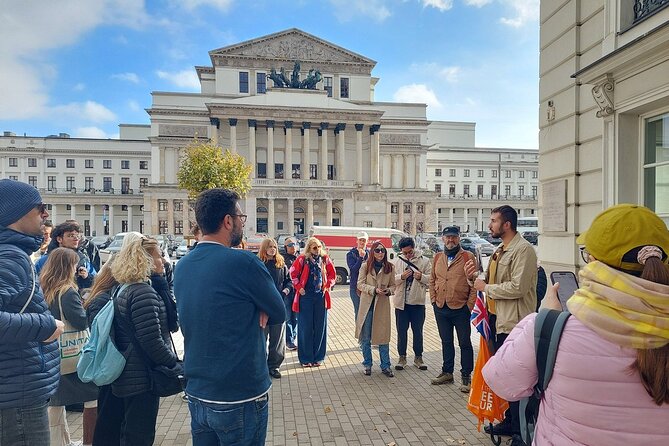
You start at Sigismund’s Column, Plac Zamkowy. The guide meets you right by the column, then gives you the kind of fast orientation that makes the rest of the walk click.
The tour ends at plac Krasińskich near the Warsaw Uprising Monument, about half a mile from where you start. That ending is practical. It puts you close to another cluster of sights, coffee, and easy onward transport without forcing a long return walk.
Timing is set for an afternoon start, with a 1:30 pm departure. If you can, arrive a bit early so you’re not juggling a mobile ticket while trying to find your guide at the start.
Stop by Stop: What You’ll See and What It Means
This route moves through eight key sites, with each stop around 15 to 20 minutes. Here’s how I’d expect the story to unfold as you walk it.
Stop 1: Castle Square (Plac Zamkowy), start the story
You begin at Plac Zamkowy by Sigismund’s Column, where the guide sets the stage. This opening works because it anchors you in central Warsaw before the occupation story takes over the narrative.
Expect a clear historical introduction, the kind that helps you understand what came before the war and why the city later became such a symbol. Admission is listed as free here, so you can focus on the explanation rather than logistics.
Further tours tracing the 1944 Uprising:



Stop 2: Presidential Palace area (Palac Prezydencki), occupation and power
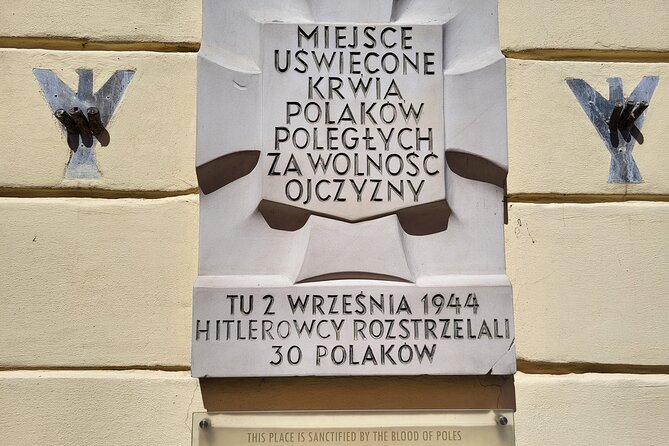
Next is Palac Prezydencki. During the Nazi-German occupation, the area is described as the site of the Deutsches House, and the guide talks about Nazi ceremonies held there.
This stop is about atmosphere and control. You’re looking at a place that now has a different role, but the guide connects the building to the occupation machine, showing how power was staged in real public spaces.
Stop 3: Plac Marszalka Józefa Pilsudskiego, the district that ran the city
From there you move to Plac Marszalka Józefa Pilsudskiego, described as the center of the former Nazi-German district. The guide focuses on the Nazi-German offices around the square.
This is where the city starts to feel like a network of decisions, paperwork, and enforcement. The time you spend here helps you stop thinking of WWII as just battles, and start seeing how administration and intimidation worked day to day.
Stop 4: Tomb of the Unknown Soldier, Polish sacrifice and loss
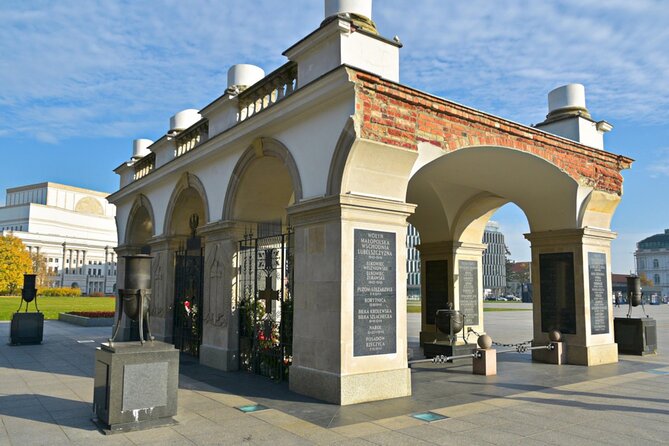
You then reach the Tomb of the Unknown Soldier. The discussion becomes symbolic and personal, with the guide talking about Polish soldiers fighting on different fronts and about the Saxon Palace, destroyed by the Nazis in the last days of occupation.
This stop is powerful because it connects the city’s experience to a wider wartime reality. Instead of only focusing on Warsaw, you’re reminded that Polish forces were spread across multiple theaters, and the guide ties that back to what people in Warsaw endured.
Stop 5: Reduta Bank Polski, a partially destroyed landmark
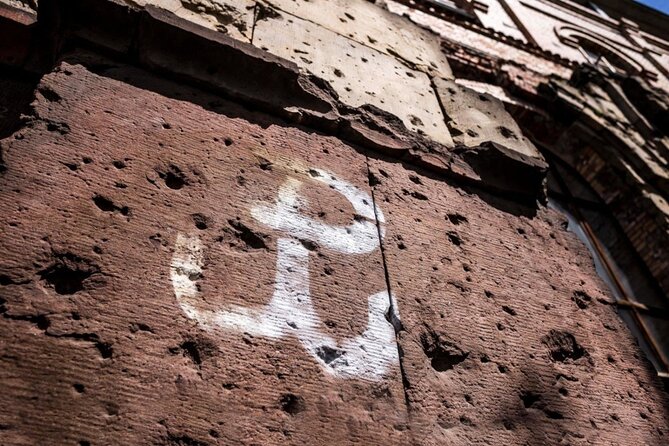
At Reduta Bank Polski, you see one of the last partially destroyed buildings in the city center. The guide uses this as a bridge into the Warsaw Uprising.
This is a good moment to slow down. A building still standing after destruction is a loud form of memory. You’ll get the uprising context without having to work too hard to link it yourself.
Stop 6: Warsaw Ghetto Wall Memorial, life inside confinement
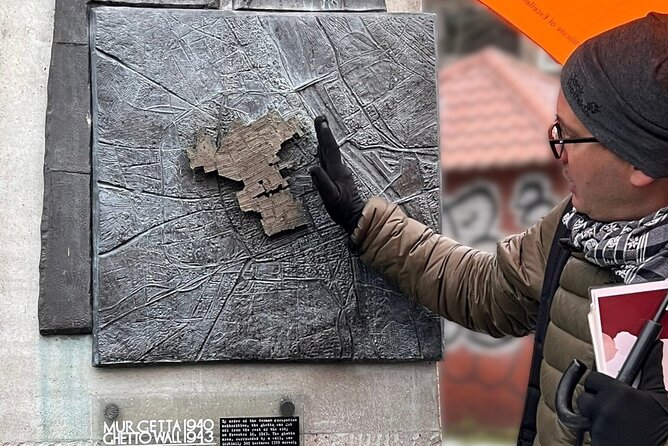
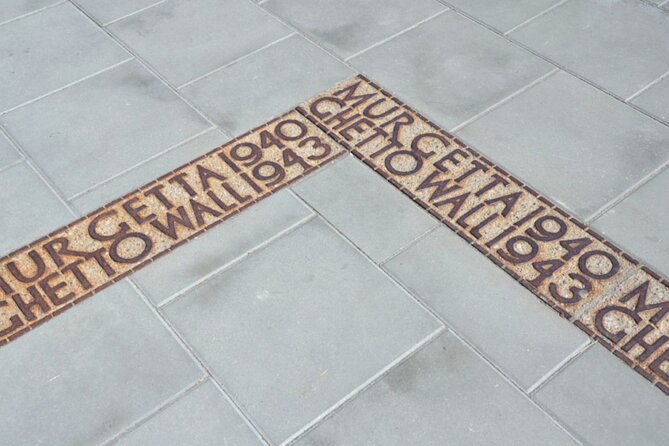
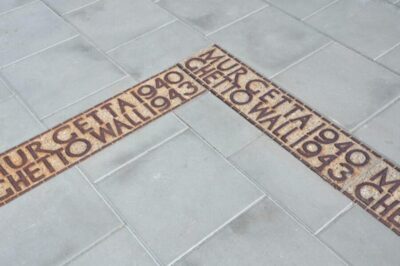
Next is Warsaw Ghetto, focused on the Memorial of the Ghetto Wall. The guide explains life in the Jewish Ghetto, not just the dates.
That detail matters. It’s easy to talk about history as numbers and milestones, but the tour’s intent is to help you understand what daily life looked like under extreme restrictions. The tone stays respectful, and the pacing keeps you from feeling lost.
Stop 7: Ogrod Krasinskich, Nalewki street echoes
At Ogrod Krasinskich, you hear about it as a relic of Nalewki street, with the tour moving along the park. The guide connects the location to the Warsaw Ghetto Uprising, keeping the story tied to the ground you’re walking.
This stop helps because it shows how uprising and resistance were shaped by neighborhood geography. It’s not abstract. The city itself becomes part of the explanation.
Stop 8: Warsaw Uprising Monument, the climax and the aftermath
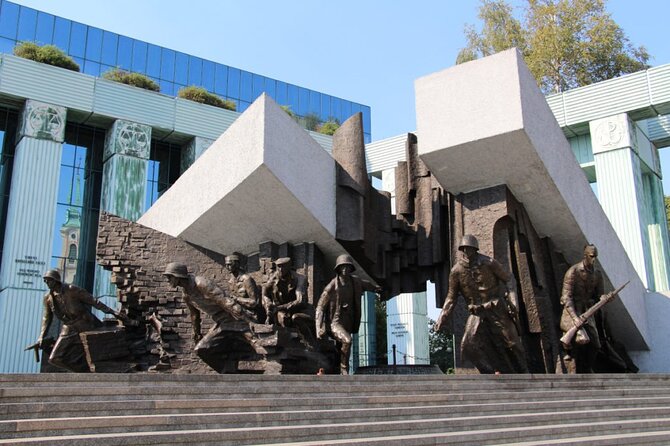
Finally, you reach the Warsaw Uprising Monument in Krasinski Square. This is framed as the central memorial for the heroes of the 1944 uprising. The guide covers the preparations, the odds, the outbreak, and the suppression.
This ending works well because it doesn’t just celebrate. It explains the reality of what happened and why the uprising remains such a lasting symbol. By the time you arrive here, you’ve already walked through the occupation, the ghetto, and the city-scale damage, so the monument lands with more meaning.
Guides, Group Size, and What That Means for Your Experience
The tour is offered by Orange Umbrella Free Tour and is available in English. The maximum group size is 25, and you’ll often be around 20, based on what’s worked well in previous departures.
This affects comfort. A group that’s big without headsets can get tougher to hear. The good news is that a voice amplifier is used, and guides have been praised for speaking clear English even with a larger group.
You might meet guides such as Peter, Goska, Magda, or Albert. Across those names, the common themes are steady storytelling, strong command of details, and a willingness to answer questions while walking between stops.
Also, tips matter here. If you enjoyed the tour, it’s encouraged to tip the guide, since commissions and taxes can take a big portion of the payment. It’s one of those practical, real-world notes that helps keep quality guides working.
Price and Value: Is $19.20 a Good Deal?
At $19.20 per person, the tour offers solid value for a few reasons.
First, it’s 2.5 hours of guided context across multiple major memorials. That reduces the time you would otherwise spend piecing together meaning from separate places and scattered reading.
Second, admission is listed as free at the stops. That means you aren’t juggling extra tickets or unexpected fees in the middle of the walk.
Third, you get a free city map included. It’s a small add-on, but in Warsaw it helps you plan the rest of your day once you understand where these WWII sites sit in relation to everything else.
If you only have one or two days in Warsaw, this tour is a fast way to get your bearings. If you have more time, it still works as a strong backbone, then you can build on it with additional neighborhood walks or museum visits.
Practical Tips That Make the Walk Easier
You’ll be outside for most of the tour, so dress for the weather. In harsh conditions, the tour still runs, and guides keep attention with narration, so you should focus on comfort and staying warm.
Wear shoes you trust. The itinerary is compact, but it’s still a sustained walk. That’s especially important because there are no scheduled WC breaks, so go before you start.
Bring your mobile ticket and keep it ready at the beginning. The meeting point is clear, but you’ll still want that quick access so you can focus on the guide’s start explanation.
If you’re sensitive to emotional content, give yourself permission to go at your pace. Stop for a breath when you need it. The tour keeps moving, but you control how you take in each site.
Who Should Book This Tour, and Who Might Want a Different Plan
You’ll love this tour if you want a story-driven WWII overview with a guided thread from occupation symbols to ghetto life and the uprising. It’s also great if you’re arriving in Warsaw with only basic background and want a map for what to look for later.
You might prefer a different plan if you want a lighter, purely architectural walk, because the tone is intentionally serious. Also, if you strongly need frequent restroom stops, plan better before departure since there are no formal breaks.
Service animals are allowed, and it’s near public transportation, which helps if you’re fitting it into a busy day. And because it’s described as suitable for most travelers, it’s a strong default even if you’re not a hard-core history person.
Should You Book Warsaw in World War 2 Walking Tour?
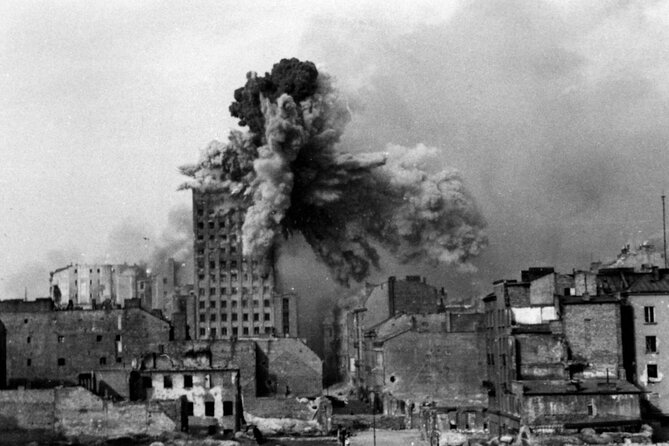
My take: yes, if you want the fastest meaningful way to understand WWII Warsaw on foot. The route covers the major themes you should know, and the guide-led context makes the memorials easier to interpret.
If you can handle the intensity and you show up ready for a steady walk, this is one of the best uses of a limited time window. At $19.20 with free admissions at the stops and a city map included, you’re paying for guided understanding, not just sightseeing.
FAQ
Where does the tour start and where does it end?
The tour starts at Sigismund’s Column, Plac Zamkowy, in Warsaw. It ends at plac Krasińskich near the Warsaw Uprising Monument.
What time does the tour begin?
The start time is 1:30 pm.
How long is the Warsaw in World War 2 walking tour?
It runs about 2 hours 30 minutes.
What language is the tour offered in?
The tour is offered in English.
What’s included in the tour price?
A free city map is included, and you’ll have a mobile ticket.
Are meals included?
No meals are included.
Can I cancel for a full refund?
Yes. You can cancel for a full refund if you cancel at least 24 hours before the experience starts.
Squares Crossed on Foot
- Warsaw: Warsaw Ghetto Private Walking Tour with Hotel Pickup
★ 4.9 · 369 reviews - Old Town Warsaw Walking Tour
★ 4.5 · 333 reviews - Warsaw: Jewish History Guided Walking Tour in English
★ 4.7 · 324 reviews - Warsaw: Jewish Heritage & Holocaust Walking Tour
★ 4.7 · 119 reviews
Freshly posted from Warsaw
- Warsaw Private Transfer from Warsaw Chopin Airport (WAW) to City centre★ 4.0 · 7 reviews
- Krakow Small Group Tour from Warsaw with Lunch, Schindler’s Factory included★ 5.0 · 7 reviews
- Wolfs Lair – Hitlers hideout★ 4.5 · 7 reviews
- 3-hour tour at Warsaw Uprising 1944 Museum /inc. Pick-up/★ 4.9 · 7 reviews
- Warsaw: Evening History and Pubs Tour by Retro Minibus★ 5.0 · 7 reviews
- Warsaw: Private Vodka Tasting Night with Snacks and Pickup★ 5.0 · 7 reviews
- Warsaw Old Town with Royal Castle + Royal Route: SMALL GROUP /inc. Pick-up/★ 5.0 · 7 reviews
Warsaw Uprising & World War II Tours, compared.
World War Two in Krakow: Jewish Quarter & Ghetto Tour
Read our review →
Warsaw for WWII Buffs – private tour with hotel pickup
Read our review →
III Reich & WW2 in Wroclaw. Monday, Wendsday, Friday regular tour
Read our review →
Museum of the Second World War Gdansk Private Tour & Tickets
Read our review →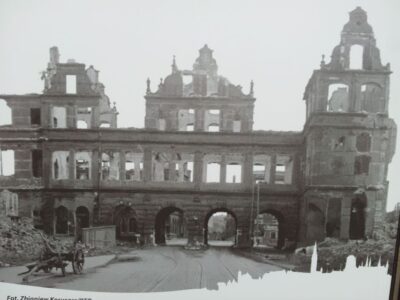
Gdansk Private WWII Tour with Museum of the Second World War
Read our review →Browse the lists this tour appears in