

Reviewed · JEWISH HISTORY & HERITAGE TOURS
Skip-the-Line Polin Museum Warsaw Jewish History Tour
Warsaw’s Jewish history isn’t abstract here, it’s mapped. This tour pairs POLIN Museum ticket access with a licensed English guide who keeps the story clear from the Ghetto’s creation through Nazi occupation. I especially like the way you get real sites beyond the museum, including the cemetery and a fragment of Ghetto wall. The main thing to consider is that the 2-hour option skips the Warsaw Ghetto walking route, so you’ll get a smaller sense of the neighborhood itself.
Because it’s private, you stay with your own group and your guide can pace the walk to your questions. I also like that the museum portion includes skip-the-line tickets that help at the ticket office, even though you still go through regular entrance and security checks. If you want maximum time for reading, know the schedule is built around an “understand the arc” approach, not a full day of absorbing every exhibit at a slow crawl.
In This Review
- Key things you’ll notice on this tour
- A private Jewish History route with POLIN Museum skip-the-line access
- 2-hour vs 4-hour options, and what changes for your experience
- Palace of Culture and Science, and why the start matters
- Pomnik Bohaterów Getta: a powerful midpoint before you enter the quieter sites
- Jewish Cemetery (Cmentarz Żydowski): a full hour with real names and symbols
- Fragment of the Ghetto wall: the tangible reminder of confinement
- Warsaw Ghetto overview: size, crowding, and how small a district held 450,000 people
- Nozyk Synagogue: one surviving synagogue and a stop that can be partly unpredictable
- Jewish Historical Institute: records and artifacts that keep the story grounded
- Prozna Street and Grzybowski Square: small stops that add texture
- POLIN Museum: how two hours can still give you a clear roadmap
- Pace, questions, and a quick family-friendly reality check
- What you’ll get for $167.97, and where the value comes from
- Who this tour suits best
- Should you book the POLIN Museum and Warsaw Ghetto tour?
- FAQ
- How long is the Skip-the-Line POLIN Museum Warsaw Jewish History Tour?
- Is the tour offered in English?
- Is this a private tour?
- What does the skip-the-line ticket cover at the POLIN Museum?
- Is the Warsaw Ghetto walking tour included for all options?
- Are tickets included for the Jewish Cemetery and the POLIN Museum?
- Can I enter Nozyk Synagogue during the tour?
- Where does the tour start?
- What is the cancellation policy?
Key things you’ll notice on this tour
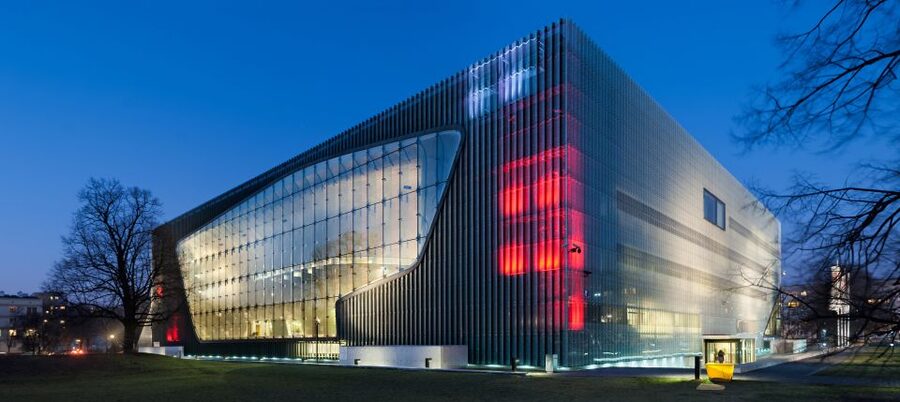
- Skip-the-line POLIN Museum ticket office access, with normal entrance and security checks still required
- A licensed English guide who ties the sites together into one story, not a list of stops
- Jewish Cemetery (Cmentarz Zydowski) with a full hour and included admission
- A Ghetto wall fragment where you can get a tangible sense of the structure and its presence
- Nozyk Synagogue stop (entry possible on request, but not included)
- POLIN Museum for about two hours, built for a strong overview of a millennium of Jewish life in Poland
A private Jewish History route with POLIN Museum skip-the-line access
If you only do the museum, you miss half the meaning. This tour is smart because it connects exhibits to the streets and landmarks that shaped daily life, confinement, and survival. You’re not just looking at photos in a gallery. You’re standing near the places where those stories unfolded.
The other big win is the guide. You get an expert commentary on Jewish history and the Holocaust in Poland, and the walking route helps the museum click into place. It’s also private, so you can ask follow-up questions without feeling like you’re holding up a large crowd.
One practical note: the skip-the-line part is real, but it’s not magic. It helps you bypass the line at the ticket office. You’ll still face the normal entrance and security checks once you’re inside the museum area. For most people, that still saves enough time to make the plan feel smooth rather than rushed.
More Museum Tours in Warsaw
- Warsaw: POLIN Museum of the History of Polish Jews Ticket
★ 4.7 · 1,142 reviews - Warsaw: Polish Vodka Museum Tour with Tasting
★ 4.6 · 788 reviews - Warsaw: Museum of Life Under Communism Entry Ticket
★ 4.5 · 178 reviews
2-hour vs 4-hour options, and what changes for your experience
This tour can run about 2 to 4 hours, depending on the option you book. That range matters because the stops don’t all happen in every version.
Here’s the key tradeoff:
- The 4-hour tour includes a walking tour of the Warsaw Ghetto, plus more time for neighborhood context.
- The 2-hour tour does not include the Warsaw Ghetto walking route. You’ll see POLIN Museum and a smaller set of stops instead.
If you want to truly feel the geometry of the Ghetto, choose the longer option. If your time is tight and you mostly want the museum and selected memorial sites, the shorter version can still be satisfying, but it will feel more museum-centered.
Palace of Culture and Science, and why the start matters
The tour kicks off near the Palace of Culture and Science, Poland’s famous tall landmark. Even if you never go inside, the exterior view gives you a strong sense of the Warsaw backdrop you’re stepping into. It’s a huge architectural statement in the city, and that contrast is useful when you later move to small, constrained spaces tied to forced confinement.
Then you move toward memorials connected to the Ghetto. The early rhythm is deliberate: you get grounding in Warsaw as a whole, then the story narrows into persecution and survival under German occupation.
Pomnik Bohaterów Getta: a powerful midpoint before you enter the quieter sites

Next up is the Pomnik Bohaterów Getta (Monument to the Heroes of the Ghetto). This stop is short, about 15 minutes, but it’s heavy in the best way. It frames the Ghetto not as a footnote, but as a place tied to courage, persecution, and resistance.
What I like about this positioning is that it prepares you for the tone shift. After this, the tour continues to sites that are calmer and more reflective, like the cemetery and wall remains.
Further Jewish history and heritage itineraries:


Jewish Cemetery (Cmentarz Żydowski): a full hour with real names and symbols
One of the most meaningful parts is the Jewish Cemetery, set up between 1799 and 1806. You get about one hour here, and admission is included. This is a stop where the guide’s interpretation really helps, because the cemetery isn’t just “old graves.” It’s a dense record of community identity.
A detail worth knowing: many tombstones are called masebas, made of marble and sandstone and carved with delicate symbols and ornaments. When your guide explains what those marks can mean, the cemetery starts to feel like a visual language.
You’ll also see the symbolic connection to Janusz Korczak, the writer and teacher who died in Auschwitz. That kind of name recognition makes the Holocaust history feel specific, not generic.
A consideration: this is emotional space. If you want a less intense pace, tell your guide. They can often slow down for questions or speed past parts to keep it manageable.
Fragment of the Ghetto wall: the tangible reminder of confinement
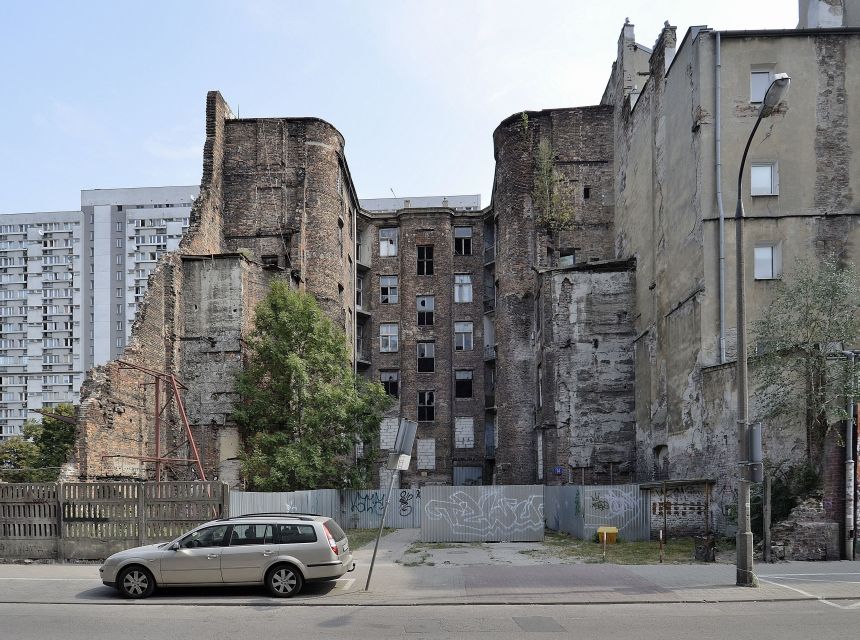
After the cemetery, you reach a Fragment of Ghetto Wall. This is another about 15-minute stop, and it’s one of the best “sense of place” moments on the itinerary.
The wall fragment is powerful because it’s physical. You can see the height, and you can even touch the construction. It’s also described as a place where you can hear life going on on the other side. That contrast between normal city sounds and the barrier of confinement is hard to forget, and it makes the story feel less like something on a timeline and more like something that changed daily life minute by minute.
Warsaw Ghetto overview: size, crowding, and how small a district held 450,000 people
You’ll also take in the core Warsaw Ghetto context, built in October and November 1940. The tour gives you the sharp facts: the Ghetto covered only 2.4 percent of Warsaw’s land area, yet more than 450,000 Jews were forced by the Germans to live there in crowded conditions.
This stop works as a bridge between memorials and the museum. At this point, you already understand the personal weight of names and monuments, so the numbers start to land with more meaning.
A drawback to consider: this part is short, around 20 minutes. It gives context, but it doesn’t attempt to replace a deeper independent study. If you want more street-level detail, the 4-hour option is where you usually get the stronger neighborhood walkthrough.
Nozyk Synagogue: one surviving synagogue and a stop that can be partly unpredictable
The Nozyk Synagogue is described as the only surviving synagogue out of around 400 that existed in Warsaw before the war. That alone makes it a major stop, and it’s now refurbished and a functioning synagogue.
You’ll spend about 30 minutes here. Entry is listed as possible for request, and admission is not included. That means there’s a chance you’ll be able to go in, but your timing and the synagogue’s situation can affect it.
What you can control is your mindset. Treat this as both a historical stop and a place still used for prayer. If entry is limited, you’ll still understand why the synagogue matters as a living survivor, not only a monument.
Jewish Historical Institute: records and artifacts that keep the story grounded
Next comes the Jewish Historical Institute, with materials tied directly to the Warsaw Ghetto during Nazi occupation. Expect records, photographs, videos, and artifacts focused on that period.
This is where the tour becomes more documentary. You’re not just receiving guided explanation. You’re seeing primary-style materials presented in a way that supports the narrative your guide built earlier.
Admission here is listed as free within the tour context. The time isn’t described in exact minutes, but it’s positioned so you can process what you’ve seen and connect it to what the museum will expand on later.
Prozna Street and Grzybowski Square: small stops that add texture
Two later stops add texture to the route.
- Prozna Street (Ulica Prozna) is described as part of the route toward the uprising-related areas, and it’s framed through a history teacher’s interest in Nazi occupation and the Holocaust. Expect the guide to use it to connect streets to themes, not just to point at buildings.
- Grzybowski Square sits in the middle of Warsaw and was part of the Jewish Ghetto during WWII. The tour also mentions a memorial garden in the center and a fountain, plus newer Jewish theater around the area.
These stops are shorter, around 15 to 20 minutes, but they matter because they show how memory and modern Warsaw overlap in real space. They also help break up the emotional intensity of the cemetery and wall fragment, without turning the tour into something lighter.
POLIN Museum: how two hours can still give you a clear roadmap
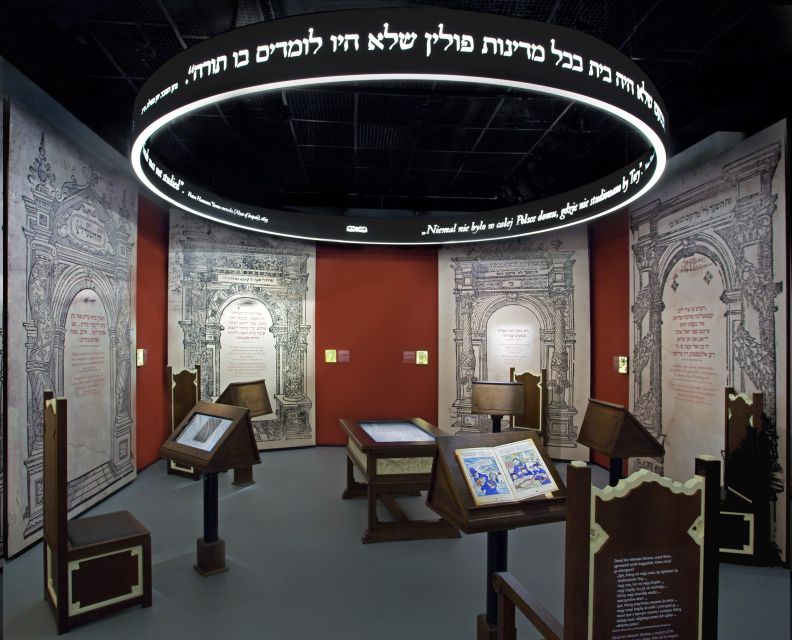
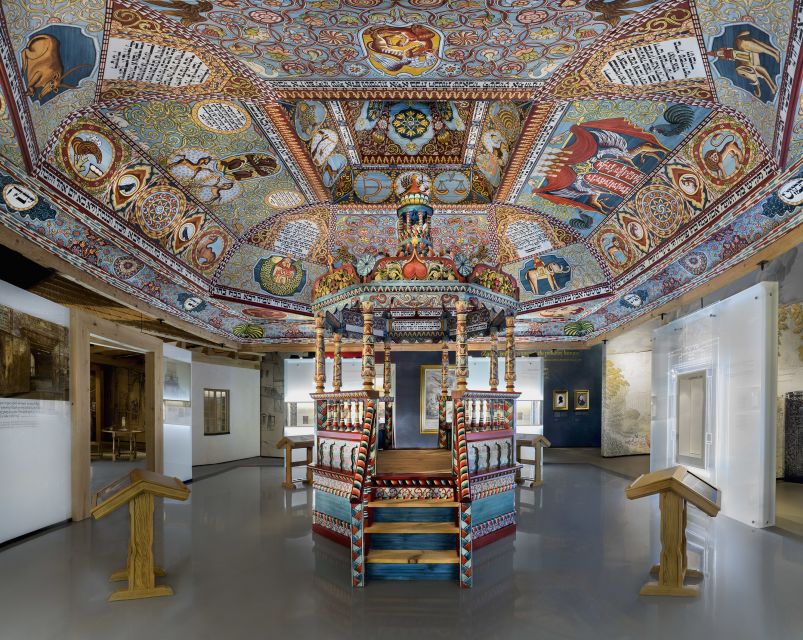
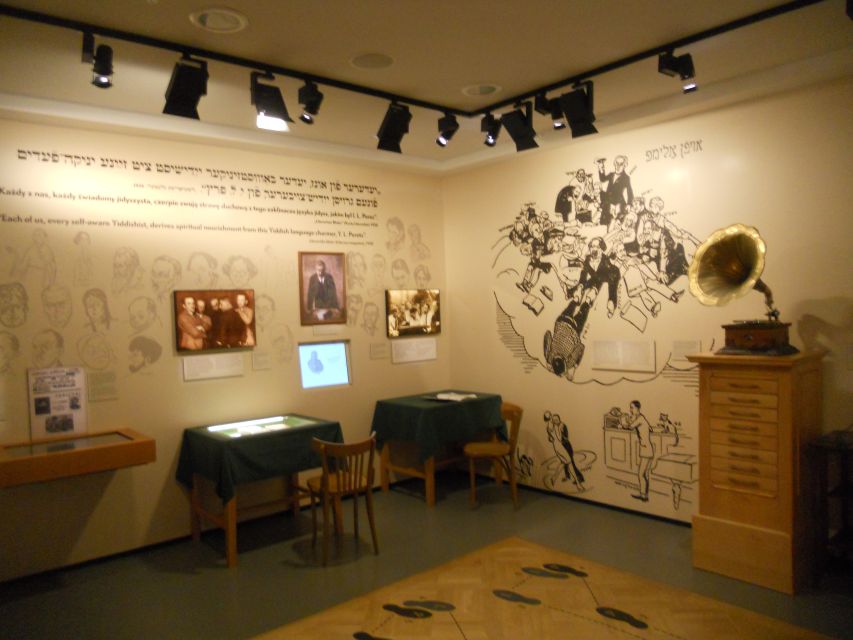
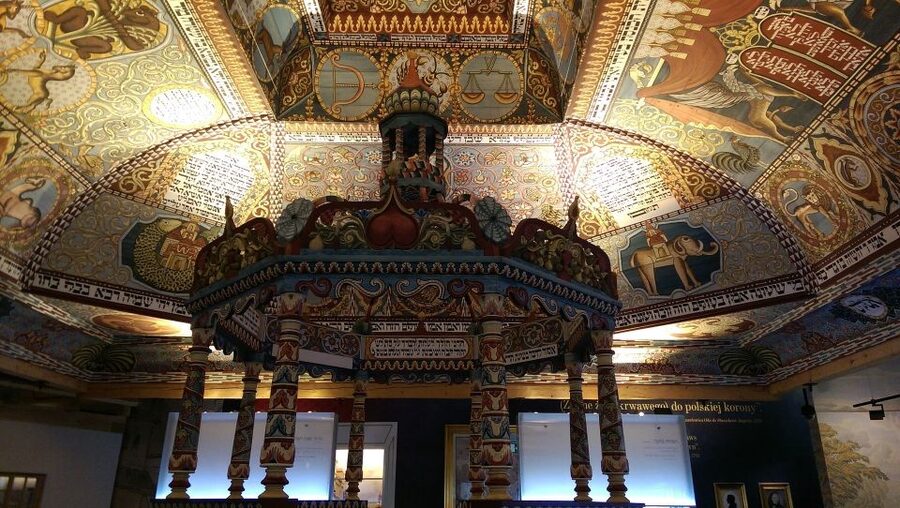
The museum stop is the centerpiece: POLIN Muzeum Historii Zydow Polskich. You’ll have about two hours here, and admission is included.
POLIN is the first and only museum dedicated to restoring the memory of the civilization created by Polish Jews over roughly a thousand years. That mission matters because it changes the museum’s emphasis. It’s not only about the Holocaust. It’s also about the long arc of culture, community, and life in Poland, and then the rupture that followed.
What makes this museum practical on a guided tour is that it’s built to be interactive and sensory in small bursts. The experience includes things like:
- drawers you can open,
- screens and objects you can touch,
- and a mix of artifacts, photographs, documents, and films.
Even with just two hours, you can get a solid overview of the timeline. The guide’s job here is crucial. Without help, the museum can be overwhelming because there’s a lot to read and observe. With a guide, you get the “what matters most” thread, so the exhibit details start to feel ordered.
One useful expectation to set: if you want to read and listen to everything slowly, it would take more than this. The tour is set up for a strong overview, not a full-day marathon.
Pace, questions, and a quick family-friendly reality check
The pacing on this kind of tour is a balancing act. You’re moving between outdoor memorials, a cemetery, a synagogue, and museum exhibits. That means you’ll spend some time standing, some time indoors, and some time walking through streets that may feel busy or crowded.
The upside is that the guide can turn short stops into meaningful ones. If you’re the kind of person who wants context, you’ll get it here because the stops are arranged in an intentional order.
Also, don’t assume it’s only for adult history buffs. The tone is guided and organized, and it can work well for curious kids too. In fact, a guide named Yulia has been highlighted for doing exactly that kind of teaching: making the main points clear and keeping questions going even for younger visitors.
What you’ll get for $167.97, and where the value comes from
At $167.97 per person, this is not a casual add-on. It’s a premium-priced, private, licensed-guide experience with included museum entry and multiple memorial stops.
Where the value shows up:
- Skip-the-line ticket office access to POLIN, which helps you use your time well.
- A licensed guide fluent in English who ties the sites together.
- Included admissions at key points, like the cemetery and POLIN’s main exhibition area plus other included sections.
- A structured route that saves you decision fatigue, especially in a place with so much information.
Where to be careful:
- If you book the 2-hour option, the experience shifts. You won’t get the full Warsaw Ghetto walking route.
- Nozyk Synagogue entry is not guaranteed, and admission there is not included.
If you want the best value, pick the length that matches what you want most: museum depth, or museum plus neighborhood orientation.
Who this tour suits best
This tour is a strong match if you:
- want an English-speaking licensed guide instead of piecing things together on your own,
- care about seeing POLIN Museum plus key Ghetto landmarks,
- want a paced overview that turns “I’ve heard of this” into “I understand the connections.”
It may be less ideal if you:
- are hoping for a slow, self-guided museum day,
- need a guaranteed entry at Nozyk Synagogue (entry is possible on request, not included),
- or want more time at each site than the schedule allows.
Should you book the POLIN Museum and Warsaw Ghetto tour?
Yes, if you want a guided, organized route that connects the museum narrative to real Warsaw geography and memorial sites. It’s especially worth it when your time is limited and you’d rather have an expert explain what you’re seeing than wonder about it alone.
If you’re choosing between lengths, here’s the simple rule: pick the 4-hour option when you want the Warsaw Ghetto walking experience. Pick the 2-hour option when POLIN Museum is your main goal and you still want a few essential stops along the way.
FAQ
How long is the Skip-the-Line POLIN Museum Warsaw Jewish History Tour?
It runs approximately 2 to 4 hours, depending on the option you select.
Is the tour offered in English?
Yes, it’s offered in English.
Is this a private tour?
Yes. It’s a private tour/activity, and only your group participates.
What does the skip-the-line ticket cover at the POLIN Museum?
The skip-the-line tickets let you skip the line at the ticket office, but not the entrance and security checks.
Is the Warsaw Ghetto walking tour included for all options?
No. You will not see the Warsaw Ghetto on the 2-hour tour. The walking tour of the Warsaw Ghetto is included on the 4-hour tour.
Are tickets included for the Jewish Cemetery and the POLIN Museum?
Yes. Admission to the Jewish Cemetery is included, and POLIN Museum admission is included for the main exhibition, the ongoing temporary exhibition, and the Heritage Gallery.
Can I enter Nozyk Synagogue during the tour?
Entry is listed as possible to enter for request. Admission there is not included.
Where does the tour start?
The start point is Ludwika Zamenhofa 11, 00-153 Warszawa, Poland.
What is the cancellation policy?
Cancellation is free. You can cancel up to 24 hours in advance for a full refund, and cancellations within 24 hours are not refunded.
Between Rebuilt Squares
- Warsaw: Chopin Concert at Historical Venue in Old Town
★ 4.7 · 445 reviews - Small-Group Historical Guided Tour of Warsaw with pick up/drop off. Public Tour.
★ 4.5 · 343 reviews - Warsaw: Warsaw Historical Group Tour with Pickup & Drop-Off
★ 4.6 · 233 reviews - Private Historical Tour of Warsaw by a Retro Fiat with Pickup
★ 5.0 · 190 reviews
Museums for an Afternoon
- World of Illusion Museum Skip-the-Line Ticket
★ 4.0 · 55 reviews - Warsaw: Cold War Museum Entry Ticket
★ 4.6 · 55 reviews - Daily live piano Chopin’s concerts at 6:30 pm in the Warsaw Archdiocese Museum
★ 4.5 · 25 reviews - From Warsaw: Lublin and Majdanek State Museum Day Tour
★ 4.8 · 21 reviews
Freshly posted from Warsaw
- Warsaw Uprising and WWII Old Town Walking Tour with Museum★ 5.0 · 1 review
- EVERYDAY Warsaw Traditional Food Tour with Old Town Sightseeing★ 5.0 · 1 review
- Warsaw to Auschwitz and Krakow Old Town Full-Day Trip by Car★ 5.0 · 1 review
- A Day in Warsaw: Private Full-Day Highlights Tour★ 5.0 · 1 review
- Pub Crawl with Shots, Discounts, Games & VIP Entry★ 5.0 · 1 review
- POLIN Museum of the History of Polish Jews : PRIVATE TOUR /inc. Pick-up/★ 5.0 · 1 review
- Full-Day Kazimierz Dolny Private Tour from Warsaw with Guide★ 5.0 · 1 review
Jewish History & Heritage Tours, compared.

Bike Tour of Old Town, Jewish Quarter and the Ghetto
Read our review →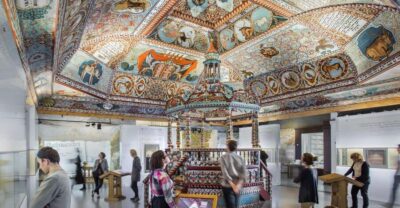
POLIN Museum of the History of Polish Jews Ticket
Read our review →
Kazimierz, Schindler’s Factory & Ghetto Guided Tour
Read our review →
Full Bike Tour – the Old Town, Jewish Qtr & the Ghetto NEW BIKES
Read our review →
Warsaw Ghetto Private Walking Tour with Hotel Pickup
Read our review →Browse the lists this tour appears in