
Reviewed · JEWISH HISTORY & HERITAGE TOURS
Private Tour: Warsaw’s Jewish Heritage by Retro Fiat
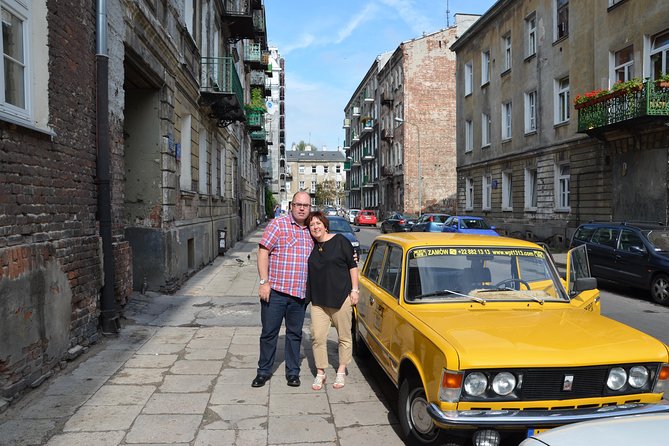
Warsaw Jewish history hits hard, fast, and close. This private tour uses a retro Fiat 125p to take you from WWII-era ghetto remains to places that still matter today. I love that the tour is led by a driver-guide, and past groups have been impressed by guides like Alex, Max, Konrad, Karol, Marcin, and Martin for clear English and serious command of the subject.
Two other things I really like: you get hotel pickup and drop-off, so you are not juggling trams and taxis, and you cover key stops without rushing. One practical consideration: some sites are not always entered, especially if your timing lands around Sabbath or closing hours for the Nożyk Synagogue and the Jewish Cemetery.
In This Review
- Key things you should know before you go
- Retro Fiat 125p, private guide, and why this format works in Warsaw
- Getting picked up at the Palace of Culture and how the 4-hour flow feels
- Stop by stop: ghetto wall fragment, Chłodna Street, and Adam Czerniaków
- Muranów and the Ghetto Heroes Monument: the geography of resistance
- Nożyk Synagogue: a living survivor, with timing you must respect
- Jewish Cemetery and POLIN Museum choice: what you get with extra time
- Respect, head coverings, and how to make the visit feel appropriate
- Price, transfers, and who this tour fits best
- Should you book this Retro Fiat Warsaw Jewish Heritage tour?
- FAQ
- How long is the Warsaw Jewish Heritage tour?
- What does the tour cost?
- Is pickup and drop-off included?
- Where is the meeting point?
- What vehicle do you use?
- Is the tour private?
- What language is the tour in?
- Are museum tickets included?
- Do I need to cover my head?
- Are the synagogue and cemetery open every day?
- What is the cancellation policy?
Key things you should know before you go
- Retro Fiat 125p (or vintage minivan for 4+) makes the route feel like a time capsule, not a checklist.
- Hotel transfers included keep this smooth, even if you start from a busy area like Centrum.
- You’ll see both preserved evidence and living memory, from the ghetto wall fragments to today’s active synagogue.
- The guide can tailor the tour, including connections to film locations like The Pianist.
- POLIN is optional and can be handled differently depending on what you want to do with your time.
Retro Fiat 125p, private guide, and why this format works in Warsaw
This is not a big-group bus tour. It is you, your guide, and a car that slows the pace in a good way. The retro Fiat 125p helps too. You are sitting in a very old-school way, moving through modern Warsaw, and that contrast makes the history stick.
The real win is the private guiding. Several guides have been singled out by name, and the praise is consistent: strong English, lots of patience with questions, and the ability to explain complicated timelines without turning it into a lecture. Guides like Karol (described as a doctoral student in history in one review) and people such as Konrad, Marcin, and Martin came up again and again for being thorough and respectful, and for balancing heavy facts with a human tone.
If you care about details, this setup makes it easier to ask your own questions. The tour even allows you to request themes, including possible The Pianist film locations set in wartime Warsaw. That means you can connect the street-level reality of the ghetto era to the stories you might already know.
Further Jewish history and heritage itineraries:
- Warsaw: POLIN Museum of the History of Polish Jews Ticket
★ 4.7 · 1,142 reviews - Warsaw: Warsaw Ghetto Private Walking Tour with Hotel Pickup
★ 4.9 · 369 reviews - Warsaw: Jewish History Guided Walking Tour in English
★ 4.7 · 324 reviews
Getting picked up at the Palace of Culture and how the 4-hour flow feels
Your tour starts and ends back at the meeting point near the Palace of Culture and Science (pl. Defilad 1). Pickup works from your hotel lobby if you are in the city center pickup area. If your hotel is outside that area, you can contact the provider to find the best solution.
The duration is about 4 hours. That is long enough for real context, but short enough to keep your energy intact. You will spend small chunks of time at multiple sites rather than doing one place for hours, and your guide’s job is to connect what you see: why a street matters, why a monument is located where it is, and how the geography of Warsaw shaped the ghetto experience.
A practical note: this is a private tour for your group only. That matters for comfort and focus. It also helps if you want to pause for questions. One group mentioned that their guide adjusted to what interested them. If you have a specific thread you care about, you will do best by speaking up early.
Finally, you might want to plan for a little real-world walking at stops and standing around memorials. The experience is not just from a vehicle window.
Stop by stop: ghetto wall fragment, Chłodna Street, and Adam Czerniaków
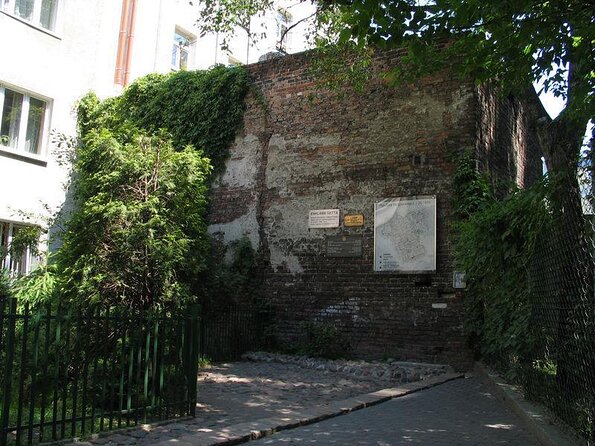
The tour begins with a Fragment of Ghetto Wall you can actually see. This is one of the best openings because it gives you an immediate visual anchor. You will look at remaining portions of the wall with commemorative plaques, and your guide will explain what it represented when it was built in 1940, when it trapped over 400,000 Jews.
From there, you move to Chłodna Street. This stop is short, but it is packed with meaning. You’ll see the Footbridge of Memory, and you’ll also get a key historical address: the building where Adam Czerniaków, president of the Jewish Community (the Judenrat), lived. That pairing helps you understand that wartime Warsaw was not only about locations, but also about the people forced into impossible leadership roles.
Then you head into the former Warsaw Ghetto area, now the Muranów district. This is where your guide’s narrative becomes important. Modern buildings and street art cover what used to be the ghetto map, and it can be hard to see the past unless someone explains where to look and what each streetline means.
Even if you are not a WWII expert, this sequencing works. Wall first, then street, then neighborhood. It keeps your brain from feeling lost.
Muranów and the Ghetto Heroes Monument: the geography of resistance
In Muranów, you are walking through an area that has been transformed, yet still holds layered evidence. The tour includes time for a stroll through the former “Large Ghetto” zone. Your guide will frame what you are seeing in terms of how the ghetto functioned and why certain sites carry weight today.
Next is the Pomnik Bohaterów Getta, the Monument to the Ghetto Heroes. This is where the story shifts from confinement to resistance. The monument commemorates the Warsaw Ghetto Uprising of 1943 during the Second World War.
You will also have additional stops tied to the uprising and deportations, including:
- a departure point associated with the route to Treblinka extermination camp with gas chambers
- a memorial linked to a group suicide during the Ghetto Uprising
- a preserved street section that survived from both sides of the ghetto area
Even with these described as short stops, they are heavy. The key is that the guide connects the dots so the sites do not feel random. If you want to ask questions, this is a good moment. You are seeing a war-story in physical form, and answers help you process what your eyes are taking in.
And yes, this can be emotional. I think that is the point of doing it with a guide rather than just reading placards on your own.
More centuries between two rebuilt squares:



Nożyk Synagogue: a living survivor, with timing you must respect
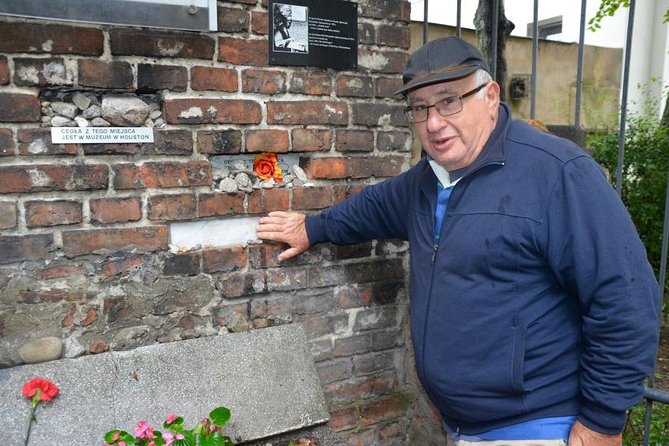
One of the most powerful stops is Nożyk Synagogue. It is described as the only surviving prewar Jewish house of prayer in Warsaw, and it is still active today. That detail changes the feeling of the visit. You are not only looking at ruins. You are seeing continuity.
Plan around opening rules. The synagogue is closed from Friday evening through the whole Saturday due to Sabbath. The same kind of timing restriction also affects the Jewish Cemetery later on.
A practical tip based on real-world experience: if you are booking late in the day, do not assume you can enter everything. At least one 5 pm start faced an issue where entry to both the synagogue and the cemetery was not possible. That does not mean it will happen to you, but it is a strong reason to ask your guide or check the local schedule before you commit.
If entry is possible on your day, take a moment to slow down inside. This is not a quick photo stop in a peaceful building. It is a place of worship, and your head covering may be required when visiting some Jewish sites.
Jewish Cemetery and POLIN Museum choice: what you get with extra time
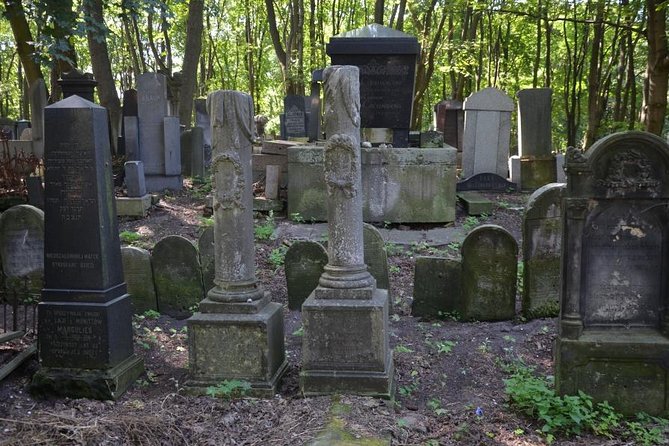
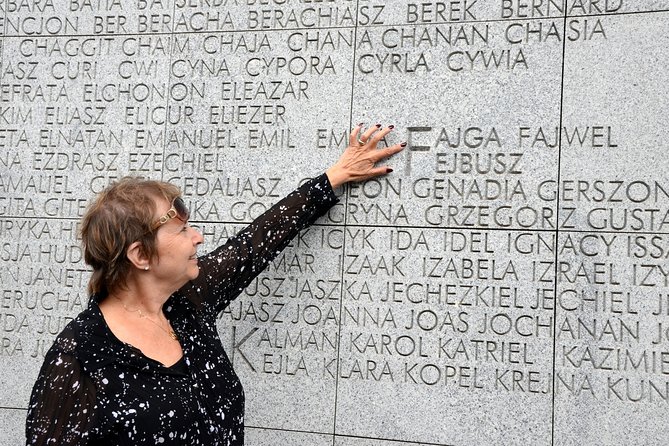
After Nożyk, the route moves to the Jewish Cemetery (Cmentarz Żydowski). This stop is long enough to feel the scale. You will see the remains of graves of over 200,000 people, including spiritual and political leaders, creators of Jewish culture, and many nameless victims. Your guide also explains that multiple generations of Jews from Warsaw were buried here.
Again, timing matters. The cemetery is closed from Friday evening through the whole Saturday due to Sabbath.
The tour then includes the POLIN Muzeum Historii Żydów Polskich in an optional way. In the basic flow, you see the museum from the outside. If you want to go inside, the admission is not included. The guide can also leave you there after the tour if you wish to visit on your own afterward.
Why POLIN fits well into this half-day: it offers a long view of Polish Jewish history, over 1,000 years, in a modern museum space. If your itinerary is time-tight, the outside view still helps because your guide can point out how the museum relates to the themes you just heard in the streets.
A good strategy: if you care more about architecture and street-level context, do POLIN later at a pace you control. If you need a narrative framework, consider adding it within your same day while your guide’s storytelling is still fresh in your head.
Respect, head coverings, and how to make the visit feel appropriate
This tour includes meaningful religious and memorial sites. The tour info notes that you will be required to cover your head when visiting some Jewish sites. I treat that as a simple checklist item.
Bring or plan for something simple like a scarf, hat, or head covering you are comfortable wearing. It will save you stress at the moment you need to focus.
Also, dress and behavior matter. Even if you are visiting quietly, you are sharing space with a real community and commemorating real trauma. Keep your phone use light and follow your guide’s cues.
In my view, the best part of a good guide here is not just facts. It is tone. Several named guides were praised for reverence to the subject and for keeping a respectful pace. That is what turns a list of sites into an understanding you can carry with you.
Price, transfers, and who this tour fits best
At $108.28 per person for about 4 hours, the price looks fair when you factor in what you get. You are paying for private guiding plus hotel pickup and drop-off, and you are also getting private transport by a vintage Fiat 125p. In Warsaw, that combination often costs more than you expect once you add logistics.
It can be especially good value if:
- you want a private experience without changing hotels or complicated transit
- you have mobility or time limits and want minimal friction
- you are traveling as a couple or small group and want focused explanations at each stop
One more detail: for groups of 4+, you will be driven in a vintage minivan instead of the Fiat. That keeps the vibe close to the retro theme, just with more seating.
If you are a solo traveler or a history-minded traveler who wants more than placards, this tour is a strong fit. If you want only light sightseeing, this may be too intense, because the memorial stops and ghetto history are unavoidable.
Should you book this Retro Fiat Warsaw Jewish Heritage tour?
I would book it if you want a guided, street-level way to understand Warsaw’s Jewish story, from prewar life to WWII persecution and uprising, and you want that delivered in a format that is easy to manage. The private guide, the included hotel transfers, and the fact that key places are still standing and still meaningful today make it more than a sightseeing route.
I would pause and double-check timing if your dates include Friday evening through Saturday, because the synagogue and cemetery are closed then. Also, if you are starting late in the day, ask directly about which entrances are possible so you do not lose the stops you most care about.
If you get the right guide, this is one of those tours that changes how you look at the city, even after you leave the car.
FAQ
How long is the Warsaw Jewish Heritage tour?
It runs about 4 hours.
What does the tour cost?
The price is $108.28 per person.
Is pickup and drop-off included?
Yes. Hotel pickup and drop-off are included, and the tour returns you to your original departure point.
Where is the meeting point?
The meeting point is near the Palace of Culture and Science, pl. Defilad 1, 00-901 Warszawa, Poland.
What vehicle do you use?
You travel in a private retro Fiat 125p. For groups of 4+, you are driven in a vintage minivan instead.
Is the tour private?
Yes. It is a private tour/activity, so only your group participates.
What language is the tour in?
The tour is offered in English.
Are museum tickets included?
No. Admissions for the main sites listed as optional or not included are not included, including POLIN. The ghetto wall fragment, Chłodna Street, and the monument stops are listed with free admission tickets.
Do I need to cover my head?
You will be required to cover your head when visiting some Jewish sites.
Are the synagogue and cemetery open every day?
No. The Nożyk Synagogue is closed from Friday evening through the whole Saturday due to Sabbath. The Jewish Cemetery is also closed from Friday evening through the whole Saturday due to Sabbath.
What is the cancellation policy?
You can cancel for free up to 24 hours in advance for a full refund. If you cancel less than 24 hours before the start time, the amount you paid will not be refunded.
Freshly posted from Warsaw
- Warsaw Private Transfer from Warsaw Chopin Airport (WAW) to City centre★ 4.0 · 7 reviews
- Krakow Small Group Tour from Warsaw with Lunch, Schindler’s Factory included★ 5.0 · 7 reviews
- Wolfs Lair – Hitlers hideout★ 4.5 · 7 reviews
- 3-hour tour at Warsaw Uprising 1944 Museum /inc. Pick-up/★ 4.9 · 7 reviews
- Warsaw: Evening History and Pubs Tour by Retro Minibus★ 5.0 · 7 reviews
- Warsaw: Private Vodka Tasting Night with Snacks and Pickup★ 5.0 · 7 reviews
- Warsaw Old Town with Royal Castle + Royal Route: SMALL GROUP /inc. Pick-up/★ 5.0 · 7 reviews
Jewish History & Heritage Tours, compared.
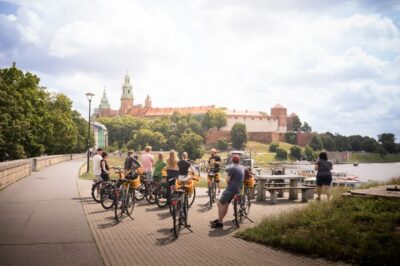
Bike Tour of Old Town, Jewish Quarter and the Ghetto
Read our review →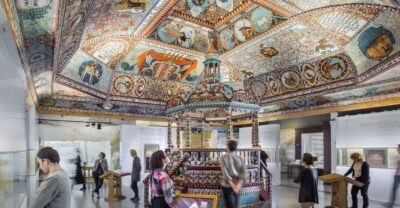
POLIN Museum of the History of Polish Jews Ticket
Read our review →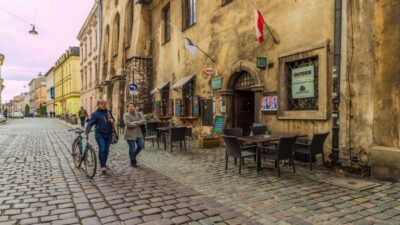
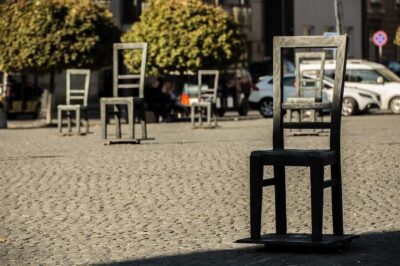
Kazimierz, Schindler’s Factory & Ghetto Guided Tour
Read our review →
Full Bike Tour – the Old Town, Jewish Qtr & the Ghetto NEW BIKES
Read our review →
Warsaw Ghetto Private Walking Tour with Hotel Pickup
Read our review →Browse the lists this tour appears in