
Reviewed · COMMUNISM & PRL HISTORY TOURS
Private Tour: Warsaw’s Communist History by Retro Fiat
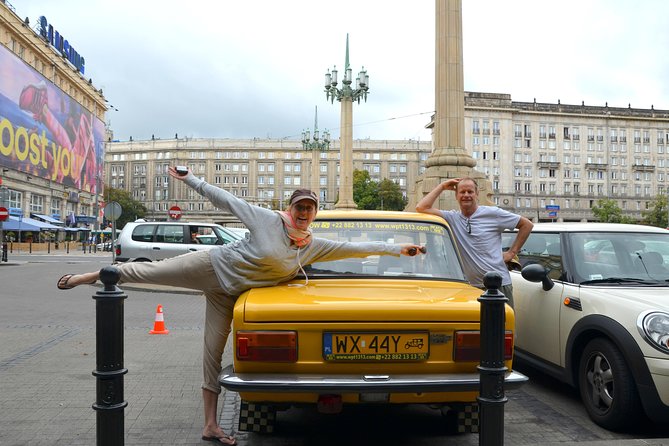
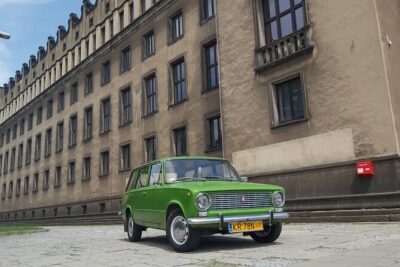
Warsaw’s Communist story has wheels, literally. This private 4-hour tour uses a Retro Fiat 125p to connect Socialist-era landmarks, from the Palace of Culture and Science to the former black-market zone. I really like the hotel pickup and drop-off, because it keeps you from wasting time on transit when you came to sightsee.
The main thing to consider is that the schedule is tight. Some stops are only 5 to 30 minutes, and the big Palace of Culture and Science stop needs its own ticket since admission is not included.
In This Review
- Key highlights worth your attention
- Why the Retro Fiat 125p makes the Communist-era route click
- The pacing, timing, and what to do before you go
- Stop 1: Palace of Culture and Science, the Socialist realist headline act
- Constitution Square and the Stalin-era housing idea: Plac Konstytucji
- The Communist Ministerial District style: why style can be a policy
- Monument of the Free Word: censorship you can point to
- Charles de Gaulle statue area and the former Communist Party House
- Praga Polnoc: a district shaped by the era and by WWII survival
- Bazar Rozzyckiego black market stop: how shortages shape behavior
- Mariensztat Square (Rynek Mariensztacki): Communist-era housing you can see
- Guide quality is a real part of the value
- Price and what you are really paying for
- Who this tour suits best
- Should you book Warsaw’s Communist History by Retro Fiat?
- FAQ
- How long is the Warsaw Communist History tour?
- Is this a private tour or will I share the car with strangers?
- Do I get hotel pickup and drop-off?
- Are any admission tickets included?
- What language is the tour conducted in?
- Is food and drink included?
- Can I cancel for free?
Key highlights worth your attention
- Retro Fiat 125p ride: A fun, old-school way to get around without feeling like you’re stuck on a bus
- Private, English-guided experience: Your group stays together, with focused attention
- Big Warsaw symbols, plus lesser stops: You hit famous architecture and smaller locations tied to everyday life under the regime
- Lots of free stops: Most stops list free admission, with only the Palace of Culture and Science requiring a paid entry
- Short walks with real context: You get quick orientation, then move on to the next site, rather than spending hours in one place
Why the Retro Fiat 125p makes the Communist-era route click
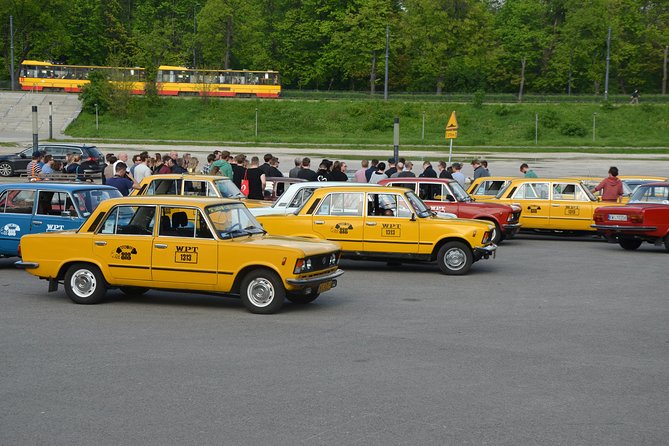
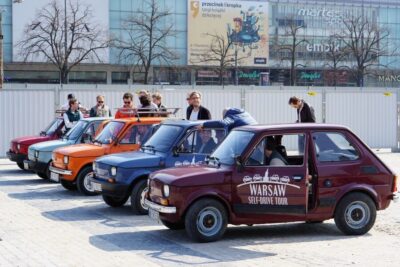
If you’ve ever done a normal sightseeing day in Warsaw, you know how quickly it can blur together: buildings, streets, a few major monuments, then you’re back on public transport. The magic here is the transport mood. Riding in a Retro Fiat 125p changes the feel of the city, and it gives the stops a sense of movement through time.
This matters for Communist history, because a lot of it is about systems, routines, and design choices made by planners and party leaders. In a normal tour, you can end up looking at architecture like it’s just scenery. In this one, you’re cruising between points, stopping often enough to connect the story beats. The short transitions help you keep the narrative straight.
Also, you’re not waiting around. This is a private tour, so it’s not built around whatever other groups happen to be doing. And since there’s hotel pickup and drop-off, you start and end with less friction than a self-guided day.
More Nowa Huta blocks and PRL relics:
- Warsaw: Museum of Life Under Communism Entry Ticket
★ 4.5 · 178 reviews - Warsaw: Communist History Self-Driving Tour
★ 4.8 · 52 reviews - Warsaw: Communism Tour in an Original Socialist Van
★ 4.5 · 35 reviews
The pacing, timing, and what to do before you go
This is listed as an approximately 4-hour private tour. The route is a mix of driving and short visits, which is why it stays doable even if you’re only in Warsaw for a few days.
You’ll spend:
- Around 30 minutes at the Palace of Culture and Science
- About 30 minutes at Constitution Square (Plac Konstytucji)
- Around 5 minutes at the Monument of the Free Word
- About 15 minutes by the Charles de Gaulle statue area
- Roughly 30 minutes at Praga Polnoc
- About 15 minutes at Bazar Rozzyckiego
- Around 20 minutes at Mariensztat Square (Rynek Mariensztacki)
That structure is great if you want to see a lot and still have a human guide to explain what you’re looking at. The tradeoff is simple: if you’re the type who wants deep museum time at every stop, this won’t be that kind of tour. It’s a tour built for perspectives and context in the street and on the architecture.
One practical tip: if you’re going to the Palace of Culture and Science, plan for ticket time. The stop is listed as having admission ticket not included, so you’ll want to be ready for that cost and any on-site timing.
Stop 1: Palace of Culture and Science, the Socialist realist headline act
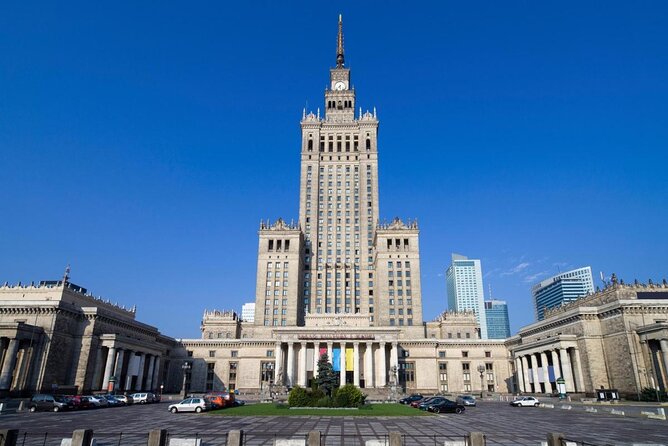
The Palace of Culture and Science is Warsaw’s most recognizable big statement piece. It’s an example of socialist realist architecture, and it still does what monumental buildings are supposed to do, it anchors the skyline and signals power.
On this tour, you’ll get about 30 minutes here, with attention on its history. The listing notes that the building is now used for public life, including theatres, museums, a cinema, and trendy pubs. That detail is more than trivia. It helps you understand how Communist-era structures were repurposed, reused, and rebranded after the political shift.
What I like about this stop is that it sets the tone for everything else. Once you’ve seen how the state tried to project authority through scale and style, the later stops feel less random. Even when the sites are smaller, you’ll start noticing the pattern: planned districts, symbolic spaces, and architecture designed to guide how people live.
What to watch for:
- This is a ticket stop. Admission is not included, so you’re not just walking past. You’re spending time inside, which makes your planning matter.
- With only about 30 minutes, don’t expect a full museum experience. Treat it like an orientation visit with the guide tying the building to Communist goals.
Constitution Square and the Stalin-era housing idea: Plac Konstytucji
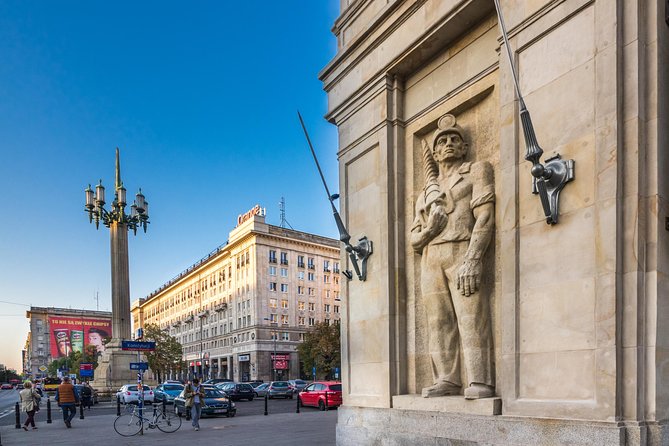
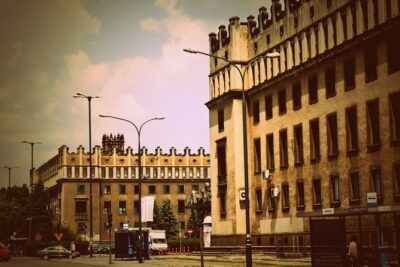
Plac Konstytucji, Constitution Square, is where the architecture leans strongly into the Stalin-era feel. The listing frames it as a unique and representative Communist housing district.
You’ll have about 30 minutes here, and the value is in connecting housing with politics. Communist planning wasn’t only about shelter. It was about creating a new kind of social order, with standardized buildings and controlled neighborhoods. The square and surrounding blocks are part of that visible blueprint.
This stop is also a good reality check. From far away, Communist architecture can look uniform, even official. Up close, you can see how these design choices shape daily movement, street life, and how people experience their neighborhood. Even if you don’t go inside every building, you’ll get enough visual info to understand why the regime used architecture as a tool.
One consideration: housing areas can mean less of the classic postcard view. Bring your curiosity and your patience. Your guide’s job here is to help you “read” the city like an editor reads a text.
More centuries between two rebuilt squares:


The Communist Ministerial District style: why style can be a policy
After Constitution Square, you’ll see the Communist Ministerial District created in Socialist Realism style. This part of the route is shorter, but it’s important because it shifts the story from housing and daily life toward the machinery of governance.
In plain terms, if the housing districts were about building a controlled society, the ministerial district was about performing state power. Socialist Realism often aimed for clarity and authority, the kind of design that says, this is the center, this is the system, and you will follow it.
Even without extra time in museums, these streets can teach you something quick: power tends to be placed where it’s hard to ignore. If you look at the building scale and how the streets feed into the sites, you can often feel the plan.
Monument of the Free Word: censorship you can point to
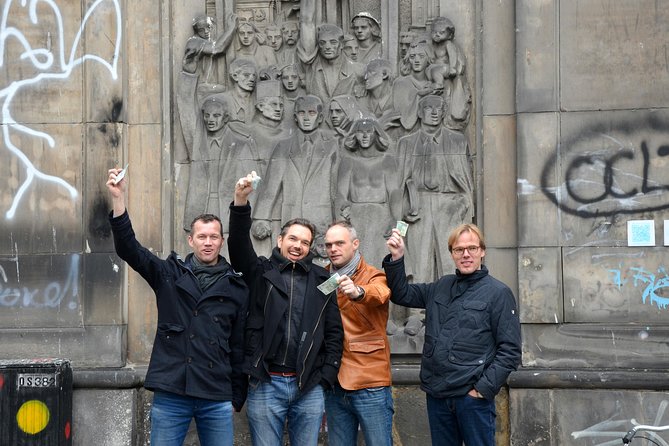
Next is the Monument of the Free Word. The stop is brief, around 5 minutes, but the subject is heavy in a focused way: censorship was daily life in Communist Poland.
This is one of those stops where the “history” isn’t theoretical. You can stand there and think about what it means when speech, printing, and information are controlled. The listing’s point is exactly that, you hear the story of daily censorship and how it affected people’s choices.
Why it’s worth your time even if it’s short: it balances the route. You get both the physical architecture of power and the psychological architecture of control. That balance makes the whole tour feel more coherent, not just a set of photo stops.
If you’re the type who likes to ask questions, this is a good moment. Guides who come from Poland often have personal context and family perspective. In past tours, guides named Olga and Marcin, for example, have shared personal experiences that made the era feel close rather than textbook.
Charles de Gaulle statue area and the former Communist Party House
The statue of Charles de Gaulle stop is about 15 minutes. This is also where the story turns to leadership and symbolism. The listing notes the area relates to the former Communist Party House, sometimes referred to as the Polish White House.
The “why” here is crucial. Even when political systems change, the locations can keep their meaning. A party headquarters is more than an office. It’s where decisions are made, and it’s also how the state communicates who matters.
On this stop, you’ll hear about the leaders in Communist Poland and connect them to the spaces where they operated. This is a strong segment if you want more than architecture and street scenes.
A practical note: since this is a stop-by-stop route, you might not linger long. If you spot a detail that grabs you, ask your guide a targeted question. That can often lead to a clearer explanation than just reading a sign.
Praga Polnoc: a district shaped by the era and by WWII survival
Then you head to Praga Polnoc for about 30 minutes. The listing describes it as a vibrant district during the Communist period, and also notes it was not badly destroyed during WWII.
That combination matters. The Communism story is partly about what the regime built, but it’s also about what survived. When an area holds older street fabric, you can compare eras more easily. You can see what changed because of ideology, and what remained because history refused to cooperate.
Praga Polnoc also tends to feel more lived in than some of the more tour-focused areas, and that helps you picture daily life under Communism. You’re not just staring at grand buildings. You’re looking at neighborhoods and thinking about what it meant to work, move, and shop under the system.
Bazar Rozzyckiego black market stop: how shortages shape behavior
Bazar Rozzyckiego is next, a 15-minute stop focused on the famous black market in Communist Poland.
This is one of the most interesting parts of the route because it shows what people did when official systems fell short. In Communist economies, shortages and rationing weren’t abstract. They were part of how many families made choices. Black markets sprang up as a response, and bazaars became social hubs as much as buying points.
The listing keeps it direct: you’ll see the most famous black market. Even on a short visit, the guide can help connect the dots, from scarcity to informal trade to the everyday reality of keeping a household running.
If you like human-scale stories, this stop often delivers. In multiple past tours, guides such as Jacob, Konrad, and Pawel were praised for answering “unorthodox” questions and sharing real perspective, not just memorized facts.
Mariensztat Square (Rynek Mariensztacki): Communist-era housing you can see
Finally, you’ll end with Mariensztat Square, about 20 minutes. The focus is on communist-era housing blocks in the Mariensztat district.
This segment is a good wrap-up because it brings you back to where most people actually lived. If earlier stops were about state power and symbolism, this one anchors the story in residential architecture.
Even if you’re not a history buff, you’ll probably notice how housing blocks set the tone for a neighborhood. They shape walkways, courtyards, building entrances, and the feel of public space. And because this is a square, you get a clear place to pause and look around, like your guide is giving you a living diagram.
If you want a memory to carry home, this is the spot. Not because it’s the most famous, but because it ties the ideology to the daily experience.
Guide quality is a real part of the value
This tour is powered by the guide, and the reviews point to a clear pattern: people want more than facts. They want perspective and the ability to ask questions.
Several guides have been named in connection with the tours. Jacob and Karol stood out for friendliness and being easy to talk to. Konrad and Marcin were praised for Cold War context and personal experiences. Martin and Adam were mentioned for showing places other tours often skip, and Olga was noted for connecting events to family experiences. Pawel was also singled out for making the experience fun and thorough.
That matters because Communist history in Poland has a lot of nuance, including how decisions made decades ago still show up in the city today. If your guide can explain impacts, not just dates, the tour feels worth it.
Also, flexibility shows up in the feedback. One guide was described as adapting the tour to specific interests on the fly. For you, that translates to a better fit. If you’re more curious about censorship, you can likely spend more time connecting the dots there. If you care about daily life and informal trade, the black market stop becomes more than a quick mention.
Price and what you are really paying for
At $108.24 per person, this is not a budget group bus tour. You’re paying for:
- a private guide and your own group time
- hotel pickup and drop-off
- transport by private vehicle, specifically a Fiat 125p
- an itinerary built around multiple Communist-era sites
So the value equation comes down to this: if you like the idea of learning with context, and you’d rather pay to reduce logistics stress, this price can make sense. You’re buying time, comfort, and a clear narrative route that hits several key locations in one half-day.
Where you might hesitate is if you prefer long museum stays or self-paced wandering. This tour is designed for guided stops and short walks, not a slow crawl through indoor exhibits. Also, the Palace of Culture and Science stop is a paid admission ticket, so you should expect an extra cost there.
My advice: if you only have one half-day in Warsaw and you want a structured entry into Communist-era architecture and control, this is a solid way to spend it. If you plan to do multiple history tours back-to-back, consider whether this one should be your anchor, since it sets the themes for later stops.
Who this tour suits best
This is ideal if you:
- want a private experience rather than a group scramble
- enjoy architecture plus social context, not just monuments
- like asking questions and hearing personal perspective in addition to dates
- want a workable plan in a 4-hour window
It’s also a good fit for first-time Warsaw visitors who want the political backdrop of the city. Places like Palace of Culture and Science and the housing districts explain why the skyline looks the way it does and why neighborhoods developed the way they did.
If you’re traveling with people who dislike dark topics, make sure everyone is on board. The censorship and black market themes are direct, and the history is not sugarcoated. On the other hand, that honesty is also why the tour resonates for many people.
Should you book Warsaw’s Communist History by Retro Fiat?
I would book this if you want a guided, story-driven walk and drive through Warsaw’s Communist-era symbols, and you like the idea of doing it in a classic Fiat rather than a modern van. The mix of big landmarks and smaller, more grounded locations makes the route feel balanced instead of one-note.
I would think twice if you strongly prefer long stops, museum-heavy time, or a completely self-paced day. The schedule is compact, and at least one major stop has admission ticket not included.
If you’re curious about how political control showed up in buildings, neighborhoods, and everyday choices, this tour gives you a fast, clear start, with enough human perspective to keep it from feeling like a lecture.
FAQ
How long is the Warsaw Communist History tour?
It’s listed as approximately 4 hours.
Is this a private tour or will I share the car with strangers?
This is a private tour. Only your group participates.
Do I get hotel pickup and drop-off?
Yes. The guide offers hotel pickup and drop-off, picking you up from your hotel lobby or meeting you near the start point if your hotel is not in the pickup area.
Are any admission tickets included?
Plac Konstytucji and the other listed stops have free admission. The Palace of Culture and Science stop notes that an admission ticket is not included.
What language is the tour conducted in?
The tour is offered in English, and it includes a professional local driver-guide.
Is food and drink included?
Food and drinks are not included unless specified. If you’re hoping to try something specific, it’s smart to confirm ahead of time.
Can I cancel for free?
Yes, there is free cancellation up to 24 hours in advance for a full refund.
Freshly posted from Warsaw
- Krakow Small Group Tour from Warsaw with Lunch, Schindler’s Factory included★ 5.0 · 7 reviews
- Warsaw Private Transfer from Warsaw Chopin Airport (WAW) to City centre★ 4.0 · 7 reviews
- 3-hour tour at Warsaw Uprising 1944 Museum /inc. Pick-up/★ 4.9 · 7 reviews
- Wolfs Lair – Hitlers hideout★ 4.5 · 7 reviews
- Warsaw: Evening History and Pubs Tour by Retro Minibus★ 5.0 · 7 reviews
- Warsaw: Private Vodka Tasting Night with Snacks and Pickup★ 5.0 · 7 reviews
- Warsaw Old Town with Royal Castle + Royal Route: SMALL GROUP /inc. Pick-up/★ 5.0 · 7 reviews
Communism & PRL History Tours, compared.
Legendary Private Nowa Huta Communism Tour with Crazy Guides
Read our review →
Nowa Huta: Steelworks Administration Buildings/Shelters Tour
Read our review →Private Nowa Huta Adventure Tour in Communist Cars
Read our review →
Browse the lists this tour appears in