
Reviewed · WARSAW UPRISING & WORLD WAR II TOURS
Gdansk: Museum of World War II – True Story of a Living Hell
This museum hits hard, in a good way. I like the way the Museum of the Second World War lays out WWII in 20 rooms with a long corridor built around everyday life, not just battles. I also love getting an English licensed guide who connects the story in Poland to the wider European war and the personal choices inside it. One thing to plan for: it is heavy, detailed, and can feel like a lot if you do not pace yourself.
Meet your guide right in front of the museum at Plac Władysława Bartoszewskiego 1. This is a private group, so you are not stuck listening politely while other people go at their own speed. You still need a solid block of time, and the full museum really wants closer to three hours.
What makes this stop in Gdansk especially meaningful is the starting point. You begin with the background to the war, and for Danzig (the older name), that story ties directly to the end of World War I and the Treaty of Versailles, leaving the city in political limbo between Poland and Germany for years.
In This Review
- Key highlights you’ll actually feel
- Getting Oriented at Plac Władysława Bartoszewskiego
- Stop 1: Quick meet-up and ticket time at the entrance
- Stop 2: The main exhibition and its long corridor of everyday life
- The one thing to watch: pacing and repetition
- Why the guide’s commentary changes the museum
- Audio headsets and translation support inside the museum
- How long you should plan: 3 hours is a smart minimum
- Price and value: Is $217.08 per person fair?
- Who this WWII museum visit fits best
- Should you book this Gdansk WWII museum tour?
- FAQ
- How long is the Museum of World War II tour in Gdansk?
- Where do we meet the guide?
- Is museum admission included?
- What language is the tour offered in?
- Is hotel pickup and drop-off included?
- Is this a private tour or shared group?
- Do I get a mobile ticket?
- Are there headphones or translation devices available inside the museum?
- Does the museum have lifts?
- What is the cancellation policy?
Key highlights you’ll actually feel

- A clear path through the main exhibition, in about 20 rooms arranged along a corridor axis
- Everyday-life displays that ground the big political story in real human routines
- Strong use of objects and technology (from an Enigma machine to tank displays and wartime artifacts)
- Headphones available at the museum, helpful when you want translation support while reading
- A licensed guide who explains WWII in Poland, linking major events to personal fates
- Plan on at least 3 hours, because the museum is long and information-dense
Getting Oriented at Plac Władysława Bartoszewskiego
Your tour starts at the Museum of the Second World War, at Plac Władysława Bartoszewskiego 1, 80-862 Gdańsk. It is simple and practical: your guide meets you out front, and the tour then moves into the museum together.
One logistics detail that matters here is access. The museum entrance is at street level, but many of the exhibits are on lower levels. The good news is that lifts are available, so you are not stuck if stairs are an issue for you. Also, the museum setup includes a cloakroom and a café, which is handy because you may want to store a light bag and keep energy up while you work through the story.
This is one of those museums where small comfort choices make the difference. A short visit can turn into you rushing through panels and videos. A planned visit helps you actually follow what you are seeing.
Further tours tracing the 1944 Uprising:
- Museum of the Second World War Gdansk Private Tour & Tickets
★ 5.0 · 24 reviews - Gdansk Private WWII Tour with Museum of the Second World War
★ 4.9 · 22 reviews - Private WW2 Tour of Westerplatte,Gdansk and Stutthof Including Lunch
★ 5.0 · 12 reviews
Stop 1: Quick meet-up and ticket time at the entrance
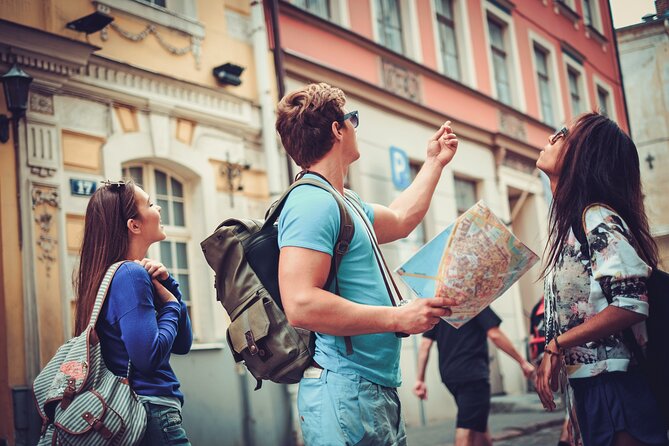
Stop 1 is brief on purpose. You meet the guide in front of the museum. Admission is handled as part of the experience, and you get tickets to the Museum of the Second World War.
Think of this first step as your momentum builder. You do not waste time figuring out the museum flow, finding the right entrance, or rereading signage. Your guide gets you started with the context you need, which pays off later when the exhibition starts connecting events and showing how WWII took hold in people’s daily lives.
The tour stays close to its starting point, and it ends back at the meeting location. So you can treat this as a focused half-day block in your day, not a trip that spirals into chaos.
Stop 2: The main exhibition and its long corridor of everyday life
The main exhibition is the show. It takes up about 20 rooms laid out on either side of a long corridor axis. What you notice right away is how orderly it feels for a subject that is anything but orderly.
You start with the background to the war. For the Danzig storyline, the museum makes a strong connection back to the Treaty of Versailles. This matters because you are not just handed the moment WWII begins. You see how the conclusion of World War I and the later political uncertainty left Danzig in a tense gap. The city sat in a political limbo, governed neither by the newly recreated Polish state nor by Germany, even though Germany had governed the area for centuries after earlier partitions.
From there, the exhibition walks you through WWII at three levels at once:
- Geopolitical shifts and how regimes and borders changed
- Military developments across the wider war
- Personal stories that show what it felt like on the ground
What I really like is that the museum uses objects to make the story physical. You may see a mix of items that feel wildly different but work together in one narrative, like Stalin’s pipe, a Sherman tank, and an Enigma machine. When the exhibition moves between themes, these artifacts help your brain stay anchored.
The museum is also visual in a very deliberate way. Expect screens, video footage, and clear, readable panels. One early moment includes a semi-circular screen that charts the rise of totalitarian regimes across Europe. It is a tough topic, but the structure helps you understand how the war grew out of political choices, not just battlefield randomness.
And because the corridor includes displays of everyday life during the war, you keep bumping into the human scale. Shops, streets, and daily routines are represented, so you are not only staring at uniforms. You are watching how war squeezed ordinary life until it broke it.
The one thing to watch: pacing and repetition
This museum is thorough, but that thoroughness can turn into information overload. Some visitors find parts to be repetitive, with details and themes returning more than once. There are also lots of videos and footage looping.
The fix is simple: take breaks on purpose. When you notice you are reading less and just absorbing images, step out to the cloakroom or grab coffee, then go back refreshed. You do not need to force a marathon pace.
More Polish museums that take an afternoon:



Why the guide’s commentary changes the museum

The tickets are included, but the real value is the guide. Your tour includes a 5-star licensed guide fluent in the selected language, plus expert commentary on WWII events in Poland.
Here is how that helps you, in plain terms. Without a guide, you can still follow the museum, but it takes effort. You read panels, watch videos, and try to connect the dots between what happened in Danzig and what happened across Europe.
With a guide, those dots get connected for you. You get a guided explanation of how WWII unfolded in Poland and how the city’s complicated position mattered. Since the exhibition already covers geopolitical and personal levels, a good guide helps you choose what to focus on first, so you do not just get carried by the scale.
It is also a more comfortable way to handle a museum where the subject matter is relentless. You are not alone in processing it. You can ask questions and get context where the visuals start to feel overwhelming.
Audio headsets and translation support inside the museum
Even with a guide, the museum itself supports independent reading through translation tools. Headphones are available at a desk, and a well-made audio option can be a big help if you want to follow along while you move through rooms.
This is especially useful when you want two things at once:
- reading what is in front of you, and
- understanding spoken commentary without stopping to decode everything
The museum also has lifts, so it is not only a “watch from above” experience. You can move between levels more comfortably, which helps you keep a steady rhythm instead of treating the visit like a stair climb contest.
If you are sensitive to how much text you can take in one sitting, audio support can also reduce the pressure to read every panel word for word.
How long you should plan: 3 hours is a smart minimum

The tour duration is about 3 hours. Stop 1 is around 10 minutes, then you spend about 2 hours and 50 minutes with the main exhibition.
That timing lines up with a practical rule: you need time to actually see and understand. Some of the key rooms connect earlier context to later outcomes, and if you rush, you lose the cause-and-effect.
Give yourself the full block. Wear comfortable shoes. Breaks are not optional comfort theater. They keep you from skimming through the same themes in a blur.
The museum also includes a café, which you may want to use if your day’s schedule is tight. And the cloakroom helps if you have bulky items you do not want to carry while you walk long corridors.
One extra timing tip from visitor experience: certain days can have free admission, including Tuesdays. If you are flexible, it is worth checking timing so you can stretch your budget.
Price and value: Is $217.08 per person fair?
At $217.08 per person, this is not a bargain ticket. But it is also not just a museum entrance fee.
You are paying for:
- a private format (only your group participates)
- a licensed English-language guide
- guided expert commentary focused on WWII in Poland
- museum tickets
If you plan to visit the museum anyway, the guide can make a big difference in comprehension. This is especially true for a subject where details are important, like the Treaty of Versailles link to the Danzig political situation, and the way the exhibition handles geopolitical, military, and personal layers.
Where the price gets more complicated is transportation. Hotel pickup and drop-off are not included. The provider says transport can be arranged upon request for an additional 20 Euro. So if you need door-to-door help, you should factor that into your total.
When I think this tour is worth booking:
- You want context, not just facts.
- You prefer a guided narrative through difficult material.
- You would otherwise feel lost in a huge museum.
When you might skip it:
- You already know the history well and are comfortable self-guiding.
- You want freedom to wander without a set route or pace.
Who this WWII museum visit fits best
This works best for people who want to understand how WWII played out in Poland and why the story in Gdansk is not just a side note.
It is also ideal if you care about the “living history” feel. The exhibition includes interactive and visual reconstructions of daily life, plus real artifacts and objects that connect the personal and the political. When the museum names horrors directly and keeps showing the chain of causes, it is powerful, even if it is hard to sit with.
Consider it less ideal if:
- you get overwhelmed easily by long, detailed rooms, or
- you need lots of frequent breaks and a slower pace than a guided flow
On accessibility, the tour info says most people can participate, and the museum has lifts at least for connecting to lower levels. Still, because this is a long exhibition route, you should expect a fair amount of walking.
Should you book this Gdansk WWII museum tour?
Yes, if your goal is understanding, not just checking a box. The combination of a licensed guide, museum tickets, and a structured 3-hour path through the exhibition makes this a smart choice when you want to connect the story of Danzig to the wider WWII narrative.
Book it if you:
- want expert commentary in English
- like clear structure when the topic is heavy
- would rather get context than fight through details on your own
Skip or self-guide it if you:
- already know the WWII chronology deeply
- hate organized pacing and prefer to wander alone
If you do book, do yourself one favor: plan a calm day around it. This museum deserves a full brain, not a rushed sprint between stops.
FAQ
How long is the Museum of World War II tour in Gdansk?
It lasts about 3 hours total, with a short meet-up and then around 2 hours and 50 minutes inside the main museum exhibition.
Where do we meet the guide?
Meet in front of the Museum of the Second World War at Plac Władysława Bartoszewskiego 1, 80-862 Gdańsk, Poland.
Is museum admission included?
Yes. Tickets to the Museum of the Second World War are included in the experience.
What language is the tour offered in?
The tour is offered in English, and the guide is fluent in the selected language.
Is hotel pickup and drop-off included?
No. Hotel pickup and drop-off are not included. Transportation can be arranged upon request for an additional 20 Euro.
Is this a private tour or shared group?
It is private, meaning only your group participates.
Do I get a mobile ticket?
Yes. The tour includes a mobile ticket.
Are there headphones or translation devices available inside the museum?
Headphones are available at the desk to translate, which can help while you walk through the exhibits.
Does the museum have lifts?
Yes. There are lifts, and the entrance is at street level with access to lower levels.
What is the cancellation policy?
Free cancellation is available up to 24 hours in advance for a full refund. After that window, refunds are not provided.
Freshly posted from Gdansk
- 1-Day Private Tour Stutthof Concentration Camp and Malbork Castle★ 5.0 · 1 review
- Oliwa Cathedral in Gdansk & Trip to Park – 2h private trip by luxury car★ 5.0 · 1 review
- Private Bartending Workshop in Gdańsk★ 5.0 · 1 review
- A Two Hour Walking Tour in Old Town Gdansk★ 5.0 · 1 review
- Gdańsk Private Romantic Sunset Cruise★ 5.0 · 1 review
- Sopot: Old Town Highlights Private Walking Tour★ 5.0 · 1 review
- Surprise Walk of Gdansk with a Local★ 5.0 · 1 review
Warsaw Uprising & World War II Tours, compared.
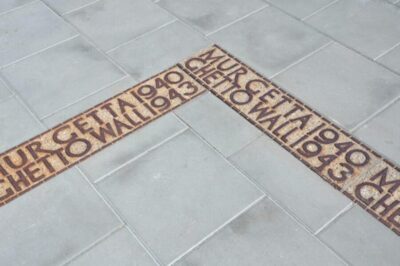
World War Two in Krakow: Jewish Quarter & Ghetto Tour
Read our review →
Warsaw for WWII Buffs – private tour with hotel pickup
Read our review →
III Reich & WW2 in Wroclaw. Monday, Wendsday, Friday regular tour
Read our review →
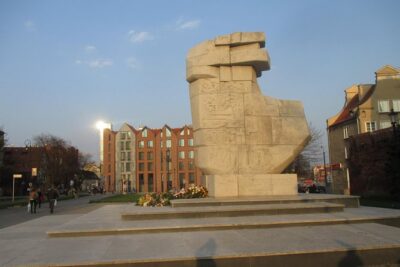
Museum of the Second World War Gdansk Private Tour & Tickets
Read our review →Browse the lists this tour appears in