
Reviewed · WARSAW UPRISING & WORLD WAR II TOURS
Warsaw: WWII Private Tour by Retro Minibus with Hotel Pickup
That is Warsaw at war, told street by street. This 3-hour private tour uses a retro Żuk minibus and real memorial sites to connect the Nazi occupation, Jewish tragedy in the ghetto, and Soviet repression into one clear timeline.
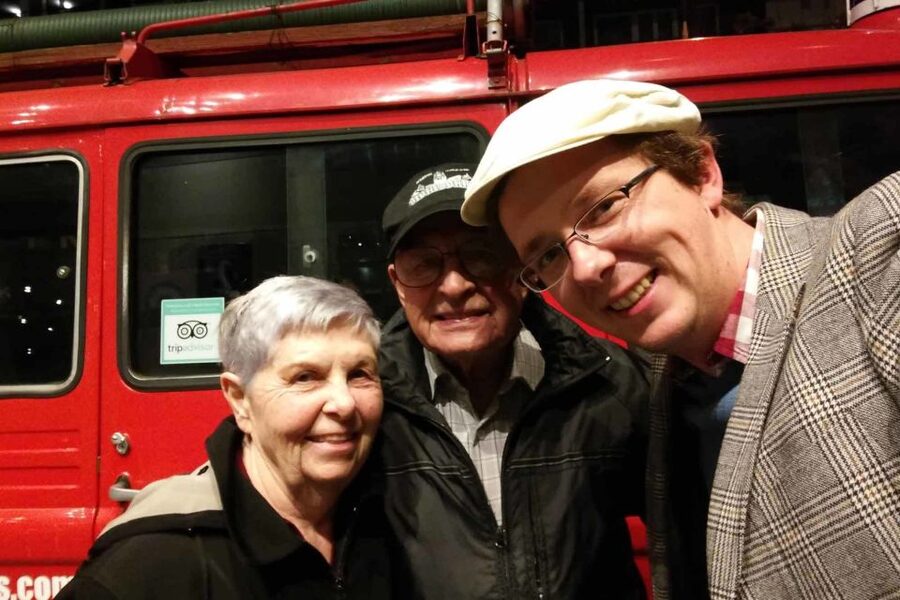
I especially like the way the guides make the story human, not abstract. With guides like Konrad and Lucas, the narration stays sharp, with enough humor to keep you from freezing in the dark moments, yet the facts stay firm. I also like how you compare archival photos to what you see today, so the city feels like the evidence it is.
One consideration: this is emotionally heavy history, and the vintage minibus has no air conditioning, so you’ll want weather-ready clothes and comfortable shoes.
In This Review
- Key things that make this tour worth your time
- Warsaw at war, told street by street
- The retro Żuk minibus, why the 3-hour pace works
- Before 1939 to dual occupation: the story you need first
- The Warsaw Ghetto story: wall fragment, Waliców Street, and the bridge over Chłodna
- Muranów and POLIN: rubble neighborhoods and places built for remembrance
- Soviet crimes remembered: deportations to Siberia and Katyń
- The Warsaw Uprising of 1944, and what January 1945 changed
- Archival photos on real streets: how the tour teaches you to see
- Logistics that actually matter: pickup, walking, and bag rules
- Who this WWII tour is best for
- Should you book this WWII private tour?
- FAQ
- How long is the Warsaw WWII private tour?
- Is hotel pickup included, and how far is it from the city center?
- What language is the guide?
- What vehicle will we ride in?
- Are food and drinks included?
- Are there luggage limits?
- Can children join, and are there child seat booster requirements?
- What is the cancellation policy?
Key things that make this tour worth your time
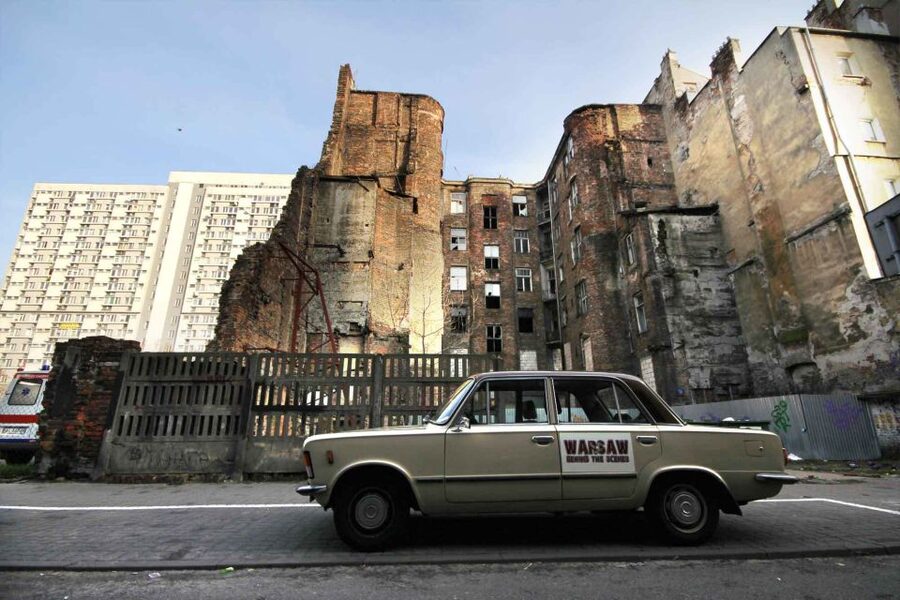
- Retro Żuk minibus, small-group feel that keeps you moving without feeling rushed
- WWII storytelling in clear chapters, from the invasion to the after-effects
- Warsaw Ghetto Wall fragment and unrestored tenement that show what was left behind
- Wooden ghetto bridge over Chłodna Street and the logic of forced separation
- Muranów built on wartime rubble, a neighborhood shaped by destruction
- Katyń and deportation remembrance alongside the Warsaw Uprising timeline
Warsaw at war, told street by street
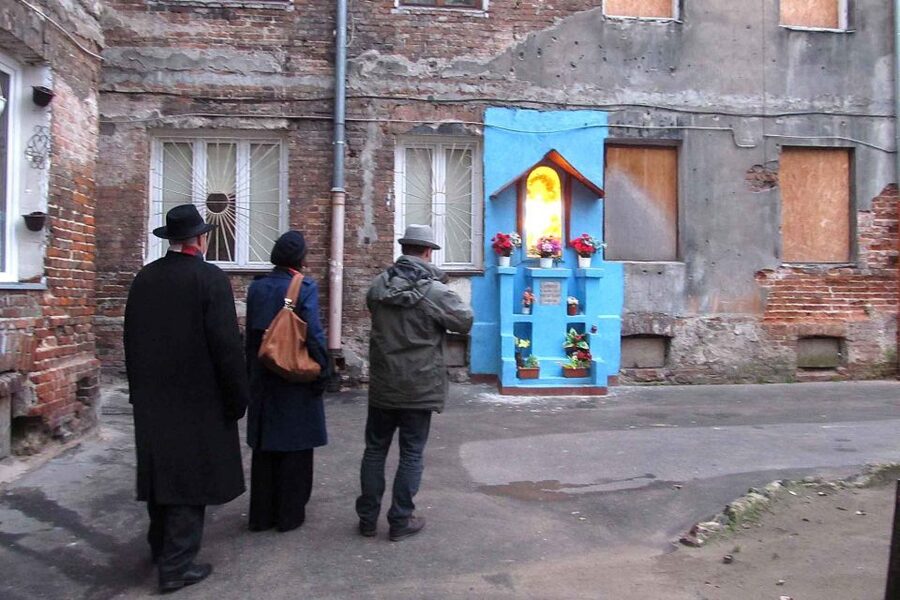
Warsaw can look calm if you only visit the big landmarks. This tour changes that. You ride, you walk a bit, and suddenly the same streets start acting like a timeline. The guide sets the stage first, starting with Europe before 1939, then what happened when Germany invaded Poland and the USSR moved in on the eastern side.
That framing matters. It helps you understand why daily life in Warsaw changed so fast, and why resistance grew so strongly. Instead of treating WWII as one uniform story, you see how occupation pressures stacked on each other.
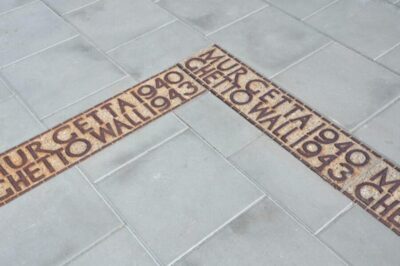
And then the tour narrows in, with a focus on the Jewish population and what the Nazis did in Warsaw. You’ll learn that before the war the city had around 300,000 Jews, and in 1940 Nazi authorities created the Warsaw Ghetto, confining hundreds of thousands in brutal conditions. Expect a visit to a preserved fragment of the former Ghetto Wall, plus places where destruction is still visible in the buildings themselves.
Further tours tracing the 1944 Uprising:
- World War 2 in Warsaw walking tour in English
★ 4.7 · 237 reviews - Warsaw for WWII Buffs – private tour with hotel pickup
★ 5.0 · 166 reviews - Warsaw in World War 2 Walking Tour
★ 5.0 · 26 reviews
The retro Żuk minibus, why the 3-hour pace works
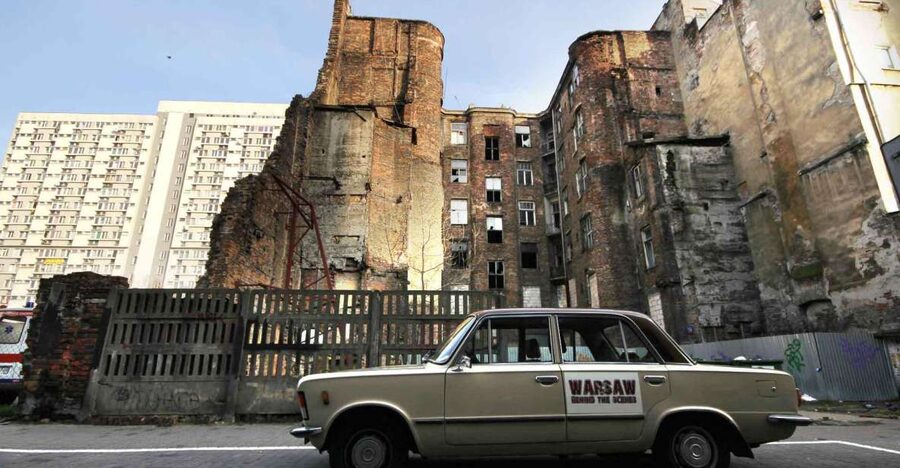
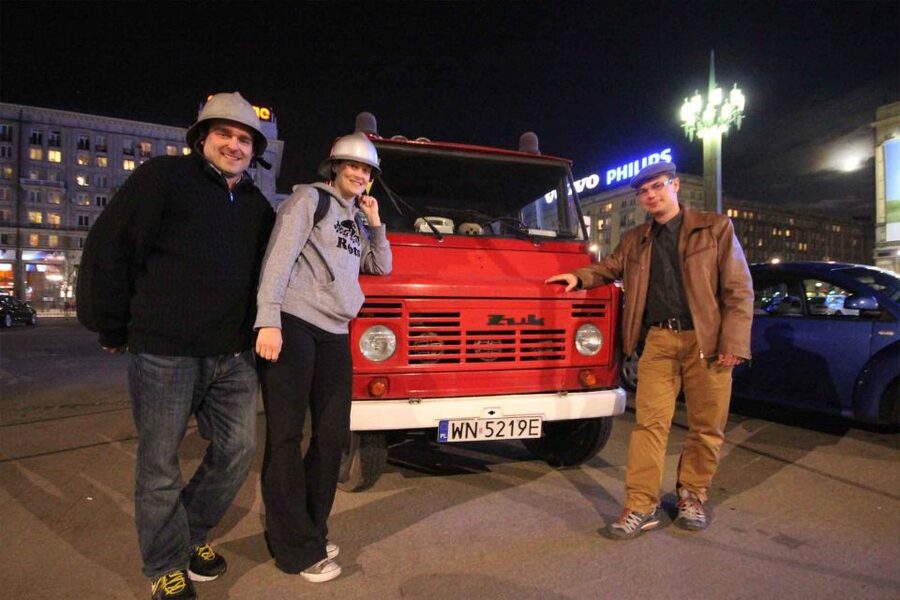
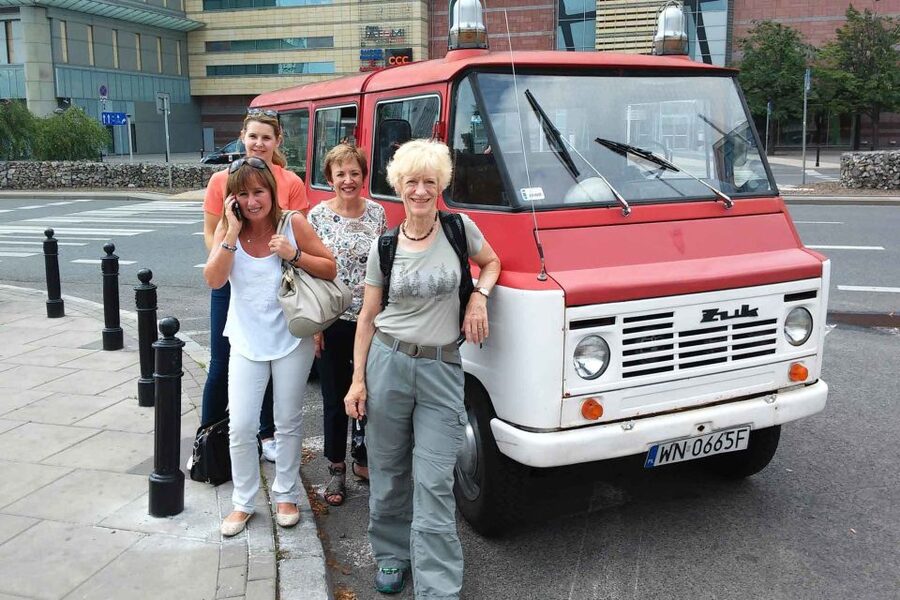
You don’t spend the whole tour parked in one place. You’re on a retro communist Żuk minibus, and that is part of the point. The vehicle feels like period texture while still letting the guide cover more ground comfortably.
Practically, it’s also smart pacing. The tour lasts 3 hours, and the format uses short walking segments at each stop. That means you’re not stuck doing a long uphill slog, but you do need comfortable footwear. Since it’s a private group, the guide can adjust the rhythm to your pace, and the small vehicle capacity keeps the experience personal.
Two comfort notes to plan for:
- The minibuses are not air-conditioned, so summer heat can feel intense.
- Some historic vehicles may not have seat belts, which is permitted for these vehicles.
Winter is the opposite problem. The minibuses do have heating, so cold won’t be your enemy if you dress for it. Either way, bring weather-appropriate clothing, because you’ll be outside enough for conditions to matter.
Before 1939 to dual occupation: the story you need first
The tour begins by getting your bearings on the international situation before the war. You’re not just hearing dates. You’re getting the logic that led to occupation and repression, including the fact that the USSR occupied eastern territories while Germany attacked Poland.
This part is useful because it stops WWII from feeling like a single villain with one strategy. In Warsaw, you see a layered reality where power shifted and oppression changed shape. The guide connects those events to what people endured day to day, and why resistance became one of the defining forces of the era.
If you like history that has cause and effect, this opening works well. It makes later stops feel less like isolated sights and more like chapters in a single story.
The Warsaw Ghetto story: wall fragment, Waliców Street, and the bridge over Chłodna
This is the emotional center of the tour, handled with care and with enough detail to make the tragedy concrete.
You’ll start by seeing a preserved fragment of the Warsaw Ghetto Wall. Standing near the wall remnants, you can feel the physical reality of confinement. It is one of those sights that doesn’t need drama added to it. The material itself does the talking.
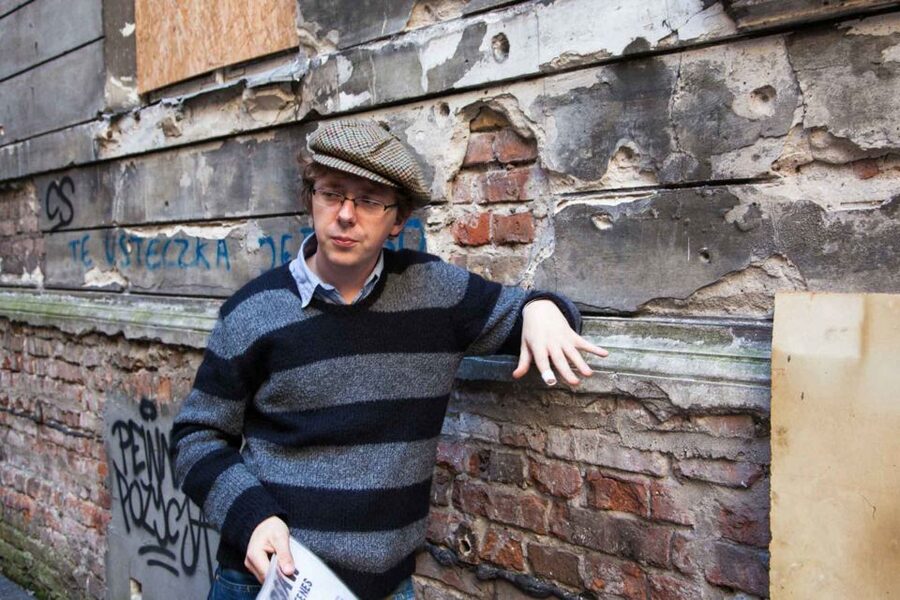
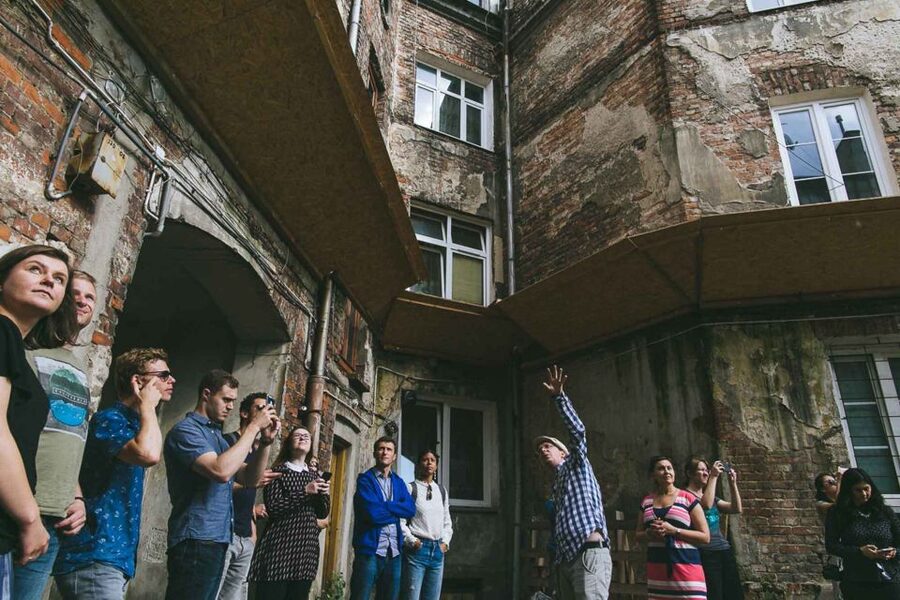
Next comes Waliców Street, where you’ll see one of the last ruined tenement houses left intentionally unrestored. That choice has weight. When buildings are restored, the past often gets smoothed over. Here, the damage remains visible on purpose, acting like a permanent reminder that destruction was not just theoretical. It happened to real homes, on real streets.
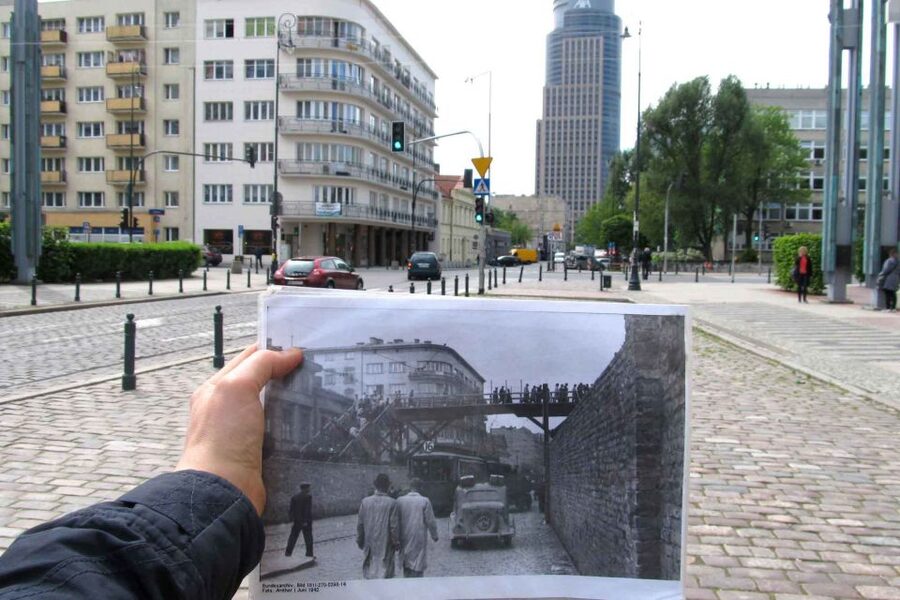
Then you move toward one of the most distinctive ghetto details: the wooden bridge over Chłodna Street. The guide explains how it was built high above street traffic to connect two sealed sections of the ghetto. It’s a detail that helps you grasp the system. Even movement had to be controlled and choreographed.
If you remember only one part of this ghetto segment, make it the combination of objects you see:
- a wall fragment,
- an unrestored ruin,
- and a bridge designed for controlled connection.
That trio turns the history into something you can visualize.
Still tacked up around Warsaw

Muranów and POLIN: rubble neighborhoods and places built for remembrance
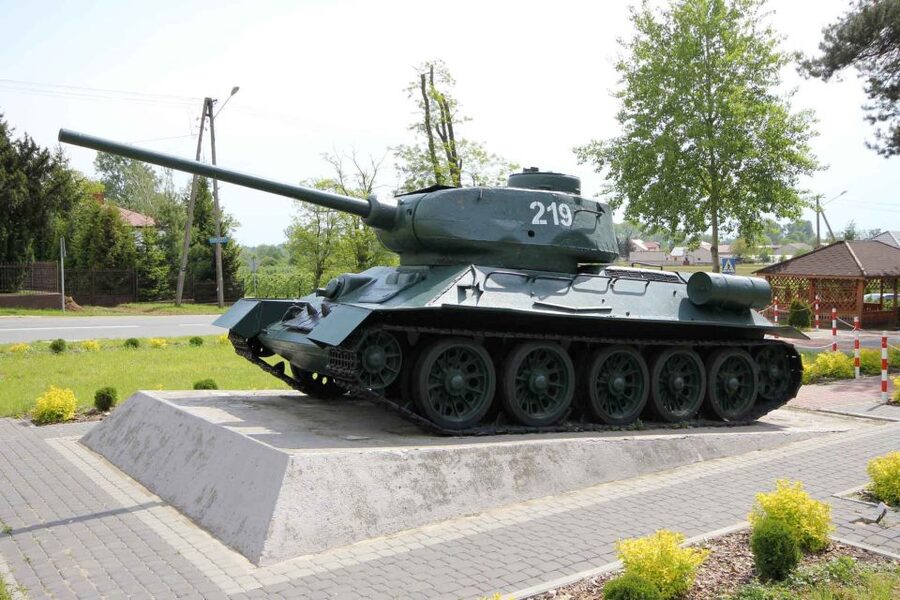
After the ghetto core, you head into Muranów, a district that was constructed entirely on wartime rubble. That fact alone tells you the neighborhood has a different relationship to ground than most parts of Warsaw. You’re walking through a city that had to be rebuilt from what was left.
In this area, the tour focuses on remembrance and on how the story continues into public memory. You’ll visit around the Monument to the Ghetto Heroes and near the POLIN Museum of the History of Polish Jews, located by the site of the first armed clashes of the 1943 Ghetto Uprising.
Even if you’ve read about uprisings before, this location-based approach helps. You see where violence erupted and where people later created a framework for commemoration and dialogue. The point is not only to learn what happened. It’s to understand that the city has carried the aftermath forward in institutions and monuments.
Also, the guide uses the contrast between then and now here. You’ll get enough context to connect the uprising to the wider occupation story you heard earlier, so it doesn’t feel like a standalone event.
Soviet crimes remembered: deportations to Siberia and Katyń
Not all Warsaw’s suffering during WWII came only from the Nazis. The tour also addresses Soviet repression, including mass deportations to Siberia and the Katyń massacres.
You’ll visit the Monument to the Fallen and Murdered in the East, which memorializes these crimes. This stop is important because it broadens your understanding of what changed after the German invasion. The tour keeps both halves of Warsaw’s WWII experience on the same mental map: what happened under Nazi rule, and what happened under Soviet rule.
A good guide will also frame this carefully, so you understand this section as part of the same larger pattern of occupation and forced violence. You leave with a more balanced view of the era, instead of a one-sided storyline.
The Warsaw Uprising of 1944, and what January 1945 changed
The final chapter brings you to the Warsaw Uprising of 1944. This is described as the city’s last major attempt to regain independence before the arrival of the Red Army.
The guide explains how the uprising was ultimately defeated. After that, Nazi forces deliberately destroyed most of Warsaw, turning the city into ruins. Then you get the pivot point: the Soviet army entered the ruins in January 1945, and that began a new political era.
This section is where the tour feels most like a before-and-after lesson. You’re not just learning that the city was destroyed. You’re learning that destruction was systematic, and the political consequences followed quickly.
If you’re the kind of traveler who likes closure, you might feel a jolt here. The tour doesn’t sugarcoat the outcome, but it does connect the dots from the uprising to the shift in power. That connection is often missing from quick city sightseeing.
Archival photos on real streets: how the tour teaches you to see
One of the smartest parts of the tour is something subtle: archival photographs placed next to the present-day streets.
The guide helps you compare wartime images with today’s Warsaw, so your brain can do a useful trick. You stop treating the past as a museum display. Instead, it becomes a set of clues about what used to be there, what was destroyed, and what survived.
This photo method is also why the tour works even if you’ve been to Warsaw before. You’re not redoing the same walking route in the same way. You’re learning a second layer of reading the city.
And for me, that is the value. You leave knowing how to look at buildings, empty spaces, and memorial plaques with more meaning than when you arrived.
Logistics that actually matter: pickup, walking, and bag rules
The tour includes pickup and drop-off within a 3 km radius of the city center. That’s a nice convenience, especially if you’re trying to protect your first morning or afternoon.
One practical point: transfer time is included in the tour total. If your hotel is right at the edge of the pickup zone, you may lose some time to driving. In those cases, meeting in the city center can save you a bit of time on the ground.
Also plan around what you can carry. Luggage or large bags are not allowed, and the vehicles and stops are built around walking segments. Pack light.
Finally, there’s a child factor. The tour is not suitable for children under 15. For kids over 15, seat boosters are mandatory if a child is under 150 cm tall, and the operator can advise on availability.
Who this WWII tour is best for
This is a strong match for you if:
- You want context, not just a checklist of sights.
- You care about specific WWII locations where history is still visible.
- You appreciate a guide who can tell a story with both seriousness and a human touch.
It also helps if you like learning through “seeing.” The wall fragment, the unrestored ruin on Waliców Street, the ghetto bridge over Chłodna Street, and the rubble-built Muranów district turn reading into understanding.
You might want to think twice if you’re sensitive to heavy subject matter, since the tour focuses on atrocities, forced confinement, deportations, and deliberate destruction of Warsaw. You can still handle it, but treat it like a main experience, not a casual stroll.
And if you’re traveling with very young kids, the under-15 rule and the requirement for seat boosters for shorter children will affect your options.
Should you book this WWII private tour?
Yes, if you want Warsaw’s WWII story told with real places and real artifacts still in front of you. For the $165 per person price and the 3-hour duration, the value comes from three things: a professional English-speaking local guide, private-group attention, and a route that connects the ghetto, resistance, Soviet repression, and the uprising into one coherent timeline.
You’ll get more than facts. You’ll get the city as evidence, reinforced by archival photographs and preserved fragments like the ghetto wall remnant and the unrestored tenement damage.
Skip it only if you’re looking for light sightseeing. This tour is built for understanding and remembrance, not distraction.
FAQ
How long is the Warsaw WWII private tour?
The tour duration is 3 hours, including the pickup and transfer time.
Is hotel pickup included, and how far is it from the city center?
Pickup and drop-off are included within a 3 km radius of the city center. Transfers from hotels within that zone are counted in the total tour time.
What language is the guide?
The guide is a professional English-speaking local guide.
What vehicle will we ride in?
You travel by a retro communist Żuk minibus. These vintage vehicles are not air-conditioned, and some may not have seat belts, which is permitted for historic vehicles. Heating is available in winter.
Are food and drinks included?
No. Food and drinks are not included.
Are there luggage limits?
Yes. Luggage or large bags are not allowed.
Can children join, and are there child seat booster requirements?
The tour is not suitable for children under 15. It can be booked for adults and children over 150 cm. If a child is under 150 cm, a seat booster is mandatory, so you should contact the operator to confirm availability.
What is the cancellation policy?
You can cancel up to 24 hours in advance for a full refund.
Freshly posted from Warsaw
- Krakow Small Group Tour from Warsaw with Lunch, Schindler’s Factory included★ 5.0 · 7 reviews
- Warsaw Private Transfer from Warsaw Chopin Airport (WAW) to City centre★ 4.0 · 7 reviews
- 3-hour tour at Warsaw Uprising 1944 Museum /inc. Pick-up/★ 4.9 · 7 reviews
- Wolfs Lair – Hitlers hideout★ 4.5 · 7 reviews
- Warsaw: Evening History and Pubs Tour by Retro Minibus★ 5.0 · 7 reviews
- Warsaw: Private Vodka Tasting Night with Snacks and Pickup★ 5.0 · 7 reviews
- Warsaw Old Town with Royal Castle + Royal Route: SMALL GROUP /inc. Pick-up/★ 5.0 · 7 reviews
Warsaw Uprising & World War II Tours, compared.
World War Two in Krakow: Jewish Quarter & Ghetto Tour
Read our review →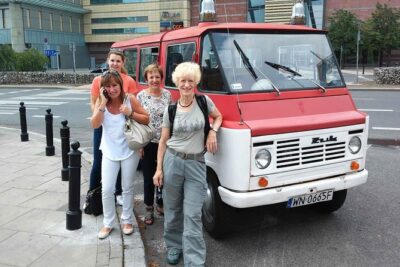
Warsaw for WWII Buffs – private tour with hotel pickup
Read our review →
III Reich & WW2 in Wroclaw. Monday, Wendsday, Friday regular tour
Read our review →
Museum of the Second World War Gdansk Private Tour & Tickets
Read our review →Browse the lists this tour appears in