

Reviewed · COMMUNISM & PRL HISTORY TOURS
Nowa Huta Premium Tour
Krakow has a second city plan. This tour takes you to Nowa Huta, a 1950s communist-era vision, with guided stops at Plac Centralny and Muzeum Nowej Huty, plus a move into an underground tunnel and shelter. I like that it trades postcard crowds for real context, and I like how the guided flow connects big ideas to specific places.
One heads-up: it’s roughly a 4 to 5 hour outing with walking between sites, and the activity calls for moderate physical fitness. It’s also capped at a small group size of up to 20 people, which is great for questions, but it means you get less free wandering time.
In This Review
- Key highlights worth marking on your map
- Nowa Huta, not Old Town: why this tour feels like a real alternative
- Pickup, round-trip transfers, and what a 4 to 5 hour day really means
- Muzeum Nowej Huty and Plac Centralny: where the district’s story starts
- Aleja Roz (Avenue of Roses): architecture you can actually read
- Tadeusz Sendzimir Steelworks: industry, power, and the Lenin-era name
- Underground tunnel and 1950s shelter: the tour’s strongest mood shift
- Arka Pana Church: how faith pushed back against the system
- Price and value: does $114.52 make sense for this route?
- Who should book this Nowa Huta Premium Tour?
- FAQ
- FAQ
- What time does the Nowa Huta Premium Tour start?
- How long is the tour?
- Does the tour include pickup and transportation?
- Is admission included anywhere?
- How many people are in the group?
- What is the cancellation window for a full refund?
- Should you book the Nowa Huta Premium Tour?
Key highlights worth marking on your map
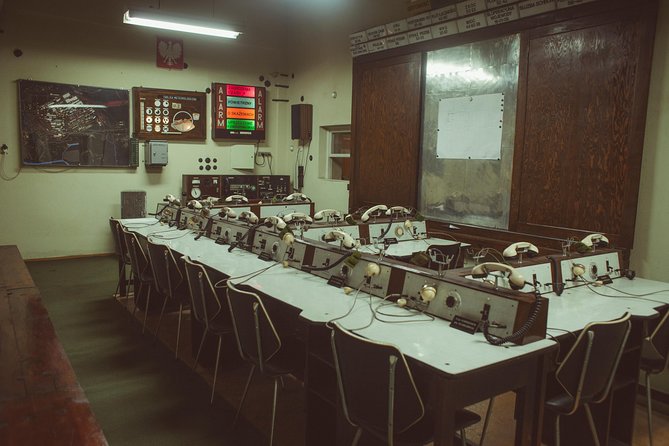
- Plac Centralny and Muzeum Nowej Huty set the scene, including how the district was developed from 1949 to 1989
- Aleja Roz (Avenue of Roses) gives you a guided look at the district’s architecture, not just the streets
- Tadeusz Sendzimir Steelworks connects Poland’s industrial story to its communist-era identity, including the Lenin-era name
- An underground tunnel and 1950s shelter is the tour’s most dramatic change of pace
- Arka Pana Church tells a power-and-faith story, consecrated by Karol Wojtyla in 1977
Nowa Huta, not Old Town: why this tour feels like a real alternative
Most Krakow days start in the Old Town, and honestly, that’s popular for a reason. But if you want to understand how Krakow’s region shaped modern Poland, this is one of the smarter swaps I’ve seen. Instead of chasing the same viewpoints, you go to Nowa Huta, a district planned in the late 1940s and 1950s as a utopian ideal city. It’s strongly tied to communist goals, and that’s exactly why it’s fascinating: you can still read the ideology in the layout and the buildings.
What I especially like is that the tour doesn’t treat Nowa Huta like a single “topic stop.” You get the big-picture location (Plac Centralny), then the human-scale streets (Aleja Roz), then the industrial engine (the steelworks), then the private, survival-related space underground (the tunnel and shelter). It’s a guided storyline you can actually follow.
If you’re the type who likes your history grounded in places you can see and walk through, this format works well. And if you’re the type who wants a clean, easy afternoon with minimal explanation, you might find it more intense than a basic city walk. But intensity here is part of the point.
More Nowa Huta blocks and PRL relics:
- Krakow: Nowa Huta Guided Tour in Vintage Car
★ 4.9 · 277 reviews - Legendary Private Nowa Huta Communism Tour with Crazy Guides
★ 5.0 · 262 reviews - Nowa Huta: Steelworks Administration Buildings/Shelters Tour
★ 4.8 · 260 reviews
Pickup, round-trip transfers, and what a 4 to 5 hour day really means
This is set up as a half-day tour, starting at 3:00 pm. Duration is listed as about 4 to 5 hours, so it’s not “drop in, see one thing, leave.” You should plan to stay engaged for the full stretch, because the stops are spaced and there’s a sequence of museum time and walking.
You also get pickup offered and round-trip transfers from Krakow, which is a big practical win. With a tour like this, the distance matters. You don’t have to figure out where to stand, how to get there on your own, or whether public transport will match your schedule. For a district that many people skip, transportation support turns it from an extra chore into a straightforward outing.
Group size is max 20 travelers, which helps. Smaller groups usually mean fewer “excuse me, can you wait” moments when you’re moving between stops, and you’re more likely to catch the guide’s explanations instead of just hearing them from far away.
One more reality check: the tour recommends moderate physical fitness. That’s not a deal-breaker, but it does mean you should expect walking between sites, plus time spent on a guided route that stays active for several hours.
Muzeum Nowej Huty and Plac Centralny: where the district’s story starts
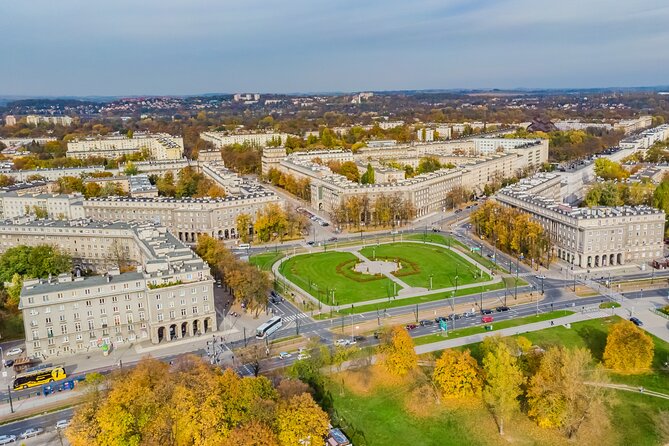
The tour kicks off at Muzeum Nowej Huty – Muzeum Krakowa. Plac Centralny, the Central Square, is highlighted as the area’s current center, and you learn how Nowa Huta was developed between 1949 and 1989.
There are two reasons this first stop matters. First, the museum gives you the “why” behind what you’ll see later. You’re not just looking at architecture and industrial buildings, you’re understanding the system those buildings were built for. Second, the time allocation is meaningful: this stop is listed at about 3 hours. That’s a substantial chunk of your outing, and it usually means you’ll come out with a much clearer mental map.
Admission to the museum is included, which also adds value. When you’re comparing tour prices, included admission can turn a seemingly pricey option into a fair deal, especially for a program that also handles transfers.
Potential drawback: if you’re short on time in Krakow and your main goal is quick photo stops, a museum-heavy start can feel like more sitting than you expected. But if you like history that explains how modern life was shaped, this gives you the foundation you’ll need for the rest of the route.
Aleja Roz (Avenue of Roses): architecture you can actually read
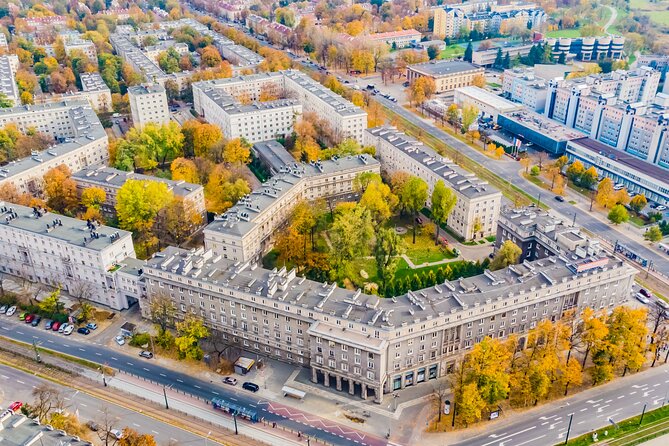
After the museum, you move into a guided walk through Aleja Roz, also known as the Avenue of Roses. This part is less about dramatic reveals and more about seeing how planning decisions show up in real streets.
Now, you can read about planned cities all day. But on foot, details become clearer fast: proportions, design choices, and how buildings relate to each other. A guided architectural walk helps you connect the museum concepts to what’s in front of you. It also helps you avoid the common mistake of treating Nowa Huta like a generic “Soviet-style” place. The district has its own character, and this stop is built to help you notice it.
If you’re visiting in warm weather, you might also appreciate this as an outdoor stretch before the steelworks and underground segment. Just keep in mind that you’re still on a clock. This tour is moving with purpose.
Still tacked up around Krakow


Tadeusz Sendzimir Steelworks: industry, power, and the Lenin-era name
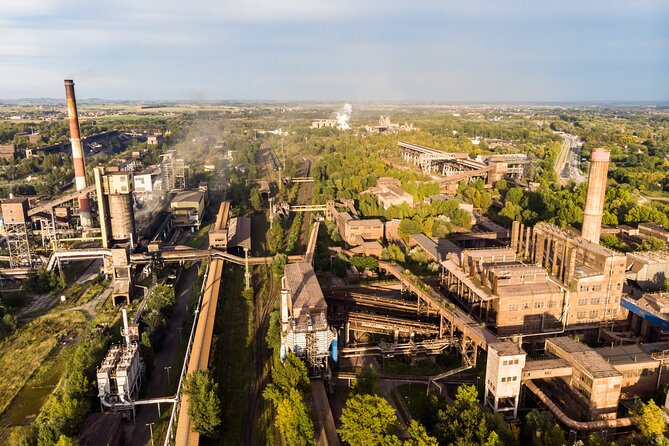
Next comes Tadeusz Sendzimir Steelworks, which was previously called Vladimir Lenin Steelworks during the Communist rule. That name change alone tells you a lot about how political narratives get tied to industry, and how places evolve when power shifts.
You’re not just walking around the exterior. The tour includes time wandering through offices and conference rooms, which is important for understanding what the place was meant to represent. A steelworks can be just “a factory” to a casual visitor. Inside rooms where decisions were made, you start seeing it as infrastructure for governance and ideology as well.
This stop is where the tour often becomes more than sightseeing. You see how the industrial engine of a planned city connects to the city’s intended future. If you like industrial history, labor-era architecture, or political symbolism, you’ll likely find this segment one of the most satisfying.
Possible drawback: if you’re expecting a relaxed “look and go” factory tour, this is a guided narrative stop. You’ll get explanations, and it’s likely you’ll spend more time paying attention than just snapping photos.
Underground tunnel and 1950s shelter: the tour’s strongest mood shift
Then the day changes gears. Your guide takes you to an underground tunnel that leads to a shelter dating back to the 1950s.
This is one of those moments where history becomes physical. Underground spaces carry a different kind of feeling than museum rooms and open squares. You’re not just hearing about survival thinking. You’re stepping into the environment that supports it.
This is also where the tour earns its reputation for being memorable. A shelter space does more than add variety. It adds contrast. You started the day with planning and public squares. Now you’re shown how that public project had a private edge, a preparedness mindset connected to the era.
Practical tip for your comfort: underground areas can feel cooler and a little darker than you expect. Dress in layers so you’re not stuck either too warm above or too cold below, and keep your shoes comfortable for the tunnel experience.
Arka Pana Church: how faith pushed back against the system
Back above ground, you visit Arka Pana (Lord’s Ark) Church, described as the first church built in Nowa Huta after inhabitants demanded it from the Communist government. The complex was consecrated by Karol Wojtyla in 1977.
What I like about including this church in the tour is that it doesn’t only frame communism as architecture and industry. It also frames it as a lived conflict over community needs. You can connect the dots between planning authority and ordinary people asking for religious life, and then you can see the result in a specific place.
This stop also creates a balanced ending tone. After steelworks and an underground shelter, a church built through insistence feels like a counterweight. And with Karol Wojtyla’s consecration in 1977, you have a real historical anchor that makes the story clearer.
Potential drawback: if you’re not interested in religious history, this can feel like the least “practical” stop. But even if that’s not your thing, it’s still useful because it shows the human side of the Nowa Huta system.
Price and value: does $114.52 make sense for this route?
The price is listed at $114.52 per person. That’s not a low-cost add-on, so it’s fair to ask what you’re really paying for.
Here’s the value case as it’s built into the tour design:
- Round-trip transfers from Krakow are included, which reduces time and hassle
- Admission ticket included at Muzeum Nowej Huty (and the museum is a major portion of the tour)
- The route includes multiple high-impact segments, including steelworks and an underground shelter
The fact that the tour is booked about 24 days in advance on average can be a sign that people find it worth planning for. The max group size of 20 also suggests a more hands-on guided experience rather than a huge bus tour where you’re just looking and hoping.
If you compare this to DIY travel, DIY might look cheaper on paper. But DIY rarely includes organized museum time, coordinated entry into specific areas like offices and conference rooms, and guided interpretation that ties everything together. For many people, the guide-driven context is what makes the price feel reasonable.
Who should book this Nowa Huta Premium Tour?
This tour fits best if you:
- Want a clear, guided story about Poland’s communist-era city planning, not just isolated facts
- Like museums that connect to what you’ll see outdoors and indoors
- Prefer smaller groups and a guided pace
- Enjoy unusual stops, like underground spaces and industrial sites
It’s less ideal if you:
- Only want classic Old Town sights and postcard viewpoints
- Prefer minimal walking and short stays at each stop
- Are not interested in a museum-centered start
FAQ
FAQ
What time does the Nowa Huta Premium Tour start?
The start time is listed as 3:00 pm.
How long is the tour?
The duration is approximately 4 to 5 hours.
Does the tour include pickup and transportation?
Yes. The tour offers pickup, and it includes round-trip transfers from Krakow.
Is admission included anywhere?
Yes. Admission ticket is included for Muzeum Nowej Huty.
How many people are in the group?
The tour has a maximum of 20 travelers.
What is the cancellation window for a full refund?
You can cancel up to 24 hours in advance for a full refund. If you cancel less than 24 hours before the start time, the amount paid is not refunded.
Should you book the Nowa Huta Premium Tour?
If you’re looking for something that feels different from the usual Krakow loop, I think this is a strong pick. The combination of Plac Centralny and Muzeum Nowej Huty, the walk through Aleja Roz, the Tadeusz Sendzimir Steelworks connection to its former Lenin-era name, and the underground tunnel and 1950s shelter gives you a “planned city” story that you can actually see.
Book it if you want guided context and you don’t mind that the afternoon is structured and history-forward. Skip it if your ideal day is mostly Old Town sightseeing and you’re trying to keep movement and explanations to a minimum.
One last quick decision tip: if you’re the kind of traveler who likes understanding how a place got made, not just how it looks, this tour will likely feel like time well spent.
Freshly posted from Krakow
- Krakow: Audio-Guided City Experience by Golf Cart★ 5.0 · 1 review
- Krakow: Zakopane and Thermal Springs Tour with Hotel Pickup★ 5.0 · 1 review
- Half-day In the footsteps of John Paul II Tour from Krakow★ 5.0 · 1 review
- Krakow: Wawel & Salt Mine Experience with Lunch★ 5.0 · 1 review
- Tour to Wadowice: Hometown of Pope Saint John Paul II★ 5.0 · 1 review
- Krakow: Outdoor Paintball with Hotel Transfers★ 5.0 · 1 review
- Krakow: Nowa Huta Communist District Walking Tour★ 5.0 · 1 review
Communism & PRL History Tours, compared.
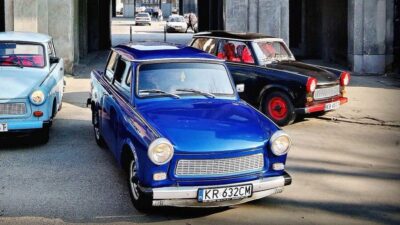
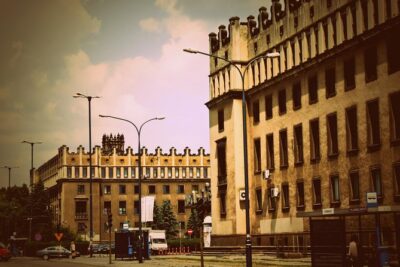
Legendary Private Nowa Huta Communism Tour with Crazy Guides
Read our review →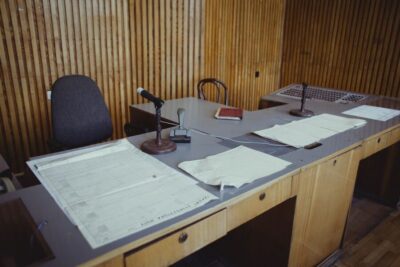
Nowa Huta: Steelworks Administration Buildings/Shelters Tour
Read our review →
Private Tour: Warsaw’s Communist History by Retro Fiat
Read our review →Private Nowa Huta Adventure Tour in Communist Cars
Read our review →

Browse the lists this tour appears in