
Reviewed · JEWISH HISTORY & HERITAGE TOURS
Jewish Warsaw Walking Tour
Ghost streets teach fast. This Jewish Warsaw Walking Tour connects surviving places like Grzybowski Square and the Nozyk Synagogue with clear, story-driven explanation, and it does it in a manageable 2.5-hour loop. I especially like the fact that key stops come with free admission tickets, so you are not constantly paying extra. I also like how guides can keep the mood human with humor while staying factual. One thing to consider, though, is that it is mostly outdoors, so cold, wind, and standing time are real parts of the experience.
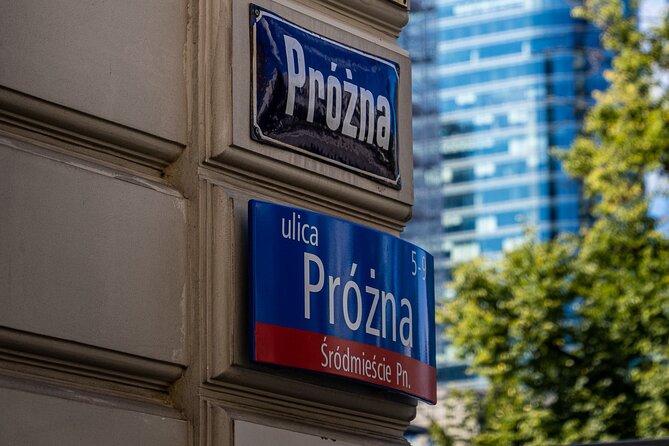
You start at All Saints Church Warsaw (Pl. Grzybowski 3/5) at 10:00 am and finish at the POLIN Museum area (Mordechaja Anielewicza 6). You get a mobile ticket, the tour runs in all weather, and it is best if you have moderate walking stamina. Group size is capped at 40, which helps keep questions from getting lost.
In This Review
- Key Points You Should Know Before You Go
- Why This Jewish Warsaw Walk Hits Hard in 2.5 Hours
- Route, Start-To-Finish Flow, and What the Price Really Buys
- Stop 1, Grzybowski Square: A Rare Ghetto-Resistant Patch
- Stop 2, Nozyk Synagogue: The Only Surviving Pre-War Synagogue
- Stop 3, Waliców: The Ghetto Border Comes Into Focus
- Stop 4, Chłodna Street Footbridge Monument: Connecting What Was Broken
- Stop 5, POLIN Museum Area and the Ghetto Heroes Monument
- Stop 6, Monument to the Heroes of Warsaw: The Walk’s Final Weight
- Guides, Humor, and the Tip-Friendly Pay Structure
- What to Wear, Expect for Walking, and How to Stay Comfortable
- Is This Tour Worth It for You? (Best Fit Scenarios)
- Should You Book This Jewish Warsaw Walking Tour?
- FAQ
- How long is the Jewish Warsaw Walking Tour?
- What is the meeting point and start time?
- Is the tour offered in English?
- Are tickets included for the stops?
- Is pickup included?
- How many people are in a group?
- Is the tour outdoors and does it run in bad weather?
- Can I get a refund if I need to cancel?
Key Points You Should Know Before You Go
- Small group limit (max 40) helps keep the pacing conversational.
- Free admission tickets at each stop reduce surprise costs.
- A stop-by-stop “trace the ghetto” route uses what remains in the city to explain what was destroyed.
- POLIN Museum and monuments show how memory is shaped after the war.
- English tour with mobile ticket makes it easier to join without printouts.
- Tip-aware pay as you wish style means your base price covers reservation and the guide, with extra reward up to you.
Why This Jewish Warsaw Walk Hits Hard in 2.5 Hours
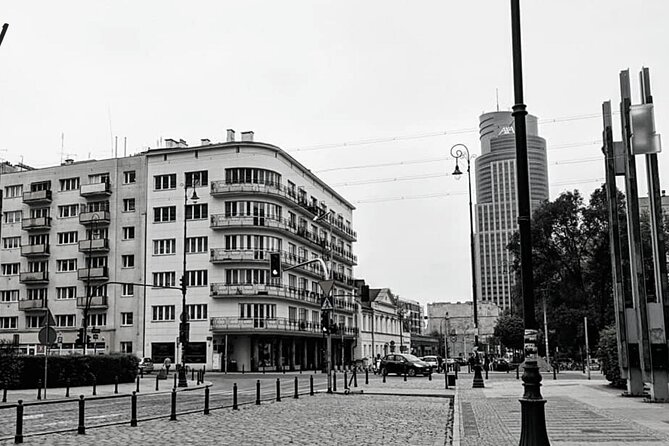
Warsaw today does not look like the ghetto did. That is exactly why this tour works. It takes you to the few spots that still stand, then builds the missing picture with street-level context, names, and geography you can actually picture. The result is a walking history lesson that feels tied to real corners of the city, not just slides or timelines.
Two moments tend to anchor the whole tour. One is Grzybowski Square, which includes a rare survivor area that escaped full destruction. The other is Nozyk Synagogue, noted as the only surviving pre-war Warsaw synagogue. Even with limited physical remnants, the guide’s narration helps you understand why these places still matter.
The tone is serious, but you will not feel trapped in sadness the whole time. On many departures, guides use a dry, human humor style to keep you listening and asking questions. Just be ready for a route that does not rush, because it has to cover weighty material at walking speed.
More Walking Tours in Warsaw
- Warsaw: Old Town Highlights Walking Tour in English
★ 4.7 · 1,516 reviews - Warsaw: Old Town Guided Walking Tour
★ 4.9 · 599 reviews - Half-Day Polish Food Walking Tour with Guide and Dinner
★ 4.5 · 381 reviews
Route, Start-To-Finish Flow, and What the Price Really Buys
The price is $26.59 per person for about 2 hours 30 minutes. At this cost, you are really paying for three things: a guide, coordination, and the structure that gets you from one historical point to the next without getting lost in names and map lines.
The tour includes pickup and drop-off from designated meeting points, plus both a local guide and a professional guide. That matters because Warsaw can be easy to navigate until you start chasing specific historical locations. This tour is built for that chase.
You get mobile ticketing and the tour runs in all weather. You should dress for reality, not optimism. If it is windy, you will feel it. If it is cold, you will stand still long enough for your hands to notice. The experience is designed for outdoor viewing, so plan to move, bundle up, and accept that comfort is part of travel planning.
Stop 1, Grzybowski Square: A Rare Ghetto-Resistant Patch
Grzybowski Square is not just a “starting point.” It is the tour’s first proof of survival. It is described as one of the very few areas of Warsaw connected to the ghetto that survived the destruction of the Warsaw ghetto.
That detail changes how you look at the city. Instead of treating the ghetto as only a historical concept, you start understanding that certain blocks and surroundings endured in some form. When your guide frames what happened around this location, you begin to see why even small geographic survivals can carry huge meaning.
Admission ticket free here also keeps the momentum. You do not need to budget extra just to get started, and you can focus on listening and orienting your mental map.
What to watch for: you might think a square will be quick. It is not. This first stop sets the tempo for the rest of the walk, and you will want to pay attention early.
Stop 2, Nozyk Synagogue: The Only Surviving Pre-War Synagogue
Next comes Nozyk Synagogue, presented as the only surviving pre-war Warsaw synagogue. Even if you are not a worshipper, this stop lands because it is a physical thread from before the catastrophe.
A synagogue is not just a building. It is a sign of community life: gatherings, identity, and daily rhythm. During the tour, your guide uses that idea to explain why survival is so rare and why this specific synagogue carried an enormous symbolic weight after the war.
The stop is around 30 minutes with admission free, which is helpful. Still, keep expectations realistic. Some people feel they want more time inside a synagogue space. With only a short stop window, you may mostly focus on what is visible and what the guide explains from the outside or in brief access areas, depending on how the visit is run that day.
If you want deeper time inside a museum or building, you can treat this tour as the orientation and then add additional time later on your own at places like POLIN.
Further Jewish history and heritage itineraries:
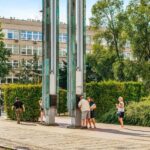

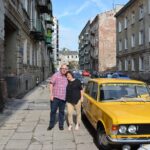
Stop 3, Waliców: The Ghetto Border Comes Into Focus
Waliców is where the route turns from “survival sites” into border thinking. The tour describes Waliców as once the ghetto border, and that framing is powerful because borders are where daily life gets squeezed.
Here, the guide’s job becomes translation. You are standing in modern Warsaw. The tour explains how a street line once represented restriction, control, and separation. That is hard material, but walking it helps you feel the logic of the space more than just hearing it.
This stop is about 30 minutes and admission ticket free, so you can keep moving without extra entry costs. It also prevents the tour from becoming overly museum-like. The ghetto story is told through streets as much as through buildings.
One practical consideration: for this part, you will likely do a lot of mental mapping. If you like taking notes or screenshots, use that instinct here. Your brain will appreciate it later at POLIN.
Stop 4, Chłodna Street Footbridge Monument: Connecting What Was Broken
Chłodna Street is where the tour adds one of its most “walkable” metaphors: a monument commemorating the footbridge once connecting parts of the Warsaw ghetto.
It is a small detail to some people, but it is one of those places where memory becomes physical form. A footbridge sounds ordinary, but in a ghetto context it represents the daily reality of movement under restriction, the way people still had to connect to survive, work, or reach community spaces.
Expect roughly 20 minutes at this stop. Your guide typically uses it to explain why infrastructure mattered and how pathways shaped what people could do, even when freedom was restricted.
Because this is a monument-focused stop, you might get the most value if you slow down and look at what is around it. Read the surrounding street, because monuments often make sense as part of a larger setting, not as an isolated object.
Stop 5, POLIN Museum Area and the Ghetto Heroes Monument
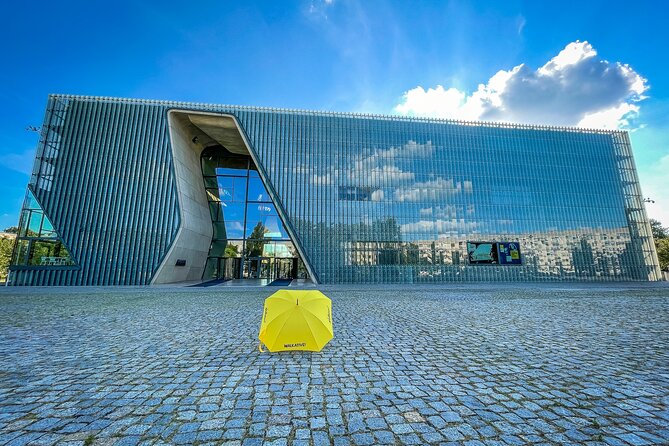
Then you hit POLIN, the big emotional and educational center of the route. The tour includes POLIN Museum of the History of Polish Jews plus the 1948 Monument to the Ghetto Heroes.
This stop is about 20 minutes. That is short for a museum, but it is the right length for a walking tour that needs to cover multiple sites. Think of it like a guided “orientation visit,” not a full museum day. You get a guided understanding of why POLIN exists and how the memory of the ghetto is carried forward in post-war commemoration.
It also helps that the stop includes free admission for what is scheduled in the tour flow. You are not paying extra just to reach the key memory points.
What you might miss with limited time: deeper exhibits. If you love reading, diagrams, personal stories, and artifacts, you will probably want to return later with a full ticket and more hours.
Practical tip: after POLIN, you still have one more monument stop. Wear comfortable shoes, because your feet will want a break around now.
Stop 6, Monument to the Heroes of Warsaw: The Walk’s Final Weight
The last stop is the Monument to the Heroes of Warsaw, with about 30 minutes here. This is where the emotional tempo usually settles. Earlier stops focused on survival, borders, and physical remnants. This one emphasizes commemoration and the collective memory of resistance and loss.
Your guide ties the story together without pretending the city is unchanged. Instead, you leave with the sense that history is layered, and that memorials are part of how communities keep meaning from fading.
Admission is listed as free here as well, which keeps the end of the tour consistent and avoids last-minute costs.
If you like a clean finish, take a moment here to stand still. Let the guide’s final wrap-up land, then slowly look around you. The point is not just the monument itself. It is how it sits in today’s Warsaw.
Guides, Humor, and the Tip-Friendly Pay Structure
The guides are one of the best reasons to book. Several named guides have shown up in people’s experiences, including Olivia, Jacek, Andrew, and Tomas. The common threads are clear storytelling, strong history context, and a knack for answering questions without making you feel rushed.
Humor comes up more than you might expect, often described as dry. That style can actually help because you are dealing with horrific subject matter. The humor does not erase the tragedy. It helps the explanation stay human, so you stay engaged long enough to absorb what matters.
Here is the important money detail: the tour is described as a pay as you wish style experience. Your payment covers a reservation fee and the guide’s payment. That means your base price is not just a service charge. It is part of how the tour is run, and the guide is already compensated. Extra tipping is still up to you, but the idea is not to assume the tour is only “tips later.” It is not. The guide may explicitly ask you to reward them at the end, and that request is part of the experience.
What to Wear, Expect for Walking, and How to Stay Comfortable
This is a walking tour with multiple stops and repeated street standing. It is listed as requiring a moderate physical fitness level, and the schedule stretches to about 2.5 hours.
Plan for:
- Time outdoors, even when the weather is not cooperating
- Wind exposure, especially if you are visiting in colder months
- A lot of looking up and listening without long seated breaks
One practical thing I strongly recommend: bring layers. If you get cold fast, you will struggle through the final monuments. If you dress for comfort, the history will land better because you will be present instead of waiting for the next warm-up moment.
Also, bring a charge or storage space on your phone. You get a mobile ticket, and you might want to save photos or map points as you go. If you rely on offline maps, download before you start.
Is This Tour Worth It for You? (Best Fit Scenarios)
This tour is best if you want a guided, structured introduction to Jewish Warsaw that uses the city’s remaining traces. You do not need prior knowledge. You do need patience for walking and listening, because the story moves by streets, not just by buildings.
You will also enjoy this if you like:
- Asking questions and getting straightforward answers
- A guide who keeps facts accurate while still making the story feel alive
- Seeing how post-war memory is built, especially through POLIN and monuments
You might not love it if you:
- Want lots of time inside the synagogue or long museum hours
- Prefer minimal walking or frequent seating
- Need a strictly cheerful sightseeing vibe
In other words, this is not a casual photo walk. It is a respectful history route with real emotional context.
Should You Book This Jewish Warsaw Walking Tour?
I think you should book it if you want an organized way to understand Warsaw’s Jewish history without getting stuck deciphering locations on your own. The combination of survival sites, the Nozyk Synagogue, and POLIN makes it a strong “first chapter” tour. The humor, question-friendly guiding, and short free-admission stops keep it moving in a way that feels efficient rather than rushed.
I would hesitate only if your main goal is inside-the-building time. This tour gives you a guided orientation and a powerful walk through key points, but not a full museum immersion. If you want that, pair this with a separate longer stop at POLIN later.
FAQ
How long is the Jewish Warsaw Walking Tour?
It is about 2 hours 30 minutes.
What is the meeting point and start time?
The tour starts at All Saints Church Warsaw, Pl. Grzybowski 3/5, at 10:00 am. The end point is POLIN Museum of the History of Polish Jews, Mordechaja Anielewicza 6.
Is the tour offered in English?
Yes, it is offered in English.
Are tickets included for the stops?
The stops listed are marked with admission ticket free, meaning you are not paying admission for those specific visits during the tour.
Is pickup included?
Pickup and drop-off from designated meeting points are included, but hotel pickup and drop-off is not included.
How many people are in a group?
The tour has a maximum of 40 travelers.
Is the tour outdoors and does it run in bad weather?
It operates in all weather conditions, so dress appropriately for the conditions.
Can I get a refund if I need to cancel?
Yes. Cancellation is free, and you can cancel up to 24 hours in advance for a full refund. If you cancel less than 24 hours before the start time, the amount you paid is not refunded.
Squares Crossed on Foot
- Old Town Warsaw Walking Tour
★ 4.5 · 333 reviews - World War 2 in Warsaw walking tour in English
★ 4.7 · 237 reviews - Warsaw: Jewish Heritage & Holocaust Walking Tour
★ 4.7 · 119 reviews - Warsaw: Old and New Town Private Walking Tour
★ 4.8 · 116 reviews
Freshly posted from Warsaw
- Krakow Small Group Tour from Warsaw with Lunch, Schindler’s Factory included★ 5.0 · 7 reviews
- Warsaw Private Transfer from Warsaw Chopin Airport (WAW) to City centre★ 4.0 · 7 reviews
- 3-hour tour at Warsaw Uprising 1944 Museum /inc. Pick-up/★ 4.9 · 7 reviews
- Wolfs Lair – Hitlers hideout★ 4.5 · 7 reviews
- Warsaw: Evening History and Pubs Tour by Retro Minibus★ 5.0 · 7 reviews
- Warsaw: Private Vodka Tasting Night with Snacks and Pickup★ 5.0 · 7 reviews
- Warsaw Old Town with Royal Castle + Royal Route: SMALL GROUP /inc. Pick-up/★ 5.0 · 7 reviews
Jewish History & Heritage Tours, compared.
Bike Tour of Old Town, Jewish Quarter and the Ghetto
Read our review →
POLIN Museum of the History of Polish Jews Ticket
Read our review →
Kazimierz, Schindler’s Factory & Ghetto Guided Tour
Read our review →
Full Bike Tour – the Old Town, Jewish Qtr & the Ghetto NEW BIKES
Read our review →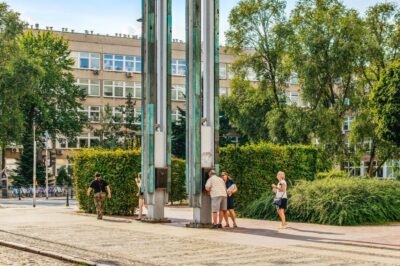
Warsaw Ghetto Private Walking Tour with Hotel Pickup
Read our review →Browse the lists this tour appears in