
Reviewed · JEWISH HISTORY & HERITAGE TOURS
Jewish Warsaw & Stories from the Ghetto – Walking Tour
This walk hits hard, in a useful way. It links Jewish Warsaw from its earliest community life to the ghetto story, so the city makes sense as you walk. You’ll end at a place where the physical separation of neighborhoods becomes impossible to ignore.
I love that the tour begins at Plac Grzybowski, grounding you in where Jewish life in Warsaw took root. I also like the way the route connects key sites, instead of treating each stop like a random postcard.
One drawback to consider: the topics are extremely heavy, and the pacing stays focused on history and suffering rather than casual sightseeing.
In This Review
- Key things I’d circle on your map
- Jewish Warsaw in Two Hours: What the Walk Really Teaches
- Plac Grzybowski to Nożyk Synagogue: From Early Jewish Life to a War Survivor
- Janusz Korczak and Children’s Courage: The Stories Behind the Walls
- Ghetto Walls, Waliców Street, and the Warsaw Ghetto Museum
- Chłodna Street Footbridge: The Great Action and the Uprising
- What You Pay, What You Skip, and How to Tip Wisely
- Should You Book Jewish Warsaw and Stories from the Ghetto?
- FAQ
- Where do I meet the guide for the Jewish Warsaw & Stories from the Ghetto walking tour?
- How long is the tour?
- What languages is the tour offered in?
- Do I need to pay extra for entries or tickets during the tour?
- Is the tour wheelchair accessible?
- Is this tour suitable for children?
Key things I’d circle on your map
- Plac Grzybowski as your starting point: you get context before you reach the ghetto sites.
- Nożyk Synagogue: the only surviving synagogue in Warsaw, so it carries real weight.
- Janusz Korczak and children’s institutions: courage and moral clarity, not just dates.
- Wall lines and Waliców Street: you see the city’s layout and learn what it meant day to day.
- Chłodna Street footbridge: a powerful ending tied to the Great Action of 1942 and the uprising.
Jewish Warsaw in Two Hours: What the Walk Really Teaches
A good walking tour should do two jobs at once. It should show you important places, and it should help you read the city’s shapes and streets as evidence. This one is built for that second job. You’re not just checking off landmarks. You’re learning how Warsaw’s Jewish community formed, lived, was enclosed, and was destroyed, all mapped onto real locations you can still stand on today.
The best part is the chain of cause and effect. You start with the Jewish presence in Warsaw before World War II, then the tour moves forward into Nazi occupation and the creation of the Warsaw Ghetto. That timeline matters because it changes how you look at the buildings. Instead of seeing stone and brick, you start seeing decisions, constraints, and human consequences.
You’ll also notice the tone is careful. The guide’s storytelling leans emotional and respectful, with room for questions. In the guide Robert’s case, what stands out is how he connects personal accounts to major events, then brings you back to what you’re actually standing near. That approach makes the end of the tour feel earned, not abrupt.
One practical note. You are walking for about two hours, and it can include colder or windier streets depending on the season. If you come expecting a quick history snack, you might feel overwhelmed. If you come ready to pay attention, you’ll leave with a clearer, more grounded understanding of Warsaw’s ghetto story.
More Walking Tours in Warsaw
- Warsaw: Old Town Highlights Walking Tour in English
★ 4.7 · 1,516 reviews - Warsaw: Old Town Guided Walking Tour
★ 4.9 · 599 reviews - Half-Day Polish Food Walking Tour with Guide and Dinner
★ 4.5 · 381 reviews
Plac Grzybowski to Nożyk Synagogue: From Early Jewish Life to a War Survivor
The walk starts at the fountain at Grzybowski Square (Plac Grzybowski). The guide meets you there (look for the brown flat cap). This opening is more than a logistics step. It’s your orientation point for Jewish Warsaw, including the fact that before the war, the city held what was described as the largest Jewish community in Europe. Getting that scale early matters, because the ghetto story can otherwise shrink into names and dates without weight.
As you move on, the tour doesn’t rush from “before” to “during.” You’re led through how Warsaw’s Jewish community fit into the city, which helps you understand what was violently erased. The tour frames the tragedy as an interruption of real life, not an abstract catastrophe.
Next comes the Nożyk Synagogue, presented as the only synagogue in Warsaw that survived the war. This is where you feel the difference between history as reading and history as standing still. A synagogue is not just a building type. In this context, it’s a symbol of continuity and community, and its survival makes it a rare physical anchor in a landscape where many other markers are gone.
If you’ve visited Holocaust sites elsewhere, you might already know that surviving structures are often few. Here, the point is to let the building do its work for you. You’ll get context for why it survived, and why it matters that it still stands in the city fabric.
Tip for your own comfort: on days with low light or rain, take a moment at each stop to look up and around. At these sites, the street view is part of the lesson. You want to notice what would have been normal movement before the ghetto boundaries, and what becomes blocked or redirected during the occupation.
Janusz Korczak and Children’s Courage: The Stories Behind the Walls
After the synagogue, the route shifts from buildings to people, and that shift is essential. The tour includes a monument to Janusz Korczak, whose name you’ll recognize from many stories about Warsaw during the Holocaust. What makes this stop effective is that it’s not treated like a historical footnote. The guide connects Korczak to a broader network of children’s lives and institutions.
Korczak is strongly associated with moral courage under impossible pressure. The tour also brings in the staff of the Bersohn and Bauman Children’s Hospital, which broadens your understanding beyond a single famous individual. In practice, this means you learn how care, education, and duty showed up in everyday actions, even when the future looked closed.
This is one of the most highly praised parts of the experience. In particular, people emphasize that the storytelling feels both professional and emotionally careful, and that Robert can answer questions in real detail. You can feel the guide’s intent: the goal is not to shock you, but to make sure the individuals inside the larger story are not reduced to just symbols.
If you’re traveling with someone who worries about “too much tragedy,” this is the place where the tour finds balance. The tragedy is central, but the focus stays on courage, responsibility, and humanity. The result is a kind of emotional clarity, not a blur of suffering.
If you tend to get overwhelmed at memorials, plan to bring a moment of breathing space. In a few sentences you’ll get the names and contexts, then you can take a personal pause before moving on to the next street.
Ghetto Walls, Waliców Street, and the Warsaw Ghetto Museum
Once you’re ready for the core of the ghetto story, the tour guides you to the Warsaw Ghetto Wall and then to Waliców Street. These stops are valuable because they teach you to see the ghetto as a lived place, not just a historical label. The walls and street lines are physical evidence of confinement. When you stand near them, the idea becomes concrete: movement restricted, neighborhoods separated, daily life shaped by rules you did not choose.
A big part of why this matters is that you learn about the ghetto’s establishment and what everyday life looked like inside it. You’ll hear how the enclosure created an entire reality, with routines and risks that ordinary people could not escape. Even if you already know the overall outline, the way the guide ties street geography to daily experience helps things click.
Next is the Warsaw Ghetto Museum. This stop is the bridge between outdoor, street-level history and the more structured historical display space. In a walking tour, you don’t want to spend too much time reading, and you also do not want to stay purely at the emotional level. Here, the museum time gives your brain a framework so the names and events you heard earlier have a place to land.
What you should expect is that the museum stop supports the story you already started walking with. If you are the type who likes details, the guide can help connect what you see to what you learned on the route. If you prefer big-picture understanding, you’ll still get a clear through-line.
This is also the point where the tour’s language keeps pace with the sites. The guide uses the locations to explain what happened and why it mattered, then you move again into the streets as witnesses.
Small practical suggestion: take quick photos only if you’re respecting the space. Some people like to capture views, but at a ghetto museum area, your best memory is often the one you carry in your head after you’ve absorbed what you’re looking at.
Further Jewish history and heritage itineraries:

Chłodna Street Footbridge: The Great Action and the Uprising
The ending is one of the tour’s strongest moments. You finish at the site of the wooden footbridge on Chłodna Street, described as a haunting symbol of separation between the small and large ghettos, and between two worlds, Jewish and non-Jewish. Endings matter on tours like this. A strong finish helps you understand why the walking route was necessary in the first place.
From here, you learn about the Great Action of 1942, a term that you might hear in other Warsaw ghetto contexts. On this tour, it’s connected to the lived meaning of separation and transport. You’ll also hear about the Warsaw Ghetto Uprising, which gives the story a sharp emotional pivot from confinement to resistance.
The best part of this closing sequence is that it ties the geography to the major events you’ve heard about. Instead of ending with a lecture, the tour closes with a location that represents the forced boundaries of life. The bridge is not just symbolism. It’s a physical reminder of how the city’s layout became an instrument of control.
If you have questions by this stage, this is often when the guide can pull them into context. The earlier stops build the foundation, so your curiosity can land on something specific. People who take this tour in German also highlight that Robert’s German is fluent and easy to follow, which helps if you want to ask questions without feeling rushed.
What stays with you after the tour is not only the events. It’s the way you can picture movement and barriers on the same streets you might otherwise walk through casually.
What You Pay, What You Skip, and How to Tip Wisely
The listed price is $13 per person, and the tour is described as a pay-what-you-wish walking tour. In practice, this means you’re not paying for a menu of extras. The amount you book for mainly supports the guide service, and any tip is optional based on how the experience felt for you.
That is good value for a serious two-hour route through major sites, guided by a licensed person who can connect the story across multiple stops. You’re also not stuck paying entry fees at each location, since the tour information says it does not require payment for entries or additional expenses.
Also, the experience is scheduled with flexibility in mind, including the option to reserve first and pay later, plus free cancellation up to 24 hours in advance for a full refund. That matters when you’re planning around weather and the day you want to keep free for more moving sites.
If you’re wondering what a fair approach is: consider tipping as part of the respect budget. This kind of walking tour relies on careful storytelling, not just recitation. If you feel the guide’s attention to detail and emotional pacing landed for you, a tip is a meaningful way to say thank you.
One more fit note. The tour is not suitable for children under 16, which tells you the organizers expect participants to be ready for heavy subject matter and a more reflective tone.
Should You Book Jewish Warsaw and Stories from the Ghetto?
You should book if you want a structured, site-based understanding of Jewish Warsaw and the ghetto, without needing to assemble your own route. This is especially worth it if you like narratives that connect people to place, and if you want the surviving Nożyk Synagogue and the ghetto wall lines to become part of your mental map.
You might skip this tour if you’re after a light, casual walk, or if you don’t feel ready for the emotional intensity of deportation stories and the Great Action period. Even though the guide keeps the tone respectful, the subject matter is brutal, and the route is designed to make you face that reality.
My simple decision rule: if you’re willing to slow down and read Warsaw with care, this tour is one of the most meaningful ways to do it in a short window. You end with the footbridge on Chłodna Street, and that finish gives you closure in the sense that the geography and history finally line up in your mind.
FAQ
Where do I meet the guide for the Jewish Warsaw & Stories from the Ghetto walking tour?
Meet at the fountain at Grzybowski Square (Plac Grzybowski) in Warsaw. The guide will be wearing a brown flat cap.
How long is the tour?
The duration is 2 hours.
What languages is the tour offered in?
The live guide offers the tour in English and German.
Do I need to pay extra for entries or tickets during the tour?
No. The tour information says it does not require payment for entries or additional expenses.
Is the tour wheelchair accessible?
Yes, the tour is listed as wheelchair accessible.
Is this tour suitable for children?
No, it is not suitable for children under 16.
Squares Crossed on Foot
- Old Town Warsaw Walking Tour
★ 4.5 · 333 reviews - World War 2 in Warsaw walking tour in English
★ 4.7 · 237 reviews - Warsaw: Jewish Heritage & Holocaust Walking Tour
★ 4.7 · 119 reviews - Warsaw: Old and New Town Private Walking Tour
★ 4.8 · 116 reviews
Freshly posted from Warsaw
- Warsaw Private Transfer from Warsaw Chopin Airport (WAW) to City centre★ 4.0 · 7 reviews
- Krakow Small Group Tour from Warsaw with Lunch, Schindler’s Factory included★ 5.0 · 7 reviews
- Wolfs Lair – Hitlers hideout★ 4.5 · 7 reviews
- 3-hour tour at Warsaw Uprising 1944 Museum /inc. Pick-up/★ 4.9 · 7 reviews
- Warsaw: Evening History and Pubs Tour by Retro Minibus★ 5.0 · 7 reviews
- Warsaw: Private Vodka Tasting Night with Snacks and Pickup★ 5.0 · 7 reviews
- Warsaw Old Town with Royal Castle + Royal Route: SMALL GROUP /inc. Pick-up/★ 5.0 · 7 reviews
Jewish History & Heritage Tours, compared.
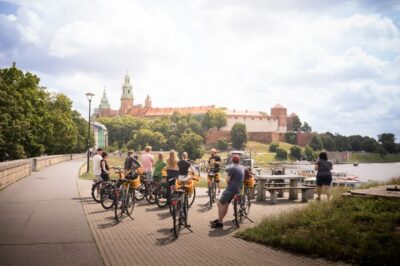
Bike Tour of Old Town, Jewish Quarter and the Ghetto
Read our review →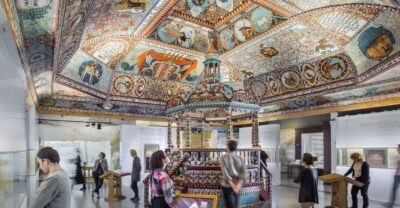
POLIN Museum of the History of Polish Jews Ticket
Read our review →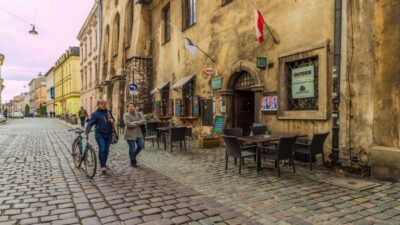
Kazimierz, Schindler’s Factory & Ghetto Guided Tour
Read our review →
Full Bike Tour – the Old Town, Jewish Qtr & the Ghetto NEW BIKES
Read our review →
Warsaw Ghetto Private Walking Tour with Hotel Pickup
Read our review →Browse the lists this tour appears in