
Reviewed · JEWISH HISTORY & HERITAGE TOURS
Jewish Private Historical Tour in Warsaw
Warsaw’s Jewish history is all around you, if you know where to look. This private 4-hour tour shows key sites from the former ghetto era through today, including Umschlagplatz and the Nozyk Synagogue, still standing as a survivor. I also love how personal and flexible the experience feels, especially with Renata Kopczewska, who keeps things moving at your pace. One thing to consider: the subject matter is heavy, and two key stops are not included for tickets, so you should be ready for a bit of extra onsite payment.
You’ll start in the ghetto area and work in a tight route that makes the geography make sense, from ghetto walls and Mila 18 to the bridge between the small and big ghetto area. You’ll also visit a well-preserved Jewish cemetery and see where prominent figures were tied to the Judenrat. If you’re visiting on a Saturday, keep in mind the Jewish cemetery is closed on Saturdays (Sabbath).
In This Review
- Key highlights you will not want to miss
- Price and what you truly get for $260 per group
- Starting at the ghetto core: Rappaport Monument, POLIN, Mila 18, and Umschlagplatz
- Reading the city’s scars: preserved fragments of ghetto wall
- The Jewish cemetery stop: Cmentarz Zydowski and what to expect
- Nozyk Synagogue: the only surviving one and why it survived
- Chlodna Street and the ghetto-bridge installation, plus Adam Czerniakow
- How the tour pace and private format actually helps you
- What to pack and how to plan your day in Warsaw
- Who this tour is best for, and who might want something else
- Should you book this Jewish historical tour in Warsaw?
- FAQ
- How long is the Jewish Private Historical Tour in Warsaw?
- What is the price for this tour?
- Is hotel pickup and drop-off included?
- Which stops have free admission?
- Is the Jewish cemetery open on Saturdays?
- Can I cancel for a full refund?
Key highlights you will not want to miss
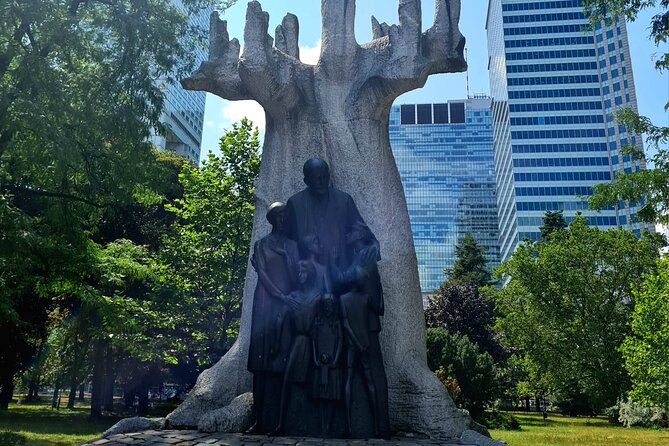
- Rappaport Monument and POLIN’s presence: you see the ghetto story framed right at the Museum of the History of Polish Jews (POLIN).
- Mila 18 and Umschlagplatz: two places that help you understand how deportations unfolded in 1942.
- Preserved ghetto wall fragments: a quick stop that gives you real physical context.
- Cmentarz Zydowski Jewish Cemetery: famous names, mass graves, and historic rabbinical ohels.
- Nozyk Synagogue, the only surviving one: its wartime survival story is part of why this stop matters.
- Chlodna Street and the ghetto-bridge installation: you learn the layout through a visual guide and the story of Adam Czerniakow.
Price and what you truly get for $260 per group
At $260 per group (up to 4), this tour is priced like a private experience, not a bargain-bus history stop. The value is that you get a licensed guide for about 4 hours, plus a dedicated air-conditioned vehicle with hotel pickup and drop-off. When you’re covering dispersed sites like the POLIN area, Umschlagplatz, remnants of wall, and religious sites, that transport matters.
It is also useful that you receive a mobile ticket. In practice, it helps you get moving faster when your day is already full. The main “cost” beyond the listed price is time and attention, because this route deals directly with persecution, deportations, and loss. If you want a light day of sightseeing, you may find this emotionally intense.
On inclusions, you should note what is and is not covered: some stops have free admission, while the Jewish cemetery and Nozyk Synagogue have admissions not included. If you budget a bit for those, the overall day feels smooth rather than piecemeal.
Further Jewish history and heritage itineraries:
- Warsaw: POLIN Museum of the History of Polish Jews Ticket
★ 4.7 · 1,142 reviews - Warsaw: Warsaw Ghetto Private Walking Tour with Hotel Pickup
★ 4.9 · 369 reviews - Warsaw: Jewish History Guided Walking Tour in English
★ 4.7 · 324 reviews
Starting at the ghetto core: Rappaport Monument, POLIN, Mila 18, and Umschlagplatz
Your first stop is Warsaw Ghetto, and it sets the tone in the right way: you’re not just “seeing buildings,” you’re learning the logic of the place. The route here typically circles through the Rappaport Monument to Heroes of Ghetto, the striking, imposing building of the Museum of the History of Polish Jews called POLIN, and memorial stones dedicated to those who contributed to survival.
One reason I like this approach is that it connects the past to the present without turning it into a checklist. POLIN’s presence matters because it anchors the story in Warsaw’s modern public memory. Even if you are not going inside every museum building, the guide can help you read the space around it, and that is where many first-time visitors struggle.
Then you move toward Mila 18 and Umschlagplatz. Mila 18 is a key reference point people use to understand how ghetto life and resistance were entangled. Umschlagplatz is where deportations began in 1942, when Warsaw Jews were sent to Treblinka extermination camp. Even at a walking pace, standing in the area helps you grasp scale and timing in a way that maps alone cannot.
Admission for this first stop is marked as free, so you can focus on the walking and the guide’s explanations rather than worrying about entry costs at the start. Stop 1 is the longest segment at about 1 hour 30 minutes, so plan for it as your main learning block.
Practical tip: this is a good place to ask your guide any question that you hesitate to ask later. The route is tight, and you will not want important clarifications to wait until you are on the move.
Reading the city’s scars: preserved fragments of ghetto wall
Next you get a Fragment Of Ghetto Wall stop, and it is brief but powerful. Two remnants of the ghetto wall are preserved, and that is exactly why this stop earns its place on the itinerary. Photos and history books can feel abstract. Here, the guide’s explanations land because you can physically see the limits that shaped people’s daily lives.
This is only about 30 minutes, with free admission. That makes it easy to fit in mentally even if your day already feels heavy. The value is not in lingering forever. It is in learning how to “read” the city: where the boundary was, how the ghetto’s edges mattered, and why the story depends on location.
If you’re the type who likes to look closely, bring your attention here rather than treating it as a quick photo moment. A few minutes of careful observation will pay off as you move on to sites that explain how life continued within constraints.
The Jewish cemetery stop: Cmentarz Zydowski and what to expect
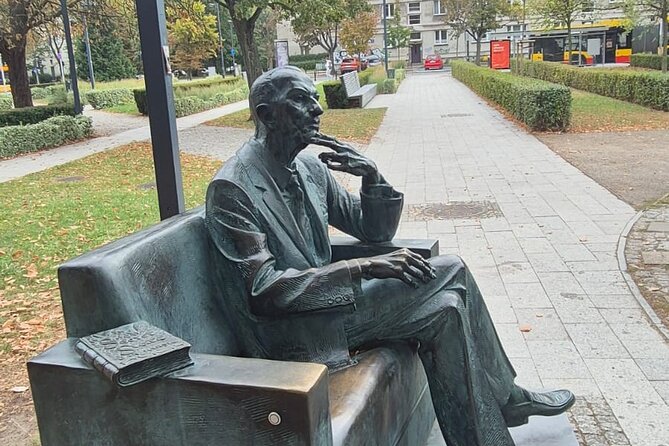
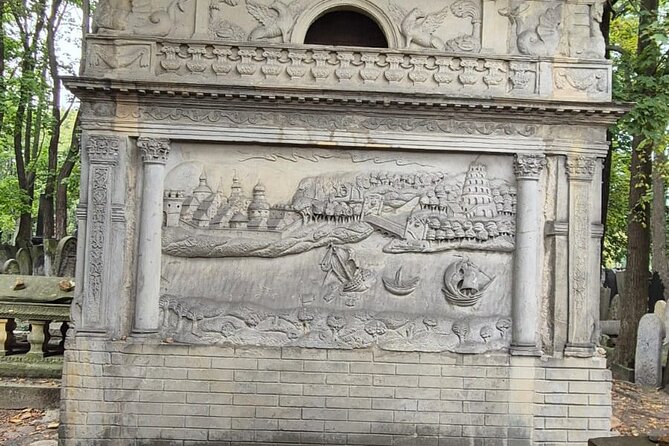
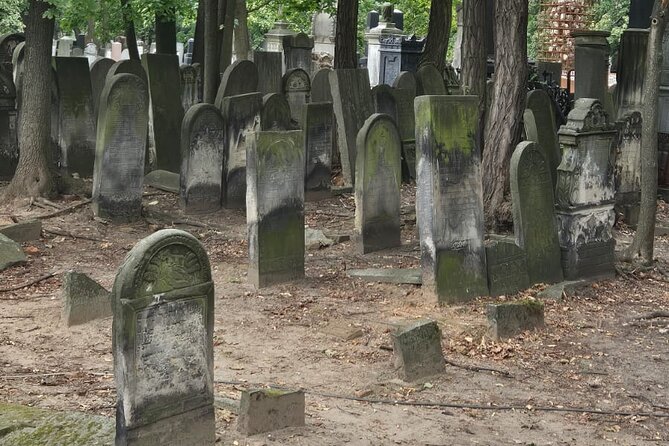
Stop 3 is the Jewish Cemetery, officially listed as Cmentarz Zydowski. This is the one stop where you should slow down a little on purpose. Your guide will show you how well preserved the grounds are, graves of famous Jews who contributed to Polish culture and science, mass graves from WWII, and ohels of known rabbis.
Cemeteries can feel like quiet places, but this one carries a lot of layers. The combination of well-known individuals, rabbinical markers, and the presence of mass graves means you are seeing personal memory and collective tragedy in the same landscape. I like that the cemetery is not treated like a generic stop. It becomes a place where the guide connects names and dates to what you have already seen elsewhere in the ghetto area.
A key drawback for planning: the cemetery is closed on Saturdays (Sabbath). If your trip window includes a Saturday, you will need to plan the day around that closure or accept that this stop may not work as expected.
Admission here is not included, so budget for the onsite ticket. The time on the ground is about 50 minutes, which gives you enough room to take in the layout without being rushed.
Practical tip: wear shoes you can walk in comfortably. Cemetery surfaces can vary, and you will likely spend more time looking down than you expect.
More centuries between two rebuilt squares:


Nozyk Synagogue: the only surviving one and why it survived
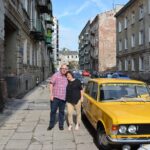
Stop 4 is Nozyk Synagogue. The tour frames it clearly as the only synagogue in Warsaw that survived the war. The wartime detail matters: it was turned by Nazis into stables. That conversion is part of why the building did not vanish like so many others.
This stop is about 20 minutes, and admission is not included. So again, factor in a separate ticket cost. The payoff is that you see a living piece of architectural survival, even though the story is painful.
What you should watch for on this stop is how the guide uses the building to explain continuity. The synagogue is not just an old structure. It is proof of how cultural life could be interrupted and yet not fully erased. Even in a short time window, your guide can help you notice the difference between a monument and a functioning symbol.
If you are religious or culturally connected to Warsaw’s Jewish story, this is often the stop that feels most personal. If you are visiting only for history, it still works, because it bridges policy and daily life.
Chlodna Street and the ghetto-bridge installation, plus Adam Czerniakow
Stop 5 brings you to Chlodna Street, with an installation that shows where the bridge linking the small ghetto with the big ghetto was located. This is a big “how did people move through this world” moment, because a bridge is not just a structure. It is a clue about how spaces were connected, controlled, or forced into proximity.
The stop also includes story context connected to Adam Czerniakow, the president of the Judenrat. You will see the house where he lived and died. That kind of detail, tied to a real address, makes the history feel less like a chapter and more like a sequence of decisions and consequences.
This final segment is about 15 minutes, with free admission. It is short by design, because by then you have already built the mental map from earlier stops: walls, transitions, deportation points, cemetery memory, and synagogue survival.
Practical tip: use the last stop to ask how the story fits together. The bridge and Czerniakow connection are often where people finally feel the route snap into place.
How the tour pace and private format actually helps you
Because this is private, only your group participates. That small-group structure changes how the day feels. You are not trapped in a larger crowd rhythm, and your guide can adjust the walking pace, timing, and focus based on your questions.
The provided guidance about pickup and drop-off is also a quality-of-life win. Hotel pickup and drop-off means you do not have to spend energy figuring out transit on a day that is already emotionally demanding. An air-conditioned vehicle helps too, even in milder weather, because it gives you a breather between stops.
The strongest point from the experience feedback is that the guide approach is personal and flexible. Renata Kopczewska is specifically praised as highly personable and informative, and people note her flexibility with pickup and drop-off. That matters because a good private guide is not only about facts, it is about timing your day so you can pay attention.
One more practical note: bring patience. This is not a “see everything fast” route. It is a meaningful route, and it asks you to slow down mentally.
What to pack and how to plan your day in Warsaw
This tour is about walking through emotionally heavy history at multiple outdoor stops, plus religious and cemetery areas. That means your comfort choices affect your experience.
I suggest you plan for:
- Comfortable shoes for walking at a steady pace
- A light layer for changing weather
- Water, since the day is not centered on a lunch stop
- Respectful clothing for synagogue and cemetery settings
Also, lunch is not included. If you want to avoid ending your day hungry and distracted, you can plan to eat before or after the 4-hour block. A “small snack plan” also helps, because the tour does not build in a meal break.
Who this tour is best for, and who might want something else
You will love this tour if you want a guided route through Warsaw that connects key sites in a logical geographic order: Warsaw Ghetto, ghetto walls, cemetery memory, Nozyk Synagogue survival, and deportation context at Umschlagplatz.
It is also a great fit for:
- First-time visitors who feel overwhelmed by Warsaw’s Jewish history topics
- Travelers who prefer a private guide over group pacing
- People who want the story tied to addresses, monuments, and specific places
You might choose something else if you:
- Want a lighter, entertainment-focused sightseeing day
- Dislike emotionally heavy subjects
- Need lots of free time for independent wandering, since the itinerary is time-structured
The “best” style of traveler here is someone who values clarity. You will get it.
Should you book this Jewish historical tour in Warsaw?
If your priority is learning with a guide in a manageable 4-hour window, I think booking is a smart move. The private setup, hotel pickup and drop-off, and Renata Kopczewska’s flexible, personable style make it easier to focus on the sites instead of logistics.
If you are comfortable with heavy history and you can plan around ticket add-ons and the Saturday closure of the Jewish cemetery, you will likely find this tour both moving and practical. Just go in with the right mindset: this is remembrance and education, not a casual walk.
FAQ
How long is the Jewish Private Historical Tour in Warsaw?
The tour duration is about 4 hours.
What is the price for this tour?
It is $260.00 per group, up to 4 people.
Is hotel pickup and drop-off included?
Yes, hotel pickup and drop-off are included, along with an air-conditioned vehicle and a licensed tour guide.
Which stops have free admission?
Admission is listed as free for Stop 1 (Warsaw Ghetto) and Stop 2 (Fragment Of Ghetto Wall), and Stop 5 (Chlodna Street). The Jewish cemetery and Nozyk Synagogue have admission not included.
Is the Jewish cemetery open on Saturdays?
No. The Jewish cemetery is closed on Saturdays (Sabbath).
Can I cancel for a full refund?
Yes. You can cancel up to 24 hours in advance of the experience for a full refund.
Freshly posted from Warsaw
- Warsaw Uprising and WWII Old Town Walking Tour with Museum★ 5.0 · 1 review
- EVERYDAY Warsaw Traditional Food Tour with Old Town Sightseeing★ 5.0 · 1 review
- Warsaw to Auschwitz and Krakow Old Town Full-Day Trip by Car★ 5.0 · 1 review
- A Day in Warsaw: Private Full-Day Highlights Tour★ 5.0 · 1 review
- Pub Crawl with Shots, Discounts, Games & VIP Entry★ 5.0 · 1 review
- POLIN Museum of the History of Polish Jews : PRIVATE TOUR /inc. Pick-up/★ 5.0 · 1 review
- Private Guided Warsaw Walking Tour with Drone Photography★ 5.0 · 1 review
Jewish History & Heritage Tours, compared.
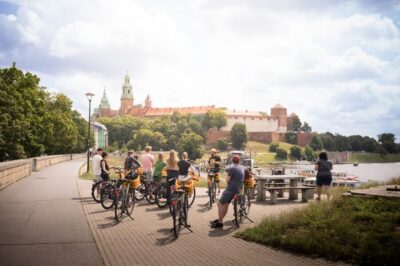
Bike Tour of Old Town, Jewish Quarter and the Ghetto
Read our review →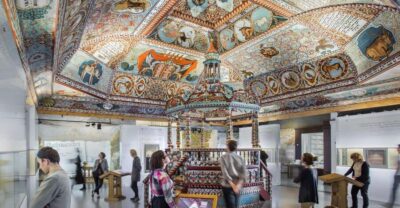
POLIN Museum of the History of Polish Jews Ticket
Read our review →
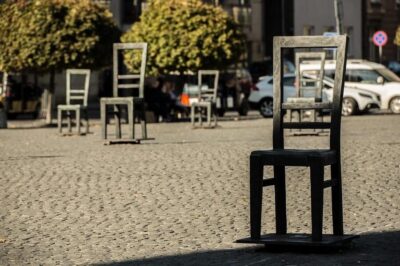
Kazimierz, Schindler’s Factory & Ghetto Guided Tour
Read our review →
Full Bike Tour – the Old Town, Jewish Qtr & the Ghetto NEW BIKES
Read our review →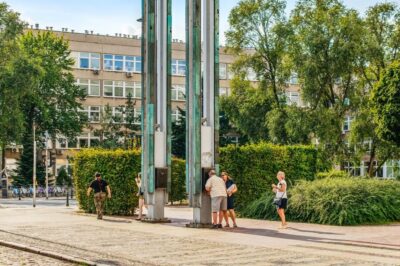
Warsaw Ghetto Private Walking Tour with Hotel Pickup
Read our review →Browse the lists this tour appears in