
Reviewed · JEWISH HISTORY & HERITAGE TOURS
Jewish heritage in Warsaw
Warsaw tells its Jewish story in one focused ride. This 5-hour, private tour strings together the key places you’d otherwise chase across the city, from ghetto memorials to a synagogue that still functions. I especially love how it saves you planning time, and how the guide, Renata Kopczewska, puts crisp context on each stop so you know what you’re looking at.
The main thing to consider is physical comfort. One group noted the vehicle felt tight for leg room, so if you’re tall, you may want to sit smartly from the start.
In This Review
- Key highlights at a glance
- Why this Warsaw Jewish heritage route saves you planning time
- Price and logistics for a private $270 group tour
- Warsaw Ghetto area, from Rappaport to Mila 18
- Jewish Cemetery: matzevot, Treblinka stones, and Saturday rules
- Umschlagplatz: deportation platform and the wall of 300 names
- Nozyk Synagogue: the wartime survivor you can still enter
- Praga Polnoc: Jewish Warsaw in less-destroyed streets
- Jewish Historical Institute: Judaistic Library artifacts and the fire traces on the floor
- The Pianist filming stops and how to watch the city differently
- Who should book, and who should double-check the day’s schedule
- FAQ
- Is hotel pickup and drop-off included?
- How long is the tour?
- Is this a private tour?
- What does the $270 price cover?
- Are entrance fees included?
- Is the Jewish Cemetery open on Saturdays?
- Can I cancel for a full refund?
Key highlights at a glance
- Hotel pickup and drop-off so you spend your energy on the sites, not directions
- No transport planning across multiple neighborhoods, with short stop-and-see moments
- Nozyk Synagogue as the surviving WWII synagogue that remains active today
- Umschlagplatz names memorial tied to the deportations to Treblinka
- Praga Polnoc survivals like the dorm where Menachem Begin lived, plus a former mikveh now used as a school
- The Jewish Historical Institute with ghetto-era collections and visible fire traces on the floor
Why this Warsaw Jewish heritage route saves you planning time
Warsaw can feel like a puzzle when you’re trying to connect Jewish heritage with the WWII landscape. You can read a lot, sure, but your first day can still turn into bus lines, museum opening times, and guesswork.
This tour keeps the focus on the core stops that anchor the story. You get guided context in the exact places where memory is marked, whether it’s a monument, a synagogue, or a museum floor that still shows the aftermath of the past.
I also like that it’s built for real visitors, not history homework. The pace is practical, with about an hour at the ghetto area and shorter, targeted stops at places like Umschlagplatz and Nozyk Synagogue. You end up seeing more than you’d likely manage solo in the same time window.
One more plus is the human side. Renata Kopczewska comes across as friendly and professional, and the experience is structured around answering questions, not just rushing through a script. That matters because this subject carries weight, and you’ll want to ask what something means in context.
Further Jewish history and heritage itineraries:
- Warsaw: POLIN Museum of the History of Polish Jews Ticket
★ 4.7 · 1,142 reviews - Warsaw: Warsaw Ghetto Private Walking Tour with Hotel Pickup
★ 4.9 · 369 reviews - Warsaw: Jewish History Guided Walking Tour in English
★ 4.7 · 324 reviews
Price and logistics for a private $270 group tour
Let’s talk value plainly. The price is $270 per group up to 4, not per person. So if you’re traveling as a pair, it can be a strong deal compared with piecing together separate tickets and taxi hops for multiple locations.
You also get a clear bundle: hotel pickup and drop-off, a driver/guide, and a fuel surcharge. Add in that you receive a mobile ticket, and the practical parts are handled for you. In a city where getting between neighborhoods can take time, that convenience is not small.
It’s also worth noting what’s not included. Lunch is not included, and museum or site entrance fees are not included. Some stops are free, others require tickets, so budget a little if you want to pay for museum access during the day.
A small caution from an attendee experience is leg room. The car can feel tight, especially if you’re long-legged, and that can turn a thoughtful day into an uncomfortable one. If you have concerns, it’s smart to request the best seating when you meet the guide and driver.
Warsaw Ghetto area, from Rappaport to Mila 18
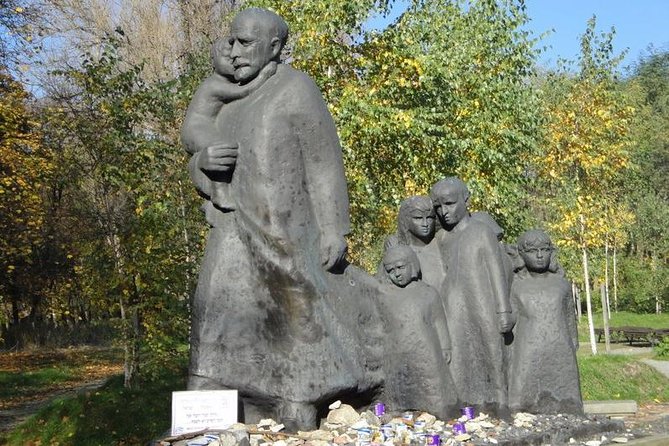
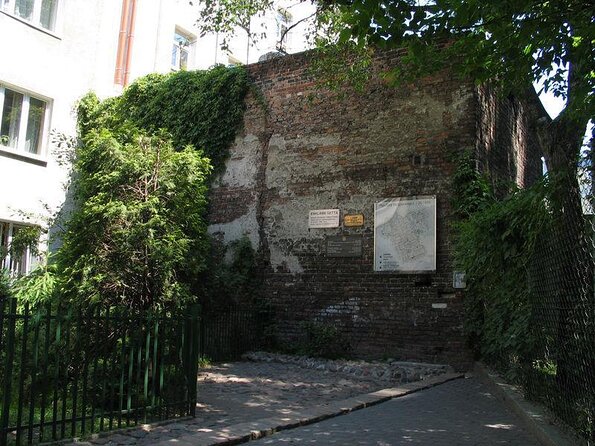
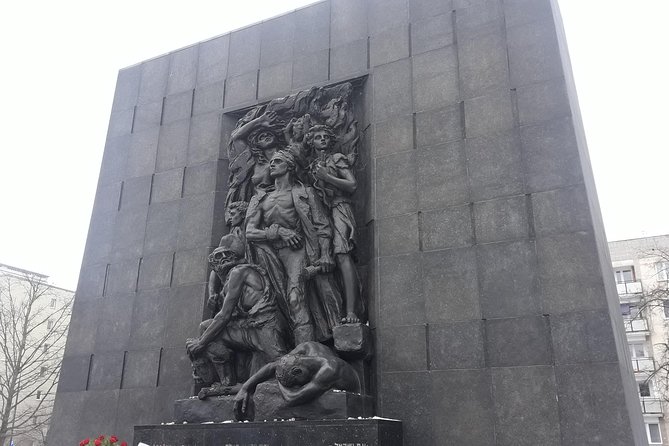
The tour starts in the zone where Warsaw’s Jewish life was destroyed and then marked with memorials. Even though the original area was heavily razed, you can still find anchors that help you build the mental map. The Rappaport monument dedicated to Heroes of the ghetto is one of the key references, because it frames the story as resistance and survival, not just tragedy.
From there, the route connects to specific points tied to ghetto history, including Mila 18. That location is often spoken about in Jewish WWII history because it became associated with the last phase of the uprising and the desperate reality of life under siege. Having a guide helps you understand why certain addresses matter, instead of just treating them as photo stops.
You’ll also encounter the memorial element that links people to place, including the Shmul Zygelbojm memorial. It’s the kind of stop where context changes your reaction. Alone, you might read it as a name and date. With guidance, you start to see the person behind the marker and the broader political world around it.
This segment runs about an hour. That time works because it gives you a pace shift, from quick viewing to moments where you can actually process what you’re hearing. The drawdown can feel heavy, but it’s balanced by the structure, so you don’t get lost in the emotion.
Jewish Cemetery: matzevot, Treblinka stones, and Saturday rules
Next comes the Jewish Cemetery, where the story turns from city blocks to individual lives. The preserved matzevots are the heart of the visit, because they show how names, language, and family lines were recorded. When you take your time here, you start to understand that this was not an abstract community. It was people who contributed to Polish literature, science, and art.
The cemetery visit also includes WWII layers. Mass graves from WWII are part of what you see, and there are symbolic stones dedicated to those who perished in extermination camp Treblinka. That pairing matters. It connects local loss to the wider system of extermination, without forcing you to jump between sources.
Plan around the closure rule. The cemetery is closed on Saturdays, so if your visit lands on a Saturday, your route may need a different match of stops. Even if you’re not sure how the day will flow, it’s worth checking the schedule before you lock in plans.
The cemetery stop lasts about 45 minutes. That’s a good amount of time for slow looking. You’ll want moments to step back and read, then re-read, because details on matzevots can be small and the meaning builds as you connect fragments of text.
One practical tip: bring something for weather and wear comfortable shoes. This portion isn’t about rushing. You’ll get more from it if you can stand and walk a bit without thinking about your feet.
More centuries between two rebuilt squares:


Umschlagplatz: deportation platform and the wall of 300 names
Umschlagplatz is one of those places where the location itself carries the message. It sits on the former railway station from which hundreds of thousands of Jews from the Warsaw ghetto were deported to death camp Treblinka in summer 1942. Even if you know the dates already, seeing the physical site helps the scale hit differently.
What I like here is the symbolic device on the walls. There’s an inscription listing 300 first names in alphabetical order of those who started their last journey. That choice forces you to switch from big numbers to real people.
The stop is short, about 15 minutes. That’s not always enough for a long quiet walk, but it does work when the guide gives you the right context right away. You’ll get the core meaning without losing momentum for the next sites.
Another consideration is emotional readiness. Umschlagplatz can feel immediate and sharp, even for visitors who came prepared. If you’re traveling with teens or someone who struggles with intense sites, you may want to slow down right there and talk quietly, instead of trying to keep moving.
Nozyk Synagogue: the wartime survivor you can still enter
Nozyk Synagogue is the moment many people wait for. It’s described as the only synagogue in Warsaw that survived WWII, and it’s still functioning today. That alone changes how you experience the building, because you’re not only looking at a restored memory. You’re witnessing something in use.
The synagogue was built in the early 20th century. It survived a war that destroyed so much else, so the structure becomes a rare continuity link from prewar Jewish life to today.
The timing details matter. On Saturdays, the synagogue is opened only for prayers, and then there is no admission fee charged. If you’re visiting on a Saturday, you should expect the emphasis to be on worship rather than visitor access. If you want to see the space with fewer restrictions, you may need to plan your day around that.
This stop runs about 15 minutes. That duration is enough to take in the setting and understand what makes it historically unique. Longer visits are possible in many places, but in a tight 5-hour window, the schedule aims to hit multiple “must see” points.
Praga Polnoc: Jewish Warsaw in less-destroyed streets
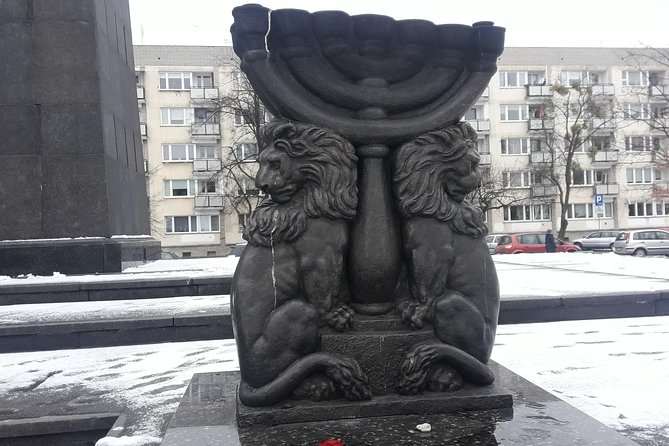
Warsaw’s Praga district, especially Praga Polnoc, offers a different feeling than the city center. The guide focuses on the fact that this area wasn’t destroyed to the same extent as central Warsaw. That matters because you can still spot survivals of Jewish-related buildings.
One of the standout references here is the student dormitory where Menachem Begin lived as a student. Seeing that name attached to a real place helps you understand how Jewish history in Warsaw wasn’t only about the ghetto period. It also connects to later political history through the people who lived, studied, and worked there.
You’ll also pass a former shelter for poor people and orphans, now used as a puppet theater. The transformation is striking, because it shows how communities change and spaces get reused. It can feel strange at first, but it also adds a layer of continuity to the city’s story.
Another survival mentioned is the former mykveh, which endured even though it now functions as a high school. That kind of adaptive reuse is practical and thought-provoking. It raises the question of how memory stays when buildings find new roles.
This segment is about 30 minutes. It’s long enough for the guide to connect the dots, but short enough that you don’t feel dragged through a neighborhood maze.
Jewish Historical Institute: Judaistic Library artifacts and the fire traces on the floor
The final stops shift from outdoor memory points to archive and museum context. You visit the Jewish Historical Institute, described as the former Judaistic Library. It survived WWII in a way that allows visitors to see tangible traces of prewar life and what was left behind.
One of the most specific details is the fire traces visible on the floor. It’s said to be because of the nearby Great Synagogue, which was blown up, leaving marks from a fire that occurred in the area. That’s one of those physical clues that hits harder than photos in a guidebook, because it’s the building itself showing damage.
You’ll also see a map of prewar Poland with former shtetles. That’s useful because it widens the lens beyond Warsaw. Jewish life across Poland wasn’t only in cities, and the map helps you remember that Warsaw was part of a larger network.
The institute also features exhibitions of ghetto archives that reportedly survived miraculously. Archive content can vary, but the point here is that you’re not only hearing about the ghetto. You’re meeting records and documents connected to it.
This museum-style visit lasts about 45 minutes. If you like museums but don’t want to spend your whole trip in indoor spaces, this length is a workable balance.
The Pianist filming stops and how to watch the city differently
A fun part of the route is the reference to filming locations from The Pianist. This is not about turning trauma into entertainment. It’s about learning how cinema translates place into story.
When your guide points out where scenes were filmed, you start noticing building lines, street angles, and street-level geography. Even if you’re not a movie buff, it helps you train your eyes for the city as it was meant to be read.
I like this approach because it gives you a second set of anchors. You’re not only learning “what happened.” You’re also learning “how Warsaw looks,” and that makes the memorial sites land more clearly in your memory later.
Just keep your expectations grounded. This film reference is there to guide your attention, not to replace historical explanation. The emphasis stays on Jewish heritage and WWII context.
Who should book, and who should double-check the day’s schedule
If you want a one-day hit of Jewish WWII sites plus key remnants in other neighborhoods, this is a strong fit. It’s also ideal if you’d rather not plan transport between multiple points and then scramble to confirm opening hours.
It’s a great match for small groups and couples who value conversation. Since it’s private for your group up to 4, you can ask questions without feeling like you’re stuck behind a crowd.
It may be less ideal if you need a lot of quiet time at each stop. The tour is structured and timeboxed, so you’ll get the guided highlights rather than total freedom to wander slowly for hours at one location.
Before you book, check your travel day if your dates fall on a Saturday. The Jewish Cemetery is closed on Saturdays, and Nozyk Synagogue access shifts to prayers only. Your guide can still manage the plan, but it’s smart to avoid surprises.
If you’re sensitive to intense topics, consider bringing a friend who keeps you grounded, and plan for a calm evening afterward. Sites like ghetto memorials and Umschlagplatz can be very direct.
FAQ
Is hotel pickup and drop-off included?
Yes. Hotel pickup and drop-off are included, and the tour ends back at the meeting point.
How long is the tour?
The tour is listed as about 5 hours.
Is this a private tour?
Yes. It’s a private tour/activity, and only your group participates.
What does the $270 price cover?
The price is per group up to 4. It includes hotel pickup and drop-off, a driver/guide, and fuel surcharge.
Are entrance fees included?
No. Entrance fees to museums are not included. Some stops have free admission, but not all.
Is the Jewish Cemetery open on Saturdays?
No. The Jewish Cemetery is closed on Saturdays.
Can I cancel for a full refund?
Yes. You can cancel up to 24 hours in advance for a full refund.
Freshly posted from Warsaw
- Warsaw Uprising and WWII Old Town Walking Tour with Museum★ 5.0 · 1 review
- EVERYDAY Warsaw Traditional Food Tour with Old Town Sightseeing★ 5.0 · 1 review
- Warsaw to Auschwitz and Krakow Old Town Full-Day Trip by Car★ 5.0 · 1 review
- A Day in Warsaw: Private Full-Day Highlights Tour★ 5.0 · 1 review
- Pub Crawl with Shots, Discounts, Games & VIP Entry★ 5.0 · 1 review
- POLIN Museum of the History of Polish Jews : PRIVATE TOUR /inc. Pick-up/★ 5.0 · 1 review
- Private Guided Warsaw Walking Tour with Drone Photography★ 5.0 · 1 review
Jewish History & Heritage Tours, compared.
Bike Tour of Old Town, Jewish Quarter and the Ghetto
Read our review →
POLIN Museum of the History of Polish Jews Ticket
Read our review →
Kazimierz, Schindler’s Factory & Ghetto Guided Tour
Read our review →
Full Bike Tour – the Old Town, Jewish Qtr & the Ghetto NEW BIKES
Read our review →
Warsaw Ghetto Private Walking Tour with Hotel Pickup
Read our review →Browse the lists this tour appears in