
Reviewed · JEWISH HISTORY & HERITAGE TOURS
Jewish Heritage and Holocaust Memorial Tour of the Former Ghetto
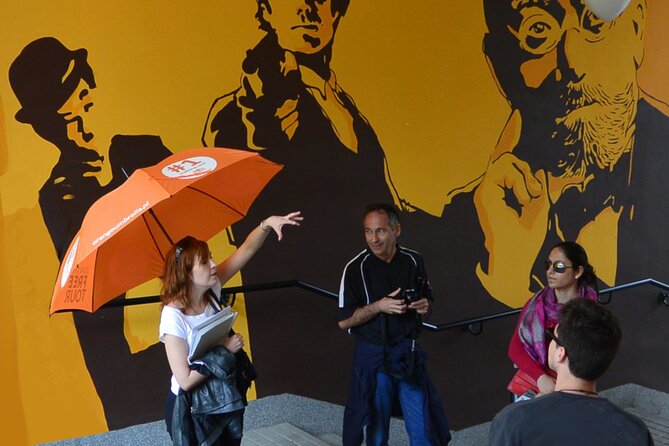
Warsaw’s ghetto story starts with a palace walk. This 2.5-hour Jewish heritage and Holocaust memorial tour traces medieval Jewish roots to key memorial locations, moving from Plac Zamkowy to Umschlagplatz with a clear route and stops you can actually picture. I especially liked how it keeps things place-based, and how the guide connects each stop to the people who lived through it. One drawback to consider: the subject matter is emotionally heavy, so if you want lighter background or a softer pace, this may feel intense.
In past runs, guides like Max and Magda have led this walk, and the approach tends to be both organized and human. You’ll go in English, get a mobile ticket, and travel with a group capped at 25, which helps the conversation stay workable. At $19.22 per person for a professional local guide plus a free Warsaw map, it’s a strong value if you want a focused, hands-on memorial route rather than a long, museum-only day.
In This Review
- Key things I’d watch for on this tour
- Plac Zamkowy and Sigismund’s Column, where the story begins with the city
- Krasinski Palace and the parkside reminder that protection existed
- Warsaw Ghetto remnants near Nalewki Street, walking the perimeter
- POLIN Museum area and the Monument to the Ghetto Heroes
- Mordechaja Anielewicza bunker memorial, the Uprising headquarters place
- Umschlagplatz, a memorial to deportation and the surviving few
- Timing, walking pace, and where to start cleanly
- Price and value, what $19.22 really buys you
- What you’ll learn from the route, not just the stops
- Who this Warsaw walking tour suits best
- Should you book this tour?
- FAQ
- Where does this tour start and where does it end?
- What time does the tour begin?
- How long is the tour?
- Is the tour offered in English?
- What is included in the price?
- Are admissions included at the stops?
- Is there a group size limit?
- What happens if there is a major event at the usual meeting point?
- Can I cancel if my plans change?
Key things I’d watch for on this tour
- A tight route from Plac Zamkowy to Umschlagplatz so the story flows instead of feeling chopped up
- Clear stop-by-stop themes, from medieval Jewish presence to ghetto gates, hero monuments, and deportation memory
- Guides with empathy and clarity, with examples like Max and Magda showing up in guide history
- All listed admissions are free, so your money goes to the guide and the experience, not tickets
- Small-group feel (max 25), which is helpful when the topic gets personal
Plac Zamkowy and Sigismund’s Column, where the story begins with the city
The tour starts near Sigismund’s Column at Plac Zamkowy, a very public, easy-to-find spot in central Warsaw. From the first minutes, you’re not thrown into tragedy right away. Instead, you get context about migrations of medieval Jews and the nearby medieval Warsaw Jewish quarter, so the later ghetto locations don’t feel like random points on a map. That framing matters, because it restores continuity, it reminds you that this was a real community before it became a cage.
This first segment lasts about 20 minutes and is mostly explanation on the ground. I like that style here, because the streets and landmarks around you help your brain build a shape for what you’re learning. If you’re the type who needs a mental map fast, this opening does the job.
Practical note: the meeting point can shift if there’s a mass event at the Column. In that case, the start moves beneath the red-brick medieval defensive wall about 100 meters north. If you’re arriving with tight timing, I’d keep an eye on your confirmation message so you don’t waste time searching.
Further Jewish history and heritage itineraries:
- Warsaw: POLIN Museum of the History of Polish Jews Ticket
★ 4.7 · 1,142 reviews - Warsaw: Warsaw Ghetto Private Walking Tour with Hotel Pickup
★ 4.9 · 369 reviews - Warsaw: Jewish History Guided Walking Tour in English
★ 4.7 · 324 reviews
Krasinski Palace and the parkside reminder that protection existed
Next you head to Krasinski Palace, one of Warsaw’s aristocratic baroque palaces, set in a park setting. The tour connection is direct: the Krasinski family are described as protectors of the Warsaw Jews. Even if you don’t know the details yet, the location helps you understand something important. In a city shaped by power and politics, not everyone acted the same way, and some people used influence to offer protection.
This stop runs about 20 minutes, and it’s a nice change in scenery without turning the tone light. It’s still grounded in memory, just told with a wider lens. That balance is one of the things I like most about this route: it doesn’t flatten history into only one angle.
A possible drawback? If you prefer a strictly chronological march through ghetto events with fewer “in-between” themes, this palace stop may feel like a detour. I think it’s worth it, but it’s good to know what you’re signing up for.
Warsaw Ghetto remnants near Nalewki Street, walking the perimeter
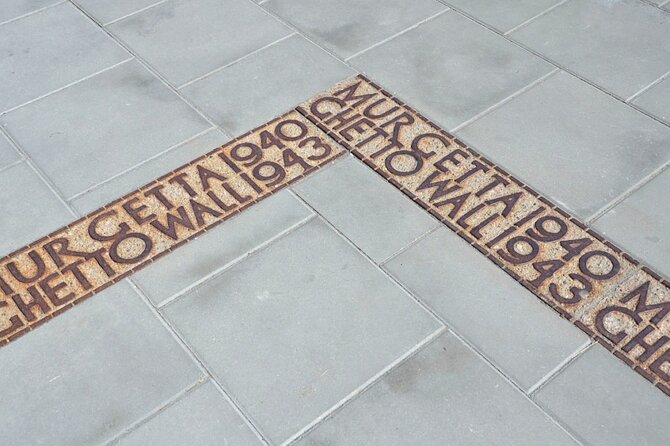
Then you reach the former Warsaw Ghetto area, focusing on a relic tied to the former Nalewki street. You’ll stand near traces connected to the main ghetto gate and ghetto wall. That’s the key experience here: not just learning about the ghetto, but seeing what’s left and why it still matters.
About 20 minutes are spent at this stop. The guide’s job is to help you interpret remnants that might otherwise look like ordinary city features. I like that approach because it trains your eyes for context. You start noticing how the old boundaries shaped daily movement, and you can feel the difference between living in a neighborhood and living inside a system designed to control movement.
This is also where the tour’s heavy tone typically becomes most obvious. If you’re sensitive, it helps to prepare yourself mentally before you arrive at this point. I recommend bringing a small bottle of water and keeping your pace steady, even if the guide is moving along quickly.
POLIN Museum area and the Monument to the Ghetto Heroes
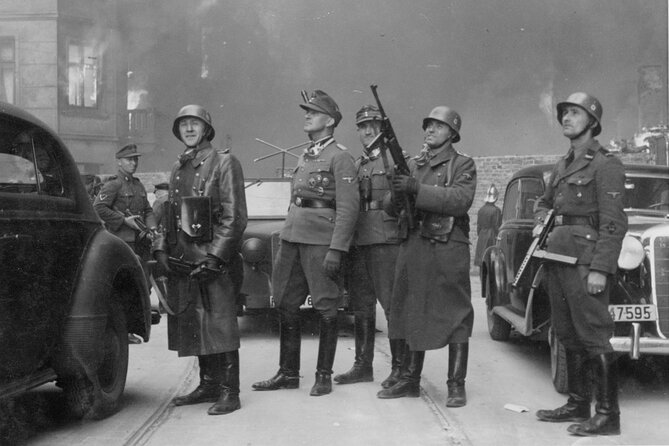
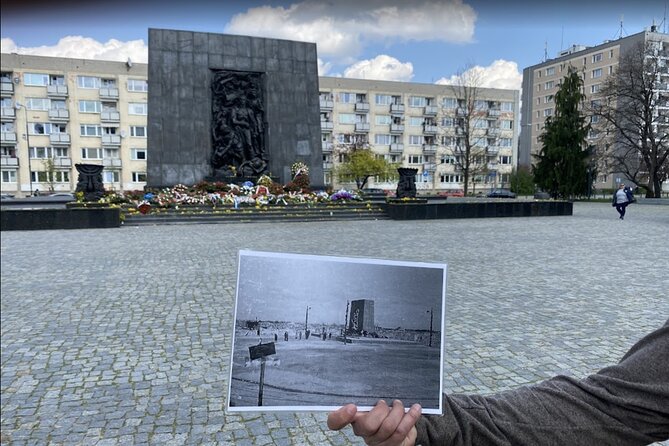
The next stop is at the POLIN Muzeum Historii Zydow Polskich memorial area in front of the main museum entrance. Even though you are not spending museum time here, the memorial space is powerful because it’s designed for reflection. You’ll specifically encounter the Monument to the Ghetto Heroes, a focal point for the emotional and historical “turn” from survival inside the ghetto to remembered resistance and courage.
You’ll get roughly 20 minutes here. I think this stop works well on a walking tour because it gives you a moment to slow down, absorb, and let the story breathe. It also acts like a bridge. You’re not just standing at a piece of the past, you’re standing at a public statement about how that past is honored.
If you’re hoping for lots of museum-level details in this tour, you might be a little surprised. This is still a walking tour with short stops, and your big museum deep dive is something you might add separately. But as a route that builds context and emotion before any optional museum visit, it’s a smart choice.
More centuries between two rebuilt squares:


Mordechaja Anielewicza bunker memorial, the Uprising headquarters place
Now you move to Mordechaja Anielewicza, near Miła street, at the Anielewicz Bunker Memorial Area. This stop is described as the place where, during the Uprising in the ghetto, the headquarters of the Jewish Combat Organization was located. That detail matters because it shifts your understanding from geography to decision-making, from “what happened” to “how people organized and resisted.”
This segment also lasts about 20 minutes. What I find valuable is that the tour gives you a named person and a defined location tied to resistance. It keeps the story from becoming only victim-focused. You’re reminded that people had leadership, plans, and urgency.
As with other memorial stops, there’s no way around the emotion. The setting asks for respectful attention. If you’re the kind of visitor who likes to take photos, keep that in mind and follow whatever guidance the space sets. For some memorials, quiet observation is part of the experience, not just a rule.
Umschlagplatz, a memorial to deportation and the surviving few
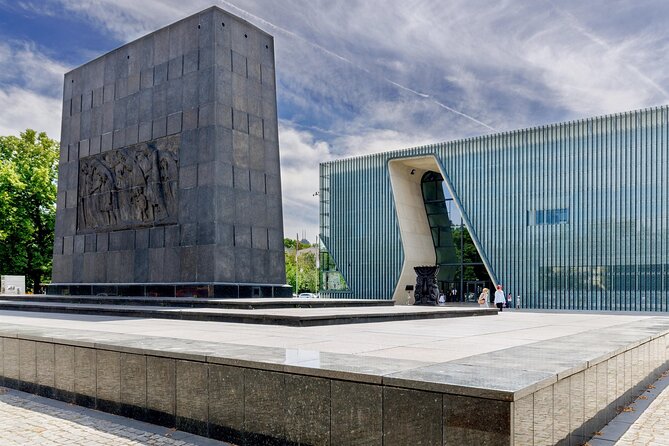
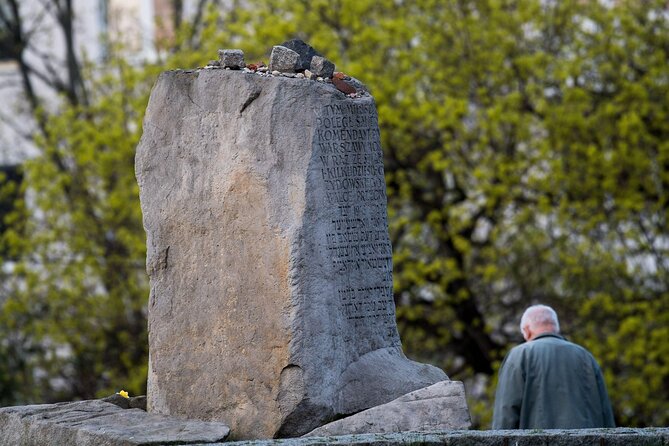
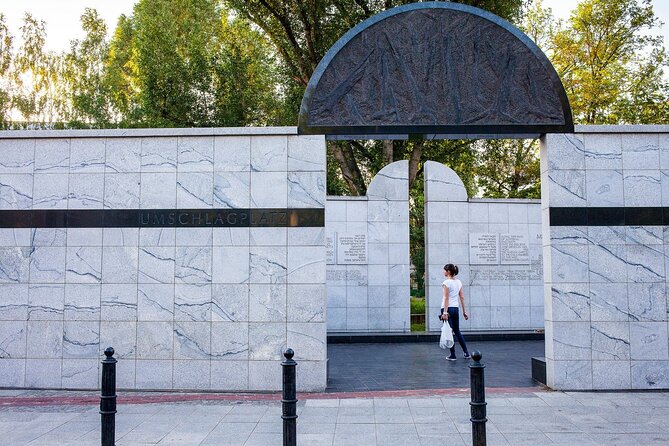
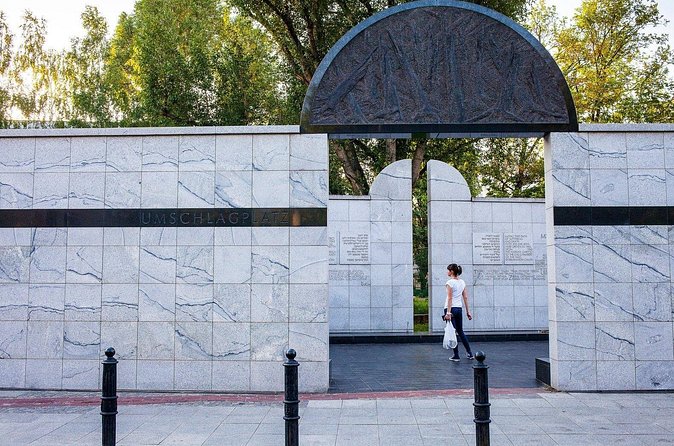
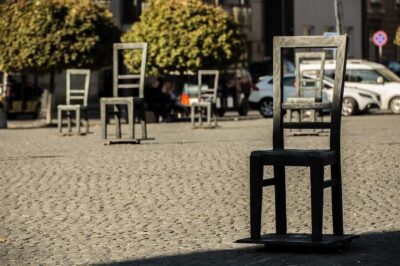
The final major stop is Umschlagplatz, the memorial of the deportation area. Here you’ll see the only three prewar buildings that survived in the Big Ghetto. That small number is what makes this place hit hard. It’s a physical reminder that destruction was not abstract. It changed a neighborhood so completely that only a handful of structures remained.
This is also where the tour ends, about 20 minutes at the site, with the walking route finishing at Umschlagplatz Memorial. The tour ends two blocks away from the POLIN Museum, which is handy if you decide to do museum time after.
I like ending here because it’s the most direct memory of deportation. Earlier stops give you community, confinement, and resistance. Ending at Umschlagplatz gives you the stark final chapter the memorial landscape wants you to face.
One consideration: since the ending location is a memorial area, you may want a little time buffer after the tour to process. Don’t schedule a hard-to-change appointment right after, because the last stop can stay with you.
Timing, walking pace, and where to start cleanly
This is a 2 hours 30 minutes tour. At the pace of six stops of around 20 minutes each, plus transit between them, you should expect a steady walking rhythm. It’s not a marathon, but it is not a sit-down lecture either. If you’re comfortable walking for a couple hours in city streets, you’ll be fine.
The start time is 1:30 pm, and the route begins at Sigismund’s Column, Plac Zamkowy, 00-001 Warszawa. The end is Umschlagplatz Monument, Stawki 10, 00-178 Warszawa. The tour is offered in English, so you can plan around that if you’re traveling with non-English speakers.
If you’re worried about timing and crowding, the fact that the tour is capped at 25 people helps. It’s also good that you’ll have a mobile ticket, which usually makes check-in quicker.
Price and value, what $19.22 really buys you
At $19.22 per person, this is priced like a budget-friendly group walking tour, but it doesn’t feel like a bargain in the wrong way. You’re paying for something specific: a professional local guide service, a focused route, and context you can’t easily piece together from a phone app while standing in places like ghetto remnants and deportation memorials.
Also, the itinerary lists admission as free at each stop. That means you’re not hit with extra ticket fees mid-walk. For some visitors, that turns a “maybe” tour into a clear yes, because the whole experience stays predictable.
One other value point: the route ends near POLIN Museum. So even if you only do the walking portion today, you’ll be positioned for a meaningful museum add-on later without changing your whole travel plan.
A practical tip note included with the tour is to tip the guide if you enjoyed it, because commissions and taxes can take a big chunk of the payment. If you liked the guide’s clarity, empathy, or ability to tie each place together, that’s the moment to show it.
What you’ll learn from the route, not just the stops
The real payoff of this tour is how it teaches you to read space. You don’t just get names and facts. You learn how to interpret boundaries, how memorials guide attention, and how a city’s layers keep speaking long after events end.
Here’s the arc the route tends to give you:
- A starting point in medieval Jewish life near Plac Zamkowy
- A moment of protection and power at Krasinski Palace, showing that influence could be used for good
- Physical confinement clues at the ghetto gate and wall relic area connected to Nalewki Street
- A memorial anchor for heroism and resistance at the Monument to the Ghetto Heroes
- A named leadership and organization connection at the Anielewicza bunker area
- A deportation conclusion at Umschlagplatz with the reminder that only three prewar buildings survived
That’s also why I think the tour works well for first-time visitors to Warsaw. You get a guided framework for the Jewish heritage and Holocaust memorial landscape without needing prior knowledge.
Who this Warsaw walking tour suits best
This is a good fit if you want:
- a guided English-language experience with a clear route
- a memorial-focused walk rather than spending the whole day inside one building
- a manageable commitment, since it’s just about 2.5 hours
It may be less ideal if you want a lighter cultural walk. This is built around Holocaust memory and ghetto sites, so the emotional weight is part of the experience, not an optional add-on.
Based on guide performance in past outings, the strongest experience typically comes when you connect with the guide’s ability to explain with care. One review comment flagged that a guide might be single-minded or less well-rounded in covering the full picture, so if you’re someone who needs broad coverage on every aspect, you should be prepared for a more focused perspective rather than a textbook style overview.
Should you book this tour?
Yes, you should book it if you want a meaningful, efficient route that takes you from central Warsaw to the most important former ghetto memorial sites, with a guide who can explain the places in plain terms. The value is solid at $19.22, and the free admissions at each stop help keep it stress-free.
I would think twice if you’re looking for a casual sightseeing walk, or if you need very broad historical coverage at every single stop. The tour is short, and it favors a guided story rather than deep museum-style detail.
If your goal is to understand the geography of Jewish Warsaw under pressure, then walk this route. It’s one of those experiences where the city stops being just a backdrop and starts becoming part of the lesson.
FAQ
Where does this tour start and where does it end?
It starts at Sigismund’s Column, Plac Zamkowy, 00-001 Warszawa, Poland. It ends at the Umschlagplatz Memorial area, listed at Stawki 10, 00-178 Warszawa, Poland.
What time does the tour begin?
The start time is 1:30 pm.
How long is the tour?
The duration is approximately 2 hours 30 minutes.
Is the tour offered in English?
Yes, the tour is offered in English.
What is included in the price?
The price includes professional local guide service and a free tourist map of Warsaw.
Are admissions included at the stops?
The tour notes admission tickets as free at each listed stop.
Is there a group size limit?
Yes. The tour has a maximum of 25 travelers.
What happens if there is a major event at the usual meeting point?
If there is a mass event at the usual meeting point (Sigismund’s Column), the tour will start beneath the red-brick medieval defensive wall about 100 meters north of the Column.
Can I cancel if my plans change?
You can cancel for a full refund if you cancel up to 24 hours in advance of the experience’s start time, based on local time.
Freshly posted from Warsaw
- Krakow Small Group Tour from Warsaw with Lunch, Schindler’s Factory included★ 5.0 · 7 reviews
- Warsaw Private Transfer from Warsaw Chopin Airport (WAW) to City centre★ 4.0 · 7 reviews
- 3-hour tour at Warsaw Uprising 1944 Museum /inc. Pick-up/★ 4.9 · 7 reviews
- Wolfs Lair – Hitlers hideout★ 4.5 · 7 reviews
- Warsaw: Evening History and Pubs Tour by Retro Minibus★ 5.0 · 7 reviews
- Warsaw: Private Vodka Tasting Night with Snacks and Pickup★ 5.0 · 7 reviews
- Warsaw Old Town with Royal Castle + Royal Route: SMALL GROUP /inc. Pick-up/★ 5.0 · 7 reviews
Jewish History & Heritage Tours, compared.
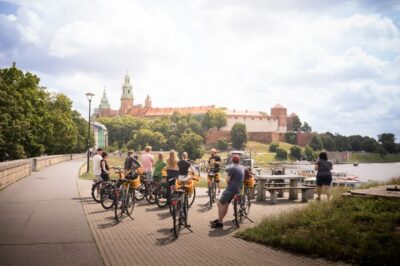
Bike Tour of Old Town, Jewish Quarter and the Ghetto
Read our review →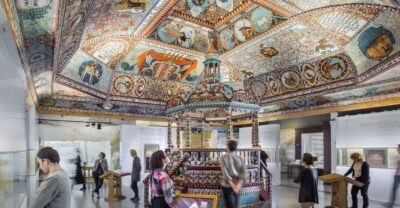
POLIN Museum of the History of Polish Jews Ticket
Read our review →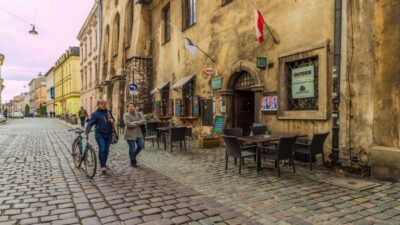
Kazimierz, Schindler’s Factory & Ghetto Guided Tour
Read our review →
Full Bike Tour – the Old Town, Jewish Qtr & the Ghetto NEW BIKES
Read our review →
Warsaw Ghetto Private Walking Tour with Hotel Pickup
Read our review →Browse the lists this tour appears in