
Reviewed · JEWISH HISTORY & HERITAGE TOURS
Historical Walking Tour of Jewish Warsaw
Jewish Warsaw hits different. This walk strings together the places tied to daily life, resistance, and deportation, even though so much was destroyed. I especially love the tight small group feel and the way the guide uses photos and visual aids to make vanished streets easier to picture. One catch to plan for: it is still a long on your feet route on uneven ground.
I like that the tour does not just list names. It explains why each location matters, from the only synagogue that survived to the unloading point for transports to Treblinka. I also appreciate the steady pace with frequent stops for context, so the story does not blur together. The main downside is simple, bring good shoes, because the walk is not a light stroll.
In This Review
- Key things I liked on this Jewish Warsaw walk
- Where the tour starts, and how the 3 hours move
- Sienna 53 and the Baguette Mi warm up that sets the tone
- Nozyk Synagogue, the surviving anchor of the story
- Fragment of the ghetto wall, what you can still touch
- The Warsaw Ghetto stop: memorials, courts, neighborhoods, and lost archives
- Ringelblum’s archive: why this matters beyond the tragedy
- Miła 18 and Anielewicz’s bunker: resistance in place
- Church of St. Augustine and the Heroes memorial: grief in public space
- Jana Karski’s bench and monuments that keep resistance visible
- Umschlagplatz: where transports to Treblinka began
- Price and value, including the one extra ticket
- Guide style: why Aga and Olivia are mentioned so often
- Practical tips so the walk does not wear you out
- Should you book this Jewish Warsaw walking tour?
- FAQ
- How long is the Jewish Warsaw walking tour?
- Where does the tour start and where does it end?
- What sites are included in the route?
- Is the Nozyk Synagogue entrance fee included?
- Is the tour offered in English?
- How big is the group?
- Is the tour suitable if I have mobility or walking issues?
- What is included in the tour price besides the guide?
- Can I use a mobile ticket and are service animals allowed?
Key things I liked on this Jewish Warsaw walk
- A small group limit of 10 makes it feel personal, not rushed.
- Nozyk Synagogue is a rare survivor, and it is treated as a central anchor of the story.
- A long focus at the Warsaw Ghetto sites means you get connections, not just snapshots.
- Umschlagplatz is the emotional endpoint, tied directly to the transport to Treblinka.
- Visual aids and an info pack help you keep track of people, dates, and geography.
- Guides named Aga or Olivia come up again and again for passion and clear delivery.
Where the tour starts, and how the 3 hours move
The tour begins at Sienna 53, 00-820 Warszawa, on the corner with Jana Pawła II Avenue. You end at the Umschlagplatz Monument area, so you finish near one of the most important ghetto memory sites. Expect about 3 hours total, with a clear rhythm: a short warm up, a key synagogue stop, then a long stretch through the former ghetto and memorial points.
A big part of the value here is pacing. The route is built around a two hour 5 minute chunk where you cover the densest cluster of ghetto and memorial sites. In practice, that means you are not bouncing every few minutes to something unrelated. You build the picture step by step, then you walk on while it is still fresh in your head.
This is also a “walk with purpose” tour. If you hate cobblestones or you are not comfortable walking for a couple hours, you may want to rethink it. The ground in this part of Warsaw can be uneven, and reviews specifically flag that you should wear sturdy shoes.
More Walking Tours in Warsaw
- Warsaw: Old Town Highlights Walking Tour in English
★ 4.7 · 1,516 reviews - Warsaw: Old Town Guided Walking Tour
★ 4.9 · 599 reviews - Half-Day Polish Food Walking Tour with Guide and Dinner
★ 4.5 · 381 reviews
Sienna 53 and the Baguette Mi warm up that sets the tone
Right at the start, you meet at Sienna 53 and get a quick introduction before the first major historical stop. Then the tour briefly points you to Baguette Mi – Banh mi bistro as the initial meetup area, with about 5 minutes there.
It sounds almost too casual for such heavy material, but that is the point. I like these early minutes because they help you get bearings fast. You learn what the tour is trying to show, and you get a mental map before you hit the memorials. If you arrive early, you can also get water or a quick snack before the walking begins.
Nozyk Synagogue, the surviving anchor of the story
The tour’s first major site stop is Nozyk Synagogue. It is one of the most important reasons to do a guided walk instead of just wandering, because it is not simply a building you pass. You are shown it as the only Warsaw synagogue that survived the war and remains today.
Timing is short, about 10 minutes, so you will not linger like you would inside a museum. Still, that short stop matters because it creates a baseline for everything that comes after. When you then see ghetto wall remnants and memorial locations, you can feel the contrast between survival and obliteration.
Budget note: Nozyk Synagogue entrance is not included. You should plan on paying 20 PLN for entry on the day. Since the tour price is $28.87 per person, this fee is the main add on to understand for real total cost.
Fragment of the ghetto wall, what you can still touch
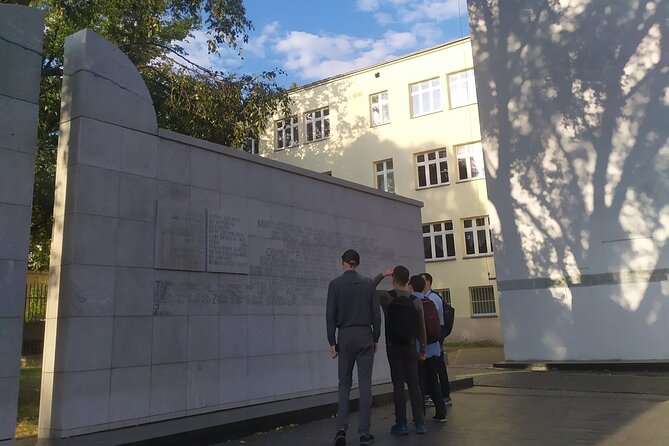
Next comes a quick stop at the Fragment of Ghetto Wall. This is only around 15 minutes, but it is powerful because it is physical evidence. In places like Warsaw, the old streets are mostly gone, so a wall fragment becomes a kind of anchor you can stand next to and feel.
I like how this kind of stop works on a walking tour. You do not just read about it later, you see how small a surviving piece can be compared to the scale of what was destroyed. That contrast is part of the emotional impact, and a good guide uses it to explain what the ghetto boundaries meant on the ground.
Further Jewish history and heritage itineraries:
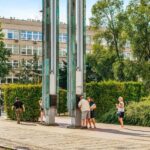

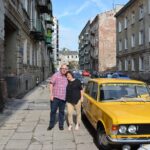
The Warsaw Ghetto stop: memorials, courts, neighborhoods, and lost archives
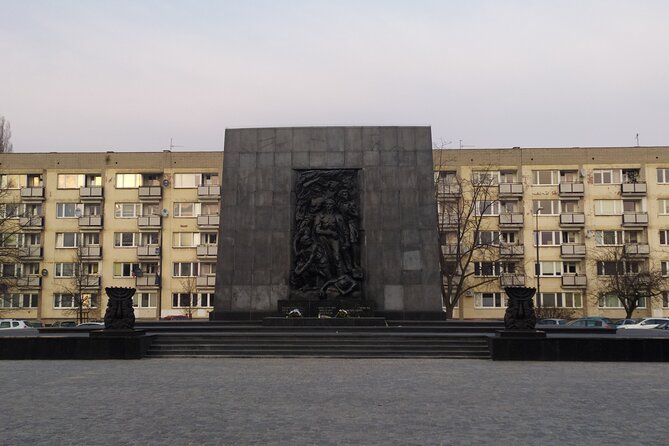
This is the heart of the tour, about 2 hours 5 minutes, and it is where the walking becomes more than movement. You cover a set of related sites that together sketch daily life, persecution, resistance, and aftermath.
Here is what you should expect to see during this stretch:
- the Jewish Ghetto memorial
- the courthouse on Solidarności Street
- the Muranów residential district
- the location of the discovery of Ringelblum’s archive
- the Church of St. Augustine
- the Heroes of the Jewish Ghetto memorial
- Miła 18, also tied to Anielewicz’s Bunker
What makes this portion valuable is the way it connects places that might otherwise feel random on a map. A courthouse is not just a building. A neighborhood is not just a backdrop. A discovered archive is not just an interesting footnote. On this tour, each stop is treated as a puzzle piece.
Ringelblum’s archive: why this matters beyond the tragedy
One detail I really want you to notice is the Ringelblum archive discovery location. Even in a tour that covers deportation and murder, it is important to show how people tried to preserve evidence. That archive is part of why the story was not fully erased.
If you like history that has names and motives, this is one of the moments that can change how you see the entire ghetto period. You stop thinking only about what was lost, and you also think about what was recorded.
Miła 18 and Anielewicz’s bunker: resistance in place
Another major stop during this long section is Miła 18, linked to Anielewicz’s Bunker. Even if you know the headline events, standing at a location tied to resistance adds a physical weight to what you have read.
It is also a reminder that ghetto life included choices and leadership, not just victimhood. A guide who keeps the tone respectful helps you absorb that without turning history into a slogan.
Church of St. Augustine and the Heroes memorial: grief in public space
The presence of Church of St. Augustine among ghetto related sites is a useful detail for first time visitors. It shows how layered the area is, how memory now sits beside older religious and civic landmarks.
And then the Heroes of the Jewish Ghetto memorial brings the story into focus again. This is the kind of site where you slow down naturally, because the whole point of memorials is that they ask you to remember, not just to look.
Jana Karski’s bench and monuments that keep resistance visible
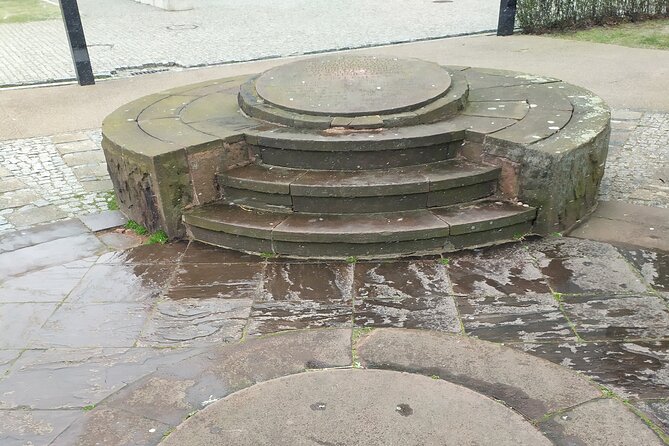
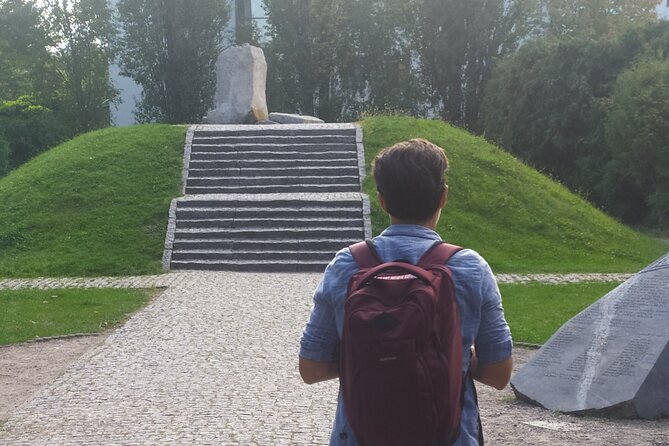
After the long ghetto segment, the tour shifts to the Laweczka Jana Karskiego area. You have about 15 minutes here, with monuments that remind you of the Jews’ heroic struggle within the Warsaw Jewish Ghetto.
Jana Karski is a name many people know in a broader European context. Here, the point is local and specific: resistance was real and it had to work under impossible constraints. If you want a tour that does not end on one dark moment, this stop helps bring the story into a wider framework of courage and witness.
Umschlagplatz: where transports to Treblinka began
The last stop is Umschlagplatz, about 10 minutes, and it is hard to overstate how central it is. This is the place from where 300,000 Jews were transported to Treblinka.
You end in front of the Umschlagplatz Monument, so this is both the emotional endpoint and the practical one for wrapping up the walk. I find this kind of final stop works best on foot. By the time you reach it, you have already built up the geography of the ghetto in your mind, so the final place feels like the logical culmination, not an abrupt jump.
Take a moment for yourself here. A good guide will keep the pacing respectful, but this is still a site where you will feel it. If you plan to move immediately afterward, make sure you know your next transit stop ahead of time.
Price and value, including the one extra ticket
At $28.87 per person, this tour sits in the budget friendly end for a structured guided walk. The big value is not just the guide time. It is the support materials you get: a full info pack about Warsaw prior to your tour, plus visual aids and recommendations for where to eat and what else to see.
That matters because this route is heavy and text dense. A guide can only explain so much out loud. Maps, photos, and a pre tour info pack help you follow along without constantly asking the same question.
Your one extra cost to plan for is Nozyk Synagogue entry, 20 PLN, since that ticket is not included. If you add that in, you get a more realistic total picture.
Also, the tour has a maximum of 10 travelers, which usually means less crowding and better group control for a topic this sensitive.
Guide style: why Aga and Olivia are mentioned so often
Many of the best experiences on this kind of tour come down to the person leading it. In the feedback, guides named Aga and Olivia show up repeatedly, and the themes are consistent: clear explanations, strong storytelling, and a tone that treats the subject with humanity.
I also like that guides are praised for keeping a good pace while still making room for photos. One reviewer noted that breaks and extra time for pictures were built in, which is important because it is easy to fall behind on a walk like this and then feel stressed.
There is also an important factual edge to how the Holocaust era is discussed. One concern that came up was how concentration camps are described. The tour approach, as emphasized by the provider response, is to state plainly that camps were German and to clarify the broader context of who suffered, including Polish victims. If you want a tour that uses sources and does not dodge hard historical details, this style is a plus.
Finally, the same response encourages reading work by historians such as Norman Davies, Władysław Bartoszewski, and Richard Overy, plus testimonies connected to the Ringelblum Archive. If the tour stirs you up to learn more, that reading list is a sensible next step.
Practical tips so the walk does not wear you out
This is a 3 hour route with a lot of emotional content, but the practical issues are real.
- Wear sturdy shoes. Reviews specifically mention cobblestones and the fact that the walk can be taxing.
- Bring an umbrella if the weather looks iffy. You do not want rain to cut into your ability to stop and take in details.
- If you have trouble with walking long distances, this tour is not recommended. The tour says most people can participate, but it is still a substantial walk.
- Expect to move between sites that are spread across the former ghetto area, with the longest concentration of walking during the ghetto memorial segment.
- You are near public transportation, so you can line up an easy return after you finish at Umschlagplatz.
- Plan for the Nozyk Synagogue entrance fee. Even if you do not think about it when you book, you will want cash or card ready for 20 PLN.
One small but useful detail: the tour uses a mobile ticket, which is handy if you travel with your phone as your main wallet. Also, service animals are allowed.
Should you book this Jewish Warsaw walking tour?
Book it if you want a guided route that helps you understand why specific Warsaw locations matter. This is the kind of tour that turns an unfamiliar neighborhood into a readable map, especially because so many original buildings are gone.
Skip or reconsider if walking for a few hours on uneven ground is hard for you, or if you prefer a purely indoor experience. And if you want a deeper dive into artifacts and museum exhibits, you might still pair this walk with an indoor option in Warsaw, since a walking route can only show you so much.
If you are the kind of traveler who likes context, names, and the logic that connects sites across time, you will probably feel grateful you did it this way. You will come away with a clearer sense of the geography of the ghetto and the sequence of events that led to the tragedy.
FAQ
How long is the Jewish Warsaw walking tour?
It is about 3 hours.
Where does the tour start and where does it end?
It starts at Sienna 53, 00-820 Warszawa and ends at the Umschlagplatz Monument area.
What sites are included in the route?
You will visit stops including Nozyk Synagogue, a Fragment of the Ghetto Wall, multiple Warsaw ghetto and memorial sites (including Miła 18 and Anielewicz’s Bunker), Laweczka Jana Karskiego, and Umschlagplatz.
Is the Nozyk Synagogue entrance fee included?
No. The tour does not include the Nozyk Synagogue entrance fee of 20 PLN.
Is the tour offered in English?
Yes, the tour is offered in English.
How big is the group?
The tour has a maximum of 10 travelers.
Is the tour suitable if I have mobility or walking issues?
It is not recommended for travelers who have problems with walking long distances.
What is included in the tour price besides the guide?
You get a full info pack, visual aids, and recommendations for more places to visit and where to eat or drink.
Can I use a mobile ticket and are service animals allowed?
Yes, the tour uses a mobile ticket, and service animals are allowed.
Between Rebuilt Squares
- Warsaw: Chopin Concert at Historical Venue in Old Town
★ 4.7 · 445 reviews - Small-Group Historical Guided Tour of Warsaw with pick up/drop off. Public Tour.
★ 4.5 · 343 reviews - Warsaw: Warsaw Historical Group Tour with Pickup & Drop-Off
★ 4.6 · 233 reviews - Private Historical Tour of Warsaw by a Retro Fiat with Pickup
★ 5.0 · 190 reviews
Squares Crossed on Foot
- Old Town Warsaw Walking Tour
★ 4.5 · 333 reviews - World War 2 in Warsaw walking tour in English
★ 4.7 · 237 reviews - Warsaw: Jewish Heritage & Holocaust Walking Tour
★ 4.7 · 119 reviews - Warsaw: Old and New Town Private Walking Tour
★ 4.8 · 116 reviews
Freshly posted from Warsaw
- Krakow Small Group Tour from Warsaw with Lunch, Schindler’s Factory included★ 5.0 · 7 reviews
- Warsaw Private Transfer from Warsaw Chopin Airport (WAW) to City centre★ 4.0 · 7 reviews
- Wolfs Lair – Hitlers hideout★ 4.5 · 7 reviews
- 3-hour tour at Warsaw Uprising 1944 Museum /inc. Pick-up/★ 4.9 · 7 reviews
- Warsaw: Evening History and Pubs Tour by Retro Minibus★ 5.0 · 7 reviews
- Warsaw: Private Vodka Tasting Night with Snacks and Pickup★ 5.0 · 7 reviews
- Warsaw Old Town with Royal Castle + Royal Route: SMALL GROUP /inc. Pick-up/★ 5.0 · 7 reviews
Jewish History & Heritage Tours, compared.
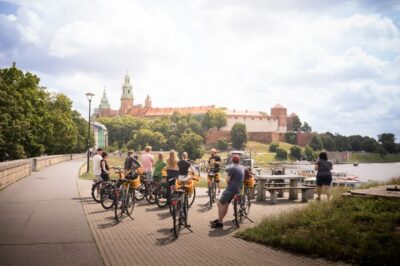
Bike Tour of Old Town, Jewish Quarter and the Ghetto
Read our review →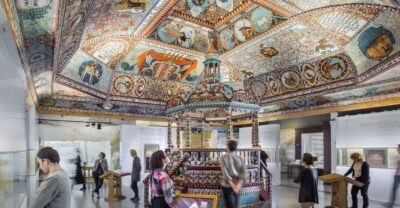
POLIN Museum of the History of Polish Jews Ticket
Read our review →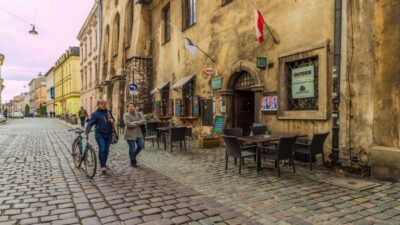
Kazimierz, Schindler’s Factory & Ghetto Guided Tour
Read our review →
Full Bike Tour – the Old Town, Jewish Qtr & the Ghetto NEW BIKES
Read our review →
Warsaw Ghetto Private Walking Tour with Hotel Pickup
Read our review →Browse the lists this tour appears in