
Reviewed · WROCLAW TOURS & ACTIVITIES
Wroclaw To Church of Peace and Project Riese Tour
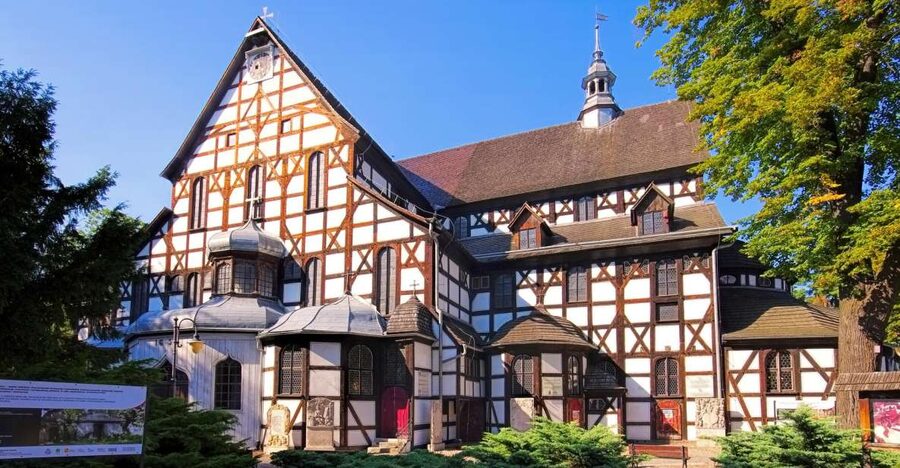
Two huge contrasts, all in one outing. This Wroclaw half-day mixes Project Riese underground sites with the UNESCO-level wow factor of the Church of Peace, an active Protestant parish that’s still pulling in crowds for a very good reason.
What I really like here is the pairing. You get self-paced audio-guided tunnel exploring, then you switch to the Church of Peace where you read your way through the story using booklets. Second, you’re not just looking at buildings, you’re learning how the places worked and why they matter, including the Project Riese idea behind the construction project and the church’s special place in Europe’s timber architecture.
One thing to plan for: the tunnels run cold, about 8 to 10 C, and food and drinks are not included, so you may want to bring a snack or plan your lunch timing.
In This Review
- Key things that make this tour worth your time
- Meeting in Wroclaw, then heading for the Owl Mountains
- Project Riese: underground tunnels with an audio guide plan
- What you should do inside the tunnels
- Pack for 8 to 10 C underground
- The bigger story Project Riese tells you
- Lunch choices: stay or head to the Church of Peace
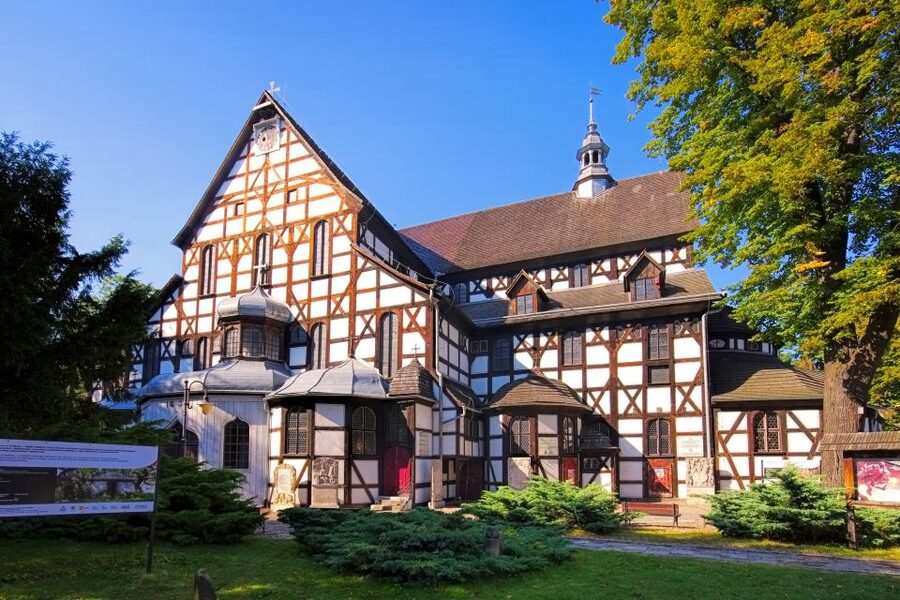
- Church of Peace: a live Protestant parish built to impress
- How the visit works: booklets, not audio
- Why the church’s story hits
- Price and value: what $145 covers in a 6-hour tour
- Who this tour suits best (and who might want a different plan)
- My practical take: the “mix” is the point
- Should you book this Wroclaw to Church of Peace and Project Riese tour?
- FAQ
- Where do we meet for the tour?
- How long is the Wroclaw to Church of Peace and Project Riese tour?
- Is this a private group tour?
- What is included in the $145 price?
- Is food and drinks included?
- Do I get an audio guide at Project Riese?
- Do you use audio guides inside the Church of Peace?
- What languages are available for the audioguide in Project Riese?
- How cold are the tunnels at Project Riese?
- Is free cancellation available?
Key things that make this tour worth your time
- Project Riese audio guides in multiple languages help you follow what you’re seeing underground
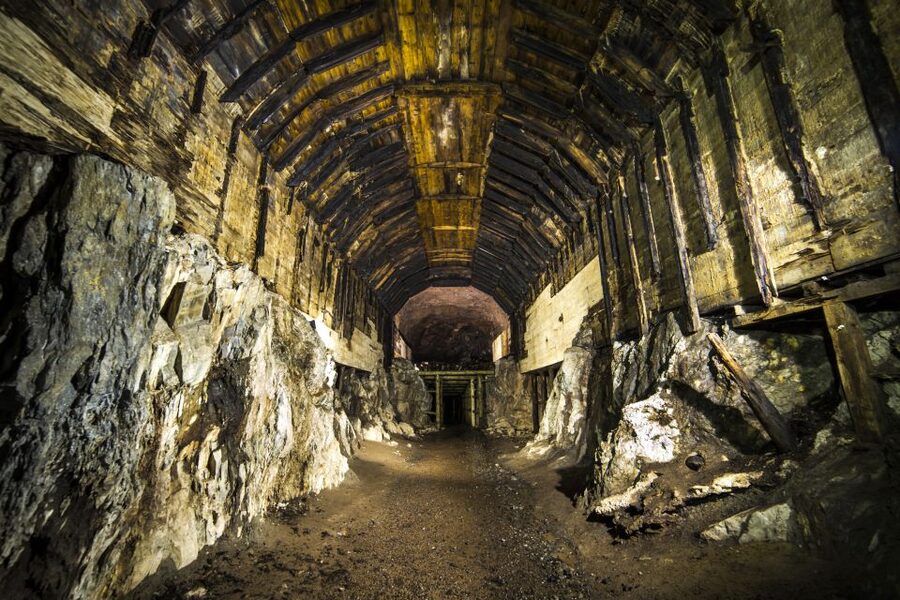
- Seven underground structures with different completion stages gives the site real variety
- The Church of Peace is still an active parish, not a dead museum
- Largest timber-framed building in Europe means you’ll see an architectural oddity in the best way
- A real half-day format: hotel pickup, then one long day stitched into two highlights
- Cold tunnels (8 to 10 C) keep your expectations honest, pack accordingly
Meeting in Wroclaw, then heading for the Owl Mountains
Your tour starts right from your hotel. That matters more than it sounds, because getting to Project Riese is not a quick hop across town. The drive from Wroclaw to the Project Riese area takes about 1.5 hours, so this is a tour built for people who want to maximize time without arranging separate transport.
You’ll ride in an air-conditioned minivan with an English-speaking driver. Since this is a private group, you’re not stuck in the usual shuffle of waiting for strangers. The plan keeps moving, but it still gives you time to explore on your own once you arrive.
If you’re the kind of traveler who likes to see big things with minimal stress, this is a solid format. If you need frequent bathroom breaks or constant narration, you may feel a bit more self-directed than you expect, because at Project Riese and the Church of Peace, the tour relies on your materials rather than a live local guide.
Still tacked up around Wroclaw
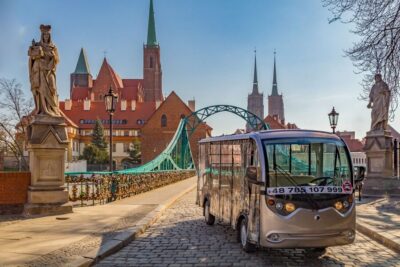
- Wroclaw: E-Car Tour and Audio Guide
★ 4.6 · 1,738 reviews - Wroclaw: 2-Hour Private Guided Tour by Electric Car
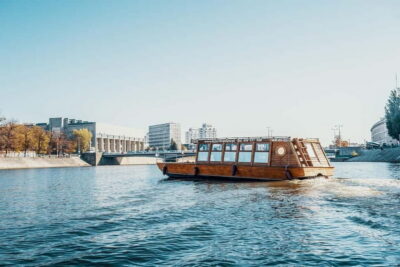
★ 4.8 · 805 reviews - Wroclaw: Ticket for Old Town Boat Cruise
★ 3.9 · 361 reviews
Project Riese: underground tunnels with an audio guide plan
Project Riese was a Nazi Germany codename for a major construction project launched between 1943 and 1945. The site includes seven underground structures spread across the Owl Mountains and the Książ Castle area. What makes it interesting is that not everything was finished the same way. You’ll see sections in different states of completion, which turns your visit into more than a single dark hallway.
At the site, you’ll use an audioguide. That’s important. Without a guide, tunnel sites like this can feel repetitive. With the audio, you can keep track of what each area represents and why it was created. Also, the audio guides come in English, German, Spanish, Italian, and French, so you can match your listening comfort level.
What you should do inside the tunnels
Since this is self-paced with an audio guide, your best move is simple: walk with a purpose. Don’t just drift. Pick a few key areas you want to understand, then follow the audioguide in order. You’ll get more meaning out of the visit that way.
Also, go in with the right expectations for the setting. This is not a staged theme park. Underground spaces are about constraints, silence, and texture. Expect uneven surfaces and tight corners, and remember that you’re touring a place designed for secrecy and heavy engineering, not comfort.
Pack for 8 to 10 C underground
The temperature in the tunnels stays around 8 to 10 C. Even if Wroclaw feels mild when you start, you will feel the chill once you enter. Bring a light layer you can actually wear for an extended time, not something that’s only good for a quick photo.
A small practical trick: wear closed shoes with decent grip. You’ll be standing and walking on surfaces that are not meant for flip-flops and fast footing.
Beneath the newer pins on the Wroclaw board:
The bigger story Project Riese tells you
This site is fascinating, but it’s also heavy. You’re looking at the material footprint of a wartime project that pushed engineers and workers toward scale, secrecy, and speed. The “codename” part matters too. It signals that the project was intentionally shrouded, designed to operate in a world full of risk.
That’s why the audio guide format works. It gives you a way to learn while you’re moving through the physical evidence, instead of trying to read a wall label in a hurry.
And because the underground structures have different completion stages, you’re not only seeing what existed. You’re also seeing what didn’t, or what started and stopped. That adds a layer of realism. You can leave with a clearer sense of how the project evolved during 1943 to 1945 rather than treating it like one finished thing.
Lunch choices: stay or head to the Church of Peace
Once you finish exploring Project Riese, you have a choice. You can stay for lunch at the site, or you can drive to the Church of Peace next. This matters because your tour is only 6 hours total, and you’ll feel it in the way you pace yourself.
Food and drinks are not included in the tour price. So you’ll want to either plan to buy something at one of the stops or bring your own snack. If you pick lunch at the site, it can reduce stress later, but it also uses time you might want in the church.
My practical advice: if you’re hungry and don’t want to gamble on timing, choose lunch at the Project Riese area. If you’re confident you can eat after the tour, prioritize time in the Church of Peace, because it’s the place where you’ll likely want to slow down and actually absorb what you’re reading.
Church of Peace: a live Protestant parish built to impress
Then comes the Church of Peace. This church is still an active Protestant parish, which changes the vibe completely. It isn’t just a historic object behind ropes. People still use it, which makes your visit feel less like consumption and more like witnessing something in daily life.
The Church of Peace is the largest timber-framed building in Europe and one of the largest wooden churches in Europe. It draws thousands of tourists, but it’s not only the attention that makes it special. It’s the sheer stubbornness of the idea. Timber at that scale is not a small claim, and seeing the structure in real life gives you a better sense of how serious the builders were.
How the visit works: booklets, not audio
Here, you won’t use the audioguide. Instead, you read information using booklets. That’s a nice contrast to Project Riese. Tunnels are about sound and guided listening, while the church is about shape, materials, and context you can take in at your own pace.
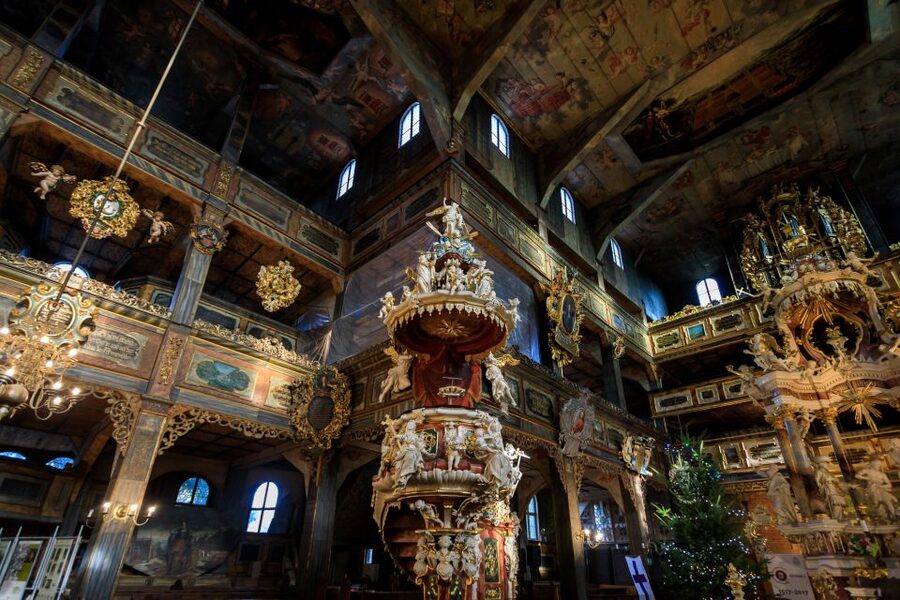
You should plan to spend more time than you think you need, because wooden architecture rewards close looking. If you treat it like a quick stop for photos only, you’ll miss the historical and architectural cues that make the place memorable.
Why the church’s story hits
The church’s unique history is part of why it keeps showing up on “must see” lists for Wroclaw. Even without a live guide, the booklets are a good way to learn why this building sits where it does in European architecture and how it became a destination in its own right.
It also helps that the church is not a sealed-off time capsule. Since it’s an active parish, you’re seeing it as something ongoing. That little detail makes the whole visit feel more real, less staged.
Price and value: what $145 covers in a 6-hour tour
This tour costs $145 per person for a 6-hour outing. On paper, that might feel like a lot for “just two stops.” In practice, you’re paying for several things that are easy to forget when you’re comparing DIY plans.
You’re getting:
- a driver
- air-conditioned minivan transport
- entrance tickets
- an audioguide for Project Riese
- bottled water
- fuel surcharge and GST
And you’re not paying extra for a separate guide at each site, since local guides are not included. That’s a tradeoff, but it also keeps the logistics simpler.
So is it good value? For many people, yes, because the drive to Project Riese is about 1.5 hours from Wroclaw one way. If you add the time and effort of organizing transport, plus entry tickets and getting the right info in the right format underground, this structured tour can be a time-saver.
If you’re the kind of traveler who loves spending half the day on one site and then wandering without a schedule, you might feel the pacing is a bit tight. But if your priority is hitting both highlights with clear educational support, the price starts to make sense.
Who this tour suits best (and who might want a different plan)
This fits best if you want a focused, high-impact day. It’s especially good for history-minded travelers who like learning while walking through real spaces, not just looking at photos.
You’ll probably enjoy it if:
- you want one organized trip to both Project Riese and the Church of Peace
- you’re comfortable using audioguides and booklets instead of a live local guide
- you don’t mind cold tunnel temperatures and plan your layers
You might want to reconsider if:
- you hate self-paced touring and want constant commentary
- you need longer, slower time in just one location
- you prefer having food included, since food and drinks are not part of the package
My practical take: the “mix” is the point
The best part of this tour is the contrast. You start underground in engineered wartime secrecy, then you come up to a timber-framed church that still functions as a community space. That switch helps the day feel more than just another history stop. It gives you perspective on how the same region can hold very different kinds of meaning.
Also, the tour stays efficient without feeling purely rushed. You get enough structure to understand what you’re seeing, but you’re still in control of your pace once you’re there.
If you’re visiting Wroclaw and want a half-day plan that feels substantial, this one is hard to beat.
Should you book this Wroclaw to Church of Peace and Project Riese tour?
I’d book it if you want both of these in one shot, with transport and entry handled, and you’re fine with learning via audio in tunnels and booklets in the church. The tunnel cold and the lack of included meals are the main things to plan around, but they’re also easy to manage.
If your idea of a great day is a slower pace with a fully guided narrative at every stop, you may feel the self-paced elements more than you expect. But for most visitors who want maximum value for a 6-hour window, this is a smart, well-packaged mix.
FAQ
Where do we meet for the tour?
Meeting point is your hotel in Wroclaw.
How long is the Wroclaw to Church of Peace and Project Riese tour?
The duration is 6 hours.
Is this a private group tour?
Yes, it’s listed as a private group.
What is included in the $145 price?
Included are the driver, entrance tickets and use of an audioguide in Project Riese, air-conditioned minivan transport, fuel surcharge, GST, and bottled water.
Is food and drinks included?
No. Food and drinks are not included.
Do I get an audio guide at Project Riese?
Yes. Entrance tickets and use of an audioguide in Project Riese are included.
Do you use audio guides inside the Church of Peace?
No. In the Church of Peace, you read information in booklets.
What languages are available for the audioguide in Project Riese?
The audioguide is available in English, German, Spanish, Italian, and French.
How cold are the tunnels at Project Riese?
The temperature inside the tunnels is about 8 to 10 C.
Is free cancellation available?
Yes. You can cancel up to 24 hours in advance for a full refund. Reserve now and pay later is also offered.
Freshly posted from Wroclaw
- Electric Scooter Tour: Old Town Tour – 1,5-Hour of Magic!★ 5.0 · 1 review
- Poznan: Heart of Greater Poland full Day Trip from Wroclaw★ 5.0 · 1 review
- Wroclaw Scavenger Hunt and Highlights Self-Guided Tour★ 5.0 · 1 review
- Wroclaw – Gross Rosen Round Trip including tickets★ 5.0 · 1 review
- University of Wrocław – discover this place with a guide!★ 5.0 · 1 review
- Wrocław: Solar gondola cruise on the Oder with a guide★ 5.0 · 1 review
- Wroclaw Grand City Private Tour with Japanise Garden and Panorama Painting★ 5.0 · 1 review
Wroclaw Tours & Activities, compared.
Old Town and Ostrów Tumski Walking Tour in English
Read our review →
Private Old Town Guided Walking Tour (2 hours)
Read our review →
Wrocław Dwarfs & Sightseeing Tour by Electric Mini Bus
Read our review →
Group city tour (walking tour) through Wroclaw in German
Read our review →Browse the lists this tour appears in