
Reviewed · WROCLAW TOURS & ACTIVITIES
Wrocław Dwarfs & Sightseeing Tour by Electric Mini Bus
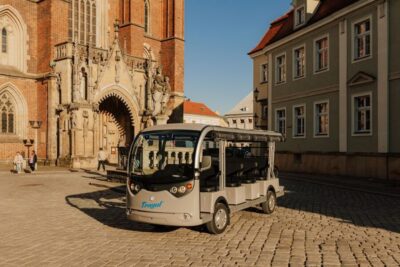
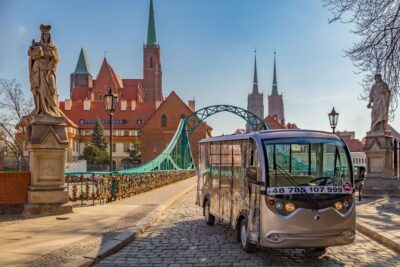
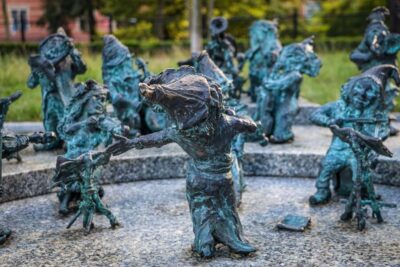
Wroclaw by electric bus feels instantly doable. In about 1 hour to 90 minutes on an electric mini bus, you chase the city’s dwarfs while rolling past major landmarks like the Old Town, the University of Wrocław, and Cathedral Island, with a guide explaining how Wrocław shifted through centuries of change.
I especially like two things. First, the bus can be surprisingly comfortable, with at least one recent winter departure described as warm even during snow. Second, the storytelling can be tailored in real time, with guides such as Timothy, Michal, Nicholas, and Simon praised for clear answers, strong pacing, and even taking photos for the group when asked.
One consideration: this is a highlights tour, so the pace is brisk. Even though you get stops to see and photo, you will not linger forever, so plan to return on foot later if you fall hard for a particular corner of the Old Town or a museum setting.
In This Review
- Key highlights at a glance
- How Wroclaw works when you ride instead of walk
- The dwarf trail plus the major landmarks you actually want
- Old Town: getting your bearings without burning the whole day
- University of Wrocław: history you can feel in the air
- Cathedral Island: the skyline moment that teaches the city’s geography
- Centennial Hall and the Pergola Fountain Show: architecture plus atmosphere
- National Museum and Racławice Panorama: when history becomes tangible
- The guide matters: what guides like Timothy and Michal bring to the ride
- History themes you will hear, and why they are worth your time
- Price and value: what you pay for at about $18 per person
- Timing tips: how to place this tour in your Wrocław visit
- Should you book this electric mini bus tour of Wrocław dwarfs?
- FAQ
- How long is the Wrocław Dwarfs and Sightseeing Tour?
- What languages are available for the guide and audio?
- Which places are included on the tour?
- Does this tour help with entry lines?
- Is the tour wheelchair accessible?
- Is there free cancellation?
- Is a private group option available?
Key highlights at a glance
- Electric mini bus comfort, including warm rides reported during snowy weather
- Dwarfs route energy, mixing quirky lore with real historical landmarks
- Major sites in one loop, like Centennial Hall and Cathedral Island
- Live multilingual guiding, with English, German, and Polish narration available
- Thoughtful history themes, from Festung Breslau to the Orange Alternative and the Great Flood
How Wroclaw works when you ride instead of walk
Wrocław is compact enough to explore, but it can still feel like a lot if you are trying to do everything by foot. This tour solves that. You hop onto an electric mini bus and let someone else handle the driving while you focus on what matters: where you are, what you are looking at, and why it changed.
The format also helps you learn faster. You are not just seeing buildings one by one. The guide connects the dots, walking you through Wrocław’s founding story, its transition between countries, and the city’s rise and upheavals over time. That kind of “put it all on a timeline” explanation is exactly what you need on a first visit.
And yes, it can be genuinely comfortable in cold months. Multiple reviews call out how warm the heated vehicle felt, which matters in Poland winters when you do not want to trade sightseeing for shivering.
Still tacked up around Wroclaw
- Wroclaw: E-Car Tour and Audio Guide
★ 4.6 · 1,738 reviews - Wroclaw: 2-Hour Private Guided Tour by Electric Car
★ 4.8 · 805 reviews - Wroclaw: Ticket for Old Town Boat Cruise
★ 3.9 · 361 reviews
The dwarf trail plus the major landmarks you actually want
The big idea here is clever: you get the famous dwarf theme, but you also get the big Wrocław landmarks that make the city memorable on day one. This blend is useful because dwarfs are fun, but they can also become random if you do not understand the places they sit beside.
On your route, you will visit stops that frame the city in layers:
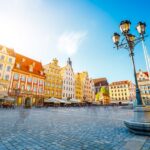
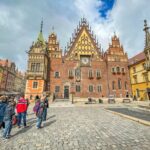
- Old Town, where the historic center teaches you the vibe fast
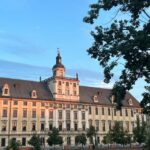
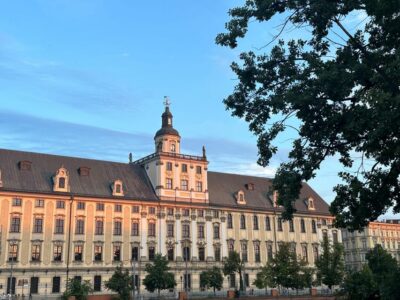
- University of Wrocław, which adds a “people and ideas” angle to the day
- Cathedral Island, a high-value viewing area for Wrocław’s shape and skyline
- Centennial Hall, a major architectural statement you cannot ignore
- The Pergola Fountain Show area, which gives you a lively, modern counterpoint
- The National Museum stop, adding cultural context
- Racławice Panorama, a standout historical artwork experience tied to the region’s past
Even in a short window, this kind of spread helps you avoid the classic mistake: seeing only one type of place. Here you get religious and civic sites, education, big architecture, and museum culture, all in one moving schedule.
Old Town: getting your bearings without burning the whole day
Your day begins in the Old Town orbit, which is the right move. This is where Wrocław feels most walkable and most photogenic. When you see the Old Town from the route, the guide’s job becomes turning landmarks into wayfinding.
You get a sense of the city’s layers: where commerce and power once sat, where streets grew into identities, and how the city’s story does not move in a straight line. The narration covers founding and major transitions between countries, so the Old Town stops feel less like scenery and more like evidence.
One practical benefit: you are not stuck doing a slow, map-first scavenger hunt. Instead, you come away with names, themes, and a clearer sense of what you want to revisit later. If you love history, this is the part that can make the rest of the city click.
University of Wrocław: history you can feel in the air
A university stop might sound like a filler in a sightseeing loop, but it is a smart one. It gives you a human dimension to Wrocław’s story. Buildings matter, yes, but education and institutions help explain why a city keeps reinventing itself.
When the guide brings up Wrocław’s periods of greatest economic growth and later hardships, the University of Wrocław fits naturally into that narrative. You start to see Wrocław as more than a set of monuments. It becomes a working place with ideas, workers, and changing priorities over time.
If you are the type who likes to understand a city’s “why,” this is one of the stops that tends to pay off later. Even if you only have a quick look from the bus or at a designated viewing point, you leave with a more grounded feel for what kind of city Wrocław is.
Beneath the newer pins on the Wroclaw board:

Cathedral Island: the skyline moment that teaches the city’s geography
Cathedral Island is where the city’s shape becomes obvious. It is also where many first-time visitors appreciate a guided stop, because the guide can help you read what you are seeing: how the river setting relates to the historic center, where the city’s identity clusters, and why certain places became focal points.
From a practical standpoint, this stop helps with composition. Your photos tend to look better when you understand what lines, bridges, and viewpoints are meant to frame the scene. A guided explanation makes the photo stops feel purposeful rather than accidental.
The narration also ties Cathedral Island into the bigger historical arc. When the guide later covers war periods such as Festung Breslau and then shifts into postwar and communism-era transformation, you start understanding why certain areas carry so much symbolic weight.
Centennial Hall and the Pergola Fountain Show: architecture plus atmosphere
Centennial Hall is one of those Wrocław landmarks that feels important even before the guide starts explaining it. It is the kind of place where you stand back, look up, and think, someone really planned this.
This is where the tour’s structure shines. The guide does not treat monuments like trivia. You get them as chapter headings. Centennial Hall becomes part of the story of growth and identity, while the later stop for the Pergola Fountain Show adds a more playful, modern feel.
The Pergola Fountain Show stop is also a reminder that Wrocław is not stuck in the past. You get a shift from heavy history topics into something that feels alive in the present. That contrast can be refreshing on a short tour, especially after the guide covers serious themes like war and the Great Flood.
National Museum and Racławice Panorama: when history becomes tangible
Museum stops can go two ways on a short tour. Either you get rushed and confused, or you get enough context that you feel oriented. This tour aims for the second.
At the National Museum, the guide’s commentary helps you understand what you are looking at and why it fits Wrocław’s broader story. The museum stop acts like a bridge between sightseeing and meaning.
Then comes Racławice Panorama, which is often the kind of cultural stop that leaves a strong impression. A panorama format gives you an immersive sense of a historical moment, and the guide can link that experience to the region’s past. Even if you only have a limited time window, you are still getting something more memorable than a quick glance at a facade.
If your travel style is “I want one or two memorable cultural moments,” these museum stops are where you likely feel the value most. They are not just photo stops. They are learning stops.
The guide matters: what guides like Timothy and Michal bring to the ride
In my experience judging tours, the guide is half the product. Here, that is clear from the standout praise in recent feedback. Guides such as Timothy, Michal, Nicholas, Simon, and Niko are described as welcoming, friendly, and especially good at explaining history in a way that stays easy to follow.
Two details show up again and again:
- Answering questions thoughtfully, with guides adjusting to what you care about
- Holding two audiences at once, one person asking for historical depth (especially around WW2) and another wanting stories and culture, with both interests handled well
One reviewer noted the tour felt nearly personalized when bookings were low. That is not a guarantee, but it is a good sign that the content is not robotic. When the group is small, it can feel like a moving conversation.
And if you like having photos without fuss, look for the guide to help. Multiple reviews mention guides taking photos of the group during stops.
History themes you will hear, and why they are worth your time
The tour’s story line has real weight. You will hear about:
- The founding of Wrocław
- The city’s transition between countries
- The period of greatest economic growth
- The war period and Festung Breslau
- Communism in Wrocław
- The founding of the Orange Alternative group
- The impact of the Great Flood
- Wrocław’s rise as a landmark of Lower Silesia and a frequently visited European city
What makes this list useful is the way it connects locations to time. You are not just memorizing dates. You are learning how the same streets and buildings can belong to different eras, different political systems, and different social needs.
The Orange Alternative mention is a particularly interesting pivot. It shifts the conversation from wars and official power into civic creativity and resistance culture. If you have ever wanted to understand not just what happened to a city, but how people responded inside it, this tour’s range helps.
Price and value: what you pay for at about $18 per person
At around $18 per person for a 1 hour to 90 minutes electric mini bus tour, the value is mostly about efficiency. You are compressing a lot of key sightseeing into one guided loop, with live narration and multiple stops.
You are also getting extras that reduce friction:
- A live guide in English, German, and Polish
- An audio guide included in several languages (Czech, English, German, Italian, Polish, Russian, Spanish, Ukrainian)
- Skip the ticket line
- A vehicle that can be warm in winter
Even if you already know some history, the “time saved” part matters. You get a structured orientation, which makes the rest of your day easier to plan. If your goal is to see major Wrocław anchors without building a complex walking route, this price feels aligned with that mission.
Timing tips: how to place this tour in your Wrocław visit
This is best early in your trip. When you do it on day one, the tour helps you build mental maps:
- You learn where Cathedral Island fits relative to Old Town
- You understand which big landmarks are close to your walking routes
- You get the history themes that make later museum time easier
If you are visiting in winter, you will likely appreciate the warm electric mini bus even more. More than one recent review calls out that comfort factor during snow.
Also consider combining it with a follow-up walking session. Since the tour is designed for highlights, your next step should be slow sightseeing in the places that grabbed you. This is how you turn a good first look into a memorable visit.
Should you book this electric mini bus tour of Wrocław dwarfs?
Book it if you want a focused first taste of Wrocław with real context. This tour is a great fit for people who like their history explained while still keeping the day fun, including the dwarf lore that adds personality to the city.
Pass or consider a different format if you want long museum time or deep wandering with lots of free-form stops. The tour is structured. It is designed to move, cover multiple landmarks, and get you oriented fast.
If you are deciding right now, I would frame it like this: if you value an efficient, guided highlights route, this tour looks like a smart buy for Wrocław. And if a warm electric mini bus helps you enjoy more sightseeing, that comfort alone can make the day feel easier.
FAQ
How long is the Wrocław Dwarfs and Sightseeing Tour?
The duration is 1 hour to 90 minutes, depending on the starting time and option you choose.
What languages are available for the guide and audio?
The live guide is available in English, German, and Polish. An audio guide is included in Czech, English, German, Italian, Polish, Russian, Spanish, and Ukrainian.
Which places are included on the tour?
The tour includes stops at the Old Town, the University of Wrocław, Cathedral Island, Centennial Hall, the Pergola Fountain Show, the National Museum, and the Racławice Panorama.
Does this tour help with entry lines?
Yes, it includes skip the ticket line.
Is the tour wheelchair accessible?
Yes, the tour is wheelchair accessible.
Is there free cancellation?
Yes. Free cancellation is available up to 24 hours in advance for a full refund.
Is a private group option available?
Yes, private group tours are available.
Freshly posted from Wroclaw
- Segway Tour Wroclaw: Old Town Tour – 1,5-Hour of Magic!★ 4.8 · 7 reviews
- The Roots of Poznań (small group)★ 5.0 · 8 reviews
- Wroclaw to Rock City Adrspach in Czech Republic Private Tour including tickets★ 4.5 · 8 reviews
- Wroclaw Private Old Town Guided Walking Tour★ 5.0 · 8 reviews
- Wroclaw: Multimedia Fountain Evening Show★ 4.0 · 9 reviews
- Wroclaw: Solar Catamaran Cruise on the Odra River★ 4.8 · 9 reviews
- Segway Tour Wroclaw: Old Town & Ostrów Tumski – Full Tour★ 5.0 · 9 reviews
Wroclaw Tours & Activities, compared.
Old Town and Ostrów Tumski Walking Tour in English
Read our review →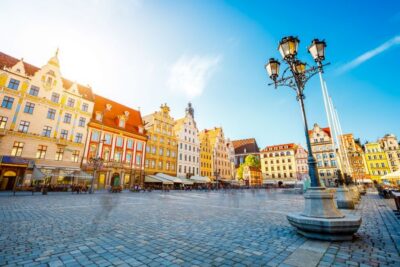
Private Old Town Guided Walking Tour (2 hours)
Read our review →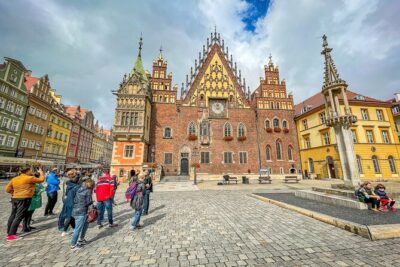
Group city tour (walking tour) through Wroclaw in German
Read our review →
Ticket for Old Town Christmas Cruise by Heated Ship
Read our review →Browse the lists this tour appears in