
Reviewed · JEWISH HISTORY & HERITAGE TOURS
Warsaw: 2-Hour Tour of Daily Life in the Ghetto Warsaw
Warsaw gets very real, very fast. This 2-hour walk through the Warsaw Ghetto turns big numbers into street-level reality, with surviving traces like the last preserved street and ghetto wall remains. I love that it focuses on daily life, not just catastrophe dates. The one drawback is that the subject matter is heavy, so you’ll want a bit of emotional stamina, plus you’ll be on your feet and moving as you go.
I also like the human, practical way the guide explains what life was like inside the ghetto, including how people coped, how control worked, and how resistance formed. Guides such as Marzena set a calm, clear tone, with lots of room for questions and answers. That’s a big plus when you’re trying to understand something this complex in a short time.
One thing to consider: this tour usually ends at the Jewish Museum, and that’s not a quick stop. Even if your guided portion is only 2 hours, you should plan extra time if you want to do the museum’s core exhibition properly with audio.
In This Review
- Key things to know before you go
- Warsaw ghetto daily life, in two hours you can actually process
- Meeting your guide with PolinTours, and what you’re allowed to bring
- The last preserved street and ghetto wall remains: why physical traces hit harder
- The only synagogue that survived: community life that refused to vanish
- Mila 18 and the Footbridge over Chłodna Street: places you can place in your mind
- Umschlagplatz: the node where deportations became a system
- The Underground Archive and Oneg Shabbat: how memory survived
- Monument symbolism and the Jewish Museum finish that actually helps
- Price and value: is $76 for 2 hours fair?
- Who should book this tour, and who might want a different pace
- Should you book Warsaw Daily Life in the Ghetto?
- FAQ
- What is the duration of the Warsaw Ghetto tour?
- Where do I meet the guide?
- What languages are offered on this tour?
- What is included in the ticket price, and are entrance fees covered?
- Does the tour include the Jewish Museum, and how long should I plan for it?
- Is this tour suitable for kids, and can I bring a pet?
- Is free cancellation available, and can I pay later?
Key things to know before you go
- A daily-life focus that helps you understand how people lived minute to minute, not only how the Nazis destroyed.
- Surviving physical traces, including the last preserved street and remains of the ghetto wall.
- Key “Pianist” related sites, including Mila 18, the Footbridge over Chłodna Street, and Umschlagplatz.
- Oneg Shabbat and the Underground Archive, including its survival in metal cases and milk cans, later recognized by UNESCO.
- A finish at the Jewish Museum, with helpful guidance on planning time for the core exhibition.
- Headsets for group clarity if the group size warrants it, so you don’t miss details.
Warsaw ghetto daily life, in two hours you can actually process
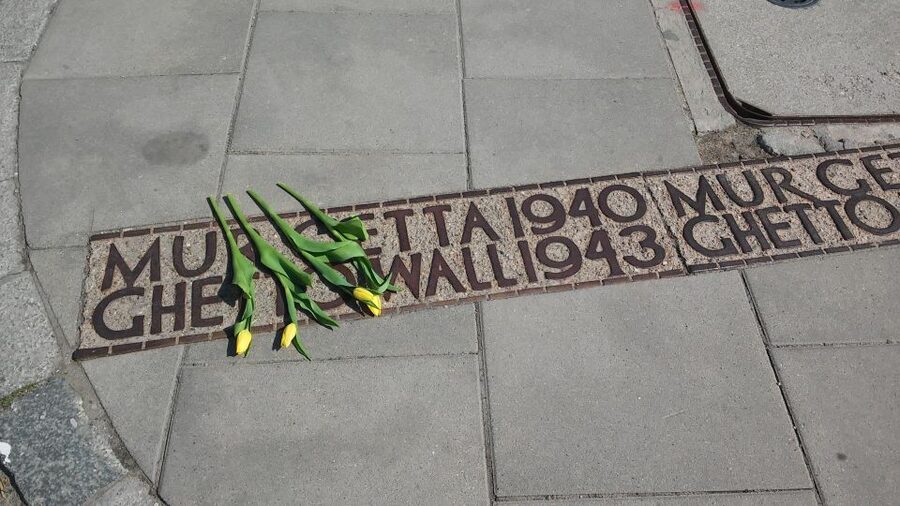
This is one of those tours where the headline is simple, but the experience stays with you. The Warsaw Ghetto wasn’t a distant history lesson. It was set up in the heart of Warsaw in 1940, and roughly 460,000 Jews from Warsaw and the nearby area were packed into about four square kilometers. The scale is hard to hold in your head, so the tour’s daily-life framing matters. You don’t just hear numbers like 100,000 dying from exhaustion, hunger, and disease, and more than 300,000 sent to Treblinka. You also learn how people tried to solve everyday problems inside an impossible system.
In 1943, an uprising broke out when the Nazis pushed toward total liquidation. The Nazis’ revenge destroyed the area of the ghetto afterward. That sequence can feel abstract until you’re standing where the street layout once pushed people into cramped, controlled routines. That’s what makes this tour work. You get a “how did life function here” lens, then the story turns to what broke it.
The heavy truth is unavoidable, but the tour gives you structure. You hear how daily life worked, why the uprising happened when it did, and how resistance and documentation grew in the middle of terror. If you come in expecting a dramatic walkthrough of only battles, you’ll be surprised in a good way. You’re learning the whole human system, not just the final explosions.
Further Jewish history and heritage itineraries:
- Warsaw: POLIN Museum of the History of Polish Jews Ticket
★ 4.7 · 1,142 reviews - Warsaw: Warsaw Ghetto Private Walking Tour with Hotel Pickup
★ 4.9 · 369 reviews - Warsaw: Jewish History Guided Walking Tour in English
★ 4.7 · 324 reviews
Meeting your guide with PolinTours, and what you’re allowed to bring
Your guide meets you with a sign that says PolinTours. That matters because you’ll be moving through city areas where it’s easy to lose the group. Aim to show up a little early, so you start the tour calm, not sprinting.
The tour runs in English and German with a licensed guide. Headsets are provided for groups up to 20, which is a practical touch. In an outdoor walking tour, it’s the difference between catching every detail and straining to hear.
Also keep the rules in mind. Pets are not allowed. Oversize luggage, smoking, and alcohol or drugs are also not allowed. The tour is conducted on foot combined with public transport, so plan to travel light. If you like to carry big bags around “just in case,” you’ll want to rethink that on this day.
The last preserved street and ghetto wall remains: why physical traces hit harder
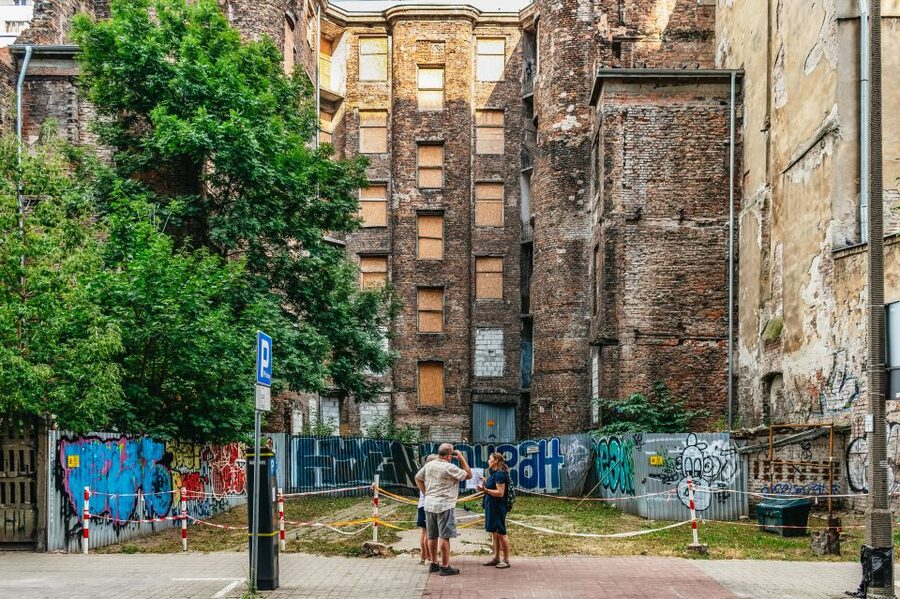
One of the best parts of this tour is its use of remains that are still there. You’ll explore the last preserved street of the ghetto and remnants of the ghetto wall. These are not museum reconstructions. They’re the kind of fragments that help your brain map a lost neighborhood.
What makes this worthwhile is how it changes your understanding of constraint. When you hear that the ghetto was only about four square kilometers for hundreds of thousands of people, it’s still a statistic. But standing near remnants tied to the old layout, you start to feel what “crowded and controlled” actually means in space and time. Even if the area has been rebuilt and renamed over the years, you can sense the boundaries and the pressure they created.
A quick practical note: this part of the tour is educational, not scenic. You’re there to read the landscape like a document. Wear comfortable shoes because you’ll be walking and stopping often, and the tour includes public transport as part of the route.
The only synagogue that survived: community life that refused to vanish
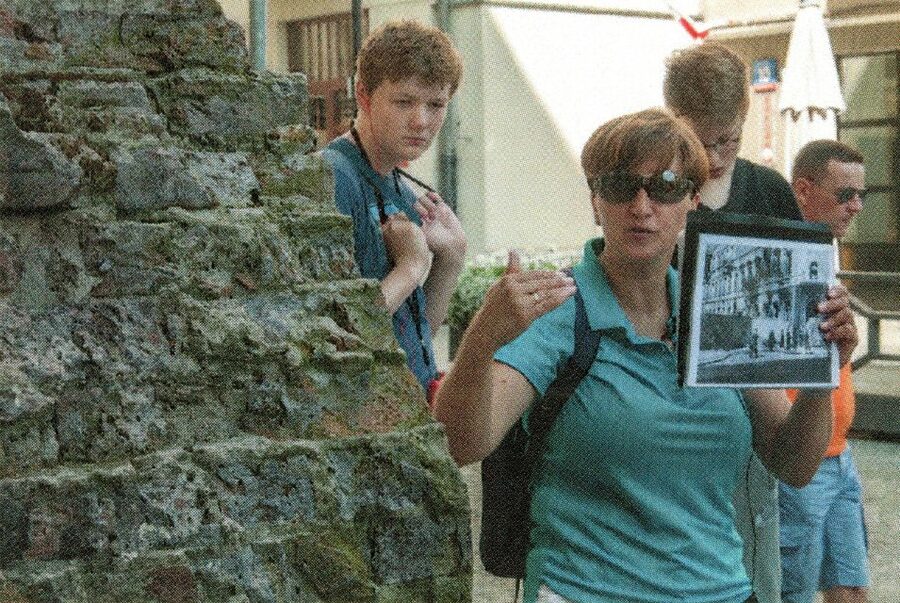
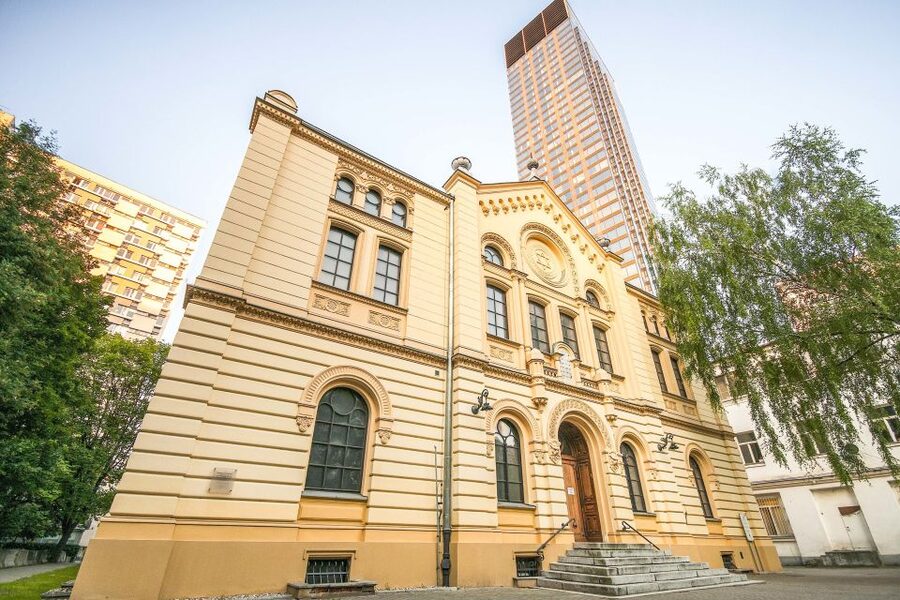
Another stop you’ll appreciate is the only synagogue that survived. For me, that’s one of the clearest ways to understand that people weren’t just victims of a plan. They were still building community, observing faith, and keeping identity alive where identity was under attack.
The tour uses that surviving synagogue not as a standalone landmark, but as a window into daily life. You learn what religion and communal institutions meant for everyday routine, and how limited space and Nazi policy threatened that stability. This stop can feel quiet compared with some of the other locations on the route, but it lands emotionally because it shows continuity under pressure.
If you care about cultural survival as much as historical events, this is a highlight. It also helps you avoid the common trap of reducing the ghetto to one theme only. Yes, the destruction is central. But so is the persistence of community.
Still tacked up around Warsaw



Mila 18 and the Footbridge over Chłodna Street: places you can place in your mind
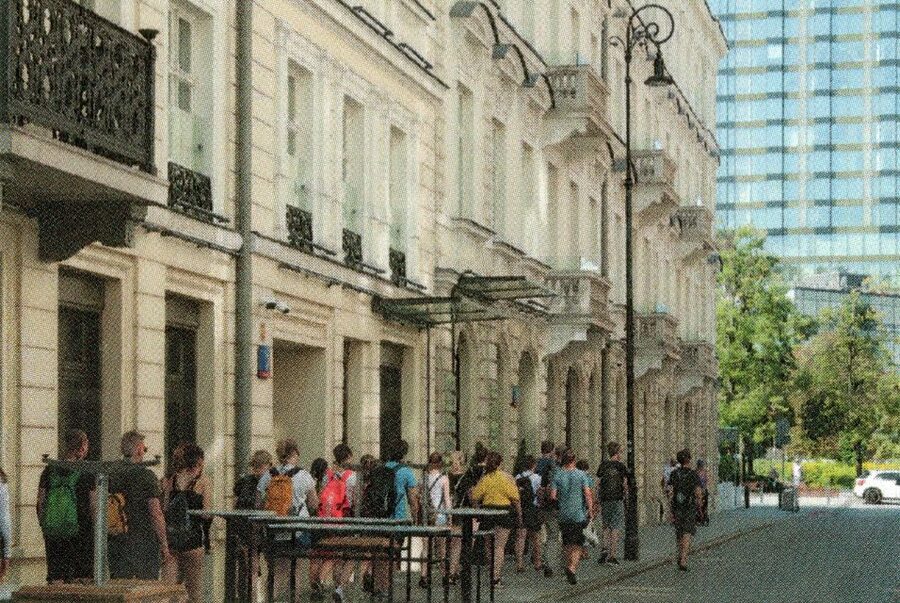
The tour makes three stops that are easy to remember because they’re strongly connected to well-known storytelling: Mila 18, the Footbridge over Chłodna Street, and Umschlagplatz. Even if you’ve seen the famous film about the period, the real value here is that you connect that narrative to specific locations on the ground.
At Mila 18 (18 Miła Street), you’ll visit the bunker location. That’s a heavy stop. The tour frames it within the uprising period and the brutal reality that people faced when hope collided with Nazi power. The guide’s job here is not just to say what happened, but to explain why these moments mattered to daily decisions, hiding, and survival strategies.
Then you move to the Footbridge over Chłodna Street. Bridges and crossings can sound like “just infrastructure,” but in a controlled zone, crossings become lifelines and risk points. The guide helps you understand how movement through the ghetto was shaped by watchfulness, restrictions, and danger. If you’re the type who likes to understand how people navigated real barriers, this stop will stick.
The tour also ties these places to the main hero of Roman Polanski’s film The Pianist, so it gives you a bridge between cultural memory and on-the-ground history. The goal isn’t to replace films with facts. It’s to use the familiarity of the story to orient you, then correct and deepen your understanding with real context.
Umschlagplatz: the node where deportations became a system
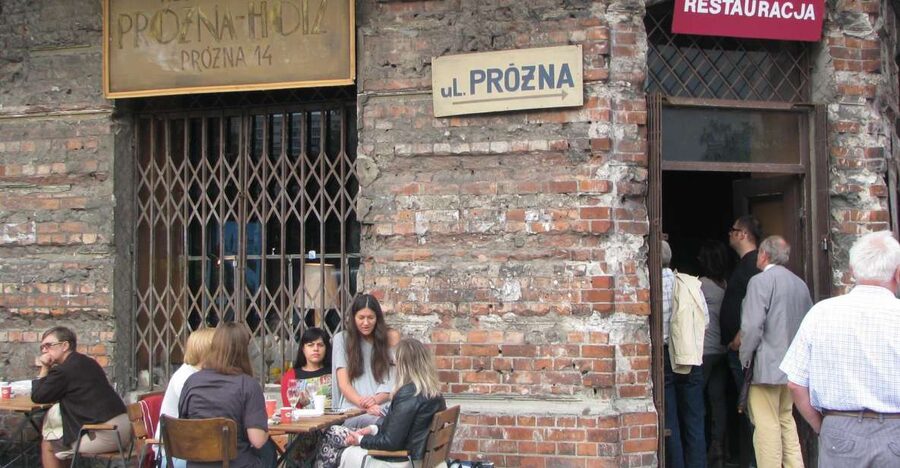
Umschlagplatz is one of the most important and sobering locations you’ll visit. It’s directly connected to the deportations from the Warsaw Ghetto. The tour uses this stop to explain the transition from trapped daily life to forced removal, including the role of Treblinka in the broader Nazi extermination system.
Why is a 2-hour tour worth it if it includes a stop like this? Because it gives you orientation. You can’t always connect specific places to specific phases of the story. Umschlagplatz is a place where that connection becomes clear. You start to see how the ghetto functioned not only as confinement, but also as a staging ground for systematic removal.
Emotionally, this is a stop you’ll want to take slowly. You might feel a strong reaction. That’s normal. If you find yourself getting overwhelmed, that’s also okay. The guide keeps the flow structured, but you’re still dealing with real human suffering tied to real geography.
The Underground Archive and Oneg Shabbat: how memory survived
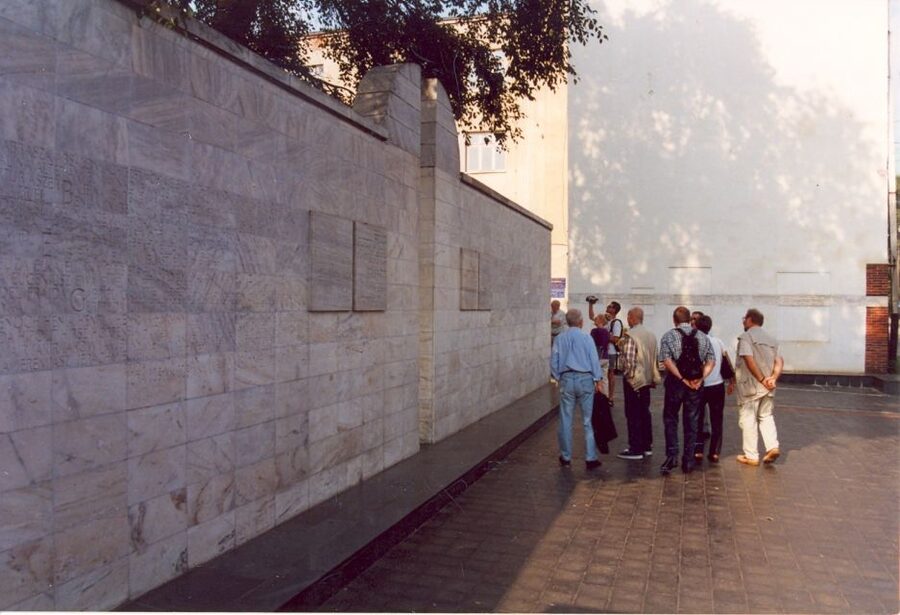
One of the tour’s most memorable components is the story of the Underground Archive of the Warsaw Ghetto and Oneg Shabbat. These weren’t just abstract efforts. The tour explains how secret documentation was created and preserved, and it gives details like the archive surviving in metal cases and milk cans. That image matters. It turns “recording history” into something physical, something hidden, something that risked lives to keep going.
You also learn that the archive entered UNESCO’s Memory of the World register. Even if you don’t know the program well, the point is simple: the documentation survived and became globally recognized evidence of the ghetto’s reality.
This part of the tour is valuable because it changes how you think about your own visit. You’re not only looking at locations. You’re stepping into a story where ordinary people tried to make sure the truth would not vanish. If you care about how history is preserved, and how facts outlive propaganda, this section is a highlight.
Monument symbolism and the Jewish Museum finish that actually helps
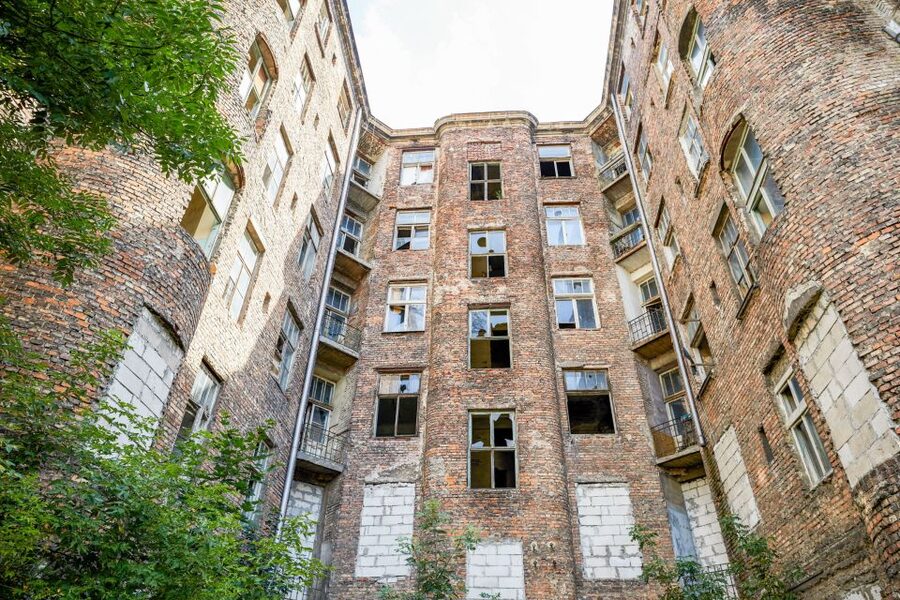
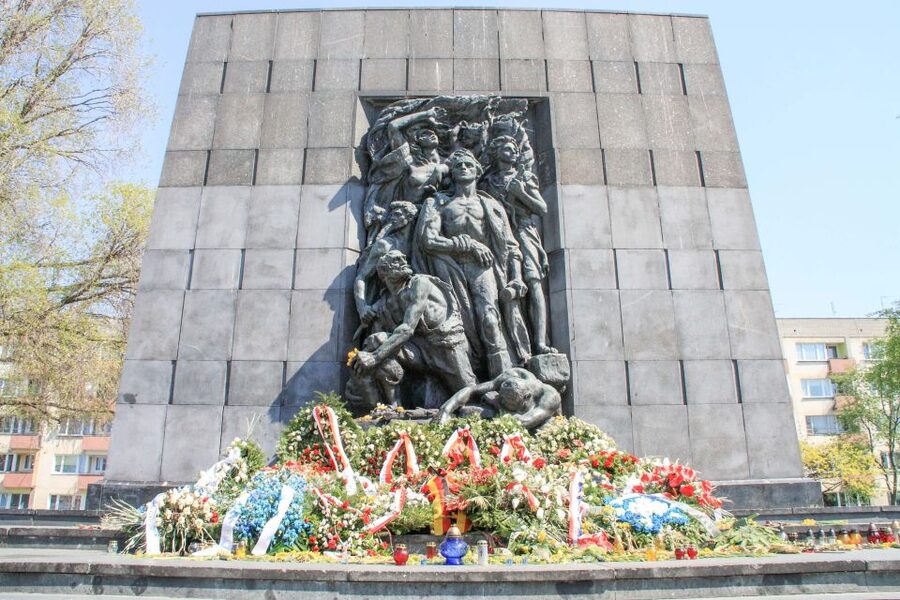
The tour includes the symbolism of the Monument to the Ghetto Heroes. Monuments can sometimes feel like big stone speeches. Here, the tour frames symbolism so you understand what the memorial is trying to communicate, not just what it looks like.
After that, your tour usually ends at the Museum of the History of Polish Jews. That ending is smart for two reasons. First, it stops you from leaving with only external impressions. Second, it gives you a natural next step: if you want deeper context, you have it right there.
Plan time for the museum. The core exhibition is best with a dedicated block of time, and you’re encouraged to reserve at least 2.5 hours. Audio guides are available in English and other languages, which makes it realistic if you only have one day for this topic.
Watch opening hours before you go:
- Monday, Wednesday, Thursday, Friday, Sunday: 10:00 am to 6:00 pm, last entrance 4:00 pm
- Tuesday: closed
- Saturday: 10:00 am to 8:00 pm, last entrance 6:00 pm
If you’re the type who thinks 90 minutes is enough for a museum, you might be underestimating this one. The ghetto story connects to broader Polish-Jewish history, and the museum setting helps you place what you learned on the street into a fuller picture.
Price and value: is $76 for 2 hours fair?
At $76 per person for a 2-hour guided experience, this tour is not cheap. But it’s also not just “someone tells you things while you walk.” You’re paying for a licensed guide, structured context for a complex and painful subject, and route planning that links multiple sites into one coherent story.
You also get headsets when group size warrants it, which helps you actually hear and understand. Entrance fees are not included, though entrances to sites and guided tour of the Jewish Museum are offered as part of the setup. That means you might have extra costs depending on what you choose at the museum.
Here’s how I see the value for your day. If your goal is to learn the daily-life story of the largest ghetto in Europe and connect it to places like Mila 18, the Footbridge, and Umschlagplatz, the tour does that efficiently. Two hours is short enough to keep it manageable, especially if you add the museum afterward at your own pace.
If you already know the story deeply and you prefer a self-guided route, you might question the price. But if you want clarity, context, and a guide ready to answer questions, $76 starts to look like a reasonable cost for turning confusing history into something you can hold.
Who should book this tour, and who might want a different pace
This tour is best for adults and older teens who can handle serious content. It is not suitable for children under 12. That matters because the tour includes topics tied to hunger, disease, deportations, and uprising.
It’s also a good fit if you want a focused orientation before the Jewish Museum, since the guided portion typically ends there. If you’re trying to understand the daily-life angle, and you like learning through specific locations, you’ll probably enjoy the structure.
It might not be the best fit if you want a light, carefree walk or if you need a very slow pace. It’s on foot with public transport, so you should wear comfortable shoes and plan for steady movement.
Should you book Warsaw Daily Life in the Ghetto?
Yes, if you want a short, structured, street-level introduction that connects history to real places. The strongest reasons to book are the physical remnants, the careful daily-life framing, and the added layer of documentation through Oneg Shabbat and the Underground Archive. I also like that the tour points you toward the Jewish Museum and helps you plan time for audio.
If you know you’re not ready for heavy subject matter, or you want only a high-level overview, you might skip this one. But if you want to understand what life was like in the ghetto and why people resisted and documented their world, this tour is a strong choice.
FAQ
What is the duration of the Warsaw Ghetto tour?
The tour lasts 2 hours.
Where do I meet the guide?
You meet the guide at the meeting point with a sign that says PolinTours.
What languages are offered on this tour?
The live tour guide is available in English and German.
What is included in the ticket price, and are entrance fees covered?
The tour includes a licensed tour guide and head sets for groups up to 20. Entrance fees are not included, and the tour notes that entrances to sites and a guided tour of the Jewish Museum are offered as part of the experience.
Does the tour include the Jewish Museum, and how long should I plan for it?
The tour usually ends at the Jewish Museum. You’re recommended to set aside at least 2.5 hours to visit the core exhibition, and audio guides are available in English and other languages.
Is this tour suitable for kids, and can I bring a pet?
It is not suitable for children under 12. Pets are not allowed.
Is free cancellation available, and can I pay later?
Yes. You can cancel up to 24 hours in advance for a full refund. You can also reserve now and pay later.
Freshly posted from Warsaw
- Krakow Small Group Tour from Warsaw with Lunch, Schindler’s Factory included★ 5.0 · 7 reviews
- Warsaw Private Transfer from Warsaw Chopin Airport (WAW) to City centre★ 4.0 · 7 reviews
- 3-hour tour at Warsaw Uprising 1944 Museum /inc. Pick-up/★ 4.9 · 7 reviews
- Wolfs Lair – Hitlers hideout★ 4.5 · 7 reviews
- Warsaw: Evening History and Pubs Tour by Retro Minibus★ 5.0 · 7 reviews
- Warsaw: Private Vodka Tasting Night with Snacks and Pickup★ 5.0 · 7 reviews
- Warsaw Old Town with Royal Castle + Royal Route: SMALL GROUP /inc. Pick-up/★ 5.0 · 7 reviews
Jewish History & Heritage Tours, compared.

Bike Tour of Old Town, Jewish Quarter and the Ghetto
Read our review →
POLIN Museum of the History of Polish Jews Ticket
Read our review →
Kazimierz, Schindler’s Factory & Ghetto Guided Tour
Read our review →
Full Bike Tour – the Old Town, Jewish Qtr & the Ghetto NEW BIKES
Read our review →
Warsaw Ghetto Private Walking Tour with Hotel Pickup
Read our review →Browse the lists this tour appears in