
Reviewed · JEWISH HISTORY & HERITAGE TOURS
Tour of the Warsaw Ghetto
This walk has real footprints. You trace the Warsaw Ghetto through surviving street corners, wall fragments, and the sites tied to deportations, with clear context in about 3 hours.
I love the street-level pacing and how the route mixes walking with a short bus or tram or metro segment, so you are not just trapped on one block. I also love the guide approach, especially when you get a storyteller like Marzena (I saw her name repeatedly) or Olivia, who brings photos and maps into the story and keeps the tone respectful while still answering your questions.
The only drawback to watch is that this is a heavy visit with about 2.5 hours on foot, and on Friday afternoons from 1 p.m., Saturdays, and Jewish holidays the tour runs without visiting Nożyk Synagogue.
In This Review
- Key things to know before you go
- Why This 3-Hour Warsaw Ghetto Walk Feels Manageable
- How the Route Builds the Story from Próżna to POLIN
- Nożyk Synagogue: The Only One Still in Operation
- Próżna Streets: Last Surviving Corners Inside the Ghetto
- Wall Fragments at Waliców: Seeing the Ghetto’s Boundaries
- Chłodna Street and the Small-to-Big Ghetto Bridge
- Umschlagplatz: Where Deportations Took Place
- POLIN Museum Area: Memorial Symbolism without the Main Exhibit
- Pomnik Willy’ego Brandta: The Spot Behind the Kniefall
- Miła 18 Memorial: Remembering the Bunker at Mila 18
- Pawiak Prison Museum: The Terror Machine You Could See
- Price and Value: What $102.78 Buys You
- Who This Tour Suits, and Who Should Skip It
- Should You Book This Warsaw Ghetto Tour?
- FAQ
- What is the approximate duration of the Warsaw Ghetto tour?
- Where does the tour start and end?
- Is hotel pickup included?
- How much walking is involved?
- Is the tour conducted in English?
- Is Nożyk Synagogue included in the ticket price?
- When is the Nożyk Synagogue stop not visited?
- Does the tour include the main exhibition at POLIN Museum?
- Is this tour suitable for children?
- Can I cancel for a full refund?
Key things to know before you go
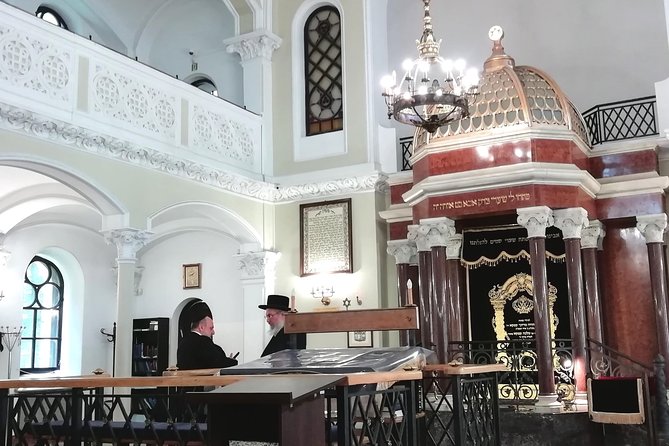
- Surviving landmarks first, starting at Nożyk Synagogue, the only synagogue still standing and in operation
- A short public-transport mix, about 30 minutes by bus or tram or underground, not nonstop walking
- Umschlagplatz plus the memorial stops, including the Willy Brandt Kniefall locations and Miła 18
- POLIN Museum without the main exhibit, but you get enough context to plan your own 2.5-hour visit later
- Guide storytelling that stays humane, with strong emphasis on everyday life, resistance, and the 1943 uprising
- Private group feel, since only your group participates
Why This 3-Hour Warsaw Ghetto Walk Feels Manageable
Warsaw’s Holocaust sites are spread out, and the story is huge. This tour’s smart move is the time box. You get roughly 3 hours, with about 2.5 hours on foot and around 30 minutes using public transport. That pacing matters because it keeps you absorbing details without burning out.
You also get hotel pickup in the city center (and the guide carries the PolinTours sign). If you are staying in an apartment, you usually wait outside. Either way, it lowers friction. You spend your energy on the places, not on figuring out the next one.
Finally, you are in English, and the tour is designed so most people can take part. Still, this is not a light stroll. Bring a calm mind and expect some parts to hit hard.
Further Jewish history and heritage itineraries:
- Warsaw: POLIN Museum of the History of Polish Jews Ticket
★ 4.7 · 1,142 reviews - Warsaw: Warsaw Ghetto Private Walking Tour with Hotel Pickup
★ 4.9 · 369 reviews - Warsaw: Jewish History Guided Walking Tour in English
★ 4.7 · 324 reviews
How the Route Builds the Story from Próżna to POLIN
The tour starts at Próżna 11 (00-107 Warszawa) and ends at POLIN Museum, near Mordechaja Anielewicza 6 (00-157 Warszawa). If your hotel is in the city center, the guide meets you there. If it is not, the meeting point logic still keeps you close to transit.
What I like about ending at POLIN is practical: the walk gives you the names and geography, then POLIN helps you zoom out. But you should know one key detail. This tour does not include a full visit to the museum’s main exhibition. Instead, you get a guided introduction tied to memorial symbolism, and then you can decide whether to do the main exhibit on your own.
Also, the order of the stops can shift based on where you are staying. That is helpful if you want to minimize backtracking and keep your legs from turning into jelly.
Nożyk Synagogue: The Only One Still in Operation
Your first stop is Nożyk Synagogue. This matters because it is not just a memory site. It is the only surviving synagogue from the Second World War that is still operating. That alone changes the tone of the visit. You are not only studying ruins. You are looking at a community landmark that kept functioning.
Admission is not included, so plan €5.00 per person for the synagogue ticket. If you are going on a Friday afternoon (from 1 p.m.), a Saturday, or a Jewish holiday, there is also a schedule reality to know: the tour runs without visiting the synagogue on those days.
Practical tip: if you care about this stop, double-check your travel day. If the synagogue is skipped, you still get the rest of the ghetto route, but you lose that particular “still alive” perspective.
Próżna Streets: Last Surviving Corners Inside the Ghetto
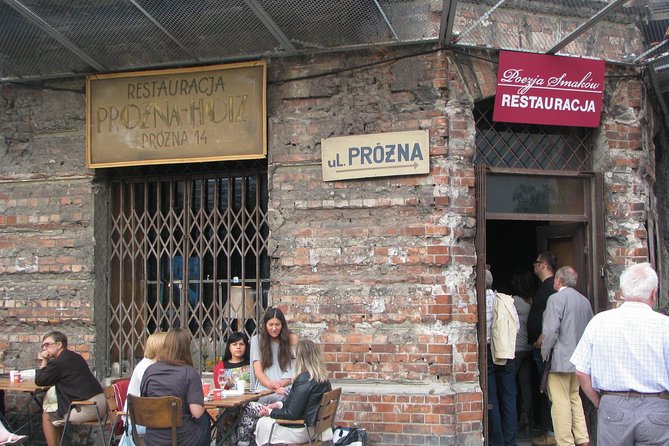
From Nożyk, the route moves to Próżna, focusing on the last surviving streets and neighborhoods within the ghetto. This is where your brain starts connecting maps to reality.
A walking tour like this works best when the guide points out what is still there and what is only remembered. In this part, you are meant to look for survival: fragments of street patterns, building footprints, and the sense of how cramped life was made to feel.
The main drawback here is simple: this is not where you go for quick photos and done. You’ll want your attention, and you’ll likely feel the weight of the facts. Wear comfortable shoes, because this is also where your legs will start keeping time.
Still tacked up around Warsaw



Wall Fragments at Waliców: Seeing the Ghetto’s Boundaries
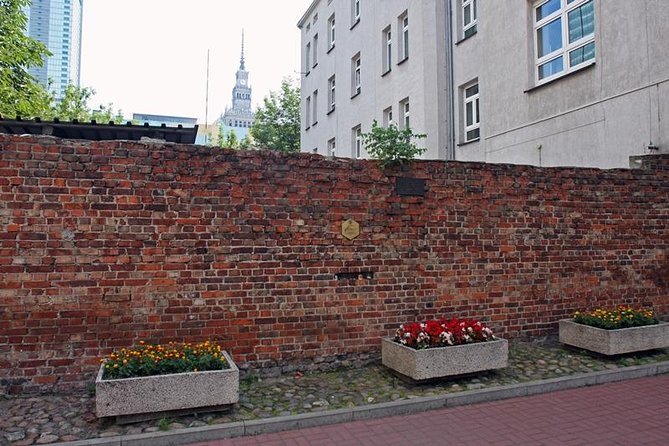
Next comes Waliców, where you see fragments of the ghetto wall. Even small sections can feel startling, because the wall stops being an abstract symbol. It becomes a physical boundary you can picture people pressed against.
The guide narration ties these locations to the origins of the ghetto, everyday life under occupation, and the uprising in 1943. That order matters. You learn how the situation formed, not just how it ended.
One heads-up: at this stage, the story grows darker. If you are sensitive to heavy subjects, it can help to take short pauses when you need them. The tour pace is fairly steady, so you control your comfort with a few breath breaks.
Chłodna Street and the Small-to-Big Ghetto Bridge
At Chłodna Street, you stop at the point where the connecting bridge between the Small Ghetto and Big Ghetto stood. For me, the value here is the symbolism. This bridge was a physical connector, and it became a memorable marker of division.
If you have seen The Pianist, you will likely recognize how the story connects to Władysław Szpilman, the title character. The tour links the cultural echo back to real geography, which helps you place scenes into the Warsaw of 1939 to 1943, not a film version.
Time on this stop is short, about 20 minutes, so treat it like a focused moment rather than a long hangout. Your guide is packing explanation into a small window.
Umschlagplatz: Where Deportations Took Place
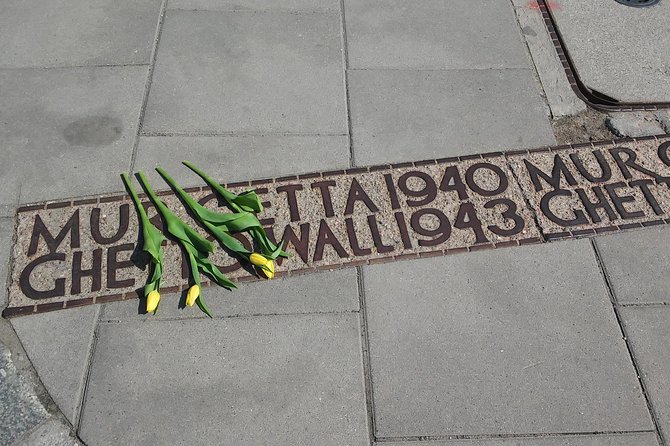
Umschlagplatz is one of the most important stops. You learn the “final solution” plan and how it was carried out in practice. The tour emphasizes the symbolic meaning of this place, and why it became part of the machinery of mass deportation.
This is also where the tour’s respectful tone really matters. You do not just “see” a location. You understand it. That is the difference between checking off a Holocaust site and actually letting the story land.
Practical tip: if you feel overwhelmed, it is okay to step back from the group for a minute. Keep moving, but do not force yourself to take in everything at once.
POLIN Museum Area: Memorial Symbolism without the Main Exhibit
One of the best value choices here is that the tour ends in the orbit of POLIN Museum. You get a guided introduction connected to the Ghettohelden Memorial and to the symbolism of Willy Brandt’s Kniefall. That moment has become one of modern history’s most recognizable gestures, and POLIN helps you understand why it resonates in a place like Warsaw.
But here’s the key limitation. This tour does not visit the museum’s main exhibition. You are introduced to the memorial symbolism and then released to your own planning.
If you want the full museum experience, plan for about 2.5 hours to see the main exhibition. Audio guides are available in German, and opening hours in general are listed as:
- Mo., Do., Fr. 10:00 a.m. to 6:00 p.m.
- Tue. closed
- Wed., Sa., So. 10:00 a.m. to 8:00 p.m.
If you schedule your museum time poorly, you can lose the chance to do it properly. So if POLIN is your top priority, plan your day around it before you join the tour.
Pomnik Willy’ego Brandta: The Spot Behind the Kniefall
After POLIN’s memorial intro, you stop at Pomnik Willy’ego Brandta, the site connected to Willy Brandt making his famous knees gesture. This stop is only about 10 minutes, but it is meaningful because it gives a physical point in space to a globally known moment.
I like adding this because it pulls the story forward. You see how remembrance and accountability show up in public memory decades later, not only in wartime documents.
Miła 18 Memorial: Remembering the Bunker at Mila 18
The route continues to the memorial at Miła 18, tied to the bunker location at Miła Street 18. Even though this is a short stop, it pushes the story into resistance and the grim reality of people hiding where the odds were against them.
The “bunker” concept can feel too abstract if you have never seen a Warsaw ghetto map. Here, the stop is meant to anchor that concept in place. Your guide’s explanation connects it to the larger sequence, including why the uprising and resistance mattered.
If you want a practical way to handle the emotion, this is where it helps to ask your guide a question. A good question can turn “I feel sad” into “I understand why this mattered.”
Pawiak Prison Museum: The Terror Machine You Could See
Your final major historical stop is Pawiak Prison Museum. You learn more about Pawiak prison, which adds another layer to the picture: the occupation was not only about forced labor and deportations, it was also about arrests, detention, and control.
This kind of site is hard, but it is important because it shows the system behind the terror. One reason the route is effective is that it does not stay only at the big name sites. It keeps adding the supporting structure of how people were captured and processed.
The stop is about 10 minutes, so you may want to make a mental note to read more or return on another day if you want deeper context.
Price and Value: What $102.78 Buys You
At $102.78 per person, this tour is not a budget add-on. But the value makes sense if you look at what is included.
You get:
- Hotel pickup in the city center with a licensed city tour
- A private group setup where only your group participates
- A guide in English
- A route that mixes walking with public transport, including about 2.5 hours on foot
- Mobile ticketing
What is not included is the Nożyk Synagogue admission (€5.00 per person). The other stops in the route are listed as free for admission within the tour plan.
So you are paying for time, guidance, and structure. Without a guide, it is easy to walk past fragments and miss why they matter. With a guide, you get the timeline, the connections, and the explanations that make the sites readable.
One more value point: since you finish near POLIN, you can decide how much museum time you want. If you only have one day, you now have a plan for what to do first, and what to do with ticketed museum time later.
Who This Tour Suits, and Who Should Skip It
This is a great choice if you want a focused, site-to-site Warsaw ghetto overview with enough context to understand the sequence: everyday life, the uprising in 1943, resistance, and how the deportation system worked.
It is also a good fit if you like questions. The tour format gives room for your guide to answer, and strong guides are quick to connect your curiosity to a specific location.
On the flip side, it is not suitable for children. And because you are on foot for about 2.5 hours, it is not ideal if you have mobility limits or stamina challenges. The tour is doable for most people, but it is still a lot of standing and walking in heavy subject matter.
Should You Book This Warsaw Ghetto Tour?
Book it if you want a respectful, structured route that helps you understand what you are seeing, not just where it happened. The big win is the combination of street-level sites, wall fragments, Umschlagplatz, and memorial stops that connect wartime events to how memory is handled today.
I would double-check your travel day if Nożyk Synagogue is a must for you, since it is skipped on Friday afternoons after 1 p.m., Saturdays, and Jewish holidays. Also, plan your POLIN Museum time separately, because the main exhibition is not part of this tour and you’ll want about 2.5 hours if you go in depth.
If you are ready for something emotionally difficult but well guided, this is a strong pick for a one-day Warsaw Jewish history experience.
FAQ
What is the approximate duration of the Warsaw Ghetto tour?
The tour lasts about 3 hours (approx.).
Where does the tour start and end?
It starts at Próżna 11, 00-107 Warszawa, Poland, and ends at Mordechaja Anielewicza 6, 00-157 Warszawa, Poland at POLIN Museum.
Is hotel pickup included?
Yes. Pickup is offered from your hotel in the city center. The guide picks you up with the sign PolinTours, or you wait outside if you are in an apartment.
How much walking is involved?
You are about 2.5 hours on foot and about 30 minutes on the bus or tram or underground.
Is the tour conducted in English?
Yes, the tour is offered in English.
Is Nożyk Synagogue included in the ticket price?
No. Admission to Nożyk Synagogue is not included. The fee is €5.00 per person.
When is the Nożyk Synagogue stop not visited?
On Friday afternoons (from 1 p.m.), Saturdays, and Jewish holidays, the tour is conducted without visiting the synagogue.
Does the tour include the main exhibition at POLIN Museum?
No. During the tour there is no visit to the main exhibition at POLIN Museum. It is recommended to visit it separately with audio guides in German, allowing about 2.5 hours.
Is this tour suitable for children?
No. This tour is not suitable for children.
Can I cancel for a full refund?
Yes. Free cancellation is available, and you can cancel up to 24 hours in advance of the experience for a full refund.
Freshly posted from Warsaw
- Warsaw Private Transfer from Warsaw Chopin Airport (WAW) to City centre★ 4.0 · 7 reviews
- Krakow Small Group Tour from Warsaw with Lunch, Schindler’s Factory included★ 5.0 · 7 reviews
- Wolfs Lair – Hitlers hideout★ 4.5 · 7 reviews
- 3-hour tour at Warsaw Uprising 1944 Museum /inc. Pick-up/★ 4.9 · 7 reviews
- Warsaw: Evening History and Pubs Tour by Retro Minibus★ 5.0 · 7 reviews
- Warsaw: Private Vodka Tasting Night with Snacks and Pickup★ 5.0 · 7 reviews
- Warsaw Old Town with Royal Castle + Royal Route: SMALL GROUP /inc. Pick-up/★ 5.0 · 7 reviews
Jewish History & Heritage Tours, compared.
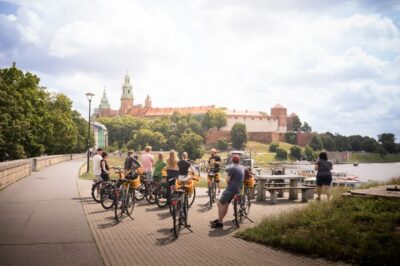
Bike Tour of Old Town, Jewish Quarter and the Ghetto
Read our review →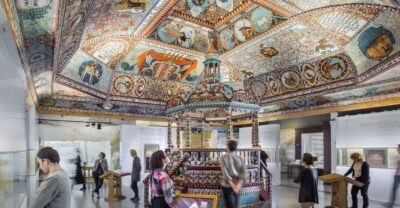
POLIN Museum of the History of Polish Jews Ticket
Read our review →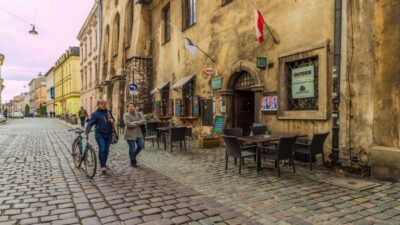
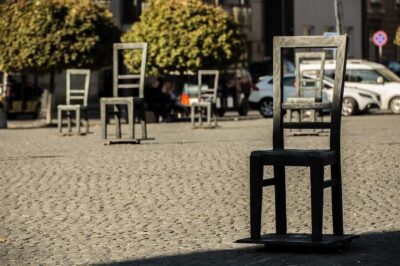
Kazimierz, Schindler’s Factory & Ghetto Guided Tour
Read our review →
Full Bike Tour – the Old Town, Jewish Qtr & the Ghetto NEW BIKES
Read our review →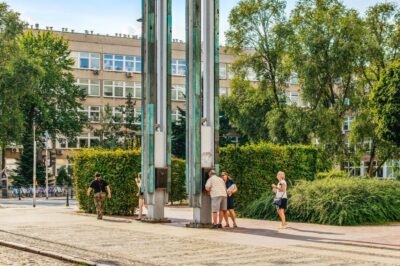
Warsaw Ghetto Private Walking Tour with Hotel Pickup
Read our review →Browse the lists this tour appears in