
Reviewed · JEWISH HISTORY & HERITAGE TOURS
The Jewish Quarter – Walking Tour
Krakow’s Jewish Quarter tells its story on foot. This Jewish Quarter walking tour ties together Jewish life in Krakow with what happened during WWII, and it does it through real streets and specific places, including multiple Schindler’s List filming locations. I like that it connects the past and the present in Kazimierz, not just dates on a page.
Two things I especially like are the focus on licensed, English-speaking guides and the very clear route built around major sights, from historic synagogues to the cemetery. The guide (often identified as Zee) is the kind of person who helps you make sense of what you’re looking at, not just recites facts.
One consideration: it’s a 2-hour walking tour, so it moves at a steady pace. If you want long photo stops or lots of quiet time inside places, plan to keep your expectations flexible.
In This Review
- Quick hits before you go
- Kazimierz, where Jewish and Christian stories overlap
- Finding the group at Restaurant No7 courtyard
- A stop-by-stop walk from main square to Remuh cemetery
- WWII and Schindler’s List, taught through real street corners
- Price and timing: is $33 for 2 hours worth it?
- Should you book this Jewish Quarter walking tour?
- FAQ
- How long is the Jewish Quarter walking tour?
- How much does the Jewish Quarter tour cost?
- Where do I meet the guide?
- Is the tour guided and in English?
- What is included in the price?
- Are admission tickets included?
- Is the tour wheelchair accessible?
- Can I cancel for free or reserve without paying right away?
Quick hits before you go
- Kazimierz route with major synagogue stops, including Tempel, Kupa, Izaak’s, Remuh, Popper, and the Old Synagogue
- WWII focus, including a stop tied to a man who tried to stop the Holocaust
- Schindler’s List filming locations scattered through the walk, so the movie history stays grounded in real streets
- Old-to-new Jewish landmarks, from a building dating to the 1400s to a 16th-century mikveh
- Personal-story stops like Helena Rubinstein’s birth place and the Nissenbaum Family Foundation monument
Kazimierz, where Jewish and Christian stories overlap
If you’ve only seen Krakow as a single, unified city, this is the reality check you’re looking for. There were stretches of history when Krakow did not feel like it held lots of different cultures in one place. This tour helps you understand how and why it once did, especially through Kazimierz, which the tour frames as a neighborhood where Jewish and Christian life overlapped for centuries.
You’ll also get a strong historical backbone right away. The tour explains why Poland mattered so much to Jewish settlement history, including the striking fact that in the 16th century around 75% of the world’s Jewish population lived in Poland. That one detail changes how you read the whole area. It’s not just local history. It’s part of a much bigger world story.
And then comes the emotional shift. The route keeps pulling you forward in time, toward WWII, so the buildings are not treated like museum props. You’re shown how the neighborhood’s history was interrupted, distorted, and permanently changed.
One more thing I appreciate: the tour doesn’t ask you to separate Jewish history from the broader Krakow story. It treats the Jewish Quarter as an essential piece of the city’s identity, not an optional side quest.
More Walking Tours in Krakow
- Old Town Krakow & Wawel Castle Walking Tour
★ 5.0 · 1,508 reviews - Creepy Krakow: 2-Hour City Walking Tour
★ 4.7 · 1,131 reviews - Krakow: The Old Town Walking Tour
★ 4.8 · 794 reviews
Finding the group at Restaurant No7 courtyard
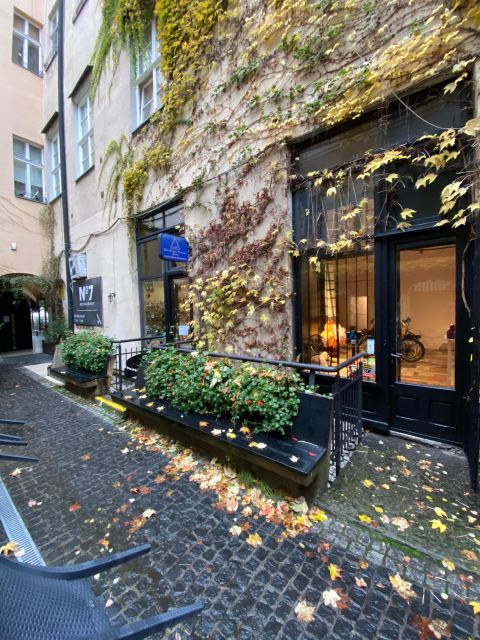
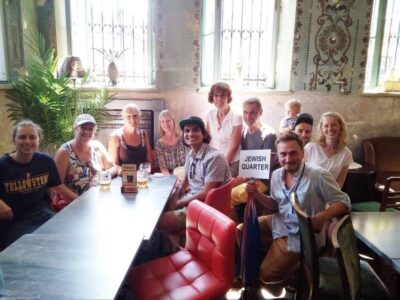
This matters more than people think, especially in Kazimierz where streets can feel close and similar. Your meeting point is Restaurant No7. Go into the building, and ZeeTour’s office is in the courtyard, in the second shop on the left.
The tour is 2 hours long and runs with a live guide in English. It’s also wheelchair accessible, which is a big plus if you need a route that stays practical.
Also note what’s not part of the plan: public transportation is not included, and admission tickets are not included. In other words, you’re paying for the walking guide and interpretation, not for entry fees. If you’re the type who likes to check what’s payable ahead of time, it’s worth planning your budget accordingly.
Shoes matter here too. Even with a shorter walking window, Kazimierz is made for pedestrians, not for rolling luggage. You’ll want comfortable walking footwear and a light layer, because weather can shift quickly in southern Poland.
A stop-by-stop walk from main square to Remuh cemetery
The tour follows a route that feels like a guided map of identity, not just a list of landmarks. You start in the core of Kazimierz Main Square, then move toward the older city fabric, where the tour highlights Miodowa Street, including the city walls of Kazimierz. That section is a good early setup. You’re learning where the neighborhood’s boundaries and movement would have mattered, before the walk zooms in on religious and community sites.
From there, the tour steps into the synagogue story. It stops at places tied to multiple synagogues, and each one reinforces a different layer of how the neighborhood functioned.
Here’s what that middle part is like:
- Tempel Synagogue: you’re shown this as part of Kazimierz’s standing synagogue landscape, and it frames how Jewish religious life was visually and geographically present in the quarter.
- Kupa Synagogue: this keeps the focus on built heritage, helping you see the quarter as a real community space, not a single landmark.
- Izaak’s Synagogue: another stop that builds continuity, so the walk feels like a progression rather than a random scatter of points on a brochure.
- The tour then points out the oldest building inside the Jewish Quarter from the 1400s. This is one of the moments where the neighborhood stops feeling like “old Krakow” and starts feeling like a place with roots that reached back far earlier than you might expect.
Then you get a stop that shifts from public worship to ritual life: the mikveh, described as a ritual Jewish cleansing bath house for females from the 16th century. Even if you know little about mikveh practice, the tour’s choice to include it matters. It reminds you that community life wasn’t only about major buildings you photograph, but also about routines and spaces connected to identity and ritual.
After that, the route moves along Szeroka Street, which helps you read the quarter as a lived-in environment. This part matters because you start seeing the rhythm of streets between major sites, and you understand how people would have moved through the neighborhood day to day.
Then the tour adds modern history and personal story into the mix. You’ll stop at Helena Rubinstein’s birth place, and you’ll also see the Nissenbaum Family Foundation monument. These stops help you see that the quarter’s story didn’t end with medieval dates. It carries forward through named individuals, remembrance, and institutions tied to families.
Next comes a powerful memory stop, the statue of a man who tried to stop the Holocaust. This is not history presented as distant tragedy. It’s framed as action, decision, and moral courage. If you tend to find WWII information too abstract, this kind of landmark makes it more human.
As the walk continues, you’ll reach the end stretch of religious sites and burial memory: the Remuh Synagogue and the Jewish Cemetery, then stops at Popper’s Synagogue and the Old Synagogue. Together, these points give you a full arc. The tour doesn’t just cover what communities built while alive. It also points you toward how the quarter holds memory through cemetery space and long-standing religious structures.
Finally, the tour weaves in numerous Schindler’s List filming locations. That final segment turns the whole walk into something extra, because you’re no longer only learning local Jewish and WWII history. You’re also learning where the city’s real settings became part of how global audiences later imagined that period.
WWII and Schindler’s List, taught through real street corners
WWII history can go two ways on tours. Some guides rattle off dates. Others make everything so heavy that it’s hard to track what you’re actually seeing. This tour keeps WWII tied to specific places, so you can connect the story to the geography.
The Schindler’s List element is a big reason this walk is popular. You’re not only told that parts of the film were shot in Krakow. You’re walked past numerous filming locations, so you can look at the streets and landmarks and understand how the city’s layout became part of the storytelling.
What I like about handling Schindler’s List this way is that it prevents the classic mistake: treating the film as the whole story. Instead, you use the film as a doorway, and then the guide fills in what the neighborhood was like before the rupture, how Jewish life played a role in Krakow, and what WWII changed.
If you’re a film fan, this is the moment where the tour becomes extra satisfying. If you’re not, it still works because the filming locations are used as real-world anchors for WWII context.
Further Jewish history and heritage itineraries:
Price and timing: is $33 for 2 hours worth it?
At $33 per person for a 2-hour walking tour, the value depends on how you like to travel. If you enjoy interpretation and want a licensed guide to point out what matters, this is a reasonable price for a focused, high-impact route.
Why that cost feels fair here:
- The tour includes guiding services with licensed guides, which usually means you’re getting more than casual storytelling.
- You get a lot of stops in a short window, including multiple key synagogue sites and cemetery-linked memory points.
- The route is built around two major themes at once: Jewish community history in Krakow and WWII significance, plus Schindler’s List locations as a familiar entry point.
What’s not included is part of the equation. Admission tickets are not included, and that means any optional entry fees you might want would be on you. Public transport is also not included, so you’ll want a plan for how you’ll get to the meeting point.
Who this is best for:
- First-time visitors to Krakow who want a grounded starting point in Kazimierz
- People who want to understand the Jewish Quarter without feeling lost in facts
- Anyone who wants a short walk that still covers WWII and major cultural landmarks
Who might want to look elsewhere:
- If you want a tour that focuses only on one thing, like architecture or only WWII, this may feel like it juggles themes across the walk.
Should you book this Jewish Quarter walking tour?
I’d book it if you want a 2-hour, guided walk that connects place to history. The route’s structure helps you understand Kazimierz as a living neighborhood with deep roots, then brings you forward to the WWII era and the part Krakow played in Schindler’s List settings.
I’d skip it or compare options if you have trouble with steady walking time or if you strongly prefer tours that include entry tickets and let you spend lots of time inside buildings. Since admissions and transport are not included, you’ll also want to plan any extra costs yourself.
Overall, if your goal is to get your bearings in the Jewish Quarter fast, and you care about both Jewish life history and WWII context, this is a smart way to spend your time in Krakow.
FAQ
How long is the Jewish Quarter walking tour?
The tour lasts 2 hours.
How much does the Jewish Quarter tour cost?
It costs $33 per person.
Where do I meet the guide?
Meet at Restaurant No7. Go into the building, and ZeeTour’s office is in the courtyard, at the second shop on the left.
Is the tour guided and in English?
Yes. It includes a live tour guide and the tour language is English. The guiding services are provided by licensed guides.
What is included in the price?
What’s included is guiding services with licensed guides.
Are admission tickets included?
No. Admission tickets are not included.
Is the tour wheelchair accessible?
Yes. The tour is wheelchair accessible.
Can I cancel for free or reserve without paying right away?
Yes. It offers free cancellation up to 24 hours in advance for a full refund, and you can reserve now & pay later (book your spot and pay nothing today).
Squares Crossed on Foot
- Kraków: Old Town & Wawel Castle Walking Tour in English
★ 4.8 · 532 reviews - Krakow: Evening Walking Tour with Spooky Stories
★ 4.7 · 500 reviews - Krakow Old Town Guided Walking Tour
★ 4.5 · 438 reviews - Krakow: Jewish Ghetto Walking Tour
★ 4.6 · 349 reviews
Freshly posted from Krakow
- Krakow: Audio-Guided City Experience by Golf Cart★ 5.0 · 1 review
- Krakow: Zakopane and Thermal Springs Tour with Hotel Pickup★ 5.0 · 1 review
- Half-day In the footsteps of John Paul II Tour from Krakow★ 5.0 · 1 review
- Krakow: Wawel & Salt Mine Experience with Lunch★ 5.0 · 1 review
- Tour to Wadowice: Hometown of Pope Saint John Paul II★ 5.0 · 1 review
- Krakow: Nowa Huta Communist District Walking Tour★ 5.0 · 1 review
- Krakow: Outdoor Paintball with Hotel Transfers★ 5.0 · 1 review
Jewish History & Heritage Tours, compared.
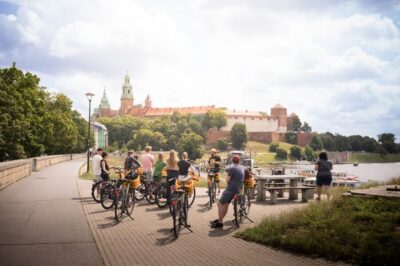
Bike Tour of Old Town, Jewish Quarter and the Ghetto
Read our review →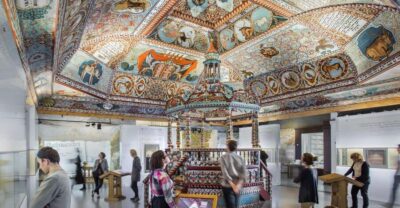
POLIN Museum of the History of Polish Jews Ticket
Read our review →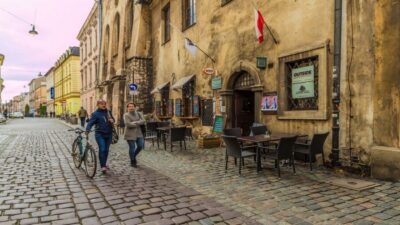
Kazimierz, Schindler’s Factory & Ghetto Guided Tour
Read our review →
Full Bike Tour – the Old Town, Jewish Qtr & the Ghetto NEW BIKES
Read our review →
Warsaw Ghetto Private Walking Tour with Hotel Pickup
Read our review →Browse the lists this tour appears in