
Reviewed · JEWISH HISTORY & HERITAGE TOURS
Krakow: Jewish Ghetto Walking Tour
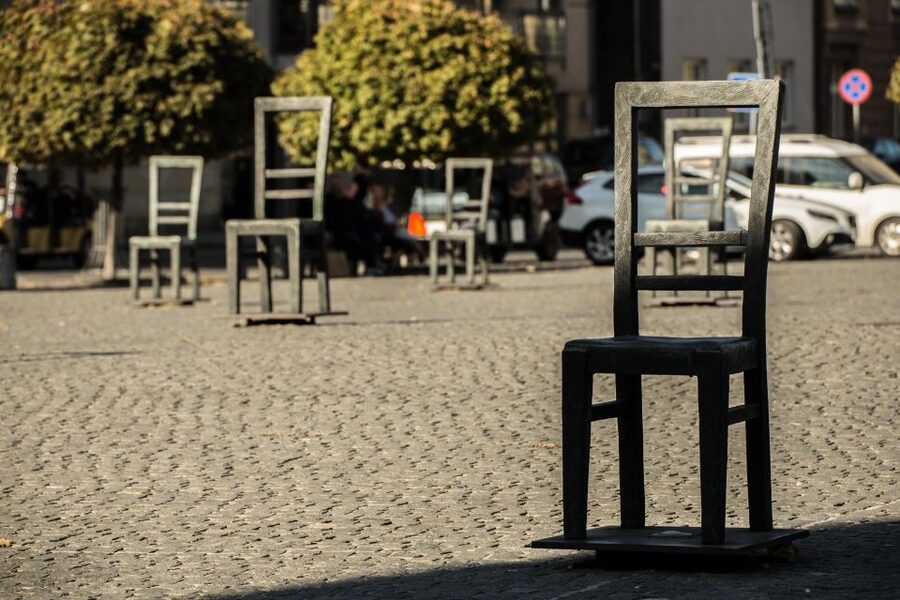
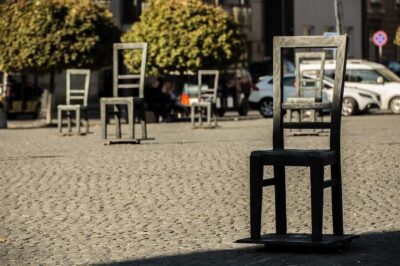
The empty chair memorial hits harder than photos. This 1-hour Krakow Jewish Ghetto walking tour focuses on Podgórze, where daily life, deportations, and survival played out inside cramped streets. I especially liked Ghetto Heroes Square with its symbolic chair memorial, because the place feels quiet even when your mind is loud.
I also like how the route uses real, still-standing wartime locations, not vague explanation. The stops connect the story to specific structures, including the remaining Ghetto Wall fragment and the historic Under the Eagle Pharmacy tied to Tadeusz Pankiewicz’s rescue efforts. One thing to consider: one hour moves fast, and if you want slower, deeper storytelling, you may want to pair it with a longer history stop afterward.
In This Review
- Key Things That Make This Tour Worth Your Time
- Podgórze Streets, WWII Context, and Why This Walk Hits So Well
- The Ghetto Wall Remains: Seeing Confinement Without Guesswork
- Ghetto Heroes Square and the Chair Memorial That Doesn’t Let You Look Away
- Under the Eagle Pharmacy: Tadeusz Pankiewicz’s Help and the Risk Behind It
- How Daily Life, Deportations, and Survival Are Explained in One Short Loop
- Timing, Weather, and What the Experience Feels Like in Real Krakow
- Pairing With Schindler’s Factory and Other Krakow Must-Sees
- Price and Value: Why 11 Dollars Feels Like a Bargain
- Who Should Book This Krakow Jewish Ghetto Walking Tour
- Should You Book This Tour?
- FAQ
- How long is the Krakow Jewish Ghetto walking tour?
- How much does it cost?
- What language is the tour offered in?
- Where does the tour take place and what do we see?
- Is food included?
- What should I wear and what happens in bad weather?
Key Things That Make This Tour Worth Your Time
- Podgórze at walking pace: you see the neighborhood layout in a way a bus tour never can
- Ghetto Wall remains: a rare surviving fragment that helps you picture confinement in real space
- Ghetto Heroes Square chairs: dozens of empty metal chairs mark the lives lost
- Under the Eagle Pharmacy stories: bravery and medical aid under Nazi occupation
- Clear, adaptable listening: some groups use headsets so the guide is easier to hear outdoors
Podgórze Streets, WWII Context, and Why This Walk Hits So Well
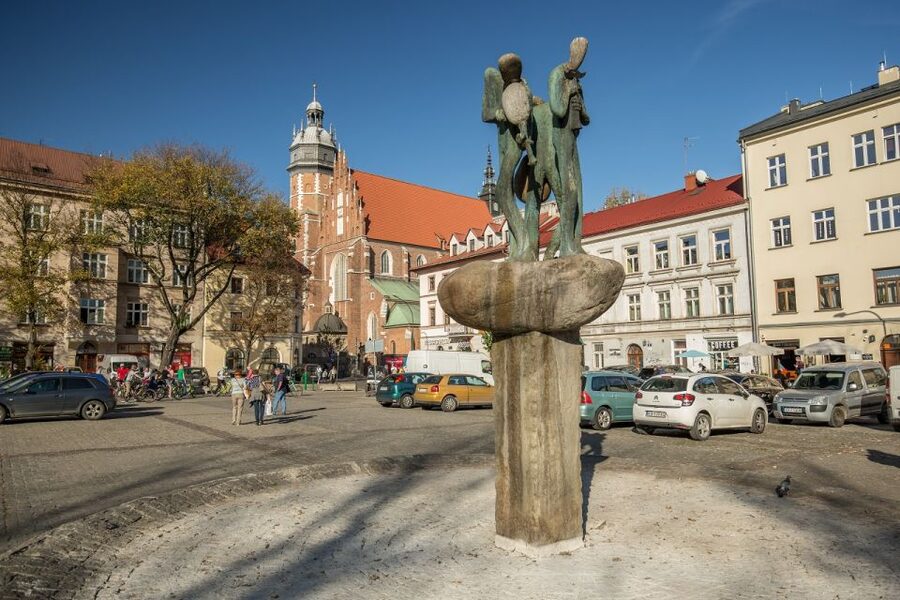
This tour starts in Podgórze, the district that became the setting for Krakow’s Jewish Ghetto during WWII. What I like right away is the tone: you are not rushing through history as a checklist. Instead, you’re led to understand how the ghetto worked day to day, and why fear and hope lived side by side on these streets.
You also get the benefit of a licensed guide. That matters here, because the topic is heavy. A good guide keeps the facts clear while still respecting the human side of what happened. In a few guides’ storytelling styles that show up repeatedly, you can feel the same pattern: specific events, then the bigger meaning, then a reminder that history has consequences for how people behave today.
The pace is built for 60 minutes. Expect a steady walking rhythm with stops where the guide explains what you’re looking at. It is not a museum crawl, and it is not meant to replace longer lectures. It is meant to help your brain build a map in your head, so the sites make sense.
More Walking Tours in Krakow
- Old Town Krakow & Wawel Castle Walking Tour
★ 5.0 · 1,508 reviews - Creepy Krakow: 2-Hour City Walking Tour
★ 4.7 · 1,131 reviews - Krakow: The Old Town Walking Tour
★ 4.8 · 794 reviews
The Ghetto Wall Remains: Seeing Confinement Without Guesswork
One highlight is the visit to the remains of the original Ghetto Wall. This is one of the key reasons to do a guided walk instead of going on your own. The wall fragment is a surviving piece of something larger, and without context it can feel like just another historic corner.
With the guide, you connect the physical boundary to the human reality: more than 15,000 people were enclosed in just a few city blocks. That scale lands differently when you are standing near the line they could not cross. You start noticing how a street plan can become a trap.
A practical note: you will be outside. Even when it is quiet, you are walking through real neighborhoods, on real sidewalks. Wear comfortable shoes. This is also a good time to remind yourself that the street layout is part of the story, not just scenery.
Ghetto Heroes Square and the Chair Memorial That Doesn’t Let You Look Away
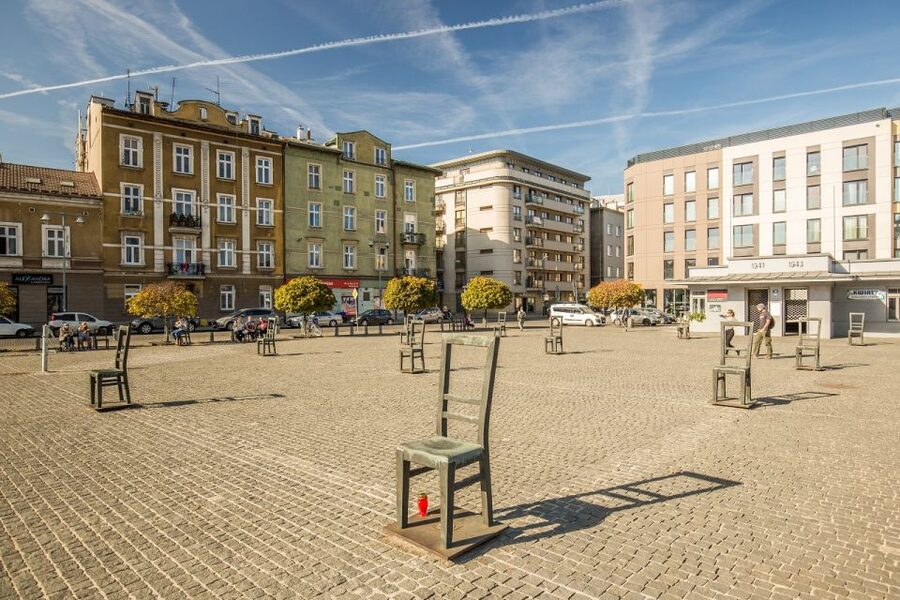
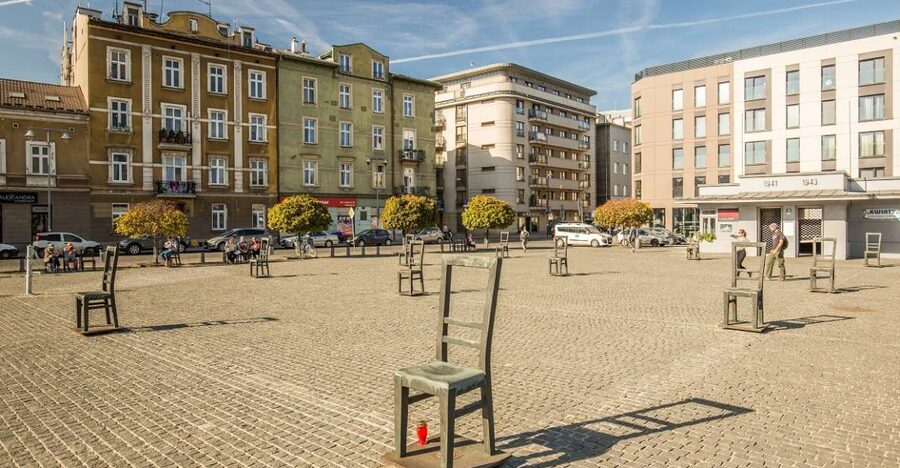
Next comes Ghetto Heroes Square, described as the heart of the ghetto. The guide explains it as a place connected to deportations to concentration camps, which makes the square’s emptiness feel intentional rather than neutral.
Then you reach the main visual symbol: dozens of empty metal chairs. Each chair represents lives lost during the Holocaust. I appreciate that this memorial doesn’t try to be flashy or decorative. It is stark, and that restraint is exactly why it stays with you.
If you are the type who processes history better through place-based details, this stop is for you. You will likely find yourself slowing down without being told. That pause is part of what the tour does well, giving you a moment to absorb what the site is saying without cramming more facts on top of it.
Under the Eagle Pharmacy: Tadeusz Pankiewicz’s Help and the Risk Behind It
Across from the square is the historic Under the Eagle Pharmacy, connected to Tadeusz Pankiewicz and his staff. This is where the tour shifts from describing oppression to describing rescue and moral courage.
The guide focuses on the idea that bravery was not only a battlefield thing. In this case, it was practical help: medicine and shelter for ghetto residents, offered at significant personal risk. That angle is important, because it keeps the story from becoming one-note tragedy.
One detail I’d file away if you like planning: on some days, the pharmacy stop may not be fully accessible, depending on whether the site is open. If you’re hoping for an inside look, go in expecting that the guide will still interpret the significance even if you cannot spend extra time inside.
This stop also works well as an emotional pivot. After the chairs, you get a reminder that people still chose compassion inside a system designed to crush choice.
Further Jewish history and heritage itineraries:
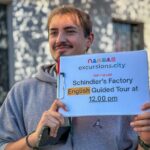


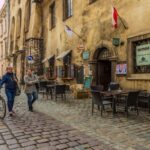
How Daily Life, Deportations, and Survival Are Explained in One Short Loop
The big promise of the tour is learning how daily life functioned inside the ghetto, including deportations and survival. In 60 minutes, you are not going to get every detail. But you do get something more useful than a long lecture: you learn the main threads in a way your brain can hold onto.
Here’s what I think makes the storytelling land:
- You hear about what life looked like, not just what happened at the end.
- The guide ties hardship to specific settings you see while you walk.
- The explanations are framed with sensitivity, so you’re not left feeling like you watched a spectacle.
You may notice that some guides also connect past events to present-day lessons about hatred and human behavior. If that kind of framing helps you, you’ll probably appreciate it. If you prefer a purely historical approach, you can still listen for the facts and keep the modern thread as optional meaning rather than the main message.
Also, the group setup helps. Several past participants mention having headsets or ear mics, which can make a difference on windy days and when you’re trying to follow the guide’s voice while walking.
Timing, Weather, and What the Experience Feels Like in Real Krakow
This tour lasts about 1 hour. That length is a double-edged sword. On the plus side, it is focused and easy to fit into a Krakow day. On the downside, some people feel the time limit means they could have asked more questions and heard more nuance.
Weather is handled in the straightforward way: the tour goes ahead rain or shine. So you should dress like you’re walking outside in a normal Krakow day, with good footwear. In colder conditions, it helps if you bring layers. One nice touch people mention is that the group may be allowed to sit inside to wait before departure when it is freezing, which is better than suffering on the sidewalk.
Expect a bit of walking, but it is not described as a marathon. One person even notes it is mostly flat, so you’re not fighting hills while your thoughts are already heavy.
Pairing With Schindler’s Factory and Other Krakow Must-Sees
A smart way to use this tour is to connect it to the broader Krakow WWII story. Several participants note starting near Schindler’s Factory, and that pairing makes a lot of sense.
Why? Because Schindler’s Factory tends to ground you in the Nazi occupation system and the era’s wider mechanisms. Then the ghetto walk narrows the lens to daily life in Podgórze. After that, you’re better prepared for bigger stops later in the trip, because you know what confinement did to ordinary routines.
Practical tip: if you plan your day around multiple tours, build in buffer time. One participant noted a small mismatch when the guide assumed the group had already attended a specific earlier stop at Schindler’s Factory. It’s rare, but when it happens it can throw off the flow. Keep your schedule flexible and don’t be afraid to ask the guide where the walk begins and ends.
Price and Value: Why 11 Dollars Feels Like a Bargain
The price is $11 per person, and for what you get, that is strong value. You’re paying for:
- a licensed guide
- an on-foot route through key sites you might otherwise miss or misunderstand
- context that turns streets and buildings into a coherent story
You should also remember what is not included. There’s no food or drink, so plan to eat before or after. This matters because the tour is short and you will not want to be thinking about snacks while you’re trying to focus.
I also like that the tour is short enough to feel low-risk for most budgets. If the topic is something you care about, you can do it without sacrificing your entire day.
Who Should Book This Krakow Jewish Ghetto Walking Tour
Book it if you want an emotionally grounded, place-based introduction to the Jewish Ghetto in Podgórze. You’ll likely enjoy it most if you:
- like walking tours that explain what you are actually seeing
- want the story of daily life, deportations, and survival, not just dates
- prefer a guide to help you connect the dots at real locations
It is also a good option if you already have your head full from other Holocaust-related visits. Some people do mention feeling sadness after Auschwitz, and this can be a different kind of learning, with a focus on local life under Nazi occupation and the meaning of specific memorials in Krakow.
If you want a long, detailed course with lots of stops and extended inside access, this 1-hour format might feel tight. In that case, consider pairing it with a longer history museum visit or a second walking option.
Should You Book This Tour?
Yes, if you want a short Krakow Jewish Ghetto walking tour that gives you clear context and strong site-based moments, especially Ghetto Heroes Square and the Chair Memorial. The Under the Eagle Pharmacy stop adds a vital layer of rescue and human courage, not only suffering.
I’d skip it only if you are looking for a long, deeply academic experience or you know you cannot handle emotionally heavy history right now. For most people, though, this is one of those tours where the price is reasonable, the route is easy to fit in, and the places you walk through make the story finally make sense.
FAQ
How long is the Krakow Jewish Ghetto walking tour?
The tour duration is 1 hour.
How much does it cost?
The price is $11 per person.
What language is the tour offered in?
The live tour guide is available in multiple languages, including French, German, Italian, English, Spanish, Russian, Portuguese, Swedish, Slovak. The group tours are only in 1 language, so you choose your preferred language when booking.
Where does the tour take place and what do we see?
It takes place in Kraków’s former Jewish Ghetto area in Podgórze. You visit the remains of the Ghetto Wall, Ghetto Heroes Square with the Chair Memorial, and the Under the Eagle Pharmacy, along with surrounding wartime buildings and street layouts.
Is food included?
No. Food and drink are not included.
What should I wear and what happens in bad weather?
The tour goes ahead in all weather, rain or shine. Wear suitable clothing and footwear for walking outdoors. You are also asked to arrive about 10 minutes early, since latecomers may not be able to join after the group departs.
Squares Crossed on Foot
- Kraków: Old Town & Wawel Castle Walking Tour in English
★ 4.8 · 532 reviews - Krakow: Evening Walking Tour with Spooky Stories
★ 4.7 · 500 reviews - Krakow Old Town Guided Walking Tour
★ 4.5 · 438 reviews - Historic Krakow : Old Town & Wawel Castle Walking tour
★ 5.0 · 318 reviews
Freshly posted from Krakow
- ZALIPIE – painted village, unique small group tour from Krakow★ 5.0 · 7 reviews
- “John Paul II Route” PRIVATE -Wadowice, Kalwaria Z.-Łagiewniki★ 5.0 · 7 reviews
- Krakow: Craft Beer Tasting City Walking Tour★ 4.4 · 7 reviews
- Magic of Krakow: Guided Tour of the Old Town★ 5.0 · 7 reviews
- Krakow in One Day: City Tour by Electric Car★ 5.0 · 7 reviews
- Krakow : Zakopane Tour + Thermal Pools with Hotel Pickup★ 4.8 · 7 reviews
- Guided Tour of Plaszow Concentration Camp, Kraków★ 4.8 · 7 reviews
Jewish History & Heritage Tours, compared.
Bike Tour of Old Town, Jewish Quarter and the Ghetto
Read our review →
POLIN Museum of the History of Polish Jews Ticket
Read our review →
Kazimierz, Schindler’s Factory & Ghetto Guided Tour
Read our review →
Full Bike Tour – the Old Town, Jewish Qtr & the Ghetto NEW BIKES
Read our review →
Warsaw Ghetto Private Walking Tour with Hotel Pickup
Read our review →Browse the lists this tour appears in