
Reviewed · JEWISH HISTORY & HERITAGE TOURS
Private Jewish Warsaw Tour with social-distance bus
Warsaw hits hard, and this tour helps you make sense of it. In just about 3 hours, you’ll cover major Jewish landmarks tied to both daily life and catastrophe, with a private, social-distance bus plan and a guide who brings real weight to every stop. I like the door-to-door pickup, so you skip the awkward hunt for a meeting point, and I like the fact that the route is built around short, meaningful segments rather than one long slog.
Two details from the guide experience stand out: you get a driver who shows visuals and helps you find the hidden corners you would miss on your own, and the pacing is tight enough to keep everyone together without rushing the lessons. The one drawback to plan for is that this is emotional history and much of it is outdoors, so you’ll want weather-appropriate clothing, and Saturdays may not be the best day to choose.
In This Review
- Key things to know before you go
- Why this 3-hour Jewish Warsaw route feels focused, not rushed
- Pickup and social-distance bus comfort that actually helps
- Stop by stop: the Warsaw Ghetto route, wall to uprising monuments
- Why the short segments work here
- Mila 18 and the Umschlagplatz: the two hardest places to face
- Jewish Cemetery and Nozyk Synagogue for the part many miss
- Yiddish theatre passing by: why it matters even if you only see it briefly
- Finishing at POLIN Museum, or going back to your hotel
- Price and value: is $185.22 per person worth it?
- What the best reviews point to (and what you should watch for)
- Who this tour fits best, and who might want something different
- Should you book this Warsaw Jewish history tour?
- FAQ
- Is pickup included in the tour?
- How long is the tour?
- Does the tour include admission tickets?
- What food and drinks are included?
- Where does the tour end?
- Is mobile ticketing available?
- Are Saturdays recommended?
Key things to know before you go
- Pickup where you stay: start right from your hotel or apartment, no searching for a meeting point
- Private group only: you’re not mixed into a random crowd, so questions feel easier
- War-survivor guide approach: the guides are described as people who survived the war and carry the story personally
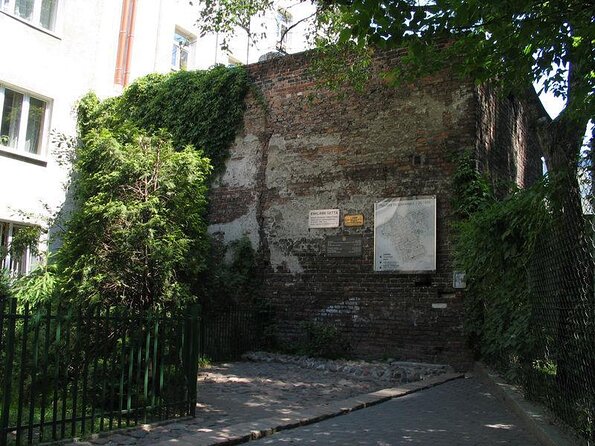
- Ghetto wall and major memorials: you see the preserved wall fragment and sites tied to the uprising and deportations
- No entrance ticket costs on the route: admission is listed as free for the stops on the itinerary
- Stops end at POLIN or your hotel: you can continue on your own at the museum or head back
Why this 3-hour Jewish Warsaw route feels focused, not rushed
If you’ve only got a short window in Warsaw, this tour is designed for impact. You concentrate on the places most connected to the Jewish story of the city, from pre-war cultural landmarks to the Ghetto’s final years, and you do it with a calm, organized flow.
What makes the time work is the mix of quick drives and short walks. Instead of spending the whole morning lost between far-apart points, you get vehicles for the longer connections and then brief on-foot moments where you actually stop, look, and absorb. That matters here, because the setting changes quickly, and the details are what stick.
Also, this tour ends in a smart place. Ending at POLIN gives you an easy next step. If you feel up for more, you keep going. If not, you can be dropped back at your hotel.
Further Jewish history and heritage itineraries:
- Warsaw: POLIN Museum of the History of Polish Jews Ticket
★ 4.7 · 1,142 reviews - Warsaw: Warsaw Ghetto Private Walking Tour with Hotel Pickup
★ 4.9 · 369 reviews - Warsaw: Jewish History Guided Walking Tour in English
★ 4.7 · 324 reviews
Pickup and social-distance bus comfort that actually helps
Warsaw can be a city where you spend energy just getting from A to B. That’s why I really appreciate the pickup included. You start where you’re staying, so the tour begins with your guide, not with your stress.
The tour also uses a bus described as a social-distance option. Even if you don’t think about it day to day, this kind of setup helps with comfort and group management, especially during an experience that’s already intense.
A small but nice touch: the day includes bottled water, plus Polish beer, Coca Cola, and Wedel chocolate candies. There’s no food meal included, but having something to sip and a sweet snack can take the edge off when the subject matter is heavy.
Finally, it’s a private tour, meaning only your group participates. That sounds like a sales line, but it changes the feel of the tour. You can ask questions without watching the clock for strangers.
Stop by stop: the Warsaw Ghetto route, wall to uprising monuments
The tour’s story engine starts in the area of the Warsaw Ghetto, where the guide frames both what was lived and what was destroyed. It’s not just a list of sites. The route is set up so you understand that this wasn’t an abstract tragedy. It was a real neighborhood with community life, culture, and people with everyday routines, before everything collapsed.
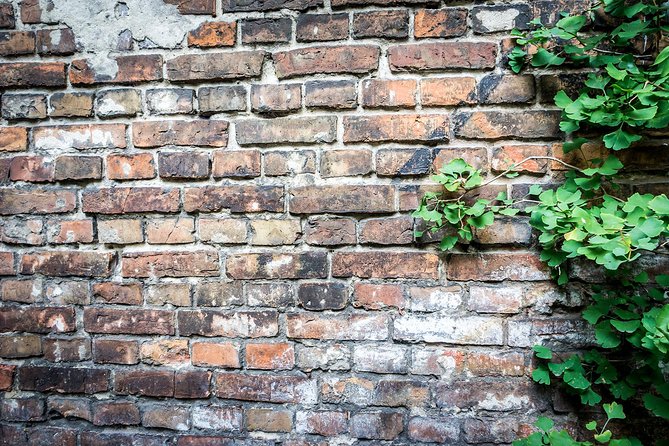
You first drive by the Zlota Street area to contemplate an original and preserved Ghetto wall fragment. This kind of stop is powerful because it’s physical. You’re not just hearing about history. You’re seeing a remnant that still has presence in the city.
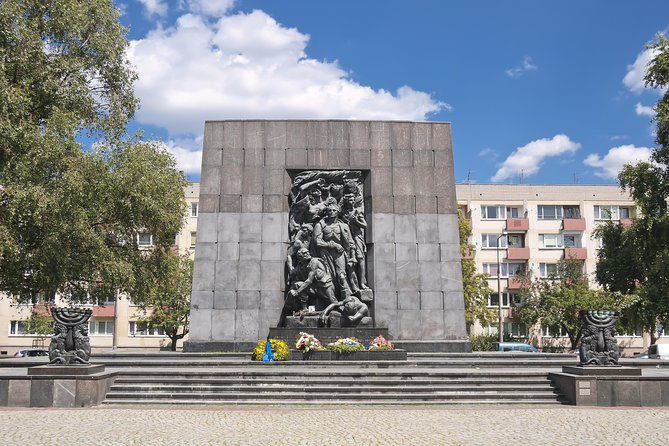
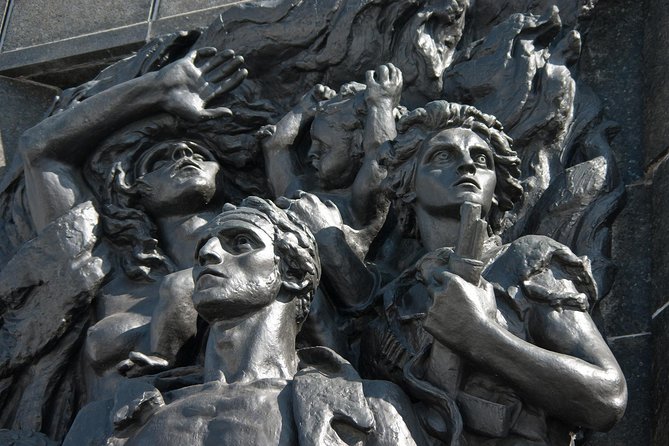
From there, the tour moves to the monument commemorating the Warsaw Ghetto Uprising. This is where the tone shifts toward resistance and survival in the face of overwhelming force. If you’ve ever wondered how to read a monument without feeling lost, this is exactly the kind of site where a guide’s framing helps you look in the right direction.
Close by sits POLIN, the Museum of the History of Polish Jews. The plan is to pass this spot during the tour and then leave it for you to explore later on your own. You’re told it covers a 100-year history of Polish Jews and is presented in a unique, interactive way, and that preview gives your museum visit more meaning.
Why the short segments work here
You might think a longer walking tour would be better, but that would also risk turning this into a logistical exercise. Instead, the route keeps the focus on the critical places: wall remnants, memorial points, and the most emotionally charged deportation sites.
Still tacked up around Warsaw


Mila 18 and the Umschlagplatz: the two hardest places to face
The tour hits two of the most difficult locations in Warsaw’s Jewish history: Mila 18 and Umschlagplatz.
At Mila 18, you get a short walk and a chance to look closely at the Jewish Martyrdom Route concept. This is also where the guide brings you to a bunker connected to the uprising. You’re shown the bunker where the commander of the Jewish Uprising committed suicide. That sentence is heavy, and it’s meant to be. A guide’s job here is not to shock you. It’s to place that moment into context, so the site doesn’t become a film scene in your mind, but a human decision inside a real collapse.
Next comes Umschlagplatz, one of the most heartbreaking squares in Warsaw. The tour explains why it mattered: Nazis loaded Jews onto carriages there and transported them to Treblinka. There’s also a wall with engraved typical Jewish names, shaped as a remembrance for the Nazi victims and as a symbol of the former Ghetto walls.
This stop is brief in time, but it’s not light in impact. I suggest slowing your pace here, even if you feel the group moving. Give yourself a few extra breaths near the names and the square details. Let it land.
Jewish Cemetery and Nozyk Synagogue for the part many miss
After the hardest stops, the tour shifts into remembrance through place. First is the Jewish Cemetery (Cmentarz Zydowski). The cemetery is about two kilometers from Umschlagplatz, and you go by car to get there. Once there, you see old, typical Jewish tombstones and learn that important spiritual leaders, activists, artists, and other honored people are buried there.
Cemeteries can feel repetitive if the visit is superficial. Here, the value is in how the guide connects the tombstones to individuals and roles in community life. Even in a short window, you come away with a stronger sense of continuity: the culture was not only present before the war, and it also survived in memory after.
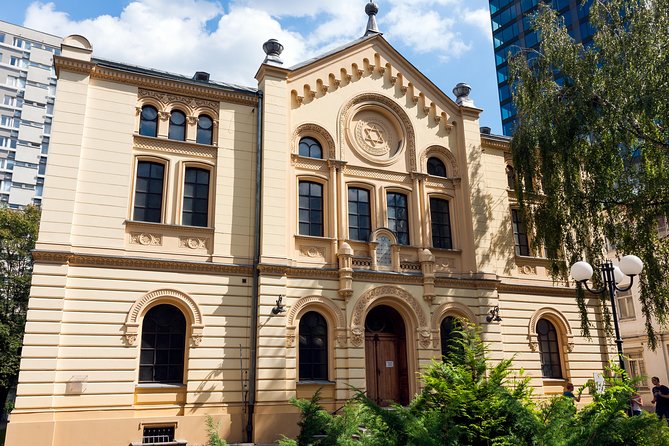
Then the tour visits Nozyk Synagogue, described as the only pre-war synagogue in Warsaw that was not demolished during World War II. That makes it more than a pretty building. It’s proof of what was saved, what remained, and what still tells the story of Jewish religious life in the city.
Yiddish theatre passing by: why it matters even if you only see it briefly
Near the end, you pass the Jewish Theatre named after Ester Rachel and Ida Kaminska. The key fact here is that it is described as the only theatre in Warsaw that creates performances in Yiddish.
This is a small timing stop compared to the memorials, but it’s an important counterweight. After learning about destruction, you’re reminded that Jewish culture also includes ongoing language and performance. Even seeing the theatre from the outside helps the story feel less like a one-way road.
Finishing at POLIN Museum, or going back to your hotel
The tour ends at POLIN Museum, or you can be dropped off at your hotel instead. The plan is built around choice, which I love.
If you visit POLIN on your own, you’re told it usually takes about two hours. That’s enough time to get past the feeling of, I’m not sure where to start, without feeling like you must do everything.
If you choose to skip the museum, getting dropped back is still a win. After emotional history, a quiet hotel moment can be part of how you digest what you learned.
Either way, the tour tries to keep your day from becoming all hard stops with no relief. That’s a subtle form of respect.
Price and value: is $185.22 per person worth it?
At $185.22 per person for about three hours, the price can look steep until you break it down.
You’re paying for:
- a private group experience
- pickup from where you stay
- a guide approach described as being led by war-survivor experiences
- free admission status for the itinerary stops listed
- transportation via a bus for the route flow
- included drinks and candies (beer, water, Coca Cola, and Wedel chocolate)
The value comes from the combination: not just places, but how you reach them and how you interpret them. A well-framed guide can save you hours of independent research, and the preserved wall and memorial points are exactly the kind of sites where context matters.
Also, the tour is booked about five days in advance on average, which suggests it fills at least some of the time slots. If your schedule is fixed, booking early helps.
What the best reviews point to (and what you should watch for)
The highest praise here centers on organization and guide quality. You’ll want to take advantage of that structure by doing one simple thing: ask your guide to explain what you’re seeing before you move on.
One highlight in feedback is that the guide or driver was extremely knowledgeable in the practical sense, showing photos in books and bringing you to spots people often miss. That is exactly the difference between a sightseeing checklist and a history walk that actually sticks.
If you want to get the most out of it, don’t be shy about questions. This is a private tour. The whole point is that the guide can respond to your pace and interests, whether you’re focused on architecture like Nozyk Synagogue or on the memorial meaning at Umschlagplatz.
Who this tour fits best, and who might want something different
This tour is a good match if you want:
- a short, structured overview of major sites in Jewish Warsaw
- pickup convenience and a private setup
- emotional, story-driven guiding rather than a quick photo stop
It may not be ideal if:
- you prefer long museum time instead of guided outdoor and memorial stops
- you want a gentler pace, because the content includes uprising sites and deportation-related locations
- you are traveling on a Saturday, since the tour notes that Saturdays are not recommended
For most people, it works. Service animals are allowed, and it’s described as something most travelers can participate.
Should you book this Warsaw Jewish history tour?
I’d book this if you’re short on time and you want the most important Warsaw Jewish sites handled with care and good logistics. The pickup, the private format, and the included interpretation are the core reasons this feels like good value.
I’d think twice if you’re looking for a casual, light day out. This is history with deep grief, and the tour makes sure you understand it. If that’s what you came for, you’ll likely appreciate how structured and respectful the experience is, and how neatly it ends at POLIN for those who want more.
FAQ
Is pickup included in the tour?
Yes. Pickup is offered from where you stay, including hotels and apartments, so you do not have to walk around Warsaw to find the meeting point.
How long is the tour?
The tour lasts about 3 hours.
Does the tour include admission tickets?
Admission is listed as free for the stops on the itinerary, and there is an included mention of free admission ticket status throughout the schedule.
What food and drinks are included?
The tour includes Polish beer, bottled water (still and gas), Coca Cola, and Wedel chocolate candies. No food is included.
Where does the tour end?
The tour concludes at POLIN Museum, where you can tour on your own, or you can be dropped off at your hotel.
Is mobile ticketing available?
Yes, the experience includes a mobile ticket.
Are Saturdays recommended?
Saturdays are not recommended.
Freshly posted from Warsaw
- Warsaw Uprising and WWII Old Town Walking Tour with Museum★ 5.0 · 1 review
- EVERYDAY Warsaw Traditional Food Tour with Old Town Sightseeing★ 5.0 · 1 review
- Warsaw to Auschwitz and Krakow Old Town Full-Day Trip by Car★ 5.0 · 1 review
- A Day in Warsaw: Private Full-Day Highlights Tour★ 5.0 · 1 review
- Pub Crawl with Shots, Discounts, Games & VIP Entry★ 5.0 · 1 review
- POLIN Museum of the History of Polish Jews : PRIVATE TOUR /inc. Pick-up/★ 5.0 · 1 review
- Full-Day Kazimierz Dolny Private Tour from Warsaw with Guide★ 5.0 · 1 review
Jewish History & Heritage Tours, compared.
Bike Tour of Old Town, Jewish Quarter and the Ghetto
Read our review →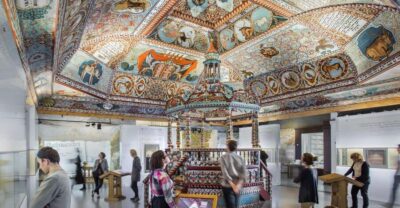
POLIN Museum of the History of Polish Jews Ticket
Read our review →
Kazimierz, Schindler’s Factory & Ghetto Guided Tour
Read our review →
Full Bike Tour – the Old Town, Jewish Qtr & the Ghetto NEW BIKES
Read our review →
Warsaw Ghetto Private Walking Tour with Hotel Pickup
Read our review →Browse the lists this tour appears in