
Reviewed · JEWISH HISTORY & HERITAGE TOURS
Krakow: Old Town, Jewish Kazimierz and Ghetto Sightseeing by Electric Golf Cart
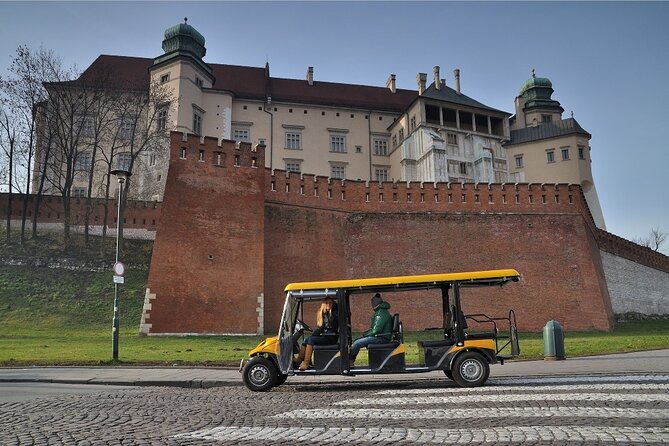
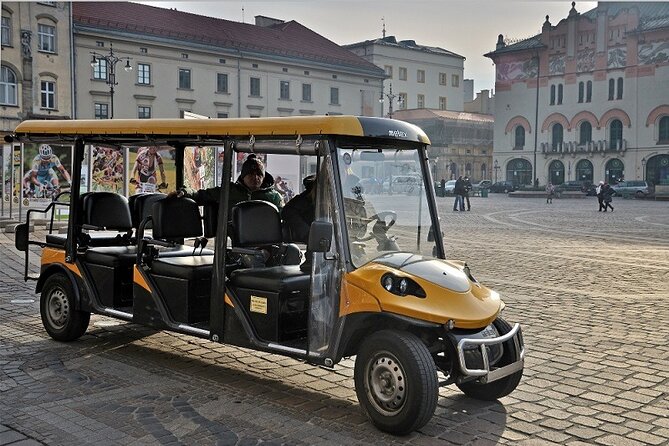
Carts, history, and synagogues in one tidy ride. This electric golf cart tour is built for time-tight days in Krakow, pairing Old Town landmarks with Kazimierz and key WWII ghetto-era stops, all with an audio system.
I especially liked the small group size (max 8), which keeps the ride friendly and the explanations clear. I also liked that you get an organized route with audio coverage, so you are not trying to piece together the city from street corners.
One consideration: the experience moves fast. If you want extended photo time or long cathedral-style stops, you may feel crowds and short stop windows squeeze your plans.
In This Review
- Key highlights worth your attention
- A golf cart sprint through Krakow’s big hits
- Route design: Old Town, Kazimierz, then the WWII ghetto area
- Main Market Square, Cloth Hall, and the Town Hall Tower
- St Mary’s Basilica, Juliusz Słowacki Theatre, and the Barbican’s legend
- Kazimierz: Tempel Synagogue and what the stained glass is really telling you
- Szeroka Street’s synagogues: the heart of Kazimierz
- Remuh Synagogue: modest decor with a modern role
- Podgórze and the ghetto memorial stops: St Joseph’s Church, the wall fragment, and Umschlagplatz
- Price and timing: what $56.47 buys you, and where it can feel tight
- Who should book this electric golf cart tour
- Should you book this Krakow Old Town, Kazimierz, and ghetto golf cart tour?
- FAQ
- How long is the Krakow Old Town, Kazimierz, and ghetto electric golf cart tour?
- Is the tour offered in English?
- What is the group size limit?
- What kind of ticket do I get?
- Where does the tour start and end?
- Can I bring large baggage?
- Is there free cancellation?
Key highlights worth your attention
- Electric golf carts help you cover big distances without burning the day on walking
- Old Town to Kazimierz to the ghetto gives you a simple, logical storyline across eras
- Audio system in English keeps you oriented even when streets feel maze-like
- Small-group feel (up to 8 people) means you are not shouting over the entire city
- Memorial stops include the ghetto wall fragment and Umschlagplatz at Plac Zgody
A golf cart sprint through Krakow’s big hits
Krakow has that special problem: you start with one plan, then Old Town pulls you in, Kazimierz tempts you next, and suddenly your day is gone. This tour is designed for the opposite approach. You get a set circuit, you move efficiently, and you still see the places that anchor the city.
The ride is in an electric sightseeing vehicle with an audio system, and it is paced like a highlights walk, not a slow museum crawl. You will spend most of your time on the carts, with opportunities to stop at major sights along the way. That makes it a strong choice if you have only a few hours in the city or if walking for long stretches is not your thing.
It also works well for first-timers because it stitches together what is often taught as separate chapters: medieval Krakow around the Market Square, the Jewish quarter of Kazimierz, and the WWII tragedy centered on the ghetto area in Podgórze.
More Golf Cart Tours in Krakow
- Krakow: City Sightseeing Tour by Electric Golf Cart
★ 4.5 · 3,264 reviews - Krakow: City Sightseeing Tour Eco Electric Buggy Golf Cart
★ 4.7 · 3,143 reviews - Krakow: Extended City Sightseeing Tour – Eco Buggy Golf Cart
★ 4.7 · 794 reviews
Route design: Old Town, Kazimierz, then the WWII ghetto area
The biggest value here is the order of the story. You start in the heart of Krakow’s historic core, then transition to Kazimierz, and finally shift to the ghetto-era sites. That flow helps your brain connect the dots.
You begin around the city’s most central medieval spaces, then you pivot to religious and community landmarks in Kazimierz, including major synagogues and Szeroka Street, before ending with solemn stops tied to the deportations from the ghetto.
One detail I appreciate: the tour does not treat Kazimierz like a single photo stop. It gives you multiple touchpoints, like the Tempel Synagogue, the older synagogues on Szeroka Street, and Remuh, so you start understanding why this neighborhood mattered long before the modern tourism boom.
Main Market Square, Cloth Hall, and the Town Hall Tower
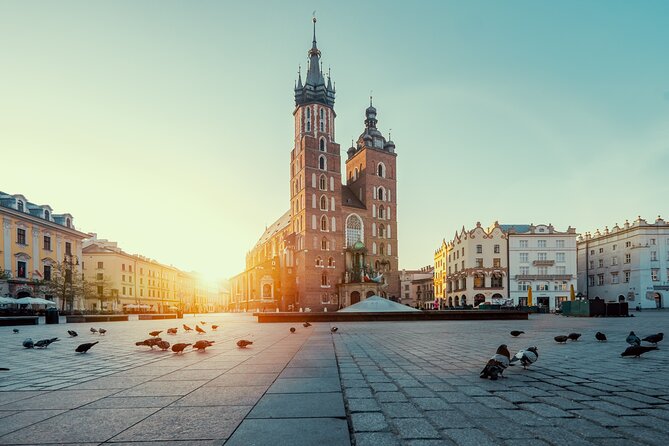
Krakow’s Market Square is the kind of place that makes you stop talking and start looking. Even before you go inside anything, you can feel how central it has been for centuries as a public gathering space. On this route, the main square is presented as the city’s beating heart, with its medieval layout and iconic landmarks crowding in close.
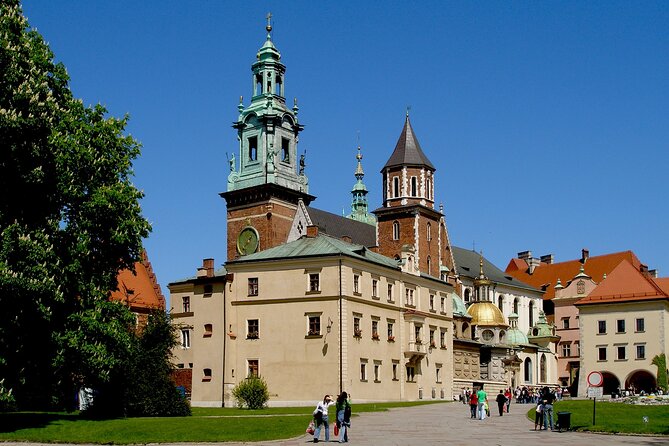
From there, you hit Sukiennice, the Cloth Hall. It is described as Krakow’s oldest commercial center and a standout piece of Renaissance architecture. The practical takeaway: even if you are not shopping, this is a great structure to notice from multiple angles. It tells you a lot about how Krakow functioned as a trading city, not just a postcard city.
Next is the Town Hall Tower, which is where the tour gets concrete about height and history. You are looking at a tower that is 70 meters high and tied to the city’s civic authority. The tour description also includes the executioner’s dungeons and the fact that the tower has been part of the Main Market Square for around 700 years. That is one of those details that makes the tower feel less like scenery and more like infrastructure of everyday medieval power.
My tip: When the carts pause here, take 60 to 90 seconds just to scan the square edges. Krakow’s landmark “portraits” come from the way buildings align. If you treat the square like a single photo spot, you will miss the way it frames the city.
St Mary’s Basilica, Juliusz Słowacki Theatre, and the Barbican’s legend
This leg adds personality fast, because the architecture here ranges from sacred art to dramatic theater to defensive medieval engineering.
First comes St Mary’s Basilica, presented as one of the major stops in the center of Krakow. What makes it special in this tour is the attention to specific artistry: a high altar by Veit Stoss, murals by Jan Matejko covering the vaulting, and even the mention of a bugle call. Those details are useful because they point you to what to look for if you are able to enter or get a close view.
From there, the tour moves to the Juliusz Słowacki Theatre, known for continuous operation since 1893 and noted for precious theatre architecture in Europe. Even if you do not catch a performance, this is still worth noting. It is one more clue that Krakow has long been a city of culture and public life, not only old stone and churches.
Then you reach the Barbican, described as a pearl of Krakow’s fortifications. It is an exquisite example of medieval military architecture, and the story highlights that it was never captured during a siege, with defenders repulsing attackers using a single shot. Whether you treat the story as legend or fact, it adds a punch of drama to the structure itself.
Photo reality check: The Old Town core can be busy, and carts can park in ways that block views at street level. If photos matter to you, prioritize wide shots from corners, then step forward for the “money view” of one or two buildings.
Further Jewish history and heritage itineraries:
Kazimierz: Tempel Synagogue and what the stained glass is really telling you
Kazimierz is where the tour shifts tone. The pace is still efficient, but the content becomes more reflective. You start hearing the names that anchor Jewish life in Krakow for centuries, and you see how community spaces shaped everyday geography here.
One standout is the Tempel Synagogue, highlighted for stained glass windows that are among the best preserved of their kind in Poland. The other reason it is singled out is its non-orthodox character, which matters because it signals that Jewish religious life in Krakow was not one uniform tradition. There were variations, and they show up in architecture.
In a short time, you can miss that nuance if you only glance at buildings. Here, the tour pushes you to connect design with community identity. That is the value of an audio-guided approach: it tells you where to look, not just what you are looking at.
Szeroka Street’s synagogues: the heart of Kazimierz
Next is Szeroka Street, described as the heart of Jewish Kazimierz. The tour emphasizes that four synagogues used to stand on the street, a detail said to be unheard of elsewhere in Europe. That is a big deal. It tells you the street functioned like a living axis of worship, not a random row of historic structures.
The tour also notes what the street hosts historically and today, tying it to the Jewish Culture Festival. Even if your trip does not overlap with that event, you can feel how often this area has been used as a cultural stage and a community center.
The key practical idea: on a street like this, you should walk slowly for a minute even if you mostly ride. The architecture reads better up close, and the sense of place is built from small distances between buildings. If you rely only on distance views from the cart, you lose some of the layered texture.
Remuh Synagogue: modest decor with a modern role
The route then points you to Remuh Synagogue, described as the smallest of seven synagogues of Krakow. It is also described as more modest in decor than the others, and the tour notes that after renovation completed in April 2016, it became the main site of prayer for the Jewish community in Krakow.
That combination is worth noticing. Small and modest does not mean minor. It often means different priorities, different design choices, and a different kind of presence in daily life. The tour frames Remuh less like a decorative stop and more like a functioning spiritual site with a renewed role after restoration.
If you want to respect the space, keep your expectations practical. Look, absorb, and avoid turning it into a quick selfie runway. This area feels different because it is not only a history set, it is still tied to faith and community.
Podgórze and the ghetto memorial stops: St Joseph’s Church, the wall fragment, and Umschlagplatz
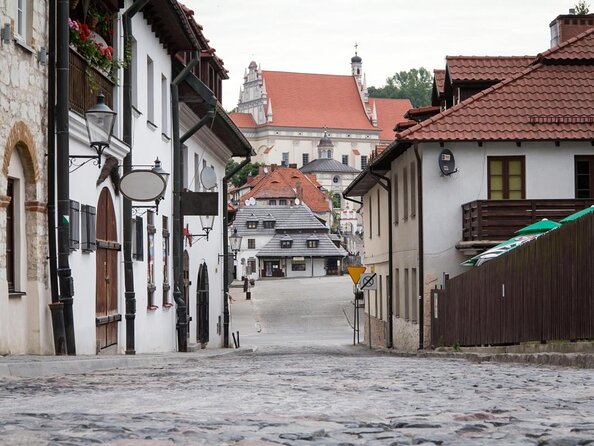
Now the tour shifts into Podgórze, and the mood changes for good reason. The stop at St Joseph’s Church is described as a distinctive, widely recognizable site of devotion that dominates the Podgórze Market Square, a central point only incorporated into Krakow in the 20th century. That detail matters because it reminds you this district’s story is part of Krakow’s larger timeline, not an isolated footnote.
From there, the route moves to the ghetto-era story with two specific memorial elements.
First is a small fragment of the original ghetto wall, preserved with a plaque commemorating the fate of the inhabitants. It is a short stop, but those kinds of remnants have weight. They show you what was left behind and what was taken away.
Then comes Plac Zgody, once independent and later designated as Umschlagplatz during Nazi occupation, the place where Jews had to congregate for deportation. The tour is very specific about the name and the function: Umschlagplatz is not just a marker, it is a key word in the story of how deportations were carried out.
The final piece tied into the ghetto narrative is Tadeusz Pankiewicz and his father’s pharmacy, described as a moment where he could not have foreseen he would make history. This is presented as part of the broader WWII tragedy that affected the whole world, and it gives the tour a thread of human action amid horror.
My advice for this part: Keep your phone usage modest. If you want photos, take one or two, then put the camera away and let the words and plaque details land. The point here is understanding and remembrance, not ticking boxes.
Price and timing: what $56.47 buys you, and where it can feel tight
At about $56.47 per person for roughly 2 hours 30 minutes, you are buying time efficiency and structure, not deep, slow museum access. That is a fair trade in Krakow, where the biggest sights cluster in a way that makes “getting to the next place fast” a real advantage.
You also get value from the format. The vehicle is electric, and it uses audio to explain the sites. In practice, that means you are not dependent on luck for a good self-guided experience. The audio keeps you moving with context, which helps especially if you have limited time or if you are traveling solo.
Still, the tradeoffs are real. The Old Town can be crowded, and at least one negative theme from experiences with this kind of setup is that there is not always enough time at each stop for photos. Another recurring consideration is congestion later in the day. If you can choose your time slot, earlier is usually kinder to your photos and your viewpoint.
Also pay attention to what is not mentioned: you should not plan on carrying bulky luggage. The vehicles are designed with limited space and are meant for passengers to sit. If you have a big backpack, you may feel cramped.
If you want to optimize the experience, do this:
- Pick an earlier starting time if possible for better visibility
- Have one or two “must-photo” buildings in mind before you reach the crowded square
- Use your time on the carts to listen to audio between stops, then use walking time only where it matters most
Who should book this electric golf cart tour
I think this tour fits best if you:
- Have only half a day or a short visit and want to see the city’s main chapters
- Prefer less walking but still want major landmarks, not only drive-by views
- Like an organized route with audio guidance in English
- Want a gentle introduction to Kazimierz and the ghetto memorial areas without feeling lost
It may not fit if you:
- Want long stays at interior sites or expect lots of downtime for photos
- Are traveling specifically to do slow, detailed museum-style study at a single location
Should you book this Krakow Old Town, Kazimierz, and ghetto golf cart tour?
If your goal is to get your bearings fast and hit the most important parts of Krakow in one go, I would book it. The format is built for efficiency, and the route connects Old Town, Kazimierz, and WWII ghetto remembrance in a way that is easy to follow. For the price, you are paying for structure, audio context, and a low-effort way to cover distance.
Just go in with the right mindset: this is a highlights circuit. Plan for short stop windows, bring a camera strategy, and if you care deeply about any one interior site, consider pairing this with a separate, slower visit afterward.
FAQ
How long is the Krakow Old Town, Kazimierz, and ghetto electric golf cart tour?
It lasts about 2 hours 30 minutes.
Is the tour offered in English?
Yes, it is offered in English.
What is the group size limit?
The tour has a maximum of 8 travelers.
What kind of ticket do I get?
You receive a mobile ticket.
Where does the tour start and end?
Start: Mikołaja Zyblikiewicza 2, 31-029 Kraków. End: Mikołaja Kopernika 3, 31-034 Kraków.
Can I bring large baggage?
It says you should not bring large baggage since the vehicles only have enough room for passengers to sit.
Is there free cancellation?
Yes, free cancellation is available, and you can cancel up to 24 hours in advance for a full refund.
Melex Loops
- Krakow: Electric Car Sightseeing Tour
★ 4.4 · 450 reviews - Krakow: Jewish Quarter and Ghetto Electric Golf Cart Tour
★ 4.6 · 348 reviews - Krakow: City Sightseeing Tour Eco Electric Buggy Golf Cart
★ 4.5 · 311 reviews - Krakow Grand City Tour by golf cart – All 3 districts
★ 5.0 · 311 reviews
Freshly posted from Krakow
- ZALIPIE – painted village, unique small group tour from Krakow★ 5.0 · 7 reviews
- Magic of Krakow: Guided Tour of the Old Town★ 5.0 · 7 reviews
- “John Paul II Route” PRIVATE -Wadowice, Kalwaria Z.-Łagiewniki★ 5.0 · 7 reviews
- Krakow: Craft Beer Tasting City Walking Tour★ 4.4 · 7 reviews
- Krakow : Zakopane Tour + Thermal Pools with Hotel Pickup★ 4.8 · 7 reviews
- Krakow in One Day: City Tour by Electric Car★ 5.0 · 7 reviews
- Full-Day Morskie Oko in The Tatra Mountains and Thermal Baths from Kraków★ 5.0 · 7 reviews
Jewish History & Heritage Tours, compared.
Bike Tour of Old Town, Jewish Quarter and the Ghetto
Read our review →
POLIN Museum of the History of Polish Jews Ticket
Read our review →
Kazimierz, Schindler’s Factory & Ghetto Guided Tour
Read our review →
Full Bike Tour – the Old Town, Jewish Qtr & the Ghetto NEW BIKES
Read our review →
Warsaw Ghetto Private Walking Tour with Hotel Pickup
Read our review →Browse the lists this tour appears in