
Reviewed · JEWISH HISTORY & HERITAGE TOURS
Krakow: Jewish Quarter Kazimierz Guided Walking Tour
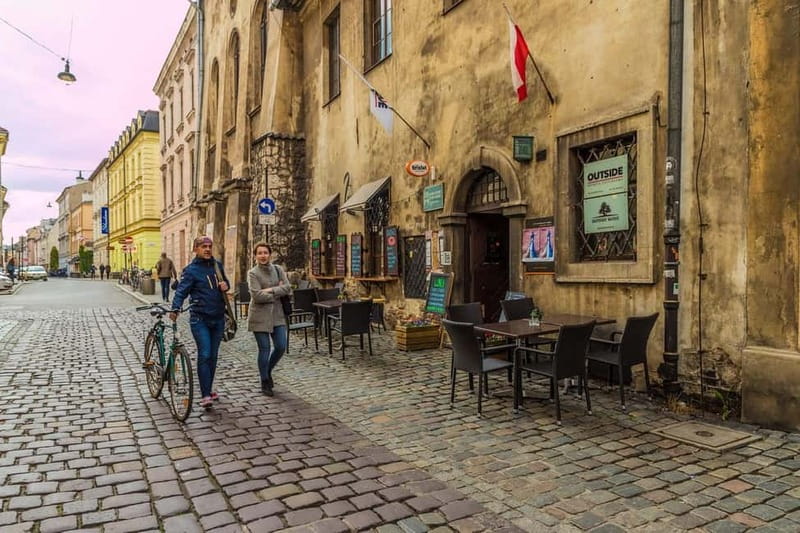
Kazimierz walks you right into memory. This guided Jewish Quarter stroll is built around the places where faith, daily life, and historic trauma left visible traces, not just textbook facts. You’ll see key synagogues and courtyards as your guide ties them to the lived world of the community.
I especially like how the route balances spirituality and history, with Old Synagogue as a starting anchor and Remuh Synagogue and Cemetery for quiet reflection. The tour also gives you practical context for how coexistence shaped Krakow, then shows how later events changed everything. One drawback to plan for: this is a walking tour through older streets and sites, so it is not suitable for mobility impairments or wheelchair users.
Finally, the price feels fair for what you get: a licensed local guide, a focused route, and about 90 minutes to 2 hours of clear explanation in the language you choose. If you want Kazimierz to make emotional and historical sense, this is a smart, efficient way to do it.
In This Review
- Key highlights you will care about
- Getting oriented at the Old Synagogue meeting steps
- Szeroka Street, where communal life shaped the street itself
- Old Synagogue Museum: oldest preserved synagogue in Poland
- Remuh Synagogue and Cemetery: where memory is part of the site
- Kupa Synagogue and Tempel Synagogue: differences within the community
- Plac Nowy: seeing how past and present share the same streets
- Meaningful courtyards and secluded spaces you might miss on your own
- How the guide makes the story clear and usable
- Value for money: what $27 buys you in Kazimierz
- Who should book this, and who should skip it
- Quick practical tips to make your visit smoother
- Should you book this Kazimierz Jewish Quarter walking tour?
- FAQ
- Where is the meeting point?
- How long is the walking tour?
- What is the price per person?
- Which languages are available?
- Is hotel pickup included?
- What should I bring?
- Are there any restrictions during the tour?
- Is the tour suitable for wheelchair users or people with mobility impairments?
- What is the cancellation policy?
Key highlights you will care about
- Old Synagogue first, meeting on the steps so you get oriented fast
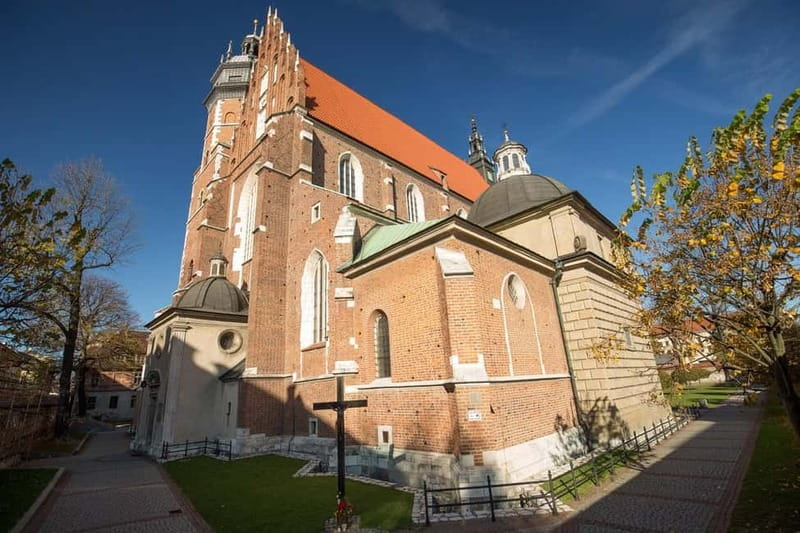
- Remuh Synagogue and Cemetery, where remembrance is part of the visit
- Szeroka Street and nearby historic buildings from the 16th to 18th centuries
- Kupa Synagogue and Tempel Synagogue, representing different sides of the community
- Plac Nowy stop, showing layers of past and present in the same neighborhood
- Licensed local guide, with a single chosen language for better flow
Getting oriented at the Old Synagogue meeting steps
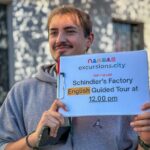
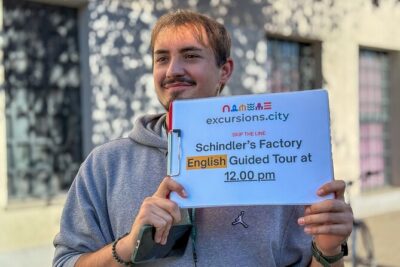
Your tour starts at a very logical spot: the steps of the Old Synagogue. The guide holds an excursions.city sign, so you should be able to find them without a scavenger hunt. Do yourself a favor and arrive at least 10 minutes early, because once the group leaves, late arrivals cannot join and refunds are not available.
This is a walking experience, so comfort matters. Bring comfortable shoes because you will be on foot for about 90 minutes to 2 hours, depending on the group pace and the flow of stops. The activity is led by a licensed local guide and stays focused on the Kazimierz area, with no meals and no hotel pickup included, so you will handle those separately.
Another practical note: the tour runs in a single language chosen when you book. A multilingual city can be messy, so the single-language structure is a real advantage if you want fewer pauses and clearer explanations.
More Walking Tours in Krakow
- Old Town Krakow & Wawel Castle Walking Tour
★ 5.0 · 1,508 reviews - Creepy Krakow: 2-Hour City Walking Tour
★ 4.7 · 1,131 reviews - Krakow: The Old Town Walking Tour
★ 4.8 · 794 reviews
Szeroka Street, where communal life shaped the street itself
Once you get going, the tour’s early momentum comes from Szeroka Street, described as the former heart of Jewish communal life. This is where Kazimierz stops feeling like a generic neighborhood and starts feeling like a system: community, religion, learning, and commerce all braided into the same blocks.
You will walk through an area surrounded by historic synagogues and townhouses, including architecture dating from the 16th to 18th centuries. That matters because it helps you understand why the district still feels layered. Buildings are not just backdrops here. They act like physical reminders of how people lived, worshipped, and organized their days.
If you like “place-based history,” this is a good place to lean in. Your guide is there to explain what you are seeing, not just point at plaques. Expect context about Jewish traditions and everyday life before the war, with enough detail to help you connect names and locations to real practices.
Old Synagogue Museum: oldest preserved synagogue in Poland
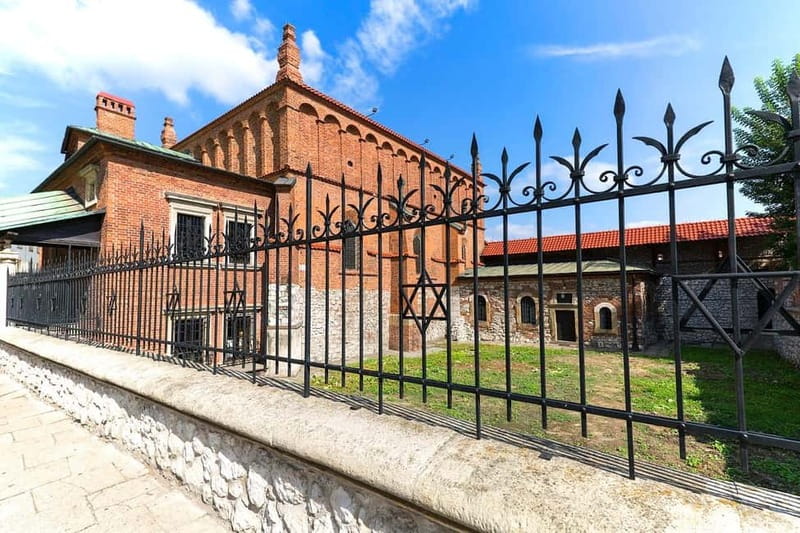
One of the clearest anchor stops is the Old Synagogue, now functioning as a museum that documents Jewish history and religious practice. The tour treats this as more than an old building, and that is exactly what you want. You are not just looking at a structure, you are getting a framework for how synagogues served the community in daily spiritual life and cultural memory.
Because the Old Synagogue is the oldest preserved synagogue in Poland (as presented in the tour), it gives you a sense of continuity. Standing there, you can understand why Kazimierz earned its reputation as a center of religious and intellectual life before the war.
A practical benefit of starting with the Old Synagogue is that it sets vocabulary early. Later stops make more sense when you already understand the purpose of synagogues as religious, communal, and historical spaces.
Remuh Synagogue and Cemetery: where memory is part of the site
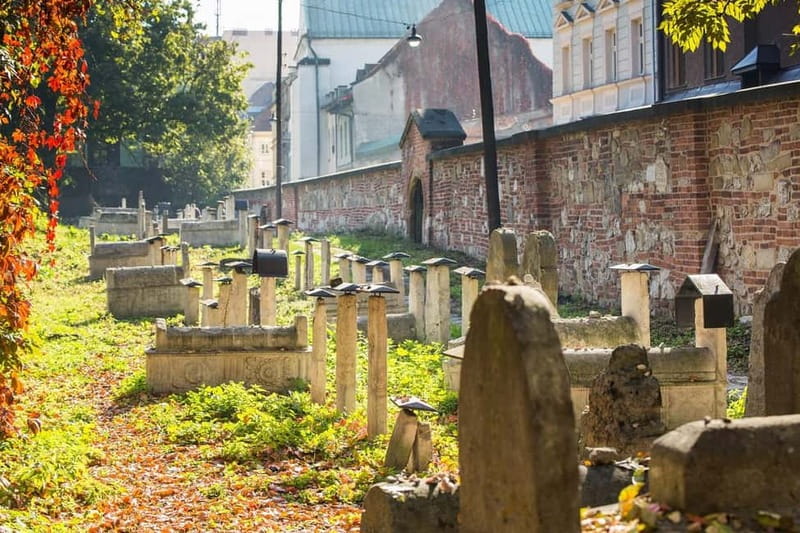
Next you will head to the Remuh Synagogue and Cemetery, one of the most emotionally serious segments of the walk. This is described as a site of deep spiritual significance and lasting memory, and the tour’s tone matches that.
A cemetery is not something you “speed-run.” You will likely experience a slower, more reflective pace here because the point is remembrance, not sightseeing theater. If you are someone who prefers quiet context over big dramatic storytelling, you will probably appreciate how this stop is framed.
This is also where the tour’s bigger theme becomes tangible: Kazimierz today is a place shaped by memory, loss, and survival. The district’s streets carry traces of the past, and Remuh is one of the most direct places to encounter that reality.
Further Jewish history and heritage itineraries:
Kupa Synagogue and Tempel Synagogue: differences within the community
One of the more interesting parts of the tour is the way it contrasts synagogues to show the community’s range of experiences.
- The Kupa Synagogue is connected to the poorer members of the community. That link is important because it reminds you that religious life was not one-size-fits-all. Economic realities shaped how people worshipped and how institutions served different groups.
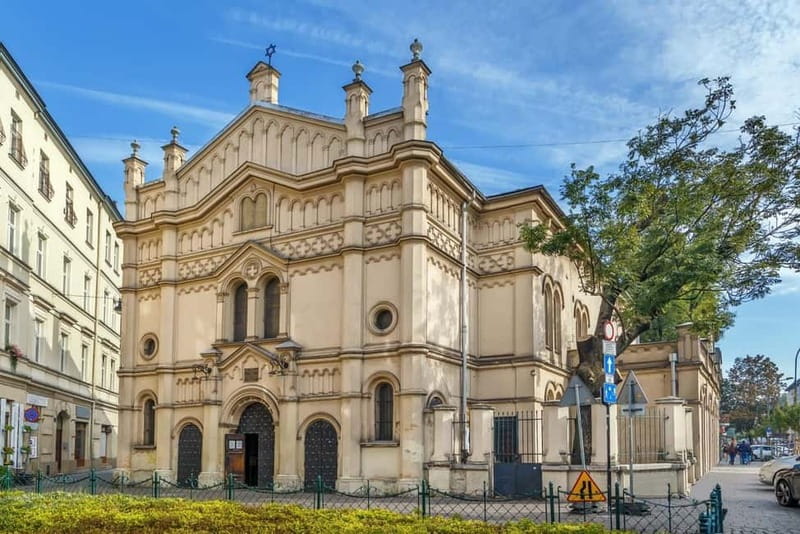
- The Tempel Synagogue reflects the aspirations of a more modern, assimilated Jewish society. This is a different kind of story, one about changing identities, education, and how community members engaged with broader culture.
That contrast helps you avoid a common mistake: flattening people into one uniform narrative. Kazimierz had internal diversity, and the tour uses these sites to show that coexistence and faith were not static concepts. They evolved with time, politics, and social pressure.
If you are the type who wants history to feel specific, these stops deliver. Two synagogues can look similar from the outside, but your guide can explain why their backgrounds mattered.
Plac Nowy: seeing how past and present share the same streets
After you have absorbed the synagogue landmarks, the tour shifts attention to Plac Nowy, where layers of history intersect with contemporary life. This stop is useful because it helps you interpret what you see around you after the main sites.
Kazimierz is not only a museum-like zone of monuments. It is a district you can still walk through, with modern rhythms layered over older ones. When your guide connects that today-meets-yesterday atmosphere to earlier centuries, the walk feels more coherent.
This is also where the idea of coexistence becomes less abstract. You start to see how neighborhoods grow and change while old structures remain, quietly carrying meanings even when the community that built them is no longer present in the same way.
Meaningful courtyards and secluded spaces you might miss on your own
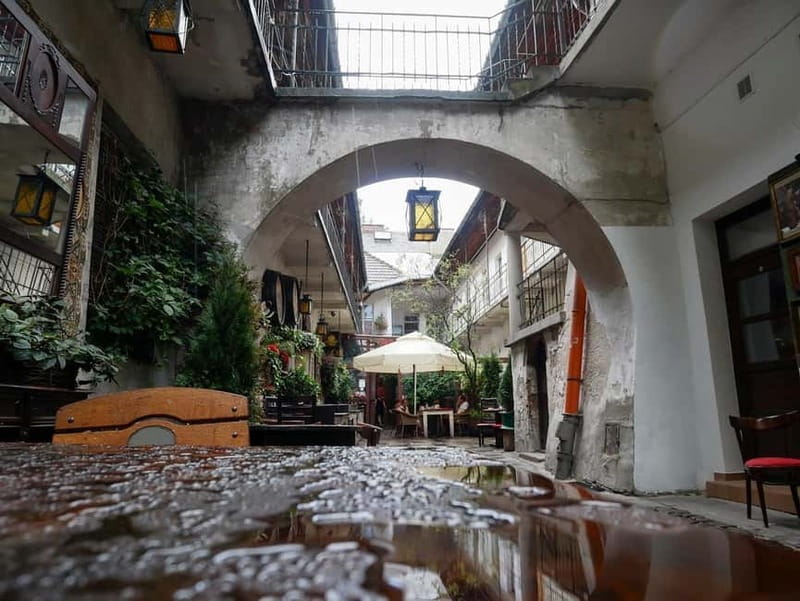
The tour description emphasizes meaningful sites and secluded courtyards, which is a big deal if you have ever explored Kazimierz without guidance. The district has many streets, and not every important spot is obvious from a main road.
A good local guide helps you notice what you would otherwise walk past: the way a courtyard creates privacy, the way certain buildings relate to one another, and the way the community’s religious and social structures influenced spatial layout. Even if you cannot quote every detail later, you will come away with a stronger sense of how the neighborhood worked.
This is also where a professional guide earns their fee. Without that person, you might get the basic names. With the guide, you get the “why it mattered.”
How the guide makes the story clear and usable
You will spend most of the experience listening, so the guide’s communication style matters. Based on the consistent praise for clarity and preparation, this is set up to be easy to follow. The tour is built around personal stories and historical contexts, with the explanation designed to connect sites to what Jewish traditions and daily practices looked like before the war.
The guide also ties together how coexistence, faith, and historical events influenced Krakow’s past. That thread is what keeps the walk from turning into a list of religious buildings.
Another practical advantage: because the tour runs in one language, you are not stuck translating in real time. If your booked language is English, German, French, Italian, Spanish, Swedish, Russian, Slovak, or Portuguese, you can expect the narrative to flow as intended.
The structure is also time-efficient. You get a concentrated slice of Kazimierz in about 90 minutes to 2 hours, which makes it doable even on days when you are also visiting other major sites.
Value for money: what $27 buys you in Kazimierz
At $27 per person, this is not just a sightseeing stroll. You are paying for three things that are hard to replicate on your own:
1) A licensed local guide
You get interpretation, context, and connections between places. Kazimierz can be emotionally heavy, and a good guide helps you hold the right pace.
2) A focused route with key anchors
The walk hits the Old Synagogue, Remuh Synagogue and Cemetery, Kupa Synagogue, Tempel Synagogue, and Plac Nowy. That order matters because it builds understanding step by step.
3) Pre-war daily life context
A lot of visits to Krakow’s Jewish heritage focus mostly on destruction and loss. This tour’s emphasis on traditions, everyday life, and religious practices before the war helps balance what you learn.
Also, this is a good add-on if you are planning a larger day around Auschwitz or other Holocaust-related sites in the region. Even without naming other attractions, it is clear how Kazimierz provides human scale and cultural context before you move into heavier territory elsewhere.
Is it worth it if you are a “quick photos only” traveler? Probably not. If you want meaning and structure, it is solid value.
Who should book this, and who should skip it
This walking tour is best for you if you enjoy guided history, want to understand the Jewish quarter through real places, and appreciate a respectful, context-driven pace.
It may be less ideal if:
- You are not able to do a walking tour, since it is not suitable for people with mobility impairments and wheelchair users.
- You are hoping for a casual, light neighborhood chat rather than a story-heavy walk. This is about memory, loss, survival, faith, and coexistence, so the emotional weight is part of the experience.
If you are traveling with teenagers, it can work well if they are willing to listen and engage. The key is whether your group wants to understand before they consume photo stops.
Quick practical tips to make your visit smoother
A few small things will make the tour feel better in real life:
- Wear comfortable shoes. You are on your feet throughout.
- Arrive on time at the Old Synagogue steps and bring your phone battery for navigation afterward.
- Know your language choice at booking, because the tour operates in a single language.
- Keep it respectful in the space. This is a memorial and religious heritage environment, and the tour framing reflects that.
- No alcohol or drugs are allowed, so plan accordingly.
If you want to take in Kazimierz afterward on your own, you will have a mental map by the end of the walk. That means your extra time can be spent wandering with intention, not just guessing.
Should you book this Kazimierz Jewish Quarter walking tour?
Yes, if you want a structured, local-guided understanding of Kazimierz in a short time. The combination of Old Synagogue, Remuh Synagogue and Cemetery, and the contrasting Kupa and Tempel synagogues gives you more than surface-level context. It helps you understand why the district feels like a place of remembrance, not a stage set.
Skip it if walking is a problem for you, or if you dislike tours that prioritize historical explanation over casual sightseeing. Also consider whether you want a lighter tone. This one is built around memory, faith, and survival, so it is not a “just chill in the streets” activity.
If your goal is to connect the dots between places, people, and Krakow’s past, booking this tour is a smart move.
FAQ
Where is the meeting point?
Meet your guide on the steps of the Old Synagogue. The guide will hold an excursions.city sign.
How long is the walking tour?
The tour lasts about 90 minutes to 2 hours.
What is the price per person?
The price is $27 per person.
Which languages are available?
The tour offers live guides in Spanish, English, German, French, Italian, Swedish, Russian, Slovak, and Portuguese.
Is hotel pickup included?
No. Hotel pickup and drop-off are not included.
What should I bring?
Wear comfortable shoes.
Are there any restrictions during the tour?
Alcohol and drugs are not allowed.
Is the tour suitable for wheelchair users or people with mobility impairments?
No. It is not suitable for wheelchair users or people with mobility impairments.
What is the cancellation policy?
You can cancel up to 24 hours in advance for a full refund.
Squares Crossed on Foot
- Kraków: Old Town & Wawel Castle Walking Tour in English
★ 4.8 · 532 reviews - Krakow: Evening Walking Tour with Spooky Stories
★ 4.7 · 500 reviews - Krakow Old Town Guided Walking Tour
★ 4.5 · 438 reviews - Krakow: Jewish Ghetto Walking Tour
★ 4.6 · 349 reviews
Freshly posted from Krakow
- ZALIPIE – painted village, unique small group tour from Krakow★ 5.0 · 7 reviews
- “John Paul II Route” PRIVATE -Wadowice, Kalwaria Z.-Łagiewniki★ 5.0 · 7 reviews
- Krakow: Craft Beer Tasting City Walking Tour★ 4.4 · 7 reviews
- Magic of Krakow: Guided Tour of the Old Town★ 5.0 · 7 reviews
- Krakow : Zakopane Tour + Thermal Pools with Hotel Pickup★ 4.8 · 7 reviews
- Krakow in One Day: City Tour by Electric Car★ 5.0 · 7 reviews
- Guided Tour of Plaszow Concentration Camp, Kraków★ 4.8 · 7 reviews
Jewish History & Heritage Tours, compared.
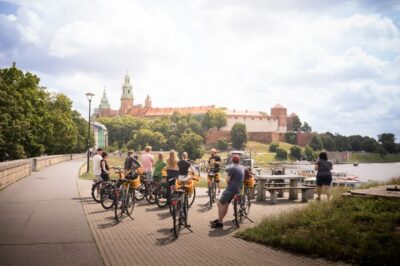
Bike Tour of Old Town, Jewish Quarter and the Ghetto
Read our review →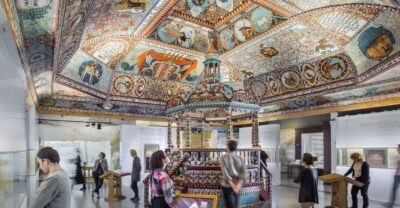
POLIN Museum of the History of Polish Jews Ticket
Read our review →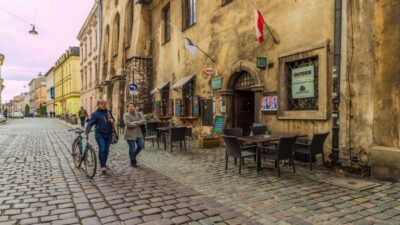
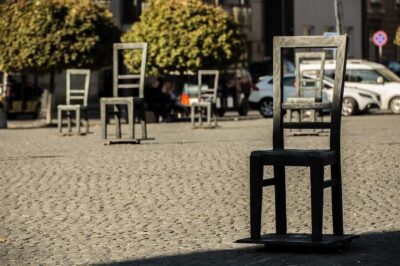
Kazimierz, Schindler’s Factory & Ghetto Guided Tour
Read our review →
Full Bike Tour – the Old Town, Jewish Qtr & the Ghetto NEW BIKES
Read our review →
Warsaw Ghetto Private Walking Tour with Hotel Pickup
Read our review →Browse the lists this tour appears in