
Reviewed · JEWISH HISTORY & HERITAGE TOURS
Krakow: Jewish Quarter and Ghetto tour by electric golf cart
Krakow tells two stories in one ride. This heated electric golf cart tour rolls you through Kazimierz, the former Jewish town, and into the WWII-era ghetto area with a multilingual audio guide. I especially like the language-ready audio so you can follow closely without hunting for context, and I like the way the route hits real places tied to both everyday Jewish life and the Nazi occupation. One possible drawback: with only 1 hour, it is more of a moving overview than a slow, in-depth museum experience.
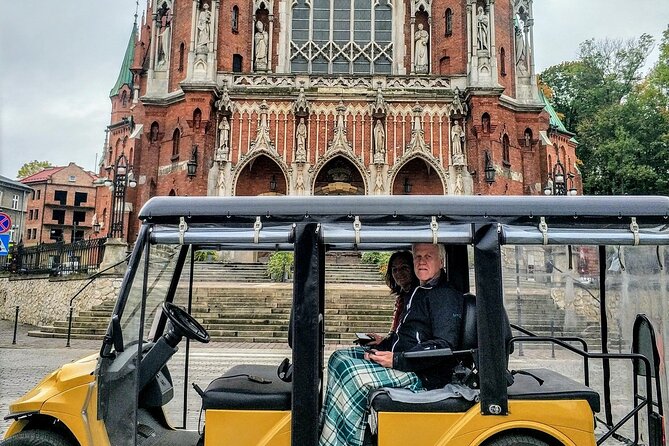
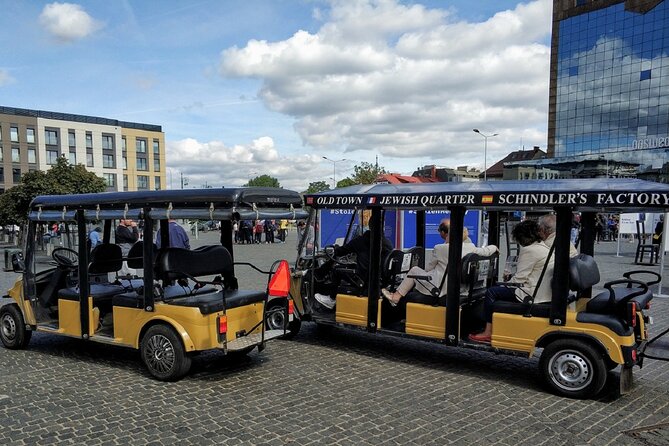
The format is easy: you meet at the pickup point, hop into a comfortable cart, and let the audio guide do most of the steering while the driver keeps things moving and answers questions during stops. You also get weather protection, so the tour stays pleasant in cold or rainy conditions, and there is time to pull over for photos.
In This Review
- Key things I’d watch for
- Rolling Through Kazimierz in a Heated Electric Golf Cart
- How This Area Became Kazimierz, the Jewish Quarter
- Jewish Landmarks You’ll See, and What They Represent
- Christian Landmarks Along the Route, Without the Noise
- Krakow’s Old Tram Depot and the City’s Living Timeline
- WWII Stops That Stick: Ghetto Heroes’ Square and the 70 Chairs
- Driving the Former Ghetto Streets and Seeing the Tombstone-Shaped Wall
- Audio Guide in Your Language, Plus Real-Time Help
- Price, Timing, and What You Get for $22
- Who This Tour Suits Best
- Should You Book This Electric Golf Cart Jewish Quarter and Ghetto Tour?
- FAQ
- How long is the Krakow Jewish Quarter and Ghetto tour?
- What language options are available for the audio guide?
- Is there a live guide on the tour?
- Is the cart heated and covered?
- Are entrance tickets included?
- Is the tour wheelchair accessible?
- What is included in the tour price?
Key things I’d watch for
- Heated, covered carts that stay comfortable in winter and summer sun
- Multilingual audio plus a live driver/guide in English or Polish
- Kazimierz stops tied to medieval life, not just WWII landmarks
- Memorial-focused WWII moments like Ghetto Heroes’ Square
- Photo pauses so you can actually see what matters
Rolling Through Kazimierz in a Heated Electric Golf Cart
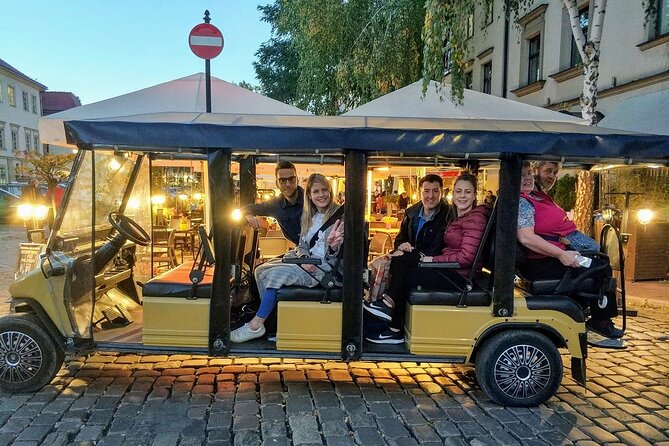
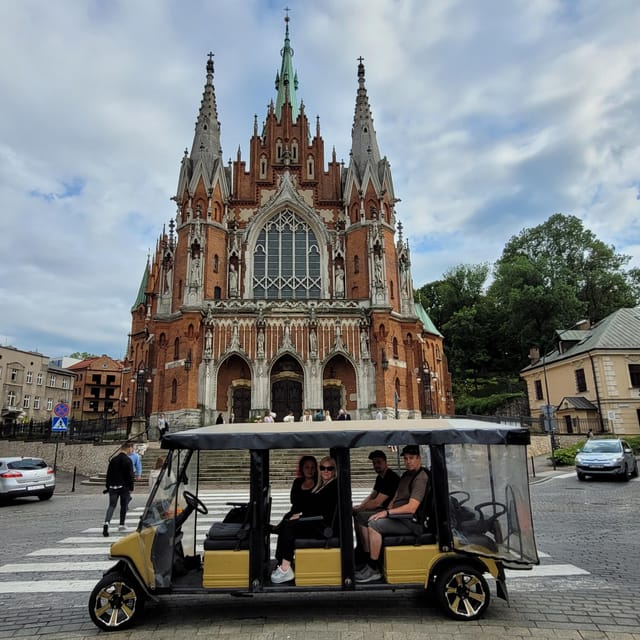
This tour works because you do not have to choose between comfort and meaning. In a city that rewards walking, the electric golf cart gives you a calmer pace while still getting you into the right neighborhoods fast. The seats are designed for comfort, and the cart setup matters in Krakow. You get a roof for sun in summer, rain curtains for wet weather, and a heating system for winter.
That means the “hard part” is minimal. You can focus on places and stories instead of tiring out your legs before the memorial moments. If you are traveling with a stroller, pushing wheels can be a deal breaker on certain days in old-town areas. Here, the vehicle setup includes space for a stroller or wheelchair, and the tour is wheelchair accessible.
One more practical plus: the tour includes air conditioning, so in warmer months you are not sweating through the whole experience just because you wanted to see Kazimierz and the ghetto area in one go. Add the fact that the experience is pet friendly, and it feels like it is built for real-life travelers.
More Golf Cart Tours in Krakow
- Krakow: City Sightseeing Tour by Electric Golf Cart
★ 4.5 · 3,264 reviews - Krakow: City Sightseeing Tour Eco Electric Buggy Golf Cart
★ 4.7 · 3,143 reviews - Krakow: Extended City Sightseeing Tour – Eco Buggy Golf Cart
★ 4.7 · 794 reviews
How This Area Became Kazimierz, the Jewish Quarter
The tour’s big idea is simple: you are not only seeing a wartime ghetto map. You are also seeing how Kazimierz functioned as a separate medieval town starting in the 14th century, founded by King Casimir the Great. That detail changes how you read the neighborhood. Instead of viewing everything through the single lens of WWII, you start noticing earlier layers: community life, trade, religion, and local institutions.
On the route, you can spot medieval city walls and parts of the historic layout, along with the former market square and town hall area. Those landmarks help you understand what a “town inside a city” felt like. When you move to the wartime sections later, it is easier to grasp that the ghetto area was not created in a vacuum. It was carved out of a place with a long, complex past.
Also, this is one of the few tours where the balance feels intentional. You see a district of two cultures, Christian and Jewish, in the same orbit. That is not just a geography note. It is a reminder that the neighborhood’s history is layered, not one straight line.
Jewish Landmarks You’ll See, and What They Represent
As the cart rolls through Kazimierz, you are guided to key Jewish-life references, including Jewish synagogues and other community sites. The tour also highlights places tied to notable names and everyday practices. For instance, you will see the home of Helena Rubinstein, known as the founder of the cosmetics empire. That stop is more than a celebrity detour. It signals that Jewish community life included business, influence, and culture, not only places of worship.
You will also pass areas connected to kosher restaurants and a ritual Jewish bath house. The ritual bath house is especially meaningful because it points to traditions that were part of daily life. When a tour includes both a bath house and a synagogue, it gives you a fuller sense of what community meant day to day.
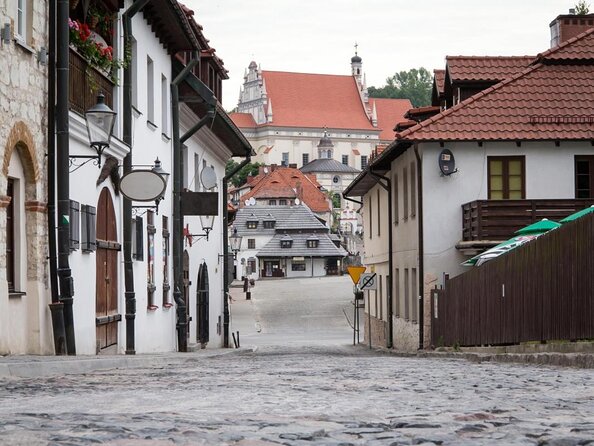
As you move along, you also get medieval urban texture. You will see the medieval city walls and you can catch viewpoints related to the old neighborhood structure. Even if you do not enter any specific site, the street-level context helps you place the story into physical space.
One small consideration: this is an outdoor cart experience. Entrance tickets are not included, so you should expect to see many landmarks from the street or at viewpoints rather than to walk inside every building.
Christian Landmarks Along the Route, Without the Noise
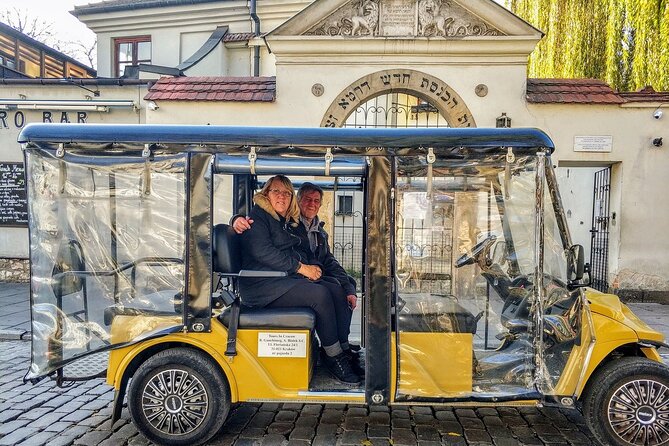
Krakow’s old center and the Kazimierz district connect in a way that feels natural once you are moving through the streets. The tour includes passing medieval churches such as Corpus Christi and Saints Catherine and Margaret. You do not lose the main thread because the focus stays on the neighborhood’s overlap of communities and time periods.
This matters for two reasons. First, it prevents the tour from feeling like a single-issue route. Second, it keeps the neighborhood real. Krakow is not a set of separate history folders; it is one place with many layers coexisting in the same streets.
If you like tours that show how different communities shared space and shaped architecture, you will likely appreciate this mix. If you are only looking for WWII memorials, you might find some earlier cultural stops feel slower. But the payoff is that the wartime sections later land harder, because you already understand what was there before.
Further Jewish history and heritage itineraries:
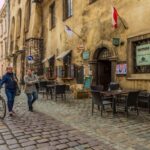
Krakow’s Old Tram Depot and the City’s Living Timeline
One stop that I think works well for “getting your bearings” is Krakow’s oldest tram depot. It is not just trivia. It’s a reminder that the city keeps moving forward, even in neighborhoods with difficult history. When you see places of transport and infrastructure alongside medieval walls, you get a better sense of how people live with the past right now.
You also pass a former prison and transit camp related to the German Gestapo police. That is a heavy note, and the value here is that it is placed in the middle of a broader walk through the district, not thrown at you in isolation. Seeing how everyday routes and older infrastructure overlap with wartime institutions helps you understand how occupation reshaped the city.
WWII Stops That Stick: Ghetto Heroes’ Square and the 70 Chairs
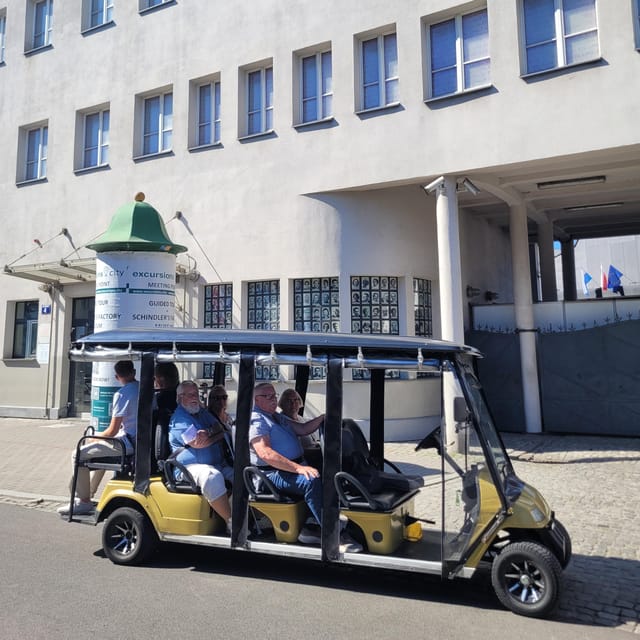
This is the part most people remember, and with good reason. You visit Ghetto Heroes’ Square, where there is a monument made of 70 chairs. The structure is stark, and it gives the story a physical shape you can grasp quickly. Even on a short tour, a site like this tends to do the job of focusing attention.
After this, you learn about Tadeusz Pankiewicz, the owner of the Eagle Pharmacy. That detail adds a human thread, not only a “system” story. You come away with a clearer sense that resistance and help took place through specific people and specific locations, not just general ideas.
When you are on a cart, you are not spending hours lingering. But the stop format still gives you a chance to look and take in the atmosphere, and there is built-in time for photos. You should plan to step off and stand still for a minute if the site feels emotional, because those pauses are part of why this tour works.
If you prefer very quiet, museum-like pacing, you might want to pair this tour with a longer self-guided visit afterward. But for a 1 hour experience, the memorial focus is strong.
Driving the Former Ghetto Streets and Seeing the Tombstone-Shaped Wall
One of the most striking technical details on this route is the original section of wall carved in the shape of Jewish tombstones. You do not just hear the story. You see an artifact of how memory was physically built into the neighborhood’s remaining elements.
Driving through the streets of the former ghetto area helps you imagine the geometry of daily movement, even if you cannot reconstruct every detail at street level. The cart’s route is useful here: it keeps you moving without forcing you to sprint between stops, which is important when you are trying to process difficult history.
This is also where the guide assistance matters. The tour format includes a driver who can answer questions. On a short ride, that is important because you can clarify what you just saw instead of leaving with vague impressions.
Audio Guide in Your Language, Plus Real-Time Help
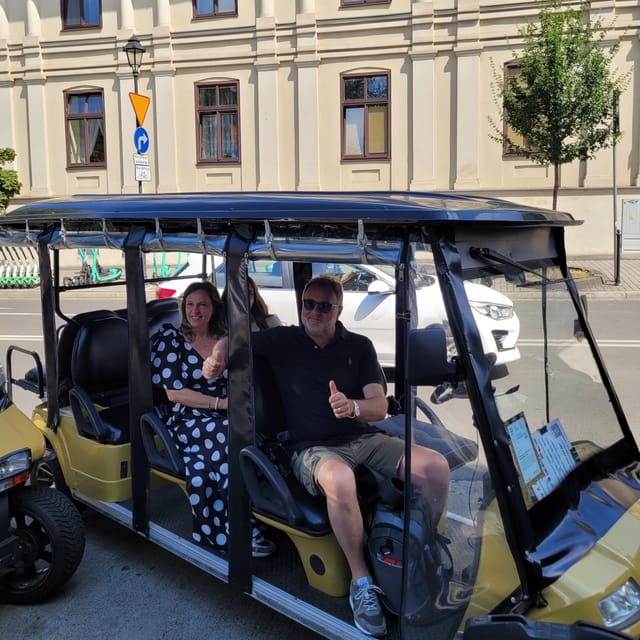
The tour’s audio guide is multilingual, with options including Arabic, Czech, Danish, Dutch, English, Finnish, French, German, Hungarian, Italian, Norwegian, Polish, Portuguese, Russian, Slovak, Spanish, Swedish, Ukrainian, and Hebrew. That breadth is a real value. Krakow attracts visitors from all over, and having an audio guide that matches your language helps you follow the story without relying on guesswork.
There is also a live tour guide listed for English and Polish. That matters if you want more back-and-forth. In practice, the driver and guide can help with questions during stops, which is useful when you want to understand what you are looking at.
One possible drawback I’d flag based on the overall experience style: some visitors prefer more fully explained stops rather than audio-led narration. If you are the type who needs extra context to feel satisfied, bring questions for the driver. Even a quick question like what to focus on at the next stop can turn the ride into a clearer story.
Price, Timing, and What You Get for $22
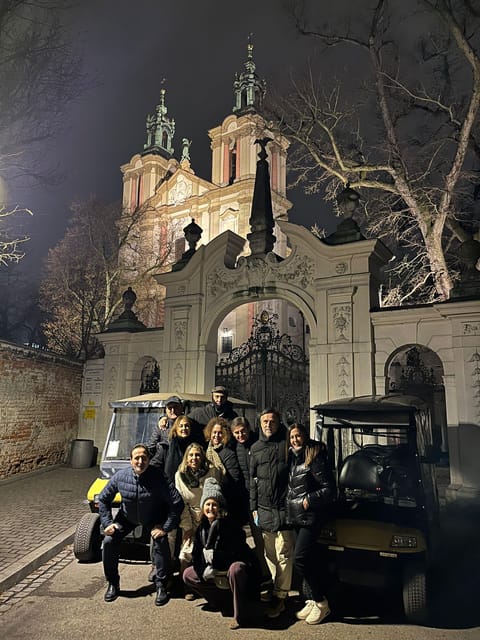
At $22 per person for about 1 hour, the value is mainly in the transportation and guided context. You are paying for an electric, eco-friendly cart, multilingual audio, and the comfort upgrades like heating, air conditioning, and rain curtains. That is not a small thing in Krakow, where weather can change fast.
Also, entrances are not included, so do not treat this as a ticketed “inside every site” experience. Think of it as an efficient, guided orientation that connects medieval Kazimierz landmarks with WWII-era sites you can then explore further on your own if you want.
The short duration can be perfect if you are on a tight schedule. It can also be limiting if your goal is deep study. If you only have a day or you want an easy way to cover key themes without committing half your day, this price point makes sense.
You will also appreciate the setup for real travelers. Space for a stroller or wheelchair, wheelchair accessibility, and a pet-friendly option make it feel flexible. That helps families and anyone with mobility limits who still wants meaningful history.
Who This Tour Suits Best
I think this tour fits best if you fall into one of these groups:
- You want a respectful WWII and Jewish Quarter overview but only have about an hour to spare.
- You care about comfort and weather protection, and you do not want to base your day on how your feet feel.
- You prefer audio guidance in your language, with staff available to answer questions.
- You are traveling with family members or need an easier way to cover neighborhoods efficiently.
- You want a route that includes both medieval Kazimierz references and WWII memorial stops, so the story has more depth than a single timeline.
If you want to go inside buildings, see the interiors of synagogues or churches, or spend long periods at each site, you will likely want to add time afterward. This tour is designed for clarity and coverage, not for long stays.
Should You Book This Electric Golf Cart Jewish Quarter and Ghetto Tour?
Book it if you want an efficient way to connect medieval Kazimierz with WWII-era locations in a comfortable, weather-friendly cart. The memorial focus at Ghetto Heroes’ Square, the account tied to Tadeusz Pankiewicz and the Eagle Pharmacy, and the stop for the tombstone-shaped wall are the kinds of moments that can make history feel concrete.
Skip it, or at least plan extra time, if your ideal tour is slow, detailed, and ticket-heavy. Because entrances are not included and the total time is about 1 hour, you should treat this as a guided orientation plus a few key stops, then follow up on whatever site you want to spend more time with.
If you are choosing between this and a longer walking-focused plan, I’d lean toward this cart tour when comfort, timing, and multilingual clarity matter most.
FAQ
How long is the Krakow Jewish Quarter and Ghetto tour?
It lasts 1 hour.
What language options are available for the audio guide?
The audio guide is available in Arabic, Czech, Danish, Dutch, English, Finnish, French, German, Hungarian, Italian, Norwegian, Polish, Portuguese, Russian, Slovak, Spanish, Swedish, Ukrainian, and Hebrew.
Is there a live guide on the tour?
Yes, a live tour guide is listed for English and Polish.
Is the cart heated and covered?
Yes. The vehicles have a roof and rain curtains, and they also include a heating system for winter.
Are entrance tickets included?
No. Entrance tickets are not included.
Is the tour wheelchair accessible?
Yes, the tour is wheelchair accessible, and there is space for a stroller or wheelchair.
What is included in the tour price?
The tour includes eco friendly golf carts, a helpful driver, comfortable seats, the multilingual audio guide, air conditioning, heating, rain curtains, a sun roof, and time to take pictures. Pets are also allowed. Food and drinks are not included.
Melex Loops
- Krakow: Electric Car Sightseeing Tour
★ 4.4 · 450 reviews - Krakow: Jewish Quarter and Ghetto Electric Golf Cart Tour
★ 4.6 · 348 reviews - Krakow: City Sightseeing Tour Eco Electric Buggy Golf Cart
★ 4.5 · 311 reviews - Krakow Grand City Tour by golf cart – All 3 districts
★ 5.0 · 311 reviews
Freshly posted from Krakow
- Krakow: Zakopane and Thermal Springs Tour with Hotel Pickup★ 5.0 · 1 review
- Krakow: Audio-Guided City Experience by Golf Cart★ 5.0 · 1 review
- Half-day In the footsteps of John Paul II Tour from Krakow★ 5.0 · 1 review
- Krakow: Wawel & Salt Mine Experience with Lunch★ 5.0 · 1 review
- Tour to Wadowice: Hometown of Pope Saint John Paul II★ 5.0 · 1 review
- Krakow: Outdoor Paintball with Hotel Transfers★ 5.0 · 1 review
- Krakow: Nowa Huta Communist District Walking Tour★ 5.0 · 1 review
Jewish History & Heritage Tours, compared.
Bike Tour of Old Town, Jewish Quarter and the Ghetto
Read our review →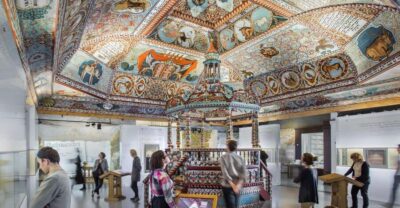
POLIN Museum of the History of Polish Jews Ticket
Read our review →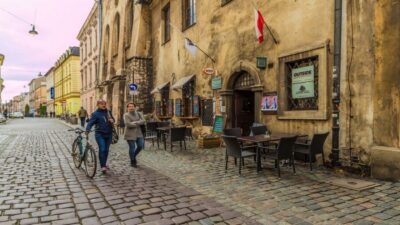
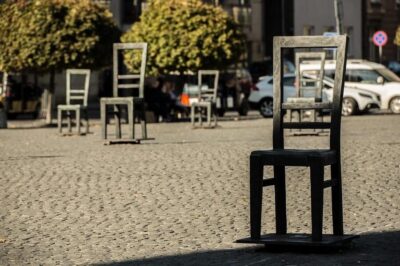
Kazimierz, Schindler’s Factory & Ghetto Guided Tour
Read our review →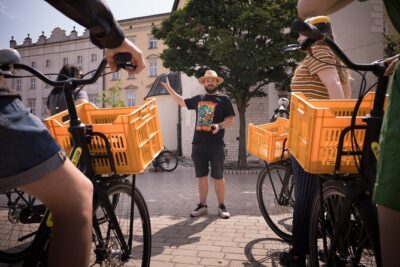
Full Bike Tour – the Old Town, Jewish Qtr & the Ghetto NEW BIKES
Read our review →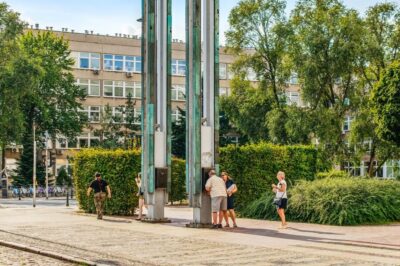
Warsaw Ghetto Private Walking Tour with Hotel Pickup
Read our review →Browse the lists this tour appears in