
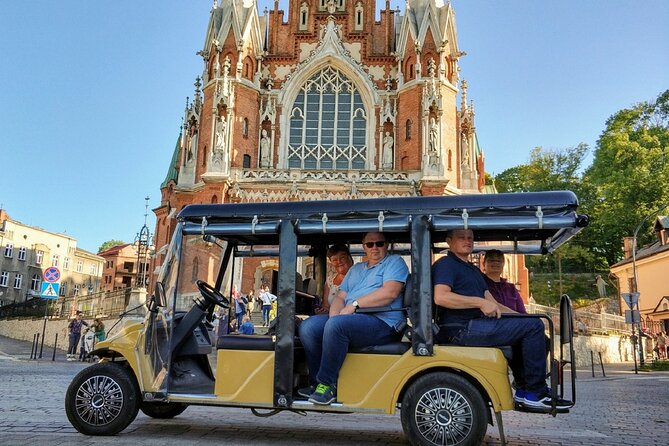
Reviewed · JEWISH HISTORY & HERITAGE TOURS
Krakow: Jewish Quarter and Ghetto Sightseeing Golf Cart Tour
Two Krakow stories in one 90 minute ride. I love the heated electric golf cart for an easy pace, and the audio commentary that turns the streets into lessons, from Kazimierz to Podgórze. One caution, the activity lists it as wheelchair accessible, yet it also says it is not suitable for wheelchair users, so if mobility access is a must, confirm first.
This tour guides you past more than 20 important sites, including synagogues and historic cemeteries, while you learn how Jewish daily life functioned before WWII and what happened afterward. You’ll also see the former ghetto location, including Ghetto Heroes Square and a chair memorial, plus fragments of the ghetto wall and Under the Eagle Pharmacy.
The upside is comfort and focus. The cart keeps you moving, and you skip long walks and the worst crowd crush. The tradeoff is you are on a set route with scheduled timing, and late arrivals cannot join once the group departs.
In This Review
- Key things I’d watch for
- Meeting at Parking Kiss and Ride, then settling into the cart
- Kazimierz Jewish Quarter: synagogues, cemeteries, and everyday life before WWII
- Christian Kazimierz: coexistence you can still sense in the streets
- Rolling across the Vistula to Podgórze, the shift gets real
- Ghetto wall fragments and Ghetto Heroes Square with the chair memorial
- Under the Eagle Pharmacy: the kind of detail that sticks
- What you actually get in 90 minutes, and why that pacing helps
- Price and value: is $34 a smart spend?
- The kind of guide support you may notice on the ride
- Who should book this Krakow Jewish Quarter and ghetto cart tour
- Quick practical tips before you go
- Should you book? My honest call
- FAQ
- How long is the Krakow Jewish Quarter and Ghetto golf cart tour?
- What is the meeting point for the tour?
- What is included in the price?
- Is there a live guide included?
- Are entrance tickets included?
- What languages are available for the audio guide?
- What should I bring?
- Is the tour wheelchair accessible?
Key things I’d watch for
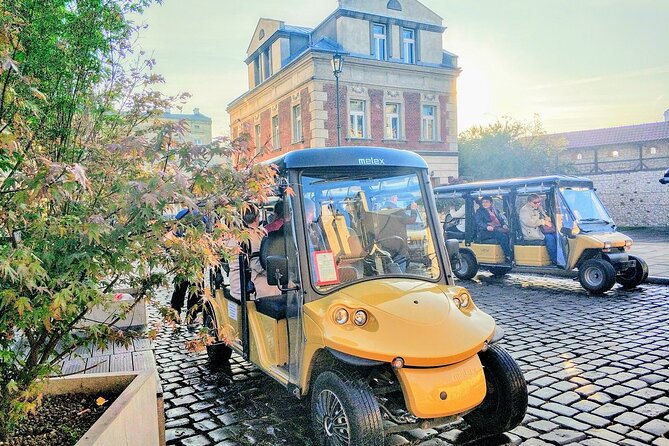
- Heated, eco-friendly cart keeps things comfortable in any weather
- Audio guide in your language handles most of the talking, with helpful guide additions
- Kazimierz to Podgórze in one loop gives a clear before-and-after WWII contrast
- Ghetto Heroes Square and wall fragments offer powerful place-based context
- 90 minutes is just long enough to learn a lot without feeling rushed
Meeting at Parking Kiss and Ride, then settling into the cart
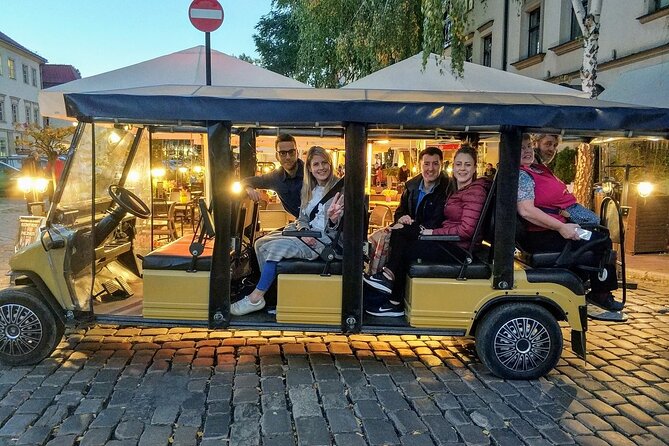
The tour starts at Parking Kiss&Ry d, 2 Mikołaja Zyblikiewicza street, in front of the Zabka store. Look for a golf cart labeled excursions.city. Arrive about 10 minutes early, because once the group leaves, latecomers cannot join and tickets are non-refundable.
You’ll board a heated electric cart with an audio guide system set for your chosen language. The driver is there to get you safely around, and you’re not relying on your legs for the whole experience. For me, this matters because Krakow’s older streets can be uneven and tight, and a cart lets you focus on what you’re learning instead of “where do I step next?”
A small practical note: flash photography is not allowed, so plan on using standard camera settings without the big pop of flash. Also, smoking is not permitted. If you want photos, bring a charged phone or camera and keep your head up when the audio cues you to a key stop.
More Golf Cart Tours in Krakow
- Krakow: City Sightseeing Tour by Electric Golf Cart
★ 4.5 · 3,264 reviews - Krakow: City Sightseeing Tour Eco Electric Buggy Golf Cart
★ 4.7 · 3,143 reviews - Krakow: Extended City Sightseeing Tour – Eco Buggy Golf Cart
★ 4.7 · 794 reviews
Kazimierz Jewish Quarter: synagogues, cemeteries, and everyday life before WWII
Most people come to Krakow for the big sights. This tour is built for something more specific, the Jewish quarters that shaped the city for centuries. You start in Kazimierz, once an independent town and for a long time a central hub of Jewish religious, social, and cultural life.
From the cart, you’ll pass scenes that feel ordinary now but were once tied to community routines: streets where daily life played out, and areas associated with major Jewish institutions. The audio commentary ties it together, so you’re not just seeing buildings, you’re hearing how people lived around them.
The tour route includes stops linked to synagogues and historic cemeteries, and you’ll likely notice how the city layout supports memory. Even when a building exterior is modest, the context you get through the audio makes it feel anchored to real lives, not just dates.
Christian Kazimierz: coexistence you can still sense in the streets
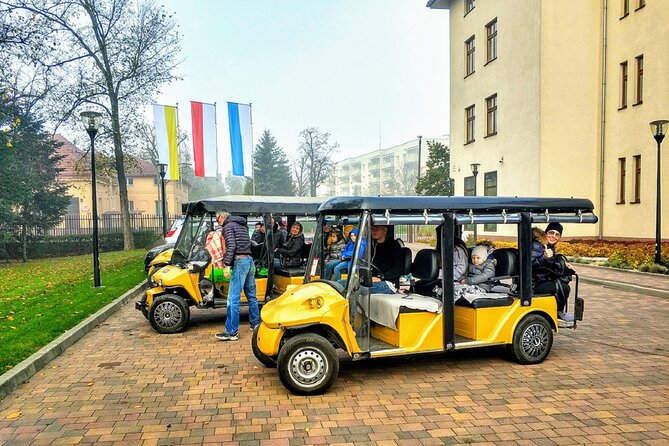
After covering core Jewish landmarks, the cart continues through Christian Kazimierz, an area shaped by centuries of coexistence. Today, it’s known for cafés, galleries, and a lively local atmosphere, but the point here is that the neighborhood did not flip from one world to another overnight.
This section works best if you listen for the contrast in the narration: Jewish communal life, then the overlapping urban rhythm of the same streets under different communities and eras. If you’re the kind of visitor who likes to understand how neighborhoods actually function, this part helps you see Kazimierz as a living place, not only a museum.
Also, you’ll get a comfortable rhythm for photo stops. The cart keeps moving, but the guide audio and windows of time make it easier to capture street scenes without trying to sprint for the best angle.
Rolling across the Vistula to Podgórze, the shift gets real
Crossing the river is more than a change of scenery. It sets up the emotional turn from older Jewish community life to the destruction that came with WWII. The cart crosses into Podgórze, where the Nazi German ghetto was located.
This is where onboard audio does its heavy lifting. The commentary gives you the framework for what you’re seeing on the ground, so places don’t feel random. You’re not memorizing names for the sake of it, you’re building a mental map of persecution, forced movement, and survival.
Because the cart is heated and you’re not walking long distances, you can keep listening even if you’re mentally absorbing heavy material. That matters, because it’s a lot to take in, and comfort helps you stay present instead of checking the time every minute.
Further Jewish history and heritage itineraries:
Ghetto wall fragments and Ghetto Heroes Square with the chair memorial
In Podgórze, you’ll see preserved fragments tied to the ghetto experience, including remnants of the ghetto wall. Seeing physical traces like this is one of the best ways to understand how “the ghetto” wasn’t just an idea. It was streets, boundaries, and daily reality.
Then the tour brings you to Ghetto Heroes Square, including its symbolic chair memorial. The chair detail is easy to miss if you’re only scanning for big monuments, but it lands because it represents absence and remembrance in a way that’s direct rather than abstract.
This section is also one reason the cart format works. You can look at the memorial, then turn your attention back to the street alignment and nearby cues the audio references, which helps you understand how the neighborhood functioned before and during the ghetto period.
If you want to be respectful with your photography, remember flash photography is not allowed. Take a breath, frame your shot, then move on with the group so the moment does not turn into a photo scramble.
Under the Eagle Pharmacy: the kind of detail that sticks
The tour also passes Under the Eagle Pharmacy, another powerful wartime-era reminder. What makes stops like this effective is not just the building itself, it’s the way the audio connects it to the people who survived, hid, or endured around those spaces.
Sometimes, on heritage tours, you leave with a list of locations and nothing else. Here, the structure helps you remember the bigger story of the two districts, Kazimierz on one side of WWII, Podgórze on the other. Under the Eagle Pharmacy fits into that timeline with a clarity that’s hard to get if you’re trying to stitch together details on your own.
If you’re someone who likes meaningful specifics, this is the part where you’ll probably say, I get why that mattered. It’s the kind of place-based detail that makes the history feel closer to the street.
What you actually get in 90 minutes, and why that pacing helps
A 90 minute tour can be tricky, either it feels rushed or it feels too light. Here, the length is a practical sweet spot because you cover a lot of ground without having to walk from stop to stop across older streets.
You’ll pass more than 20 notable sites, including synagogues and historic cemeteries. That sounds like a lot because it is, but the audio guide keeps things organized. You’re not doing a mental sprint trying to read plaques as you go. Instead, you listen and look, then move on before the next key location.
Comfort also changes how you experience sensitive content. When the cart is heated, you can concentrate on the audio and the street scenes rather than shivering through the lesson. Even if it’s a mild day, the ride makes it easier to stay attentive.
If you prefer tours where you stop and get out to wander, this one may feel more like learning from the move. Still, for most visitors, that’s exactly the point, you get a broad, coherent overview without turning the trip into a marathon.
Price and value: is $34 a smart spend?
At $34 per person for 90 minutes, you’re paying for transportation, a heated electric vehicle, and a multi-language audio guide system. The main value is efficiency: you’re covering two major districts with a lot of key points in one outing.
Is it worth it compared with doing it solo? If you want to piece together Kazimierz and Podgórze yourself, you can. But you’ll spend more time navigating, and you’ll likely miss the “why this matters” connections that the audio narration makes for you. The cart also reduces walking fatigue, which can help when you want to still enjoy the rest of Krakow afterward.
Also, you’re getting a driver and professional operation, and you can choose the audio language in advance. That language choice is not a small perk. It changes comprehension, especially with complex WWII topics.
Finally, the booking options are travel-friendly, with reserve now and pay later offered. If your schedule might shift, that flexibility is part of the value.
The kind of guide support you may notice on the ride
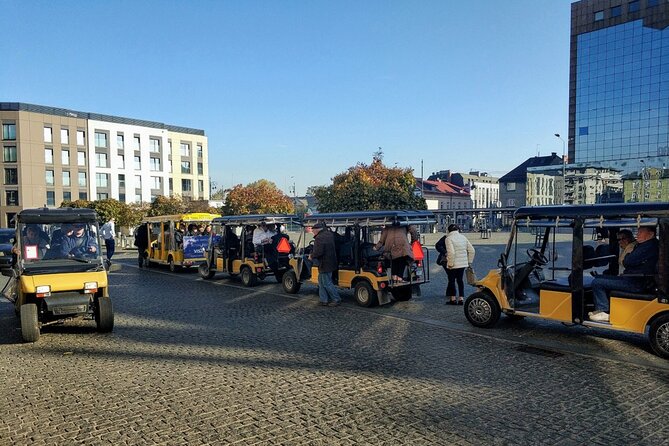
The heart of the tour is the onboard audio guide, but the tone can be helped by the person running the cart. In the feedback I’ve seen, guides such as Olivia and Jacob get called out for being pleasant and adding helpful context beyond the audio.
What that means for you: if you have questions, you’re more likely to get a human answer rather than a strict, mute-quiet experience. It also helps the tour feel less robotic. You still get the structured audio, but with a touch of real-person warmth.
Who should book this Krakow Jewish Quarter and ghetto cart tour
This fits you well if you want a guided overview of Kazimierz Jewish Quarter and Podgórze without a long day of walking. It’s also a good match if you like learning in your chosen language and you prefer hearing history tied to places as you see them.
It may not be your best choice if you have mobility limitations that make the tour hard, because it is listed as not suitable for wheelchair users and people with mobility impairments. Even though it says wheelchair accessible elsewhere, that mismatch is important enough to check directly before you commit.
It’s also not recommended for young kids, with the tour marked as not suitable for children under 10. And if you’re the type who needs constant stops to wander on your own, you might prefer a walking tour instead.
Quick practical tips before you go
A few small things make the experience smoother. Bring comfortable shoes, and if you want to follow local tradition or the tour guidance, bring a head covering or kippah. Have your camera ready, but remember flash photography is not allowed. Bring water, because even a cart ride can leave you mentally focused and talking less about your physical needs.
One more thing: show up early. The tour is time-based, and once the cart departs, you cannot jump on mid-route.
Should you book? My honest call
Book this tour if you want a comfort-first, place-based introduction to Krakow’s Jewish Quarter and the former WWII ghetto sites. The format is especially strong for visitors who want structure, a lot of sites in a short window, and audio narration that gives you context you might miss on your own.
Skip or at least confirm access details if you rely on a wheelchair or if mobility needs are strict. Also think twice if you want long on-foot exploration, because this tour is designed around learning while riding, not wandering independently.
If your goal is to understand what made Kazimierz culturally central for centuries, and then to face what happened in Podgórze with clarity, this is a good, efficient way to do it.
FAQ
How long is the Krakow Jewish Quarter and Ghetto golf cart tour?
The tour duration is 90 minutes.
What is the meeting point for the tour?
Meet at Parking Kiss&Ry d, 2 Mikołaja Zyblikiewicza street, in front of the Zabka store. Look for a golf cart labeled excursions.city.
What is included in the price?
The tour includes the electric golf cart ride through Kazimierz Jewish Quarter and Podgórze, an audio guide in your selected language, a heated environmentally friendly vehicle, and a professional experienced driver.
Is there a live guide included?
No live guide is included. You’ll have an audio guide.
Are entrance tickets included?
No, entrance tickets are not included.
What languages are available for the audio guide?
Audio guides are available in many languages, including English, German, French, Spanish, Italian, Polish, Hebrew, Russian, Japanese, Korean, Swedish, Turkish, and more.
What should I bring?
Bring comfortable shoes, a head covering or kippah, a camera, and water.
Is the tour wheelchair accessible?
The activity notes wheelchair accessibility, but it also lists the tour as not suitable for wheelchair users and people with mobility impairments. If this applies to you, confirm with the operator before booking.
Melex Loops
- Krakow: Electric Car Sightseeing Tour
★ 4.4 · 450 reviews - Krakow: Jewish Quarter and Ghetto Electric Golf Cart Tour
★ 4.6 · 348 reviews - Krakow: City Sightseeing Tour Eco Electric Buggy Golf Cart
★ 4.5 · 311 reviews - Krakow Grand City Tour by golf cart – All 3 districts
★ 5.0 · 311 reviews
Freshly posted from Krakow
- Krakow: Audio-Guided City Experience by Golf Cart★ 5.0 · 1 review
- Krakow: Zakopane and Thermal Springs Tour with Hotel Pickup★ 5.0 · 1 review
- Half-day In the footsteps of John Paul II Tour from Krakow★ 5.0 · 1 review
- Tour to Wadowice: Hometown of Pope Saint John Paul II★ 5.0 · 1 review
- Krakow: Wawel & Salt Mine Experience with Lunch★ 5.0 · 1 review
- Krakow: Nowa Huta Communist District Walking Tour★ 5.0 · 1 review
- Krakow: Outdoor Paintball with Hotel Transfers★ 5.0 · 1 review
Jewish History & Heritage Tours, compared.
Bike Tour of Old Town, Jewish Quarter and the Ghetto
Read our review →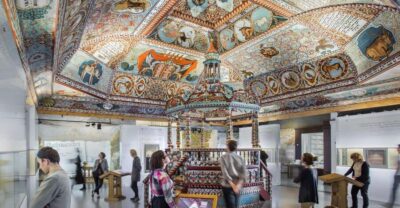
POLIN Museum of the History of Polish Jews Ticket
Read our review →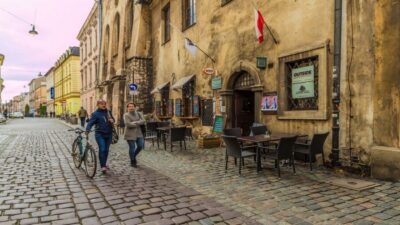
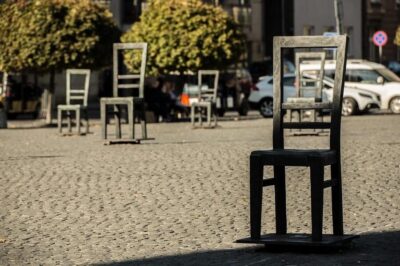
Kazimierz, Schindler’s Factory & Ghetto Guided Tour
Read our review →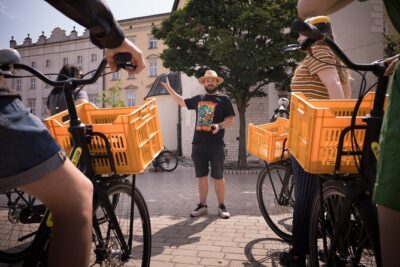
Full Bike Tour – the Old Town, Jewish Qtr & the Ghetto NEW BIKES
Read our review →
Warsaw Ghetto Private Walking Tour with Hotel Pickup
Read our review →Browse the lists this tour appears in