
Reviewed · JEWISH HISTORY & HERITAGE TOURS
Krakow: Jewish Quarter and Ghetto Sightseeing Golf Cart Tour
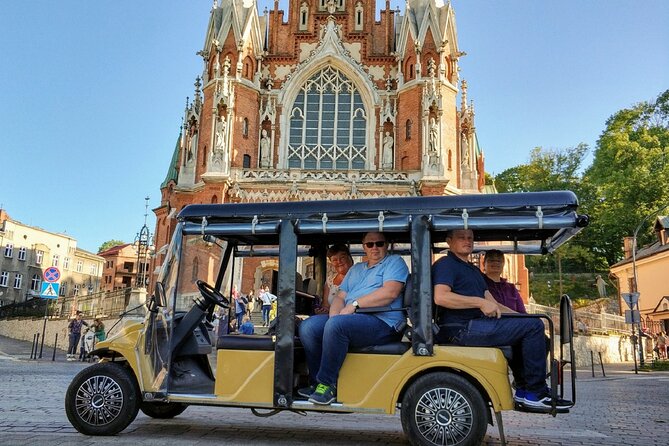
Krakow tells its Jewish story fast. On a heated electric golf cart, you glide through Kazimierz and into Podgórze while an audio guide keeps the context coming, so you are not just looking at buildings, you are understanding why they matter.
Two things I really like: the audio commentary is built for comprehension, and the route hits major memory points without wasting your time walking uphill or zigzagging across a big area. One consideration: the ride is efficient, so stops can feel brief if you want a long linger for photos or personal reading, and audio timing can vary a bit depending on the language track.
In This Review
- Key Highlights Worth Your Time
- Why This Krakow Golf Cart Route Works in 90 Minutes
- Entering Kazimierz: The Jewish Quarter’s Everyday Life, Not Just Landmarks
- The Christian Side of Kazimierz, and Why It’s Included
- Crossing to Podgórze: The Former Ghetto Area Comes Into Focus
- Ghetto Heroes Square and the Chair Memorial
- Under the Eagle Pharmacy: A Strong, Human Detail
- The Audio Guide and the English Speaking Driver: How You’ll Get the Story
- Price and Value: Is $34 Worth It?
- Comfort, Group Size, and What to Pack Light
- Who This Tour Suits Best (And Who Might Skip)
- Should You Book This Krakow Jewish Quarter and Ghetto Cart Tour?
- FAQ
- Where does the tour meet?
- How long is the tour?
- What is included in the price?
- Do I need a live guide?
- What languages is the audio guide available in?
- Is the tour wheelchair accessible?
- Are large bags allowed?
- Can I cancel for a refund?
- Is food included?
Key Highlights Worth Your Time
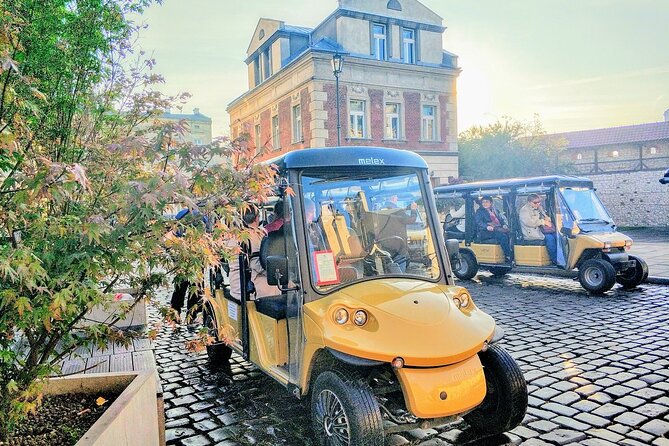
- Heated, smooth golf cart travel that makes the route easy in any weather
- Kazimierz history in plain language, including everyday life beyond big landmarks
- Podgórze ghetto reminders, including visible remnants of the wall and major memorial points
- Ghetto Heroes Square with its distinctive chair memorial stop
- Under the Eagle Pharmacy as a strong, grounded wartime-history stop
- Audio guide in lots of languages, plus an English speaking driver for group questions
Why This Krakow Golf Cart Route Works in 90 Minutes
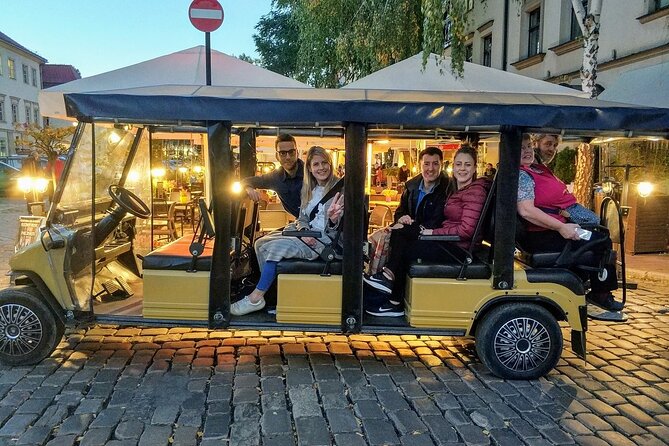
If you only have limited time in Krakow, this kind of tour is a smart way to get your bearings. Kazimierz and Podgórze sit side by side along the Vistula River, but they feel like different worlds. A golf cart lets you cover that distance and still hear the story as you go, instead of piecing it together later from notes on your phone.
I also like that it is not just a sightseeing loop. The commentary is designed to explain what you are seeing, from the idea of Kazimierz as a long-running Jewish community center to what Podgórze became during World War II. That shift matters. You do not just get dates and names, you get the sense of how everyday life changed, then shattered, then left traces you can still find today.
And yes, the ride is comfortable. All vehicles are heated, which matters in Krakow when the weather decides to be unpredictable. The cart moves you through narrow streets and key crossings, without you needing to stop and start every few minutes.
More Golf Cart Tours in Krakow
- Krakow: City Sightseeing Tour by Electric Golf Cart
★ 4.5 · 3,264 reviews - Krakow: City Sightseeing Tour Eco Electric Buggy Golf Cart
★ 4.7 · 3,143 reviews - Krakow: Extended City Sightseeing Tour – Eco Buggy Golf Cart
★ 4.7 · 794 reviews
Entering Kazimierz: The Jewish Quarter’s Everyday Life, Not Just Landmarks
Kazimierz is where the tour begins in spirit, even if you are rolling along the streets in a cart. This district was historically connected to a Jewish community that functioned with a lot of its own identity for centuries. You will pass places tied to Jewish heritage and see the kinds of streets where daily life happened, not only the “top attractions” that people photograph and move on from.
What I like here is that the commentary helps you read the neighborhood. It is easy to arrive in Kazimierz and think, I see old streets, that is cool. The audio helps you go one step further: why these blocks mattered, how the community shaped Krakow, and how that history is still present in the area’s character.
You will also notice that Kazimierz is not frozen in time. Part of the district is known today for cafés and galleries, and the tour uses that reality to explain a long history of coexistence between communities. That matters because the story is not only about separation. You get both the deep historical roots and the way the neighborhood lives now.
The Christian Side of Kazimierz, and Why It’s Included
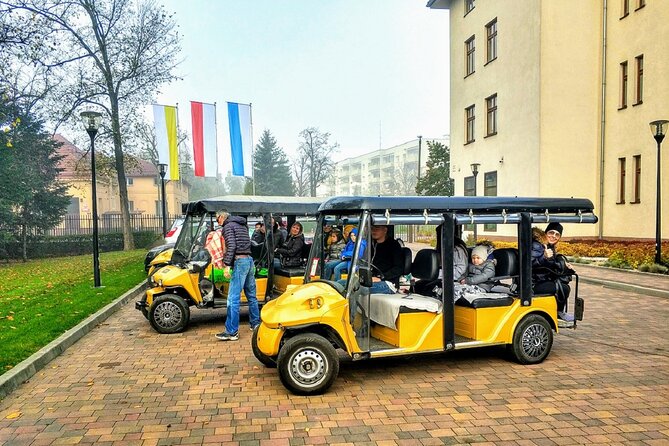
The route also moves through the Christian part of Kazimierz, where the vibe is more modern day, with cafés and galleries drawing people in. I appreciate that this is part of the tour, because it prevents the common mistake of treating history like a museum display.
Here is the practical value: when you see how people live now in the same general zones where earlier communities also lived, the history stops feeling abstract. It becomes more human. You also get a smoother mental transition from the broader Kazimierz context to the harder Podgórze chapter.
The cart helps too. Without the physical effort of walking every block, you can focus on listening and looking. That might sound small, but in a 90-minute tour, it is a big deal.
Crossing to Podgórze: The Former Ghetto Area Comes Into Focus
After you leave Kazimierz, the tour crosses the Vistula River and enters Podgórze. This is where the tone changes. The commentary is aimed at wartime history and remembrance, and the sights start to feel heavier.
This portion is built around real, concrete remnants and memorial points. You will see the kind of structures and locations that anchor the story. And you will get a fragment of the ghetto wall, which is the sort of thing that hits differently when you are standing near it rather than reading about it later.
If you care about historical accuracy, you will probably appreciate this segment. Instead of a vague “this is where it happened,” you are guided from site to site with an explanation of what you are seeing and why it is remembered.
Further Jewish history and heritage itineraries:
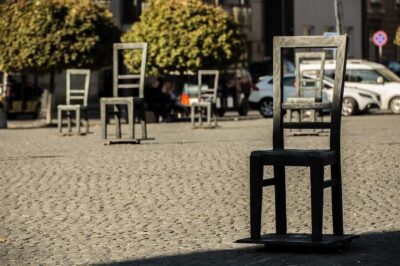
Ghetto Heroes Square and the Chair Memorial
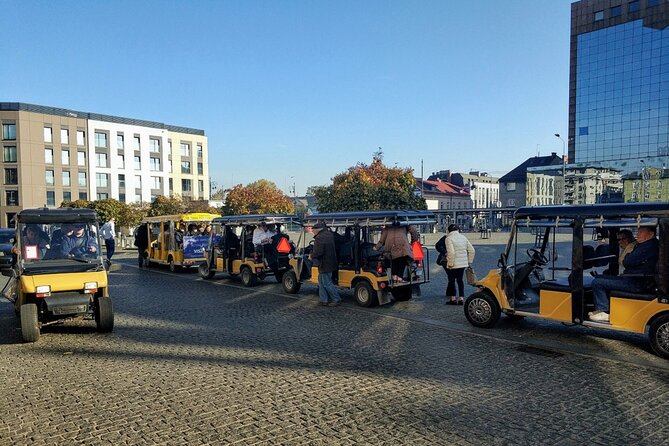
Ghetto Heroes Square is one of the tour’s standout memory stops. The distinctive chair memorial helps make the area recognizable, and the commentary gives you context for why that memorial exists and what it represents.
I like that this is not the only “big moment” on the Podgórze side. It is paired with other points that help the story stay connected. A memorial stop works best when it is not isolated. When you see it as one part of a longer chain of sites, the meaning lands more clearly.
This is also a stop where your brain will likely slow down. Even if the cart is moving you along efficiently, the memorial itself creates a pause. You will want a few minutes here to take photos if that is your thing, but also just to stand and let it sink in.
Under the Eagle Pharmacy: A Strong, Human Detail
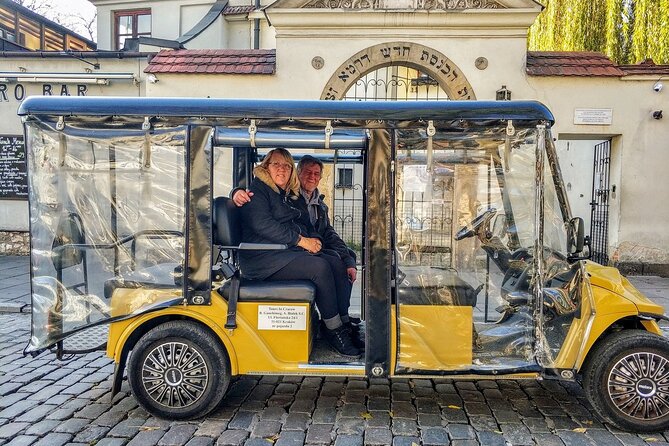
Another key stop on the Podgórze side is the historic Under the Eagle Pharmacy. The name alone sounds specific, and that specificity is the point. Wartime history can become a blur of broad terms, but a place like this puts you back in the reality of a neighborhood under impossible conditions.
This is the kind of location that gives your understanding weight. It is not only a “marker,” it is a named building tied to the wartime past. The audio helps connect it to the surrounding story, so you can place it mentally inside the broader experience of the ghetto area.
If you like history that feels grounded, this stop will work well for you. If you prefer only the most famous names and skip the rest, you still may find this one useful because it is specific, and specificity is how memory stays real.
The Audio Guide and the English Speaking Driver: How You’ll Get the Story
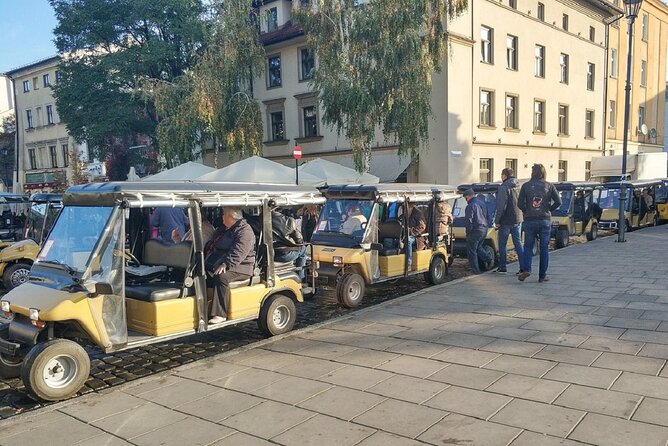
The big engine of this tour is the audio guide. It is included, and it runs through many languages. You can choose English or another language track if you prefer. The vehicles are heated and equipped with the audio guide, so you do not need to hunt for headphones or make it complicated.
There is also an English speaking driver, which helps with the human side. When you have a quick question about what a place was or what you should notice next, a driver is useful in a way that pure self-guided audio is not.
One practical tip I recommend: before you start, glance at the audio language and make sure you are set. The route is about 90 minutes, and if you have the wrong track, the whole experience can feel off. Also, because the audio is timed to the stops, you might notice that one language track can run slightly differently than another. That can matter if you are listening closely in real time.
Based on at least one highlighted experience I read, guides can be very personable. If you happen to get a guide named Nathalie, for example, that is the kind of departure where the explanation can feel especially friendly and clear.
Price and Value: Is $34 Worth It?
At $34 per person for a 90-minute group tour, you are paying for three things: coverage, comfort, and interpretation. You are not just buying transport. You are buying a guided narrative that connects Kazimierz to Podgórze with the help of audio.
Value usually depends on your travel style. If you like walking everywhere and reading at length, you might decide this is optional. But if you want to see key sites without losing time to logistics or fatigue, the cart is doing real work for you. It also helps you get more meaning out of the ghetto history area, because you are not piecing it together one sign at a time.
I’d call this a good value especially if:
- You are short on time and want an organized overview
- You prefer listening while you move
- You want to cover both Kazimierz and Podgórze efficiently
Comfort, Group Size, and What to Pack Light
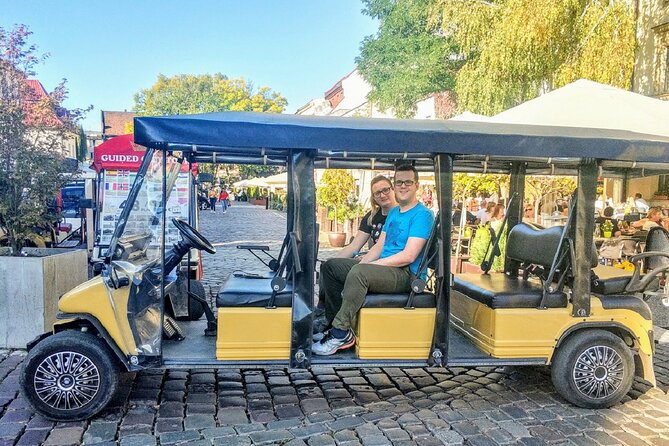
This is a group tour, and it runs on a timed schedule. That is part of the value, but it does mean you should travel light. Luggage or large bags are not allowed, and your best move is to bring only what you can comfortably hold for 90 minutes.
Also, plan to arrive about 10 minutes early. Once the group departs, latecomers cannot join and tickets are not refundable. It sounds strict, but it is typical for multi-stop city tours that have to keep moving.
If you are sensitive to crowds, pick quieter times when you can. Still, compared with some walking tours that require constant regrouping, a golf cart setup can feel easier because you stay together and the ride keeps things moving.
Who This Tour Suits Best (And Who Might Skip)
This tour is ideal for first-time visitors who want a focused orientation to Jewish Krakow. It is also a strong pick if you want a respectful overview of Kazimierz and Podgórze without needing to plan a self-guided route.
I especially think it suits people who:
- Want a historical framework, not just sightseeing
- Appreciate audio guidance in real time
- Prefer a comfortable format over lots of walking
It might not be your best match if you want extended time in each stop for slow reading or long photo sessions. Since the tour is efficient, you may wish for more pause time at certain points. That is a fair trade-off for the coverage you get in 90 minutes.
Should You Book This Krakow Jewish Quarter and Ghetto Cart Tour?
Yes, I think you should book it if your goal is clarity and coverage. This is one of those experiences where the format helps you understand what you are looking at. The heated cart keeps things comfortable, and the audio guide pushes you beyond surface-level sightseeing by explaining Kazimierz and Podgórze as connected chapters.
Skip it only if you are committed to a slower, independent walking day and you already have strong background notes. Otherwise, this tour is a solid way to see the important sites, get key context, and leave with a better mental map of Krakow’s Jewish history.
FAQ
Where does the tour meet?
The meeting point is Parking Kiss&Ride in front of the Zabka store. Look for a golf cart labeled excursions.city.
How long is the tour?
The duration is 90 minutes.
What is included in the price?
You get the golf cart ride around the Kazimierz and Ghetto areas, an audio guide, and an English speaking driver.
Do I need a live guide?
No live guide is listed as included. The tour includes an audio guide.
What languages is the audio guide available in?
The audio guide is available in many languages, including English and also options such as French, German, Spanish, Russian, Hebrew, and others.
Is the tour wheelchair accessible?
Yes, the tour is wheelchair accessible.
Are large bags allowed?
No. Luggage or large bags are not allowed.
Can I cancel for a refund?
Yes. You can cancel up to 24 hours in advance for a full refund.
Is food included?
No. Food and drink are not included.
Melex Loops
- Krakow: Electric Car Sightseeing Tour
★ 4.4 · 450 reviews - Krakow: Jewish Quarter and Ghetto Electric Golf Cart Tour
★ 4.6 · 348 reviews - Krakow: City Sightseeing Tour Eco Electric Buggy Golf Cart
★ 4.5 · 311 reviews - Krakow Grand City Tour by golf cart – All 3 districts
★ 5.0 · 311 reviews
Freshly posted from Krakow
- ZALIPIE – painted village, unique small group tour from Krakow★ 5.0 · 7 reviews
- Magic of Krakow: Guided Tour of the Old Town★ 5.0 · 7 reviews
- “John Paul II Route” PRIVATE -Wadowice, Kalwaria Z.-Łagiewniki★ 5.0 · 7 reviews
- Krakow: Craft Beer Tasting City Walking Tour★ 4.4 · 7 reviews
- Krakow : Zakopane Tour + Thermal Pools with Hotel Pickup★ 4.8 · 7 reviews
- Krakow in One Day: City Tour by Electric Car★ 5.0 · 7 reviews
- Cracow: Wawel Castle and Cathedral Guided Tour★ 5.0 · 7 reviews
Jewish History & Heritage Tours, compared.
Bike Tour of Old Town, Jewish Quarter and the Ghetto
Read our review →
POLIN Museum of the History of Polish Jews Ticket
Read our review →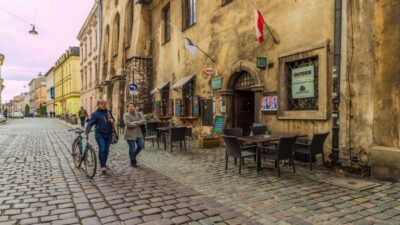
Kazimierz, Schindler’s Factory & Ghetto Guided Tour
Read our review →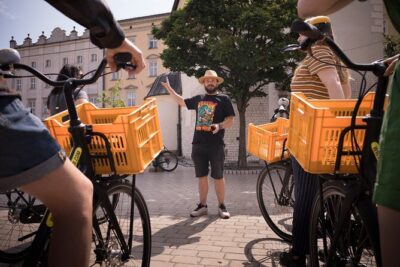
Full Bike Tour – the Old Town, Jewish Qtr & the Ghetto NEW BIKES
Read our review →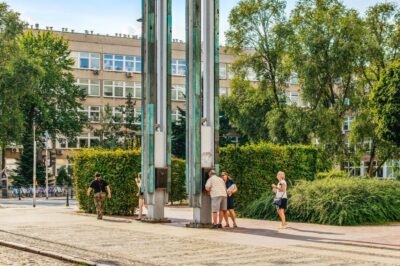
Warsaw Ghetto Private Walking Tour with Hotel Pickup
Read our review →Browse the lists this tour appears in