
Reviewed · JEWISH HISTORY & HERITAGE TOURS
Krakow: Jewish Ghetto Guided Walking Tour
Four streets, one hard story to understand. This Krakow Jewish Ghetto guided walking tour in Podgórze connects the places you can still see today with the fear, courage, and survival behind them. You start near Schindler’s Factory, then move through the district where Nazi occupation reshaped work, daily life, and movement.
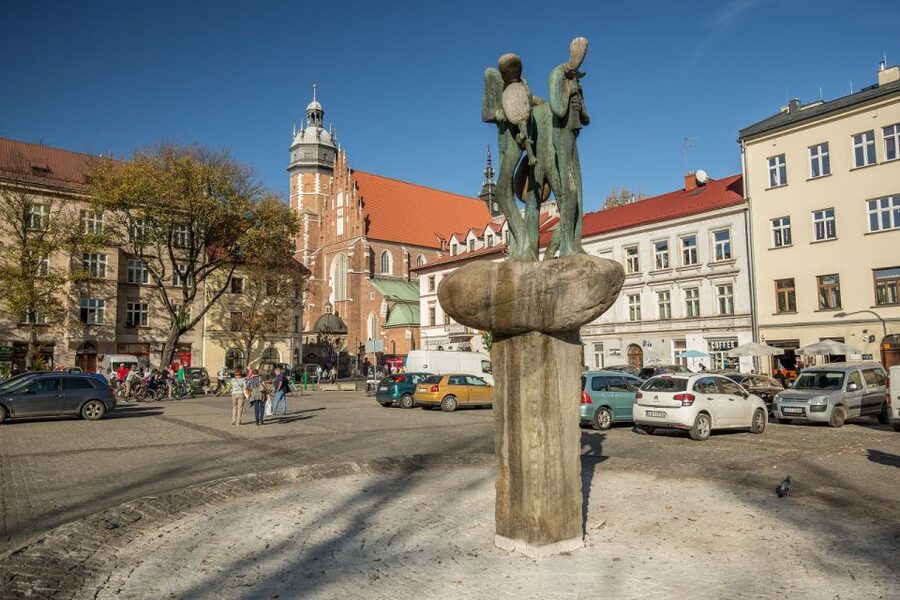
I love two things most: you get clear, guided context (not just facts on a plaque), and you also visit sites that feel physical, like the remnants of the Ghetto Wall and the memorial at Ghetto Heroes Square. A good guide makes a big difference here, and it shows, with guides described as friendly and easy to follow, and others praised for well-structured explanations.
One possible drawback: it’s only 1 hour, so you should expect a focused walk, not long lingering. If you’re hoping to sit and read every sign slowly, you may want to follow up on your own afterward, because the route moves.
In This Review
- Key things you will get
- Krakow Jewish Ghetto tour in Podgórze: what you’re really paying for
- Meeting at Schindler’s Factory: the best way to start this story
- Schindler’s Factory area to the ghetto boundary: learning to see the walls
- Ghetto Heroes Square: where remembrance meets the geography of deportation
- Under the Eagle Pharmacy and Tadeusz Pankiewicz: resistance told through help
- Preserved wartime streets and buildings: making daily life feel visible
- Price and value: why $15 for an expert guide can be a smart buy
- Languages and guide style: how to choose comfort for your day
- How weather and footwear affect this short walk
- Who this tour fits best
- Should you book this Krakow Jewish Ghetto guided walking tour?
- FAQ
- How long is the Krakow Jewish Ghetto guided walking tour?
- How much does the tour cost?
- Where do I meet the guide?
- What languages are available for the live guide?
- What are the main stops on the walk?
- Are entrance fees included?
- Does the tour run in bad weather?
- Do I need to arrive early?
- Is free cancellation available?
- Can I reserve now and pay later?
Key things you will get
- Schindler’s Factory area as the starting context for Nazi occupation and forced labor
- Remnants of the Ghetto Wall you can see and measure against the modern street grid
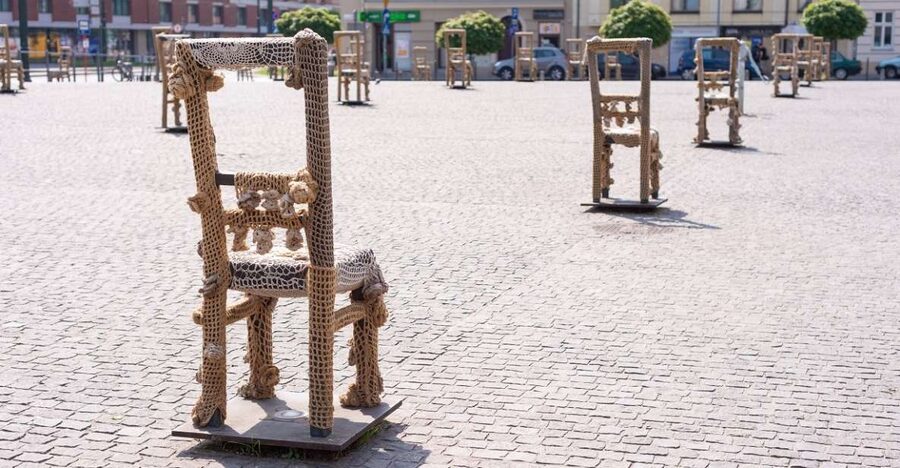
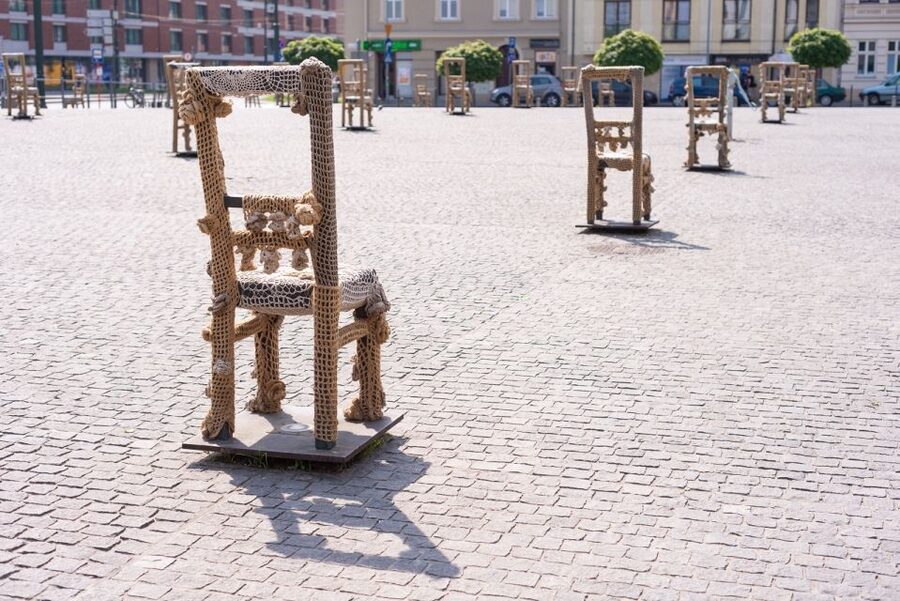
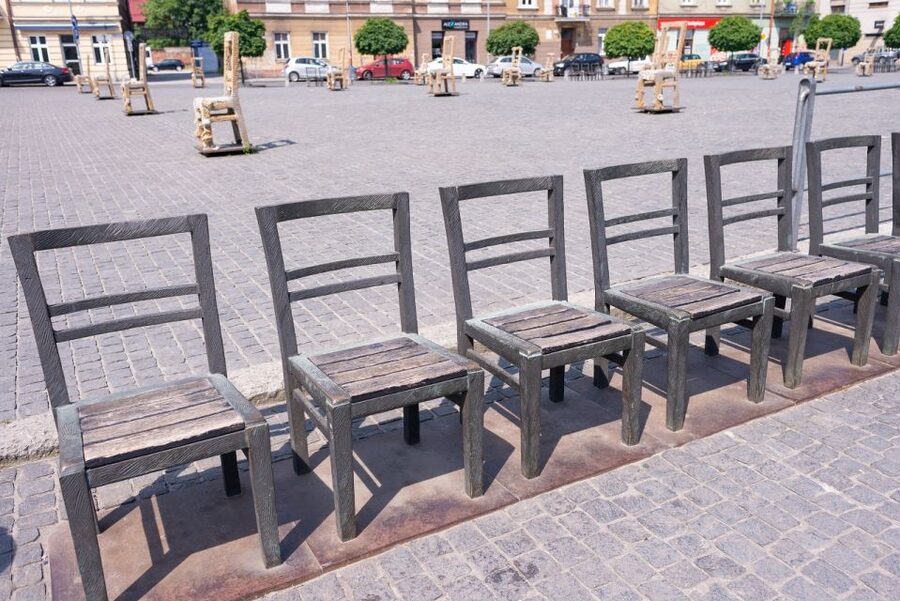
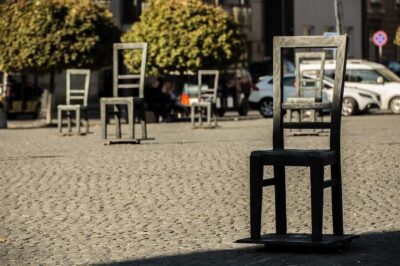
- Ghetto Heroes Square and its memorial using empty metal chairs to symbolize lost lives
- Under the Eagle Pharmacy and the story of assistance and resistance tied to Tadeusz Pankiewicz
- Preserved wartime streets and buildings that help you picture daily life under occupation
- Licensed, multi-language guidance with English, French, Spanish, German, and Italian options
Krakow Jewish Ghetto tour in Podgórze: what you’re really paying for
This is a 1-hour walking tour focused on turning locations into understanding. At this price point, the value comes from expert narration, because the real work here is helping you connect geography to what people faced during WWII in Krakow’s former Jewish Ghetto in Podgórze.
You’ll walk at a steady pace through a set route, with the guide providing context as you go. The goal is not to collect trivia, it’s to help you see how ordinary streets became part of a system built on confinement, exploitation, and terror.
And because this is a walking format, you’ll pick up details you might miss when you visit alone. Even if you already know the headline facts, a guide can help you notice what matters: boundaries, centers of deportation, and places where choices were made under extreme pressure.
More Walking Tours in Krakow
- Old Town Krakow & Wawel Castle Walking Tour
★ 5.0 · 1,508 reviews - Creepy Krakow: 2-Hour City Walking Tour
★ 4.7 · 1,131 reviews - Krakow: The Old Town Walking Tour
★ 4.8 · 794 reviews
Meeting at Schindler’s Factory: the best way to start this story
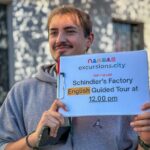
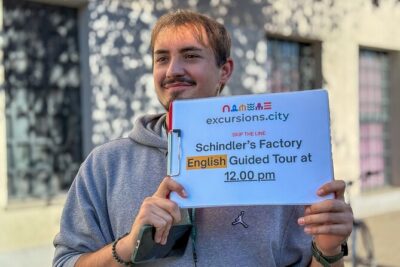
The tour begins in the area of Schindler’s Factory, and your meeting point is outside the main entrance of the Schindler’s Factory Museum, on the right-hand side. The guide will hold an excursions.city sign.
Starting here is smart because it frames the rest of the walk. You’ll get historical context about Nazi occupation and how this part of Krakow changed during WWII, including how industry, forced labor, and everyday life became tangled together.
If you arrive early, you’ll have time to get oriented before the group departs. You’re asked to be there 10 minutes before start time, because once the group leaves, latecomers can’t join and tickets won’t be refunded.
Schindler’s Factory area to the ghetto boundary: learning to see the walls
After the initial context, the route moves toward the remains of the Ghetto Wall. These fragments are small compared to what a full wall would look like, but that is part of the effect. You can see how the boundary was physically built into the city, not imagined on a map.
Here’s why that stop matters: a wall is not just stone or metal. It’s a system of forced separation, control of movement, and constant pressure on survival. Standing near the surviving sections helps you grasp the scale of restriction, and it also makes it easier to understand why certain locations became so important during deportations and resistance efforts.
You’ll also get help comparing then and now. The district’s streets and buildings are still there, so the guide’s narration can make modern Krakow feel less abstract. The message is clear: ordinary streets became scenes of fear and courage, and those lines mattered every day.
Ghetto Heroes Square: where remembrance meets the geography of deportation
Next comes Ghetto Heroes Square, described as the former center of the Krakow Ghetto and connected with deportations. Today, the square has a strong memorial function, and it’s not subtle about what it represents.
The standout detail here is the memorial with empty metal chairs. The empty seating turns absence into something you can see immediately. It’s the kind of symbol that makes you slow down, even if the tour keeps walking.
This stop also helps you understand the idea of a “center.” When a ghetto has a central point connected with deportations, it shapes daily life. People don’t just experience confinement on the edges, they are pulled into systems that decide who moves next, who disappears, and who survives long enough to tell the story.
The guide’s job is to keep this grounded. You’ll learn how places like this square functioned, then you’ll walk past preserved features that help you build a mental picture of what it would have felt like.
Further Jewish history and heritage itineraries:

Under the Eagle Pharmacy and Tadeusz Pankiewicz: resistance told through help
Across the square, you’ll see Under the Eagle Pharmacy, a historic building tied to the story of Tadeusz Pankiewicz and his staff. This is one of the most human parts of the tour, because it focuses on how people used their position and resources to protect others.
The tour highlights both assistance and resistance connected to this location. You’ll hear how crucial aid could be arranged and how moral choice could become life-saving even when the risks were massive.
What I like about the way this stop is presented is that it doesn’t treat history like a distant battlefield. It centers on actions that happened inside a real workplace, in a real city block, with real people making choices under occupation.
If you get a guide who speaks clearly and at an easy pace, this part lands even better. Some guides have been noted for being especially patient and responsive, with an emphasis on explanation that doesn’t rush you through the meaning.
Preserved wartime streets and buildings: making daily life feel visible
Between the major landmarks, you’ll also walk through preserved wartime streets and buildings. The tour keeps returning to the same idea: survival wasn’t only about dramatic events. It was also about navigating a daily system that controlled work, movement, and safety.
This is where the guided format pays off. Without narration, you might simply see “old buildings.” With the guide’s context, you start to interpret what you’re looking at: how a street could channel people to specific points, how neighborhoods changed function, and how the ghetto’s routine could feel like a trap tightening day by day.
The tour’s emphasis on context, perspective, and lived experience matters because it pushes you to imagine daily life, not just the big dates. That shift is often what makes a short tour feel more meaningful.
Price and value: why $15 for an expert guide can be a smart buy
At $15 per person for 1 hour, this isn’t a high-cost tour, but you’re not paying mainly for “more stops.” You’re paying for a licensed guide who can connect what you see to what it meant.
Here’s how to think about value: the cost is modest partly because it’s a walking tour with no stated entrance fees included. That makes it easy to fit into a day, and it also encourages you to learn something before you decide what else you want to visit.
For this kind of topic, the guide is the difference between a quick pass and real understanding. If the narration is clear and paced well, the hour can change how you read the city after you leave.
Languages and guide style: how to choose comfort for your day
The tour runs with live guides in English, German, Italian, French, and Spanish. That matters because this is a story where clarity is important. You want explanations that you can follow without mental translation work.
A couple of practical tips if you care about comfort: choose the language you’re most confident with, and consider arriving early so you can settle your hearing before the group starts. The tour is short, so if you miss a few minutes early on, you might feel it.
From what people have shared about their experiences, the best tours here are the ones where the guide speaks at a pace you can track and makes time for questions. So when you book, go with the language that keeps you fully engaged.
How weather and footwear affect this short walk
The tour takes place as planned in all weather conditions, but comfort can vary. That’s typical for outdoor walking tours, and it matters here because stone sidewalks and cold air can make an hour feel longer.
Bring suitable footwear and dress for the forecast. You’ll be walking through historic areas, and you’ll want your feet to be steady, especially if the weather turns or the pavement gets slick.
Who this tour fits best
This walking tour is a good fit if you want a focused way to understand Krakow’s WWII-era Jewish Ghetto in Podgórze. It works well for:
- First-timers to Krakow who want context without committing to a long day
- People who prefer a guided narrative over reading alone
- Travelers who like seeing specific sites, not just sweeping overviews
- Anyone interested in how resistance and assistance stories played out in real places
It may not be your best match if you need lots of free time to sit, read, and photograph slowly. Because it’s 1 hour, the pace is meant to keep the storyline moving from Schindler’s Factory context to wall remnants, then to memorial and assistance/resistance at Under the Eagle Pharmacy.
Should you book this Krakow Jewish Ghetto guided walking tour?
I’d book it if you value a guided route that helps you understand what you’re seeing, not just where the buildings are. The combination of Ghetto Wall remnants, Ghetto Heroes Square, and Under the Eagle Pharmacy gives you a tight sequence of place-based meaning, and the short duration makes it easy to add to a Krakow itinerary.
Avoid it only if you strongly prefer a self-guided pace with extended time at each stop. If you want to learn the story in a compact format, this tour offers a lot of payoff per hour.
FAQ
How long is the Krakow Jewish Ghetto guided walking tour?
The tour lasts 1 hour.
How much does the tour cost?
The price is $15 per person.
Where do I meet the guide?
Meet your guide in front of the main entrance to the Schindler’s Factory Museum, on the right-hand side. The guide will hold an excursions.city sign.
What languages are available for the live guide?
The tour is available in German, Italian, French, Spanish, and English.
What are the main stops on the walk?
You’ll see remnants of the Ghetto Wall, visit Ghetto Heroes Square with its memorial, and learn about resistance at the Under the Eagle Pharmacy, along with preserved wartime streets and buildings.
Are entrance fees included?
No. Entrance fees to attractions are not included.
Does the tour run in bad weather?
Yes. The tour takes place as planned in all weather conditions, but you are advised to dress for comfort and review the forecast.
Do I need to arrive early?
Yes. You’re asked to arrive 10 minutes before the tour begins. Latecomers will not be able to join once the group has departed, and tickets cannot be refunded.
Is free cancellation available?
Yes. You can cancel up to 24 hours in advance for a full refund.
Can I reserve now and pay later?
Yes. You can reserve your spot and pay nothing today.
Squares Crossed on Foot
- Kraków: Old Town & Wawel Castle Walking Tour in English
★ 4.8 · 532 reviews - Krakow: Evening Walking Tour with Spooky Stories
★ 4.7 · 500 reviews - Krakow Old Town Guided Walking Tour
★ 4.5 · 438 reviews - Krakow: Jewish Ghetto Walking Tour
★ 4.6 · 349 reviews
Freshly posted from Krakow
- ZALIPIE – painted village, unique small group tour from Krakow★ 5.0 · 7 reviews
- “John Paul II Route” PRIVATE -Wadowice, Kalwaria Z.-Łagiewniki★ 5.0 · 7 reviews
- Krakow: Craft Beer Tasting City Walking Tour★ 4.4 · 7 reviews
- Magic of Krakow: Guided Tour of the Old Town★ 5.0 · 7 reviews
- Krakow in One Day: City Tour by Electric Car★ 5.0 · 7 reviews
- Krakow : Zakopane Tour + Thermal Pools with Hotel Pickup★ 4.8 · 7 reviews
- Guided Tour of Plaszow Concentration Camp, Kraków★ 4.8 · 7 reviews
Jewish History & Heritage Tours, compared.
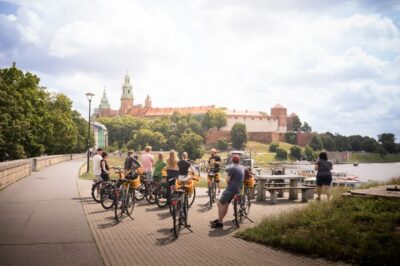
Bike Tour of Old Town, Jewish Quarter and the Ghetto
Read our review →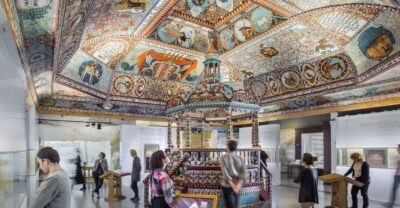
POLIN Museum of the History of Polish Jews Ticket
Read our review →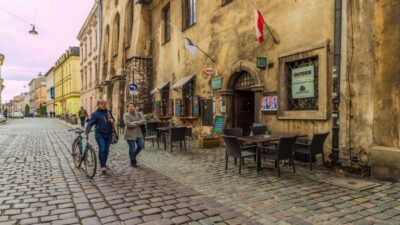
Kazimierz, Schindler’s Factory & Ghetto Guided Tour
Read our review →
Full Bike Tour – the Old Town, Jewish Qtr & the Ghetto NEW BIKES
Read our review →
Warsaw Ghetto Private Walking Tour with Hotel Pickup
Read our review →Browse the lists this tour appears in