
Reviewed · JEWISH HISTORY & HERITAGE TOURS
Jewish Warsaw
Warsaw’s Jewish story is walkable in three hours. This guided route takes you through pre-war Jewish Warsaw to the modern POLIN Museum area, using real streets and buildings you can still see today. I love how the walk stays focused, you get history without getting lost in long museum detours.
I also like the way the guide points out the details that make places feel real, including literary connections and neighborhood textures you would miss on your own. In one recent group, the guide Mary was praised for being both clear and genuinely informative. The one thing to plan for is extra entry costs, since some stops are not included.
Because the tour is only about 3 hours, you should expect short stops, not deep museum time. Nozyk Synagogue and the Jewish Cemetery require separate admission, and the Jewish Warsaw entrance fee is listed as an extra cost too. If you prefer slow, indoor time, you may want to add extra hours after you finish at POLIN.
In This Review
- Key highlights to know before you go
- A 3-hour Jewish Warsaw route that actually makes sense
- Starting at Grzybowski Square, the pre-war center
- Prozna Street’s preserved commercial street feel
- Nozyk Synagogue, the survivor still in operation
- Krochmalna and Chlodna, Singer’s Warsaw in real streets
- Keret House, the narrowest house in the world
- Jewish Cemetery, burials, traditions, and unexpected connections
- Pomnik Bohaterow Getta and the Willy Brandt knee moment
- Finishing at POLIN Museum, then go deeper with audio
- Price and what feels like good value
- What’s included, what’s not, and how to plan your day
- Pickup, meeting point, and how to avoid first-stop stress
- Who this tour fits best
- Should you book Jewish Warsaw with PolinTours?
- FAQ
- How long is the Jewish Warsaw tour?
- How much does the tour cost?
- What language is the tour offered in?
- Is hotel pickup available?
- What is included in the price?
- Are any entrance fees included?
- Where does the tour start and end?
- Is the tour private?
- What if the weather is bad?
Key highlights to know before you go
- A tight 3-hour route from Grzybowski Square to POLIN, designed for momentum
- Prozna Street in original form, a commercial street with stories attached
- Nozyk Synagogue still operating, one of the major WWII survivors on the list
- Literary Warsaw wayfinding with places associated with Isaac Bashevis Singer
- Jewish Cemetery context plus connections to Esperanto, Janusz Korczak, and Jewish theater
- Memorial stop at Pomnik Bohaterow Getta, including the spot linked with Willy Brandt
A 3-hour Jewish Warsaw route that actually makes sense
This tour is built for orientation, not for endless wandering. In about three hours, you go from the heart of pre-war Jewish Warsaw to the area anchored by the POLIN Museum of the History of Polish Jews. You’ll move street to street, so the story changes with the geography.
I like that the pace is brisk but not frantic. You get a sequence of meaningful stops, then you finish where you can keep going with an audio-guided visit at your own speed. For many people, that combination is ideal: guidance first, then independence.
It also helps that the tour is offered in English and is set up as a private tour, meaning it’s just your group. That usually makes it easier to ask questions and not feel rushed by strangers.
Further Jewish history and heritage itineraries:
- Warsaw: POLIN Museum of the History of Polish Jews Ticket
★ 4.7 · 1,142 reviews - Warsaw: Warsaw Ghetto Private Walking Tour with Hotel Pickup
★ 4.9 · 369 reviews - Warsaw: Jewish History Guided Walking Tour in English
★ 4.7 · 324 reviews
Starting at Grzybowski Square, the pre-war center
The tour begins at Grzybowski Square, at Pl. Grzybowski 2. This is positioned as a first impression of Jewish Warsaw before World War II, when it was home to Europe’s largest Jewish community. Starting here matters because it frames what you’re about to see.
You’ll get a guided introduction that helps you understand what makes Warsaw’s Jewish story specific to place, not just to people. The stop is brief, about 15 minutes, but that’s often enough to set the mental map so later streets feel connected instead of like random landmarks.
If you arrive early, I’d use a minute to orient yourself to the square and nearby street layout. When you start moving, having that mental picture helps you follow the guide’s narrative.
Prozna Street’s preserved commercial street feel
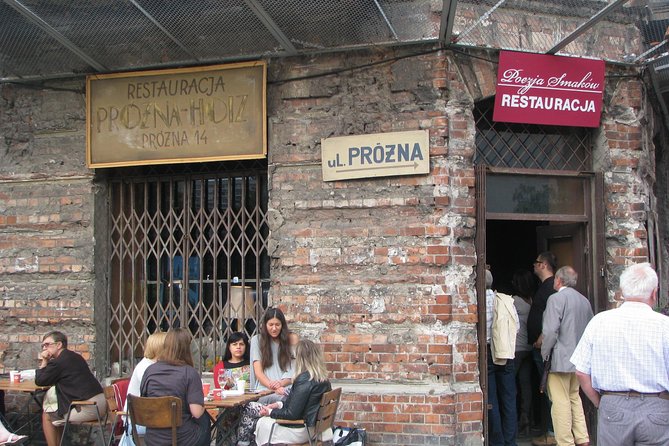
Next comes Prozna Street (Ulica Prozna), one of those Warsaw streets where the atmosphere is the point. The tour treats it as a Jewish commercial street with preserved character, so you’re not only learning names, you’re learning the kind of life that happened there.
This stop is short, around 10 minutes, but it’s designed to make the neighborhood feel inhabited, not just historical. You’ll hear about inhabitants, including big names and world-famous families associated with Warsaw. That mix of ordinary street life plus notable residents gives you a fuller picture.
Practical thought: if you’re taking photos, keep an eye on timing. Street stops are fast, and you’ll likely want the camera ready before the guide finishes the explanation.
Nozyk Synagogue, the survivor still in operation
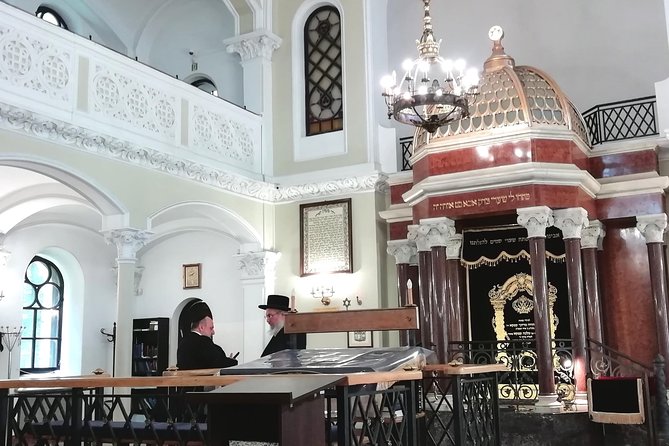
Nozyk Synagogue is the one major religious site on the route, and it’s handled with care. The tour visits the only synagogue that survived the Second World War and is still in operation. That single sentence tells you why this stop carries weight.
You’ll have about 15 minutes here, and the admission is listed as not included. So it’s smart to budget for the entrance fee if you plan to go inside and not just look from outside.
I like that this is not presented as a quick exterior photo stop. A functioning synagogue adds a different kind of reality to the story because it isn’t only a memorial building. Even if you’re not religious, it changes the tone of the tour.
Still tacked up around Warsaw

Krochmalna and Chlodna, Singer’s Warsaw in real streets
After the synagogue, the tour moves into the neighborhood fabric. You pass through areas so vivid they’re linked to the prose of Isaac Bashevis Singer, the Nobel Prize for Literature. You’ll hear about streets and places connected to his writing, and you’ll get a sense of how literature can preserve a city’s emotional geography.
Krochmalna is a quick pass, about 5 minutes, but it’s the kind of stop where the guide’s context makes a difference. You’re essentially learning how to look at an urban grid through a literary lens.
Then you go to Chlodna Street for about 10 minutes. Here you explore Warsaw backyards and the houses that are still in original condition. That backyard element is important because it reminds you that daily life happens off the main street too. You get a snapshot of residential rhythm rather than only public monuments.
If you like architecture and small-scale details, this is one of your favorite parts. If you do not, you’ll still benefit because the guide uses these spaces to explain how communities worked.
Keret House, the narrowest house in the world
Keret House is another short stop, around 10 minutes, but it’s memorable for one specific reason: it’s described as the narrowest house in the world. The tour uses the narrowness as a springboard to tell you more about its history.
I find these kinds of stops useful because they prevent the whole tour from feeling frozen in the past. You’re still in the conversation, just through a different kind of Warsaw story. It’s a good moment to reset after cemetery reflections and WWII memorial weight.
Don’t expect a long lecture here. Expect the guide to tie the quirky architecture to broader themes about how the city changed and adapted.
Jewish Cemetery, burials, traditions, and unexpected connections
The Jewish Cemetery stop is where the tour slows down emotionally. You spend about 40 minutes here, and it is listed as admission not included. Plan on paying if you want to fully take part, and dress appropriately for a cemetery visit.
This stop focuses on famous rabbis, zaddiks, and Jewish families, plus an explanation of Jewish burial traditions. The tour also brings in a few elements that make the cemetery feel like more than a list of names: Esperanto language history, Janusz Korczak’s orphanage, and the Jewish theater.
That combination is smart. It shows how culture, language, and community institutions all connect back to the same people and the same world. Even if your knowledge is basic, the guide gives you threads you can follow later when you read or visit memorial spaces again.
Because it’s a longer stop, you’ll want comfortable shoes. You’ll probably be moving slowly and pausing, so plan for that rather than thinking of it as a quick photo break.
Pomnik Bohaterow Getta and the Willy Brandt knee moment
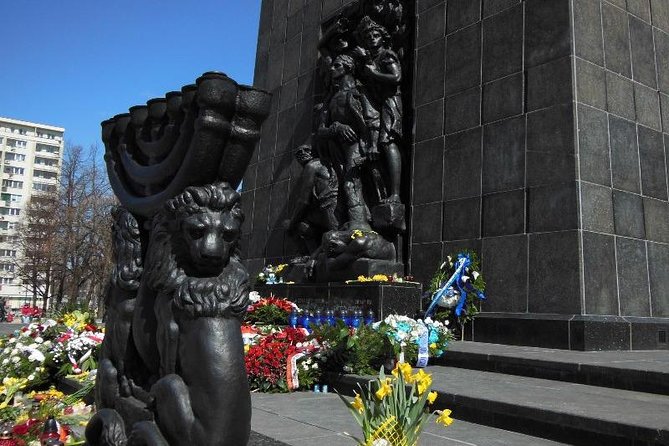
Next is Pomnik Bohaterow Getta, a memorial stop about 15 minutes. The tour includes the spot where Willy Brandt did his famous knee moment. That detail gives the memorial a human, widely recognized connection, not only a local one.
This isn’t just about the monument itself. It’s about what such monuments are for, remembrance in public space, and how Warsaw acknowledges the Jewish ghettos and their people. The guide’s explanation is meant to help you see the memorial as part of a longer chain of history, not as a stand-alone stop.
If you’re someone who prefers direct answers, you’ll likely appreciate this segment. It often feels more straightforward than some of the street-history stops because the subject is concentrated in one place.
Finishing at POLIN Museum, then go deeper with audio
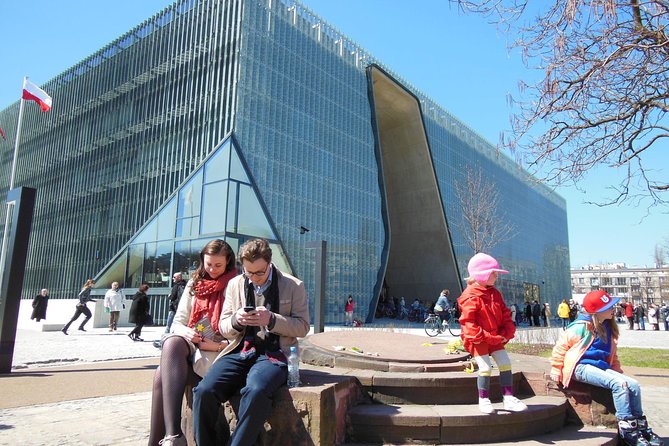
The tour ends at the POLIN Museum of the History of Polish Jews, after about 15 minutes of final guided focus on the museum’s building. You’ll hear about symbolism and architecture, then you can visit the museum with audio guides.
This ending structure is a real advantage. You get a guided primer, then you can choose what to spend time on. If you love exhibits, you can linger. If you want a quick pass to keep your energy for the rest of Warsaw, you can do that too.
Also, finishing at POLIN means your last impressions are in one coherent location. The tour takes you across the city, and then it lands you in a place built to interpret the whole story. Even if you don’t enter right away, it helps you know what you’re looking at.
Price and what feels like good value
The price is listed as $89.35 per person for about 3 hours. That’s not a budget number, but you are paying for a guided walkthrough with a specific route, plus pickup options and an air-conditioned vehicle. For many people, that combo is what makes it feel like value.
The big variable is entrance fees. Jewish Warsaw entrance is listed as €5.00 per person and is not included. Nozyk Synagogue and the Jewish Cemetery also list admission as not included. Those extras can change the final total, so I’d treat $89.35 as the base cost and plan for on-top entry where needed.
Even with that caveat, the route can still be a good deal if you’re the type who wants context. These are not only famous stops. The guide connects streets, neighborhoods, and cultural references so you understand why each place matters. That’s where the money tends to pay off.
What’s included, what’s not, and how to plan your day
Included: you get an air-conditioned vehicle and the tour is offered in English. Pickup is available, either at your hotel reception with the PolinTours sign or the car waiting in front of your hotel.
You’ll also get a mobile ticket. That’s handy in practice because you can show it on your phone without digging through paper. The tour is described as near public transportation too, which helps if your schedule changes.
Not included: lunch, and entrance fees. Nozyk Synagogue and the Jewish Cemetery have admission not included. The Jewish Warsaw entrance fee is listed as extra, and it’s worth bringing cash or a card ready for on-site payments if you can.
If you plan to use public transport for any reason, the tour notes recommend buying tickets in advance or taking small change. That’s a small thing, but it can save time when you’re moving between neighborhoods.
Pickup, meeting point, and how to avoid first-stop stress
Your start point is Grzybowski Square, Pl. Grzybowski 2, 00-824 Warszawa, Poland. The tour ends at POLIN Museum of the History of Polish Jews, Mordechaja Anielewicza 6, 00-157 Warszawa.
Pickup details are clear. If you have hotel pickup, the guide meets you at reception with the PolinTours sign or waits in the vehicle out front. If your hotel is far outside the city center, you’ll agree on a meeting point by email, with the guide waiting at the agreed location with the sign.
To make your morning or afternoon smoother, aim to be ready a few minutes early. These tours run on a tight route, so being ten minutes late can matter more than you’d think.
The tour is described as most travelers can participate, and it’s private for your group. That suggests a more controlled pace, but it still involves walking and moving between stops.
Who this tour fits best
This is a strong fit if you want a guided introduction to Jewish Warsaw without needing a full day. If you like street-level history, recognizable names, and place-based storytelling, you’ll probably enjoy how the tour uses multiple short stops to build a bigger picture.
It’s also a good choice if you value a guide who can tie different parts together. One recent review highlighted the guide’s competence and the fact that the group saw places of Jewish life they would not have found on their own.
If you only want museums, this may not satisfy your entire day. The museum is the ending point, and the time before that is mostly outdoor and walking-focused.
Should you book Jewish Warsaw with PolinTours?
Book it if you want an efficient, structured walk through Jewish Warsaw that ends with an easy next step at POLIN. The combination of street stops, a major surviving synagogue site, and the thoughtful cemetery segment makes the route feel intentional.
I’d hesitate only if you strongly prefer long indoor time from start to finish, or if you hate the idea of paying separate admissions at specific stops. In that case, you might still visit on your own, but you’ll lose the connective tissue that makes the streets and buildings feel linked.
FAQ
How long is the Jewish Warsaw tour?
The tour lasts about 3 hours.
How much does the tour cost?
The price is listed as $89.35 per person.
What language is the tour offered in?
The tour is offered in English.
Is hotel pickup available?
Yes. Hotel pickup is available, with the guide meeting you at reception with a PolinTours sign, or waiting in the vehicle in front of your hotel.
What is included in the price?
The included items are an air-conditioned vehicle, and the tour provides a mobile ticket.
Are any entrance fees included?
Nozyk Synagogue and the Jewish Cemetery admission are not included. The Jewish Warsaw entrance fee is also listed as not included (given as €5.00 per person).
Where does the tour start and end?
It starts at Grzybowski Square (Pl. Grzybowski 2) and ends at the POLIN Museum of the History of Polish Jews (Mordechaja Anielewicza 6).
Is the tour private?
Yes. It is private, with only your group participating.
What if the weather is bad?
The experience requires good weather. If it is canceled due to poor weather, you’ll be offered a different date or a full refund.
Freshly posted from Warsaw
- Warsaw Private Transfer from Warsaw Chopin Airport (WAW) to City centre★ 4.0 · 7 reviews
- Krakow Small Group Tour from Warsaw with Lunch, Schindler’s Factory included★ 5.0 · 7 reviews
- Wolfs Lair – Hitlers hideout★ 4.5 · 7 reviews
- 3-hour tour at Warsaw Uprising 1944 Museum /inc. Pick-up/★ 4.9 · 7 reviews
- Warsaw: Evening History and Pubs Tour by Retro Minibus★ 5.0 · 7 reviews
- Warsaw: Private Vodka Tasting Night with Snacks and Pickup★ 5.0 · 7 reviews
- Warsaw Old Town with Royal Castle + Royal Route: SMALL GROUP /inc. Pick-up/★ 5.0 · 7 reviews
Jewish History & Heritage Tours, compared.
Bike Tour of Old Town, Jewish Quarter and the Ghetto
Read our review →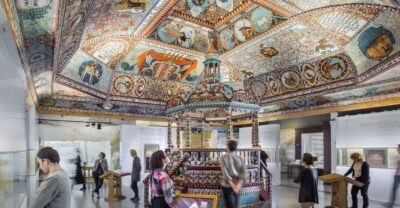
POLIN Museum of the History of Polish Jews Ticket
Read our review →
Kazimierz, Schindler’s Factory & Ghetto Guided Tour
Read our review →
Full Bike Tour – the Old Town, Jewish Qtr & the Ghetto NEW BIKES
Read our review →
Warsaw Ghetto Private Walking Tour with Hotel Pickup
Read our review →Browse the lists this tour appears in