
Reviewed · JEWISH HISTORY & HERITAGE TOURS
Jewish Legacy in Warsaw. Private Tour with the best local specialist.
Warsaw tells its Jewish story in layers. This private tour threads Nozyk Synagogue and the POLIN Museum into a clear, walkable route through the Warsaw ghetto’s final decades. I like how the pacing gives you enough time to understand what you are looking at, not just where it is.
You also get the human side of this topic through a local specialist approach, with pickup around Warsaw and a private group of up to 3. One possible drawback: some stops are intentionally short, including only about 50 minutes in POLIN, so if you want to linger on exhibits, you may feel time pressure.
In This Review
- Key points to know before you go
- How This Jewish Heritage Route Feels Different From a Usual Sightseeing Day
- Price and What You’re Really Buying With a Private Group
- The 9:00 am Pickup Setup, and Why Timing Matters Here
- Stop 1: Nozyk Synagogue, the Oldest Link You Can Still Walk Into
- What to watch for during the short stop
- Stop 2: POLIN Museum, Understanding the Story in 50 Minutes
- Stop 3: Fragment of the Ghetto Wall, What 20 Minutes Can Still Teach
- A practical way to get value from this short stop
- Stop 4: Umschlagplatz, the Cargo Railroad Terminal to Treblinka
- Stop 5: Memorial at Mila 18, the Bunker and the Uprising
- Pass By: Willy Brandt Monument, Apology and Reconciliation in Stone
- Stop 6: Monument to the Heroes of Warsaw, Memory in the Open
- Stop 7: Chlodna Street Footbridge, When Movement Meant Risk
- Stop 8: Praga Polnoc, Polański Film Streets and the Optional Villa
- Walking, Pacing, and How to Choose the Right Kind of Tour Day
- Service, Language, and How to Expect the Day to Run
- Value Check: Is This Worth $361.23 for Up to 3 People?
- Tips to Get the Most From Each Stop
- Should You Book This Jewish Legacy Tour in Warsaw?
- FAQ
- What time does the tour start?
- Do you offer pickup around Warsaw?
- How much does the tour cost?
- What language is the tour offered in?
- Is this a private tour?
- What are the main stops on the route?
- Is there an optional stop in Praga Polnoc?
- Is a mobile ticket used?
- Can I bring a service animal?
- Is free cancellation available?
Key points to know before you go
- Private, up to 3 people, so you can ask questions at each stop
- Pickup around Warsaw starts you off at 9:00 am without hunting for transit
- Nozyk Synagogue is treated as the surviving starting point, not a random landmark
- POLIN Museum includes a focused look at the museum’s interior and major ideas in about 50 minutes
- Umschlagplatz and Mila 18 anchor the route in the deportations and the uprising
- Chlodna Street and Praga Polnoc add a street-level sense of how the city changed, plus an optional villa visit tied to a book about the period
How This Jewish Heritage Route Feels Different From a Usual Sightseeing Day
This is one of those tours where the order matters. You start with a synagogue that still exists, then move into a museum that explains context, and only then do you step into the outdoor places where the ghetto life and destruction were concentrated.
I like that the route avoids a scattershot approach. You are guided from survival and memory into deportation logistics, resistance, and then into how Warsaw keeps marking these places in public space.
Further Jewish history and heritage itineraries:
- Warsaw: POLIN Museum of the History of Polish Jews Ticket
★ 4.7 · 1,142 reviews - Warsaw: Warsaw Ghetto Private Walking Tour with Hotel Pickup
★ 4.9 · 369 reviews - Warsaw: Jewish History Guided Walking Tour in English
★ 4.7 · 324 reviews
Price and What You’re Really Buying With a Private Group
At $361.23 per group (up to 3), the price reads like a small luxury. But what you are actually paying for is time efficiency plus control: fewer people, a dedicated specialist, and pickup so the day starts smoothly at 9:00 am.
Because it is private, you can pace your own questions. If you are the type who wants the story straight and dates explained, this format helps. If you are more contemplative and prefer pauses, you can ask for that too.
The tour runs in English and uses a mobile ticket, so it is low-fuss for planning. Service animals are allowed, and the sites are near public transportation, which matters if you decide to meet the guide elsewhere.
The 9:00 am Pickup Setup, and Why Timing Matters Here
Pickup is offered, and the tour operator picks up guests from around Warsaw. That is a big deal on a day like this, because you are moving between emotionally heavy places where it helps to stay on schedule.
The tour starts at 9:00 am, so plan to be reachable and ready to go. If you are using public transit, remember this day is built around short stop times, meaning late arrivals cut into the most important moments.
Stop 1: Nozyk Synagogue, the Oldest Link You Can Still Walk Into
The first major stop is Nozyk Synagogue on Twarda 6. You spend about 20 minutes here, and the focus is on why this building survived when so much else did not.
What stands out is the explanation tied to geography and function during the final chapter of the ghetto time. The Nazis did not destroy it, and the reason has to do with how the site was used. Even in a short visit, you get the idea that buildings can become witnesses, not just backdrops.
Still tacked up around Warsaw

What to watch for during the short stop
Nozyk is brief by design. Use the time to orient yourself: where you are in Warsaw, what survived, and how that changes the way you read the next stops.
Stop 2: POLIN Museum, Understanding the Story in 50 Minutes
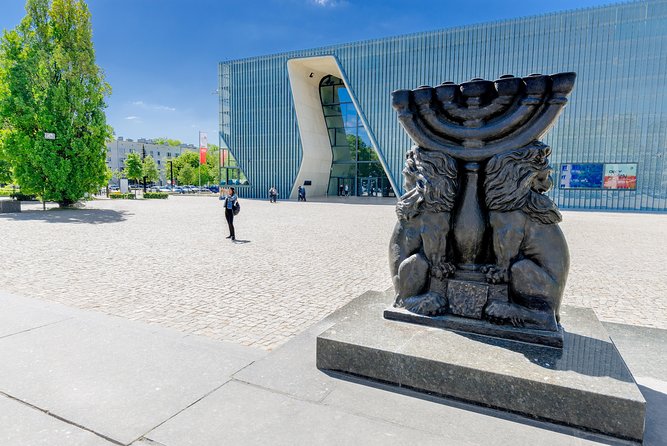
Next you head to POLIN Museum of the History of Polish Jews. This is the stop that gives the route its meaning, not just its locations. You get about 50 minutes, with time for a visit at the museum’s whereabouts and a quick look inside at interior design.
That “quick look” detail is important. Fifty minutes is not enough to see everything deeply, but it can be enough to learn the museum’s way of organizing the narrative, and to pick up the main threads that will make outdoor sites hit harder.
I like that the museum is treated as more than a building. It is positioned as one of the first places to present Jewish legacy in Poland in a wide and proper perspective, so it acts like your foundation before you move into the ghetto remains.
Stop 3: Fragment of the Ghetto Wall, What 20 Minutes Can Still Teach
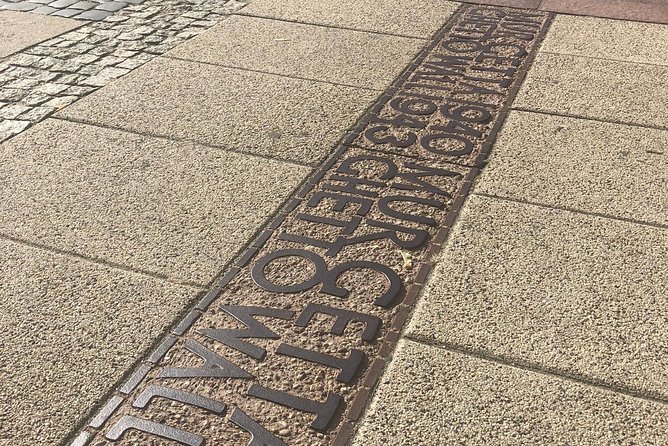
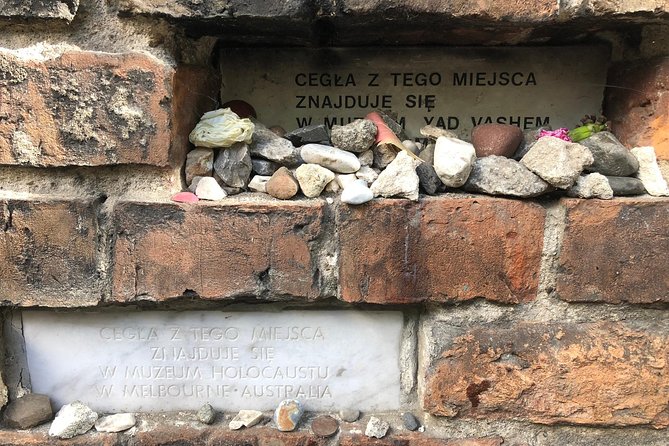
Your third stop is a Fragment of Ghetto Wall on Zlota 60. Again, it is about 20 minutes, but the point is massive: it is the only remaining fragment of the largest Jewish ghetto that ever existed.
This is also the kind of stop where a specialist explanation changes the feeling of the location. The fragment is officially recognized by Chaim Herzog in 1992 and visited by thousands of guests each year. That recognition gives you a sense that remembrance here is not private. It is public, maintained, and meant to keep teaching.
A practical way to get value from this short stop
Look at what you can see now, then listen for what used to be there. The fragment is small, but the story it signals is not.
Stop 4: Umschlagplatz, the Cargo Railroad Terminal to Treblinka
Then you reach Umschlagplatz, at the corner of Stawki and Dzika. You spend about 20 minutes here.
This place is described as the cargo railroad terminal in the ghetto. It is also the location from where Jews were taken to Treblinka Death Camp. That is blunt, and the tour does not try to soften it. You get the hard logistics behind the horror.
If you want the story to land emotionally, this is the moment. If you want it to land intellectually, it helps too, because understanding the route to Treblinka is part of understanding how the machinery of deportation worked.
Stop 5: Memorial at Mila 18, the Bunker and the Uprising
The route continues to Memorial at Mila 18, at the corner with Dubois. Another 20 minutes.
This stop focuses on the largest bunker in the Jewish ghetto in Warsaw. It is tied directly to Mordechaj Anielewicz, the leader of the uprising, and nearly 30 other members of the Jewish fighting organization who hid there.
I value that the tour links resistance to a specific place, not a vague idea. When you stand at a memorial built over the realities of hiding and decision-making, the history becomes less abstract.
Pass By: Willy Brandt Monument, Apology and Reconciliation in Stone
Near the POLIN Museum, you also pass by the Pomnik Willy’ego Brandta at Willy Brandt Square. This monument commemorates Willy Brandt’s gesture of kneeling in front of the ghetto heroes, presented as a symbol of apology and reconciliation with the Jews.
Because it is a pass-by, you will not spend long here. Still, it adds a critical layer to your day: not only what happened and how it was remembered, but how later generations tried to face it in public.
Stop 6: Monument to the Heroes of Warsaw, Memory in the Open
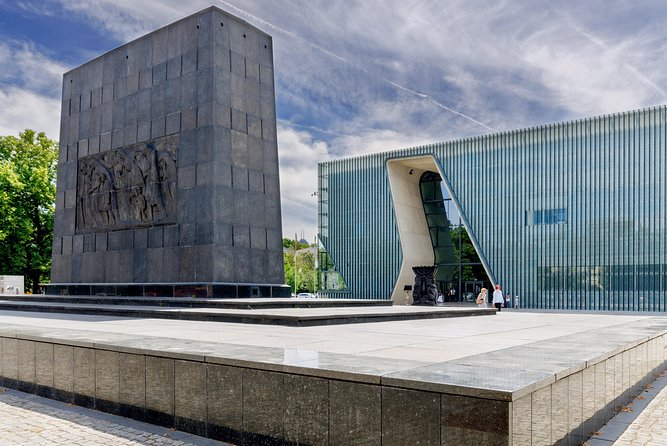
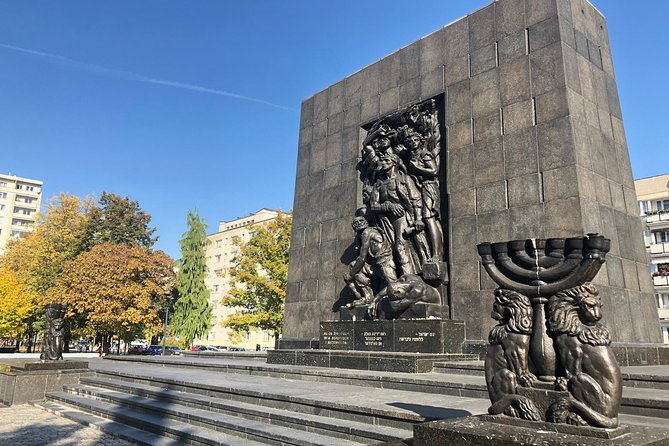
You then visit the Monument to the Heroes of Warsaw on Nowy Przejazd. You spend about 50 minutes here.
This one is about the memory of Jews who went through the nightmare of the ghetto. The longer time makes sense. Monuments work best when you can slow down enough to read what they are trying to communicate, not just photograph.
I recommend using this stop to connect your earlier sites. The wall fragment, Umschlagplatz, and Mila 18 all become part of a single chain when you give yourself time to think here.
Stop 7: Chlodna Street Footbridge, When Movement Meant Risk
Next is Chlodna Street on Chlodna 00-000. This is a short 10-minute stop.
You are shown a footbridge linking the small ghetto section with the larger ghetto part. The tour frames Chlodna as the liveliest section of the ghetto, and also the most dangerous.
Even in ten minutes, that contrast is useful. It reminds you that danger was not only at the edges or only during deportations. It was part of everyday movement, visibility, and the act of living in a confined city.
Stop 8: Praga Polnoc, Polański Film Streets and the Optional Villa
Finally, you head into Praga Polnoc on Zabkowska, with about 40 minutes. This stop is about street-level Warsaw and how film helped shape modern memory.
You will visit streets where Roman Polański would produce shots for the movie The Pianist. The route also includes an optional villa visit tied to the book Zoo Keeper’s Wife, depending on your interest.
I like that the tour gives you a choice here. If you are interested in how storytelling connects to place, you can lean into the villa option. If you prefer staying focused on the core ghetto sites, you can treat it as optional flavor, not a distraction.
Walking, Pacing, and How to Choose the Right Kind of Tour Day
This route is built from many short stops, plus a couple longer ones. The scheduled guided time by stop adds up to roughly 4.5 hours, not counting transit time between sites.
That pacing is great if you want structure and clarity. It can feel like a lot if you prefer long museum browsing and slow meandering.
So decide what kind of day you want. If you want a guided map through the most important Warsaw Jewish legacy locations, this works well. If you want pure museum time, you might want a separate museum-focused plan.
Service, Language, and How to Expect the Day to Run
The tour is offered in English, and you’ll receive confirmation at booking time. A mobile ticket is provided, and the sites are near public transportation if you need flexibility.
One more practical factor: this is a private tour/activity, so only your group participates. That matters on topics like this, because you can ask follow-up questions without worrying about slowing anyone down.
Value Check: Is This Worth $361.23 for Up to 3 People?
To judge value, look at what is bundled:
- pickup across Warsaw
- a private specialist approach
- multiple key sites tied to the Warsaw ghetto story
- English guidance
- mobile ticket convenience
If you are traveling solo, it is pricier than a group tour. But if you are two or three people who like to ask questions, it can feel fair because you are not paying per person for the privilege of a quieter, more responsive experience.
The best value usually comes when you care about narrative order. This itinerary is essentially a guided storyline through Warsaw’s Jewish legacy markers, not a list of random stops.
Tips to Get the Most From Each Stop
Here are a few things you can do to make the day feel coherent, even with short visits.
First, decide what you want to prioritize at POLIN Museum. You have time for a quick look inside, so ask your guide where the museum’s framing of history is easiest to spot fast.
Second, at Umschlagplatz and Mila 18, listen for how the tour connects the physical space to the human choices behind it. Those two stops are heavy, and you will get more from them if you let the explanation work like a bridge between location and meaning.
Finally, in Praga Polnoc, tell the guide what you want from the film and book references. The villa visit is optional, so make it a conscious choice, not an afterthought.
Should You Book This Jewish Legacy Tour in Warsaw?
I think this is a strong booking if you want a focused, guided run through the major Warsaw Jewish legacy sites, with pickup and a private group format up to 3. It is especially good for first-timers who want the story in an order that helps it make sense.
Book it if you are comfortable with short stop times and you want clarity more than deep standalone browsing. Skip it or pair it with additional time if you know you want hours in POLIN Museum, since the museum portion here is designed to be a quick, guided orientation.
If you value street-level context in places like Chlodna Street and Praga Polnoc, you will probably enjoy the way the tour connects ghetto history to how Warsaw still reflects it today.
FAQ
What time does the tour start?
The tour starts at 9:00 am.
Do you offer pickup around Warsaw?
Yes. The tour offers pickup, and the operator picks up guests from all around Warsaw.
How much does the tour cost?
The price is $361.23 per group, up to 3 people.
What language is the tour offered in?
The tour is offered in English.
Is this a private tour?
Yes. It is a private tour/activity, and only your group will participate.
What are the main stops on the route?
Key stops include Nozyk Synagogue, POLIN Museum of the History of Polish Jews, a fragment of the ghetto wall, Umschlagplatz, the Memorial at Mila 18, the Monument to the Heroes of Warsaw, Chlodna Street, and Praga Polnoc.
Is there an optional stop in Praga Polnoc?
Yes. A visit to a villa tied to Zoo Keeper’s Wife is optional and depends on your interest.
Is a mobile ticket used?
Yes. A mobile ticket is provided.
Can I bring a service animal?
Service animals are allowed.
Is free cancellation available?
Yes. Free cancellation is available, and you can cancel up to 24 hours in advance for a full refund.
Freshly posted from Warsaw
- Krakow Small Group Tour from Warsaw with Lunch, Schindler’s Factory included★ 5.0 · 7 reviews
- Warsaw Private Transfer from Warsaw Chopin Airport (WAW) to City centre★ 4.0 · 7 reviews
- 3-hour tour at Warsaw Uprising 1944 Museum /inc. Pick-up/★ 4.9 · 7 reviews
- Wolfs Lair – Hitlers hideout★ 4.5 · 7 reviews
- Warsaw: Evening History and Pubs Tour by Retro Minibus★ 5.0 · 7 reviews
- Warsaw: Private Vodka Tasting Night with Snacks and Pickup★ 5.0 · 7 reviews
- Warsaw Old Town with Royal Castle + Royal Route: SMALL GROUP /inc. Pick-up/★ 5.0 · 7 reviews
Jewish History & Heritage Tours, compared.
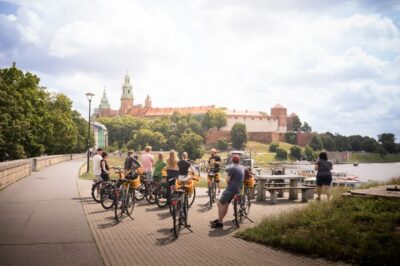
Bike Tour of Old Town, Jewish Quarter and the Ghetto
Read our review →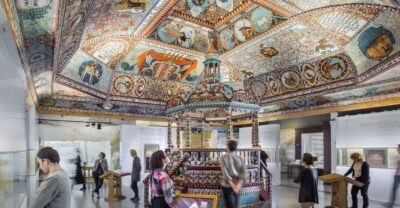
POLIN Museum of the History of Polish Jews Ticket
Read our review →
Kazimierz, Schindler’s Factory & Ghetto Guided Tour
Read our review →
Full Bike Tour – the Old Town, Jewish Qtr & the Ghetto NEW BIKES
Read our review →
Warsaw Ghetto Private Walking Tour with Hotel Pickup
Read our review →Browse the lists this tour appears in