
Reviewed · JEWISH HISTORY & HERITAGE TOURS
Lodz: Jewish Heritage Private Tour
Jewish Łódź tells its story in layers. In four hours, you follow monuments from Radegast Station to Piotrkowska Street, including the ghetto landscape, the cemetery, and Reicher synagogue. I especially like how the guide turns big history into human-scale moments, and how Manufaktura connects Israel Poznanski’s factory past to a modern, walkable center.
One consideration: because this route deals with grief, memorial culture, and identity, the emotional tone can depend on the guide’s approach. If you want a very strictly neutral, careful framing at sensitive sites, say so up front when you meet your guide.
In This Review
- Key Highlights You Should Not Miss
- A Private 4-Hour Walk Through Łódź’s Jewish Landmarks
- Planning the Route: From Radegast Station to Piotrkowska Street
- Before the Holocaust: How Many Jews Lived in Łódź?
- Radegast Station: The Final Rail Stop for Deportations
- Litzmannstadt Ghetto Grounds and Survivors’ Park Memory Trees
- The Jewish Cemetery: Poland’s Largest Necropolis (And How to Use Your Time)
- The Children’s Martyrdom Monument, Broken Heart Style
- Reicher Synagogue: A Pre-War Building That Survived as a Salt Warehouse
- Israel Poznanski and Manufaktura: From Factory Owner to City Landmark
- Piotrkowska Street: Łódź’s Long Promenade Finish
- Price and Value: What $46 Buys in a Private 4-Hour Format
- Who This Tour Suits Best, and Who Should Think Twice
- Should You Book This Jewish Heritage Tour?
- FAQ
- How long is the Lodz Jewish Heritage private tour?
- What sites does the tour include?
- Is hotel pickup and drop-off included?
- Is transportation included?
- Are entrance tickets included?
- Is this tour private?
- What languages are available?
- Is there free cancellation?
- Can I reserve without paying right away?
- What is the price per person?
Key Highlights You Should Not Miss
- Radegast Station context: where deportations from western Europe and local ghettos were carried out from the final rail stop
- Litzmannstadt ghetto grounds: see the footprint of the ghetto and understand how the Holocaust played out locally
- Jewish cemetery stop: the largest Jewish necropolis in Poland, worth planning for time inside
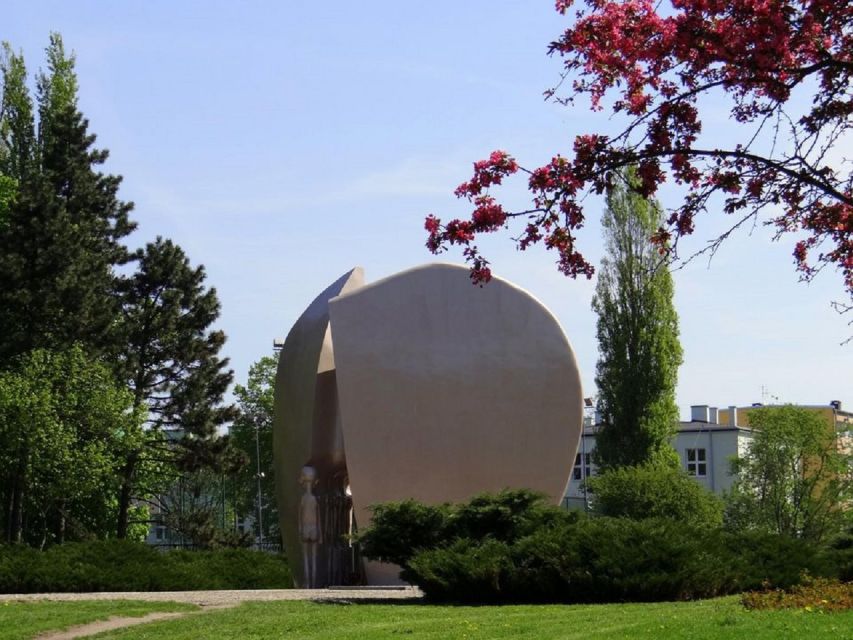
- Broken Heart monument: the Children’s Martyrdom Monument tied to Przemysłowa Street
- Manufaktura and Israel Poznanski: a restored industrial complex with an open-air plaza and major fountain display
A Private 4-Hour Walk Through Łódź’s Jewish Landmarks
Łódź holds a special kind of story. It is not just about what happened in the Holocaust, it is also about what Jewish life looked like before the war, when Jews made up a huge slice of the city’s population. This tour keeps you moving, but it never treats the sites like checkboxes. The aim is to connect names, streets, and buildings to lived reality, then to the machinery of persecution.
You also get a practical rhythm. The group is private, and the pace is built around four hours of sightseeing, with hotel pickup and drop-off and transportation included. That matters because Łódź’s key landmarks are spread out, and you do not want to waste the best hours of your day on transit.
Still, remember this is not a light, casual outing. Some stops are about mass murder, forced deportations, and children who died or were murdered while imprisoned. You might want to bring a notebook, or at least a little extra patience for moments when the history lands hard.
Further Jewish history and heritage itineraries:
- Krakow: Schindler’s Factory & Ghetto Guided Tour
★ 4.7 · 1,694 reviews - Krakow: Jewish Quarter and Former Ghetto Tour
★ 4.9 · 1,441 reviews - Krakow: Bike Tour of Old Town, Jewish Quarter and the Ghetto
★ 4.9 · 1,155 reviews
Planning the Route: From Radegast Station to Piotrkowska Street
The tour is built like a guided trail. You start with the broader Jewish background of the city, then you move into the wartime route, and finally you return toward the modern city center where you can see how the past survives in buildings and street life.
A typical flow looks like this:
- You meet your guide and head out to the major Holocaust-related locations.
- You visit the ghetto area and memorial spaces, including the Survivors’ Park.
- You stop at major heritage sites like the Jewish cemetery and Reicher synagogue.
- You end with a walk along Piotrkowska Street, Łódź’s famous long promenade.
That ending is more than a stroll. It gives you a sense of scale for the modern city, so you can later look up details on your own with better bearings.
Before the Holocaust: How Many Jews Lived in Łódź?
Before World War II, Łódź was a multinational industrial hub, and Jewish residents were a major part of that mix. In the period before the war, Łódź had over 200,000 Jews, and in the city overall, Jews made up as many as one third of the population. It is a statistic that changes how you see everything else on the map.
You are not just learning numbers. You are learning context for why the later destruction was so total. When a community forms such a large share of a city, the loss changes the streets, businesses, schools, and neighborhood rhythms. It also means there are more physical clues to track, from cemeteries and synagogues to industrial buildings tied to Jewish entrepreneurs.
This is one reason the tour works even if you have never studied Polish Jewish history. You start with who was there, then you see what was taken away.
Radegast Station: The Final Rail Stop for Deportations

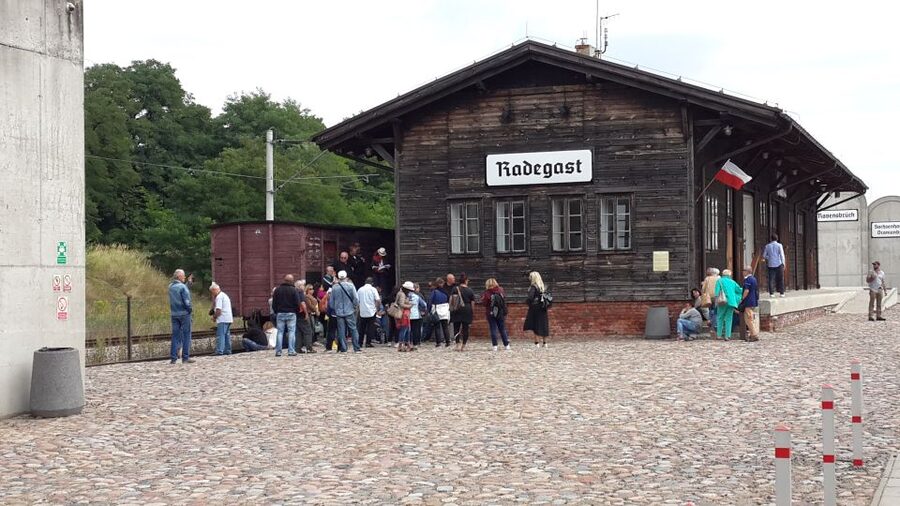
One of the most intense stops on the route is Radegast station. Here, you learn about the grim function of the rail system, including how this station served as the final point of trains transporting Jews from western European countries and from provincial ghettos in Wartheland.
What I like about this moment is that it reframes the station. It is not just a historical label on a plaque. It helps you connect the physical reality of deportation with the broader Holocaust system.
Practical tip: bring your focus. This is a place where the details matter, and your guide will likely point out how memory is presented in the space around you. If you prefer a slower pace at memorials, tell your guide early. Private tours are built for small adjustments like that.
Litzmannstadt Ghetto Grounds and Survivors’ Park Memory Trees
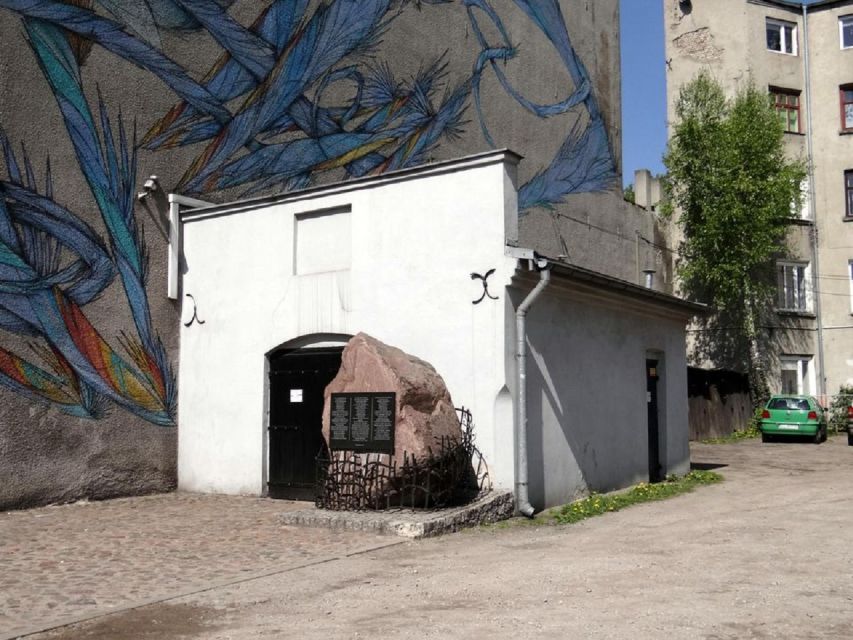
From the rail history, you move into the local geography of the ghetto, specifically the area of the Litzmannstadt ghetto. Seeing the footprint of the ghetto grounds is one of those experiences that helps the Holocaust stop feeling abstract. You start understanding how people were trapped, where movement was controlled, and how daily life was reorganized under persecution.
Then comes a quieter but powerful memorial space: Survivors’ Park. You learn about the liquidation of the ghetto and you also encounter the “memory trees.” The park includes over 600 memory trees, planted by survivors to hold names, stories, and survival in living form.
If you like photography, you can take pictures here, but I would keep it respectful and slow. This is not a place for quick snapshots. Treat the park like a conversation, not a photo shoot.
The Jewish Cemetery: Poland’s Largest Necropolis (And How to Use Your Time)
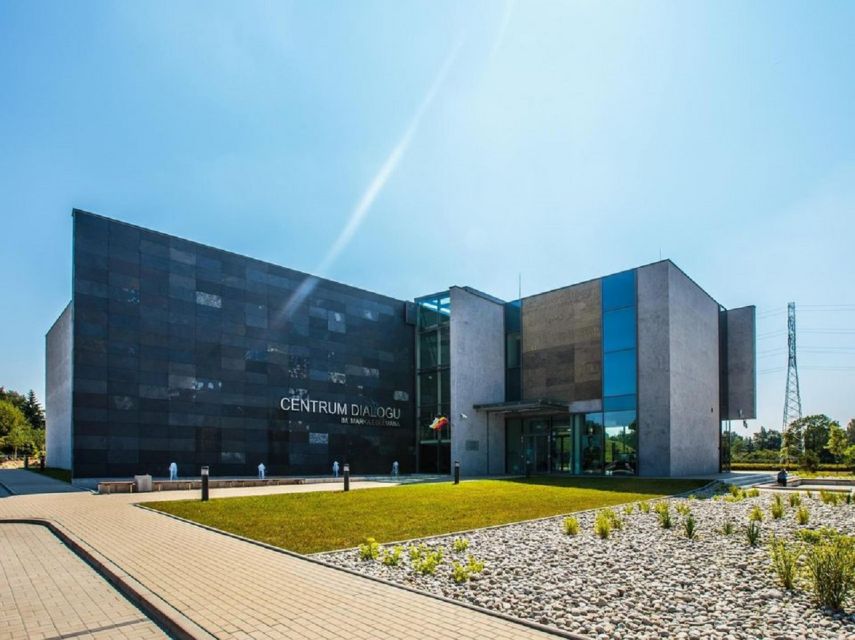
The Jewish cemetery is the largest Jewish necropolis in Poland, and it is a central stop on this route. Even if you have seen cemeteries elsewhere in Europe, this one hits differently because it carries an enormous layer of community memory.
The best way to get value here is simple: don’t just look from the edge. Make sure you have time to go inside the cemetery area and read what you can. Entrances are not included, so there may be limitations on access, but that is exactly why you should ask your guide a direct question at the start: will we have time to enter and spend real moments there?
Practical tip: wear shoes that can handle uneven ground. Cemeteries reward the people who can stand and read slowly.
The Children’s Martyrdom Monument, Broken Heart Style
This tour includes a specific memorial tied to children who were imprisoned and killed. You pass the Children’s Martyrdom Monument, also called the monument of the Broken Heart, connected to Polish children who died or were murdered while being imprisoned in the camp in Przemysłowa Street.
This is one of those stops where history becomes heartbreak fast. I like that the tour does not treat children as an afterthought. It brings them into the story directly, which is crucial for understanding what the Holocaust did to the youngest and most vulnerable.
If you are traveling with teens, this can be a serious but educational moment. I would go in with a plan to talk after, even just ten minutes in the car back. Questions like what you saw, what surprised you, what you want to learn next can turn a heavy stop into something meaningful.
Reicher Synagogue: A Pre-War Building That Survived as a Salt Warehouse
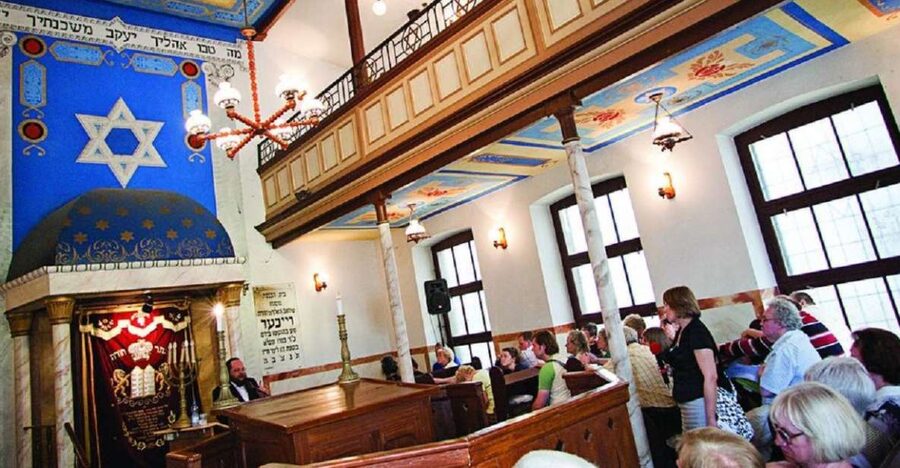
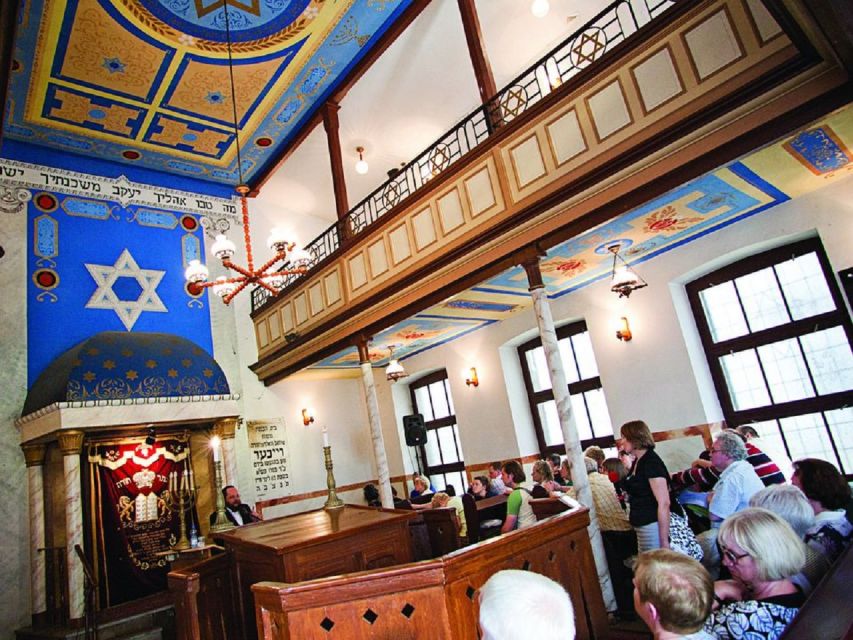
You also visit Reicher synagogue, described as the only remaining pre-war synagogue. The reason it still exists is tied to adaptation during occupation, when the building survived as a salt warehouse.
This stop is valuable because it shows survival through transformation. You are looking at a structure that endured because people repurposed it, not because it was protected in the simple sense.
The takeaway for you: buildings do not always stay frozen in time. Sometimes survival means being changed, then later restored or reinterpreted. It makes the city feel more real because you can imagine how the building’s purpose shifted as control shifted.
Israel Poznanski and Manufaktura: From Factory Owner to City Landmark
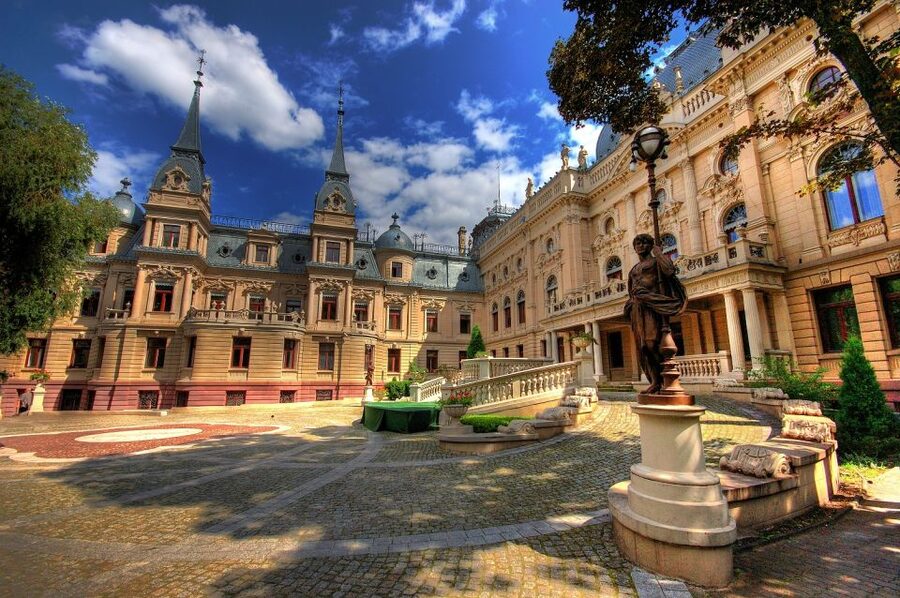
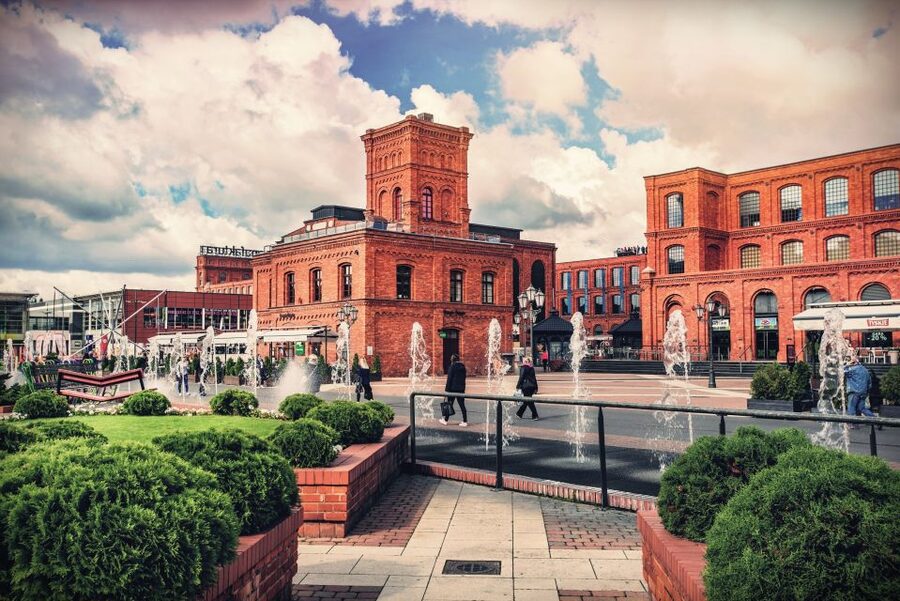
One of the most satisfying parts of the tour is the shift to industrial heritage. You discover the renovated complex of the Manufaktura, originally the former factory belonged to Jewish businessman Israel Poznanski.
Today it is an open-air plaza surrounded by large brick buildings. It also includes a major water feature: the longest stretch of fountains in Europe. Even if fountains are not your thing, this is still a great stop because you can see how industrial power ties to Jewish entrepreneurship, then later ties into postwar redevelopment and public life.
What I like: the tour uses Manufaktura to keep the story from ending at tragedy. It shows how part of the Jewish past became part of the city’s everyday present.
If you like architecture, spend a little extra time simply looking up and around. Industrial brick complexes reward attention.
Piotrkowska Street: Łódź’s Long Promenade Finish
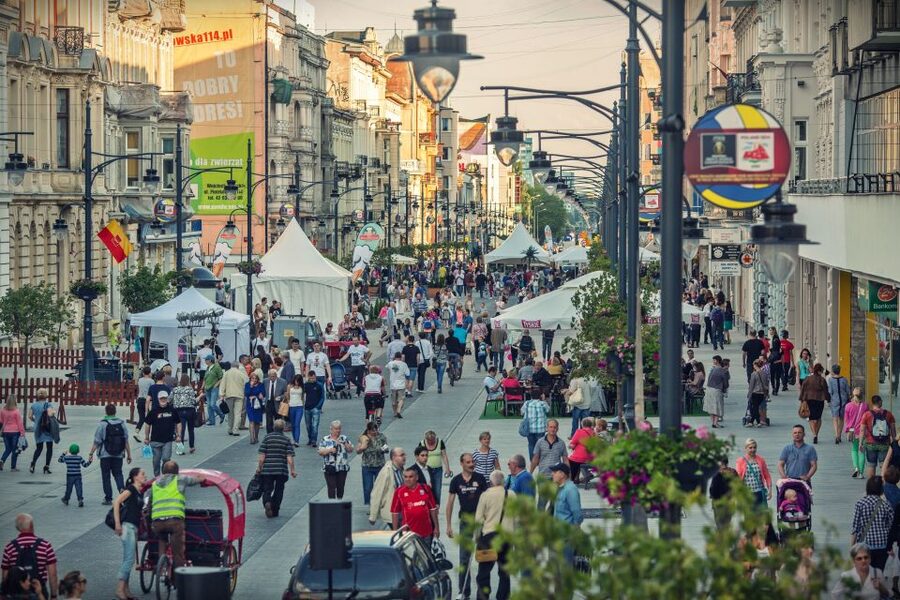
After the heritage and memorial stops, you end with a walk along Piotrkowska Street, Poland’s longest promenade. This is where you get to feel the city’s scale in real time: shops, pubs, restaurants, and public sculptures that commemorate famous inhabitants of Łódź.
Your guide will point out what you can explore on your own after the tour. That last section is smart because it gives you a way to keep learning without feeling stuck in a rigid schedule.
Practical tip: if you want a smooth finish, save energy here. Piotrkowska is lively, and walking for an extra hour after a memorial-focused half-day can feel easier if you plan for it.
Price and Value: What $46 Buys in a Private 4-Hour Format
At about $46 per person for four hours, the pricing can feel fair, especially because this is not just a self-guided route. It includes hotel pickup and drop-off, transportation, and a live guide.
The “value” angle here is coverage. You cannot see Radegast station, ghetto grounds, the cemetery, Reicher synagogue, Manufaktura, and then still end on Piotrkowska Street efficiently without some kind of structured guidance. Even more, the guide’s explanations are what turn individual places into a connected story.
One more note: entrances are not included, so if a site requires a ticket for entry, you might need to pay separately. That is not a deal breaker, just something to keep in mind so you do not get surprised when the time comes.
Who This Tour Suits Best, and Who Should Think Twice
This tour is a strong fit if you want:
- A private, guided overview of Jewish heritage in Łódź that connects life before the war to what came after
- A route that includes both memorial sites and surviving pre-war landmarks
- A walk ending on Piotrkowska Street so you can keep exploring afterward
It may be a tougher fit if you:
- Want only light historical context and none of the Holocaust framing
- Prefer a very specific tone and might feel uncomfortable with the guide’s interpretive style at memorials
- Expect every stop to include entry to interiors, since entrances are not included
On the guide side, people often describe the experience as attentive and flexible, with guides like Marek, Krys, and Krzysztof being especially praised for adapting to interests and mixing local history with architecture, film, books, and city context. That kind of tailoring is a big part of why a private format is worth it.
Should You Book This Jewish Heritage Tour?
I think you should book if you want a structured, human scale way to understand Łódź’s Jewish past. The combination of Radegast station, Litzmannstadt ghetto grounds, the Jewish cemetery, and the surviving landmarks like Reicher synagogue gives you both the painful and the enduring sides of the story. Then you finish with Manufaktura and Piotrkowska, which helps you carry the history into how the city feels today.
I would especially recommend it if you like guided context and you want your questions answered in real time, not hours later in a guidebook.
If you decide to go, do one thing that makes a difference. When you meet your guide, tell them what you need most from the tour: more time at memorial spaces, more time inside the cemetery, or more focus on architecture and buildings. Private tours are built for that.
FAQ
How long is the Lodz Jewish Heritage private tour?
It lasts 4 hours.
What sites does the tour include?
You will follow a trail of Jewish monuments, including the area of the Litzmannstadt ghetto, Radegast station, the Jewish cemetery, the Children’s Martyrdom Monument (Broken Heart) on Przemysłowa Street, Survivors’ Park with memory trees, Reicher synagogue, the Manufaktura complex connected to Israel Poznanski, and a walk along Piotrkowska Street.
Is hotel pickup and drop-off included?
Yes. Hotel pickup and drop-off are included.
Is transportation included?
Yes. Transportation is included.
Are entrance tickets included?
No. Entrances are not included.
Is this tour private?
Yes. It is a private group tour.
What languages are available?
The live guide is available in English, German, Russian, and Polish.
Is there free cancellation?
Yes. You can cancel up to 24 hours in advance for a full refund.
Can I reserve without paying right away?
Yes. There is a reserve now and pay later option.
What is the price per person?
The price is $46 per person.
Between Rebuilt Squares
- Gdansk: City Cruise on Historical Polish Boat
★ 4.8 · 2,913 reviews - Warsaw: POLIN Museum of the History of Polish Jews Ticket
★ 4.7 · 1,142 reviews - Gdańsk: Sunset Cruise on a Historic Polish Boat
★ 4.9 · 977 reviews - Gdańsk City Sights & History Guided Walking Tour in English
★ 4.8 · 876 reviews
Freshly posted from Lodz
- Lodz Old Town Manufaktura Highlights Private Walking Tour★ 4.9 · 12 reviews
- Lodz: Private City Walking Tour★ 4.2 · 10 reviews
- Luxury airport transfer from Lodz to Warszawa Chopin Airport★ 5.0 · 6 reviews
Jewish History & Heritage Tours, compared.
Bike Tour of Old Town, Jewish Quarter and the Ghetto
Read our review →
POLIN Museum of the History of Polish Jews Ticket
Read our review →
Kazimierz, Schindler’s Factory & Ghetto Guided Tour
Read our review →
Full Bike Tour – the Old Town, Jewish Qtr & the Ghetto NEW BIKES
Read our review →
Warsaw Ghetto Private Walking Tour with Hotel Pickup
Read our review →Browse the lists this tour appears in