
Reviewed · SCHINDLER'S FACTORY MUSEUM TOURS
Krakow: Schindler’s Factory Expert GuidedTour with Skip-line
History feels heavier when it is in the same rooms you are standing in. This tour guides you through Oskar Schindler’s former enamel factory, where Krakow under Nazi occupation is told through recreated sets and a carefully timed route. I like that you get skip-the-line entry plus a licensed local guide, so you do not waste your limited time fighting ticket queues.
You’ll also get to see the preserved office where Schindler’s story lands, then finish with the Survivor’s Ark installation. The pace is fast and structured for 90 minutes, which is great for first-time visitors who want an overview. The main drawback to plan for is space: the factory layout is tight, and larger groups can make it harder to see every exhibit up close or hear your guide at certain moments.
In This Review
- Key things you will notice on this tour
- Why Schindler’s Factory is such a powerful stop in Krakow
- Skip-the-line entry and Lipowa Street meeting reality
- The 45-room route through occupied Krakow: what the tour covers
- Before the war: Jewish Krakow in the 1930s
- Blitzkrieg streets and military checkpoints
- Life in the ghetto: recreated apartments and daily pressure
- Resistance stories: hidden weapons and the Polish Underground State
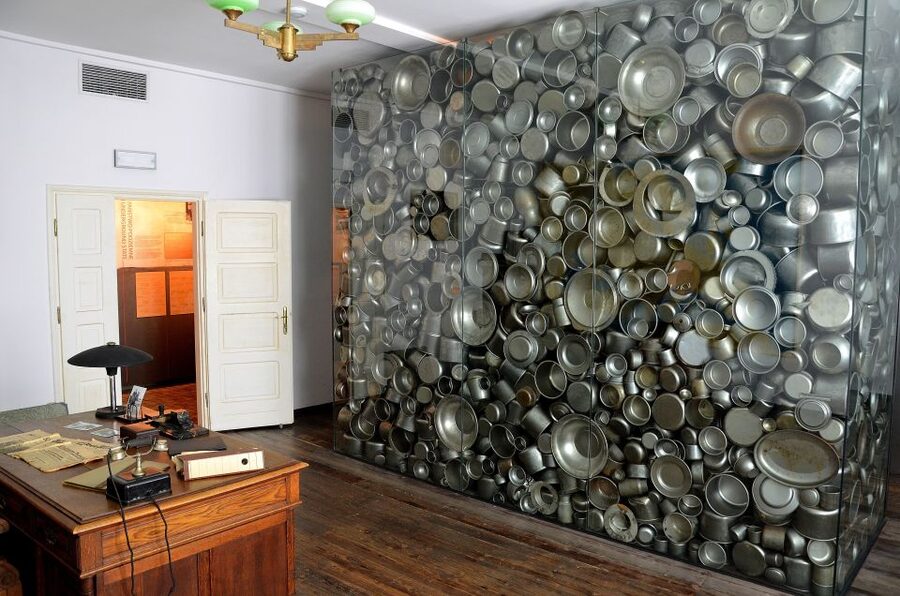
- Schindler’s preserved office: where the story’s moral weight lands
- Survivor’s Ark: symbolic ending you will remember
- Headsets and the cramped layout: how to make the most of 90 minutes
- Price and value: is $46 worth it?
- Getting there smoothly: tram stops and timing tips
- Who should book this tour
- Should you book Schindler’s Factory with skip-the-line?
- FAQ
- How long is the Schindler’s Factory guided tour?
- Does this tour include skip-the-line entry?
- Where do I meet the representative before the tour starts?
- What time should I arrive for the tour?
- What languages is the tour offered in?
- Do I need to bring identification?
- Are alcohol or drugs allowed?
- Is the museum wheelchair accessible for this visit?
- Which tram stops are closest?
- Are headsets provided during the tour?
Key things you will notice on this tour
- Skip-the-line access via a separate entrance, with tickets handled at the factory meeting point on Lipowa Street
- A licensed local guide explaining the story room-by-room, with context you will miss on your own
- A chronological route through 45 rooms, from pre-war Jewish life to the final years of occupation
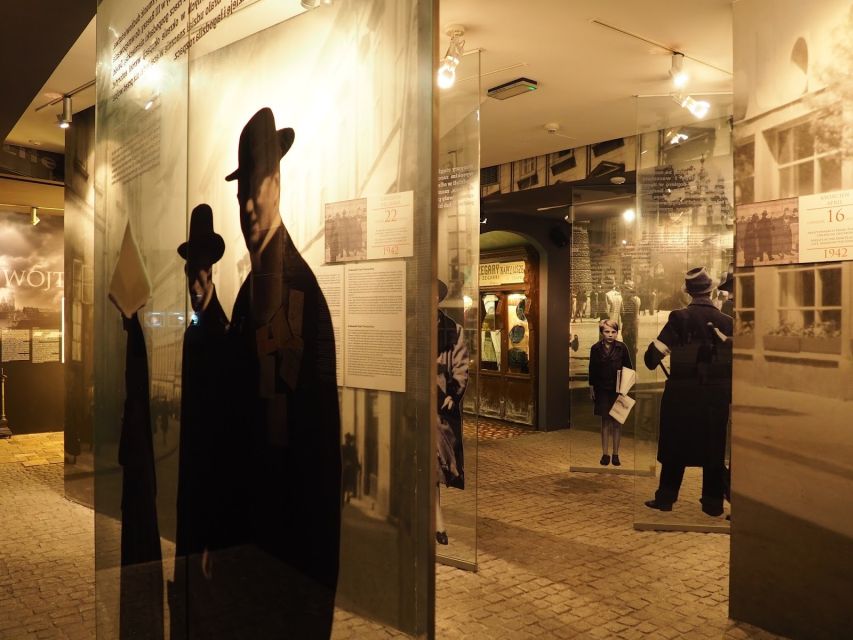
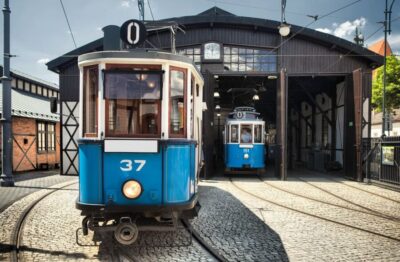
- Recreated WWII scenes, including the ghetto apartment, tram, and city streets
- A focused ending at Schindler’s preserved office and the symbolic Survivor’s Ark installation
- Headsets provided, designed to help you follow the guide in noisy or interactive areas
Why Schindler’s Factory is such a powerful stop in Krakow

Schindler’s Factory is not a museum you casually skim. It is built around rooms that guide your eyes, your footsteps, and your attention, so the story of WWII in Krakow lands in a very physical way. I like that this tour is set up to help you understand what you are seeing, not just watch displays go by.
The biggest value here is context. You walk through the history in a clear order, and your guide connects what looks like a set or exhibit with the real pressure people faced in occupied Krakow from 1939 to 1945. If you have ever felt overwhelmed by WWII museum content, this structure is exactly what you want.
You also get a clear focus on Schindler’s legacy. The preserved administrative office and the Survivor’s Ark stop give the story a strong closing note, rather than leaving you with scattered details.
Further visits to Schindler’s Factory Museum:
- Krakow: Schindler’s Factory Ticket and Guided Tour Option
★ 4.3 · 4,306 reviews - Krakow: Schindler’s Factory Tour with Entrance Ticket
★ 4.5 · 3,182 reviews - Krakow: Schindler’s Factory Skip-the-Line Ticket
★ 4.4 · 3,105 reviews
Skip-the-line entry and Lipowa Street meeting reality
This tour is timed inside the museum, so logistics matter. You meet your representative at the factory entrance on Lipowa Street, get your ticket there, and then join your licensed local guide while bypassing the long ticket line with pre-reserved skip-the-line entry.
Plan to arrive early. The museum requires you to be at the meeting point at least 15 minutes before your scheduled start time, and late entry can mean denied access with no refunds. That rule is strict, so I strongly suggest you treat the meeting time as your real arrival time, not your “we will be there soon” time.
If you are coming by tram, the nearest stops are Zablocie or Plac Bohaterów Ghetta. There is street parking nearby, but there is no dedicated parking at the museum, so expect curbside searching if you drive.
The 45-room route through occupied Krakow: what the tour covers
The tour is guided through 45 rooms and runs about 90 minutes. The rooms are arranged in a chronological storyline, so you are not bouncing around. That matters because occupation history can feel like one long blur unless someone helps you sort cause and effect.
Here is the flow you should expect, in plain language:
- You start with life and culture before the war.
- Then the German invasion and early occupation shift the mood fast.
- After that, you focus on the ghetto, daily life, and the shrinking space for survival.
- Next comes resistance, including the Polish Underground State and hidden operations.
- Finally, the tour brings you to Schindler’s office and the symbolic ending.
Because it is a guided route, you will not have the same freedom as a self-guided visit. You trade off extra wandering time for a guided overview that helps everything make sense.
Before the war: Jewish Krakow in the 1930s
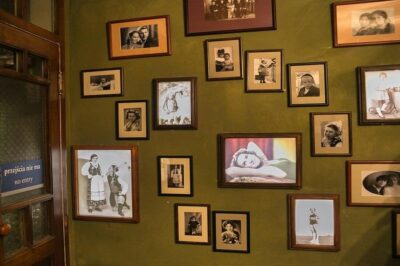
The tour starts with Krakow’s Jewish life and culture in the 1930s, before the darkness takes over. I like this opening because it helps you see people as people first, not only as victims or statistics later.
You are not just learning dates. You are getting the background that makes later scenes feel sharper. When the displays move into occupation, the contrast is the point, and the guide keeps the storyline clear.
This is also where you might notice how much the museum relies on recreations. Pre-war scenes set expectations, and then the later rooms break those expectations by showing what control and violence do to daily life.
Still tacked up around Krakow


Blitzkrieg streets and military checkpoints
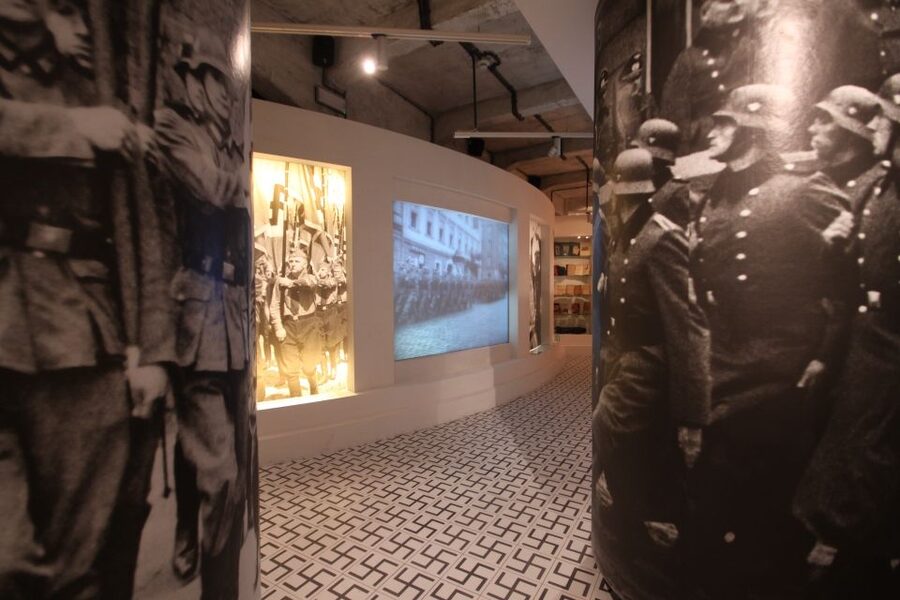
Next you walk through the tension of the German invasion and early occupation. Expect reconstructions of wartime streets and military checkpoints, designed to put you in the atmosphere of speed, fear, and sudden control.
This is a place where a guide matters a lot. On your own, you might read labels and move on. With a guide, you get explanations that connect what you see to what it meant for real people, including how occupation tightened quickly.
If you are sensitive to harsh themes, brace yourself here. This section sets a serious tone, and it is intentionally not light.
Life in the ghetto: recreated apartments and daily pressure
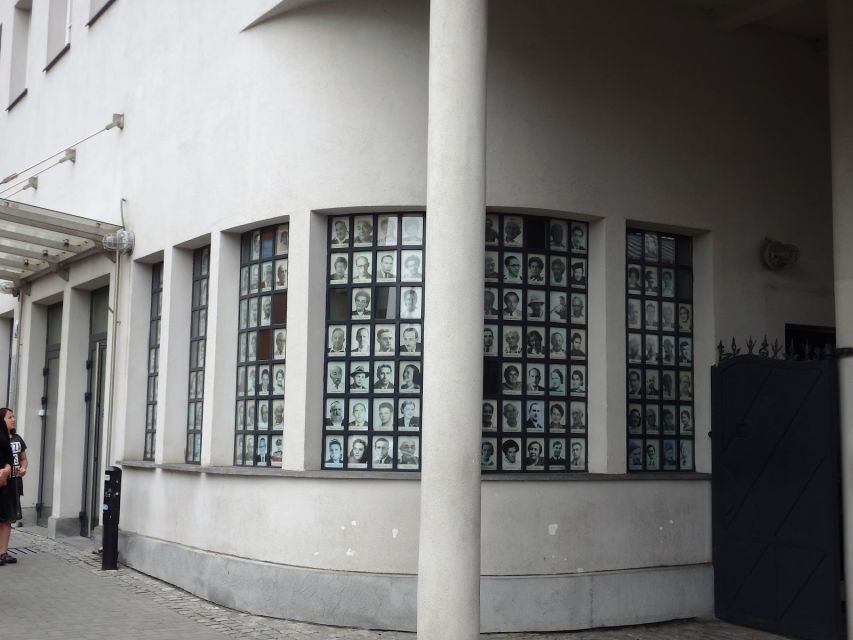
Then the tour narrows in on the ghetto experience. You move through claustrophobic passages and recreated spaces, including a ghetto apartment where Jewish families were forcibly crammed.
One of the most useful aspects of a guided visit is that the guide helps you understand what not to miss. In tight rooms, it is easy to get distracted by props or ignore the small details that explain the situation. Your guide’s job is to point out the meaning behind the design and the choices made in how the story is staged.
Some parts of the exhibits are interactive, but remember you are in a timed 90-minute guided flow. You will likely get brief moments with hands-on elements, not extended play time.
Resistance stories: hidden weapons and the Polish Underground State
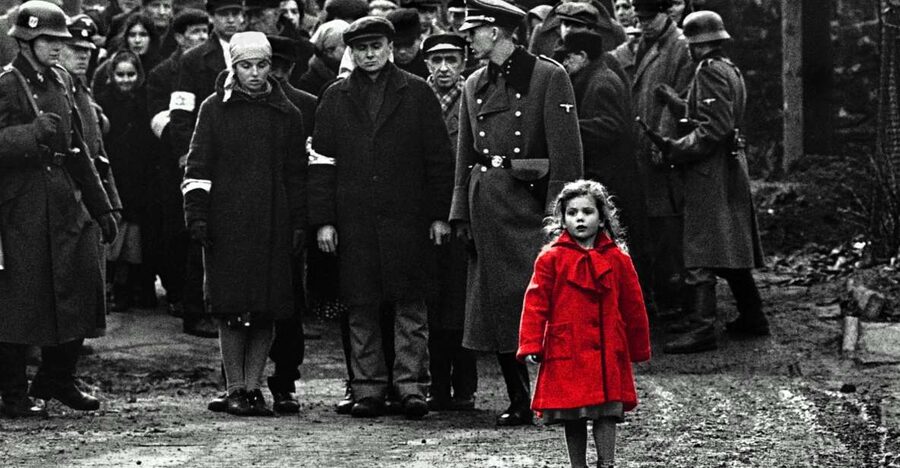
After the ghetto section, the tour turns toward resistance. You hear about secret operations, hidden weaponry, and the brave network connected to the Polish Underground State.
This part can feel like a shift in energy, and not in a careless way. It gives you a wider view of what people did besides endure. The guide’s explanations help you understand that survival was not only passive, and it was also organized, risky work.
If you have only heard simplified versions of WWII resistance, this section is one of the places where the story becomes fuller and more grounded.
Schindler’s preserved office: where the story’s moral weight lands
The climax is practical and emotional at the same time. The tour culminates in Schindler’s preserved administrative building, and you stand in Oskar Schindler’s office as the narrative brings his transformation into focus.
This is where your guide ties together the broader occupation story with Schindler’s specific choices. The point is not a neat hero story. You are shown how complex his position was, and how risk, profit, and conscience mixed together when he decided to help and save more than a thousand Jewish lives.
I like that the tour does not end with a single moral label. It leaves you with questions about how decisions get made under extreme pressure, and that can be the hardest part, but also the most meaningful.
Survivor’s Ark: symbolic ending you will remember
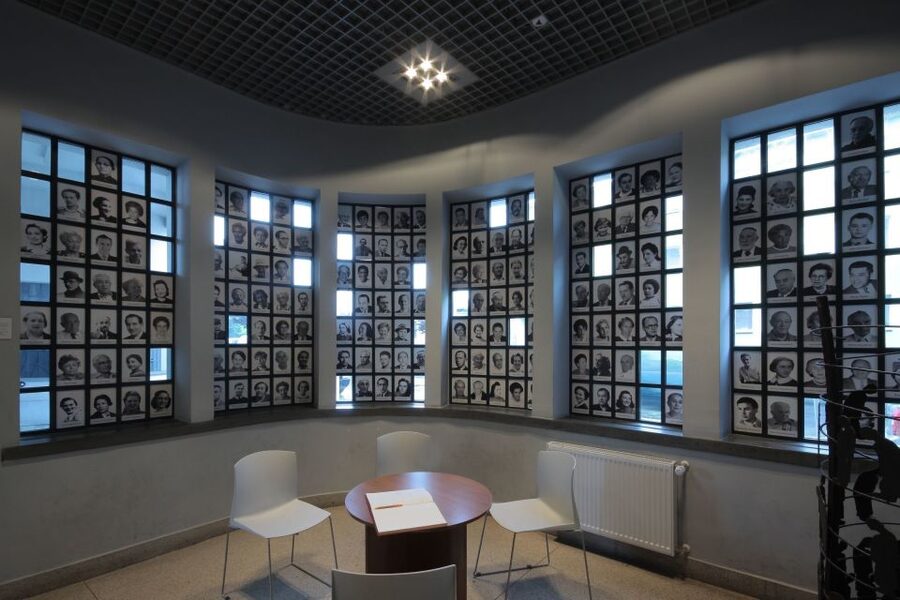
After Schindler’s office, the tour adds the symbolic installation known as Survivor’s Ark. This kind of ending matters because museums can sometimes feel like a history lecture that stops when the door closes.
The Survivor’s Ark gives the story a visual emotional landing. Even if you are not a symbolism person, it is hard to miss the intent: remembrance and survival.
If you want photos, try to do them efficiently, because time is limited and groups move continuously.
Headsets and the cramped layout: how to make the most of 90 minutes
The tour provides headsets to help you follow the guide. That helps a lot, especially in rooms where interactive displays create noise or where multiple people are moving around.
Still, the factory is tight. Your group size can affect how easy it is to see exhibits your guide is pointing out, since people have to share narrow paths. In a group setting, I recommend you position yourself early, not at the back, if you want a better view of the exact exhibit being explained.
Also, the tour is fast-paced by design. Some people may want more time to sit with interactive elements, but the 90-minute structure is about coverage and context. If you care most about slowing down and reading every panel, you may find this tour gives you the framework, then leaves you wanting a second visit on your own.
Price and value: is $46 worth it?
At about $46 per person for roughly 90 minutes, the value comes from three things working together:
- Skip-the-line entry so you do not lose time before you even start the experience.
- A local expert guide who explains the story so you understand what you are looking at.
- Headsets and admission included, which makes the visit more comfortable and easier to follow.
If you are visiting on a busy day or you dislike waiting, skip-the-line access is often the difference between a satisfying visit and a rushed one. You are paying for momentum plus interpretation.
On the other hand, this is not a slow, free-form museum pass. If you prefer long independent browsing, you might get better total satisfaction by planning extra time and doing parts on your own after the tour.
Getting there smoothly: tram stops and timing tips
The museum is on Lipowa Street. If you are using public transit, the nearest tram stops are Zablocie or Plac Bohaterów Ghetta, both convenient options depending on where you are staying.
Because entry is strictly timed, start thinking about transit time earlier than usual. If you arrive right on the start time, you are already late for a 15-minute buffer. I suggest you build slack into your schedule so the meeting point does not become stressful.
If you are walking, double-check your route before you head out. Street parking exists nearby, but there is no dedicated car park, so driving can add uncertainty.
Who should book this tour
This tour is a strong match if:
- You want a guided overview of WWII Krakow without piecing history together yourself.
- You have limited time and want the most important stops in about 90 minutes.
- You prefer interpretation and clear context in a museum with many rooms.
- You would benefit from headsets in tight, active exhibit areas.
It may be less ideal if:
- You want long breaks to explore interactive exhibits at your own speed.
- You dislike crowds in enclosed spaces.
- You are the kind of visitor who likes to read slowly and revisit favorite sections without moving on.
Should you book Schindler’s Factory with skip-the-line?
I think you should book this tour if you want your visit to feel organized, understandable, and emotionally directed. The skip-the-line entry plus guide-led route through the key sections makes it a practical way to get value from a museum that can easily overwhelm you without context.
If you are hoping for lots of free time to linger, plan to treat the tour as your first pass. You will likely want additional time later to revisit details you cannot fully take in during a structured 90-minute experience.
Either way, do not under-estimate the timing rules. Arrive early, bring a valid photo ID, and be ready for a moving story told in a very physical place.
FAQ
How long is the Schindler’s Factory guided tour?
The guided tour runs for about 90 minutes.
Does this tour include skip-the-line entry?
Yes. You get skip-the-line entry through a separate entrance with pre-reserved tickets.
Where do I meet the representative before the tour starts?
You meet the representative directly at the factory entrance on Lipowa Street.
What time should I arrive for the tour?
You should arrive at least 15 minutes before the scheduled start time to meet the museum’s strictly timed entry policy.
What languages is the tour offered in?
The live guided tour is available in English, German, Spanish, and Italian.
Do I need to bring identification?
Yes. Bring a passport or ID card, and it should match the name used in your booking.
Are alcohol or drugs allowed?
No, alcohol and drugs are not allowed.
Is the museum wheelchair accessible for this visit?
Yes. The exhibition halls are wheelchair accessible.
Which tram stops are closest?
The nearest tram stops are Zablocie or Plac Bohaterów Ghetta.
Are headsets provided during the tour?
Yes. Headsets are provided to help you follow the guide better.
Freshly posted from Krakow
- ZALIPIE – painted village, unique small group tour from Krakow★ 5.0 · 7 reviews
- “John Paul II Route” PRIVATE -Wadowice, Kalwaria Z.-Łagiewniki★ 5.0 · 7 reviews
- Krakow: Craft Beer Tasting City Walking Tour★ 4.4 · 7 reviews
- Magic of Krakow: Guided Tour of the Old Town★ 5.0 · 7 reviews
- Krakow : Zakopane Tour + Thermal Pools with Hotel Pickup★ 4.8 · 7 reviews
- Krakow in One Day: City Tour by Electric Car★ 5.0 · 7 reviews
- Guided Tour of Plaszow Concentration Camp, Kraków★ 4.8 · 7 reviews
Schindler's Factory Museum Tours, compared.
Schindler’s Factory Ticket and Guided Tour Option
Read our review →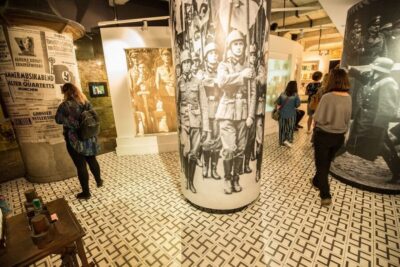
Schindler’s Factory Tour with Entrance Ticket
Read our review →
Schindler’s Factory Tour with Entrance Ticket
Read our review →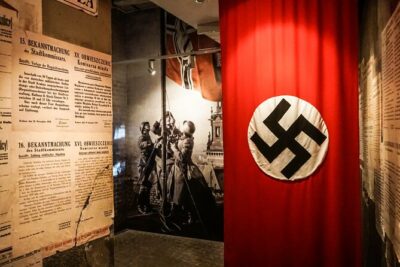
Schindler’s Factory in Krakow: Guided Tour & Skip the Line Ticket
Read our review →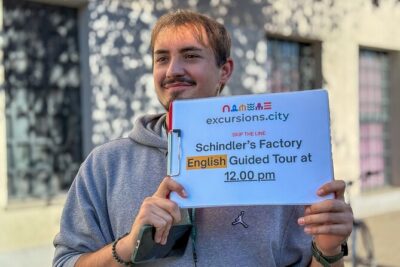
Krakow Schindler’s Factory Guided Tour with Admission Ticket
Read our review →Browse the lists this tour appears in