
Reviewed · JEWISH HISTORY & HERITAGE TOURS
Krakow: Kazimierze Jewish History Tour. Italian
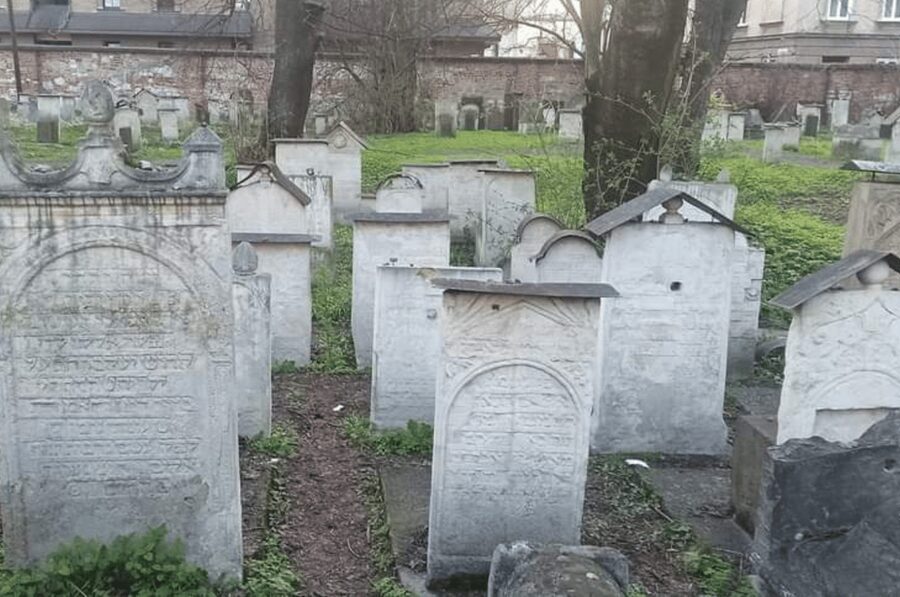
Synagogues and churches sit side by side in Kazimierz. This tour turns Krakow’s Jewish quarter into a moving timeline, where stories feel close to the street you are standing on. With guide Leonardo, I like the way the narration stays specific, built on what people actually lived through, not generic facts.
Two things I really like: you get internal visits of selected churches and synagogues, and you hear real testimonies of deportees that make the 20th century hit with weight. One thing to consider is the language: the guide is Italian, so if you do not follow Italian well, the experience may feel harder to absorb.
In This Review
- Key highlights
- A 3.5-hour Kazimierz walk with real deportee testimony
- Where the tour starts: Fabric Palace at 3:30 pm
- Kazimierz and the oppidum iudaeorum: Szeroka Street as the spine
- Inside synagogues and churches: what you gain from going in
- Remuh and candlelight on Szeroka Street, 22 Szeroka Street
- World War II in Kazimierz: deportee testimonies and diaspora memory
- Pricing and value at $46 per person for 210 minutes
- Pacing, private group, and your experience with Leonardo
- Practical tips so you get the most out of Kazimierz
- Should you book the Krakow Kazimierze Jewish History Tour?
- FAQ
- Where is the meeting point?
- What time does the tour start?
- How long is the tour?
- What language is the tour guide using?
- Is this a private group tour?
- Is the tour wheelchair accessible?
- What is included in the tour?
- Is transport back to the center included by tram?
- How much does it cost?
Key highlights
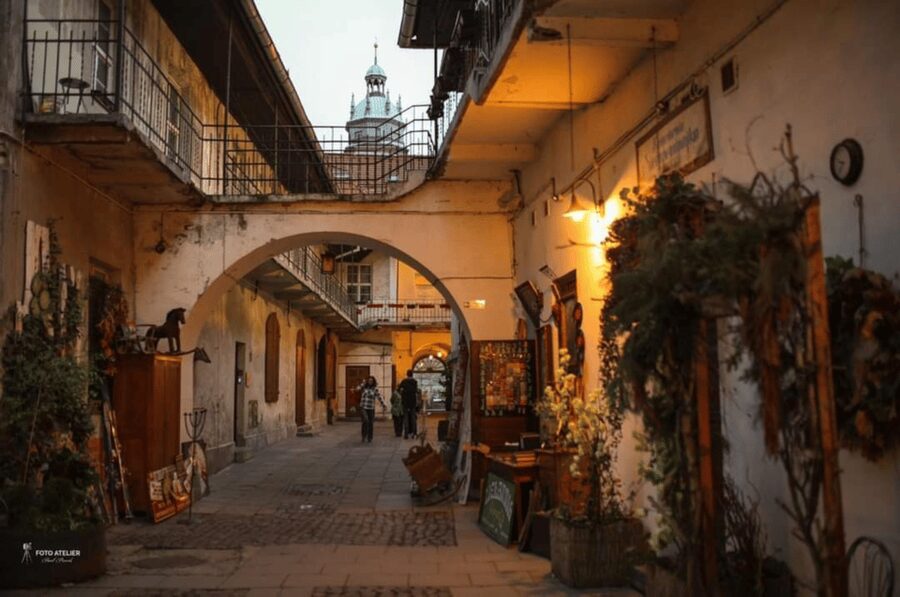
- Szeroka Street storytelling tied to centuries of Jewish and Christian life next to each other
- Interior visits to churches and synagogues, not just a walk past façades
- Real deportee testimonies that connect World War II to the present day
- Remuh and Natan Spira legends told with dates and place names you can picture
- Private group pacing with a live guide in Italian for focused attention
- Kazimierz timeline in one sitting, from the oppidum iudaeorum to postwar memory
A 3.5-hour Kazimierz walk with real deportee testimony
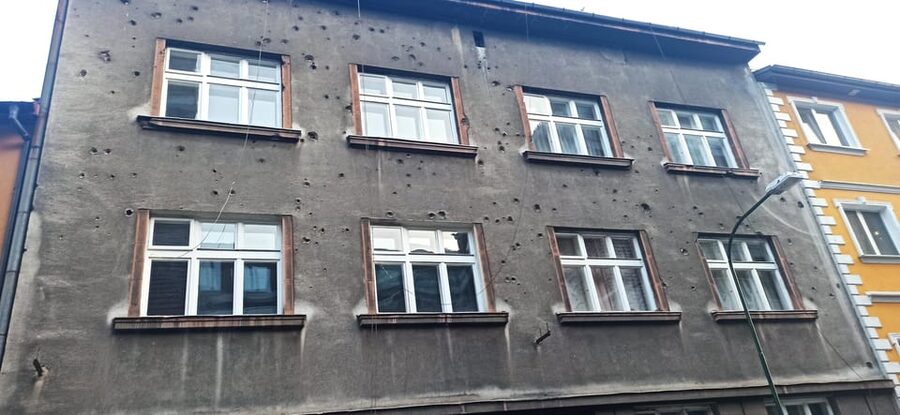
Kazimierz is not a museum you look at from a distance. It is a living neighborhood where the past still shows up in the streets, the buildings, and the way people speak about memory. This tour leans into that idea hard, moving from earlier centuries of Jewish life to the brutal break of World War II.
What makes it especially compelling is that you do not just hear about events. You get events that really happened, plus real testimonies of deportees. That blend matters. It keeps the tour from becoming a simple list of dates, and instead turns it into a sequence of human moments, some light, some heavy, all connected to the place.
I also like the way the experience is framed as the past in the present. You are not sent to a separate stage. You stay in Kazimierz and let the neighborhood itself do the work.
Further Jewish history and heritage itineraries:
- Krakow: Schindler’s Factory & Ghetto Guided Tour
★ 4.7 · 1,694 reviews - Krakow: Jewish Quarter and Former Ghetto Tour
★ 4.9 · 1,441 reviews - Krakow: Bike Tour of Old Town, Jewish Quarter and the Ghetto
★ 4.9 · 1,155 reviews
Where the tour starts: Fabric Palace at 3:30 pm
You meet at the Fabric Palace at 3:30 pm, and the visit starts at 3:45 pm. That timing is useful if your Krakow days are already packed, since it gives you a workable half day in the morning and early afternoon for other sights.
A practical note: because transport back to the center by tram is not included, plan how you will get where you need to be after the tour. The tour duration is 210 minutes (a bit over 3.5 hours), so you likely finish in the evening range. If you are staying near Old Town, build in some buffer time for walking or a quick ride.
Also, the tour is designed for a private group and is listed as wheelchair accessible. If you use a wheelchair, it is still smart to check with the operator the day before, since cobblestones and old-building entrances can change what feels easy.
Kazimierz and the oppidum iudaeorum: Szeroka Street as the spine
Kazimierz grew from a forced reality, then became a center of culture and learning. At the end of the 15th century, Krakow created an autonomous Jewish district enclosed by walls, the oppidum iudaeorum, meant to host Jews confined by the city. The current Szeroka Street sat at the center of this zone.
What I like here is that the tour does not treat Kazimierz like a single era. It walks you through how the neighborhood’s role changed:
- centuries of close proximity between Jews and Christians
- a period when Kazimierz was one of Europe’s important Jewish cultural and spiritual centers
- later incorporation into Krakow, with big shifts for how Jews lived and moved
Then it brings the story into the 19th century, when the neighborhood transitioned into an Orthodox center and a destination for Jewish pilgrimage. In 1822, the walls around the Jewish quarter were demolished, and Jews could settle freely across the Kazimierz area. That wall removal is more than a fact. It is a key moment that explains why the district’s streets and institutions developed the way they did.
You end up with a clearer sense of why Kazimierz looks the way it does today, because you know what it had to be at different times.
Inside synagogues and churches: what you gain from going in
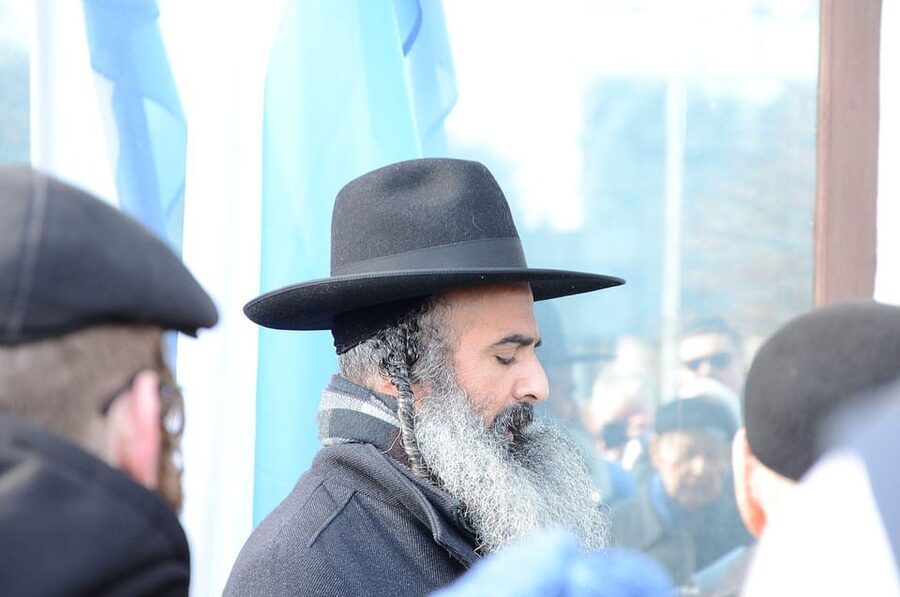
This experience includes internal visits of some churches and synagogues. That is a big deal, because Kazimierz cannot be understood only through outer views. Interior spaces hold the details that tell you how communities worshipped, studied, and gathered.
Even when you are not seeing every famous site, going indoors changes the entire feel. Light, layout, and the atmosphere of a sacred room give you a better mental picture than exterior photos can.
There is also a careful balance built into this kind of tour. Because it covers everything from spiritual life to war-time destruction and diaspora, the interior stops help you switch modes. You can feel the continuity of religious life, then feel how profoundly it was interrupted. If you are someone who likes to learn in a place, not just about it, this format fits.
Possible drawback? Interior spaces can mean quieter time and slower pacing. If you are the type who gets impatient in enclosed areas, plan to slow your own rhythm to match the guide.
More centuries between two rebuilt squares:

Remuh and candlelight on Szeroka Street, 22 Szeroka Street
A standout part of Kazimierz storytelling is how the neighborhood ties to specific scholars. This tour’s approach connects you to people you will recognize, with details that are easy to keep in your head.
One of the most memorable names is Moshe Isserles, known as Remuh, who lived in Kazimierz. His tomb is still a destination for Jewish pilgrimages from all over the world. When you hear that, it reframes your walk. You stop thinking of the district as old, and start thinking of it as still visited, still meaningful.
The tour also includes the story of Rabbi Natan Spira, who studied Jewish Kabbalah by candlelight in an attic tied to 22 Szeroka Street. There is a haunting detail here: it is said that when the candle went out in 1633, the rabbi died, of exhaustion. Whether you treat the account as legend or as deeply personal memory, the point lands. The neighborhood is not just about dates. It is about lives organized around study, faith, and endurance.
I like that the guide places these stories where your eyes can connect the dots. You leave with something you can visualize, not just information you heard and forgot.
World War II in Kazimierz: deportee testimonies and diaspora memory
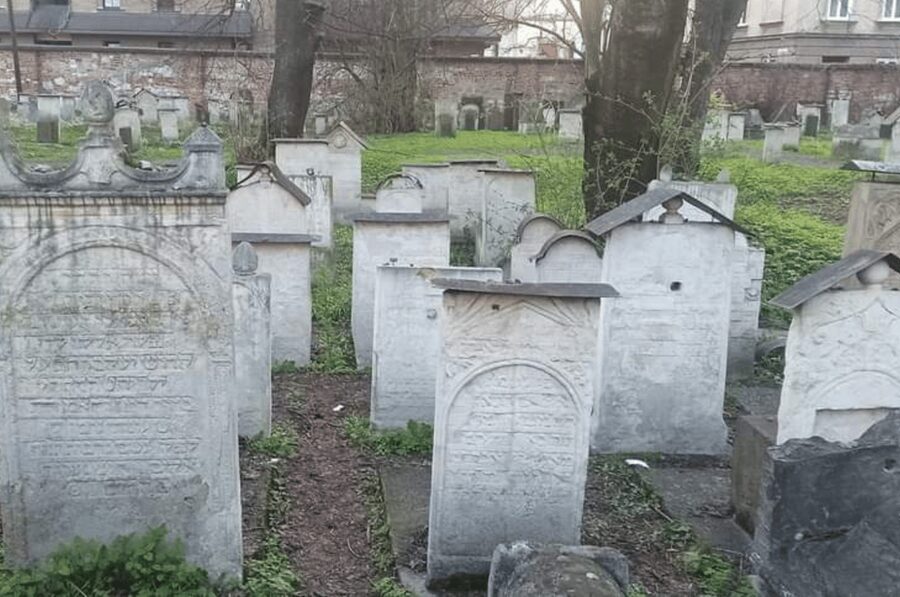
The tour does not skirt the hardest part of the district’s story. In the Second World War, Krakow’s Jewish community faced extermination and diaspora, and this experience brings you there with real testimonies of deportees and events that really happened.
For me, that combination is what prevents the subject from turning abstract. Testimony gives it a personal texture. Then the tour ties that suffering back to the streets, buildings, and the idea that Kazimierz’s past is still present.
You should also be ready for emotional whiplash in a good way. Earlier parts of the tour highlight centuries of learning and religious life. Then, without skipping the facts, the mood changes. If you prefer strictly upbeat sightseeing, this tour will probably feel too intense. If you want honest context, it is worth it.
Small practical tip: wear something comfortable and bring a bottle of water. You will likely walk, pause, and listen for long stretches, and emotional topics can make time feel slower.
Pricing and value at $46 per person for 210 minutes
The price is $46 per person for a 210-minute guided experience. On paper, that might look like a standard paid tour. In practice, the value depends on what you get inside, not just the route.
Here you get:
- a live Italian guide
- a private group format
- internal visits to churches and synagogues
- real deportee testimonies and historical context that ties specific places to events
For many city tours, you pay to walk and take photos. Here, you pay for access to interior spaces plus guided interpretation that gives you names, places, and a timeline. That makes the cost feel more like a contribution to a guided education than just a sightseeing chore.
If you are traveling with someone who likes history but hates cold, lecture-style facts, this tour’s approach can work well. It is detailed but tied to storytelling, including names like Remuh and Natan Spira.
Pacing, private group, and your experience with Leonardo
This is a private group tour with a live guide in Italian. Private does not always mean “slow” or “custom,” but it usually means you have fewer distractions and better attention from the guide.
The review highlight on guide Leonardo is consistent with what you want in a tour like this. The feedback emphasized how he offered rich detail without turning the experience into a Wikipedia lecture. That is exactly the difference between knowing facts and understanding what those facts mean in a specific neighborhood.
If you do understand Italian, you will likely enjoy the story flow. If you do not, you can still benefit, especially when the tour focuses on visible places and clear historical signposts. Just keep expectations realistic: language will shape how much you absorb.
Wheelchair accessibility is listed. That is good news, but with historic districts, you should still be prepared for uneven surfaces and step-based entrances at some points. If you need step-free access, ask ahead so you get the route you can manage comfortably.
Practical tips so you get the most out of Kazimierz
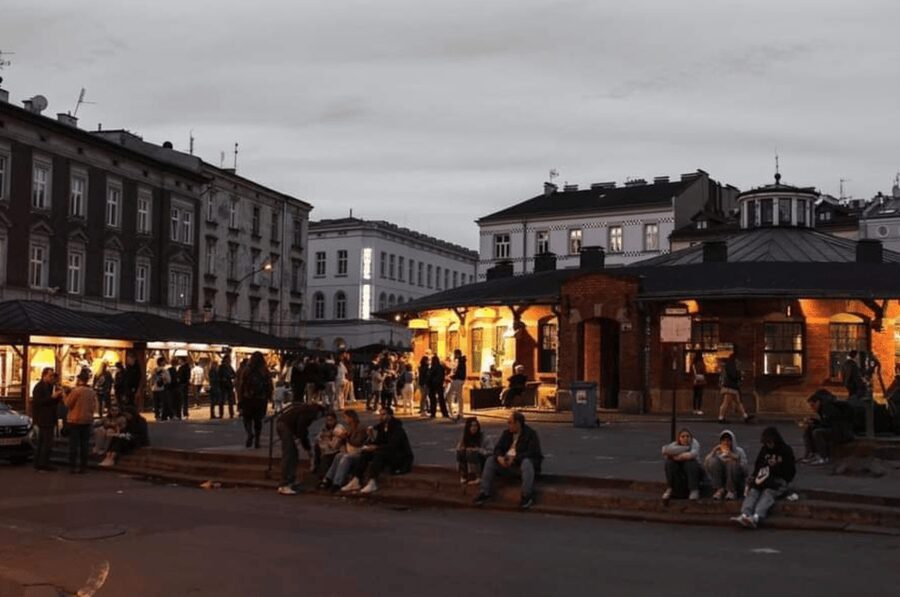
Here are a few things that help you enjoy this kind of tour without feeling stressed:
- Arrive a little early at the Fabric Palace meeting point so you are not rushing right before the 3:45 pm start.
- Wear shoes you trust. Kazimierz streets can be uneven, and you will likely spend time walking between stops.
- Plan for quiet moments. Interior visits mean lower pace and more listening time.
- Bring a water bottle, especially if you are sensitive to long guided hours.
- If you are visiting Kazimierz the same day as other heavy history stops, space them out. This tour already carries strong emotional content.
And one more small thing: keep your phone ready for notes, not just photos. When you hear place names like Szeroka Street and addresses tied to stories like 22 Szeroka Street, it helps to jot them down so you can connect the dots after the tour.
Should you book the Krakow Kazimierze Jewish History Tour?
I think you should book this tour if you want Jewish history in Krakow tied to the actual streets, and you value learning that includes real testimony, not just background facts. The combination of interior visits, named figures like Remuh and Natan Spira, and the focus on what happened during the war makes it a strong choice for people who want meaning, not just sightseeing.
You might skip it if you are only looking for light, quick context, or if Italian is a barrier for you. In that case, you would likely miss some of the nuance that makes the narration stand out.
If you want to understand Kazimierz as it was, and as it is remembered today, this tour is a focused way to do it in one late afternoon window.
FAQ
Where is the meeting point?
The meeting point is the Fabric Palace.
What time does the tour start?
You meet at 3:30 pm, and the visit begins at 3:45 pm.
How long is the tour?
The duration is 210 minutes.
What language is the tour guide using?
The tour guide speaks Italian.
Is this a private group tour?
Yes, it is a private group.
Is the tour wheelchair accessible?
Yes, it is listed as wheelchair accessible.
What is included in the tour?
The tour includes internal visits of some churches and synagogues.
Is transport back to the center included by tram?
No, transport back to the center by tram is not included.
How much does it cost?
The price is $46 per person.
Freshly posted from Krakow
- Krakow: Audio-Guided City Experience by Golf Cart★ 5.0 · 1 review
- Krakow: Zakopane and Thermal Springs Tour with Hotel Pickup★ 5.0 · 1 review
- Half-day In the footsteps of John Paul II Tour from Krakow★ 5.0 · 1 review
- Krakow: Wawel & Salt Mine Experience with Lunch★ 5.0 · 1 review
- Tour to Wadowice: Hometown of Pope Saint John Paul II★ 5.0 · 1 review
- Krakow: Outdoor Paintball with Hotel Transfers★ 5.0 · 1 review
- Krakow: Nowa Huta Communist District Walking Tour★ 5.0 · 1 review
Jewish History & Heritage Tours, compared.
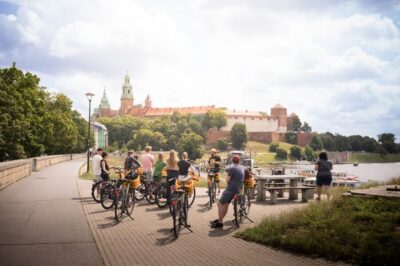
Bike Tour of Old Town, Jewish Quarter and the Ghetto
Read our review →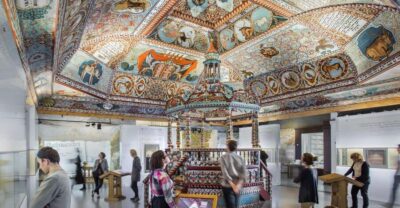
POLIN Museum of the History of Polish Jews Ticket
Read our review →
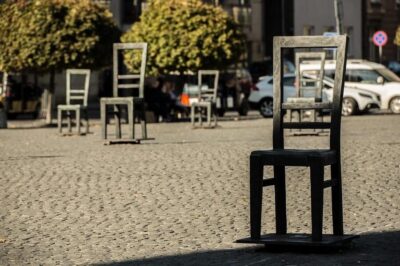
Kazimierz, Schindler’s Factory & Ghetto Guided Tour
Read our review →
Full Bike Tour – the Old Town, Jewish Qtr & the Ghetto NEW BIKES
Read our review →
Warsaw Ghetto Private Walking Tour with Hotel Pickup
Read our review →Browse the lists this tour appears in