
Reviewed · JEWISH HISTORY & HERITAGE TOURS
Krakow: Jewish Ghetto Guided Tour
You can feel history tighten around you. This 1-hour walk through Krakow’s former ghetto in Podgórze is guided by a licensed expert, taking you to the places where Nazi repression crushed daily life and where people still chose human courage. You’ll follow the route on foot, with clear context and stories that stay focused on the families who lived there and the risks of survival.
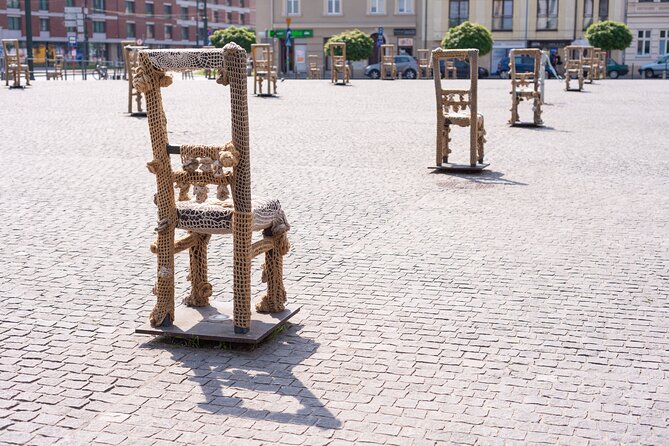
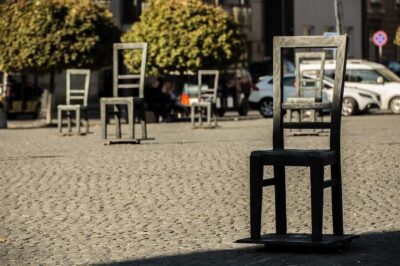
What I like most is the emphasis on real people, not abstract facts. You also get to see Ghetto Heroes Square and the haunting Chair Memorial, so the story lands in your mind in a physical way, not just on a screen.
The guides matter here, and the best ones bring both empathy and depth. I appreciate how instructors such as Annetta and Chiara are described as giving detailed explanations while also answering questions thoughtfully, so you can leave with a clearer understanding of what you just saw. Another plus: the tour connects locations into a story, including the rescue thread tied to the wider narrative around Oskar Schindler.
One consideration: this is a heavy, mostly standing and walking experience. It is not suitable for wheelchair users or people with mobility impairments, and you’ll want comfortable shoes because it is a concentrated hour on uneven city surfaces. Also, the walk begins on time and joining late is not possible after the group sets off.
In This Review
- Key things to know before you go
- Entering Podgórze, Where the Ghetto Was Rewritten
- The Ghetto Wall Remnants, Small Pieces With Big Gravity
- Ghetto Heroes Square and the Chair Memorial
- Under the Eagle Pharmacy, Where Rescue Was Extremely Risky
- Schindler’s Factory Area, Rescue Part of a Bigger Narrative
- Price and Value for a 1-Hour Guided Walk
- Languages, Group Style, and How to Get the Most Out of It
- Who This Tour Is For (and Who Should Rethink It)
- Should You Book This Krakow Jewish Ghetto Tour?
- FAQ
- How long is the Krakow Jewish Ghetto guided tour?
- How much does it cost?
- What is included in the tour price?
- Where does the tour start and where does it end?
- What languages are available for the live guide?
- Is the tour suitable for wheelchair users, and can you bring alcohol?
Key things to know before you go
- Podgórze start point: the tour begins where Nazi authorities reshaped the district into the Krakow Ghetto
- Ghetto wall fragments: you’ll see surviving remnants that make the imprisonment feel real
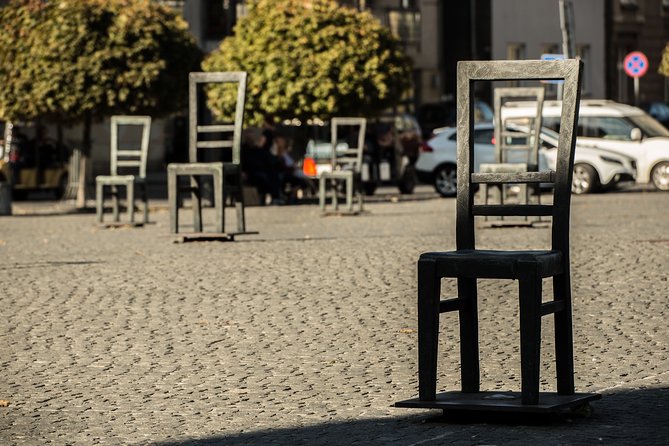
- Chair Memorial at Ghetto Heroes Square: empty metal chairs mark deportations to extermination camps
- Under the Eagle Pharmacy story: you’ll learn how Tadeusz Pankiewicz and staff provided medicine, shelter, and help at great risk
- Schindler’s Factory area, no entry: you end at the site connected to rescue, but you do not go inside
Entering Podgórze, Where the Ghetto Was Rewritten
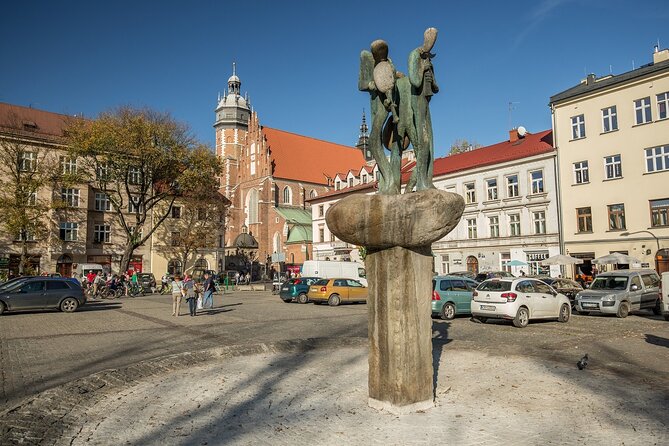
Krakow’s Jewish Ghetto walk starts in Podgórze, the district Nazi authorities transformed into the Krakow Ghetto. Even before you reach the big memorial points, the guide sets the tone by explaining what systematic persecution meant on the ground, not in theory. You move street by street through an area shaped by overcrowding, hunger, fear, and the constant threat of violence.
The value of starting here is simple: you experience how people were forced to live inside the boundaries of a brutal system. You are not just looking at monuments, you are walking through the lived-in setting where families tried to keep going. That makes the tour feel grounded and human.
You’ll also notice the way the guide frames everyday courage. The story is not only about tragedy, it also highlights solidarity and human dignity in impossible conditions. That balance matters, because it prevents the tour from becoming only grim or only instructional. It helps you understand why survival sometimes depended on small acts and risky choices.
One practical tip: because the tour is just 1 hour, the pacing is brisk. If you like to stop and read every plaque at length, you might feel a little rushed. The trade-off is that you get a tight, meaningful route without turning it into a half-day.
Further Jewish history and heritage itineraries:
- Krakow: Schindler’s Factory & Ghetto Guided Tour
★ 4.7 · 1,694 reviews - Krakow: Jewish Quarter and Former Ghetto Tour
★ 4.9 · 1,441 reviews - Krakow: Bike Tour of Old Town, Jewish Quarter and the Ghetto
★ 4.9 · 1,155 reviews
The Ghetto Wall Remnants, Small Pieces With Big Gravity
A standout moment is seeing surviving fragments of the original Krakow Ghetto Wall. These remnants are easy to miss if you are walking fast on your own, which is exactly why a guide helps. Up close, the wall pieces are not just a historical detail. They help you understand the physical and psychological imprisonment that came with being confined.
The guide uses these wall fragments to explain more than structure. You learn what it meant to have movement controlled, to live under constant surveillance, and to understand that safety could vanish at any moment. That is where a good guide earns their pay, because the wall becomes a lens for the lived experience of the residents, not only an object from the past.
I also like how the tour avoids turning the ghetto into a generic horror story. The focus stays on the people forced to live there, their struggle to survive, and those who tried to resist. You hear how daily life was squeezed, how families dealt with hunger and fear, and how even in that pressure, people still tried to protect one another.
If you are the type who needs time to process hard topics, plan a little buffer before or after. You will likely want a quiet moment after the walk to reset, especially if you are sensitive to Holocaust history.
Ghetto Heroes Square and the Chair Memorial
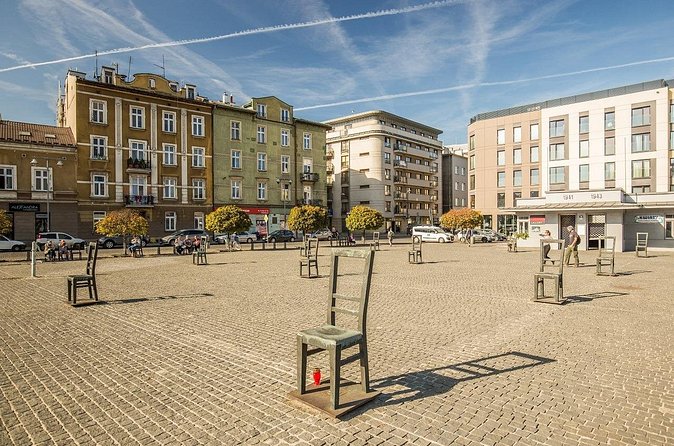
Then you reach Ghetto Heroes Square, once a central point tied to deportations to extermination camps. This is one of the tour’s most powerful stops, because the memorial does not just tell you that people were taken. It creates an emotional visual that sticks with you: rows of empty metal chairs.
The Chair Memorial changes the way you experience the space. You start looking at the chairs and then you start thinking about absence, about the abrupt ending of normal life. It is hard not to make a mental connection between everyday seating and the lives that never returned.
What I find valuable is the guide’s framing. The stop is not only about identifying what you are seeing. You get context about why the square became a focal point, and how the memorial helps preserve memory over time. This is the kind of place where silence feels appropriate, and you’ll probably notice people naturally slowing down and taking it in.
One practical note: photos are tempting here, but take a minute to decide if you are looking to document or to remember. This stop hits harder when you treat it like a memorial moment first, a sightseeing moment second.
Under the Eagle Pharmacy, Where Rescue Was Extremely Risky
After the square, the tour moves to Under the Eagle Pharmacy, a site connected to one of the most striking moral courage stories in the route. The guide explains how Tadeusz Pankiewicz and his staff defied Nazi orders to aid ghetto prisoners, providing medicine, shelter, and assistance at great personal risk.
This stop adds an essential counterpoint. The story shifts from what the system did to what some individuals tried to do against it. You still feel the terror of the era, but now you also see that compassion had consequences and that rescue could look like practical help, not only heroic gestures.
I like that the guide keeps the rescue story grounded. Medicine and shelter are not abstract. The details make it clear what people needed to survive and how dangerous it was to provide it. When the tour is done well, you leave understanding that resistance was often small and physical, and it took real courage to do it.
If you want to get the most out of this stop, ask your guide a question while you’re there. The better guides in this route are described as willing to answer questions, and that makes a difference here because the ethical questions feel personal.
Still tacked up around Krakow
Schindler’s Factory Area, Rescue Part of a Bigger Narrative
The tour ends at the Schindler’s Factory site. Important: you do not get entry, so think of this as a connection point rather than a museum visit. The guide uses the location to place rescue stories into a broader narrative that includes Oskar Schindler, helping you understand how acts of rescue fit into the larger wartime landscape.
This is useful because it prevents the tour from ending on a single emotional note. You finish with a thread that suggests survival and rescue were not only about the past, they were also about decisions people made in real time. The framing helps you connect what you learned in the ghetto streets and memorials to what happened nearby and what is remembered through these sites.
If you want to go further after the walk, you can plan your next stop accordingly since you will not be going inside on this tour. Even without entry, the ending works as a transition: you are guided to a place that many people associate with rescue, and then you’re free to explore at your own pace.
Price and Value for a 1-Hour Guided Walk
The price is listed at $15 per person, and for what you get here, it is strong value. You’re paying for a licensed expert guide plus a focused walking route through some of Krakow’s most emotionally demanding Holocaust related sites. In many cities, tours like this cost much more, and the time is often longer. Here, the hour format keeps it concentrated, which is a plus if you only have limited time.
That said, you should go in with the right expectations. This is not a casual city stroll, and it does not include food or drinks. You are walking through heavy subject matter: repression, deportation, and rescue. So the value is not just the itinerary, it is the guide’s ability to explain what you see clearly and compassionately in a short window.
Also, it is a good idea to treat the ticket as part of your broader Krakow planning. Combine it with other nearby history stops if you want a fuller day, but avoid stuffing your schedule with activities that require you to be upbeat right after. Your brain will need a little decompression.
Languages, Group Style, and How to Get the Most Out of It
The tour is offered in multiple languages, including Italian, English, French, Spanish, Russian, Swedish, Slovak, and German. One practical detail: group tours run in a single language, and you choose that at booking. That matters because translation style can shape how you receive difficult history.
If you book in English, English, French, or another language you speak well, you’ll likely get more out of the memorial context and the rescue explanation. If you’re relying on a language that is not your comfort zone, you might miss important phrasing about what each site represents.
Private group options are also available, which can be a great choice if you want more time for questions or if you have a small group with mixed interests. For this specific tour, questions can be especially valuable because the story includes both suffering and acts of help, and a guide can clarify details that a sign alone might not.
Finally, plan to arrive at the meeting point early. Joining late is not possible once the group sets off, so give yourself time to find the exact location for your booking and settle in.
Who This Tour Is For (and Who Should Rethink It)
This experience is a good fit if you want a guided walk that connects key locations into a meaningful story. It works well for visitors who:
- want a licensed guide to explain what you’re seeing
- prefer walking routes over museum-only experiences
- appreciate a focus on people forced into the ghetto and on moral courage, not only dates
- like to ask questions and get clear answers
It is not a good fit if you have mobility challenges. The tour is explicitly not suitable for people with mobility impairments or wheelchair users, and since it is only 1 hour, there is less flexibility to slow down or take frequent breaks.
It also helps to be prepared emotionally. This tour covers persecution and deportation. Even if you have visited Holocaust sites before, the Chair Memorial and pharmacy rescue story can hit hard, in a quiet, specific way.
Should You Book This Krakow Jewish Ghetto Tour?
Book it if you want a compact, well-guided route through Podgórze that takes you to the ghetto wall remnants, Ghetto Heroes Square, and the Under the Eagle Pharmacy story, and then points you toward the larger rescue narrative connected with Schindler’s Factory.
Think twice if you need a lighter, more relaxed activity right now, or if walking and standing for an hour is difficult for you. This is also best when you can give it your full attention. If you plan to rush through it while checking your phone every few seconds, you will miss what makes the guide’s work matter.
Overall, I’d call it high value and deeply meaningful. The strongest part is the way the tour turns street corners and memorial objects into a clear account of lives under Nazi rule, plus the courage of people who tried to help anyway. If that is the kind of Krakow experience you came for, this is an easy yes.
FAQ
How long is the Krakow Jewish Ghetto guided tour?
The tour lasts 1 hour.
How much does it cost?
The price is listed as $15 per person.
What is included in the tour price?
It includes an expert licensed guide and a walking tour of the former Krakow Ghetto.
Where does the tour start and where does it end?
The meeting point may vary depending on the option booked. The tour ends at the Schindler’s Factory site, and entry is not included.
What languages are available for the live guide?
The tour offers live guided options in Italian, English, French, Spanish, Russian, Swedish, Slovak, and German.
Is the tour suitable for wheelchair users, and can you bring alcohol?
No. It is not suitable for people with mobility impairments or wheelchair users. Alcohol and drugs are not allowed.
Freshly posted from Krakow
- ZALIPIE – painted village, unique small group tour from Krakow★ 5.0 · 7 reviews
- “John Paul II Route” PRIVATE -Wadowice, Kalwaria Z.-Łagiewniki★ 5.0 · 7 reviews
- Krakow: Craft Beer Tasting City Walking Tour★ 4.4 · 7 reviews
- Magic of Krakow: Guided Tour of the Old Town★ 5.0 · 7 reviews
- Krakow : Zakopane Tour + Thermal Pools with Hotel Pickup★ 4.8 · 7 reviews
- Krakow in One Day: City Tour by Electric Car★ 5.0 · 7 reviews
- Guided Tour of Plaszow Concentration Camp, Kraków★ 4.8 · 7 reviews
Jewish History & Heritage Tours, compared.
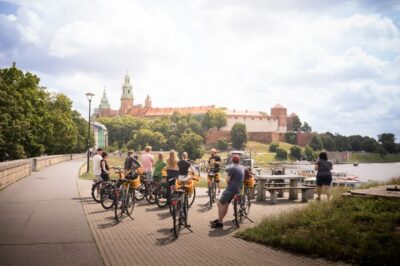
Bike Tour of Old Town, Jewish Quarter and the Ghetto
Read our review →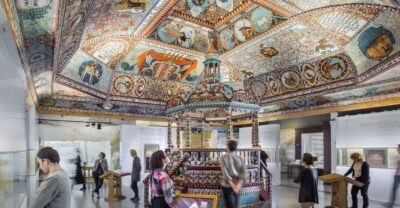
POLIN Museum of the History of Polish Jews Ticket
Read our review →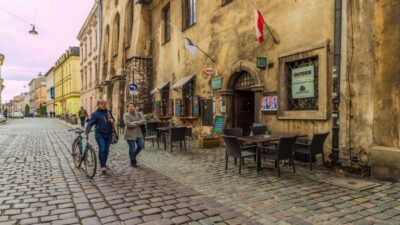
Kazimierz, Schindler’s Factory & Ghetto Guided Tour
Read our review →
Full Bike Tour – the Old Town, Jewish Qtr & the Ghetto NEW BIKES
Read our review →
Warsaw Ghetto Private Walking Tour with Hotel Pickup
Read our review →Browse the lists this tour appears in