
Reviewed · JEWISH HISTORY & HERITAGE TOURS
Krakow: Jewish Ghetto Guided Tour
Few walks hit as hard as this one. This 1-hour Krakow Jewish Ghetto tour moves through places tied to wartime daily life, starting at Schindler’s Factory and ending at Plac Bohaterów Getta. I love how the experience connects personal, human details to the larger tragedy, and I love the physical weight of the original ghetto wall. One possible drawback: the subject matter is emotionally heavy, so it is not the kind of tour you do when you need a light day.
For about $15.73 per person, you get a small-group format, capped at 24 people, and the tour runs in English with a mobile ticket for easy check-in. It also books fairly ahead of time, so if you are visiting during peak season, it is smart to lock it in early.
In This Review
- Key highlights you should not miss
- A 1-hour tour that still packs a full story
- Starting at Lipowa 4, then walking to Plac Bohaterów Getta
- Stop 1: Schindler’s Factory, where wartime life becomes visible
- Stop 2: The 12-metre stretch of original ghetto wall
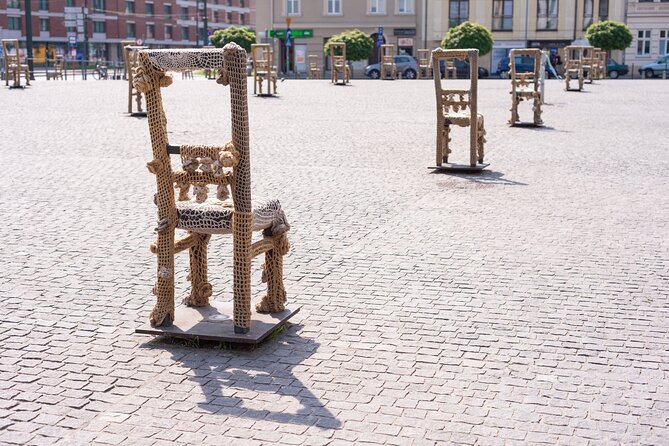
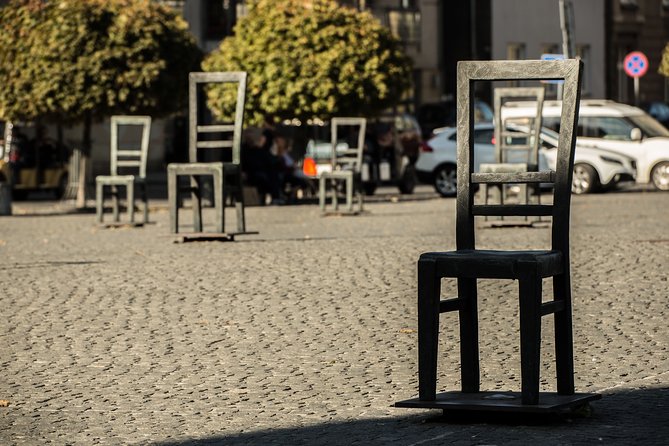
- Stop 3: Ghetto Heroes Square and the cast-iron chairs
- The guide quality, and why it changes the whole tour
- Who this tour fits best
- Price and value: what $15.73 buys you here
- Practical tips so you get more out of it
- Should you book the Krakow Jewish Ghetto guided tour?
- FAQ
- How long is the Krakow Jewish Ghetto guided tour?
- What language is the tour offered in?
- Where does the tour start and end?
- Do I need a paper ticket?
- How many people are in a group?
- When should I book?
- What is the cancellation policy?
Key highlights you should not miss
- Schindler’s Factory museum context: a modern museum experience tied directly to Krakow wartime reality
- The original ghetto wall section: a rare, 12-metre stretch with a memorial plaque in Hebrew and Polish
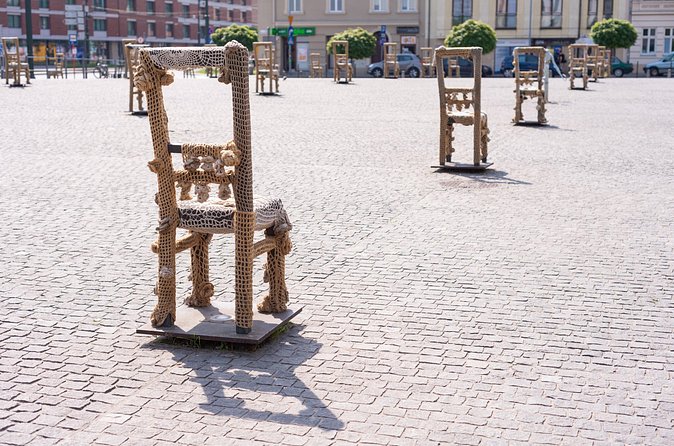
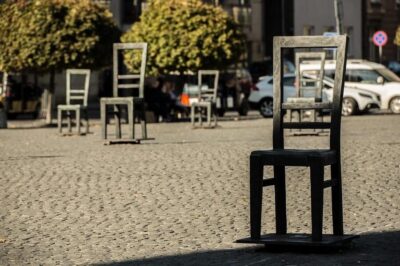
- Ghetto Heroes Square and the chairs: cast-iron seating symbolizing belongings left behind after liquidation
- Small group, 24 people max: easier to ask questions and hear the guide well
- English-led guiding: strong enough to keep even the less-focused group members moving in the right direction
A 1-hour tour that still packs a full story
This is the kind of time-tested Krakow walking tour that respects your schedule while still making the message land. You are looking at roughly an hour, not a multi-hour commitment, but the stops are chosen so you get both setting and symbols, not just dates and names.
Value matters here. At $15.73, you are paying for focused interpretation, not a long self-guided route you cobble together yourself. A guide also helps you read what you are seeing, especially at sites where the details can be easy to miss if you do not know what to look for.
And because it stays small, you can usually hear the explanation clearly. That matters in places like this, where the guide is doing more than pointing. They are giving context for daily life and the ways suffering unfolded in Krakow during World War II.
Further Jewish history and heritage itineraries:
- Krakow: Schindler’s Factory & Ghetto Guided Tour
★ 4.7 · 1,694 reviews - Krakow: Jewish Quarter and Former Ghetto Tour
★ 4.9 · 1,441 reviews - Krakow: Bike Tour of Old Town, Jewish Quarter and the Ghetto
★ 4.9 · 1,155 reviews
Starting at Lipowa 4, then walking to Plac Bohaterów Getta
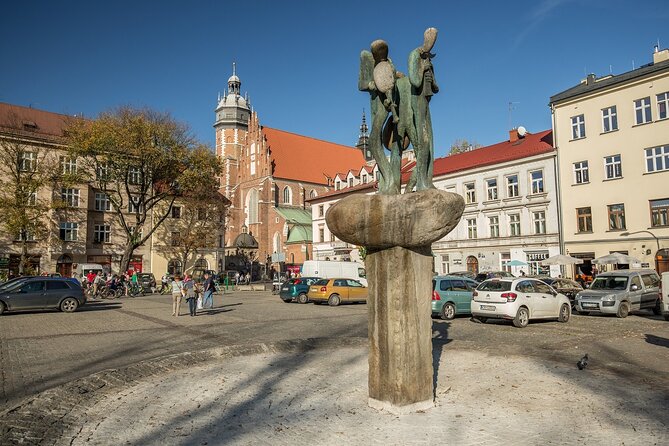
The tour begins at Lipowa 4 in Kraków and ends at Plac Bohaterów Getta. That end point is a good “wrap” location because it anchors the final stop in a memorial space tied to what happened to the Jewish population in the Podgórze district.
It is also convenient in practical terms. The meeting area is near public transportation, so you are not forced into a complicated logistics puzzle before you even start. If you are trying to stack Krakow sites in a day, this helps.
Bring your patience for an emotional experience. Even if you are well-prepared with reading, you still have to process what the places represent. The route is short, but the content is intense.
Stop 1: Schindler’s Factory, where wartime life becomes visible
The tour’s first major anchor is the museum connected to the Schindler’s Factory site. This is the same location associated with Schindler’s List, the film that put a global spotlight on Krakow’s wartime reality, but the experience here is not just film trivia. The museum presents day-to-day life alongside the tragic events that took place in Krakow during World War II.
What I like about starting here is that it sets your mental map fast. Before you see walls and memorial squares, you understand what life was like, what was taken away, and what the city’s Jewish community faced. In other words, the later stops feel less like separate “photo points” and more like pieces of one story.
The exhibition style also matters. It is described as unusual and modern, and that is a big part of why people walk through it feeling something. A modern approach can make history less distant, more immediate, and more specific. Just be ready for a museum experience that does not try to be comfortable.
One practical tip: plan for your attention to be pulled in multiple directions. Museums like this often include details you will want to look at longer than you expect. Since your guided tour time is limited, listen closely to the guide’s pointers so you do not miss the key interpretive thread they are emphasizing.
Stop 2: The 12-metre stretch of original ghetto wall
After the museum, the tour moves you into a rare physical reminder of the ghetto itself: a 12-metre stretch of the original ghetto wall. That number sounds small until you stand in front of it. When a city has changed, original remnants become fragile proof. Here, you are looking at an actual surviving piece.
The wall also has a commemorative plaque with text in Hebrew and Polish. The words on it matter because they spell out what happened in plain, direct language: here they lived, suffered and died at the hands of German torturers, and from here they began their final journey to the death camps. You are not left guessing what the memorial is saying, and the bilingual presentation underlines that this was a community rooted in Krakow, not an abstract concept.
Why this stop is powerful for you, even if you think you already “know” the history: walls make consequences visible. You feel how movement can be controlled, how space can be weaponized, and how ordinary streets become a boundary for people who had no choice. Even for visitors who prefer architecture and “things you can see,” this is not just a sight. It is a document made of stone and memory.
A small caution: because this is a surviving piece, it can feel tight or visually constrained compared with open squares. If you are someone who likes lots of room to take photos and casually look around, you may need a second to adjust your expectations. Focus first on the guide’s explanation, then take photos if and when the moment feels right.
Still tacked up around Krakow
Stop 3: Ghetto Heroes Square and the cast-iron chairs
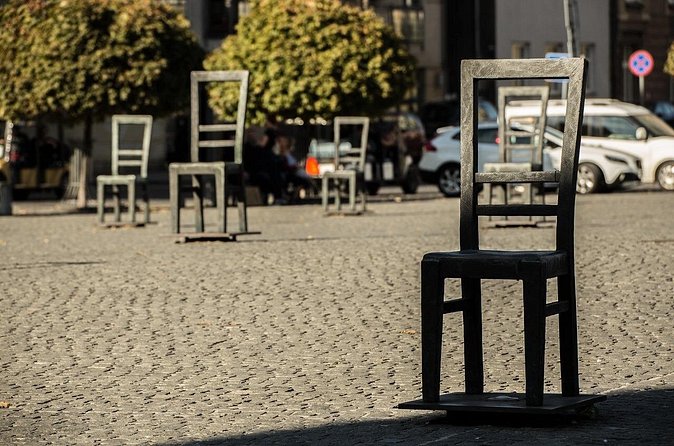
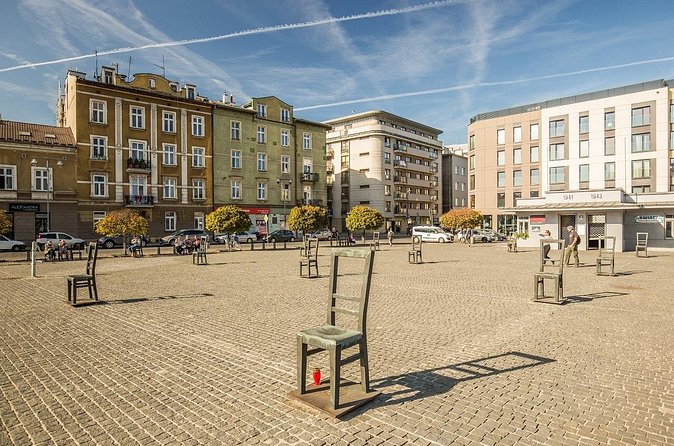
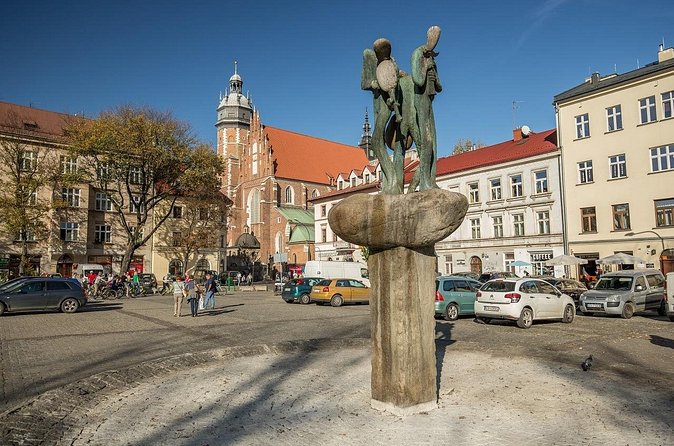
The final stop is Ghetto Heroes Square in the Podgórze district, a place that was within the ghetto during the years 1941 to 1943. This square served as a concentration point before deportations to concentration camps.
What you will notice is the unusual monument made of several dozen cast-iron chairs, standing individually across the square. The chairs symbolize property and belongings of Krakow Jews scattered on the streets after the liquidation of the ghetto. It is a memorial language that works even if you do not speak the local language well. Chairs are universal. They imply home, routine, and the everyday objects that should have stayed put.
This stop is valuable because it shifts the conversation from only suffering to what was erased. The loss here is not only lives. It is belongings, household patterns, and the physical markers that tell you someone lived there as more than a victim.
If you want a small mental exercise for this part, try it: imagine a normal square with normal daily movement, then picture what it would mean when people are displaced and belongings are scattered. The chairs help you make that connection quickly, and that is why the monument design works.
Also, because you end at Plac Bohaterów Getta, you finish in a space built for remembrance rather than in the middle of city traffic. That makes it easier to let the final message settle.
The guide quality, and why it changes the whole tour
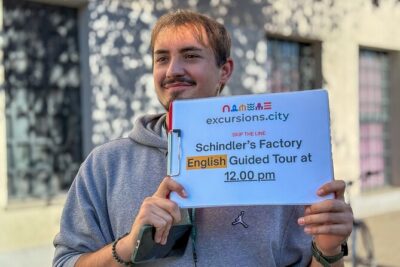
The biggest difference between a good “see the sites” outing and a meaningful guided walk is how the guide handles the group. In this tour, the guiding approach stands out: the explanation is described as very informative, with insight into life inside the ghetto, and the guide also manages a group when some participants are clearly less engaged.
That matters more than people think. In a setting like this, you do not want the tour to feel like it is drifting. A good guide keeps the pace purposeful, ties each location back to the story, and gives you a coherent sequence instead of disconnected facts.
The language quality also gets credit. The tour is offered in English, and feedback highlights friendly guiding with excellent English. If you have ever been on an English-language tour where the guide had to “push through,” you know how much that affects comprehension. Here, the interpretation is set up so you can follow without mental strain.
And because the tour is limited to 24 travelers, the group dynamic tends to stay manageable. Smaller groups usually mean fewer distractions, and you are less likely to lose the key points when the explanation gets specific.
Who this tour fits best
I think this tour suits you if you want a focused, high-impact history walk that does not swallow your whole day. It is also a good match if you like learning from real places, not just reading from a museum placard.
You will likely enjoy it if you:
- like guided context at memorial sites
- want a short Krakow experience with clear, meaningful stops
- prefer English interpretation without complicated language logistics
If you are the type who needs lighter sightseeing and comedy right after a heavy subject, I would adjust expectations. This is not built to distract you. It is built to help you understand what happened and why the physical reminders still matter.
Also, this experience is described as suitable for most travelers. Still, go in knowing it is emotionally intense and involves walking between points in Kraków.
Price and value: what $15.73 buys you here
At $15.73 per person, this tour is priced like an accessible entry point to an emotionally heavy story. You are not paying for luxury. You are paying for three key things that are hard to DIY efficiently: interpretation at the museum site, grounding you with the original wall fragment, and making sense of the symbolism in Ghetto Heroes Square.
Here is the value equation I would use as you decide:
- Short duration means less time away from other Krakow sights
- A guide helps you connect each stop, which is hard to do alone
- The small group size improves the odds you will actually hear the key points
If you are on a tight schedule in Krakow and you want one guided walk that hits the core landmarks, this pricing feels fair. If you are someone who always prefers to wander with zero structure and read everything yourself, you might feel limited by the one-hour format. But most people looking for meaning usually find the time well spent.
Practical tips so you get more out of it
A few small moves can make a big difference on tours like this.
First, come with a little curiosity. Even if you know basic WWII history, the power here is in how the tour frames daily life and material remnants, not just the outline of events.
Second, give the museum stop your attention. The museum setting at Schindler’s Factory is the interpretive foundation. If you rush it, the wall and chairs can feel like separate memorial objects instead of a coherent story.
Third, keep your phone use respectful. Photos are not banned in the description you were given, but memorial sites are best treated with care. If you want photos, take them after the guide’s main explanation, not during the moments when you need to listen.
Finally, wear comfortable shoes. This is a walking-based tour route between Kraków locations. The itinerary is not long, but you will be on your feet.
Should you book the Krakow Jewish Ghetto guided tour?
I would recommend booking this tour if you want a short, guided route that connects Schindler’s Factory, an original remnant of the ghetto wall, and the symbolic memorial design at Ghetto Heroes Square. It is strong for English speakers, it runs in a small group, and the guiding quality seems to be a real focus, not an afterthought.
I would think twice if you need a light, purely sightseeing day. This is heavy material. The chairs, the wall plaque text, and the memorial framing are meant to stay with you.
If you are in Krakow with limited time and you want one experience that gives you structure, meaning, and a clear ending, this is a solid choice. Just bring the right mindset, and let the places do the talking.
FAQ
How long is the Krakow Jewish Ghetto guided tour?
It runs for about 1 hour.
What language is the tour offered in?
The tour is offered in English.
Where does the tour start and end?
It starts at Lipowa 4, 32-051 Kraków, Poland, and ends at Plac Bohaterów Getta, Kraków, Poland.
Do I need a paper ticket?
No, you get a mobile ticket.
How many people are in a group?
The tour has a maximum of 24 travelers.
When should I book?
On average, this experience is booked 17 days in advance.
What is the cancellation policy?
You can cancel for free up to 24 hours in advance for a full refund. If you cancel less than 24 hours before the start time, the amount paid is not refunded.
Freshly posted from Krakow
- Krakow: Audio-Guided City Experience by Golf Cart★ 5.0 · 1 review
- Krakow: Zakopane and Thermal Springs Tour with Hotel Pickup★ 5.0 · 1 review
- Half-day In the footsteps of John Paul II Tour from Krakow★ 5.0 · 1 review
- Krakow: Wawel & Salt Mine Experience with Lunch★ 5.0 · 1 review
- Tour to Wadowice: Hometown of Pope Saint John Paul II★ 5.0 · 1 review
- Krakow: Outdoor Paintball with Hotel Transfers★ 5.0 · 1 review
- Krakow: Nowa Huta Communist District Walking Tour★ 5.0 · 1 review
Jewish History & Heritage Tours, compared.
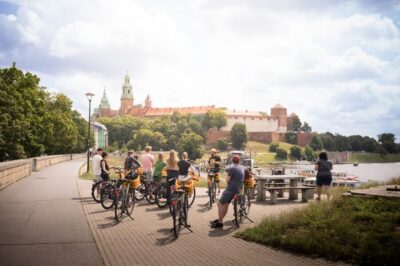
Bike Tour of Old Town, Jewish Quarter and the Ghetto
Read our review →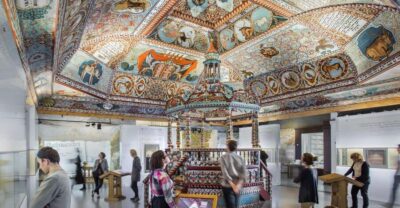
POLIN Museum of the History of Polish Jews Ticket
Read our review →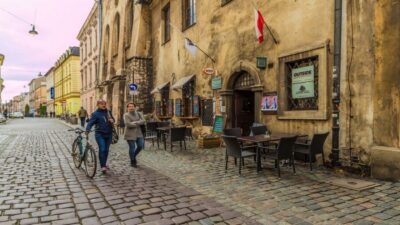
Kazimierz, Schindler’s Factory & Ghetto Guided Tour
Read our review →
Full Bike Tour – the Old Town, Jewish Qtr & the Ghetto NEW BIKES
Read our review →
Warsaw Ghetto Private Walking Tour with Hotel Pickup
Read our review →Browse the lists this tour appears in