
Reviewed · JEWISH HISTORY & HERITAGE TOURS
Krakow Jewish District Private Tour. Kazimierz and Jewish Ghetto
Jewish Krakow hits you fast. On this Kazimierz Jewish Quarter private walk, I like that your private guide turns street corners into clear, human-scale lessons about Poland’s Jewish past, and I also like the close-up, on-foot look you get along Szeroka Street and the synagogue cluster. One note: several stops are explained from outside, so if you want lots of inside time, this format may feel a bit limited.
At about 2 hours 30 minutes, the pace is tight but doable. You’ll start with the Wolf Popper Synagogue, then fan out through the Kazimierz streets, and finally move to the ghetto wall fragment and Ghetto Heroes Square, with a stop at the Mrs. Dresner courtyard and stairs connected to Schindler’s List.
One more thing I appreciate is that this feels like a real walking tour, not a headset tour. One review specifically flagged that they did not expect a prepared audio track, and that difference is important, because you’re hearing context, not just background noise. If your timing hits Jewish holidays when places close, you may still see the sites and get the explanations.
In This Review
- Key Points Worth Noticing Before You Go
- Why Kazimierz and the Krakow Ghetto Pair So Well
- Price and Value: What You Get for $96.11 Per Person
- The Walking Pace: 2.5 Hours That Actually Feel Manageable
- Stop by Stop: Wolf Popper Synagogue to Szeroka Street
- Wolf Popper Synagogue: A Focused Opening
- Szeroka Street: The 45-Minute Walk That Gives You Bearings
- The Synagogue Cluster: Remuh, Old Synagogue, and Outside-Only Stops
- Remuh Synagogue and Old Synagogue (Seen From Outside)
- Jewish Community Center and the 17th-Century Synagogue From Outside
- Plac Nowy: A Break in the Route That Helps the Story Land
- Reformed, Izaak, and a 16th-Century Synagogue
- Schindler’s List Site at Mrs. Dresner, Then the Ghetto Stops
- Mrs. Dresner Courtyard and Stairs: Movie Site With Real Context
- Ghetto Wall Fragment: A Physical Reminder
- Ghetto Heroes Square: A Focused Wrap on Meaning
- What the Guide Style Feels Like (Based on Real Feedback)
- Getting Your Bearings in Kazimierz, Without Turning It Into a Checklist
- Practical Tips: Shoes, Pickup, and Holiday Closures
- Who Should Book This Tour, and Who Might Want a Different Option
- Should You Book the Krakow Jewish District Private Tour?
- FAQ
- How long is the Krakow Jewish District private tour?
- Is this tour private or shared with other groups?
- What language is the tour offered in?
- Is pickup included?
- Do the stops require paid admission?
- Will I receive a ticket on my phone?
- Is there free cancellation?
- Is this tour suitable for most people, and are service animals allowed?
Key Points Worth Noticing Before You Go
- Wolf Popper Synagogue stop with a short explanation and free admission ticket
- Szeroka Street time built for walking the oldest part of the Jewish quarter
- Many synagogue stops from outside so you see variety without a long queue
- Mrs. Dresner courtyard and stairs tied to the Schindler’s List movie site
- Ghetto wall fragment plus Ghetto Heroes Square for the strongest WWII-era context
- Private licensed local guide for Q&A, plus pickup and an English option
Why Kazimierz and the Krakow Ghetto Pair So Well
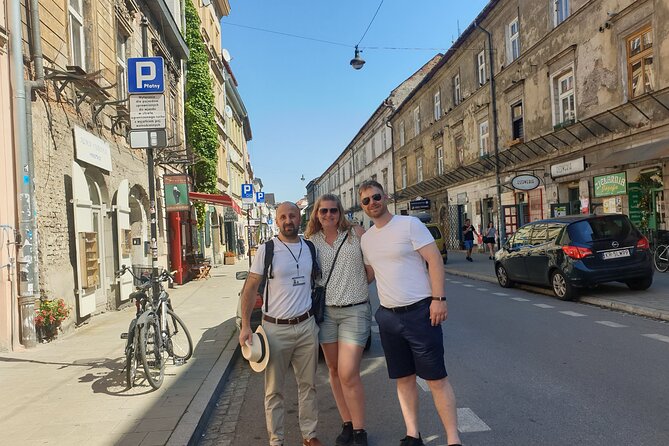
Kazimierz is the heart of pre-war Jewish Krakow, and it helps to see it on foot. A walking route like this keeps the story grounded in geography, so you are not just collecting names. You’re looking at a neighborhood layout, then shifting into the more painful ghetto-era section of the city.
I like that the route connects the dots in a practical way. You begin with synagogues and Jewish community spaces, then you move toward the physical remnants of the ghetto, like the wall fragment and the Heroes Square stop. That movement helps most people understand why the later sites hit so hard, because you’ve already built some sense of community life.
Also, the tour length works. Two and a half hours is long enough to feel like you covered something real, but short enough that you can keep your attention during heavy WWII history moments.
Further Jewish history and heritage itineraries:
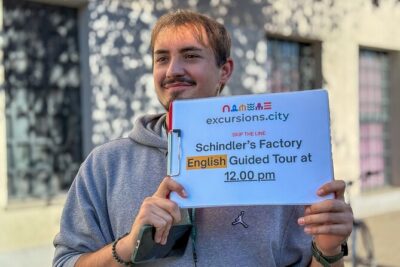
- Krakow: Schindler’s Factory & Ghetto Guided Tour
★ 4.7 · 1,694 reviews - Krakow: Jewish Quarter and Former Ghetto Tour
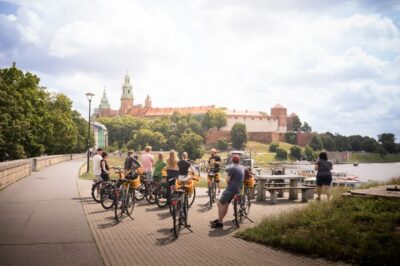
★ 4.9 · 1,441 reviews - Krakow: Bike Tour of Old Town, Jewish Quarter and the Ghetto
★ 4.9 · 1,155 reviews
Price and Value: What You Get for $96.11 Per Person
At $96.11 per person, this is not a budget grab, but it also does not try to be a luxury product. You are paying for a licensed private local guide, and that matters here because the subject is sensitive and details matter. The route includes multiple stops with free admission tickets and planned explanations, so you are not spending your time searching for answers on your own.
You’ll also get a few value boosters. Pickup is offered, which can save you time and hassle if you do not want to navigate with a map. You get a mobile ticket, and group discounts are available. And because it is private, you and your group set the rhythm within the planned stops.
If you prefer learning through conversation, this is where private time pays off. Reviews highlight how detailed the guide’s information was and how moving the WWII context felt. That kind of impact is hard to get from an audio app.
The Walking Pace: 2.5 Hours That Actually Feel Manageable
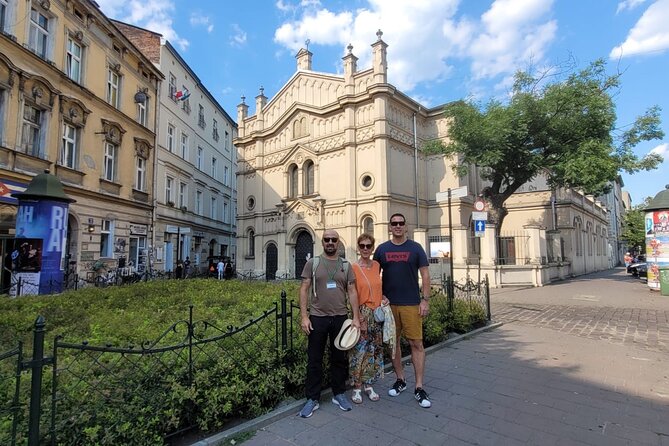
This tour is designed around short explanations and walking blocks, not marathon trudging. Expect comfortable shoes advice for a reason. You’ll cover Szeroka Street on foot for about 45 minutes, and then you’ll move between key landmarks in the Jewish district.
The stop durations are tight enough that you get variety without getting lost in one topic too long. There is also a practical benefit to the outside viewing stops, even though it is not what some people hope for. You can still read the area and absorb context, while avoiding long lines and time-consuming backtracking.
If you already walked earlier in Krakow, you’ll still be able to enjoy this. One review noted that they had done another walking tour in the morning, and they still felt the guide respected their pace and did not try to overstuff the day.
Stop by Stop: Wolf Popper Synagogue to Szeroka Street
Still tacked up around Krakow

Wolf Popper Synagogue: A Focused Opening
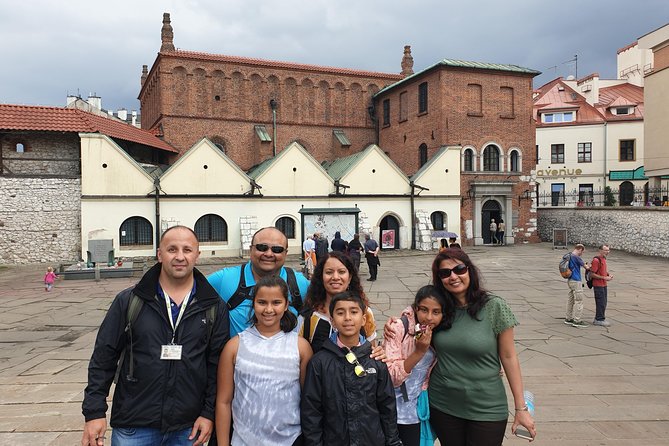
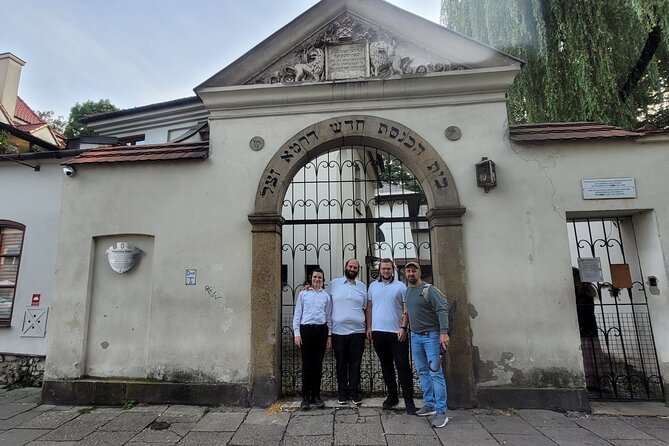
You start at the Wolf Popper Synagogue for a short, concentrated introduction, around 10 minutes, with a free admission ticket. This first stop does a useful job: it gives you grounding before you go wandering down the neighborhood streets.
Why it helps: when you start with a real institution, the later street-level landmarks make more sense. You are learning how the Jewish community’s religious life and communal life connect, then you’re walking through the area that held all that activity.
Szeroka Street: The 45-Minute Walk That Gives You Bearings
Next comes Szeroka Street, including about 45 minutes of walking along one of the oldest parts of the Krakow Jewish Quarter. This is where you start to see the neighborhood as a place with corners, sightlines, and a recognizable flow.
I love walking routes like this because you get more than a photo checklist. You can feel the shape of the district and understand why certain sites would have been close neighbors. It also sets you up for the synagogue cluster coming up next, because you’re already oriented in the area.
A small practical note: if the weather is hot or rainy, plan to slow down at natural breaks. Your guide’s explanations are timed, but your comfort is your responsibility, so water and layers help.
The Synagogue Cluster: Remuh, Old Synagogue, and Outside-Only Stops
After Szeroka Street, you’ll keep moving through the historic synagogue landscape. Several stops are described from outside, each with short explanations. That design choice is not a “less is more” trick. It is practical, and it keeps the tour within a realistic 2.5 hours.
Remuh Synagogue and Old Synagogue (Seen From Outside)
Remuh Synagogue from outside gets about 15 minutes of explanation, and the Old Synagogue from outside gets about 10 minutes. If you are expecting to go inside for everything, this is where you need to adjust expectations.
Still, outside explanations can be effective. From street view, you can compare how the area evolved and how different synagogues relate to the neighborhood. It also keeps your tour moving, so you can reach the ghetto-era stops without feeling rushed at the end.
Jewish Community Center and the 17th-Century Synagogue From Outside
You also stop at the Jewish Community Center for about 10 minutes of explanation. Then there is a 17th Century Synagogue from outside, again with a short guided introduction. These stops are important because they broaden the focus beyond worship spaces.
If you only learn synagogue names, you end up with a narrow story. Community institutions give you a sense of how everyday life and communal support fit into the picture, which makes the later WWII history feel more personal.
Plac Nowy: A Break in the Route That Helps the Story Land
Plac Nowy is part of this middle stretch. Even though it is not listed as a long stop, it works as a mental reset. When you move from synagogue stop to synagogue stop, a public square area helps your brain connect the dots between religious life and neighborhood life.
Reformed, Izaak, and a 16th-Century Synagogue
Next are the Reformed Synagogue from outside (about 10 minutes), the 17th Century Izaak Synagogue from outside (about 10 minutes), and a 16th Century Synagogue stop (duration not specified, but it remains part of the route). This sequence keeps the focus on a concentrated geography.
Why this matters for you: seeing multiple synagogue types in one walk helps you understand diversity within Jewish life in Krakow, not just one single story. It also gives you an easy way to ask questions when something sparks curiosity. With a private guide, you are not waiting for the whole group to catch up.
One small heads-up based on real-world conditions: if your visit lands on a Jewish holiday when some doors close, you may still get the explanations and see the areas. One review mentioned Simchat Torah closures, but the guide still helped them understand what existed, even with certain spaces shut.
Schindler’s List Site at Mrs. Dresner, Then the Ghetto Stops
This is the emotional shift portion of the tour. The good news is the route keeps the stops short, so you are not forced to “power through” too long between meaningful points.
Mrs. Dresner Courtyard and Stairs: Movie Site With Real Context
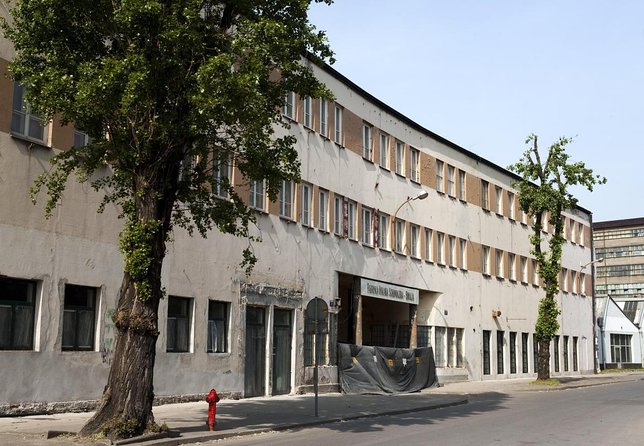
You spend about 10 minutes at Mrs. Dresner courtyard and stairs, identified as a Schindler’s List movie site. For many people, this is where the history becomes more than a textbook.
I find these kinds of stops work best when the guide brings you back to the human scale. Even without details you might hope for, the location itself can create a strong sense of place, and the guided explanation helps connect that sense to what it represents.
Ghetto Wall Fragment: A Physical Reminder
Next is the ghetto wall fragment for about 10 minutes. This is one of the most direct “you are here” moments of the tour.
Seeing remnants like this does something that maps cannot. It turns the idea of confinement into something concrete. If you want the strongest visual anchor for the WWII ghetto story, this stop is it.
Ghetto Heroes Square: A Focused Wrap on Meaning
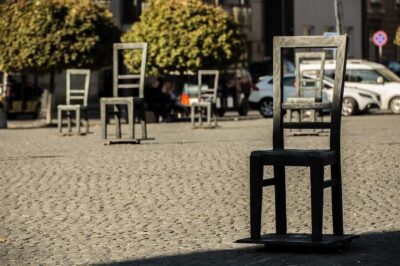
You finish with Ghetto Heroes Square for about 20 minutes. That longer final stop gives you time to let the last pieces settle. It also helps if you have questions, because you are not sprinting immediately to another location.
From a practical standpoint, ending with a square works well for navigation afterward. You can orient yourself for lunch, a return to your hotel, or your next Krakow plan.
What the Guide Style Feels Like (Based on Real Feedback)
This tour lives or dies on the guide, and reviews suggest the guide approach is a big win.
The most praised aspect in the feedback is the amount of detailed information. People also described the WWII material as moving, which tells me the explanations are delivered with care rather than as dry facts. That matters on topics like this, because you want clarity and respect, not just trivia.
Another theme is attention to pacing. One review singled out Christopher and said the guide did not pressure them to keep going beyond what they wanted, especially since they had already done a walking tour earlier. For you, that translates to a calmer experience. If you need a moment to process, you can usually ask for it.
Finally, one review highlighted that they did not expect a prepared audio recording. That is a helpful expectation to set for yourself. This is best when you are ready to listen to a live local guide, ask questions, and treat the walk like a conversation with a good teacher.
Getting Your Bearings in Kazimierz, Without Turning It Into a Checklist
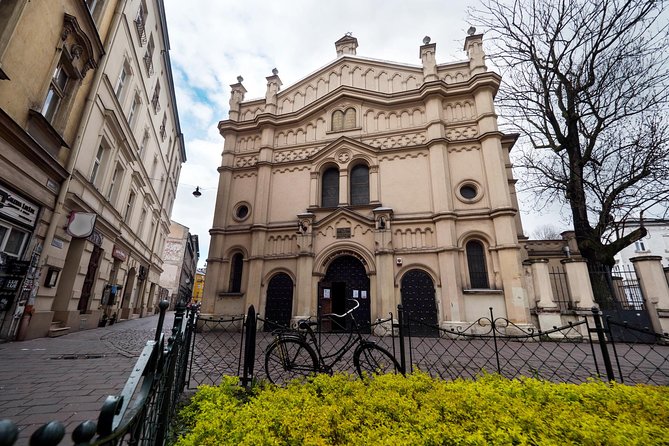
A walking tour can easily become a sprint of photos. This one has built-in structure with clear stop times, which helps prevent that. It starts with synagogues, then shifts to community life, then lands on ghetto-era remnants.
For you, the winning strategy is simple. Before you go, decide what you want most: religious-site context, WWII ghetto context, or the neighborhood geography. Then ask the guide one question in each category as you go. That turns the tour into a targeted learning experience instead of a general overview.
Also, bring your curiosity. You will see a synagogue cluster with multiple from-outside stops. Those are exactly the moments to ask why one building is placed where it is, or what differences the guide points out among the sites.
Practical Tips: Shoes, Pickup, and Holiday Closures
- Wear comfortable shoes. This is a walking route with street transitions.
- Plan for outside viewing. Several synagogues are described from outside, so do not judge the tour based on inside access.
- If you use pickup, confirm the meeting point. Pickup is offered, but you still want clarity on where you’ll be picked up.
- Use the mobile ticket. It is part of the tour design.
- Expect possible closures on holidays. One real visit mentioned Simchat Torah closures, but the guide still provided explanations and helped make sense of what you could and could not access.
If you like to keep control of your day, you’ll also appreciate that the tour feels respectful of how long you want to linger. One review described the guide as not pushing. That is the kind of tour dynamic that makes it easier to enjoy a serious topic without stress.
Who Should Book This Tour, and Who Might Want a Different Option
Book this if you want a focused history walk through Kazimierz and the Krakow ghetto sites, with a private licensed local guide and free-entry stops marked on the route. It is especially good for history enthusiasts who like clear explanations and structured walking.
Also consider it if you learn best by asking questions. A live guide gives you a chance to steer the conversation, whether you care more about community life, synagogue differences, or the ghetto remnants.
Skip it, or at least set expectations, if your top priority is spending most of the tour inside religious spaces. Several stops are explicitly from outside with explanation time, so your experience will be built more around street-level context than interior visits.
Should You Book the Krakow Jewish District Private Tour?
I think you should book it if you want a guided walk that links neighborhood geography to Jewish history, then to ghetto-era reality. The strongest reason is the way the route is structured: it starts with synagogues and community spaces, then moves toward the ghetto wall fragment and Ghetto Heroes Square. That order helps the story land.
The other reason is value for the format. You get a licensed private local guide, a 2.5-hour time window, and multiple free-entry stops, plus pickup is offered. With a 4.9 rating and a strong recommendation rate, this is the kind of tour where you feel safe spending your limited Krakow time.
If you know you want only inside access, adjust your expectations before you go. Otherwise, this tour is a sharp, respectful way to understand Kazimierz and the ghetto sites without turning it into a confusing self-guided scavenger hunt.
FAQ
How long is the Krakow Jewish District private tour?
It lasts about 2 hours 30 minutes.
Is this tour private or shared with other groups?
It is private. Only your group will participate.
What language is the tour offered in?
The tour is offered in English.
Is pickup included?
Pickup is offered.
Do the stops require paid admission?
The stops listed on the tour are marked with admission ticket free.
Will I receive a ticket on my phone?
Yes, there is a mobile ticket.
Is there free cancellation?
Yes. You can cancel for free up to 24 hours in advance for a full refund.
Is this tour suitable for most people, and are service animals allowed?
Most people can participate, and service animals are allowed. Comfortable shoes are recommended.
Freshly posted from Krakow
- ZALIPIE – painted village, unique small group tour from Krakow★ 5.0 · 7 reviews
- “John Paul II Route” PRIVATE -Wadowice, Kalwaria Z.-Łagiewniki★ 5.0 · 7 reviews
- Krakow: Craft Beer Tasting City Walking Tour★ 4.4 · 7 reviews
- Magic of Krakow: Guided Tour of the Old Town★ 5.0 · 7 reviews
- Krakow : Zakopane Tour + Thermal Pools with Hotel Pickup★ 4.8 · 7 reviews
- Krakow in One Day: City Tour by Electric Car★ 5.0 · 7 reviews
- Cracow: Wawel Castle and Cathedral Guided Tour★ 5.0 · 7 reviews
Jewish History & Heritage Tours, compared.
Bike Tour of Old Town, Jewish Quarter and the Ghetto
Read our review →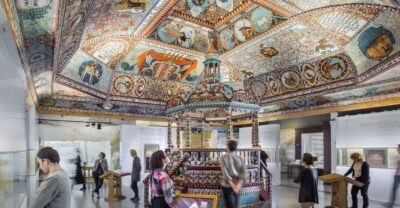
POLIN Museum of the History of Polish Jews Ticket
Read our review →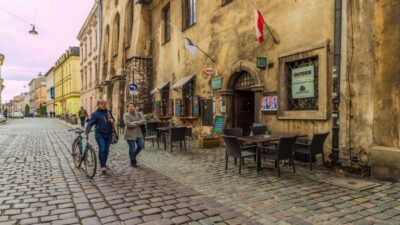
Kazimierz, Schindler’s Factory & Ghetto Guided Tour
Read our review →
Full Bike Tour – the Old Town, Jewish Qtr & the Ghetto NEW BIKES
Read our review →
Warsaw Ghetto Private Walking Tour with Hotel Pickup
Read our review →Browse the lists this tour appears in