
Reviewed · JEWISH HISTORY & HERITAGE TOURS
Krakow: Guided Tour of the Jewish Ghetto
Kraków’s wartime streets hit hard. This 1-hour guided walk through the former Jewish Ghetto in Podgórze turns quiet corners into a clear, human story of daily life, deportations, and survival. You’ll move step by step through places that still carry weight in real buildings and real street lines, with a licensed guide to connect it all (Podgórze).
I love seeing the Ghetto Wall remains in person, because fragments can still make the scale feel real. I also love stopping at the Chair Memorial, where loss is marked in a way that feels direct and unforgettable.
One possible drawback: at just one hour, you’ll hit the key sites, but you may want more time for questions and to sit with the memorial moments.
In This Review
- Key Highlights Worth Your Time
- First Stop in Podgórze, Where the Story Starts
- The Ghetto Wall Remains, Small Pieces With Big Impact
- Ghetto Heroes Square and the Chair Memorial
- Under the Eagle Pharmacy, Bravery You Can See
- Authentic Wartime Buildings and Street Layouts
- How the 1-Hour Pace Works (and Where It Falls Short)
- Price and Value: Why $15 for a Guided Walk Makes Sense
- Meeting Point at the Schindler Factory Entrance
- Language Options and Local Guide Style
- Who This Tour Fits Best
- Should You Book This Kraków Jewish Ghetto Tour?
- FAQ
- How long is the Kraków Guided Tour of the Jewish Ghetto?
- How much does the Kraków Jewish Ghetto guided tour cost?
- Where is the meeting point for the tour?
- What language options are available for the live guided tour?
- What are the main stops or highlights during the tour?
- Is food or drink included in the tour price?
- Is free cancellation available?
- Can I reserve now and pay later?
Key Highlights Worth Your Time
- Ghetto Wall fragments that help you grasp how a whole community was enclosed within a few blocks
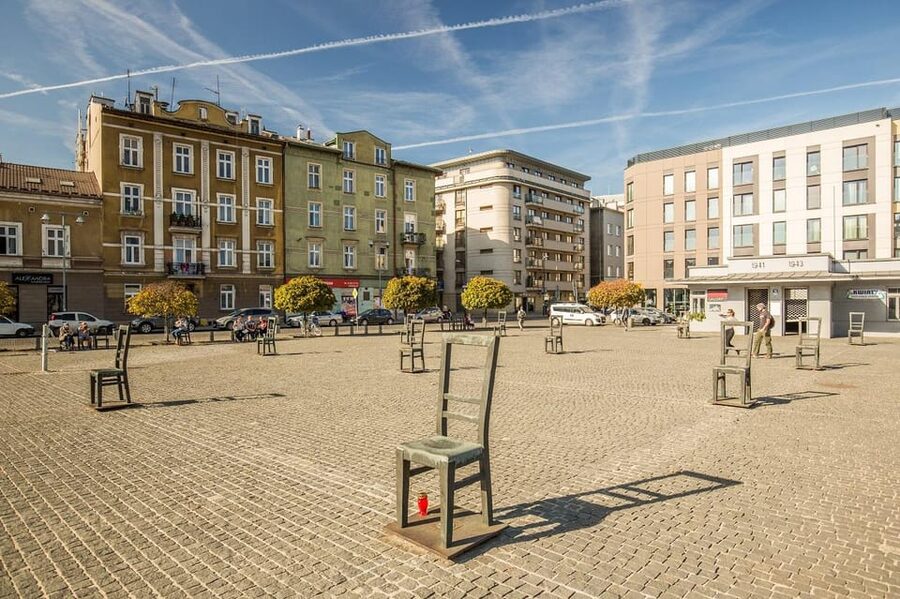
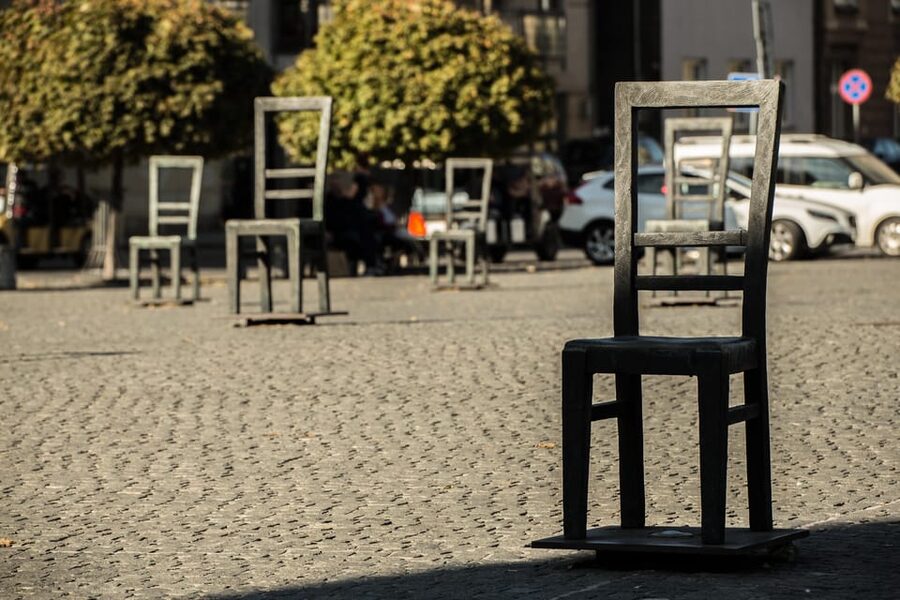
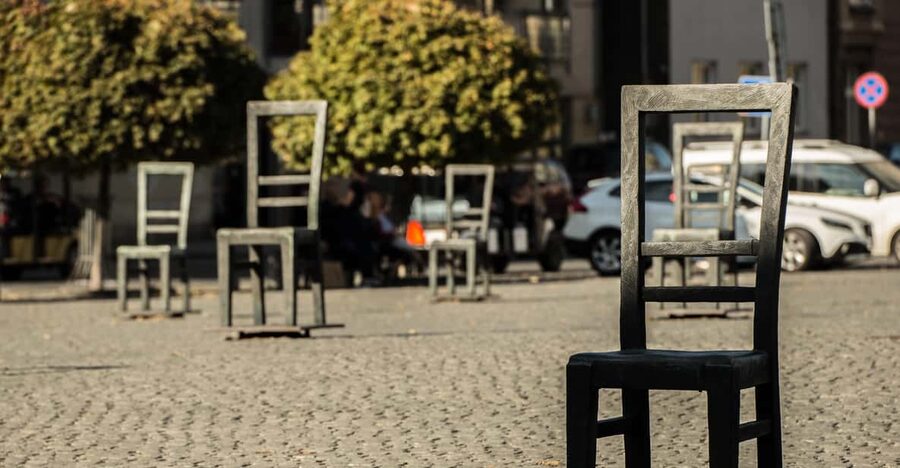
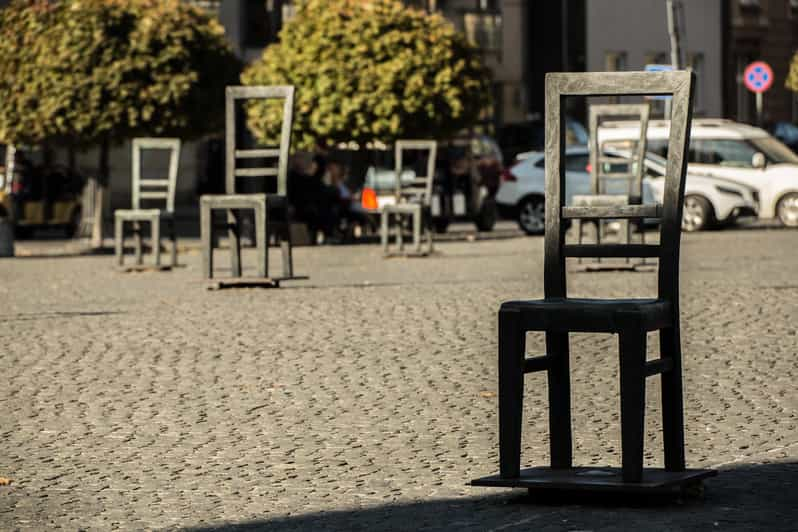
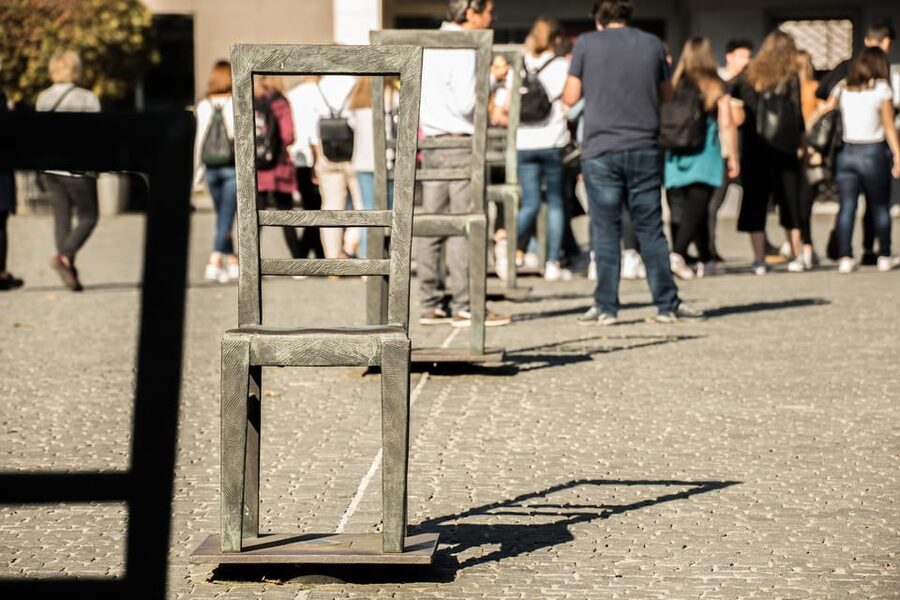
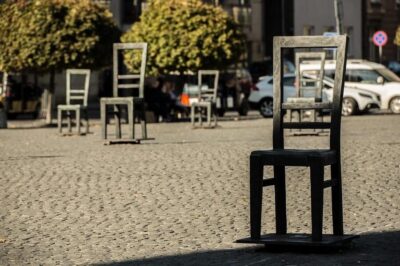
- Ghetto Heroes Square and the Chair Memorial, with dozens of empty metal chairs marking lost lives
- Under the Eagle Pharmacy and the bravery of Tadeusz Pankiewicz and his staff
- Authentic wartime street layout that makes the geography of fear easier to understand
- A guided focus on daily life, deportations, and survival, not just dates and statistics
First Stop in Podgórze, Where the Story Starts
The tour begins in Podgórze, the district that became the site of the Kraków Ghetto during World War II. Even before you reach the major memorials, the walk helps you reframe the neighborhood. You start to see how ordinary streets can become part of an extraordinary, brutal system.
This is one of the best parts of the experience: the guide sets up your mental map early. You’re not just looking at plaques. You’re learning what it meant to live in a place designed to control movement, create fear, and squeeze daily routines into impossible conditions.
You’ll also get a sense of how the ghetto wasn’t only about catastrophe. It was about people managing hunger, illness, family responsibilities, and small acts of care while knowing the threat was always there.
Further Jewish history and heritage itineraries:
- Krakow: Schindler’s Factory & Ghetto Guided Tour
★ 4.7 · 1,694 reviews - Krakow: Jewish Quarter and Former Ghetto Tour
★ 4.9 · 1,441 reviews - Krakow: Bike Tour of Old Town, Jewish Quarter and the Ghetto
★ 4.9 · 1,155 reviews
The Ghetto Wall Remains, Small Pieces With Big Impact
Next comes the remains of the original Ghetto Wall. This is one of those moments where the guide’s narration matters a lot, because surviving fragments can look modest until you understand what they once enclosed.
The wall remnants are described as some of the few surviving sections that once enclosed more than 15,000 people within a few city blocks. That number gives context, but the real lesson is how space becomes policy. When you see the physical boundaries, you understand why daily life felt trapped, monitored, and constantly at risk.
I like that this stop is not treated like a wall-only photo stop. The guide connects the wall to daily hardships and solidarity inside those boundaries. That makes the structure feel less like an artifact and more like a condition people lived under.
Practical note: you’re walking outdoors, and you’ll probably pause more than you expect for explanation. Comfortable shoes really help.
Ghetto Heroes Square and the Chair Memorial
Then you reach Ghetto Heroes Square, described as the heart of the ghetto. It’s the kind of place where the setting does the speaking. You can feel why the square became a gathering point for deportations to concentration camps, and why it now functions as a memorial.
The Chair Memorial is made up of dozens of empty metal chairs, with each chair representing a life lost during the Holocaust. Instead of relying on a single statue image, this creates a repeated pattern, so you register the scale emotionally rather than only intellectually.
What I like about this stop is that it doesn’t try to be dramatic. The emptiness is the message. You’ll likely feel the tension between what should be present, and what is gone.
If you’re the type who hates when tours rush reflection, you’re in luck. The tour includes a moment at the end specifically for reflection, but this square often creates its own pause naturally.
Under the Eagle Pharmacy, Bravery You Can See
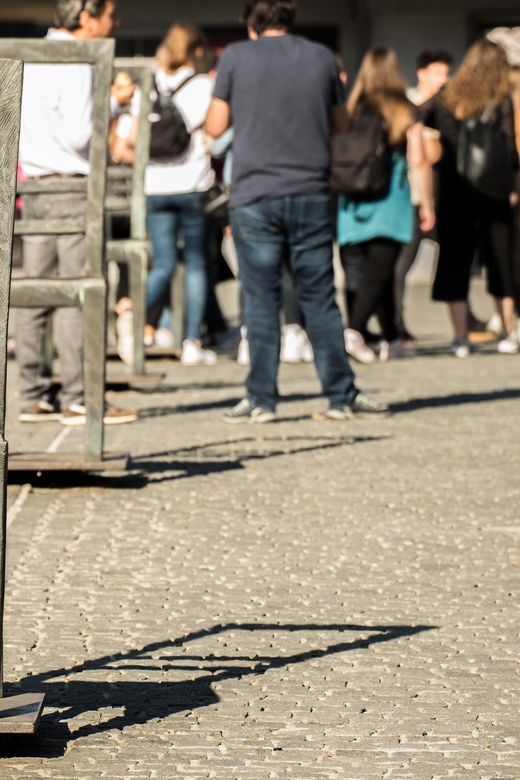
Across the square is the historic Under the Eagle Pharmacy, a site tied to rescue and risk. Here, the guide shares stories connected to Tadeusz Pankiewicz and his staff, who risked their lives to help ghetto residents by providing medicine and shelter.
This part changes the tone in a useful way. History here isn’t only about how systems destroy people. It’s also about how individuals choose to help, even when helping is dangerous.
I think this stop is powerful for two reasons. First, medicine and shelter are basic needs, so the story connects to everyday survival. Second, the idea that a pharmacy could become a lifeline gives the entire ghetto story a more human shape, not just a story of suffering.
Expect the guide to connect bravery to moral choice, not just hero branding. You’ll walk away with a clearer sense of what “resistance” can look like when it’s not loud or public.
Still tacked up around Krakow
Authentic Wartime Buildings and Street Layouts
One of the tour’s most underrated strengths is how much attention it pays to authentic wartime buildings and street layouts. It’s easy to remember names and dates. It’s harder to understand how the geography of a city supports control.
As you walk, the guide helps you read the streets like a map of events. Where people would gather, where movement could be restricted, how the city’s structure shaped daily reality. That turns a memorial route into something closer to a lesson in spatial history.
This matters because ghetto life wasn’t just one big moment. It was daily movement under fear, repeated sorting into categories, and constant uncertainty about what tomorrow could bring. When you can connect the narrative to the city’s lines, you understand why survival required constant adaptation.
You might also notice that the tour focuses on how deportations were part of the ghetto’s function in the war system. The guide’s storytelling aims to show what was happening in real time for real people, including how fear and survival coexisted.
How the 1-Hour Pace Works (and Where It Falls Short)
This tour is designed for a tight timeframe: 1 hour total. That can be a good thing. You get a focused route with the key stops, and you’re not stuck for hours when your schedule is packed.
But the flip side is time for questions, or for lingering longer at the memorial moments. The walk is intense. Even if you’re fast, you’ll likely feel like your brain needs extra minutes at Ghetto Heroes Square and at the wall fragments.
So I’d plan this tour with intention. If you’re visiting Kraków for the first time, consider doing this earlier in your trip so the story informs how you experience nearby sites later, including the area around the Schindler Factory Museum.
If you’re sensitive to heavy themes, go in expecting emotion. The tour does not dodge tragedy. It uses the locations to keep the information grounded and human.
Price and Value: Why $15 for a Guided Walk Makes Sense
The price is about $15 per person for a 1-hour walking tour with a professional guide. For Kraków, that’s a straightforward, relatively accessible price point for a guided historical experience.
Value here comes from the fact that you’re not just seeing “sites.” You’re getting interpretation, including stories of daily life, deportations, survival, and rescue efforts tied to Tadeusz Pankiewicz. Without a guide, you’d likely get some context from signs, but you’d miss the connective tissue that turns locations into understanding.
Also, the included guide is licensed, and that matters with sites like this. The details are precise, and good guidance helps you read what you’re seeing without getting lost.
You should also factor in what’s not included: no food or drink. So if you’re doing this mid-day, bring water and a small snack plan for afterward.
Meeting Point at the Schindler Factory Entrance
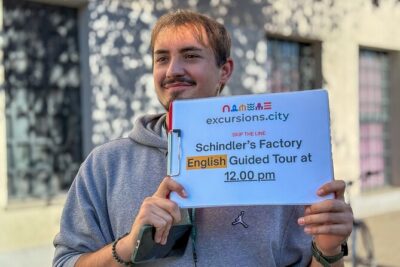
For logistics, meet your guide at the entrance to the Schindler Factory Museum. Look for someone holding an “excursions.city” sign.
This is helpful because the area is already a major historical zone, so it’s easy to combine visits. If you want a smooth day, you can time this so you’re not crisscrossing the city.
Because the tour is short, show up a little early. That extra time helps you settle your thoughts before you start walking, and it keeps the group moving at the pace the guide set.
And since multiple languages are offered, it’s also smart to check that you get the language option you want.
Language Options and Local Guide Style
The live tour guide is available in German, Italian, English, French, and Spanish. That’s a big plus if your group has mixed language needs.
From the reviews, one thing I really like is that the guides seem to handle the history part well, while still being personable and helpful in practical ways. One review even mentioned that the guide recommended a good rugby bar after the tour, which tells you they’re paying attention to what visitors care about beyond the walking route.
That doesn’t mean the tour turns casual. It just means your guide is likely to be human, clear, and willing to point you toward the city after the heavy material.
Who This Tour Fits Best
This Jewish Ghetto tour works best if you want a structured, respectful route with strong context. It’s ideal for:
- First-time visitors to Kraków who want a single, focused historical experience
- People who learn best through storytelling tied to specific locations
- Anyone interested in WWII-era life, deportations, and survival, not just memorials
It might be less ideal if you’re looking for a light, relaxed outing. This is a heavy subject, and the tone matches the places you’re visiting.
If you’re the type who wants to read every plaque, this one-hour format may feel tight. You’ll get the highlights, but you may want to continue exploring on your own after the tour.
Should You Book This Kraków Jewish Ghetto Tour?
Yes, I think you should book it if you want the main ghetto sites connected into a clear story in just one hour. The route hits the key emotional anchors, including the Chair Memorial and the Under the Eagle Pharmacy rescue story tied to Tadeusz Pankiewicz, and the guide helps you understand why the street layout and surviving wall fragments matter.
Book it with two expectations: it’s a walking tour, and it’s emotionally serious. If you can handle that, this is excellent value and a meaningful way to understand Kraków’s WWII chapter in a way that sticks.
FAQ
How long is the Kraków Guided Tour of the Jewish Ghetto?
The tour lasts 1 hour.
How much does the Kraków Jewish Ghetto guided tour cost?
The price is $15 per person.
Where is the meeting point for the tour?
Meet at the entrance to the Schindler Factory Museum, and look for a guide holding an “excursions.city” sign.
What language options are available for the live guided tour?
The tour guide is available in German, Italian, English, French, and Spanish.
What are the main stops or highlights during the tour?
You’ll visit the remains of the original Ghetto Wall, Ghetto Heroes Square with the Chair Memorial, and the Under the Eagle Pharmacy, plus you’ll see authentic wartime buildings and street layouts.
Is food or drink included in the tour price?
No. Food and drink are not included.
Is free cancellation available?
Yes, you can cancel up to 24 hours in advance for a full refund.
Can I reserve now and pay later?
Yes. You can reserve now and pay later, keeping travel plans flexible.
Freshly posted from Krakow
- Krakow: Zakopane and Thermal Springs Tour with Hotel Pickup★ 5.0 · 1 review
- Krakow: Audio-Guided City Experience by Golf Cart★ 5.0 · 1 review
- Half-day In the footsteps of John Paul II Tour from Krakow★ 5.0 · 1 review
- Krakow: Wawel & Salt Mine Experience with Lunch★ 5.0 · 1 review
- Tour to Wadowice: Hometown of Pope Saint John Paul II★ 5.0 · 1 review
- Krakow: Outdoor Paintball with Hotel Transfers★ 5.0 · 1 review
- Krakow: Nowa Huta Communist District Walking Tour★ 5.0 · 1 review
Jewish History & Heritage Tours, compared.
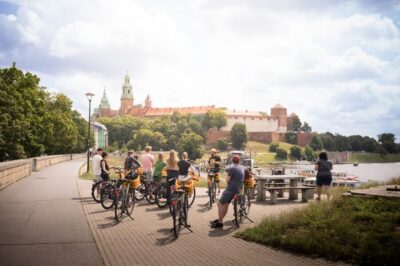
Bike Tour of Old Town, Jewish Quarter and the Ghetto
Read our review →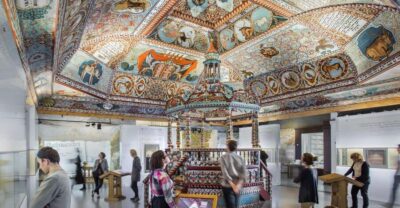
POLIN Museum of the History of Polish Jews Ticket
Read our review →
Kazimierz, Schindler’s Factory & Ghetto Guided Tour
Read our review →
Full Bike Tour – the Old Town, Jewish Qtr & the Ghetto NEW BIKES
Read our review →
Warsaw Ghetto Private Walking Tour with Hotel Pickup
Read our review →Browse the lists this tour appears in