
Reviewed · SCHINDLER'S FACTORY MUSEUM TOURS
Kazimierz, Schindler’s Factory & Ghetto Guided Tour
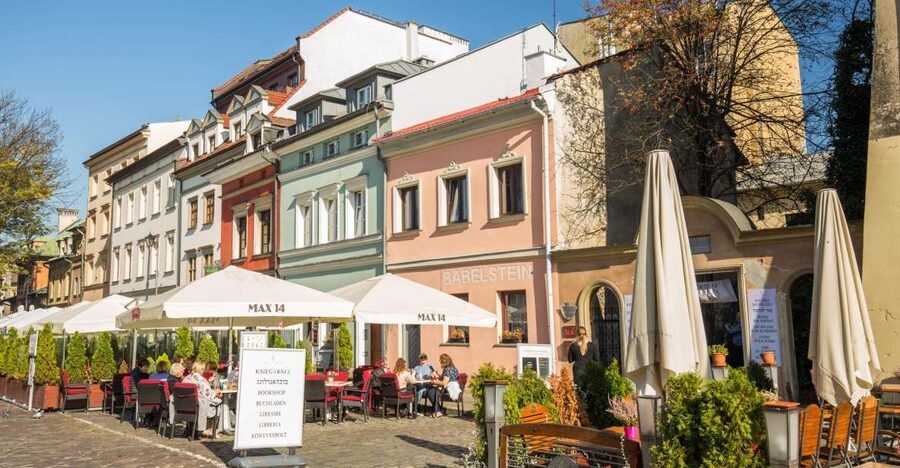
Krakow tells its Jewish story on foot. This 5-hour walk gives you Kazimierz street life first, then brings you into the WWII reality through Schindler’s Factory and the former ghetto area. I love that the guide ties daily traditions to the war years, and I also love the fast-track admission that saves time at Schindler’s Factory. The main drawback is simple: some museum and memorial areas can feel tight with a full group, so comfortable shoes and a little patience help.
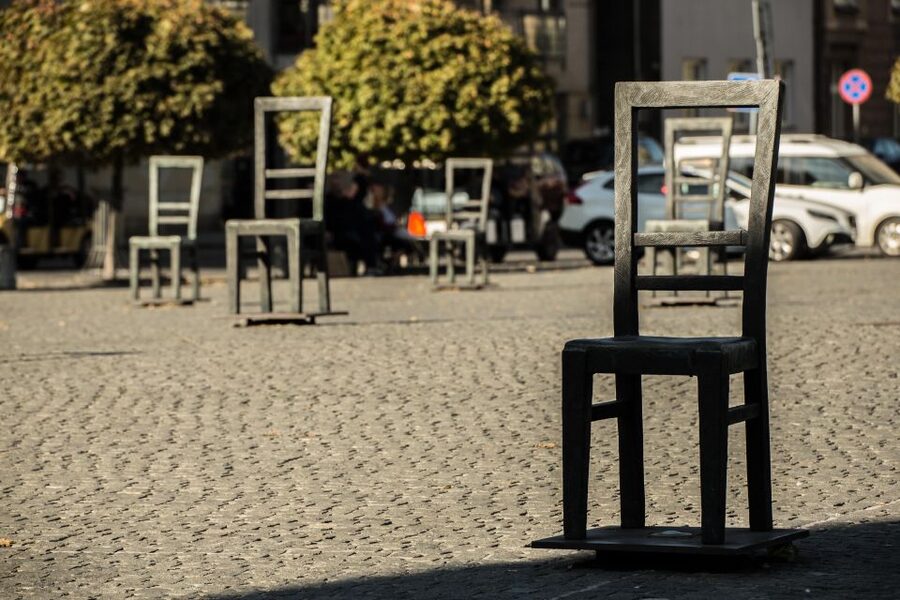
You start on Szeroka Street, in the atmospheric heart of Krakow’s historic Jewish Quarter, and you work through major synagogues like the Old Synagogue (now a Jewish history museum) and Remuh’s cemetery. Then the tone shifts in Schindler’s Enamel Factory museum, where the story of Oskar Schindler and the people he helped is front and center. Finally, Podgórze shows you the physical boundaries of the ghetto, including fragments of wall and Ghetto Heroes Square with its memorial of empty metal chairs.
The tour is led by a licensed guide, kept to a maximum of 25 people, and offered in several languages (French, English, German, Spanish, Italian). Meet on the steps of the Old Synagogue, and plan to arrive at least 10 minutes early so you do not miss entry once the group goes in.
In This Review
- Key highlights to plan around
- Kazimierz and Podgórze: why this route hits harder than a list of stops
- Starting at the Old Synagogue steps: getting grounded fast
- Kazimierz on foot: synagogues, cemetery space, and Jewish community life
- The Old Synagogue museum stop you can actually absorb
- Remuh Synagogue and Cemetery: where memory lives
- Kupa Synagogue and Tempel Synagogue: contrast in today’s community
- Plac Nowy to close Kazimierz: where the neighborhood keeps moving
- Schindler’s Enamel Factory: why skipping the line matters
- Oskar Schindler explained in plain human terms
- Podgórze Ghetto remnants: walls, boundaries, and Ghetto Heroes Square
- How the 5-hour pace works, and who will enjoy it most
- Price and value at $81 for a guide-led, fast-track day
- Tips that make the day easier (and more respectful)
- Should you book the Kazimierz, Schindler’s Factory and Ghetto guided tour?
- FAQ
- Where do I meet the guide?
- How long is the tour?
- How much does it cost?
- Is food included?
- What sites will I visit during the tour?
- Is there fast-track admission?
- What languages are available?
- What is the maximum group size?
- Do I need to provide my full name for tickets?
- What should I do about weather?
- What is the cancellation rule?
Key highlights to plan around
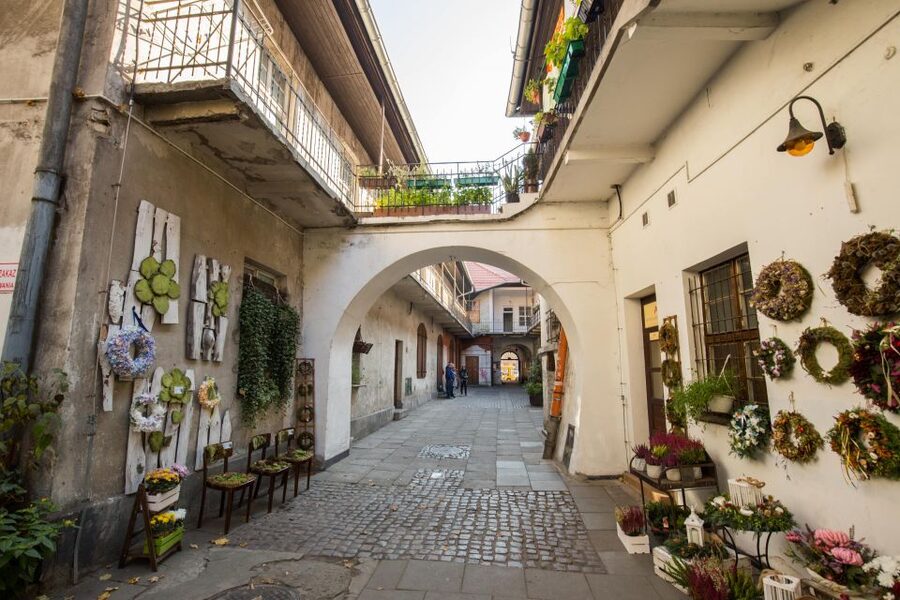
- Old Synagogue to Remuh Cemetery: major places of faith, memory, and Jewish community life in one walking route
- Schindler’s Enamel Factory skip-the-line entry: more time inside the museum, less time waiting outside
- Oskar Schindler explained as a story of action: how his influence helped protect Jewish workers from deportation
- Ghetto walls and Ghetto Heroes Square: remnants of the boundary, plus a memorial with empty metal chairs
- Small-group feel up to 25 people: enough voices to stay lively, but still manageable in most tight spots
Kazimierz and Podgórze: why this route hits harder than a list of stops
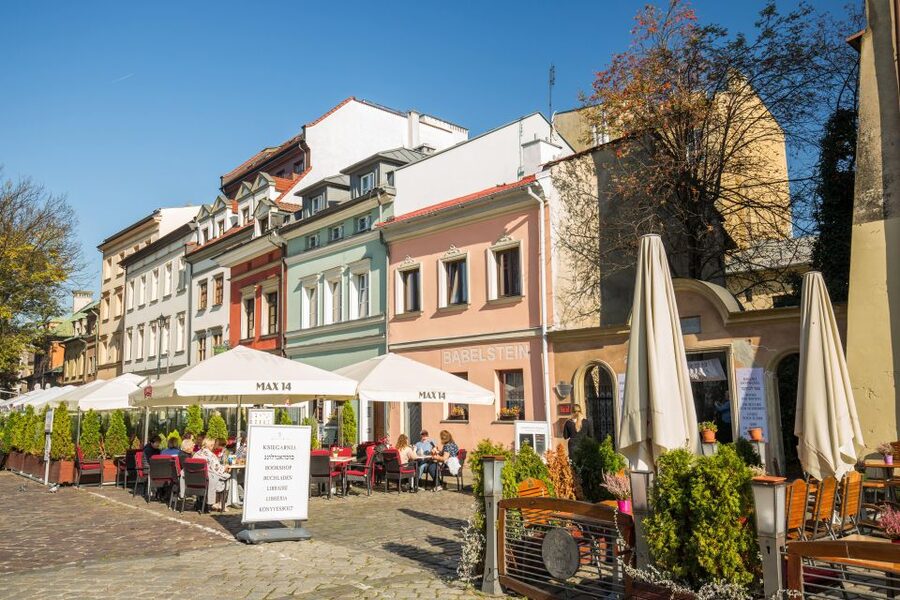
What I like about this tour is the way it builds an emotional timeline. You begin in Kazimierz, where Jewish life shaped the neighborhood for centuries, and the streets help you picture ordinary routines: prayer, community, and local culture. Then you move into Podgórze, where the city’s wartime division becomes physical, and remembrance takes over.
This is not just a “see these buildings” experience. Your licensed guide is there to connect the dots between heritage and persecution, including the role of Oskar Schindler during the Nazi occupation. That connection matters, especially if you are visiting other sites in the region, because you get the occupation-era context before you go deeper into the darkest chapters.
Further visits to Schindler’s Factory Museum:
- Krakow: Schindler’s Factory Ticket and Guided Tour Option
★ 4.3 · 4,306 reviews - Krakow: Schindler’s Factory Tour with Entrance Ticket
★ 4.5 · 3,182 reviews - Krakow: Schindler’s Factory Skip-the-Line Ticket
★ 4.4 · 3,105 reviews
Starting at the Old Synagogue steps: getting grounded fast
You meet at the steps of the Old Synagogue, where you will see a Kazimierz Guided Tour sign. That is a smart starting point because it anchors the day in the heart of what you are about to learn. From there, the route moves onto Szeroka Street, described as the historic heart of Kazimierz, with synagogues and townhouses dating back to the 16th-18th centuries.
This is also where you should think about timing. The group enters as a unit, and late arrivals cannot be accommodated. If you want an easy start, arrive at least 10 minutes early, even if you feel ahead of schedule.
Practical tip: wear shoes that handle uneven sidewalks and expect some crowding. Even when walking time is reasonable, the city center can feel busy, and you will want to stay focused on the story instead of navigating foot traffic.
Kazimierz on foot: synagogues, cemetery space, and Jewish community life
The Kazimierz segment is where you see how faith and community shaped the neighborhood’s everyday rhythm. Your route passes several key religious and cultural sites, and the guide explains what each one represents.
Here are the stops that make the biggest difference in how you understand the neighborhood:
The Old Synagogue museum stop you can actually absorb
The Old Synagogue is the oldest preserved synagogue in Poland, and today it functions as a museum of Jewish history. Seeing it early is useful because it sets the tone. Instead of the war arriving like a surprise, the day starts with identity, continuity, and community institutions that were already rooted long before WWII.
If you like museums that explain context rather than just facts, this stop tends to work well. It gives you a framework so later sites feel less abstract.
Further Jewish history and heritage itineraries:

Remuh Synagogue and Cemetery: where memory lives
You will also pass Remuh Synagogue and Cemetery, noted as one of the most important Jewish religious sites in the country. Cemeteries are not just “background” here. In Jewish tradition, they are part of how people remember and honor the past, and that matters when the tour transitions to deportation-era history.
This is one of those moments where it helps to slow down. Listen to the guide, take in the surroundings, and resist the urge to rush a photo. It is not the kind of place where you should treat the stop like a quick checklist item.
Kupa Synagogue and Tempel Synagogue: contrast in today’s community
Along the way, you pass the Kupa Synagogue, once associated with the poorest residents, and the Tempel Synagogue, which is now an active center of cultural life. That mix of locations shows two things at once: different layers of social history, and the fact that Jewish cultural life did not disappear when the centuries turned.
Even if you do not know much about Kazimierz yet, these stops help you see a fuller picture than “one neighborhood, one story.”
Plac Nowy to close Kazimierz: where the neighborhood keeps moving
The walk concludes this portion of Kazimierz at Plac Nowy, a lively square with cafés, markets, and local art. This stop functions like a palate cleanser, but not in a shallow way. After absorbing synagogues and cemetery space, you get a glimpse of how the district operates in the present.
I like this contrast because it reminds you that heritage is not frozen in time. You are leaving a story that includes loss, but the neighborhood still has daily life, people gathering, and culture happening.
Schindler’s Enamel Factory: why skipping the line matters
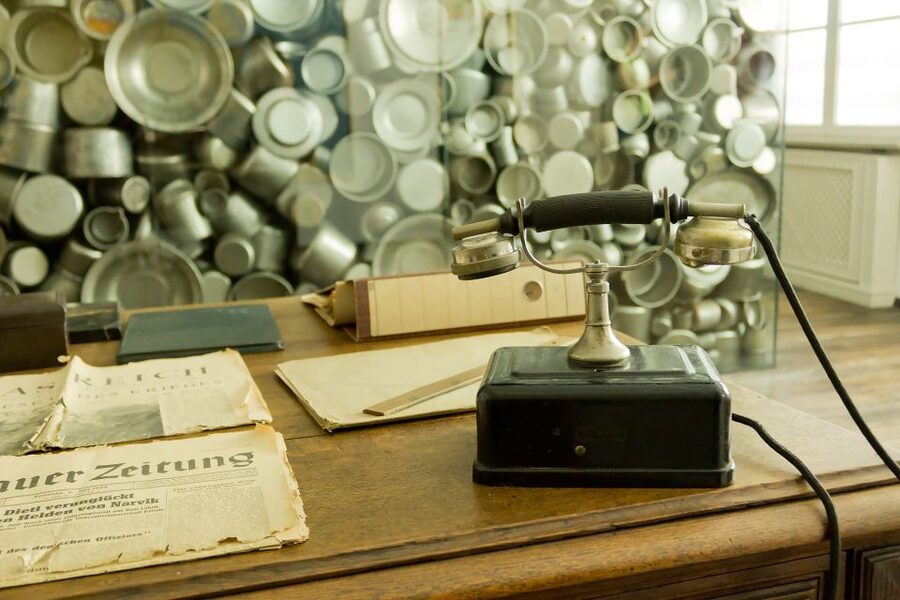
Then comes the shift to Schindler’s Enamel Factory, now a major museum in Krakow. The tour includes fast-track admission, which is a genuine value. With popular museums, lines can steal your energy. Here, the goal is to keep you moving into the exhibits while your attention is still sharp.
One important detail: the building is a museum now, and it no longer contains original production equipment. So what you are seeing is the preserved site and the exhibition experience, not an operating factory floor. That helps set expectations before you arrive.
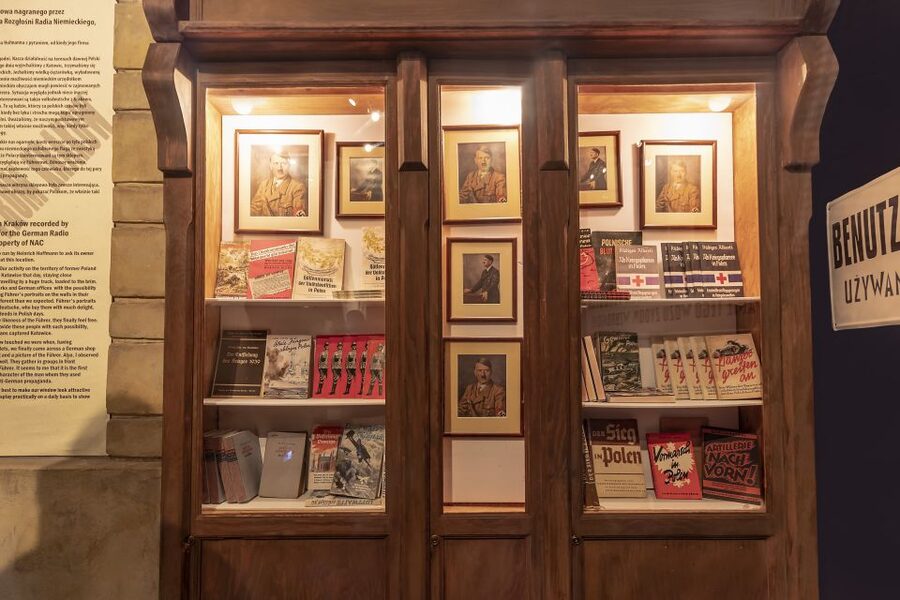
The museum’s exhibition you will follow is called Kraków under Nazi Occupation 1939-1945. Your guide walks you through it with the lens of Oskar Schindler’s decisions and actions.
Oskar Schindler explained in plain human terms
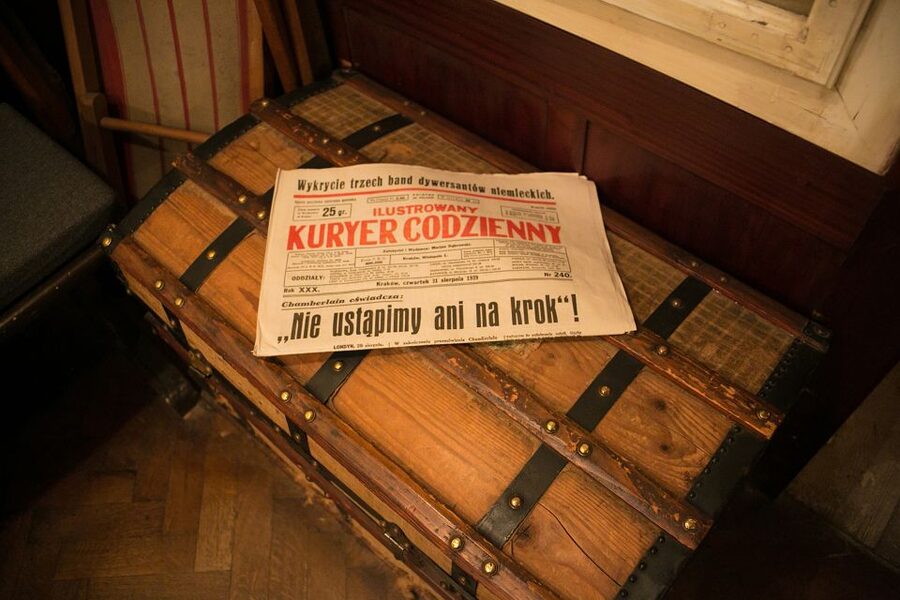
If you only know Oskar Schindler as a name, this is where the story becomes personal and specific. Schindler employed Jewish workers, and he used his position and resources to protect them from deportation. The tour frames what happened in terms of action under extreme pressure, not just heroic myth.
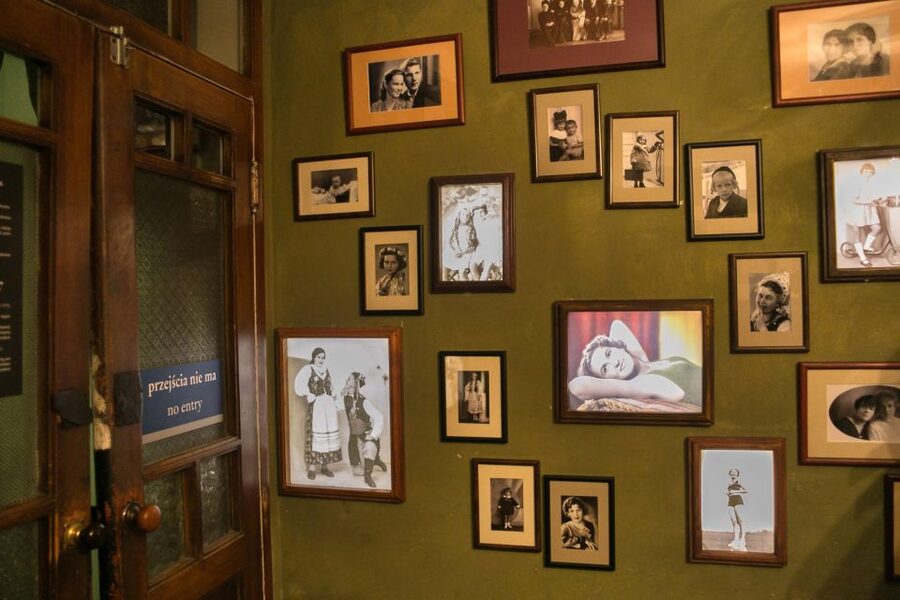
Inside the museum, photographs, personal objects, and reconstructed streets are used to show fear, uncertainty, and daily struggles. That matters because the ghetto and occupation story can otherwise feel like a series of big events with no in-between. Here, you get some sense of what daily life looked like while people were trapped in a narrowing world.
You will also hear about Schindler’s workers, often called Schindlerjuden, and how their testimonies continue to resonate. This is one of the tour’s most praised elements because it connects individual survival to the larger historical framework.
A realism note: museum spaces can be crowded, and group movement through narrow areas can limit what you can see clearly. In a full group, you might hear the guide well but have trouble seeing every detail the guide points out. If that is a concern for you, aim to stay near the front half of the group.
Podgórze Ghetto remnants: walls, boundaries, and Ghetto Heroes Square
After Schindler’s Factory, you move toward the former ghetto area in Podgórze. This section is where the city becomes a physical reminder. You explore remnants of the ghetto walls, and those fragments are stark because they show boundaries that were real and enforced.
Seeing wall remains changes the feeling of the story. Instead of thinking in abstract terms, you picture separation in daily life. The area helps you understand how occupation reshaped streets, movement, and safety.
Then you reach Ghetto Heroes Square, described as the former center of the Krakow Ghetto and tied to deportations. Today it functions as a remembrance space, marked by a memorial of empty metal chairs that symbolizes lives lost.
If you want the tour to land with full impact, this is where you should slow down the most. Let the memorial speak, then ask yourself what it means that a square can hold history like this.
How the 5-hour pace works, and who will enjoy it most
Five hours is long enough to cover a meaningful chain of sites, but short enough to avoid feeling like you are trapped in a classroom all day. The tour format is walking with museum time, and the ghetto and memorial pieces add emotional weight.
This fits well if you:
- want a guided way to connect Kazimierz’s Jewish heritage to WWII-era events
- like walking tours that explain what you see instead of just pointing at it
- plan to visit other major WWII memorial sites in the region and want basic occupation context first
It is less ideal if you:
- get overwhelmed by tighter indoor spaces or larger groups
- prefer purely light, food-focused sightseeing for the day
Language note: the tour runs in one language per group, so pick the one that lets you follow comfortably. If you are on the edge between two languages, it is worth choosing the stronger one, because the subject matter benefits from clear explanations.
Price and value at $81 for a guide-led, fast-track day
At $81 per person for a 5-hour guided experience, this is not a budget-only activity, but it also is not just paying for time. You are paying for three big components bundled together:
- A licensed guide who walks you through Kazimierz and the ghetto area
- Fast-track admission to Schindler’s Factory so you spend more time inside the exhibits
- A structured route that connects culture, persecution, and memory rather than leaving you to stitch it together
What you need to budget separately is simple: food and drinks are not included. Plan to stop for snacks or a drink on your own, especially because museum time can add up even when it is not extremely long.
Tips that make the day easier (and more respectful)
A few small choices can make a big difference in how the tour feels:
- Arrive early: the tour asks for at least 10 minutes before start, and late arrivals cannot be accommodated once the group enters.
- Bring all participants’ full names: the museum issues personalized tickets, and the names are mandatory for entry.
- Expect weather to affect comfort: it is an outdoor walking day plus indoor museum time, so dress for the conditions.
- Stay near the front in crowded parts: some museum corridors are tight, and you do not want to be blocked from what the guide points out.
One more practical note: group size is capped at 25. That is a good balance for discussion and movement, but if the group is at the cap, some spaces will feel more cramped than you might expect.
Should you book the Kazimierz, Schindler’s Factory and Ghetto guided tour?
I would book this tour if you want a guided, story-connected way to understand Krakow’s Jewish heritage and the WWII occupation-era experience. The value comes from the combination of Kazimierz heritage sites, the emotionally intense Schindler’s Factory museum, and the physical reminders of the Podgórze Ghetto, all tied together by a licensed guide.
Skip it only if you strongly prefer lighter sightseeing, or if you know you struggle in crowded indoor spaces. Otherwise, treat it as a serious, well-paced day: comfortable shoes, clear language choice, and a bit of quiet attention for the memorial sites will make it hit in the best way.
If you are ready to understand the city beyond the postcard views, this is one of the most direct ways to do it on foot.
FAQ
Where do I meet the guide?
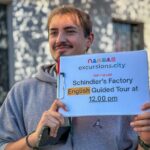
Meet your guide on the steps of the Old Synagogue. They will hold a Kazimierz Guided Tour sign.
How long is the tour?
The tour lasts 5 hours.
How much does it cost?
The price is $81 per person.
Is food included?
No, food and drinks are not included.
What sites will I visit during the tour?
You will walk through Kazimierz, visit the Schindler’s Factory area and museum, explore remnants of the ghetto walls, and see Ghetto Heroes Square.
Is there fast-track admission?
Yes, fast-track admission to Schindler’s Factory is included, so you can skip the ticket line.
What languages are available?
The live guide is available in French, English, German, Spanish, and Italian.
What is the maximum group size?
Group size is limited to a maximum of 25 participants.
Do I need to provide my full name for tickets?
Yes. The museum issues personalized tickets, and providing the full names of all participants at booking is mandatory.
What should I do about weather?
Weather can influence comfort since parts of the tour are outdoors, so dress accordingly.
What is the cancellation rule?
Free cancellation is available up to 24 hours in advance for a full refund.
Freshly posted from Krakow
- ZALIPIE – painted village, unique small group tour from Krakow★ 5.0 · 7 reviews
- “John Paul II Route” PRIVATE -Wadowice, Kalwaria Z.-Łagiewniki★ 5.0 · 7 reviews
- Krakow: Craft Beer Tasting City Walking Tour★ 4.4 · 7 reviews
- Magic of Krakow: Guided Tour of the Old Town★ 5.0 · 7 reviews
- Krakow : Zakopane Tour + Thermal Pools with Hotel Pickup★ 4.8 · 7 reviews
- Krakow in One Day: City Tour by Electric Car★ 5.0 · 7 reviews
- Cracow: Wawel Castle and Cathedral Guided Tour★ 5.0 · 7 reviews
Schindler's Factory Museum Tours, compared.
Schindler’s Factory Ticket and Guided Tour Option
Read our review →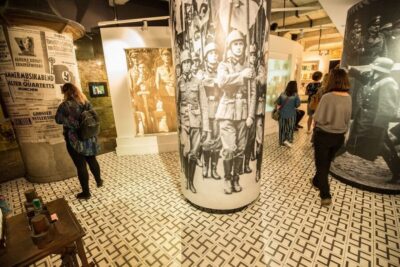
Schindler’s Factory Tour with Entrance Ticket
Read our review →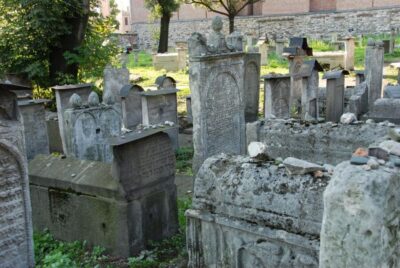
Schindler’s Factory Tour with Entrance Ticket
Read our review →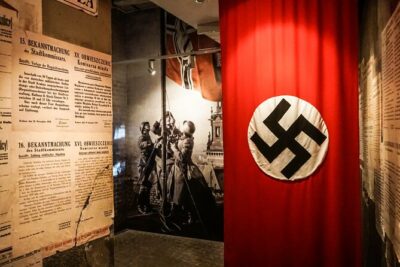
Schindler’s Factory in Krakow: Guided Tour & Skip the Line Ticket
Read our review →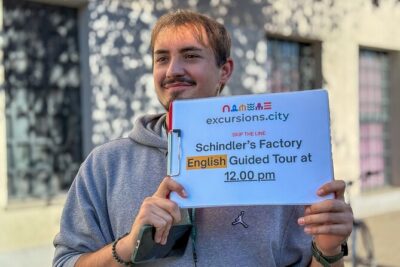
Krakow Schindler’s Factory Guided Tour with Admission Ticket
Read our review →Browse the lists this tour appears in