Reviewed · SCHINDLER'S FACTORY MUSEUM TOURS
Jewish Quarter Group Tour by Golf Cart with Schindler’s Museum visit in Krakow
Krakow’s Jewish Quarter tells stories fast. This 3-hour group tour combines an ecological golf cart ride through Kazimierz and Podgórze with a guided visit to Schindler’s Factory Museum, using street-level clues to explain how Jewish life shaped the city. I especially like the mix of practical geography, you see where things happened, and the way the museum uses interactive exhibits to make WWII personal.
Two things I like a lot: first, the cart lets you cover several meaningful neighborhoods without turning the day into a marathon. Second, the museum visit is guided, and it focuses on Krakow under Nazi occupation and what happened to everyday people, not just big names and dates. One possible drawback to plan for: the tour ends at the museum and the operator does not provide transport back to your hotel or onward, so you’ll want to have a ride or tram route ready.
If you’re coming to Krakow for history, this tour is one of the most direct ways to connect it to real places: Szeroka Street, Plac Nowy, surviving wall fragments, and the Umschlagplatz area, then straight into an exhibition about survival and deportation. You’ll also be in a small group (max 24), which helps you hear your guide and ask questions.
In This Review
- Key points to know before you go
- Getting oriented in Kazimierz and Podgórze on a golf cart
- Szeroka Street and the synagogue legacy you can still read in stone
- Plac Nowy’s food, markets, and community rhythm
- St Joseph’s Church and the Podgórze Market Square power point
- Surviving wall fragments and Umschlagplatz geography
- Fabryka Emalia Oskara Schindlera: the interactive museum part
- Price and logistics, including where you finish
- Who this Krakow tour is perfect for
- Should you book it?
- FAQ
- How long is the Krakow Jewish Quarter group tour with the Schindler’s Museum visit?
- How much does the tour cost per person?
- Is the golf cart ride included, and is it one way?
- What guides are included during the tour?
- Is the Schindler’s Factory Museum ticket included?
- What does the tour include besides the museum?
- Where does the tour start and where does it end?
- Do you get transportation back to your hotel after the museum?
- What is the group size limit?
- Is there any accessibility or fitness guidance?
Key points to know before you go
- Ecological golf cart with audio support, so you get context while you’re moving between sites.
- Kazimierz plus Podgórze in one run, covering both prewar Jewish life and wartime ghetto geography.
- Szeroka Street’s synagogue concentration, a rare historical detail you can actually see reflected in what remains today.
- Plac Nowy’s living food and market story, from Jewish Square origins to today’s market days and café culture.
- Ghetto wall fragment and Umschlagplatz points, focused stops that explain what the neighborhood became during the occupation.
- Schindler’s Factory Museum ticket included, with a live guide and about 1 hour 30 minutes inside.
Getting oriented in Kazimierz and Podgórze on a golf cart
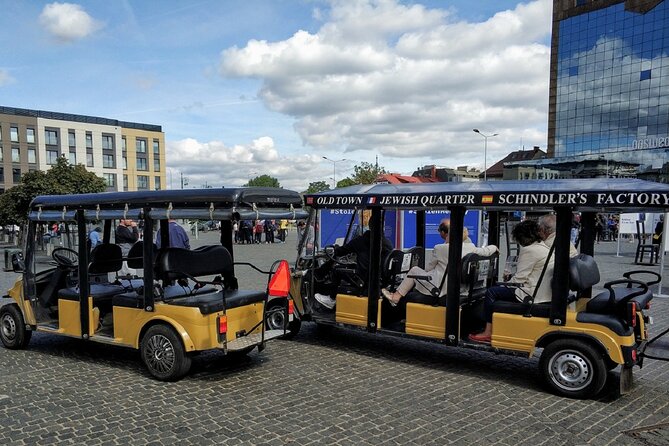
The tour starts at Mikołaja Zyblikiewicza 2, in the Krakow area that puts you close to the action fast. From the first moments, the format is built for understanding. You’re not wandering around guessing which building matters. You ride an audio-guided ecological golf cart through Kazimierz and Podgórze while your guide sets up what you’ll see next.
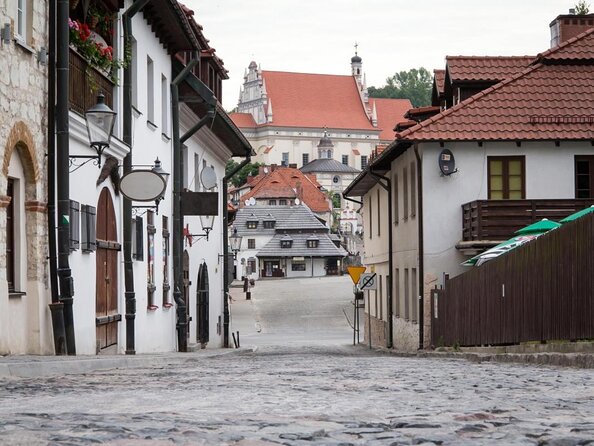
Kazimierz is one of the oldest districts behind Wawel, historically an independent settlement, located near where a Vistula branch once flowed. That positioning matters. It helps explain why this area could grow into the hub of Jewish life in Krakow and why so many cultural layers sit close together. The tour’s big idea is simple: you’ll see traces of Jewish culture in a way that feels tied to the actual street plan, not only to a textbook.
Then the route shifts toward Podgórze, which in 1941 became part of the Krakow Ghetto. That transition can feel heavy, and it’s also where the cart format helps. You move quickly between points that are spaced out, so you can keep the story connected instead of getting lost in logistics.
The walking you’ll do at stops is probably manageable if you have a moderate physical fitness level, but you should still be ready for uneven pavement and standing for short explanations. With a maximum group size of 24, the pace stays controlled, and the guide can manage the flow when you stop for photos.
More Golf Cart Tours in Krakow
- Krakow: City Sightseeing Tour by Electric Golf Cart
★ 4.5 · 3,264 reviews - Krakow: City Sightseeing Tour Eco Electric Buggy Golf Cart
★ 4.7 · 3,143 reviews - Krakow: Extended City Sightseeing Tour – Eco Buggy Golf Cart
★ 4.7 · 794 reviews
Szeroka Street and the synagogue legacy you can still read in stone
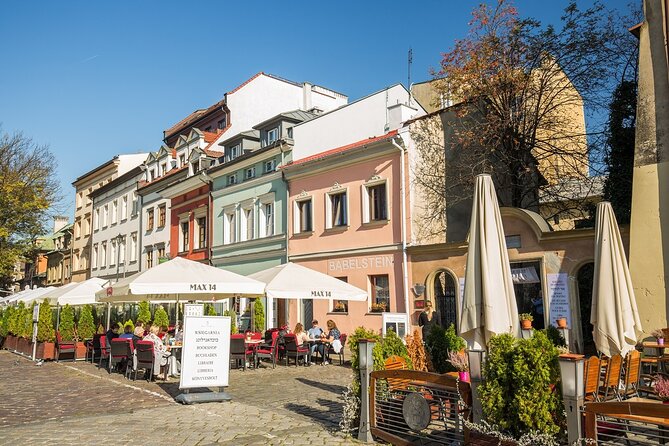
Szeroka Street is described as the heart of Jewish Kazimierz, and once you’re there, it makes sense. This is where the tour leans into the idea of visibility. Centuries ago, Szeroka Street held four synagogues, something described as unheard of elsewhere in Europe. Even without trying to memorize a map of old buildings, you can sense the importance of the street from its role as a religious center and community space.
A guide-led stop here is more useful than it sounds. Your group is not just looking at a street. You’re learning how a single corridor could function as a cultural hub, with multiple houses of worship clustered where daily life took place. That “interpenetration” of Christian and Jewish life over the centuries is part of Krakow’s story, and Szeroka Street is one of the clearest places to grasp it.
The tour also calls out that this street is the stage for the final concert of the Jewish Culture Festival. That detail matters because it shows continuity. History isn’t only what’s gone. It’s also what keeps being used, celebrated, and remembered.
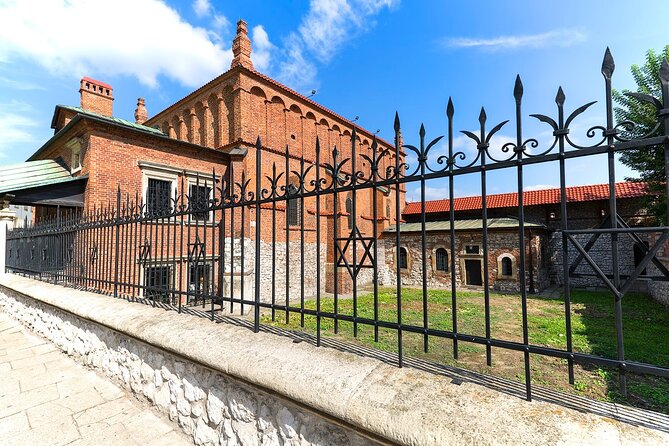
Near this area, you’ll stand at one of the oldest synagogues in Poland preserved in such good condition. The value here is what you learn while looking. It’s easy to appreciate a preserved building when someone explains what made it central, and why surviving structures carry extra meaning after war and persecution. If you’ve been to other European cities, you may notice a difference: the Krakow Jewish Quarter doesn’t ask you to imagine everything from ruins. It gives you real material to look at.
Potential drawback at stops like this: it can be tight to take photos while you’re also trying to hear the guide. If you care about pictures, keep your phone ready but don’t let it steal your attention. The best moments are usually when you pause and listen for what the guide points out.
Plac Nowy’s food, markets, and community rhythm
Next up is Plac Nowy, today known as a popular meeting place and festival venue. The tour frames it as more than a scenic square. It used to be Plac Żydowski, the Jewish Square, and the history shows up in the way the square functions.
One detail I think you’ll appreciate is the 1900 circular pavilion erected in the middle. It wasn’t just architectural flair. It was designed around everyday commerce: small grocery and butcher shops, plus a fast-food bar serving delicious casseroles. That matters because it keeps the story grounded in ordinary routines, what people ate, where they shopped, how they gathered.
The tour also points out how Plac Nowy behaves differently depending on the day. Weekdays bring stalls selling vegetables and antiques. On Sunday mornings, it becomes a clothing market. In warm summer nights, cafés and pubs spill out around the square, described as forming one big beer garden.
If you’re trying to understand Jewish community life before the war, this stop is surprisingly powerful. A city square can tell you more than a plaque when you connect its past to its present use. You’re seeing how public space supported daily needs, celebrations, and social life.
One practical tip: if your visit date lines up with market days, you’ll get extra texture. Even if you’re there on a quiet day, pay attention to how locals use the space. The guide is giving you context, but the square itself does the convincing.
St Joseph’s Church and the Podgórze Market Square power point
The tour makes a clear visual shift at Podgórze by including the parish church of St Joseph. It’s described as a distinctive, widely recognizable site of devotion and it dominates Podgórze Market Square.
This is one of those stops that helps you understand how different layers of Krakow lived side by side. In a neighborhood with a major Jewish story, a Catholic church with strong presence still shaped the area’s skyline and rhythms. The guide’s job here is to connect architecture to community meaning.
The tour also notes the Podgórze Market Square as a central point in the town, which only in the 20th century was incorporated into Krakow. That gives you a helpful lens. It reminds you that city borders and identities changed over time, and those changes often overlap with the pressures of modernization and, later, war.
If you’re sensitive to the emotional tone of the route, St Joseph’s Church can act like a brief reset. You’re not erasing anything. You’re just getting a different kind of context from the story you’ll tackle next at the ghetto-related stops.
More Museum Tours in Krakow

Surviving wall fragments and Umschlagplatz geography
Then the tour turns to the places that carry the heaviest weight: a preserved fragment of the original wall around the former ghetto, with a plaque commemorating the fate of the inhabitants. You stop here so the story isn’t abstract. It’s not just “something terrible happened.” You’re shown a physical remnant and told what it commemorates.
After that, you move to the former Plac Zgody, now known today as a place where history is still visible. Under Nazi occupation, it was designated Umschlagplatz, described as the place where Jews had to congregate before deportation.
This stop is the one where you’ll likely feel the difference between learning history and standing in history. The tour’s strength is that it keeps the logic tight. You hear why the area mattered, what role it played in deportations, and how that role connects to the ghetto geography you saw just before.
Important practical note: these are somber stops. Keep your tone respectful, and give yourself a moment after the guide finishes before you start scrolling online for photos. If you want pictures, do it quickly, then listen. The location will do the rest of the heavy lifting.
Fabryka Emalia Oskara Schindlera: the interactive museum part
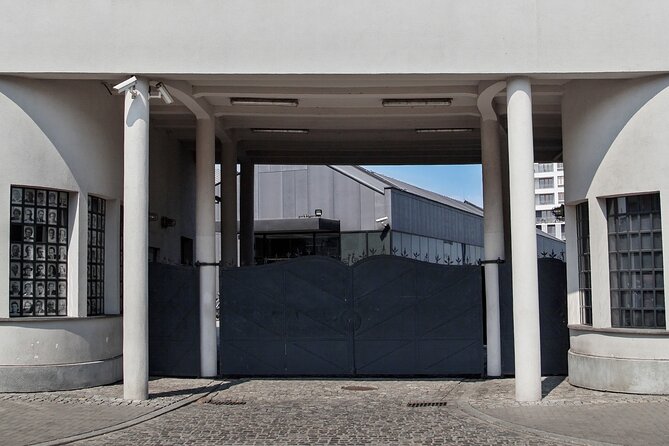
The museum portion is where the tour’s second stage really lands. You’ll visit Fabryka Emalia Oskara Schindlera, with the entrance ticket included. The tour time for the museum is about 1 hour 30 minutes, and you’ll have a live guide.
The museum is closely associated with Oskar Schindler, the German entrepreneur known for saving many Jews by employing them in his factory. But the tour framing is broader and, in my view, more educational. It emphasizes Krakow and its inhabitants during Nazi occupation, and it explains the impact of WWII through everyday life.
What you’ll see is not generic. The tour calls out the real headquarters of Deutsche Emailwarenfabrik and tells you about its owner. This is where the story becomes specific: a real workplace, a real set of decisions, a real mix of people living in one place under extreme pressure.
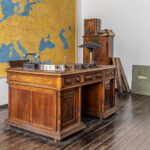
The visit also includes the preserved office area in the factory administration building. The tour highlights a symbolic Ark of Survivors made of thousands of pots like the ones made by Schindler’s employees during the war. That image is memorable because it turns craft into evidence. It tells you that skills, work, and objects mattered, even when survival depended on far more than productivity.
The exhibition is described as interactive and modern. That’s a good fit here because it helps you process what you’re learning without getting stuck only in labels. You’ll still want to slow down, even if the format feels hands-on. Take a minute to read, to stand back, and to let the “everyday life” theme sink in.
Price and logistics, including where you finish
At $75.60 per person, this tour sits in the midrange for Krakow experiences, but it’s not just a ride and a quick stop. You get one-way transportation by golf cart, an audio guide during the ride, a live guide during the museum, and museum admission included.
That package matters because the museum ticket alone can take a chunk out of your budget. Here, the ticket is built in, and you’re also paying for guided interpretation of both the streets and the exhibition.
Timing is also practical. The overall duration is about 3 hours. The museum segment is 1 hour 30 minutes, which is usually enough time to see major themes and the interactive elements without rushing through.
Two logistics things to plan:
- The tour ends at Lipowa 4, Kraków, which is by the museum area. The operator does not provide transport from the museum back to your hotel or elsewhere.
- The meeting point is at Mikołaja Zyblikiewicza 2, and it’s near public transportation. That’s handy if you’re arriving early or want flexibility after the tour.
If you’re staying in Old Town, you’ll probably find tram or bus options nearby, but you should still plan your route rather than assuming an easy walk or an instant ride.
If plans change, you can cancel for free up to 24 hours in advance for a full refund. Keep that in mind if you’re juggling museum hours and weather.
Who this Krakow tour is perfect for
This Jewish Quarter group tour by golf cart is a smart choice if you want structure. You’re not spending your energy deciding which street to start with. Your guide does the heavy framing, then you see the clues in place.
It’s especially good for:
- First-timers who want a fast, readable path through Kazimierz and Podgórze.
- People who want a balance of street context and museum interpretation.
- Travelers who like guided explanations more than self-guided reading.
- Anyone who prefers not to do long walking segments across multiple neighborhoods.
It’s less ideal if you want total independence. You’re on a scheduled route with a set finish at the museum. And because the tour ends at Lipowa 4 with no return transfer, you need a plan for what happens after the museum.
Also, this is not a light sightseeing loop. It includes ghetto history and deportation geography. If you’re not up for heavy material, you might prefer a different Krakow overview. If you are up for it, the route is built to keep the story connected.
Should you book it?
I’d book this tour if you want one guided package that connects prewar Jewish life in Kazimierz to wartime realities in Podgórze, and then you want the museum to turn that into something you can actually absorb. The included museum ticket, the guided time inside, and the ecological cart format make it good value for a short Krakow window.
I would think twice if you hate fixed schedules or you rely on the tour operator to bring you back after. Since the day ends at the museum area, plan your next step before you go. Bring comfortable shoes, stay ready to stand for explanations, and expect the museum portion to be emotionally direct.
If you get that, you’ll leave with a much clearer map in your head, and a much stronger sense of what Krakow’s Jewish Quarter meant before and during the darkest years.
FAQ
How long is the Krakow Jewish Quarter group tour with the Schindler’s Museum visit?
The duration is approximately 3 hours.
How much does the tour cost per person?
The price is $75.60 per person.
Is the golf cart ride included, and is it one way?
Yes. Transportation by golf cart is included, and it is one way.
What guides are included during the tour?
You’ll have an audio guide during the golf cart portion and a live guide during the museum visit.
Is the Schindler’s Factory Museum ticket included?
Yes. Entrance ticket to Schindler’s Factory Museum is included.
What does the tour include besides the museum?
The tour includes a golf cart route through Krakow’s Kazimierz and Podgórze districts, with stops at key locations connected to Jewish culture and World War II history.
Where does the tour start and where does it end?
Start: Mikołaja Zyblikiewicza 2, 31-029 Kraków, Poland. End: Lipowa 4, 32-051 Kraków, Poland.
Do you get transportation back to your hotel after the museum?
No. The tour ends with the museum visit, and transport from the museum back to your hotel or other place is not provided.
What is the group size limit?
The tour has a maximum of 24 travelers.
Is there any accessibility or fitness guidance?
Travelers should have a moderate physical fitness level.
Jewish History & Heritage Itineraries
- Krakow: Schindler’s Factory & Ghetto Guided Tour
★ 4.7 · 1,694 reviews - Krakow: Jewish Quarter and Former Ghetto Tour
★ 4.9 · 1,441 reviews - Krakow: Bike Tour of Old Town, Jewish Quarter and the Ghetto
★ 4.9 · 1,155 reviews - Krakow: Kazimierz Jewish Quarter Walking Tour
★ 4.8 · 571 reviews
Schindler’s Factory Museum Visits
- Krakow: Schindler’s Factory Ticket and Guided Tour Option
★ 4.3 · 4,306 reviews - Krakow: Schindler’s Factory Tour with Entrance Ticket
★ 4.5 · 3,182 reviews - Krakow: Schindler’s Factory Skip-the-Line Ticket
★ 4.4 · 3,105 reviews - Krakow: Schindler’s Factory Tour with Entrance Ticket
★ 4.6 · 1,737 reviews
Freshly posted from Krakow
- Krakow: Audio-Guided City Experience by Golf Cart★ 5.0 · 1 review
- Krakow: Zakopane and Thermal Springs Tour with Hotel Pickup★ 5.0 · 1 review
- Half-day In the footsteps of John Paul II Tour from Krakow★ 5.0 · 1 review
- Krakow: Wawel & Salt Mine Experience with Lunch★ 5.0 · 1 review
- Tour to Wadowice: Hometown of Pope Saint John Paul II★ 5.0 · 1 review
- Krakow: Outdoor Paintball with Hotel Transfers★ 5.0 · 1 review
- Krakow: Nowa Huta Communist District Walking Tour★ 5.0 · 1 review
Schindler's Factory Museum Tours, compared.
Schindler’s Factory Ticket and Guided Tour Option
Read our review →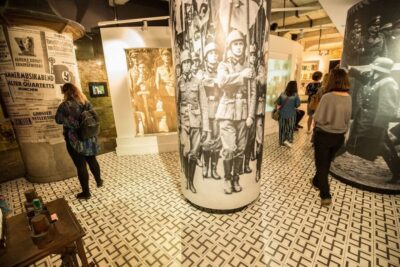
Schindler’s Factory Tour with Entrance Ticket
Read our review →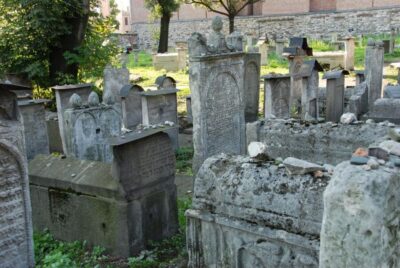
Schindler’s Factory Tour with Entrance Ticket
Read our review →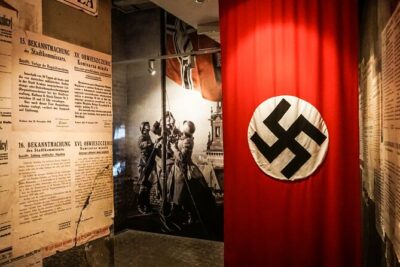
Schindler’s Factory in Krakow: Guided Tour & Skip the Line Ticket
Read our review →