
Reviewed · HISTORICAL TOURS
Historic Heart of Warsaw Walking Tour
A walk that teaches Warsaw fast and in plain English. This Historic Heart of Warsaw route threads through the Old Town and beyond, using short stops to connect big themes: royal rule, religious life, resistance, and survival. I like that it is built for real understanding, not just photo stops, and you get a ready-made guide pack to keep exploring after the tour.
Two things I really like. First, you get an engaging, funny guide, with Olivia and Agnieszka specifically noted for humor and clear answers. Second, the route includes both the famous must-sees and the smaller details, like Kanonia and the Wishing Bell, so the city feels lived-in rather than checklist-like.
One consideration: two major attractions, the Royal Castle and the Marie Curie Museum, require admission you handle yourself. If you do not plan for those tickets ahead, you might feel a small timing squeeze.
In This Review
- Key things to know before you go
- A Route Through Old Town With Built-In Context
- Meeting at Sigismund’s Column, Then Reading the City Like a Story
- Royal Castle Stop: Where to Spend Your First 15 Minutes
- Sigismund’s Column, Kanonia, and the Wishing Bell Stops That Make Warsaw Feel Real
- Gnojna Gora Viewpoint: A Quiet Upgrade Over Typical Old Town Walking
- Rynek Starego Miasta and the Mermaid Symbol: The Old Town’s Core
- Archikatedra Sw. Jana Chrzciciela and Warsaw’s Most Important Church
- Warsaw Barbican: The Defensive Wall That Still Shapes the Streets
- Marie Curie Birthplace Museum: Science Meets Survival, With Separate Tickets
- Warsaw Ghetto Boundary Markers: Remembering the Maximum Perimeter
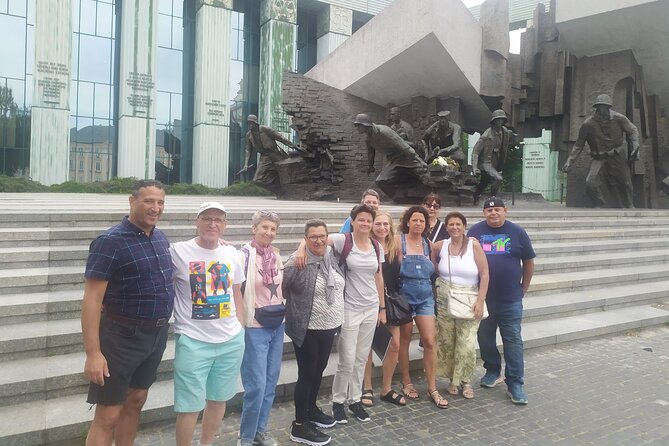
- Warsaw Uprising Monument: The Ending Point With Weight
- What You Really Get Besides the Walking
- Who This Tour Suits Best
- Should You Book the Historic Heart of Warsaw Walking Tour?
- FAQ
- How long is the Historic Heart of Warsaw Walking Tour?
- How much does the tour cost?
- Is the tour offered in English?
- Where does the tour start and end?
- Is the Royal Castle ticket included?
- Is the Marie Curie Museum ticket included?
- Which stops are listed as free?
- How large is the group?
- Is the tour wheelchair-friendly and are service animals allowed?
Key things to know before you go
- Small group, big personal attention (maximum 15 travelers), which makes it easier to ask questions as you walk
- A smart mix of landmarks and meaning, from Sigismund’s Column to the Warsaw Ghetto boundary markers
- Short photo-friendly stops, with time balanced for viewpoints and street-level details
- Two admission items not included, so plan your Royal Castle and Marie Curie Museum entry separately
- A route that moves through the heart of Warsaw, ending at the Warsaw Uprising Monument for a powerful final moment
A Route Through Old Town With Built-In Context
This tour works because it keeps moving but never rushes the story. In about 2 hours, you cover a concentrated stretch of Warsaw’s historic core, starting at Sigismund’s Column and finishing at the Warsaw Uprising Monument. The pacing is designed around short visits, so you see a lot without needing long museum time.
What makes it especially useful is the way each stop ties to what you will notice later. You are not just learning names and dates. You learn why these places mattered, and how the same few locations fit together across centuries. You will likely walk away with a cleaner mental map of the Old Town, the river side viewpoint, and the major wartime memorial points.
The route also feels approachable. Most stops are outdoors, and the tour is listed as wheelchair-friendly, with service animals welcome. If you use a mobility aid, you will still want to wear comfortable shoes, because you are doing a focused walk on city sidewalks.
More Walking Tours in Warsaw
- Warsaw: Old Town Highlights Walking Tour in English
★ 4.7 · 1,516 reviews - Warsaw: Old Town Guided Walking Tour
★ 4.9 · 599 reviews - Half-Day Polish Food Walking Tour with Guide and Dinner
★ 4.5 · 381 reviews
Meeting at Sigismund’s Column, Then Reading the City Like a Story
You begin at Sigismund’s Column at Plac Zamkowy, a classic “start here” landmark right by the Royal Castle area. It is a strong first choice because it sets the theme of national identity and leadership, before you even step into the main historic zones. From the first minutes, you are likely to understand what you are looking at, not just where to stand for pictures.
Then you shift from broad symbol to lived detail. The Royal Castle stop is your first bigger historical anchor. Even with only about 15 minutes there, it helps you reframe the rest of your walking as part of a larger royal and political center. It also gives you a “why” for everything around it, like the layout of the area and the importance of this part of Warsaw over time.
Tip for your photos: at the start, take one quick wide shot, then wait for the guide’s explanation before shooting close-ups. On this tour, the small visual cues matter, and the guide’s timing helps you notice them.
Royal Castle Stop: Where to Spend Your First 15 Minutes
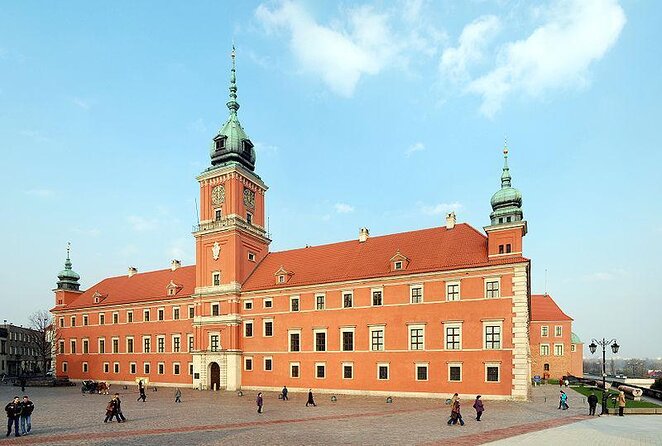
The Royal Castle in Warsaw museum visit is short, about 15 minutes, and the admission ticket is not included. That is the main practical difference from the rest of the route, and it is worth planning for. If you know you want museum time, you may prefer to book an entry slot separately so you do not feel limited.
Why this stop is worth it even in a short window: it gives you a base layer. You start to see the Old Town not as a pretty set of buildings, but as the stage for power, rebuilding, and national symbolism. Even if you do not go deep into exhibits, you will likely get a guided framing that makes other stops land harder later.
One drawback to consider: since it is museum time and tickets are separate, timing can feel a bit more “you manage part of it.” If you are traveling with a strict schedule, check your access plan before the tour so you are not scrambling at the last minute.
Sigismund’s Column, Kanonia, and the Wishing Bell Stops That Make Warsaw Feel Real
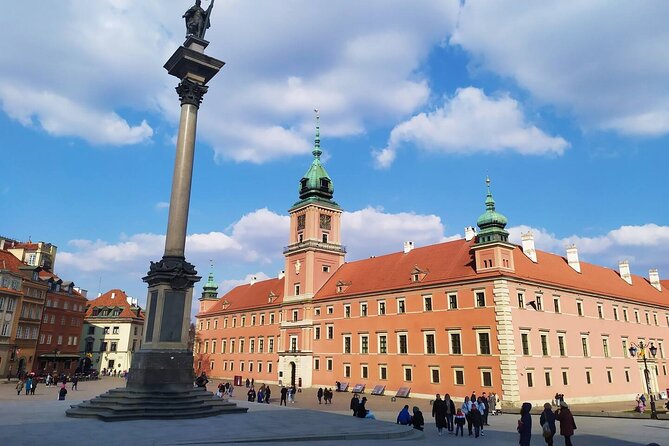
After the castle area, the tour leans into the charm and the small-scale stories that often get missed. You have multiple short stops with free entry, each designed to be quick, memorable, and tied to a bigger theme.
King Sigismund’s Column is next, about 10 minutes. It is not just a monument, it is a repeating symbol in how Warsaw tells its story of kingship and identity. You will likely hear what the statue represents and why a column became a public statement.
Then comes Kanonia, a 10-minute stop at a quieter square behind the Cathedral of Saint John the Baptist. This is the kind of place that makes you slow down. You are away from the biggest crowd lines and closer to the everyday rhythm of the Old Town. If you like atmospheric details, this stop is a good palate cleanser between major memorial moments.
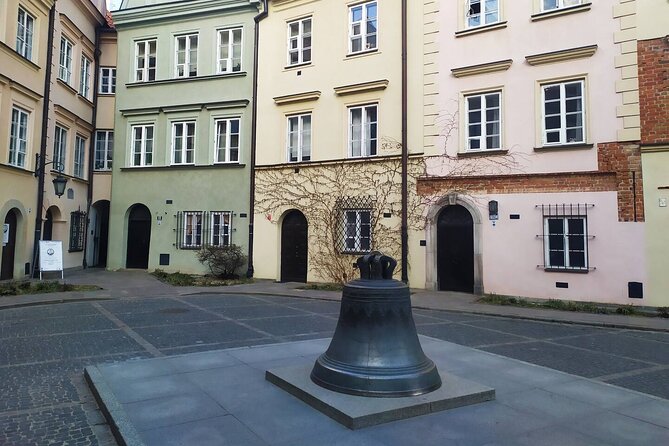
And do not skip The Wishing Bell, an old bell from the 17th century, where tourists come from around the world. It is only a short 5 minutes, but it is the most playful stop in the arc. The guide tends to connect it to how local tradition survives and how meaning changes over time.
More Polish squares crossed on foot:



Gnojna Gora Viewpoint: A Quiet Upgrade Over Typical Old Town Walking
One of my favorite kinds of tour stops is the viewpoint. Gnojna Gora is exactly that, about 10 minutes, and it is free. This is a lesser-known lookout point in the Old Town of Warsaw, and the big pay off is the view of the Vistula River and the other side of the river.
This matters more than you might think. Warsaw’s story is shaped by what is around it, not just what is inside the walls. Seeing the river connection gives you better context for why trade, travel, and conflict have always been tied to this geography.
Because the stop is short, do not expect a long break. Treat it as a “reset moment.” Stand where the guide points out the view angle, take a couple photos, and then keep going while everything is still fresh.
Rynek Starego Miasta and the Mermaid Symbol: The Old Town’s Core
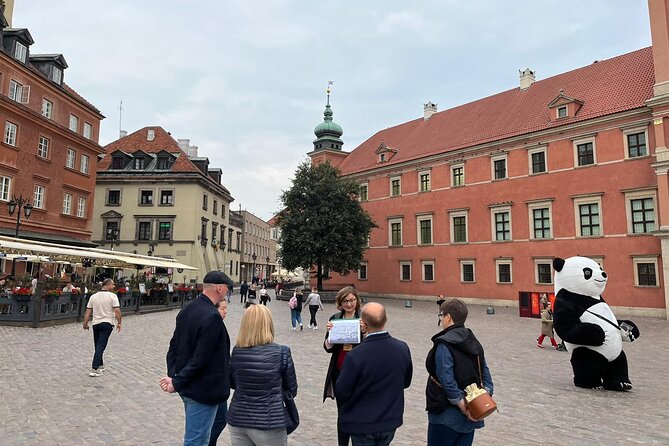
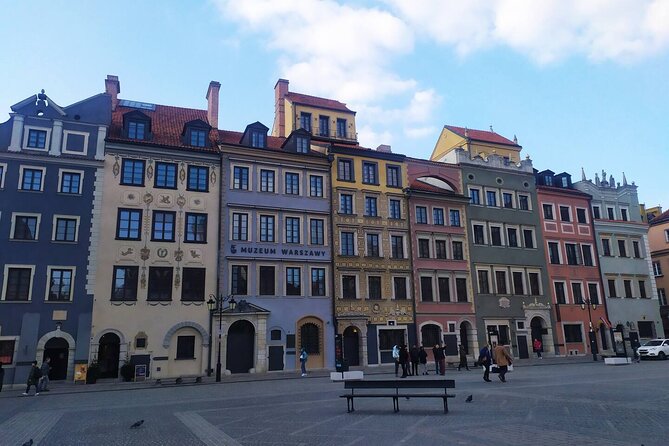
Next you reach Rynek Starego Miasta, the heart of the Old Town, for about 10 minutes. This is where the colors and the street energy show up, and where the guide’s explanations help you see past the postcard look.
A key detail you will focus on is the monument featuring the mermaid, the symbol of Warsaw. It is the sort of object you could walk right by, but on this tour you get the context for what it represents and why it has stuck around as a city identity marker.
This is a good stop to slow your pace just a little. Since the tour is paced around short segments, it helps to be present during the explanations, then take photos after you understand the story. If you are traveling in summer, it can also get bright, so bring sunglasses and expect the light to be strong on the square.
Archikatedra Sw. Jana Chrzciciela and Warsaw’s Most Important Church
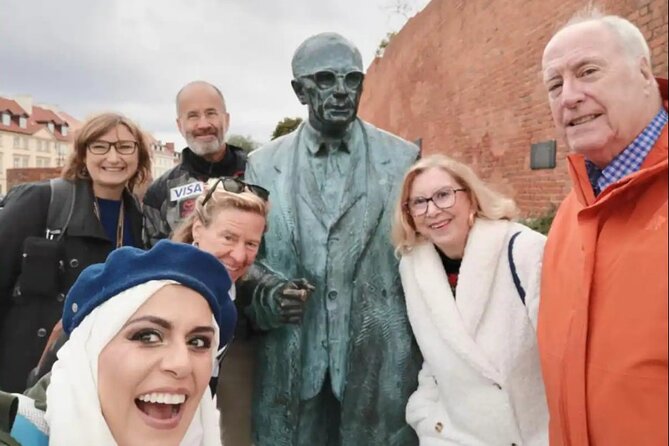
The tour includes Archikatedra Sw. Jana Chrzciciela, about 10 minutes, and it is free. This is Warsaw’s most important church, and it shows up at just the right moment in the walk. You have already seen symbols, royal power, tradition, and quiet courtyards, so the church helps connect the spiritual side of the city to its public life.
What you get here is not just architecture talk. The guide typically uses this stop to explain why the church matters in the city’s identity, and how religious sites can serve as anchors during times of change.
Practical tip: churches usually have rules, like appropriate clothing and quiet behavior. Since the tour does not mention anything specific beyond what is included in the walking, I would still plan to dress respectfully and keep your phone on low brightness.
Warsaw Barbican: The Defensive Wall That Still Shapes the Streets
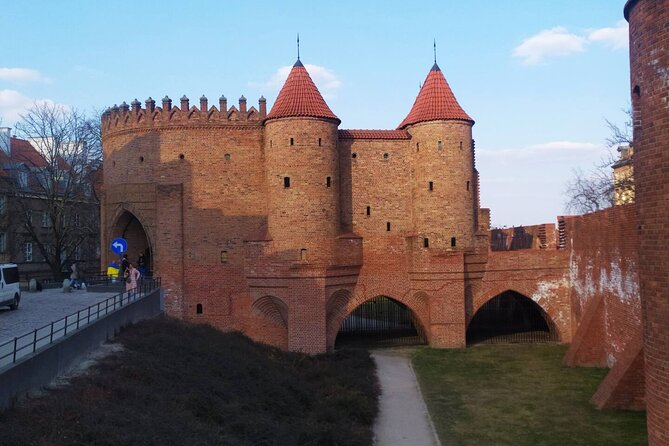
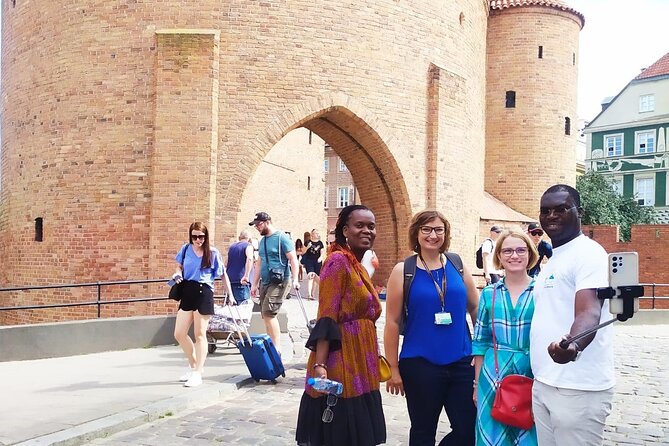
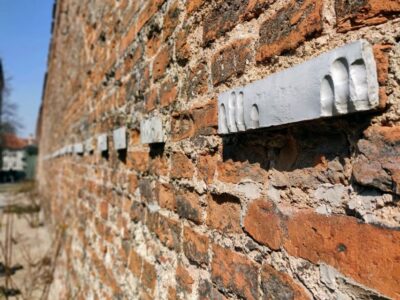
Then you hit the Warsaw Barbican (Barbakan Warszawski) for about 5 minutes. It is free, and it once formed part of the medieval defensive walls that encircled Warsaw. Short stop, big effect, because these walls are not just background. They shape how the Old Town feels spatially.
This is also a smart transition into the heavier wartime topics later. You go from understanding how the city protected itself in medieval times to seeing what happened centuries later under modern conflict.
If you care about fortifications, spend your 5 minutes well. Look for the defensive structure details, then let the guide connect it to Warsaw’s longer pattern of rebuilding and defense.
Marie Curie Birthplace Museum: Science Meets Survival, With Separate Tickets
You also stop at Muzeum Marii Sklodowskiej-Curie for about 10 minutes. It is free only in the sense that the tour includes a stop there, but the admission ticket is not included. This is a big deal for planning, because it affects how smoothly the middle of your tour runs.
Why the stop is valuable: it anchors Warsaw in modern achievement. Maria Skłodowska-Curie, the double Nobel prize winner, represents perseverance and intellect, and the museum birthplace location adds emotion to the story. Even a short visit can change how you see the city, because you are not only looking at survival through war, you are seeing survival through discovery.
If you do not want to pay for museum entry that day, you can still appreciate the guide’s framing around it. But if you are a science fan, this stop is one you will likely want to take seriously and time properly with your own ticket plan.
Warsaw Ghetto Boundary Markers: Remembering the Maximum Perimeter
The tour then enters the most sobering part of the route: Warsaw Ghetto boundary markers, marked by memorial plaques showing the maximum perimeter of the former ghetto established in 1940. This stop is about 10 minutes and is free.
This is not an “easy” segment, and you should treat it like one. The guide’s job is crucial here, because the plaques can feel like markers on a wall unless you know what to connect them to. In practice, the value of a guided stop is that it makes the geography meaningful. You start to understand that the ghetto was mapped in real space, not abstract tragedy.
It also changes your reading of the Old Town streets. Once you understand where the boundary markers point, the city stops being just a pretty backdrop.
Warsaw Uprising Monument: The Ending Point With Weight
The tour finishes at the Warsaw Uprising Monument, with the ending point listed at Plac Krasińskich. This is about 10 minutes as a stop, and it is free. The finish also matters logistically: the tour notes you end in front of the monument, about a 15-minute walk from the meeting point.
Why I like this ending: it gives the final emotional frame to what you learn earlier. You start with royal identity, move through tradition and culture, and then land on resistance and sacrifice. Ending here turns your walk into a full arc, not just a scatter of sights.
If you want a personal moment, plan it here. Stand, look, and give yourself a minute or two before you pull out your next plan for the day.
What You Really Get Besides the Walking
The tour includes a full info pack for before your tour. It includes a FAQ, useful links, and recommendations about more places to visit, plus where to eat and drink. You also get visual aids. That combination is underrated. It means you can use the tour as the start of your broader Warsaw day, not a one-off experience.
You also get a mobile ticket, offered in English. The mobile ticket is helpful in practice, because you can keep everything on your phone and avoid paper clutter.
Price-wise, at $28.75 per person for about 2 hours, I think it is good value if you care about understanding the city. You are not paying for entry into the two big ticket attractions. You are paying for the route, the guide, and the background that makes the landmarks click. If you plan to visit the Royal Castle and the Marie Curie Museum anyway, the value gets even better because you are bundling guided context with your independent ticket time.
Who This Tour Suits Best
This is a strong choice if you want to learn Warsaw without doing a heavy day of museum planning. The pacing is ideal for first-time visitors and for people who like a guided storyline more than a checklist.
It is also good for solo travelers and small groups, because the cap is 15 travelers and the guide tends to field questions. The humor and clear explanations mentioned by named guides like Olivia and Agnieszka are a big part of why this tour holds attention, even when the subject matter turns serious.
If you have limited time but still want context, this tour is a practical win. If you only want museum tickets included, you might feel the missing admissions are a hassle since the Royal Castle and the Marie Curie Museum are not included.
Should You Book the Historic Heart of Warsaw Walking Tour?
Book it if you want a short, high-impact way to understand Warsaw’s Old Town and its wartime memory, with an entertaining guide and lots of landmark context. The small group size and the fact that the route blends famous sights with meaningful smaller stops make it feel like more than just a walk.
Consider skipping or adjusting your expectations if you hate managing separate admissions, because the Royal Castle and Marie Curie Museum tickets are not included. If you are flexible, this is an excellent foundation tour, especially if you plan to explore afterward using the included info pack.
FAQ
How long is the Historic Heart of Warsaw Walking Tour?
It lasts about 2 hours.
How much does the tour cost?
The price is $28.75 per person.
Is the tour offered in English?
Yes, it is offered in English.
Where does the tour start and end?
It starts at Sigismund’s Column, Plac Zamkowy, and ends at the Warsaw Uprising Monument, Plac Krasińskich.
Is the Royal Castle ticket included?
No, admission to the Royal Castle is not included.
Is the Marie Curie Museum ticket included?
No, admission to the Marie Curie Museum is not included.
Which stops are listed as free?
All stops except the Royal Castle Museum and the Marie Curie Museum are listed as free.
How large is the group?
The tour has a maximum of 15 travelers.
Is the tour wheelchair-friendly and are service animals allowed?
Yes, the tour is wheelchair-friendly, and service animals are welcome.
Between Rebuilt Squares
- Warsaw: POLIN Museum of the History of Polish Jews Ticket
★ 4.7 · 1,142 reviews - Warsaw: Chopin Concert at Historical Venue in Old Town
★ 4.7 · 445 reviews - Small-Group Historical Guided Tour of Warsaw with pick up/drop off. Public Tour.
★ 4.5 · 343 reviews - Warsaw: Warsaw Historical Group Tour with Pickup & Drop-Off
★ 4.6 · 233 reviews
Freshly posted from Warsaw
- Krakow Small Group Tour from Warsaw with Lunch, Schindler’s Factory included★ 5.0 · 7 reviews
- Warsaw Private Transfer from Warsaw Chopin Airport (WAW) to City centre★ 4.0 · 7 reviews
- 3-hour tour at Warsaw Uprising 1944 Museum /inc. Pick-up/★ 4.9 · 7 reviews
- Wolfs Lair – Hitlers hideout★ 4.5 · 7 reviews
- Warsaw: Evening History and Pubs Tour by Retro Minibus★ 5.0 · 7 reviews
- Warsaw: Private Vodka Tasting Night with Snacks and Pickup★ 5.0 · 7 reviews
- Warsaw Old Town with Royal Castle + Royal Route: SMALL GROUP /inc. Pick-up/★ 5.0 · 7 reviews
Historical Tours, compared.

POLIN Museum of the History of Polish Jews Ticket
Read our review →
Gdańsk City Sights & History Guided Walking Tour in English
Read our review →

Tipsy Polish Food Tour With History, Pierogi & Shots
Read our review →
Browse the lists this tour appears in