
Reviewed · GOLF CART & MELEX TOURS
Gdansk : Shared / Private Mulled Wine City Tour By Golf cart
Mulled wine plus electric wheels in Gdansk. This private golf-cart tour strings together the Old Town’s big hits fast, while the mulled wine keeps things warm as you roll past key sights.
I like the pace because the route is built for seeing a lot without wearing out your legs, especially in the medieval core. And I like that your guide gives you the “why this matters” context, not just a list of buildings.
One possible drawback: the duration can be as short as 30 minutes. If you want long photo stops and slow wandering, plan to choose the longer time slot so you do not feel rushed.
In This Review
- Key things that make this Gdansk tour worth it
- Why a mulled wine golf-cart tour makes sense in Gdansk
- Choosing 30 minutes versus 2 hours, and why it matters
- Starting with the medieval feel: gates, prison tower, and ceremonial spots
- Highland Gate and the prison-tower stop
- Golden Gate and ceremonial architecture
- John III Sobieski monument
- The classic Old Town loop: Long Market, Golden Gate area, and the Crane
- Long Market and Old Town orientation
- St. Mary’s, St. Nicolas, and the Royal Chapel moments
- The Crane stop: why it is a highlight
- St. John’s Church and the post-card angles
- Waterfront and shipyard energy: Ship Soldek, Amber Sky, and the views
- Ship Soldek and the maritime pause
- Amber Sky and the skyline feeling
- Solidarity Square and the European Solidarity Centre: the city’s modern anchor
- Solidarity Square as your orientation checkpoint
- European Solidarity Centre as the guided context stop
- More city stops: Philharmonic, Post Office, Railway Station, mills, and Market Hall
- Philharmonic and cultural rhythm
- Post Office in the Free City and the civic layer
- Railway Station and the movement of a real city
- Great Mill and Market Hall, the local-life angle
- Churches at the end of the route: St. Bridget’s, St. Catherine’s, and where they fit
- What the guide actually adds, from Dominik and Thomas examples
- Price and value: what $19 per person buys you
- Skip-the-ticket-line and audio options, what they mean for you
- Who should book this Gdansk mulled wine cart tour
- Should you book this tour
- FAQ
- How long is the Gdansk mulled wine city tour by golf cart?
- Is this tour private?
- What is included in the price?
- What languages are available for the tour guide and audio?
- Is the tour wheelchair accessible?
- Can I cancel, and do I need to pay right away?
Key things that make this Gdansk tour worth it
- Eco-friendly electric cart transport keeps you moving through the historic center with minimal walking
- Mulled wine for every participant is included during the full tour time
- Private or small-group options so you can ask questions and set your own pace
- A packed sights list covering gates, churches, waterfront stops, and Solidarity-era landmarks
- English, German, Polish live guides plus an optional multi-language audio guide
Why a mulled wine golf-cart tour makes sense in Gdansk
Gdansk can feel like two cities at once: a medieval Old Town that rewards slow strolling, and a wider set of waterfront and civic landmarks that are harder to cover efficiently on foot. This electric cart tour solves the “too much to see, not enough time” problem by doing the connecting travel for you.
And the mulled wine is not a token sip. It is included for every participant during the entire experience, so you are not constantly thinking about where to find a drink later. On a cool day, it turns the tour into something more like an evening walk with a plan, just with wheels.
I also like that this is set up as a guided loop, not a free roam session. You get a live tour guide in English, German, or Polish, and the stops are chosen from the most recognizable and important areas, including the Long Market and the Crane.
More Golf Cart Tours in Gdansk
- Gdansk: Shared or Private City Tour Sightseeing by Golf Cart
★ 4.9 · 754 reviews - Gdansk: City Tour Live Guided by Golf Cart/Buggy Sightseeing
★ 4.9 · 715 reviews - Gdansk: Shared/Private Golf Cart City Tour with Local Guide
★ 4.9 · 604 reviews
Choosing 30 minutes versus 2 hours, and why it matters
This tour runs anywhere from 30 minutes to 2 hours, depending on what you book. That range matters because the sights list is long: it includes gates, multiple churches, waterfront and shipyard stops, plus major civic sites.
In the shortest time slot, you will likely get quick orientation and brief stops at the highlights. That can still be great if you want to get your bearings fast and then explore on your own afterward.
In the longer time slot, you are more likely to have time for slower photo moments and a better feel for how the different neighborhoods connect. If you care about details, pick the longer duration. If you are only in Gdansk for a short layover day, the shorter option can be a smart “taste test” before you go deeper.
Starting with the medieval feel: gates, prison tower, and ceremonial spots
The tour’s opening stretch leans into the medieval personality of Gdansk. You roll past iconic entry points and dramatic historic structures, and your guide helps you understand what you are looking at as you go.
Highland Gate and the prison-tower stop
You visit the Highland Gate, then get to Torture House and Prison Tower. Even if you are not a dark-history person, this kind of stop can be useful because it anchors the medieval-era setting in a physical place, not just a story. The cart also helps here because you can pause, look, and move on without spending extra energy.
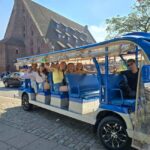
More melex loops around the old town:



Golden Gate and ceremonial architecture
Next comes the Golden Gate and then the Court of the Society of St. George. These are the kinds of stops where a guide really helps. From a distance, they can look like “pretty old walls.” Up close, you start to notice how the gates and courtyards signal power, civic identity, and the city’s old design logic.
John III Sobieski monument
You also see the Monument of John III Sobieski. Monuments are the fastest way to understand how places choose to remember people. With a guide on board, it is easier to connect the monument to the surrounding area instead of treating it like just another stop for a picture.
The classic Old Town loop: Long Market, Golden Gate area, and the Crane
As the route turns into the core sightseeing zone, you hit the kinds of landmarks that most people come to Gdansk for. This is where you get the “okay, I get it now” feeling, because everything lines up visually.
Long Market and Old Town orientation
You include the Long Market as one of the top attractions. This works well because it is a natural reference point. After you visit it, you can better plan your self-guided walking time later, since you know where the main pedestrian arteries sit.
St. Mary’s, St. Nicolas, and the Royal Chapel moments
You pass multiple church stops early and mid-route, including St. Nicolas Church, St. Mary’s Church, and the Royal Chapel. Churches can feel overwhelming if you are trying to absorb everything alone. On this tour, your guide can help you pick out what to focus on at each one, so you leave with a sense of each building’s role in the area.
Practical tip: even if you are not going inside, these are good stops to look carefully at exteriors and entrances. The cart makes it easy to stop briefly, grab a photo, and then keep moving.
The Crane stop: why it is a highlight
The Crane is one of the signature stops of the tour. This is the kind of landmark where you benefit from a guide-led stop, because your route naturally aligns you to see the structure within the wider waterfront setting rather than as a standalone object.
If you like architecture and maritime-era symbolism, you will understand why this gets included. It gives you a “center of gravity” for the whole city. And because you are on an electric cart, you can actually stick around long enough to take in the view.
St. John’s Church and the post-card angles
You also see St. John’s Church. If you are the type who keeps trying to photograph the same building from five angles, this is a good moment to do it. The tour format keeps the logistics easy, so you are not constantly thinking about how long it will take to reposition yourself.
Waterfront and shipyard energy: Ship Soldek, Amber Sky, and the views
Gdansk’s waterfront is a big part of why the city feels different from inland towns. The tour includes ship-and-maritime stops, so you are not stuck with only medieval streets.
Ship Soldek and the maritime pause
You visit Ship Soldek. Even without a deep dive into ship design, this kind of stop is valuable because it signals the city’s working relationship with the water. It also gives you a break from gate-and-church concentration, which keeps the tour from feeling repetitive.
Amber Sky and the skyline feeling
You also see Amber Sky. This stop matters because it adds a modern contrast to the Old Town vibe. You get a sense of how the city’s waterfront has evolved beyond medieval walls, while still staying connected to the same general geography.
The good part about the electric cart is that you can shift from one “era mood” to another without a long commute. You stay in tour mode instead of switching to transport mode.
Solidarity Square and the European Solidarity Centre: the city’s modern anchor
One of your highlights is the chance to discover the most important place. The route includes Solidarity Square and the European Solidarity Centre, and this pairing is clearly meant as a key moment in the tour.
Solidarity Square as your orientation checkpoint
Solidarity Square helps you understand the city beyond its medieval tourism layer. If you have limited time, this is a high-value stop because it gives context to Gdansk as a place with political and social meaning.
European Solidarity Centre as the guided context stop
The European Solidarity Centre fits into the same idea: it is included as part of the top-attractions set, so the guide is there to help you connect what you are seeing with the themes the city is known for. Even if your interests are mostly visual, this is the kind of stop that turns the city from postcard scenery into something you can place in a broader story.
More city stops: Philharmonic, Post Office, Railway Station, mills, and Market Hall
Gdansk is not just Old Town. This tour also includes civic and cultural buildings that round out the picture.
Philharmonic and cultural rhythm
You see the Philharmonic. A cultural venue is a good mid-tour stop because it changes the tone. Instead of more “historic façade watching,” you can look at the building as part of how the city lives today.
Post Office in the Free City and the civic layer
The Post Office in the Free City adds a practical angle. It reminds you that cities run on communication and logistics, and it helps you broaden the mental map from only monuments to everyday systems.
Railway Station and the movement of a real city
You also visit the Railway Station. Even as a quick stop, it is useful because it brings the “people and travel” theme back into your day. It also gives you a sense of where you might naturally connect to buses or walking routes later, since stations anchor transport.
Great Mill and Market Hall, the local-life angle
You include The Great Mill and The Market Hall. These are strong choices for travelers who like seeing how a city feeds itself and trades goods. You also get a different kind of architecture than gates and churches, so your photos do not all look the same.
Churches at the end of the route: St. Bridget’s, St. Catherine’s, and where they fit
Near the tail end, the tour brings you to St. Bridget’s Church and St. Catherine’s Church. Ending with churches can be nice because they act like a natural visual closure to an Old Town-heavy experience.
If you are planning your own walking time afterward, this portion helps you understand where religious landmarks sit relative to squares and main streets. You leave the tour with a mental map of “where to wander next,” not just a bag of photos.
What the guide actually adds, from Dominik and Thomas examples
The tour is built around a live guide, and the reviews name guides like Dominik and Thomas. Dominik is praised for being very good at explaining Gdansk history, and Thomas is noted for speaking very good German and English and giving lots of interesting information and tips.
For you, the practical benefit is simple. If your guide is giving strong explanations, you spend less time trying to figure things out with your phone. You can focus on what you are seeing in front of you, then ask a couple of smart questions that make your later self-guided time more rewarding.
Also, because it is private, you are not stuck with the same pace as a big group. You can ask for a slower stop at one church or a quicker look at a gate you already recognize.
Price and value: what $19 per person buys you
At $19 per person, this tour is priced like a quick, efficient introduction rather than a full-day deep study. That is not a flaw. It is the point.
You are paying for three things at once:
- Guided orientation of major top attractions (so you do not wander aimlessly)
- Electric cart transport to reduce walking time between far-flung stops
- Mulled wine included for the duration, which turns the tour into an experience, not just transportation
If you are trying to maximize value with limited time, this pricing format makes sense. You get a compact overview of Old Town gates and churches plus waterfront and modern civic landmarks, all in one go.
If you already know Gdansk very well and only need one or two stops, you might prefer a shorter custom plan or independent walking. But for first-timers, or for travelers who want structure without heavy effort, $19 can feel like a smart deal.
Skip-the-ticket-line and audio options, what they mean for you
The tour lists skip the ticket line. That usually helps when a stop involves entry lines, and it saves time compared to trying to coordinate tickets on your own mid-walk.
It also offers an optional audio guide in multiple languages, including Danish, Finnish, French, Italian, Norwegian, Slovak, Swedish, English, Russian, German, Portuguese, and Spanish. If you are the type who likes to replay details later, audio can be a nice backup.
Who should book this Gdansk mulled wine cart tour
This is a great match if you:
- Want Old Town highlights plus waterfront and civic stops without long walking
- Prefer a structured route with a live guide in English, German, or Polish
- Like the idea of touring with a drink in hand, especially in cooler months
- Travel with people who have mixed mobility needs, since the tour is wheelchair accessible
It may be less ideal if you:
- Want an all-day slow exploration with lots of time per site
- Plan to do detailed museum-style visiting at multiple stops during the same day
- Are sensitive to the pace of a sightseeing loop, even if it is private
Should you book this tour
I would book it if you are arriving in Gdansk and want to leave with a clear mental map and a stack of high-quality photo moments, without burning your whole day on transit. The combination of eco-friendly electric cart, a guided sweep of major landmarks, and mulled wine included makes it a very practical way to sample the city.
Pick the longer time slot if you want room to linger at the Crane area, churches, and waterfront stops. Pick the shorter slot if you are after a fast orientation and then you plan to continue exploring on your own.
If that sounds like your style, this is an easy yes.
FAQ
How long is the Gdansk mulled wine city tour by golf cart?
The duration ranges from 30 minutes to 2 hours. Starting times depend on availability.
Is this tour private?
Yes, it can be a private tour, just your crew. Private or small groups are available.
What is included in the price?
You get a guided tour of Gdansk’s top attractions, a ride in an eco-friendly electric cart, and mulled wine for every participant during the entire tour.
What languages are available for the tour guide and audio?
The live guide is available in English, German, and Polish. An optional audio guide is available in Danish, Finnish, French, Italian, Norwegian, Slovak, Swedish, English, Russian, German, Portuguese, and Spanish.
Is the tour wheelchair accessible?
Yes, the tour is wheelchair accessible.
Can I cancel, and do I need to pay right away?
You can cancel up to 24 hours in advance for a full refund. You can also reserve now and pay later.
More Wine Tours in Gdansk
- Gdansk: Unlimited Wine Tour by Golf Cart with Local Guide
★ 4.1 · 13 reviews - Exclusive Gdańsk Wine Tour with Polish Wine Tastings
★ 5.0 · 11 reviews - Gdansk: Polish Wine Tasting with Local Guide
★ 5.0 · 2 reviews - Gdańsk: Main and Old Town Golf Cart Tour with Mulled Wine
★ 5.0 · 2 reviews
Freshly posted from Gdansk
- 1-Day Private Tour Stutthof Concentration Camp and Malbork Castle★ 5.0 · 1 review
- Oliwa Cathedral in Gdansk & Trip to Park – 2h private trip by luxury car★ 5.0 · 1 review
- Private Bartending Workshop in Gdańsk★ 5.0 · 1 review
- A Two Hour Walking Tour in Old Town Gdansk★ 5.0 · 1 review
- Gdańsk Private Romantic Sunset Cruise★ 5.0 · 1 review
- Sopot: Old Town Highlights Private Walking Tour★ 5.0 · 1 review
- Surprise Walk of Gdansk with a Local★ 5.0 · 1 review
Golf Cart & Melex Tours, compared.
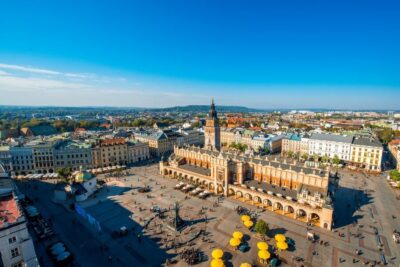
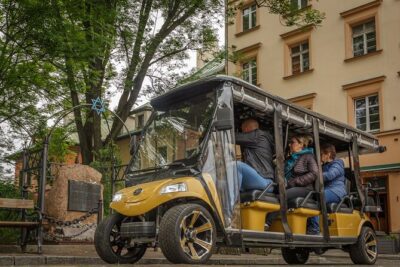
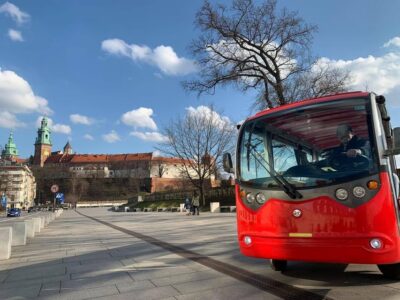
City Sightseeing Tour Eco Electric Buggy Golf Cart
Read our review →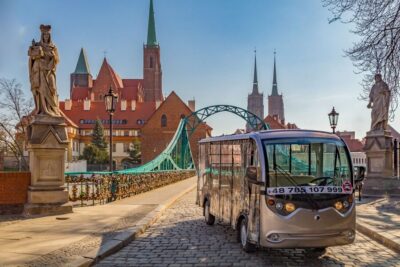
Extended City Sightseeing Tour – Eco Buggy Golf Cart
Read our review →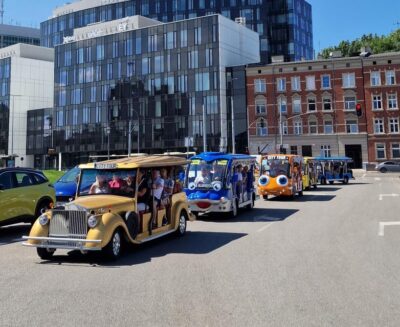
Shared or Private City Tour Sightseeing by Golf Cart
Read our review →
City Tour Live Guided by Golf Cart/Buggy Sightseeing
Read our review →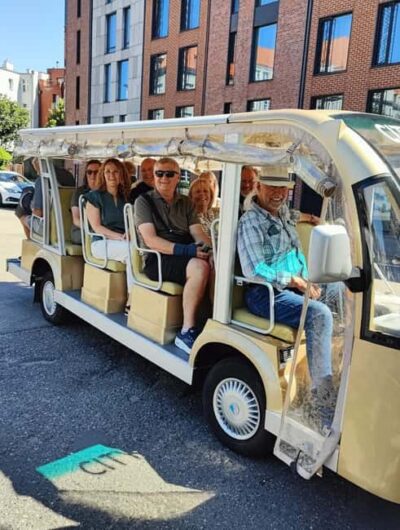
Shared/Private Golf Cart City Tour with Local Guide
Read our review →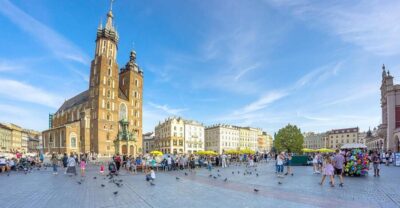
Browse the lists this tour appears in