
Reviewed · GOLF CART & MELEX TOURS
Gdansk: 2H City Sightseeing Tour LIVE GUIDED by Buggy/Golf cart
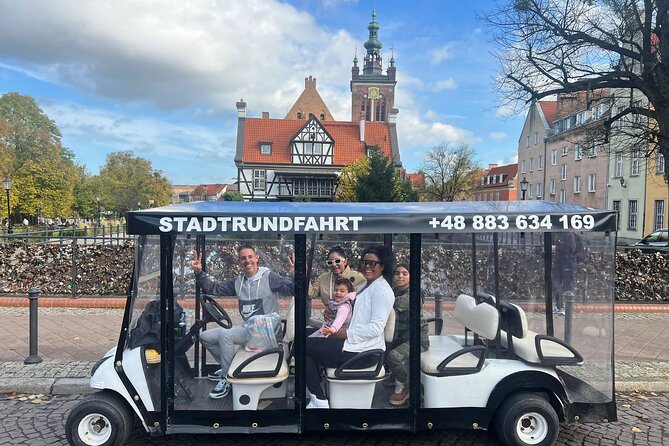
Gdansk looks different from a buggy. In about 2 hours, you zip through the historic center in an electric golf cart, catching the main sights with way less walking than a regular old-town loop. I love that the tour includes a free drink (water, coffee, or beer), so you start your sightseeing feeling human.
My other big plus is the live English guide and the tight focus on the places that matter most. One thing to plan for: the route is mostly outdoors and you ride in open-air carts, so bring a layer on chilly days, and expect changes during the Saint Dominic’s Fair window (late July to late August 2025).
In This Review
- Key highlights that make this tour worth your time
- Why a golf cart is the smartest way to see central Gdansk
- Price and value: what you actually get for about $52 per person
- Meeting at Neptune’s Fountain, pickup rules, and why timing matters
- The route: a stop-by-stop highlights ride you can actually use
- Neptune’s Fountain to the core of the old town
- The Royal Route flavor, from theatre to gatehouses
- Armories, monuments, and what “modern Gdansk” looks like
- Churches, the city’s “rebuilt after war” story, and industrial scale
- WWII and Solidarity landmarks, plus the waterfront icons
- Guides: what to look for, and how to handle accents and pacing
- Who this tour is perfect for, and who should choose something else
- Should you book this Gdansk electric buggy tour?
- FAQ
- How long is the Gdansk city sightseeing buggy tour?
- Where does the tour meet, and how far can I get dropped off?
- Do you pick up from cruise ports?
- What language is the live guide?
- Are admission tickets included?
- What if the weather is bad?
Key highlights that make this tour worth your time
- You cover a huge chunk of Gdansk quickly in one coordinated ride, ideal for a short visit
- A drink is included so you can pace yourself without scrambling for cafes right away
- Most stops are free to enter, with the Amber Altar visit included in the program
- Small tour size (max 30) means it stays manageable while you move through photo-friendly areas
- Pickup is practical but limited to about a 2 km radius from Neptune’s Fountain, not the ports
- Guides bring strong local storytelling, with names like Michael, Noris, Matchek, and Maciej mentioned in top ratings
Why a golf cart is the smartest way to see central Gdansk
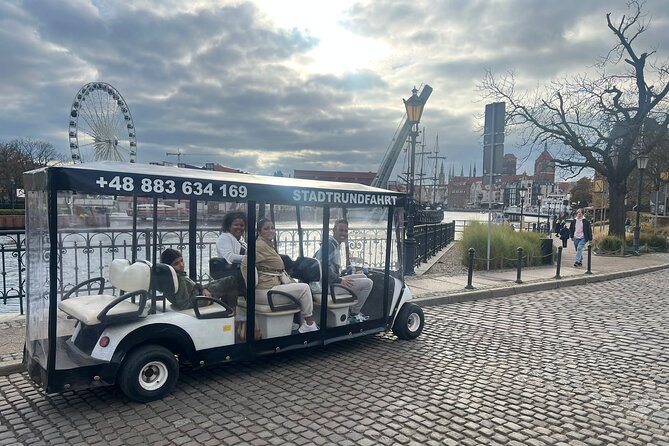
If you want to get oriented fast, this is one of the simplest ways to do it. A lot of Gdansk’s top sights are close on a map, but spread out in real life with turns, cobblestones, and occasional uphill stretches. From a buggy, you keep the momentum.
The other nice part is the feel of it. An electric golf cart is quiet compared to cars, and you’re not stuck behind tour buses. You can concentrate on the buildings, not on how far your feet have left in the tank.
And yes, the drink matters. It is the kind of included extra that quietly improves the experience because you do not start your sightseeing dehydrated or hyped-up on caffeine only.
More Golf Cart Tours in Gdansk
- Gdansk: Shared or Private City Tour Sightseeing by Golf Cart
★ 4.9 · 754 reviews - Gdansk: City Tour Live Guided by Golf Cart/Buggy Sightseeing
★ 4.9 · 715 reviews - Gdansk: Shared/Private Golf Cart City Tour with Local Guide
★ 4.9 · 604 reviews
Price and value: what you actually get for about $52 per person
At around $51.97, you are paying for three things: a live guide, transportation that saves time, and included access at least once during the ride. When I look for value in a short tour, I want the guide to connect the dots, not just point at postcards. This one aims to do that by routing you through the key old town and waterfront areas.
The itinerary is packed with landmark stops, and many of the listed entries are marked as free. That means your money goes toward the guided route and the ride itself, not constant paid admissions. The standout paid inclusion is the visit to the Amber Altar in St. Bridget’s Church, which is specifically noted as included.
Finally, the group limit (up to 30) helps keep the experience from turning into a herding situation. You still move quickly, but you are not alone on the cart either, which can be a plus if you like seeing other travelers’ questions.
Meeting at Neptune’s Fountain, pickup rules, and why timing matters
The tour starts and ends at Neptune’s Fountain on Długi Targ. If you want, you can also end within about a 2 km radius from the fountain area. It is a good setup because it keeps you right where most first-timers want to be, without forcing you into a dead-end pickup location.
Pickup is offered within roughly a 2 km radius from Neptune’s Fountain. The tour operator also explicitly notes that pickup is not offered at ports, which matters if you are arriving by cruise ship. In that case, you will need to plan your own way to the central meeting area.
One practical tip: you are asked to wait at the pickup spot about 10 minutes before the scheduled start. Traffic can cause slight delays, and the carts still need to route guests and regroup. Build a little buffer into your morning so you are not stressed before you even begin.
Also note the schedule change period. From July 27 to August 25, 2025, the Saint Dominic’s Fair brings restrictions, and the itinerary may shift while keeping the same general length and high standard.
The route: a stop-by-stop highlights ride you can actually use
This is built as a fast orientation loop. Most stops are brief, often a minute or two, which is perfect if you want photos and context, then decide what to revisit later. Think of it like grabbing the map in real life, then choosing your personal deep dives.
More melex loops around the old town:


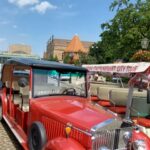
Neptune’s Fountain to the core of the old town
You begin at Neptune’s Fountain (Fontanna Neptuna), the iconic symbol where people line up for photos every day. Neptune ties Gdańsk to the sea, and the guide usually uses that starting point to explain why maritime trade shaped the city’s identity.
Next you glide by the Main Town Hall, currently part of the Museum of Gdansk. It is a 14th-century style anchor of the historic center, and it is a helpful stop because it frames how governance and commerce overlapped here.
A short stop follows at Muzeum Gdańska, Arthur’s Court. This place started as a merchants’ meeting point in the 14th century, shifted into the city’s stock exchange, and later became part of the museum system. Even in a quick pass, it gives you a feel for Gdańsk as a city of deals and networks.
Then it is onto Długa Targ (Long Market Square). This is the main square vibe in the historical center, the place you will walk toward again and again. You get a moment here to orient yourself to the streets that radiate out.
The route continues with the Green Gate (Brama Zielona), a Renaissance gate built as part of royal residence functions in the 1560s. It is part of the museum network today, and it is a nice reminder that entry points to cities were political and ceremonial, not just practical.
The Royal Route flavor, from theatre to gatehouses
One of the most charming quick stops is the Gdańsk Shakespeare Theatre, notable for its folding roof. It is the kind of detail that makes a short tour feel smarter than just driving past facades.
From there you pass Katownia (Old Prison Tower), which includes the tower and torture chamber areas. Even with limited time, the guide’s context helps you understand why coal markets and marketplaces often sit near former detention spaces, because city planning often mixed functions.
Next up is the Golden Gate (Langgasser Tor). The program notes it as a former entry point for royal suites into the representative Długa Street area. It’s a great place to connect the look of the street to the real history of status and power.
Then comes Highland Gate, part of a gatehouse complex and presented as the start of what was formally the Royal Road. Today it also serves as a tourist information point, which makes this stop a natural moment to ask your guide for the smartest next walk.
Armories, monuments, and what “modern Gdansk” looks like
The Great Armoury (Wielka Zbrojownia) is one of those buildings you feel before you fully process it. It is described as Dutch Mannerism style from the 16th and 17th centuries and now belongs to the city’s art academy. In a short tour, it is a good reminder that Gdansk’s looks changed over time, not just its medieval vibe.
You also pass the Millennium Tree (Trzewko Tysiąclecia), a stainless steel monument marking the city’s 1000th anniversary. It contrasts sharply with the old bricks around it, and it helps you see the city as layered rather than frozen in time.
The Jan III Sobieski Monument follows, an equestrian statue with a relocation story from Lviv in 1898 to Gdańsk in 1965. That detail is useful because it explains how monuments can travel and be re-contextualized.
Churches, the city’s “rebuilt after war” story, and industrial scale
The tour loops past Gdańsk Główny Railway Station (opened in 1900), then stops at St. Joseph’s Church from the 15th century, rebuilt after WWII. These are not “quick tourist-only” stops. They reinforce how the city endured damage and then rebuilt itself, which is a big part of why so many structures have a visible before-and-after feel.
Next is St. Elizabeth’s Church, also tied to WWII reconstruction. The program description notes that the church was badly damaged and that reconstruction ran from 1947 to 1949. Again, brief as the stop is, it helps you read the architecture with the right mindset.
You then pass through a portion of the old-town church cluster, including the Old Town Hall (Ratusz Starego Miasta). It is noted as one of the few historic buildings in Gdańsk that survived the war damage. That survival angle can change how you view everything else you saw earlier.
The tour continues with The Great Mill, described as the greatest industrial plant of Medieval Europe and now home to an amber museum. This is one of the most important stops for understanding that Gdańsk was not just art and architecture, it was manufacturing and trade power.
Then you see St. Catherine’s Church, described as the oldest church in Gdańsk, and St. Bridget’s Church, known as a Solidarity sanctuary under martial law. This is where you get one of the tour’s longer moments: time at the Amber Altar, and the entry is marked as included.
WWII and Solidarity landmarks, plus the waterfront icons
After the church stop, you shift to 20th-century history landmarks. The Museum of the Polish Post Office (defense of the Polish Post Office in September 1939) is a quick stop, but it is a powerful one. The description also references a monument to the defenders.
Then comes the European Solidarity Centre, often called the Solidarity Museum. You also visit Three Crosses Monument, created to commemorate shipyard workers, described as steel crosses with anchors and tied to December 1970 events.
Next is Sala BHP, a key Solidarity-linked place connected in the description to the 1980 strike and the birth of Solidarity. After that, you pass Gdańsk Shipyard, formerly Lenin Shipyard, famous for Solidarity’s founding in September 1980. This section gives your earlier medieval and royal-route sights a hard contrast, and it helps you understand why Gdańsk matters far beyond tourism.
Then the program continues with the Museum of the Second World War and the Baltic Symphony Hall. The symphony hall is noted as a rebuilt and extended former municipal power plant, which fits the theme of reuse and reconstruction you already saw in the older churches and buildings.
You also stop at St. John’s Church, described as a unique Gothic church and cultural center, then at the Great Crane, one of the defining Gdańsk symbols on the Motława River. The crane is important because it turns maritime trade into a physical landmark, not just an idea.
From there you pass St. Mary’s Church, described as the biggest Gothic brick building in the world. You get a look at the Royal Chapel (Kaplica Królewska), a 17th-century baroque church with a central dome feature noted in the description. The tour also includes St. Nicholas Church, an older Dominican church starting in the 12th century and noted as one of the churches that survived WWII.
Finally you end with Market Hall (Hala Targowa 1896), described as the oldest shopping center in Gdańsk. It is a satisfying final stop because it brings the story back to daily life and commerce.
Guides: what to look for, and how to handle accents and pacing
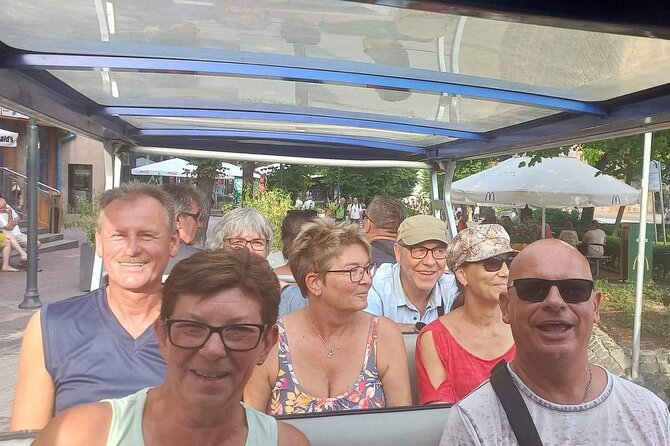
The best part of a short guided ride is the guide’s ability to make connections. In this tour, guides like Michael have been praised for a very detailed, personal-feeling explanation of Gdańsk’s history and later eras, including what families experienced during Nazi and Soviet times.
Other guides mentioned in strong ratings include Matchek, Maciej, and Noris. If you get one of these guides, you should expect enthusiasm, humor, and lots of context even when the stop time is short.
A fair note on pacing: one review flagged that an accent can affect how quickly you process the spoken commentary. If you find the guide moving fast, ask for slower speech or clarification early. This is one of those situations where asking immediately helps, because you cannot expect to pause a cart tour whenever you want.
Also, bring a layer. One traveler specifically recommended a blanket because the golf cart can feel chilly in autumn. Even in milder weather, your face and legs can get wind exposure, so dress for being outside.
Who this tour is perfect for, and who should choose something else
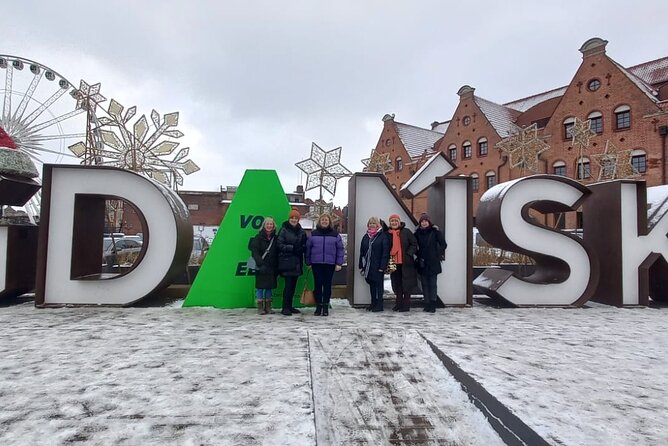
I think this tour is ideal when you want a quick, structured start. It is especially useful if you have limited time and you want to pick the best places to return to for longer visits later.
It also makes sense if walking is tough. Several route points involve old streets and longer distances between major sights, and the buggy format keeps you moving without exhausting yourself.
If you are on a tight schedule because you are heading back to a ship or another commitment, this kind of tour can still work, but plan your route to the city center because pickup is not offered from ports. If you need port pickup, you will likely have to look for a different arrangement.
Should you book this Gdansk electric buggy tour?
Yes, if you want an easy first impression with smart stop selection, a live English guide, and an included drink. The value is strongest when you treat it as orientation, not as your only way to see Gdańsk. You will leave with a mental map, plus a shortlist of where you want to spend extra time.
Do not book it if you prefer long indoor visits with deep, unhurried timing. This ride is built for quick views and context. If you are the type who likes to linger at one church or one museum for hours, pair this with one or two targeted longer experiences after.
FAQ
How long is the Gdansk city sightseeing buggy tour?
The tour runs about 2 hours to 2 hours 15 minutes.
Where does the tour meet, and how far can I get dropped off?
It meets at Neptune’s Fountain on Długi Targ. Pickup and drop-off can be arranged within a 2 km radius from Neptune’s Fountain, and you can also end the tour at a point you choose within that radius.
Do you pick up from cruise ports?
No. Pickup is offered within about a 2 km radius from Neptune’s Fountain in the historic city center, and pickup is not provided at ports.
What language is the live guide?
The tour offers a live guided experience in English, and you will receive a mobile ticket.
Are admission tickets included?
Many stops are marked as free, and the visit to the Amber Altar in St. Bridget’s Church is included. The rest of the stops listed are shown as free in the program details.
What if the weather is bad?
This experience requires good weather. If it is canceled due to poor weather, you will be offered a different date or a full refund.
Freshly posted from Gdansk
- Private Walking Tour of Old Gdańsk with an architect-guide★ 5.0 · 7 reviews
- GDANSK City Tour by Golf Cart Live Guide & Sightseeing 90min★ 4.7 · 7 reviews
- Stutthof Concentration Camp private tour★ 5.0 · 7 reviews
- Private Roundtrip Transfer to Stutthof Concentration Camp 4h★ 5.0 · 7 reviews
- Gdansk: Polish Craft Beer Tasting Session★ 4.5 · 7 reviews
- Gdansk, Sopot & Gdynia – Private 3 City Tour★ 5.0 · 7 reviews
- Gdansk: PRIVATE Alcotour City Tour Sightseeing Golf Cart★ 5.0 · 7 reviews
Golf Cart & Melex Tours, compared.
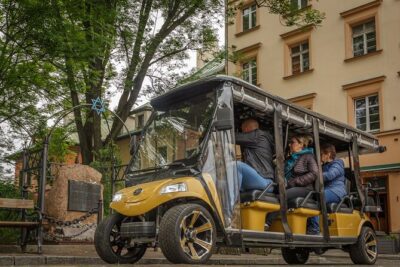
City Sightseeing Tour Eco Electric Buggy Golf Cart
Read our review →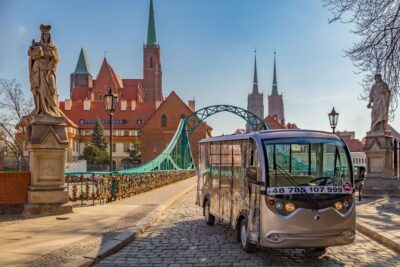
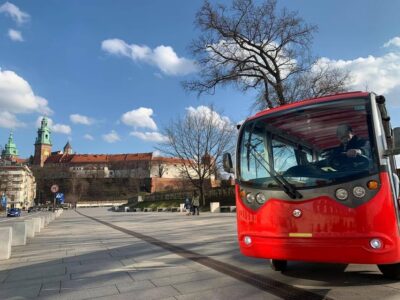
Extended City Sightseeing Tour – Eco Buggy Golf Cart
Read our review →
Shared or Private City Tour Sightseeing by Golf Cart
Read our review →
City Tour Live Guided by Golf Cart/Buggy Sightseeing
Read our review →
Shared/Private Golf Cart City Tour with Local Guide
Read our review →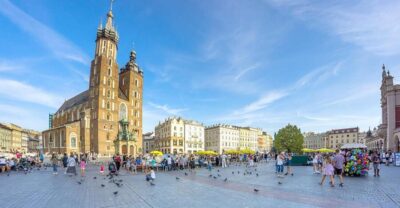
Browse the lists this tour appears in