

Reviewed · AUDIO TOURS
Warsaw Self Guided Audio Experience
Warsaw sounds better when you walk it. This self-guided English audio route strings together 19 major sights with story-focused stops you can pace yourself. You get a SoundCloud playlist for the audio, plus a Google My Maps itinerary map with headphone icons.
What I like most is the way the narration turns famous landmarks into practical street-level history. The tour shines at the contrasts, modern travel infrastructure beside communist-era design, and post-war reconstructions beside older royal spaces. You also get flexibility that suits real life, start where you want, follow the suggested order or not, and split it across multiple days.
One drawback to plan for: it streams audio, so your phone needs internet and a strong battery. One review pointed out fast battery drain, so bring a power bank and consider battery-saver mode before you start.
In This Review
- Key points before you go
- Price and value for a 19-stop audio route
- How the SoundCloud playlist and My Maps headphone icons work
- Central Warsaw: Warsaw Central Railway Station and Holy Cross Church
- Myths, gardens, and public memory: Warsaw Mermaid and Saxon Gardens
- The solemn start of a memorial walk: Tomb of the Unknown Soldier
- Royal boulevard to intellectual Warsaw: Krakowskie Przedmiescie and the University Library
- Resistance through church bells and the Cathedral at the center
- Old Town reconstruction walk: Sigismund’s Column, Old Town, Castle Square, and Rynek Starego Miasta
- Memorials you should not rush: Little Insurgent, Warsaw Uprising Monument, and the Ghetto memorial
- Modern performance and public fun: Multimedia Fountain Park
- Lazienki Krolewskie and Chopin Monument: royal gardens to musical legacy
- What to bring, and how to pace 3 to 9 hours
- Is this worth booking? My honest go or no-go
- FAQ
- How much does the Warsaw Self Guided Audio Experience cost?
- How long does this self-guided audio tour take?
- Is the tour available in English?
- Is this tour GPS-guided?
- What do I need to use the audio?
- How do I access the audio and the map?
- Can I start and finish anywhere in Warsaw?
- How long are the access links valid?
- Are there admission fees at the stops?
Key points before you go
- 19 audio stops spread across central Warsaw, each designed for about 20 minutes
- SoundCloud + Google My Maps, both accessed through private links you receive before you begin
- Not GPS-guided, so you walk with your own navigation and use the map for each stop
- Free-entry stops listed for every attraction in the route, so you are paying for the stories, not tickets
- WWII memorials with context, including the Warsaw Uprising and the Ghetto memorial
- Up to 6 days of access after you receive your links, so you can recharge and reschedule
Price and value for a 19-stop audio route
At $6 per person, this is a low-cost way to get guided-level interpretation without paying for a formal group tour. The key value is what you are actually buying: you are not paying for transportation or an audio device, you are paying for a structured route with story audio for each stop.
The tour also stacks well for budgeting because each listed site shows admission ticket free. That means your real costs are mostly basics like transit, snacks, and any optional attractions you choose to add on your own.
The time range matters too. You can do the route quickly in a half-day style sweep, or stretch it out into a full day by lingering. The app-style “each stop is about 20 minutes” pacing is useful, because it helps you avoid the classic problem of reading signage only at the places you happen to reach last.
Still tacked up around Warsaw
- Warsaw: Evening Cruise with Drink and Audio Guide
★ 4.8 · 15 reviews - Warsaw’s Old Town A Self-Guided Audio Tour
★ 4.5 · 10 reviews - Warsaw at War 1939-1945: A Self-guided Audio Tour
★ 4.5 · 7 reviews
How the SoundCloud playlist and My Maps headphone icons work
This is a self-guided audio tour, not a GPS walk. You use your phone for two things: listening and finding the next stop.
1) You open a SoundCloud link in your browser and use the playlist. It is organized in a suggested order, but you can play any stop whenever you want.
2) You open the Google My Maps link in your web browser (not the Google Maps app). You will see headphone icons on the map. Tap a headphone icon to jump to that location’s audio link.
A small practical win: your links are private and valid until your tour is complete, with a maximum of 6 days. That makes it easy to split the route, for example one cluster of sights in the morning and the rest later.
Since it streams, plan for phone life. Use headphones, keep your screen brightness reasonable, and consider battery-saver mode. And yes, bring a power bank. Your phone is doing two jobs: streaming audio and acting as your map.
Central Warsaw: Warsaw Central Railway Station and Holy Cross Church
Stop 1, Warsaw Central Railway Station, is a smart opener because it anchors you in the city’s movement. The audio focuses on the station as a gateway shaped by Polish transformation, the contrast between modern efficiency and communist-era architecture, and the way the building became a world connection point for millions.
I like starting here because it sets your mindset. You stop treating Warsaw as just postcard scenery and start reading it as infrastructure with a story. You also get specific prompts to notice details that many visitors miss, including design elements tied to Poland’s 20th-century path.
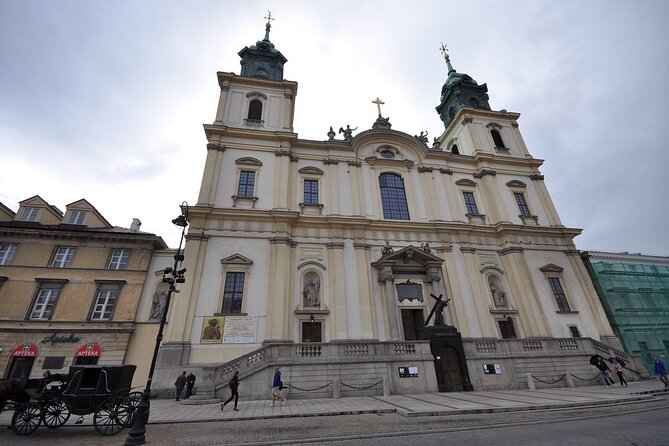
Stop 2, Holy Cross Church (Kosciol Swietego Krzyza), switches to deep cultural symbolism. The audio centers on Chopin, including the famous story of Chopin’s heart being smuggled from Paris and ceremonially placed in the church. It also brings in World War II resistance history and how the church survived through centuries of conflict.
For your walking rhythm, this pairing works well. After the station’s scale, the church gives you a quieter place to slow down for reflection, and it is a different kind of “Warsaw resilience,” faith plus national identity.
Myths, gardens, and public memory: Warsaw Mermaid and Saxon Gardens
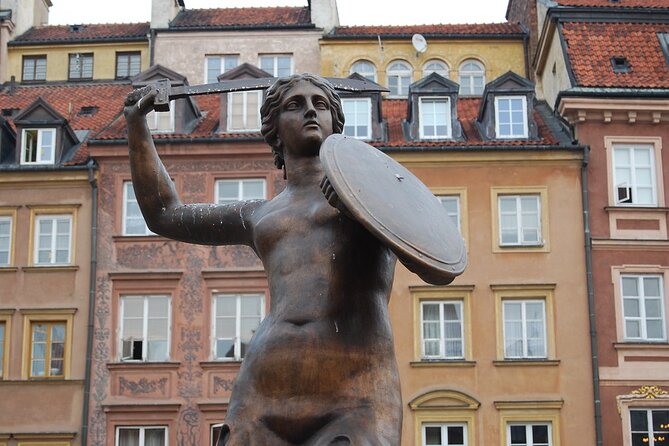
Stop 3, Warsaw Mermaid, is where the city gets myth-smart. The story connects Warsaw’s mermaid to a sister legend in Copenhagen, and it explains how this bronze figure survived Nazi occupation when so many monuments were destroyed. The audio also points you toward the mermaid’s base as a setting tied to secret resistance meetings.
If you like monuments that have footnotes, this stop delivers. The audio also explains the figure’s positioning and links it to Slavic water spirits and Polish pride, which gives you a way to interpret the sculpture beyond the photo.
Stop 4, Saxon Gardens, is a great breather and a surprisingly political place. The audio treats the park like a social map: it began as a royal space tied to Augustus II, then became older public recreation, shifting leisure from exclusive use toward shared access. It highlights baroque sculptures that survived wartime bombing and notes plant cultivation dating back to the 18th century.
I especially like that the narration mixes design and people. You get prompts about meeting grounds for conspirators, lovers, and revolutionaries. In practice, that means you are not just strolling through greenery. You are walking through layers of who had access, who gathered, and what the city chose to protect.
Beneath the newer pins on the Warsaw board:

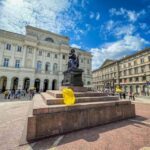

The solemn start of a memorial walk: Tomb of the Unknown Soldier
Stop 5, Tomb of the Unknown Soldier, is one of those places where the audio can genuinely change how you experience it. The narration focuses on symbolism in stone and layout, including stones selected to represent different battlefields and alignment with significant historical dates.
You also get guidance on the changing of the guard ceremony, with explanation of military traditions and protocols that date back centuries. That matters because it turns what looks like a routine into a language of remembrance.
Practical note: plan a slower pace here. This is not a quick “listen and go” stop if you want the emotional effect to land.
Royal boulevard to intellectual Warsaw: Krakowskie Przedmiescie and the University Library
Stop 6, Krakowskie Przedmiescie, is a classic “street as history lesson.” The audio frames it as the royal route from Warsaw Castle to summer residences and connects it to coronations, revolutions, and the national habit of rebuilding. It also nudges you toward architectural details and hidden courtyards that do not show themselves from the sidewalk.
Stop 7, University of Warsaw Library, shifts the focus to ideas and survival. The audio explains the library as a sanctuary for Polish intellectual life, with emphasis on how forbidden books were hidden during occupation and how underground universities operated in secret. It also treats the contemporary building design as symbolic, tying modern aesthetics to preservation efforts.
I like this stop because it complements the war memorials you will hit later. You see the same theme, Polish identity under pressure, but through culture and education instead of only monuments.
If you need a decision-making shortcut: if your phone battery is low, prioritize this one. The value-to-time ratio is strong because the narration connects architecture to real resistance activity.
Resistance through church bells and the Cathedral at the center
Stop 8, St. Anne’s Church (Kosciol Swietej Anny), is baroque drama with a wartime purpose. The audio highlights how the church served as a beacon during the Warsaw Uprising, sheltering civilians in nearby chaos. It also points out ornate interior details tied to wealthy patrons who funded reconstruction, and the religious symbolism meant to sustain faith.
A practical detail in the audio approach: it mentions climbing the bell tower through virtual tour commentary, with an explanation of how church bells functioned as communication networks for resistance fighters, plus celebration calls for triumph moments.
Then comes Stop 12, Archikatedra Sw. Jana Chrzciciela (Warsaw’s mother church). The audio treats it as both spiritual sanctuary and political symbol, linking it to royal coronations and protection sought by revolutionaries. It explains the mix of Gothic foundations and later Baroque additions, and it describes hidden crypts containing royal remains and religious artifacts that survived wartime destruction through courage and luck.
This pairing works because both stops are about survival through sacred space, but they tell it in different tones. St. Anne’s leans into uprising-era refuge and communication. The Archikatedra leans into centuries of authority and continuity.
Old Town reconstruction walk: Sigismund’s Column, Old Town, Castle Square, and Rynek Starego Miasta
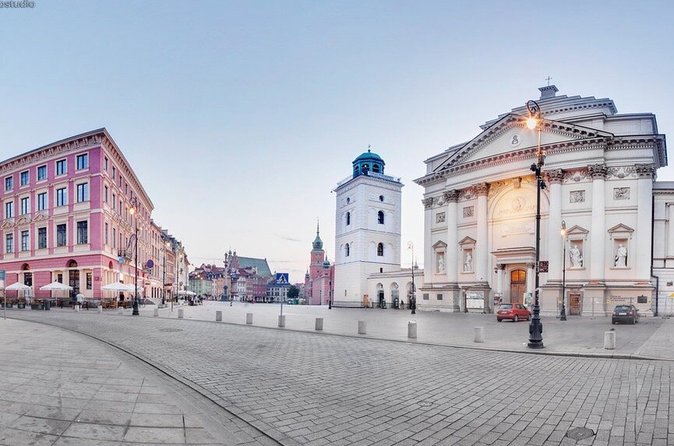
Stop 9, King Sigismund’s Column (Kolumna Zygmunta), begins the Old Town cluster with a “Warsaw origin” feel. The audio calls it Europe’s oldest secular statue and explains the engineering behind a bronze figure meant to survive wars, weather, and political change. It also connects Sigismund III to moving the capital from Krakow to Warsaw, a decision that reshaped the nation.
Stop 10, Old Town, is where the tour becomes about rebuilding as an act of identity. The narration frames it as a UNESCO World Heritage site and stresses the scale of reconstruction, rebuilt stone by stone using original architectural plans and materials. You get prompts for narrow streets that whisper stories of merchants and craftsmen in buildings that now hold shops and galleries.
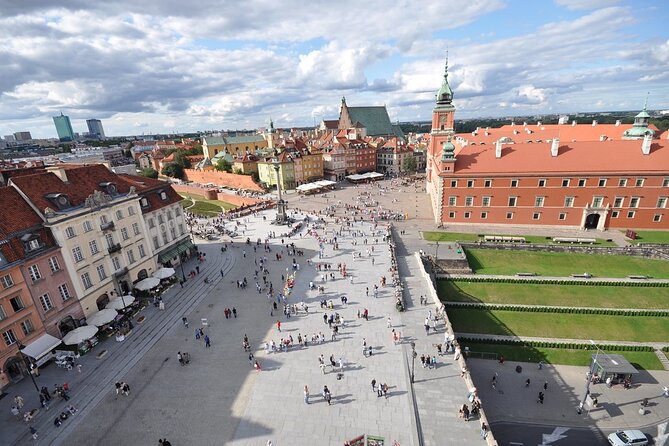
Stop 11, Castle Square (Plac Zamkowy), keeps the political focus. The audio describes coronations, declarations of war, tournaments, and demonstrations that changed Europe. It also points out architectural harmony tied to royal ambitions, and it includes a human scale angle with resident stories tied to historic events.
Stop 13, Rynek Starego Miasta, finishes the Old Town loop with commerce and daily life. The audio describes the square as a medieval marketplace with trade and taxation, then as a social heart where musicians performed and political discussions shaped national destiny. It offers a fascinating practical detail: it explains how painters and architects worked together to recreate destroyed buildings using fragments, photographs, and collective memory.
If you only have time for one Old Town-style cluster, I would choose this one. It links the why of reconstruction to details you can actually see while standing there.
Memorials you should not rush: Little Insurgent, Warsaw Uprising Monument, and the Ghetto memorial
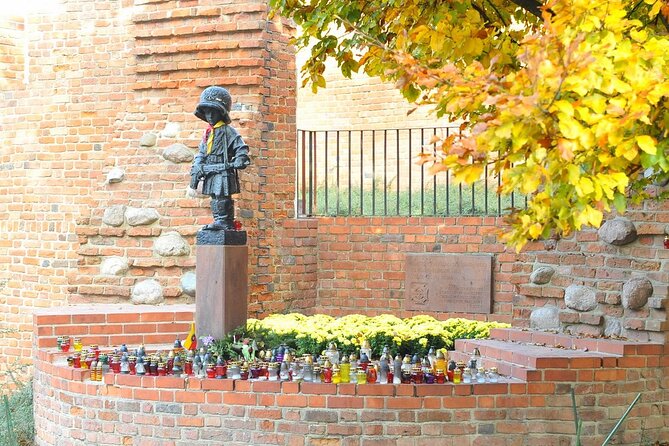
Stop 14, Statue of the Little Insurgent, is small in size, huge in weight. The audio commemorates child soldiers who fought with adult courage during the uprising against Nazi occupation. It focuses on roles like messengers, medics, and fighters in the underground resistance, with emphasis on hope and humanity under extreme pressure.
Stop 15, Warsaw Uprising Monument, expands the lens. The audio addresses the complex political decisions behind the uprising, and it explains why Warsaw’s citizens chose to fight despite overwhelming odds. It also highlights survivor testimonies for stories of courage, loss, and solidarity. There is an added layer through mention of underground museum connections, which signals you can go deeper if you want.
Stop 16, Pomnik Bohaterow Getta, is the route’s most explicit Holocaust remembrance. The audio explains the final stand of Warsaw’s Jewish community against Nazi extermination and connects that defiance to inspiration for resistance movements worldwide. It also covers strategic resistance activity, including how fighters obtained weapons and coordinated attacks.
I recommend treating this trio as a single emotional unit. Plan them when you are not racing the rest of the day, and give yourself a few quiet minutes between stops if the content hits hard. This tour handles these moments with clear reverence, and the audio context is part of why it works.
Modern performance and public fun: Multimedia Fountain Park
Stop 17, Multimedia Fountain Park, feels like a reset button after the memorials. Here, the audio focuses on how water, light, and music create public entertainment, built to celebrate Warsaw’s cultural renaissance after decades of rebuilding. It even connects the soundtrack to Polish composers like Chopin alongside international choices, making it easier for mixed tastes.
The tour’s angle is also practical: it explains behind-the-scenes engineering that makes synchronized performances possible. And the timing is your friend. Evening performances add atmosphere, and the audio’s stories about how public entertainment evolved from royal spectacles toward democratic celebrations help you watch with better context.
If you want a balanced day, use this as your lighter stop. But if you are not into shows, you might skip lingering, since the audio description is more about the performance system than quiet sightseeing.
Lazienki Krolewskie and Chopin Monument: royal gardens to musical legacy
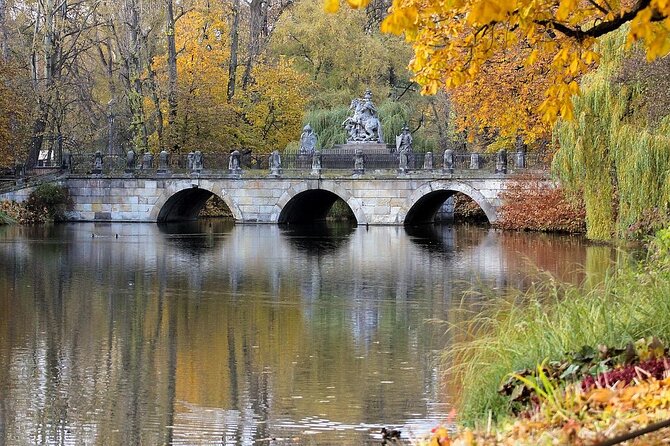
Stop 18, Lazienki Krolewskie w Warszawie, is a calm, story-rich stroll through royal grounds. The audio frames the gardens as corridors of power, describing how Poland’s last king used these spaces to entertain European nobility and plan reforms. It also talks about musicians, writers, and philosophers gathering here, tied to European Enlightenment discussions.
You get prompts to notice specific architectural features, including neoclassical palaces and romantic ruins, and the audio connects those to royal entertainment and political symbolism. It also names Stanisław August Poniatowski, tying the garden’s cultural promotion to the politics needed for the nation’s survival.
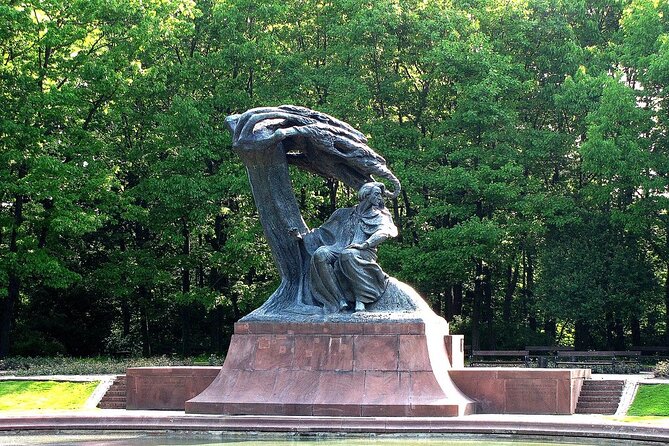
Stop 19, Chopin Monument, turns the walk into a musical payoff. The audio covers the monument’s creation story and credits sculptor Wacław Szymanowski, describing flowing forms meant to visualize musical inspiration and patriotic devotion. It also connects Chopin’s legacy to encoded Polish folk melodies and national identity during periods of oppression.
This is a great closer because it circles back to Chopin in a new way. You start with Chopin’s heart in a church, then end with Chopin’s public memorial in a park tied to royal patronage and cultural access.
What to bring, and how to pace 3 to 9 hours
To use this tour smoothly, you need a smartphone with internet and headphones or earphones. The tour does not include an audio device, so plan for your own. Charge your phone fully before you start and consider a power bank because streaming can drain batteries fast.
Timing is flexible. Each stop is designed for about 20 minutes, and the whole route is listed as approximately 3 to 9 hours depending on what you choose to do. If you want a focused first day, pick a subset: station plus one church, Old Town plus one memorial, then Lazienki at the end. If you prefer slow and emotional, stretch memorials and parks across two days.
Also remember, you can start and finish anywhere in Warsaw. The tour is set up for your route, not for a fixed meeting point with a clock.
Is this worth booking? My honest go or no-go
I would book this if you want a budget-friendly guided feel and you like learning on your feet without committing to a strict group schedule. The best reason to choose it is the way it connects architecture and monuments to real wartime choices and cultural identity, from Chopin’s heart story to uprising-era refuge.
I would hesitate if you hate phone-based navigation or you know your battery life is usually weak. Since this is not GPS-guided and it streams audio through a browser, you need decent phone readiness.
My quick checklist: bring charged headphones, use a power bank, and decide which stops matter most to you. If you do that, the $6 price feels less like a deal and more like a smart way to see Warsaw with context.
FAQ
How much does the Warsaw Self Guided Audio Experience cost?
It is listed at $6.00 per person.
How long does this self-guided audio tour take?
The duration is approximately 3 to 9 hours, depending on how many stops you visit and how long you stay at each.
Is the tour available in English?
Yes, the audio is offered in English.
Is this tour GPS-guided?
No. It is not a GPS-guided tour. You choose where to start, then use the interactive map to select each stop.
What do I need to use the audio?
You need headphones or earphones and internet access on your smartphone. The tour does not include an audio device.
How do I access the audio and the map?
Before your start time, you receive private access links through your booking platform messaging. One link opens the SoundCloud playlist, and the other opens a Google My Maps itinerary link in your browser.
Can I start and finish anywhere in Warsaw?
Yes. Because it is self-guided, you can choose where to start and finish.
How long are the access links valid?
Your private links remain valid until your tour is complete, with a maximum validity of 6 days.
Are there admission fees at the stops?
Each listed attraction shows admission ticket free in the tour content you receive, so you should not expect separate ticket costs for these stops as part of the route.
Freshly posted from Warsaw
- Warsaw Uprising and WWII Old Town Walking Tour with Museum★ 5.0 · 1 review
- EVERYDAY Warsaw Traditional Food Tour with Old Town Sightseeing★ 5.0 · 1 review
- Warsaw to Auschwitz and Krakow Old Town Full-Day Trip by Car★ 5.0 · 1 review
- A Day in Warsaw: Private Full-Day Highlights Tour★ 5.0 · 1 review
- Pub Crawl with Shots, Discounts, Games & VIP Entry★ 5.0 · 1 review
- POLIN Museum of the History of Polish Jews : PRIVATE TOUR /inc. Pick-up/★ 5.0 · 1 review
- Full-Day Kazimierz Dolny Private Tour from Warsaw with Guide★ 5.0 · 1 review
Audio Tours, compared.
Day or Night Vistula River Cruise with Audio Guide
Read our review →

Sightseeing Cruise on Vistula River with Audio Guide
Read our review →
Vistula River Sightseeing Cruise with Audio Guide
Read our review →
Wrocław University: Tour with Audio Guide & Admission
Read our review →
Browse the lists this tour appears in