
Reviewed · AUDIO TOURS
Warsaw’s Old Town A Self-Guided Audio Tour
Warsaw’s Old Town tells a story you can walk through. This self-guided audio tour uses the VoiceMap app to connect you to Warsaw’s comeback after WWII, from rubble to the rebuilt streets you see today. I like that it keeps your pace flexible, and I really love the practical setup, offline audio and maps so you can wander without stressing about data.
You start right in the thick of the action around Plac Zamkowy and Sigismund’s Column, then follow a loop through landmarks and key figures like Jan Kiliński, Mały Powstaniec, and Lech Wałęsa’s inspiration at St Martin’s Church. One thing to consider: you will need your own smartphone and headphones to run the tour, and it is strictly audio only, so museums and ticketed sites are not included.
In This Review
- Key Highlights You’ll Actually Feel Walking
- Warsaw Old Town, rebuilt, and why audio works here
- Starting at Sigismund’s Column and Plac Zamkowy’s Royal Castle zone
- Fortifications and Castle Square history you can see, not just read
- Jan Kiliński: a shoemaker who resisted and why statues matter
- Mały Powstaniec: honoring child soldiers in the Warsaw fightbacks
- Rynek Starego Miasta and the Old Town center of gravity
- The Jesuit church and St John’s Archcathedral on an audio-friendly route
- St Martin’s Church and Lech Wałęsa’s Solidarity spark
- Castle Square again, then Dzwon na Kanonii to the Vistula views
- Price and logistics: why $7.99 can be a good deal for Warsaw
- Duration and pacing: how long you should plan for
- Who this self-guided audio tour suits best
- Should you book this Warsaw Old Town audio walk?
Key Highlights You’ll Actually Feel Walking
- A WWII rebuilding story that makes the streets click, from salvaged plans and old photos to the rebuilt city you walk through now
- Low-stress pacing, since you control stops, pauses, and how fast you walk
- Iconic landmark sequence, starting at Royal Castle territory and ending by the River Vistula views near the Strong Man statue
- People-based history, with statues and memorials for child insurgents, local resistance, and Solidarity-era roots
- Offline-ready navigation, with audio and maps saved for when you have spotty or no signal
Warsaw Old Town, rebuilt, and why audio works here
Old Town in Warsaw has a special kind of energy, because you are not just seeing pretty buildings. You are seeing a city that was destroyed, then carefully reassembled using evidence like original building plans and historic street scenes, including paintings by Canaletto. When you hear that story while you’re walking the lanes, the stones stop feeling generic and start feeling earned.
That is where this tour earns its keep. Instead of reading a plaque and moving on, you get a guided narrative that comes to you as you pass the places. It is built for motion, and it stays focused on the moments that explain why these locations matter.
I also like how the tone fits the setting. It is not a lecture. It is more like someone telling you the plot of Warsaw in real time, with just enough drama to keep you listening, but not so much that you feel trapped at every corner.
Still tacked up around Warsaw
- Warsaw: Evening Cruise with Drink and Audio Guide
★ 4.8 · 15 reviews - Wroclaw: E-Car Tour and Audio Guide
★ 4.6 · 1,738 reviews - Krakow: Day or Night Vistula River Cruise with Audio Guide
★ 4.5 · 1,303 reviews
Starting at Sigismund’s Column and Plac Zamkowy’s Royal Castle zone
Your walk begins at Sigismund’s Column in Plac Zamkowy. This is a smart start because the Royal Castle area gives you context fast. You are immediately in the square where imperial power and Polish identity have always been on display, so when the audio shifts into fortifications and conflict, it lands naturally.
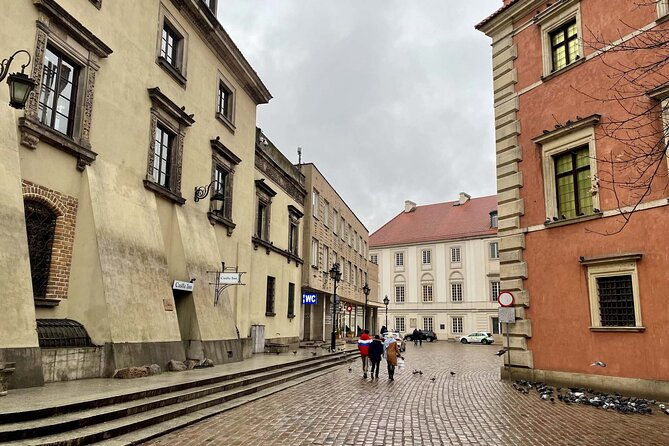
Right after you start, you move into Castle Square, in front of the imposing Royal Castle. The audio then points out Old Town fortifications as you walk, helping you notice details you might otherwise miss. If you have ever walked past a wall and thought, sure, it is old, this section helps you see what the wall was for, and what it protected.
Practical tip: take the first few minutes slowly. This area can be busy at certain times, and having your phone ready, volume set, and headphones snug will help you catch the opening storyline without rushing.
Fortifications and Castle Square history you can see, not just read
After you begin near the Royal Castle, the tour keeps you in the story of defenses and survival. That matters because Warsaw’s Old Town was nearly lost forever when the city was reduced to rubble during World War II. The tour frames restoration as something active, not passive. People combed through rubble to salvage what they could, and later, the rebuilt Old Town relied on old photographs and original plans.
As you walk through the castle-side streets and squares, you are basically seeing two layers of time at once. The audio helps you track both: the earlier power struggles and the later rebuilding that recreated a livable historic core.
The key benefit here is understanding why certain walls, streets, and squares feel deliberate. Even if you are not a history buff, you will start noticing how the town layout supports its past.
Jan Kiliński: a shoemaker who resisted and why statues matter
One of the standout stops is the statue of Jan Kiliński. You are not just told a name. You learn the role: he was a shoemaker who opposed the Russian invasion in the second half of the 1700s.
That is a powerful choice for an audio tour, because statues can feel like decoration if you do not know the human story behind them. Here, you get enough context to understand why Kiliński is honored at all, and why Warsaw remembers everyday people who resisted power.
A small, practical consideration: if you are stopping for photos, give yourself a few extra seconds. The audio is designed to be heard while you move, but you can pause at a statue if you want a clear shot without missing the point of the story.
Beneath the newer pins on the Warsaw board:


Mały Powstaniec: honoring child soldiers in the Warsaw fightbacks
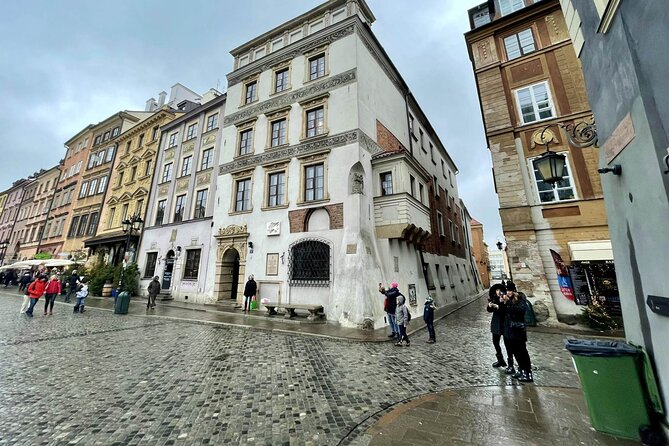
Next comes Mały Powstaniec, or the Little Insurgent. This memorial honors child soldiers who resisted Nazi occupation.
This part hits harder than the postcard highlights, and that is exactly the point. Old Town is not only a place of rebuilt facades and scenic streets. It is also a place where suffering and resistance are part of the landscape. Hearing this while standing near the memorial helps the story stay grounded.
If you prefer gentler pacing, you may want to lower the volume for a moment and then restart when you are ready to listen again. The audio here carries emotional weight, so it is okay to take a breath.
Rynek Starego Miasta and the Old Town center of gravity
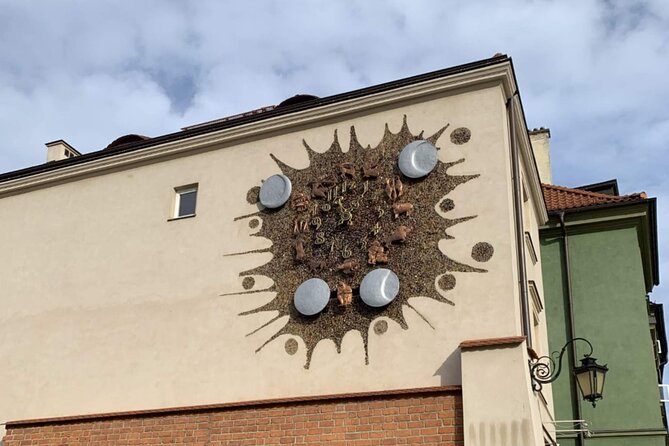
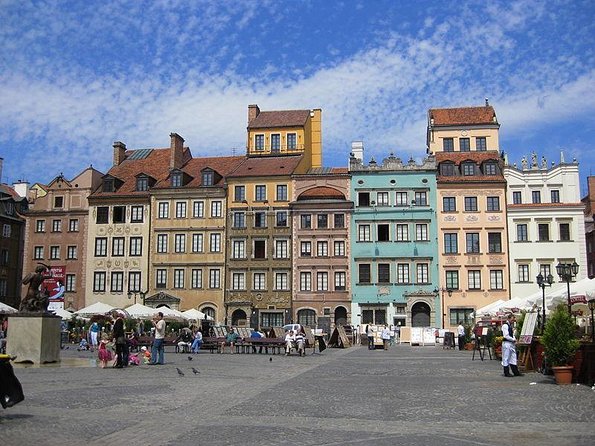
Then you pass by Rynek Starego Miasta, the Old Town Market Square. You will hear about it while you walk, and this is a good example of how the tour uses spacing wisely. Market squares often feel like open spaces you speed through. With audio, you understand what kind of stage it was, and how power and community life intersected there.
Even if your route is quick, this section helps you interpret what you are seeing. You start noticing how public space turns into a stage for politics, ceremonies, and conflict, depending on the era.
For your walking comfort: wear shoes you trust. Old Town streets can be uneven, and you are likely to be on foot close to two hours if you stop for photos and let the stories play at full length.
The Jesuit church and St John’s Archcathedral on an audio-friendly route
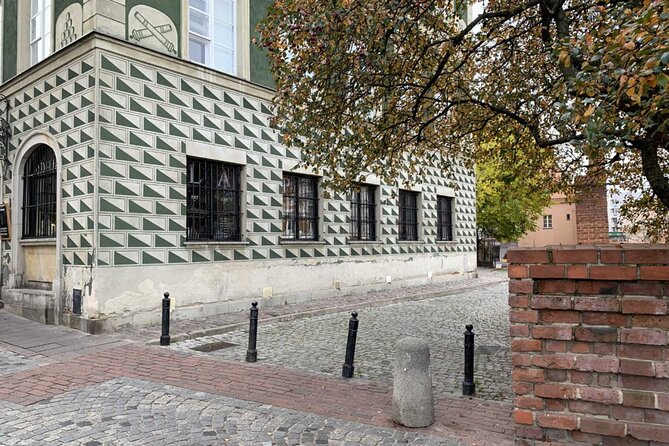
As you continue, the audio guides you past the church of Jesuits and then St John’s Archcathedral. You will not be walking with a person telling you every detail, but the narration is timed for what you can see right there on the street.
Why this works: churches like these often come with layers of architectural and historical meaning, and if you do not have context, they can turn into just another pretty facade. The audio approach gives you context without requiring you to buy tickets or commit to a museum schedule.
One consideration, though: the tour does not include entrance into museums or other attractions mentioned along the way. If you decide to go inside something, you will need to pay for it separately.
St Martin’s Church and Lech Wałęsa’s Solidarity spark
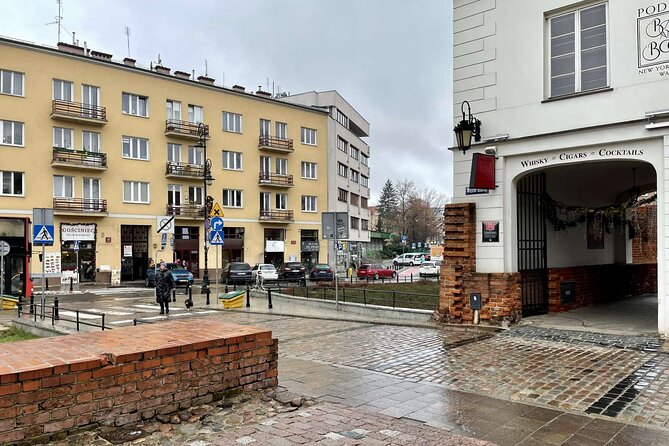
St Martin’s Church is another moment where the tour turns a landmark into a turning point. The audio connects a hunger strike against Communist oppression to inspiration for Lech Wałęsa and the later Polish Solidarity Trade Union movement.
This is the kind of history that can feel abstract if you read it quickly. The value here is timing. You are moving through the Old Town, and then the narration ties a specific place to a specific cause-and-effect chain. It is easier to remember, and it is easier to feel why this part of Warsaw mattered to modern Poland.
If you want to take notes, do it briefly. You will get a lot of names and dates in audio format, and you want your notes to support memory, not replace listening.
Castle Square again, then Dzwon na Kanonii to the Vistula views
The tour loops back through Castle Square along the way, so you revisit the area with a new lens. That repetition is useful because it reinforces the main theme: Old Town keeps changing, and it keeps fighting back.
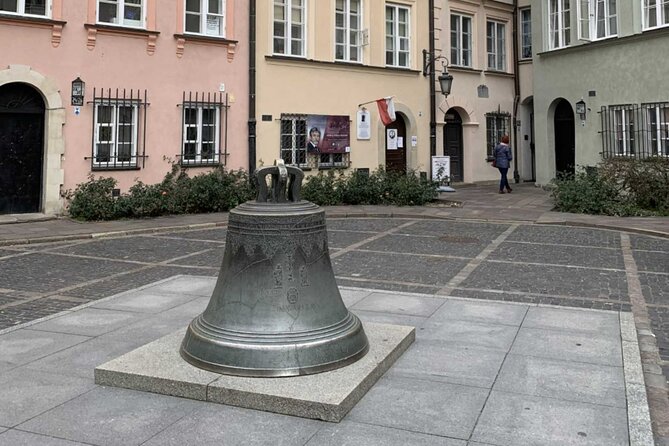
The ending is at Dzwon na Kanonii, where the narration closes with the dramatic pattern of rise and fall across dukes, kings, warriors, Nazis, and Communists. You end with the message that Old Town is a kind of time capsule, filled with history, legends, and inspiring artefacts.
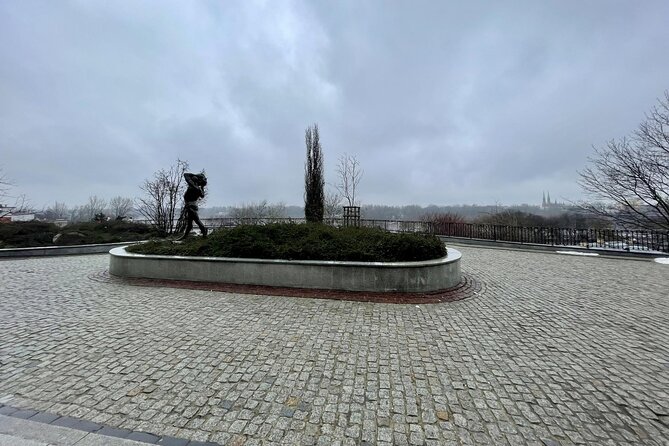
Finally, the tour ends near the Strong Man statue, with a view toward the River Vistula. That last bit is practical, too. You get an outdoor payoff and an easy point to wrap up your walk without having to guess where you are on the map.
Price and logistics: why $7.99 can be a good deal for Warsaw
At $7.99 per person, this is priced like an impulse-friendly way to understand a district without hiring a guide. The value comes from a few specific perks that matter for self-guiding:
- Lifetime access to the English audio means you can come back and refresh later
- Offline access to audio and maps reduces stress, especially if your connection is patchy
- You get a focused route that links multiple sites into one continuous storyline
The main “logistics cost” is upfront. You must provide a smartphone and headphones, and you are responsible for starting the tour smoothly in the VoiceMap app. One of the limitations I would plan around is technical friction. If your phone is picky about location permissions, or if the app struggles to start, the experience depends on fixing that quickly.
My practical advice: before you set out, open the app at home, confirm location services are allowed, and test audio playback. It takes five minutes and saves you from walking around frustrated.
Also note the tour is non-refundable and cannot be changed. If you are traveling during a tight window, plan your buffer time so you are not starting the walk at the edge of a ticket deadline for another attraction.
Duration and pacing: how long you should plan for
The walk is listed as about 1 hour 30 minutes to 2 hours, and the route ending segment is described as a 75-minute stroll. In plain terms, expect about 90 to 120 minutes including normal pauses for photos.
This is ideal if you want a solid Old Town hit without committing to half a day. It is also a good fit if you are juggling other Warsaw priorities and want history context while you still have energy to explore on your own.
Who this self-guided audio tour suits best
This tour fits best when you like structure without pressure. You want a reason to stop, but you do not want to be herded into museum schedules. It is also a great match if you are comfortable reading and listening while walking through an active city center.
It is also useful if you are traveling solo or as a small group that wants the same storyline but different photo and pace preferences. Even though it is described as a private activity, the practical effect is that your group does the same route together without needing to coordinate with strangers.
Families can often manage it, since the tour is designed for most travelers, but it is still a walking route. Bring water and go with shoes that handle uneven Old Town surfaces.
Should you book this Warsaw Old Town audio walk?
I would book it if you want a fast, thoughtful way to understand why Warsaw’s Old Town looks the way it does today. The pricing is fair for what you get, and the lifetime access plus offline support make it low-risk for future reruns.
Skip it or approach it carefully if you hate app-based tours, because you need your smartphone and headphones and the experience depends on the VoiceMap app working correctly with your settings. Also, if your top priority is museum interiors, know that this is not that type of tour. You will get the street-level narrative, and you will pay separately if you go inside.
If your goal is to walk Old Town and actually understand the people and turning points behind the facades, this one is a smart choice.
Freshly posted from Warsaw
- Krakow Small Group Tour from Warsaw with Lunch, Schindler’s Factory included★ 5.0 · 7 reviews
- Warsaw Private Transfer from Warsaw Chopin Airport (WAW) to City centre★ 4.0 · 7 reviews
- Wolfs Lair – Hitlers hideout★ 4.5 · 7 reviews
- 3-hour tour at Warsaw Uprising 1944 Museum /inc. Pick-up/★ 4.9 · 7 reviews
- Warsaw: Evening History and Pubs Tour by Retro Minibus★ 5.0 · 7 reviews
- Warsaw: Private Vodka Tasting Night with Snacks and Pickup★ 5.0 · 7 reviews
- Warsaw Old Town with Royal Castle + Royal Route: SMALL GROUP /inc. Pick-up/★ 5.0 · 7 reviews
Audio Tours, compared.
Day or Night Vistula River Cruise with Audio Guide
Read our review →

Sightseeing Cruise on Vistula River with Audio Guide
Read our review →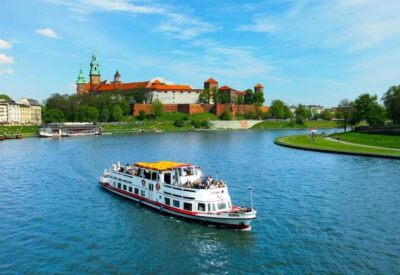
Vistula River Sightseeing Cruise with Audio Guide
Read our review →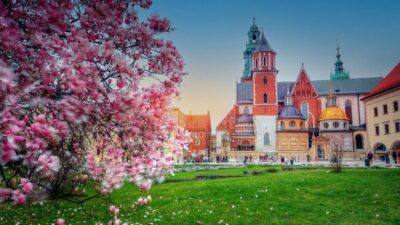
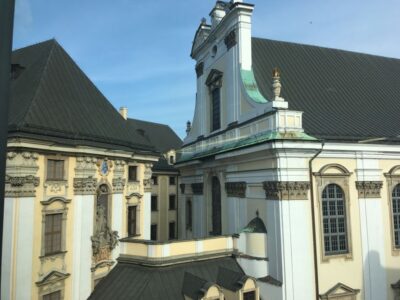
Wrocław University: Tour with Audio Guide & Admission
Read our review →
Browse the lists this tour appears in