
Reviewed · WALKING TOURS
Warsaw: Private Walking Tour with Professional Guide
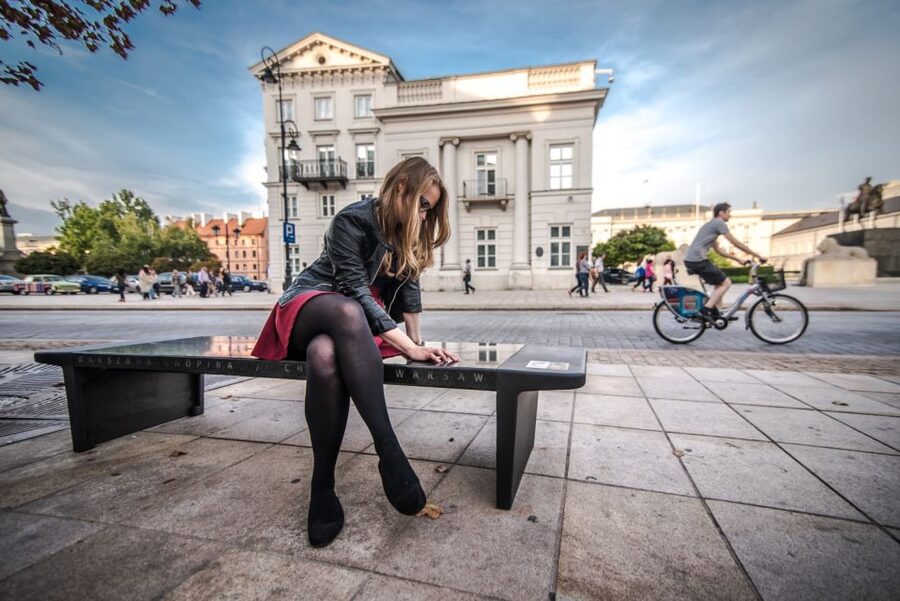
Warsaw history hits fast on foot. This private walking tour is built around the big Warsaw moments, from the UNESCO Old Town to the Royal Route, with a guide who puts the buildings into real-life context. I especially love how quickly you get oriented, starting at Castle Square and working your way through Old Town symbols like The Warsaw Mermaid. I also like the storytelling, including legends in the Old Town and the human details tied to places like Chopin’s heart site.
The one thing to consider is that entry fees are not included, so if you plan to go inside churches or museums that require tickets, you’ll need a bit of extra budgeting and time.
In This Review
- Key highlights at a glance
- Getting your bearings at Sigismund’s Column and Castle Square
- Royal Castle and St. John’s Archcathedral, the Warsaw “center stage”
- Old Town Market Place and The Warsaw Mermaid symbol
- Warsaw Barbican, the fortification you can walk beside
- New Town flavor: Maria Sklodowska-Curie and the city’s science pulse
- Krakowskie Przedmieście, the Royal Route that turns into a walking museum
- St. Anne’s Church tower terrace views, then onward toward Chopin
- Presidential Palace, University of Warsaw, Copernicus, and the academic feel
- Pilsudski Square and the Tomb of the Unknown Soldier
- Krasinski Square and the Warsaw Uprising Monument
- Finishing back near Castle Square
- How the tour works for your day, pacing, and photo stops
- Languages, private groups, and who the guide is for
- Value for money: $252 per group up to 10
- Who should book this Warsaw private walking tour
- Should you book this Warsaw private walking tour?
- FAQ
- FAQ
- How long is the Warsaw private walking tour?
- Where does the tour start, and how do you meet your guide?
- Is this tour private, and how big is the group?
- What languages are available for the live guide?
- Are entry fees included?
- Is there wheelchair accessibility?
- What is the cancellation policy?
Key highlights at a glance
- Castle Square first, then the UNESCO core, so you get your bearings early
- Old Town legends and icons, including The Warsaw Mermaid
- Warsaw Barbican, a defensive wall you can actually walk around
- Royal Route walking, with photo-worthy side moments, not just the obvious stops
- Big memorials and monuments, including the Tomb of the Unknown Soldier and the Warsaw Uprising Monument
Getting your bearings at Sigismund’s Column and Castle Square
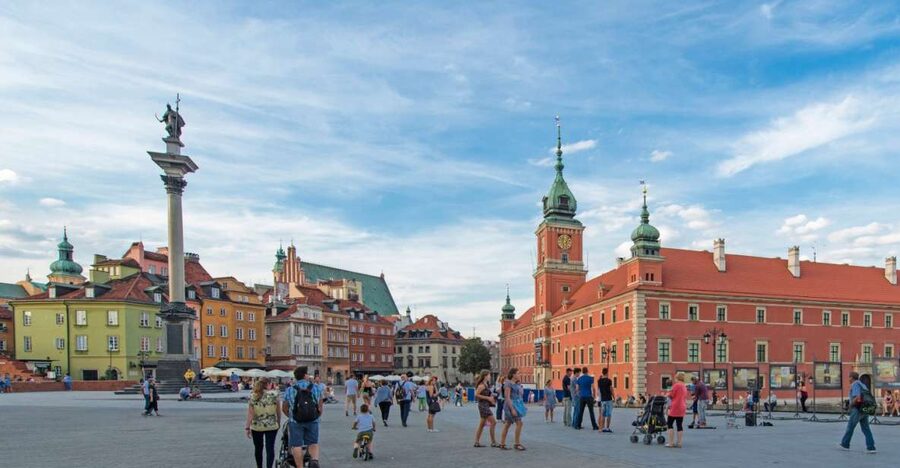
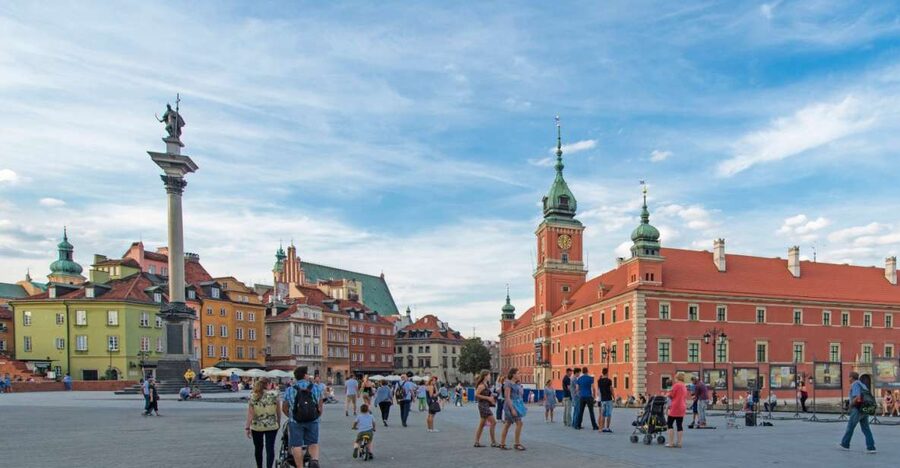
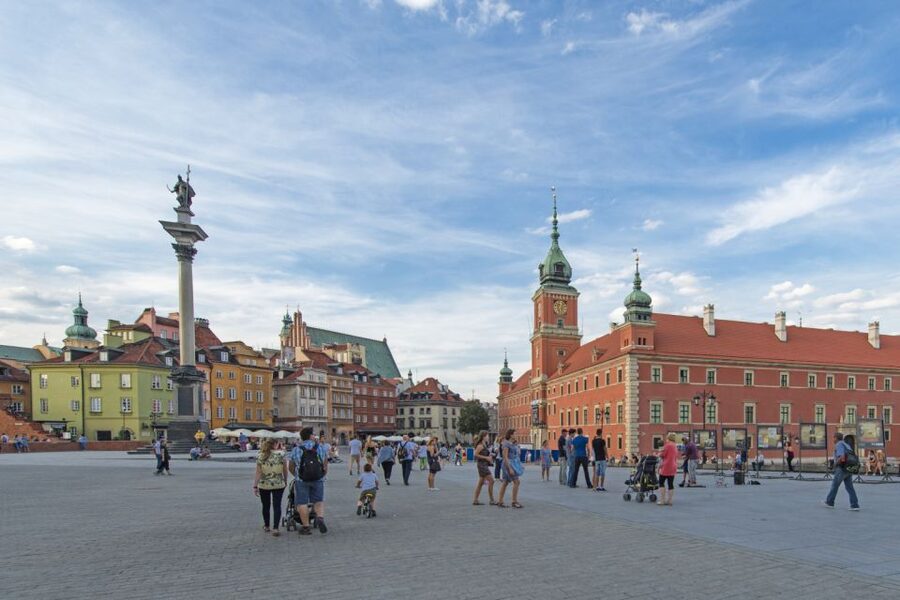
The tour begins at Sigismund’s Column, the kind of starting point that makes instant sense. You see it first because it anchors the whole experience, visually and historically. From there, the walking route is logical, with Old Town sights and nearby landmarks that help you understand how Warsaw’s center grew and changed.
Castle Square is where you feel the scale of the city. You’re close to the Royal Castle and St. John’s Archcathedral area, and the buildings set the tone for what follows: grand civic architecture plus dramatic wartime memory. It is also a practical start, because it keeps you near the heart of the action without burning time on transfers or finding tricky meeting spots.
From the first minutes, your guide’s job is clear. They point out what to look at, then explain why it matters. That means you spend less time guessing and more time noticing details you would otherwise walk past.
More Walking Tours in Warsaw
- Warsaw: Old Town Highlights Walking Tour in English
★ 4.7 · 1,516 reviews - Warsaw: Old Town Guided Walking Tour
★ 4.9 · 599 reviews - Half-Day Polish Food Walking Tour with Guide and Dinner
★ 4.5 · 381 reviews
Royal Castle and St. John’s Archcathedral, the Warsaw “center stage”
Next up is the Royal Castle, a UNESCO World Heritage Site, and that matters in a very practical way. When a place is protected at that level, the guide’s explanations tend to focus on what you can learn from the architecture and the careful restoration story.
You then continue to St. John’s Archcathedral, described as gothic. This is one of those stops where you can look up, slow down, and let the shapes do their job. Gothic lines pull your eye upward, and when you pair that with a guide’s context, the cathedral stops being just a pretty façade and becomes part of Warsaw’s identity.
If you care about great photo angles, watch how your guide positions you through the streets around Castle Square. You will not only get the obvious front views, you also get perspectives that show how the square and nearby streets funnel movement toward the river-side direction of the city.
Old Town Market Place and The Warsaw Mermaid symbol
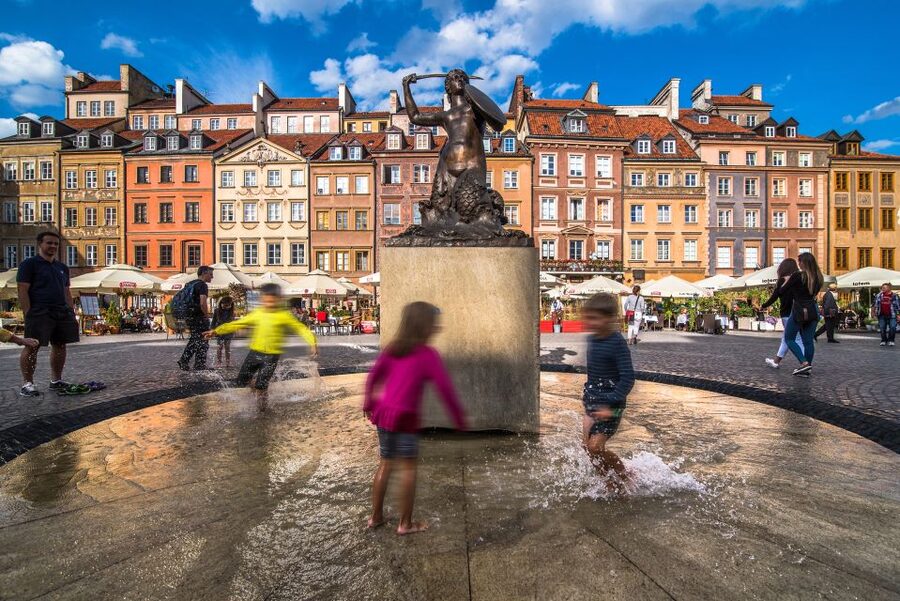
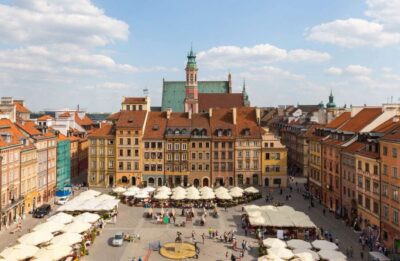
Then you move into the oldest part of the city, Old Town Market Place. This is where Warsaw starts feeling like a living story instead of a list of monuments. Your guide brings the symbolism to the front, and the most famous piece here is The Warsaw Mermaid, the symbol of the Polish capital.
The Mermaid stop is valuable because it gives you a quick cultural read on the city. You’ll see the icon, you’ll hear the legend attached to it, and suddenly Old Town looks like it has rules, meanings, and recurring motifs. You also learn what to notice as you walk, so the streets stop looking random.
Old Town is also where the guide’s timing matters. If you’re there during busy hours, the crowd level can change how quickly you can pause for photos. A good guide helps you slow down at the right moments, and then move on when you’d otherwise be stuck waiting for space.
Warsaw Barbican, the fortification you can walk beside
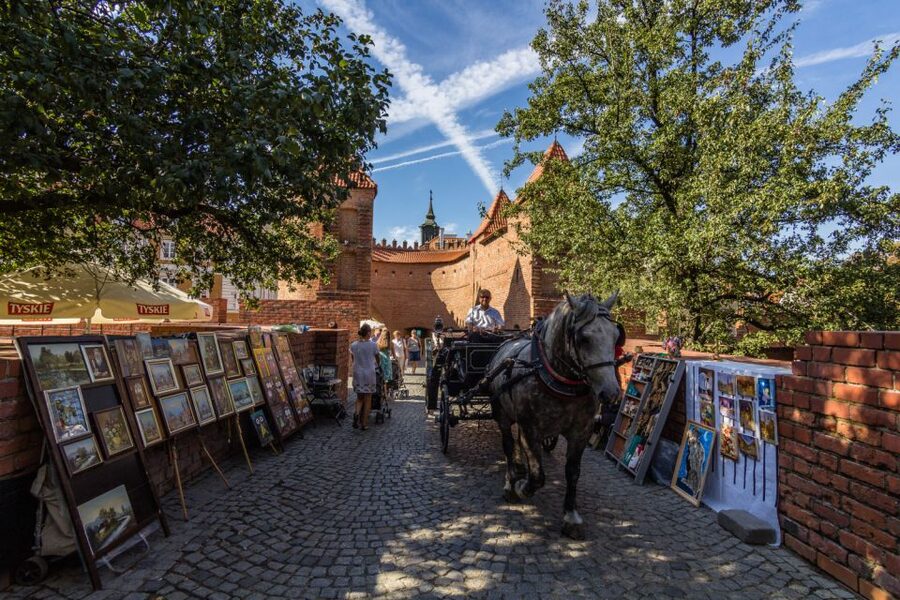
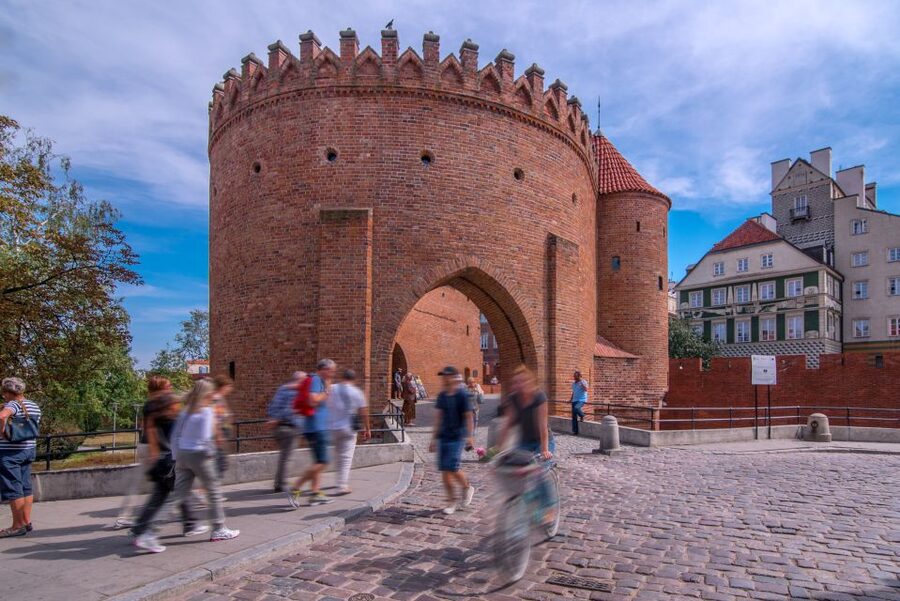
Between Old Town and New Town, you’ll reach the Warsaw Barbican. This defensive structure once encircled Warsaw, and that detail is key. When you hear that, you start reading the building differently, not as a standalone landmark but as part of a protective system.
What I like about the Barbican is how it frames the city. It gives you a border feeling, even after centuries of change. As you walk past it, you can mentally map where people once entered, where walls constrained movement, and how the city’s security shaped daily life.
For photos, this is one of your best stops because the structure holds shape even from street level. You can capture it from different angles without needing to access ticketed interiors, and you’ll have enough time to notice stonework and form rather than just snapping one quick shot.
More Polish squares crossed on foot:



New Town flavor: Maria Sklodowska-Curie and the city’s science pulse
From the fortification area, you step into New Town and you get a very different side of Warsaw. One of the stops is the house where Maria Sklodowska-Curie was born. That’s a smart pivot because it balances the grand civic and religious buildings with real human achievement tied directly to place.
Even if you are not a science enthusiast, you’ll appreciate what the guide is doing here. They are showing you that Warsaw is not only about monarchs and memorials. It is also about people who changed the world, and the city preserved that connection by keeping the location visible within the urban fabric.
This section works well for pacing too. After the intensity of wartime-adjacent themes near Old Town and the Barbican, the Curie stop provides a quieter kind of inspiration. You get to think, read, and take your time.
Krakowskie Przedmieście, the Royal Route that turns into a walking museum
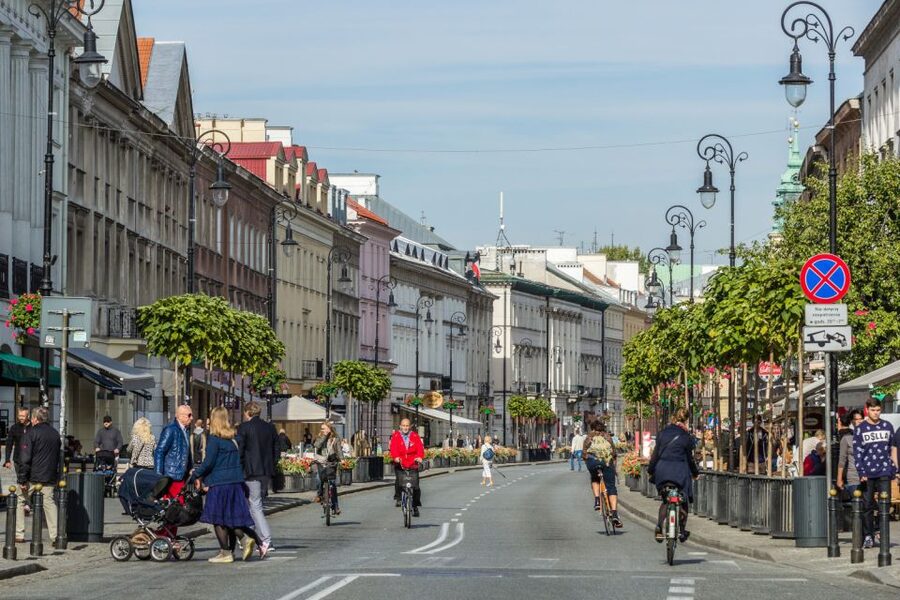
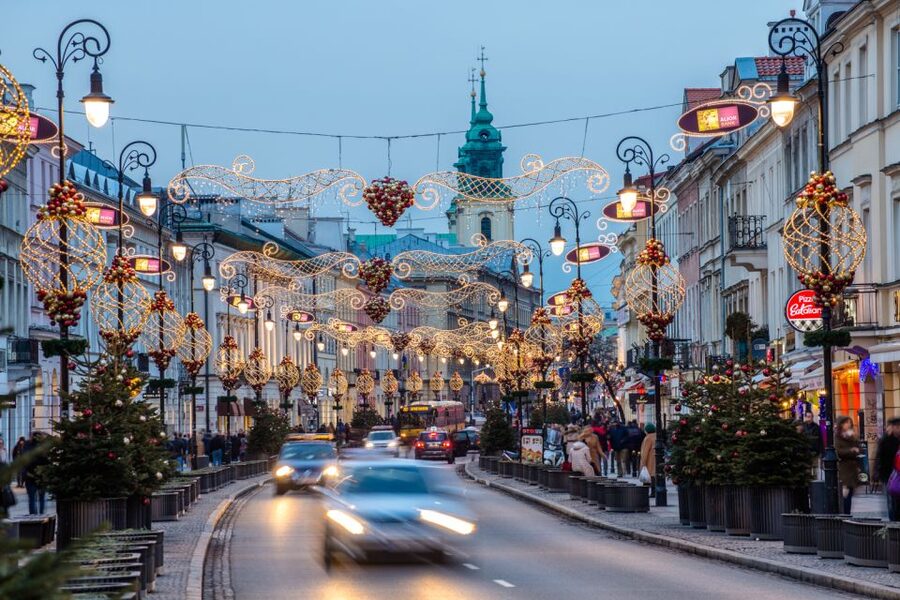
As the tour moves along Krakowskie Przedmieście Street, you’re on the Royal Route. That’s where Warsaw starts to feel like a corridor of landmarks. The street is doing something for you here, and it’s more than convenience. It organizes the sights into a sequence, so every next stop has context.
If you like walking tours that feel efficient, this is the sweet spot. You are not crisscrossing the city. You are flowing along a named route, guided stop by stop, so your map in your head stays consistent.
Your guide also includes photo opportunities tied to spots along this route, including less obvious areas. That’s important because otherwise Royal Route walks can feel like you’re just checking boxes. Here, you get suggestions for where to pause so your photos look intentional instead of accidental.
St. Anne’s Church tower terrace views, then onward toward Chopin
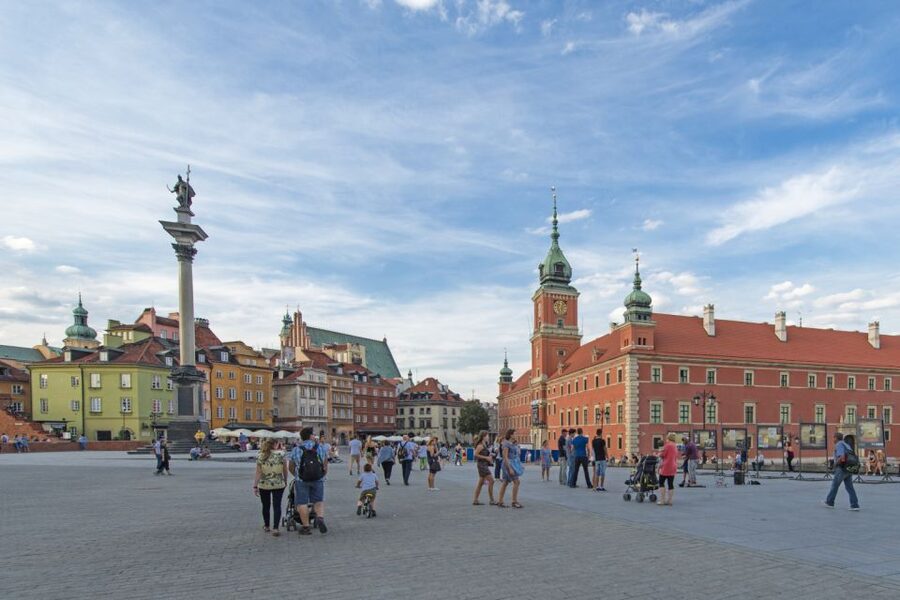
You first pass St. Annes Church, described as the famous center of Warsaw next to Castle Square at Krakowskie Przedmieście. Then comes a highlight that is both practical and fun: you can climb up its tower to a viewing terrace.
This is where the tour earns its value. From a tower terrace, you quickly understand the layout of the Old Town and how the Royal Route carries you through the city. It turns the walk into a geography lesson, not just sightseeing. Even if you have seen pictures of Warsaw before, nothing replaces standing somewhere elevated and matching what you see to what you just walked through.
After that, the tour keeps moving along the route to Holy Cross Church, where Frederic Chopin’s heart is buried. That is a deeply specific detail, and it gives Warsaw a very personal artistic thread. It is not just a city of monuments. It is also a place where art is tied to bodies, memory, and ritual space.
Presidential Palace, University of Warsaw, Copernicus, and the academic feel
As you continue along Krakowskie Przedmieście, you will see the Presidential Palace, the University of Warsaw, and the Copernicus Monument. This cluster matters because it shifts the tone again. You go from religious and musical landmarks into government and education, all within a walking rhythm.
The University of Warsaw stop helps explain why Warsaw feels like a capital that also lives like a study city. You can feel it in the streets and the energy of the area. The Copernicus Monument adds another layer, connecting Warsaw to the broader European tradition of science and public intellectual life.
The Presidential Palace is the other anchor here. Even if you are not focused on politics, you still get a sense of modern state power sitting alongside centuries of older architecture. Warsaw’s story is partly about what rises, what is rebuilt, and what endures.
Pilsudski Square and the Tomb of the Unknown Soldier
Then you reach Pilsudski Square and the Tomb of the Unknown Soldier. This stop changes the emotional temperature of the walk, and it is handled through place-based respect. The Tomb is not just a photo stop. It’s a site that asks you to slow down and read the meaning in the space.
The value of having a guide here is simple. They help you understand what you are looking at and why it is so central to national memory. Without context, it can feel like another monument. With context, it becomes a key to understanding modern Warsaw identity.
If you’re planning your day around heavier memorial stops, I recommend timing this portion so you have a little breathing room after. You will still keep walking, but you will want a moment to reset mentally.
Krasinski Square and the Warsaw Uprising Monument
Next is Krasinski Square, with the impressive Warsaw Uprising Monument. If the Tomb is about honoring unknown sacrifice, the Uprising Monument connects that sacrifice to a specific chapter of Warsaw’s wartime experience.
This is one of those places where scale is part of the message. You’ll look up, you’ll take in the form, and your guide will likely bring in background to help you understand the monument’s place in the city’s story. Even if you know little about the uprising, the guide’s explanation turns it into something you can follow.
For photos, use the time to get at least one wide shot and one more detailed angle. The monument is designed to be read from multiple distances, and a single snap from far away often misses the shape.
Finishing back near Castle Square
The route eventually brings you back toward Sigismund’s Column, so the tour ends where it began. That loop is more helpful than it sounds. It lets you connect the beginning and the end, so your mental map tightens as you go.
By the final stretch, you will likely find that the streets feel less random. You’ll notice how Old Town, New Town, and the Royal Route connect like pieces of a plan, not just a collection of landmarks.
How the tour works for your day, pacing, and photo stops
This is a 3 to 5 hour walk, private group style. That time range is important because it affects how much you can actually enjoy. If you have a tight schedule, you can treat the tour as your core orientation session. If you have more time, you’ll enjoy the pauses and photo moments without feeling rushed.
It is also wheelchair accessible, which is a big plus if mobility is a concern. That said, you should still be ready for a walking pace across city streets. If you or anyone in your group needs breaks often, ask your guide to help manage stops and viewing time.
Bring a camera, but also bring curiosity. The guide is your advantage here. They point out details along the way, including photo-worthy spots along the Royal Route. You’ll leave with pictures that make sense, because you’ll understand what you were aiming for.
Languages, private groups, and who the guide is for
The guide is available in English, Italian, Russian, Spanish, German, and French. That language flexibility is practical if you’re traveling with mixed-language friends or family. It also helps you get more out of the stories in the language you’re most comfortable with.
Because it is private group, the guide can match the pace and focus. If you want more time at memorial sites, you’ll usually have a chance to adjust. If you care more about architecture and photos, you can steer the conversation that way.
Price is per group up to 10, and that matters for families or small friend groups. A private walking tour can be a smarter value than buying multiple individual tickets to piecemeal experiences.
Value for money: $252 per group up to 10
At $252 per group up to 10 for 3 to 5 hours, the value depends on how you travel. If you’re one or two people, it can feel like a premium. If you’re a small group, it becomes easier to justify because the guide time is shared.
Here’s why I think the price can be worth it. You’re getting a professional guide for a long, sight-dense route that hits UNESCO Old Town monuments, major churches, civic buildings, and the key squares tied to national memory. You’re also not paying for time wasted, because the route is structured to keep you moving through the most meaningful areas.
One note: entry fees are not included. So if you plan to go inside places that require tickets beyond what’s already accessible on foot, you’ll want to budget for that separately.
Who should book this Warsaw private walking tour
I think this tour is ideal for you if you want to see the core of Warsaw without turning your day into a map puzzle. It’s also great if you enjoy stories that connect places, symbols, and events, from The Warsaw Mermaid to Chopin’s heart site.
It works especially well for:
- First-time visitors who want the main sights plus context
- Families or small groups who want one shared plan and one guide
- People who like walking routes built around a named corridor like Krakowskie Przedmieście
If you only want a quick highlights loop and you do not care much about legends and memorial context, you might choose something shorter. But if you want meaning alongside monuments, this fits well.
Should you book this Warsaw private walking tour?
Book it if you want a guided, coherent walk through Warsaw’s most important zones, with enough time to pause and take in details. You’ll get a strong mix: UNESCO Old Town landmarks, the Royal Route sequence, and major memorial stops like the Tomb of the Unknown Soldier and the Warsaw Uprising Monument.
I’d also book it if your group includes more than one interest level. One person may focus on churches and towers, another on monuments and symbols, and you’ll still feel like the tour gives value to everyone.
FAQ
FAQ
How long is the Warsaw private walking tour?
It lasts 3 to 5 hours, depending on the pace and starting time available.
Where does the tour start, and how do you meet your guide?
The tour starts at Sigismund’s Column. If you are staying within the Old Town area, the guide meets you in the hotel lobby. If not, the provider arranges a convenient meeting place. You will need to share your preferred starting time and your hotel or apartment address.
Is this tour private, and how big is the group?
It is a private group. The price is listed per group up to 10 people.
What languages are available for the live guide?
The guide is available in English, Italian, Russian, Spanish, German, and French.
Are entry fees included?
No. Entry fees are not included, and meals are also not included.
Is there wheelchair accessibility?
Yes. The tour is wheelchair accessible.
What is the cancellation policy?
Free cancellation is available up to 24 hours in advance for a full refund.
Freshly posted from Warsaw
- Warsaw Uprising and WWII Old Town Walking Tour with Museum★ 5.0 · 1 review
- EVERYDAY Warsaw Traditional Food Tour with Old Town Sightseeing★ 5.0 · 1 review
- Warsaw to Auschwitz and Krakow Old Town Full-Day Trip by Car★ 5.0 · 1 review
- A Day in Warsaw: Private Full-Day Highlights Tour★ 5.0 · 1 review
- Pub Crawl with Shots, Discounts, Games & VIP Entry★ 5.0 · 1 review
- POLIN Museum of the History of Polish Jews : PRIVATE TOUR /inc. Pick-up/★ 5.0 · 1 review
- Private Guided Warsaw Walking Tour with Drone Photography★ 5.0 · 1 review
Walking Tours, compared.
Old Town Krakow & Wawel Castle Walking Tour
Read our review →
Gdańsk City Sights & History Guided Walking Tour in English
Read our review →
Browse the lists this tour appears in