
Reviewed · WARSAW TOURS & ACTIVITIES
Warsaw Highlights of Old & New Town Private Guided Tour
Warsaw feels layered, like a city with answers. This private tour stitches together Old Town landmarks and the story of modern Warsaw in one practical route you can actually finish on foot. You get a licensed guide, plus local restaurant tips that help you plan your own evenings after the walking is done.
What I love most is the way the tour handles the big sights with real context, not just photo stops. My favorite part is the Royal Castle and Castle Square area, where you see how Warsaw rebuilt itself after devastation.
One thing to consider is pacing and language. The tour is described as lasting about 4 to 6 hours, and a few past visitors flagged that guides can vary in English clarity and tour organization, so it’s smart to confirm your comfort level with long walks and clear communication.
In This Review
- Key highlights worth planning around
- Starting in Modern Warsaw: Palace of Culture and Science sets the tone
- Hala Koszyki and Nowy Swiat: food, coffee, and a walking artery
- Zlote Tarasy and the shopping-era contrast
- Fragment of Ghetto Wall and the Warsaw Ghetto: heavy stops done with care
- Old Town core: Royal Castle, Rynek Starego Miasta, and Castle Square
- St. Anne’s Church bell tower viewpoint: a small climb, a big payoff
- Churches and symbols you’ll keep noticing later
- Fortifications and gates: Barbican, the Nine-to-Five of defense
- Jewish Warsaw memorials beyond the ghetto streets
- Theaters, opera, and public architecture that feels like civic pride
- Water, campuses, and the “quiet Warsaw” side of the city
- A science sweep: Copernicus Monument and science-forward Warsaw
- Chopin trail: Holy Cross Church and Chopin’s Bench
- Curie, multimedia fountains, and the lighter side between monuments
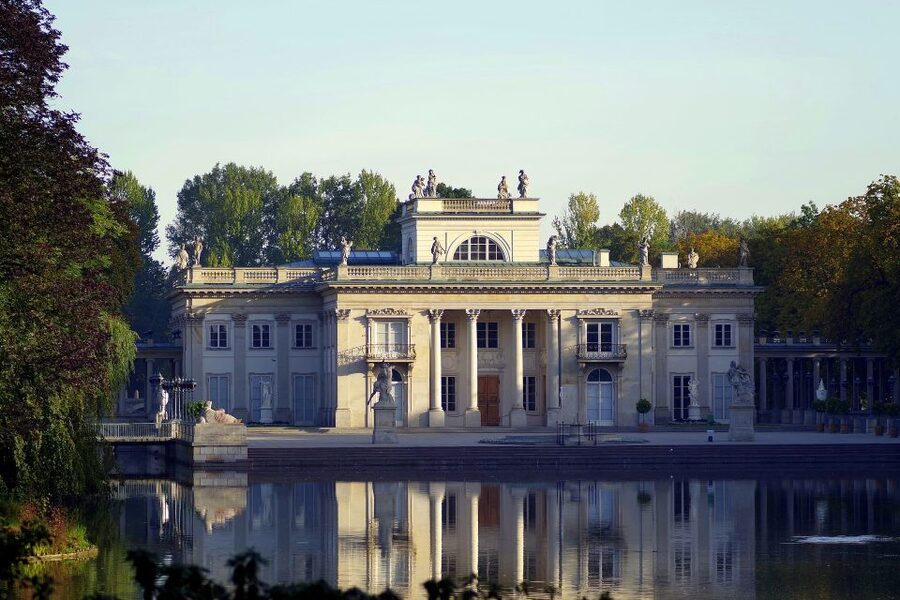
- Presidential and royal neighborhoods: palaces you can read at a glance
- Lesser stops that still matter: Baroque squares, wishing bells, mermaids
- How the guide experience can make or break the day
- Value for money: what $137.33 per person actually buys you
- Who should book this tour, and who should skip it
- Should you book the Warsaw Highlights of Old and New Town Private Guided Tour?
- FAQ
- How long is the tour?
- Is this tour private?
- What languages are offered?
- Do I get hotel pickup?
- Where does the tour start and end?
- Are any tickets included?
- Are there stops that require a request to see?
- Is there a mobile ticket?
- What’s the cancellation window?
Key highlights worth planning around
- Royal Castle, rebuilt after the Warsaw Uprising, with an emphasis on the original 17th-century feel
- Warsaw Ghetto history, including the fragment of the ghetto wall and major memorials
- Old Town core sights, including Rynek Starego Miasta, King Sigismund’s Column, and St. Anne’s viewpoints
- Your guide’s restaurant and patisserie tips, built into the tour flow
- Optional on-request moments, like tower views and some church interiors
Starting in Modern Warsaw: Palace of Culture and Science sets the tone
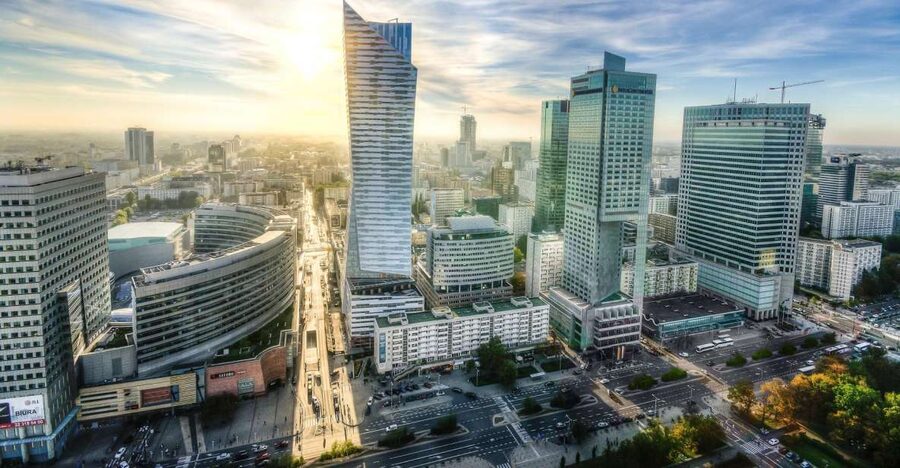
Most Warsaw walks start in the postcard places, but this one begins with something different: the Palace of Culture and Science. It’s described as Poland’s tallest building and comes off as monumental, impossible to ignore. Even if you do not love brutalist style, it works as a quick orientation landmark because it anchors your sense of where the city is headed.
From there you are set up for a day of contrasts. Warsaw is not only medieval lanes and reconstructed facades. It’s also 20th-century ambition, modern shopping, and institutions that still shape daily life.
Then the pace shifts fast, and that matters. This is not a slow museum morning. It’s a moving route, with frequent short stops. If you like your sightseeing with momentum, you’ll probably enjoy how quickly the guide moves you from one “Warsaw chapter” to the next.
Still tacked up around Warsaw
- Warsaw: Chopin Concert in the Old Town
★ 4.8 · 2,287 reviews - Warsaw: Traditional Galar Cruise on The Vistula River
★ 4.6 · 1,640 reviews - Warsaw: Old Town Highlights Walking Tour in English
★ 4.7 · 1,516 reviews
Hala Koszyki and Nowy Swiat: food, coffee, and a walking artery
Next up is Hala Koszyki, a covered food hall known for top chefs and international dishes all under one roof. Even if you do not plan to eat there, it’s a useful stop because it shows how Warsaw social life works now. I like that it breaks up the historical load with something everyday.
After that, the route follows Nowy Swiat, a long, well-maintained street that runs through the heart of the city and connects to major attractions, ending near Castle Square. This is the kind of street you can enjoy without feeling like you are racing. There are spots for coffee along the way, so you can keep your energy up.
Practical tip: plan your footwear like you’re doing an all-day walk. Stops are short, but the number of them adds up. If you only want 90 minutes of wandering, this tour may feel too full.
Zlote Tarasy and the shopping-era contrast
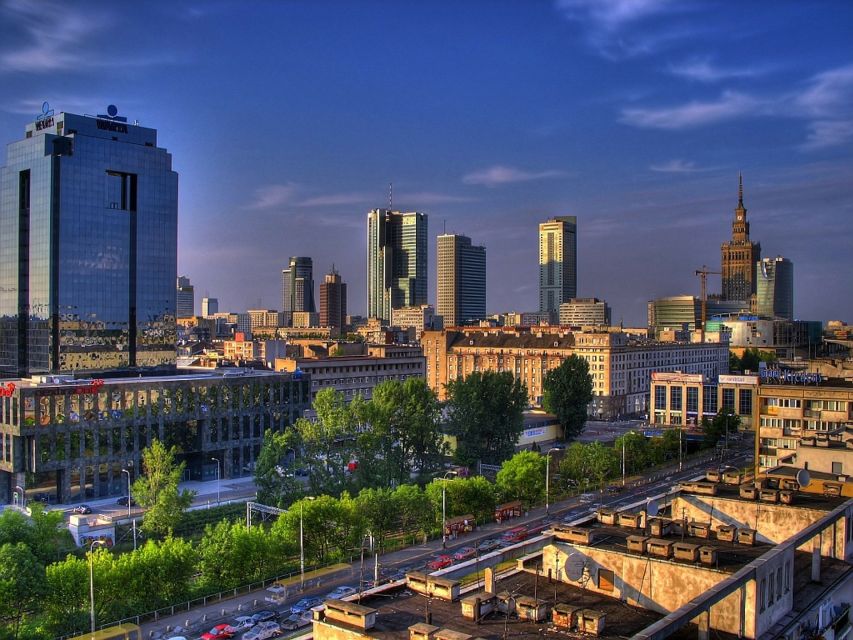
The tour includes Zlote Tarasy, a large shopping complex with notable architecture and terraces that slope down. Think of this as a “Warsaw is alive now” checkpoint. It’s not the kind of place you spend hours inside on a history tour, but it helps you understand how the city re-used big public spaces and built modern hubs right in the center.
If shopping malls are not your thing, you still get a good sense of the urban scale. And scale is part of why Warsaw can feel surprising. The Old Town is compact, but the modern city spreads out in ways you will notice today.
Fragment of Ghetto Wall and the Warsaw Ghetto: heavy stops done with care
Then the tour turns serious. You visit the Fragment of Ghetto Wall, described as a Holocaust relic tucked between buildings. It’s the kind of object that makes you slow down, because it’s easy to miss in ordinary city walking. The value here is the framing. A guide can connect the fragment to the larger story so it does not stay a random plaque.
After that comes the Warsaw Ghetto itself, created in late 1940 with an area described as 2.4 percent of Warsaw’s land. The tour notes that more than 450,000 Jews were forced into crowded conditions. This is not a place for rushing photos. If you want solemn, factual context during your visit to Warsaw, you will likely appreciate how the tour builds toward it step by step.
Two memorial-adjacent stops follow later in the day as well, including monuments tied to the uprising and persecution. So you can expect that the tour does not treat Jewish Warsaw as one “check-the-box” scene. It’s woven through the route.
If you want a light emotional day, this may feel like too much. If you want Warsaw’s story told fully, with the difficult parts included, this tour delivers.
Beneath the newer pins on the Warsaw board:



Old Town core: Royal Castle, Rynek Starego Miasta, and Castle Square
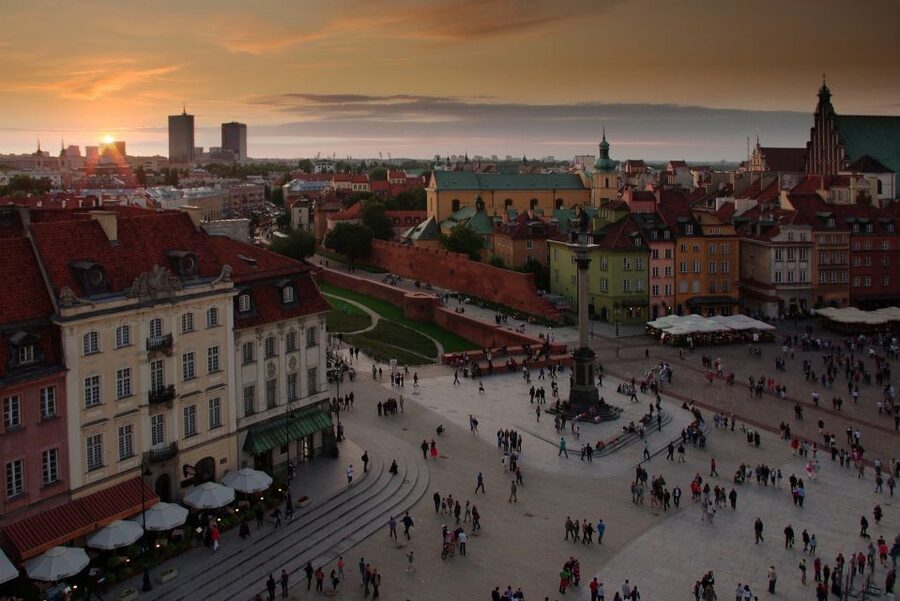
Now you move into the Old Town heartbeat. Start with Old Town itself, where rebuilt medieval-feeling streets, Gothic alleyways, baroque palaces, and churches work together to recreate an older Warsaw atmosphere after it was leveled. The reconstruction detail matters because Warsaw’s Old Town is not simply old. It is recreated, and that changes how you should look at it.
Then you reach Rynek Starego Miasta, the old-town market square surrounded by 17th- and 18th-century merchant houses. This is where the tour turns from “history lesson” to “street life.” You’ll find cafes, shops, galleries, and restaurants around you, with vendors in the mix. It’s lively without needing a stage.
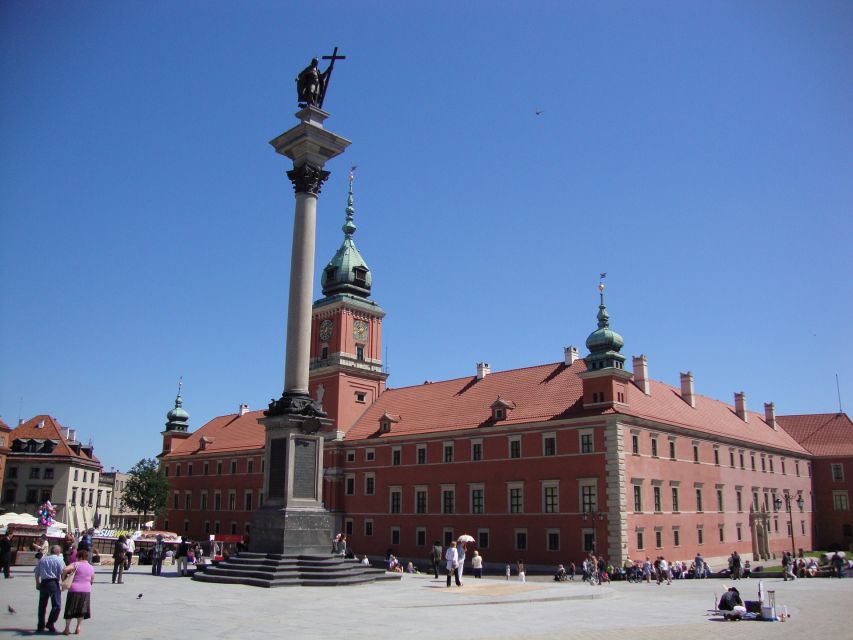
Close by is Castle Square (Plac Zamkowy), centered on the King Zygmunt III column. Even if you only spend about 10 minutes there, it’s a strong landmark zone because it anchors the Royal Castle area visually.
Then comes the big one: Royal Castle in Warsaw – Museum. The tour highlights that it served as a central building of the Polish Commonwealth for centuries and was rebuilt after being dynamited by German troops after the Warsaw uprising. This is the moment where the tour’s theme becomes clear. Warsaw rebuilt itself, and you can see that intention in the 17th-century style and interiors it recreates.
Important note for planning: the included Royal Castle entry is listed as part of the 6-hours version. If you book the shorter option, double-check how your specific length affects what is covered.
St. Anne’s Church bell tower viewpoint: a small climb, a big payoff
A short walk from the castle area can lead you to the Observation Terrace on the Bell Tower of St. Anne’s Church. The tour describes it as a worthwhile climb for a relatively low price, with views of the old town up close plus the city center in the distance.
You might not always get the tower time automatically, depending on how your guide handles “possible to see for request” items. But if you enjoy rooftops and sightlines, ask for it early in the day so the schedule can breathe.
In my experience, viewpoint time is one of the best ways to connect the names you’re hearing to what you’re actually seeing. You get perspective, literally.
Churches and symbols you’ll keep noticing later
Old Town Warsaw has a lot of churches. The good news is this tour does not treat them as identical background buildings. It picks out specific ones and attaches meaning.
You’ll see St. Anne’s Church again in the interior stop, with the note that the altars are richly decorated and the entrance Holy Cross is original and survived bombing. There is also Archikatedra Sw. Jana Chrzciciela, described as a standout church that dates back to the 13th century and connects to royal coronations. Some entry is marked as possible on request, so if you care about interiors, tell your guide you want those moments.
Another stop is Church of Jesuits, with a red facade and ornate interior details. That exterior color is a good “spot it fast” landmark when you’re walking tight streets.
The tour also includes Church of St. Joseph of the Visitationists, which had a wooden chapel origin and was rebuilt after a fire. The note here is that inside decor can feel plain and austere compared to the more ornate churches, which is a nice change of texture if you have been staring at gold and stone all morning.
And yes, you’ll also pass Holy Cross Church, where the tour specifically points out that the heart of Chopin is housed there, plus the Holy Cross at the entrance survived bombings. If Chopin matters to you, this is a major reason to pick a guided walk instead of wandering on your own.
Fortifications and gates: Barbican, the Nine-to-Five of defense
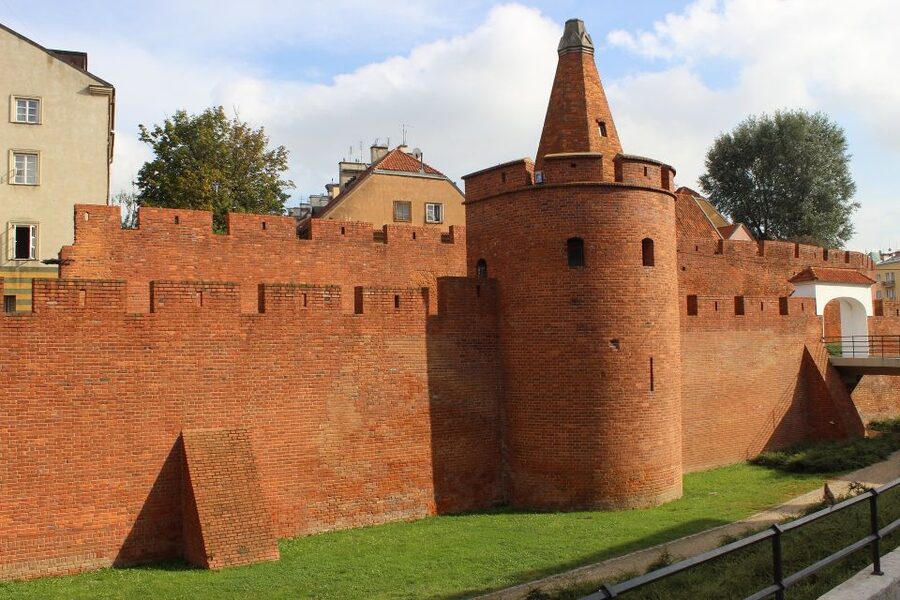
Next you hit Warsaw Barbican (Barbakan Warszawski), a 16th-century fortress tied to medieval fortifications. It guarded the northern entrance around the Novomejska Gate. This is one of those structures where a guide helps you connect it to the city layout. Without that, it can look like a dramatic relic in a random spot.
You also have Krakowskie Przedmiescie, the Road of Kings described as about 2.5 miles, lined with older buildings. It’s a good stretch because it lets the tour “show” power geography, not just tell it.
Jewish Warsaw memorials beyond the ghetto streets
After the ghetto-focused segment, the route continues with more solemn markers. You’ll come to Warsaw Uprising Monument, described as moving and representing effort, strength, and sacrifice. There’s also Pomnik Bohaterow Getta, just outside the Polish Museum of Jewish History, honoring Polish Jews and persecution during German occupation, with another “possible to see for request” note.
A smaller but emotional detail is the Statue of the Little Insurgent, commemorating children who lost their lives in the Warsaw Rising. Even though it’s described as small, it’s flagged as particularly moving, and I’d treat it as a pause moment, not a quick stop.
Later, you also encounter Monument to the Fallen and Murdered in the East, tied to 1.5 to 2 million Poles sent to Soviet labor camps. This broadens the WWII story beyond German occupation alone, which helps you understand why Warsaw remembers so many different tragedies.
Theaters, opera, and public architecture that feels like civic pride
Modern Warsaw public buildings show up throughout the day. One notable stop is Teatr Narodowy (National Theatre), described as charming in daylight and at night when lit. Teatr Wielki – Polish National Opera is also included, with an exterior that the tour frames as magnificent.
This is one of the tour’s best strategies: it reminds you that Warsaw’s identity is not only political and religious. It’s also artistic institutions, built to be seen.
If you like architecture even when you do not go inside, these stops will keep your eyes busy. If you only want interior visits, you may feel you are mostly looking at exteriors in this portion. Still, the exteriors are part of the experience here.
Water, campuses, and the “quiet Warsaw” side of the city
The tour then shifts to calmer, modern settings.
You get Vistula waterfront, described as developing and adding boulevards and waterside pubs, giving a laid-back atmosphere. Even if the waterfront changes during the years, the basic idea is stable: Warsaw is growing a new relationship with its river.
Then there is University of Warsaw Library, where the rooftop garden is called a peaceful quiet place with fabulous architecture. The tour says it may be possible to see for request, so treat it as a bonus stop if your timing lines up.
You also pass University of Warsaw and its decorated buildings, gardens, and balconies, plus Copernicus Science Centre described as one of the largest science centers in Europe with more than 400 exhibits split into six parts. The tour notes that you might only see it from outside, but the building is still described as fantastic. If you love hands-on science, you could plan a separate museum visit after this walk.
A science sweep: Copernicus Monument and science-forward Warsaw
Alongside the science center, you’ll see Monument of Nicolaus Copernicus in a square. It’s presented as one of Warsaw’s top landmarks and tied to Polish mathematician and astronomer fame. This pairs well with the earlier science stops because it turns “science” into a visible thread across the city.
If you like themed travel, this is a good moment. You can look at Copernicus, then think about the science center building you just saw, and realize Warsaw is comfortable celebrating modern thinkers in public space.
Chopin trail: Holy Cross Church and Chopin’s Bench
The tour gives you a clear Chopin track. First, you visit Holy Cross Church, noted for housing the heart of Chopin. Then later you stop at Chopin’s Bench, described as using multimedia to present Chopin’s music.
Even if you are not a classical fanatic, it’s a clever public-art way to connect sound to place. It can make the “Old Town walking fatigue” feel less tiring, because you’re listening for a while instead of just looking.
Curie, multimedia fountains, and the lighter side between monuments
For a change of mood, you’ll get Muzeum Marii Sklodowskiej-Curie but only described as possible to see from the outside. The point is simple and respectful: Poland’s link to Marie Curie is part of national pride, and the tour flags her as a Polish physicist and chemist and a pioneer in radioactivity.
You’ll also see Multimedia Fountain Park, described as a visual delight with music, light, and fountains. The “possible to see for request” note applies here too, so if it’s important to you, mention it.
Finally, there is Copernicus Science Centre again in the route flow, and it all works like a mid-day reset. You go from heavy memorials to things that focus on ideas and creativity.
Presidential and royal neighborhoods: palaces you can read at a glance
The tour includes Palac Prezydencki (Presidential Palace), described as neo-classic and heavily guarded, with exterior and surroundings called worth a look. Next to it is Carmelite Church – Our Lady of the Assumption, a baroque church with double pillars and grand stone lampions, plus a note that the story includes Napoleon admiring it for Paris.
These are quick stops, but they make sense. When you walk in a neighborhood like this, the buildings do political work. They signal power, ceremony, and national identity, even if you never go inside.
You’ll also see Plac Marszalka Jozefa Pilsudskiego, a large parade square with the Monument of the Unknown Soldier. This square works as a “final anchor” for the day’s theme of remembrance and national resilience.
Lesser stops that still matter: Baroque squares, wishing bells, mermaids
Not every stop is huge, and that is okay. This tour includes small elements that make Warsaw feel human.
You’ll see New Town Square, tied to John III Sobieski and described as featuring Renaissance architecture plus a baroque church. You’ll also find Warsaw Mermaid, a sculpture in a square with a hidden legend. Then there’s The Wishing Bell, a 17th-century bronze bell in a courtyard.
These are “pause points” that let you rest your legs and still get a story. I like when a tour does not treat every minute as a race toward the next landmark.
How the guide experience can make or break the day
This is a private tour, so guide quality matters a lot. Past experiences mention names like Natalie/Natalia, Ewa, Grace, Barbara, and Igor, and the strongest praise is about guides who connect history to real places and answer questions with confidence.
One issue I want you to plan for: there are also reports of tours where English clarity was hard to follow, or the tour felt poorly organized. Another concern mentioned was difficulty finding the starting point. That’s not about the city, it’s about execution.
My practical advice: email the day before your tour to confirm exact directions. And if your meeting point feels confusing, message early so you are not standing around on cobblestones trying to match a map to real life.
Value for money: what $137.33 per person actually buys you
At $137.33 per person, you are paying for something beyond a list of landmarks. You are paying for a licensed private walking tour, with a guide who adapts to your group’s preferences and provides tips on local restaurants, patisserie, and pubs.
You also get Royal Castle entry in the version that includes it (the tour notes tickets to entry in the 6-hours version). That can matter because castle admission can be a big chunk of the day.
The real value shows up if you want context. If you’re happy with a self-guided walk and a phone app, you might spend less. But if you want Warsaw’s stories explained while you are standing next to the monuments, the price can feel fair.
Duration is listed as about 4 to 6 hours, and the route includes lots of short stops. That means you will trade some freedom for efficiency, which is exactly what a private tour is good at.
Who should book this tour, and who should skip it
This tour is a strong match if:
- You want Old Town and New Town in one outing, without figuring out routes alone
- You care about Warsaw’s WWII and postwar memory, including ghetto and uprising memorials
- You like seeing both famous sights and the in-between details, like small sculptures and courtyards
I’d be cautious if:
- You struggle with walking for several hours, since the route is packed
- Clear English communication is a must for you, given a couple reports about guide clarity
- You dislike emotionally heavy memorial stops, since the ghetto and uprising markers are central, not optional
Should you book the Warsaw Highlights of Old and New Town Private Guided Tour?
If you want a guided introduction that covers the dramatic, reconstructed Warsaw core plus the modern city around it, I think you should book it. The best reason is the combination of major landmarks with guided framing, plus practical local tips that help you turn the tour into a useful day plan.
If you are booking for only a short attention span or you hate long walks, consider whether you might be happier with a shorter, more focused tour. And if language clarity is critical for you, choose this carefully, confirm details in advance, and be ready to ask questions early so your day stays smooth.
Booked this? Wear comfortable shoes, bring water, and treat the memorial stops with a slower pace than the rest of the route. That mix is exactly what makes Warsaw hit differently.
FAQ
How long is the tour?
It’s listed as 4 to 6 hours approximately, with the pace and route adapted to your group’s preferences.
Is this tour private?
Yes. It’s a private tour/activity, meaning only your group participates.
What languages are offered?
The tour is offered in English.
Do I get hotel pickup?
Pickup is offered, but only for hotels located in Warsaw Old Town. If your hotel is outside that area, you’re encouraged to arrange transportation separately.
Where does the tour start and end?
The start point is the Museum of Warsaw at Rynek Starego Miasta 42, and the tour ends at plac Marszałka Józefa Piłsudskiego.
Are any tickets included?
The tour includes tickets to enter the Royal Castle in the 6-hours version.
Are there stops that require a request to see?
Some items are marked as possible to see for request, including certain viewpoints and church entry moments (for example, St. Anne’s bell tower and some church interiors).
Is there a mobile ticket?
Yes, a mobile ticket is included.
What’s the cancellation window?
Free cancellation is available up to 24 hours in advance for a full refund. Less than 24 hours before the start is not refundable.
Freshly posted from Warsaw
- Krakow Small Group Tour from Warsaw with Lunch, Schindler’s Factory included★ 5.0 · 7 reviews
- Warsaw Private Transfer from Warsaw Chopin Airport (WAW) to City centre★ 4.0 · 7 reviews
- Wolfs Lair – Hitlers hideout★ 4.5 · 7 reviews
- 3-hour tour at Warsaw Uprising 1944 Museum /inc. Pick-up/★ 4.9 · 7 reviews
- Warsaw: Evening History and Pubs Tour by Retro Minibus★ 5.0 · 7 reviews
- Warsaw: Private Vodka Tasting Night with Snacks and Pickup★ 5.0 · 7 reviews
- Warsaw Old Town with Royal Castle + Royal Route: SMALL GROUP /inc. Pick-up/★ 5.0 · 7 reviews
Warsaw Tours & Activities, compared.
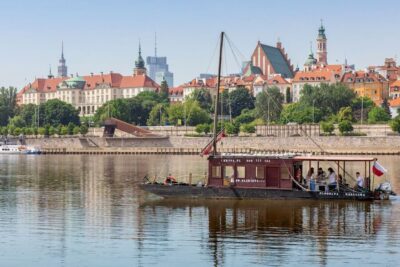
Traditional Galar Cruise on The Vistula River
Read our review →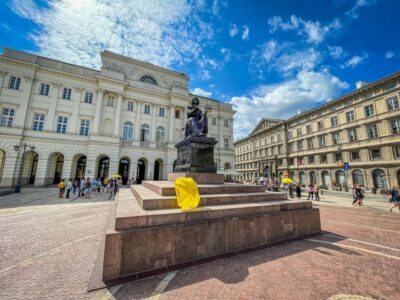
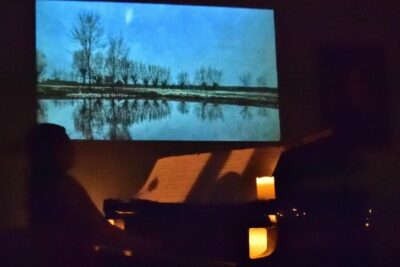
Warsaw Concert: Chopin – Painted by Candlelights with Wine
Read our review →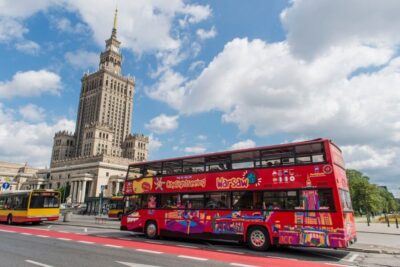

Highline Warsaw Entry With 360° Views & Rooftop Bar
Read our review →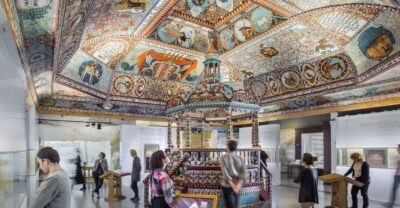
POLIN Museum of the History of Polish Jews Ticket
Read our review →
Browse the lists this tour appears in