
Reviewed · WARSAW TOURS & ACTIVITIES
Warsaw Behind the Scenes – small group tour with hotel pickup
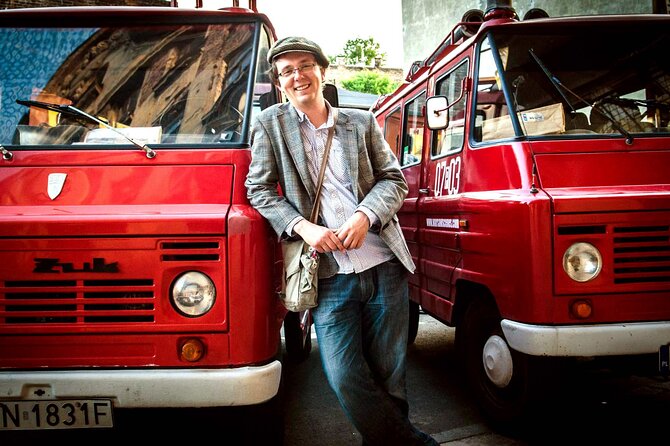
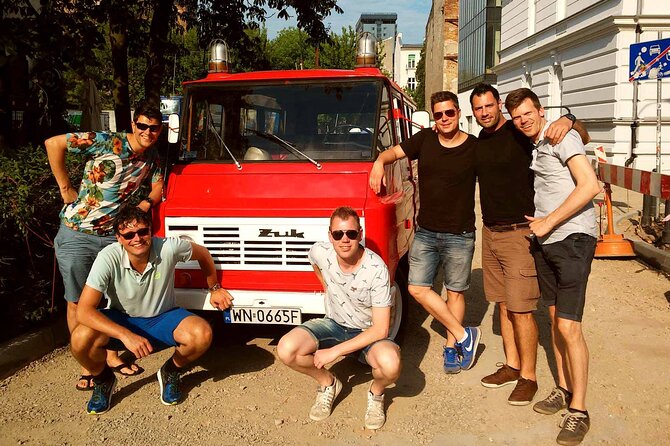
Warsaw gets personal on a backstreet history run. This is a compact, hotel pickup tour that threads you through WWII and communist-era Warsaw, with walking bits between stops and a small-group feel. The best part is how the stories connect street corners, buildings, and neighborhoods you might otherwise speed past.
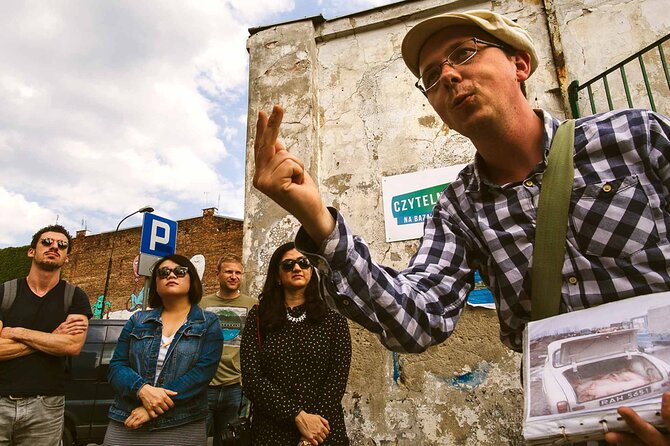
I especially love the engaging guides and their clear storytelling style. Names like Tom, Marcin, Mark, Karol, Artur, and Lucas come up again and again, and what they share in common is empathy plus smart use of historical photos to help you picture what stood here before.
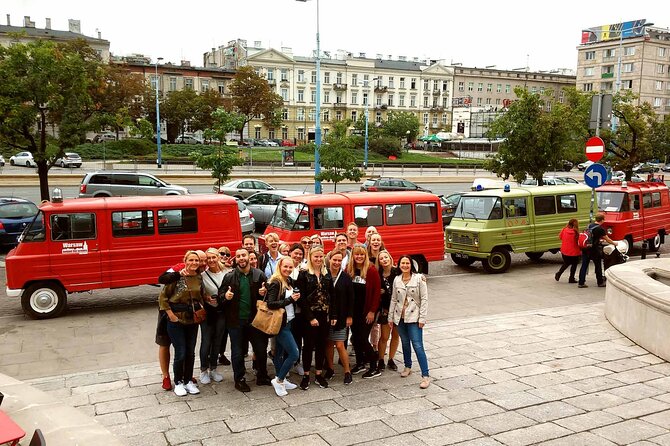
One consideration: the transport is in classic vintage minibuses, and some are not air-conditioned. On hot days or rainy days, you will want to dress for comfort and accept that part of the time is spent outside on foot.
In This Review
- Key highlights worth your time
- A vintage Zuk route that turns Warsaw into a story
- Hotel pickup and a 3-hour plan that is tight on purpose
- Stop 1: a fast Warsaw orientation that makes everything click
- Stop 2: Muranów, where postwar housing sits on a ghetto’s footprint
- Stop 3: the wooden ghetto bridge near Chłodna and Żelazna
- Stop 4: Nowolipki and the Warsaw Ghetto Uprising of 1943
- Stop 5: Bielańska, from shifting alliances to the destruction of Warsaw
- Stop 6: crossing to Praga Polnoc for prewar atmosphere and Vistula views
- Stop 7: Śródmieście and the compromises of rebuilding under Soviet pressure
- Stop 8: ending with 1989, Solidarity, and the new Warsaw
- Price and value: what $133.08 buys you here
- What to bring and how to get the most out of it
- Should you book Warsaw Behind the Scenes?
- FAQ
- How long is the Warsaw Behind the Scenes tour?
- What time does the tour start?
- Is hotel pickup included?
- What language is the tour offered in?
- Is the group small?
- Are tickets or admission fees included for the stops?
- Do the minibuses have air conditioning and seat belts?
- What are the height rules for children?
- What if I need to cancel?
Key highlights worth your time
- Hotel pickup, door-to-street convenience that saves your first-day energy
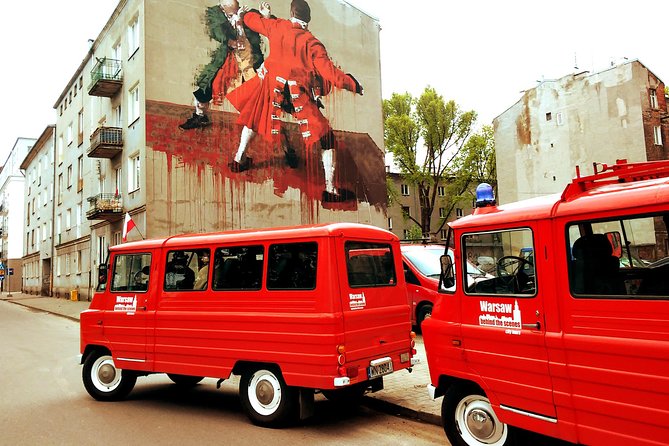
- Vintage Zuk minibus rides, often with a fun, period feel as you roll between neighborhoods
- WWII “layered city” stops, where you read history in the ground beneath everyday buildings
- Ghetto bridge and uprising sites, tied to what happened here, not just what a sign says
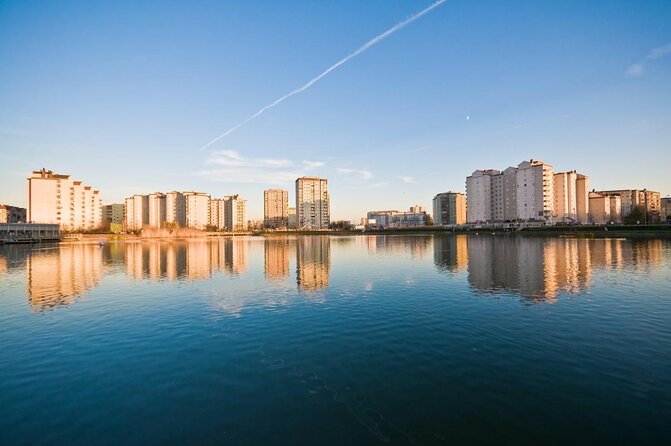
- Praga Polnoc after the crossing, with prewar atmosphere, courtyards, and a more creative vibe
- End-of-communism context in 1989, so the story doesn’t just stop at 1945
A vintage Zuk route that turns Warsaw into a story
This tour has a simple promise: you get out of the big sightseeing loop and see how Warsaw grew, broke, rebuilt, and changed again. The vehicle is a classic Zuk minibus, and the experience has that old-school “you’re riding with locals” energy. Several guides are described as funny as well as serious, which matters, because the subject matter is heavy.
You also get a format that works. Most stops are short. You are not stuck listening for ages in one spot. Instead, you move, walk a little, and get visual context for what you are seeing. Guides often use old photographs to show how places looked before the destruction and how the city later re-formed.
The small-group setup is real value. Even though the overall max is 39 travelers, the minibuses handle up to 8 passengers each. That means questions land, and you can hear explanations without feeling like you’re buried in the back row.
Still tacked up around Warsaw
- Warsaw: Chopin Concert in the Old Town
★ 4.8 · 2,287 reviews - Warsaw: Traditional Galar Cruise on The Vistula River
★ 4.6 · 1,640 reviews - Warsaw: Old Town Highlights Walking Tour in English
★ 4.7 · 1,516 reviews
Hotel pickup and a 3-hour plan that is tight on purpose
The tour runs about 3 hours, starting at 10:00 am. Hotel pickup and drop-off are included, but only for hotels listed for pickup. If your hotel is not on the list, you are asked to contact the operator so they can set a comfortable pickup point. After you book, the operator confirms the exact pickup time via the message system, since collection times vary by hotel.
Why does this matter? Because Warsaw is a big, spread-out city and this route jumps between very different areas. If you have to navigate the transit system while still trying to understand the timeline of the city, you lose time and attention. Pickup keeps your brain in tour mode from the first minute.
You should wear comfortable clothes and good walking shoes. The vehicles handle transfers between locations, but you still do walking segments at each stop. Also note the comfort reality: some minibuses do not have seat belts (historic vehicles), and classic vehicles may not have air conditioning. They do have heating for winter, so it is not purely a summer-only ride.
Mobile tickets are used, so you will want your phone charged and ready.
Stop 1: a fast Warsaw orientation that makes everything click
The tour begins with a short introduction to Warsaw and Poland. It is only about 10 minutes, but it helps you avoid that frustrating feeling of walking around and only catching fragments. You learn enough basic context to understand why the city’s layout and neighborhoods changed so dramatically.
For first-time visitors, this kind of start is gold. It also helps later if you visit major museums on your own, because you will recognize names and locations that were explained on the street.
Stop 2: Muranów, where postwar housing sits on a ghetto’s footprint
Muranów is the opening “wow” stop. From the street, it can look like ordinary postwar apartment blocks. But this district was built on the former site of the Warsaw Jewish Ghetto, established by Nazi Germany in 1940.
This is one of the tour’s strongest strengths: the guide frames what you see as a layered place. You are not just being told facts. You are learning how people’s daily lives were shaped by forced confinement, then how the area was later rebuilt, without erasing the traces beneath.
Time here is around 20 minutes. That is just enough to understand the key story without rushing. Drawback: because it is history tied to persecution, it can feel emotionally intense. If you prefer lighter sightseeing, this may not be your best first-day choice. If you want the real Warsaw story, it is exactly the kind of stop that stays with you.
Beneath the newer pins on the Warsaw board:

Stop 3: the wooden ghetto bridge near Chłodna and Żelazna
Next comes a stop that most people recognize instantly after hearing the name. At the intersection of Chłodna and Żelazna Streets, you visit the area connected to the iconic wooden ghetto bridge from The Pianist.
In practical terms, this is where the city’s “physical solutions” to oppression become visible. The bridge was suspended above the street so traffic could pass under it while connecting separated parts of the ghetto. It is a powerful reminder that control was built into infrastructure, not only into law.
Your guide uses historical photographs to make the bridge feel real, not just like a film location. The stop is about 15 minutes, so you are not stuck. Still, it can be a visually confusing intersection if you go alone. With a guide pointing out what mattered, it reads like a scene you can understand.
Stop 4: Nowolipki and the Warsaw Ghetto Uprising of 1943
Nowolipki is where the story shifts from confinement to resistance. You learn about the Warsaw Ghetto Uprising in 1943, when Jewish resistance fighters launched a final stand against deportation. After weeks of fighting, the ghetto was razed.
This stop is about 15 minutes, and that short window forces the guide to focus on what you need to remember: what triggered the uprising, what the resistance tried to achieve, and how commemoration shows up in the modern city.
One thing I like about this stop style is that it avoids turning tragedy into a spectacle. The emphasis is on meaning and remembrance, not dramatic storytelling for drama’s sake.
Stop 5: Bielańska, from shifting alliances to the destruction of Warsaw
At Bielańska, the WWII story widens. The tour explains how agreements between the Western Allies and Stalin placed Poland under Soviet control. Then it connects that political shift to the Warsaw Uprising of 1944, described as the city’s last effort to change that outcome.
You are also told what happened after the uprising collapsed: Nazi forces systematically destroyed about 85 percent of Warsaw. Then the Red Army entered the ruins in January 1945.
This stop is also about 15 minutes. The subject is heavy, so the guide’s tone matters. In the reviews I saw a lot of praise for guides who handle antisemitism and war history with candor and care. If you want a straightforward, respectful explanation that still leaves room for questions, this is where that style shows.
A practical note: the “packed timeline” approach means you should bring the right mindset. This is not a casual stroll through landmarks. It is a concentrated lesson you walk through.
Stop 6: crossing to Praga Polnoc for prewar atmosphere and Vistula views
After the intensity of WWII stops, Praga Polnoc offers a different kind of impact. You cross the Vistula River and reach a district with a distinctive identity. Praga preserved much more of its prewar atmosphere, with Belle Époque buildings, traditional courtyards, and a sense of neighborhood life that feels less curated for tourists.
You also get riverbank views, and that matters because it breaks up the narrative. When the guide shifts from destruction to survival and continuity, your brain needs a physical change of scenery.
Time here is about 30 minutes, the longest stop outside of the earlier central areas. That longer window makes sense because Praga is not just about one monument. It is about how a place feels and how local life persists.
Praga is also described as more up-and-coming and creative, and still largely less touched by mass tourism. If you like seeing where the city’s energy actually goes, this part delivers.
Stop 7: Śródmieście and the compromises of rebuilding under Soviet pressure
Back in central Warsaw, you explore the area tied to the former Polish Communist Party headquarters. The guide explains the post-1945 rebuilding challenge. Architects wanted a modern, functional city, but they had to work under Soviet-inspired ideological demands.
Walking here, you get the idea that architecture and politics are connected. You are seeing not only what was built, but how power shaped what building was allowed to become.
This stop is about 30 minutes. The benefit is time to absorb the logic, and the potential drawback is that you need to stay mentally present. If you tune out, the street-level changes can feel abstract. If you stay switched on, it becomes a clear example of how regimes influence everyday space.
Stop 8: ending with 1989, Solidarity, and the new Warsaw
The tour wraps with the turning point in 1989, when the Solidarity movement and Pope John Paul II played key roles in ending communist rule in Poland. The guide then connects that political shift to Warsaw’s latest transformation into a democracy and market economy.
This ending matters because it prevents the tour from feeling like a history of only devastation. Warsaw did not just rebuild. It changed direction again, and you can feel that in the city’s present-day identity.
The final stop is about 15 minutes. It is a fast wrap-up, but it gives you something practical: a sense of where Warsaw went after the breakpoints you learned earlier.
Price and value: what $133.08 buys you here
At $133.08 per person for around 3 hours, this tour is not the cheapest option. But it also is not just a “stand and listen” walking tour.
You are paying for three key things:
- Guided access to specific WWII and resistance-related locations that are easy to miss or misunderstand on your own
- Hotel pickup and transfers that save time and navigation stress across the city
- Small-group pacing with room to ask questions, with stops that include context and visual aids
Also, the stops are marked as admission ticket free, which keeps the cost from ballooning with extra entries. You are not trading money for a museum ticket. You are buying interpretation and route design.
If you are doing Warsaw in a short trip, or if it is your first day and you want orientation fast, the value improves. One review highlighted doing this tour on the first day as a way to get bearings. Another mentioned coming back later to a major museum and feeling it made more sense after the street-level context.
What to bring and how to get the most out of it
Keep your expectations aligned. This is a compact history route with emotionally serious content. It is not built for carefree picture-taking the whole time.
I recommend:
- Good shoes for walking segments at each stop
- Layers since vintage vehicles may have limited comfort and you may be outside briefly during transfers or stops
- A question habit. The format supports questions, and guides are praised for answering people thoughtfully
- An open mind for emotional topics. The tour covers the ghetto and uprisings, plus widespread destruction and political transitions
If you are pairing this with other Warsaw plans, you might want to schedule museum time after this tour. When you already know the major names and locations, you can read exhibits faster and connect stories more easily.
Should you book Warsaw Behind the Scenes?
Book it if you want Warsaw’s story told in the places where it actually happened, not only in polished monuments. This is a smart fit for history-minded travelers, people who like small-group guides, and anyone who values context and photos to connect the past to street-level reality.
Consider skipping it if you want an easy, light sightseeing afternoon. The ghetto and uprising sections are intense, and the tour is time-efficient, meaning you will get a lot of information in a short span.
My practical advice: if it is your first day in Warsaw, or you only have a half-day to make sense of the city, this is a strong choice. You come away with a roadmap for understanding why neighborhoods look the way they do, and why Praga feels different after you’ve traced the wartime and political turning points.
FAQ
How long is the Warsaw Behind the Scenes tour?
It runs for about 3 hours.
What time does the tour start?
The start time is 10:00 am.
Is hotel pickup included?
Pickup and drop-off are offered only for hotels listed above. If your hotel is not listed, contact the operator to set the most comfortable pickup point.
What language is the tour offered in?
The tour is offered in English.
Is the group small?
It is a small-group format. Each minibus accommodates up to 8 passengers, and the overall experience has a maximum of 39 travelers.
Are tickets or admission fees included for the stops?
The stops are marked as admission ticket free, so you should not need separate paid admission for the listed stops.
Do the minibuses have air conditioning and seat belts?
Classic vintage minibuses are not equipped with air conditioning, and some do not have seat belts (which is permitted for historic vehicles). They do have heating for winter.
What are the height rules for children?
The tour can be booked for adults and children over 150 cm (4 ft 9 in). For children under 150 cm, seat boosters are mandatory under Polish law, so you need to contact the operator in advance to check availability.
What if I need to cancel?
You can cancel for a full refund up to 24 hours in advance of the experience start time. If you cancel less than 24 hours before, the amount paid is not refunded.
Freshly posted from Warsaw
- Krakow Small Group Tour from Warsaw with Lunch, Schindler’s Factory included★ 5.0 · 7 reviews
- Warsaw Private Transfer from Warsaw Chopin Airport (WAW) to City centre★ 4.0 · 7 reviews
- 3-hour tour at Warsaw Uprising 1944 Museum /inc. Pick-up/★ 4.9 · 7 reviews
- Wolfs Lair – Hitlers hideout★ 4.5 · 7 reviews
- Warsaw: Evening History and Pubs Tour by Retro Minibus★ 5.0 · 7 reviews
- Warsaw: Private Vodka Tasting Night with Snacks and Pickup★ 5.0 · 7 reviews
- Warsaw Old Town with Royal Castle + Royal Route: SMALL GROUP /inc. Pick-up/★ 5.0 · 7 reviews
Warsaw Tours & Activities, compared.
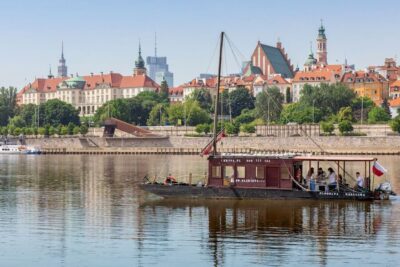
Traditional Galar Cruise on The Vistula River
Read our review →
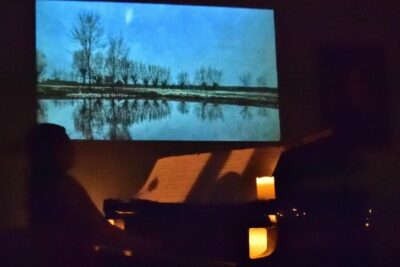
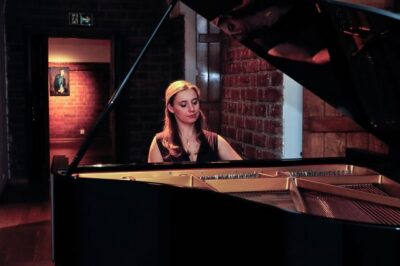
Warsaw Concert: Chopin – Painted by Candlelights with Wine
Read our review →

Highline Warsaw Entry With 360° Views & Rooftop Bar
Read our review →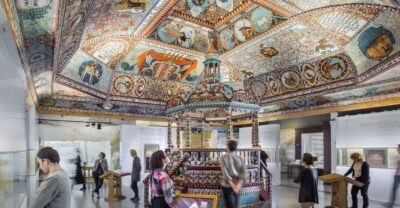
POLIN Museum of the History of Polish Jews Ticket
Read our review →
Browse the lists this tour appears in