
Reviewed · WALKING TOURS
Walk through the Warsaw Old and New Town: like Phoenix from the ashes
Warsaw rises from ruins, step by step. This 2-hour Old and New Town walk ties together Chopin’s heart and the story of how the city re-built itself, so you can read Warsaw like a timeline. I like that it moves fast but stays focused, with stops chosen for meaning, not just postcards.
You’ll also love how the route stitches public memory to art and power, from the University of Warsaw to the Castle Square story and onward to war-era landmarks. The only drawback to plan around is the pace, most stops are around 5 to 15 minutes, so you get the highlights, not long sit-down time inside every site.
In This Review
- Key moments worth your time
- Meeting at Nicolaus Copernicus, then walking straight into Warsaw’s story
- Krakowskie Przedmieście: the prelude before the big stops
- Holy Cross Church (Kosciol Swietego Krzyza) and Chopin’s heart
- University of Warsaw: the oldest part and why it matters
- Tomb of the Unknown Soldier and the Saxon kings connection
- Presidential Palace to Castle Square: power, rebuilding, and a Venetian painter
- Archcathedral Basilica of St John the Baptist: when the war front ran through a church
- Gnojna Gora and Rynek Starego Miasta: a Vistula view and old-town legends
- Through the city gate into the New Town, then Curie’s birthplace
- Field Cathedral of the Polish Army and the Warsaw Uprising Monument finish
- Price, pace, and whether the value clicks for you
- Should you book this Old and New Town walk?
- FAQ
- How long is the Warsaw Old and New Town walk?
- Where does the tour start?
- Where does the tour end?
- Is this tour private?
- What language is the tour offered in?
- Are admissions included?
- Do I need to bring a ticket?
- What is included in the price?
- Is transport included?
- Can I cancel for a refund?
Key moments worth your time
- Holy Cross Church and Chopin’s heart, a short stop with big emotional weight
- UNESCO Old Town and the reconstruction story, including financing and a Venetian painter
- A guided path through Warsaw’s civic memory, from the Tomb of the Unknown Soldier to the Presidential Palace
- War-era context at the Archcathedral Basilica of St John the Baptist, explained in a clear, place-based way
- Curie’s birthplace in the New Town, with a museum visit that is not included in the tour price
Meeting at Nicolaus Copernicus, then walking straight into Warsaw’s story
You start at the Nicolaus Copernicus Monument on Krakowskie Przedmieście, where your German-speaking guide meets you with a PolinTours sign. That location is helpful because it gives you an easy anchor for the day, especially if you are also exploring nearby streets on your own.
Right away, you’re set up for an old-and-new theme. The tour is designed as a loop that begins in the west side of central Warsaw and then works you toward the Old Town and finally into the New Town side. Expect to walk between stops, with most time blocks relatively short, about 5 to 15 minutes, so the group stays moving and the guide can hit the key turning points.
This is offered in English, and it’s a private tour, meaning only your group participates. If your group ends up small, it can feel more like a personal lesson than a big bus-and-bite-size-souvenir situation. I also appreciate that you get a mobile ticket, which keeps the start smooth and removes the need to fuss with paper.
More Walking Tours in Warsaw
- Warsaw: Old Town Highlights Walking Tour in English
★ 4.7 · 1,516 reviews - Warsaw: Old Town Guided Walking Tour
★ 4.9 · 599 reviews - Half-Day Polish Food Walking Tour with Guide and Dinner
★ 4.5 · 381 reviews
Krakowskie Przedmieście: the prelude before the big stops
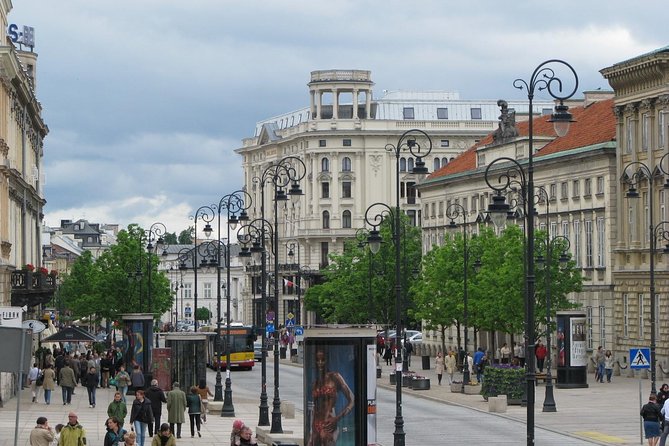
The first stop, Krakowskie Przedmieście, is where you get bearings for the rest of the walk. You’re there for about 10 minutes, and it works like a warm-up. Think of it as the part of the route that helps you connect later landmarks to the city’s layout, not just its name.
It’s also a good moment to ask quick questions before the story grows heavier. When you start at a major monument and then move into churches and memorials, it helps to have context early. The guide’s job here is to get you oriented so you don’t feel like you are racing between unrelated sights.
Because admission tickets are listed as free for this stop, there’s no extra cost to worry about. You can focus on the walk itself and get ready for the more emotional stops that come next.
Holy Cross Church (Kosciol Swietego Krzyza) and Chopin’s heart
This is one of the tour’s emotional anchors. You spend about 5 minutes at Holy Cross Church, where the guide shows the church tied to Frèderic Chopin and explains that his heart rests here.
The value of this stop is how it turns a famous name into a place you can stand on. In a short time, you get a clear sense of why this church matters for Warsaw’s identity, not only for music fans. Even if you do not know a lot about Chopin, you should still leave understanding that Warsaw keeps specific memories physically connected to the city.
Drawback to plan around: 5 minutes is brief. If you want extra time for your own pace, treat the tour as the head start and plan a return visit later. Still, as a first big “why this matters” moment, it’s a great choice.
University of Warsaw: the oldest part and why it matters
Another quick stop, about 5 minutes, brings you to the University of Warsaw. You look at the oldest part of the campus, and the guide frames it as part of the city’s longer arc.
This matters because many walking tours rush from royal or war-related points into the next photo spot. Here, the University stop adds a different kind of power: education and long-term institutions. It’s a reminder that Warsaw’s story isn’t only about rebuilding, battles, and official buildings.
Admission is listed as free here too, so you do not need to budget for a ticket. The time is tight, so treat it like a guided orientation, then use your remaining time after the tour if you want to explore further on your own.
More Polish squares crossed on foot:


Tomb of the Unknown Soldier and the Saxon kings connection
Next, you stop at the Grob Nieznanego Zolnierza, the Tomb of the Unknown Soldier, for about 10 minutes. The guide also connects this site to the estate of the Saxon kings in Poland.
This is one of those stops where a memorial can feel like a wall of marble unless you get the story. With the guide’s explanation, it becomes more than a symbol. You’re learning how different eras left their marks on the same general area, and how power and memory overlap in a city center.
One practical note: since it is a stop you stand and look around at, dress for comfort. You will likely spend more time on your feet than you expect, even though the listed duration is just 10 minutes.
Presidential Palace to Castle Square: power, rebuilding, and a Venetian painter
At the Palac Prezydencki (Presidential Palace), you get around 10 minutes. The guide explains the seat of the Polish President and highlights its unprecedented history. Even without going deep into any one era, you come away with the idea that this building has lived through major changes.
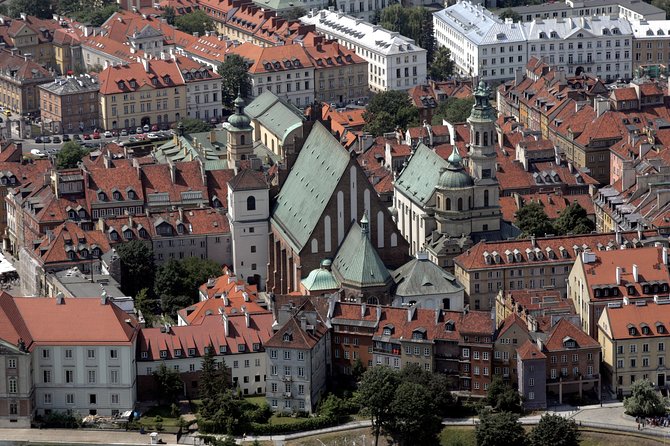
Then comes the big Old Town section at Castle Square (Plac Zamkowy). You get about 15 minutes here, and it’s the heart of the UNESCO story. This is where the guide explains the remarkable reconstruction of the Old Town, how it was financed, and even the role of a Venetian painter. The Royal Castle is part of the mix, and you’ll also hear about the first democratic constitution in Europe.
That UNESCO plus reconstruction plus constitution combo is why this stop is worth your time. It’s not just “look at the pretty buildings.” You’re learning how Warsaw deliberately recreated itself and how ideas of governance and identity got anchored in a specific historic setting.
Tip for enjoyment: when you reach Castle Square, slow down in your own head. Even if the guide moves on, take 30 seconds to look around and connect the dots between what you just learned and what you see in front of you.
Archcathedral Basilica of St John the Baptist: when the war front ran through a church
The Archcathedral Basilica of St John the Baptist gets about 10 minutes. The most striking part here is the tour’s framing: it’s described as the only church in Europe through which the war front ran during the Second World War. You also hear about the heroic struggle of the Poles in the Warsaw Uprising and the role of the Russian army.
This stop can hit hard. The lesson is place-based, meaning the guide uses the church itself as the anchor for the story, so it doesn’t feel abstract. If you’re someone who likes history told through real sites, this is a highlight.
Practical consideration: because the time is limited, you may only get a guided overview, not a long religious or architectural visit. Plan to treat it as one well-timed window into the site.
Gnojna Gora and Rynek Starego Miasta: a Vistula view and old-town legends
After the archcathedral, you move to Gnojna Gora, about 5 minutes, where the stop is about looking at the Vistula. This is a smart pacing break. You’ve been in heavier story mode, and suddenly you get a simple, grounding view.
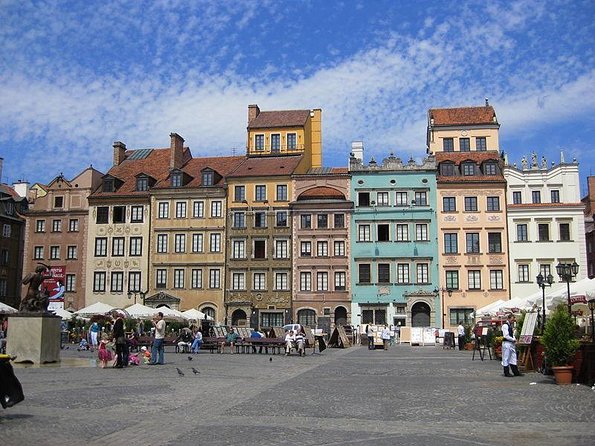
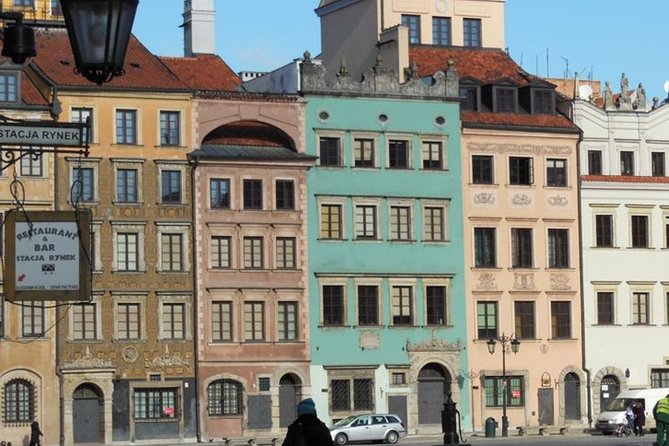
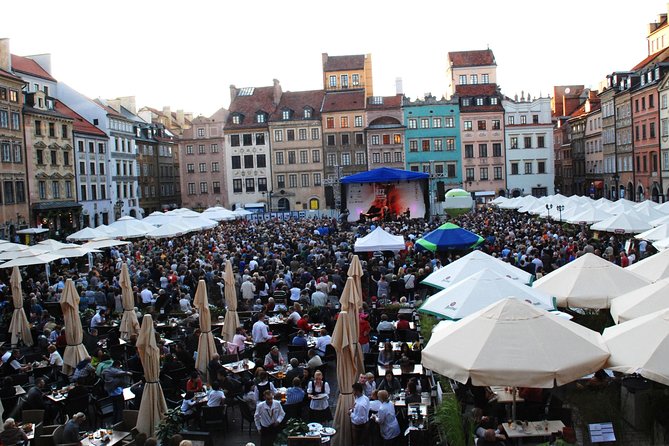
Then you reach Rynek Starego Miasta, the Market Square of the Old Town, around 10 minutes. Here, you get the picturesque streets and the famous landmarks in one area, plus legends and authentic stories told at the square.
This combination works well because Rynek Starego Miasta is where you can stop “listening” as much and start noticing your surroundings. It helps you connect names to streets, corners, and sightlines.
Through the city gate into the New Town, then Curie’s birthplace
At the point where you enter the New Town through the city gate, the feel of the walk changes. The Old Town section is about a UNESCO core and rebuilding. The New Town shift is about another kind of significance.
You then spend about 10 minutes at the Muzeum Marii Sklodowskiej-Curie, exploring the birthplace of Marie Curie. One key thing for your planning: this stop’s admission is listed as not included, so you should budget separately if you want to go in.
If you already know Curie, this is a rewarding add-on. If you do not, it still functions as a change of tone, since the tour is not only focused on churches and war memory. It adds science and personal origin into the Warsaw picture.
Field Cathedral of the Polish Army and the Warsaw Uprising Monument finish
The tour ends at the Field Cathedral of the Polish Army, spending about 10 minutes, and it finishes at the monument of the Warsaw Uprising. Ending here gives the walk a clear emotional arc. You move from civic and cultural landmarks into a final point tied to the uprising story.
This finale is also practical. If you want to keep exploring after the tour, you end at a major monument area, which should be easy to use as a landmark for the rest of your day. The official end point is the Warsaw Uprising Monument at plac Krasińskich.
You also avoid the classic problem of ending in a random alley. This ending point makes it easier to transition to your next activity.
Price, pace, and whether the value clicks for you
At $72.87 per person for about 2 hours, this is not a bargain-bucket tour, but it can be good value if you care about guided context. Here’s why: most stops have admission tickets listed as free, so you are not paying extra repeatedly throughout the walk. The main exception is the Marie Curie Museum, where admission is not included.
The other value lever is the private nature of the experience. Even though it’s “private,” the real advantage is how it can feel tailored when your group size is small. One person can end up turning it into a more personal pacing, and you get more chances to ask questions.
Pace matters. You are looking at a lot of “see it, understand it, move on” time. If you love long museum time, you might feel slightly teased by the shorter stops. If you love getting your bearings fast and then choosing what to revisit later, this format is a strong fit.
This tour also runs in English and includes a licensed city tour with tax. Snacks and transport are not included, so bring water and plan to use your own feet or local public transit for the day.
Should you book this Old and New Town walk?
Book it if you want a guided, place-based story that connects Chopin, reconstruction at Castle Square, and Warsaw Uprising sites in one smooth loop. I’d also recommend it if you like your history grounded in specific buildings, not just dates.
Skip it or plan extra time if you are the type who needs long stays inside churches or museums, because many stops are brief by design. Also budget for the Marie Curie Museum admission since it is not included.
If you want the best shot at a good experience, book early. This tour is commonly reserved well ahead, with an average booking window far in advance, so popular times can disappear.
FAQ
How long is the Warsaw Old and New Town walk?
It lasts about 2 hours.
Where does the tour start?
It starts at Nicolaus Copernicus Monument on Krakowskie Przedmieście, 00-333 Warszawa.
Where does the tour end?
It ends at the Warsaw Uprising Monument at plac Krasińskich, 00-263 Warszawa.
Is this tour private?
Yes, it is private, and only your group participates.
What language is the tour offered in?
The tour is offered in English.
Are admissions included?
Most stops list admission ticket free, but the Marie Curie Museum admission is not included.
Do I need to bring a ticket?
You get a mobile ticket.
What is included in the price?
It includes a licensed city tour and tax.
Is transport included?
No, transport is not included.
Can I cancel for a refund?
Yes. You can cancel up to 24 hours in advance for a full refund.
Freshly posted from Warsaw
- Warsaw Private Transfer from Warsaw Chopin Airport (WAW) to City centre★ 4.0 · 7 reviews
- Krakow Small Group Tour from Warsaw with Lunch, Schindler’s Factory included★ 5.0 · 7 reviews
- Wolfs Lair – Hitlers hideout★ 4.5 · 7 reviews
- 3-hour tour at Warsaw Uprising 1944 Museum /inc. Pick-up/★ 4.9 · 7 reviews
- Warsaw: Evening History and Pubs Tour by Retro Minibus★ 5.0 · 7 reviews
- Warsaw: Private Vodka Tasting Night with Snacks and Pickup★ 5.0 · 7 reviews
- Warsaw Old Town with Royal Castle + Royal Route: SMALL GROUP /inc. Pick-up/★ 5.0 · 7 reviews
Walking Tours, compared.
Old Town Krakow & Wawel Castle Walking Tour
Read our review →
Gdańsk City Sights & History Guided Walking Tour in English
Read our review →
Browse the lists this tour appears in